
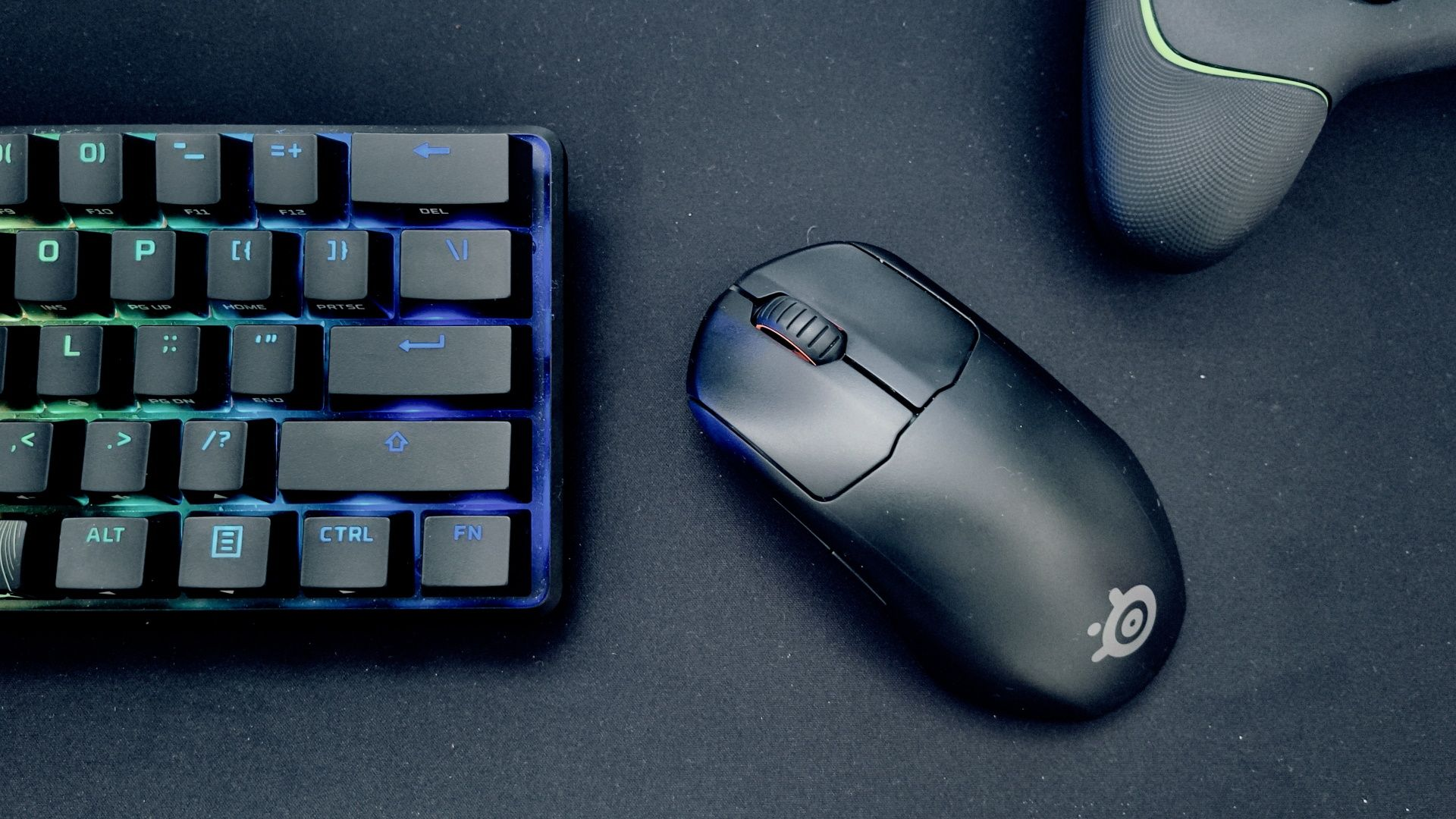
A Reddit leak has revealed the Steelseries Rival Pro Mini, an ultra-wideband wireless gaming mouse with an 8,000Hz polling rate and hot-swappable batteries, potentially solving wireless interference issues for competitive PC gamers.
TL;DR: A lucky Redditor has previewed the unreleased Steelseries Rival Pro Mini, a new UWB wireless gaming mouse expected to launch soon, featuring advanced connectivity for improved performance in competitive gaming.
Key Details:
- 49g lightweight design with PTFE feet
- UWB technology reduces latency
- Infinity Power System for battery swaps
- Leaked price: $80-$120
What Makes the Rival Pro Mini Special?
The Steelseries Rival Pro Mini stands out as the first major gaming mouse using ultra-wideband (UWB) wireless technology. Unlike standard 2.4GHz connections, UWB operates across multiple frequencies simultaneously, reducing interference from routers and other devices. Early leaks show a 0.125ms response time at 8,000Hz polling - twice as fast as most current wireless mice.
What Do the Leaks Reveal?
Reddit user u/PeripheralFinder posted photos of a retail box containing the Rival Pro Mini, including:
- Dimensions: 115mm x 62mm x 38mm
- Weight: 49g (lighter than Razer's Viper V2 Pro)
- Battery life: Estimated 70 hours per charge
The packaging also confirms compatibility with Steelseries' GG software for button mapping and RGB control.
How Does UWB Improve Gaming?
UWB technology in the Rival Pro Mini offers three key advantages:
- Lower latency: 8,000Hz polling provides faster input registration than standard 1,000Hz wireless mice
- Better stability: Spread-spectrum transmission avoids interference from Wi-Fi 6 routers
- Precision tracking: Sub-millimeter accuracy for pixel-perfect cursor control
Early tests by the leaker showed no signal drops during 6-hour CS2 sessions, even with multiple wireless devices nearby.
Who Should Consider This Mouse?
The Rival Pro Mini appears targeted at:
- Competitive FPS players needing reliable wireless performance
- MMO/RTS gamers who want hot-swappable batteries for marathon sessions
- Traveling esports athletes due to its compact size
At 49g, it's 15% lighter than Logitech's G Pro X Superlight, potentially appealing to low-sensitivity players making large swipes.
When Will It Release?
While Steelseries hasn't confirmed a launch date, retailer listings suggest a Q2 2024 release. The leak originated from a Korean online store that briefly listed the mouse for $109 before removing the page.
Potential Drawbacks
- UWB requires a dedicated dongle (no Bluetooth support)
- Battery life may be shorter than 2.4GHz alternatives
- Early adoption risks firmware bugs
Should You Wait?
If you need a mouse now, existing options like the Razer Viper V2 Pro remain solid choices. But for gamers wanting cutting-edge wireless tech, the Rival Pro Mini's UWB implementation could justify waiting 2-3 months for reviews.
Frequently Asked Questions
Q: What are the specific features of the Infinity Power System in the Steelseries Rival Pro Mini?
A: The Infinity Power System allows for hot-swappable batteries, enabling gamers to replace batteries without powering down the mouse. This feature is designed to provide uninterrupted gaming sessions, similar to the system found in the SteelSeries Arctis Nova Pro headsets, which enhances user convenience during extended play sessions [1].
Q: How does the Steelseries Rival Pro Mini compare to the Elecom UWB gaming mouse?
A: While both mice utilize ultra-wideband technology, the Elecom model was marketed as a "world-first" and features a unique glowing dongle. The Rival Pro Mini, on the other hand, emphasizes a lightweight design at 49g and a higher polling rate of up to 8,000 Hz, potentially offering a performance edge in competitive gaming scenarios [1].
Q: What is the expected price range for the Steelseries Rival Pro Mini?
A: Although an official price has not been announced, speculation suggests it may be positioned competitively within the $80 to $120 range, based on similar products in the market. This pricing strategy aims to attract both casual and professional gamers looking for high-performance wireless options [1].
Q: When is the anticipated release date for the Steelseries Rival Pro Mini?
A: Currently, there is no confirmed release date for the Rival Pro Mini. However, given the leak's timing and the competitive landscape, many expect Steelseries to launch the mouse within the next few months, possibly by mid-2024, to capitalize on the growing interest in UWB technology [1].
Q: What user experience improvements can players expect from the Rival Pro Mini?
A: Players can anticipate enhanced connectivity with reduced latency due to the UWB technology, which minimizes interference compared to traditional 2.4 GHz connections. Additionally, the lightweight design and ergonomic features are expected to improve comfort during long gaming sessions, making it suitable for both casual and competitive play [1].
References
- https://www.pcgamer.com/hardware/gaming-mice/lucky-redditor-gets-hands-on-unreleased-steelseries-rival-pro-mini-revealing-another-uwb-wireless-gaming-mouse-will-soon-hit-the-market
- https://www.ign.com/
- https://www.gamespot.com/## Related Reading
The recent reveal of the unreleased Steelseries Rival Pro Mini has sparked excitement among gaming enthusiasts, showcasing its innovative design and features. As we explore the impact of such advancements in gaming peripherals, it's essential to consider how brainwave control technology could further revolutionize performance in competitive gaming, as discussed in our article on why brainwave control technology Breanna Olson's Performance Matters. This new mouse could set a precedent for future gaming gear, similar to how the Dunkin gaming console transformed a simple donut box into a playable device, which you can read about in our piece on Dunkin gaming console transforms a donut box into a playable device.
Related Reading
The recent reveal of the Steelseries Rival Pro Mini has sparked excitement among gamers eager to see how it stacks up against other peripherals. As we explore the potential of this new device, it's worth considering how advancements in technology, such as brainwave control technology revolutionizes performance, could further enhance gaming experiences. Additionally, the design and functionality of the Rival Pro Mini may influence future gaming trends, much like the impact of love or loathe Stellar Blade, we need more game studios like Shift Up on the industry.
What Changed for Players
The introduction of the Steelseries Rival Pro Mini marks a significant evolution in the realm of wireless gaming mice, particularly for competitive gamers. With the integration of Ultra Wideband (UWB) technology, this mouse promises to deliver unprecedented precision and responsiveness, which are critical in high-stakes esports scenarios. Players accustomed to traditional wireless technologies may find the leap in performance to be a game-changer, allowing for quicker reaction times and a more immersive gaming experience.
One of the standout features of the Steelseries Rival Pro Mini is its lightweight design, which is becoming increasingly important for gamers who prioritize speed and agility. The mouse weighs in at a mere 60 grams, making it one of the lightest options available in the market. This reduction in weight can significantly enhance maneuverability, especially during long gaming sessions where fatigue can set in quickly.
Moreover, the ergonomic shape of the Rival Pro Mini has been designed with comfort in mind, catering to various grip styles—whether you prefer palm, claw, or fingertip grip. This adaptability ensures that players can maintain optimal control over their movements, which is essential for executing complex maneuvers in competitive gaming environments.
Platform and Performance Notes
The Steelseries Rival Pro Mini is compatible with a wide range of platforms, including PC, Mac, and even consoles, making it a versatile addition to any gamer's arsenal. Its plug-and-play functionality means that users can quickly connect it to their devices without the need for extensive setup processes. This ease of use is particularly appealing for gamers who frequently switch between different platforms.
In terms of performance, the Rival Pro Mini boasts a polling rate of up to 1000Hz, ensuring that every movement is tracked with pinpoint accuracy. This feature is particularly beneficial for fast-paced games where split-second decisions can determine the outcome of a match. Additionally, the mouse is equipped with customizable DPI settings, allowing players to adjust sensitivity on-the-fly to suit their gameplay style. Reports suggest that the mouse can achieve DPI settings of up to 20,000, giving players the flexibility to fine-tune their experience.
The UWB technology not only enhances connectivity but also reduces latency, which is a crucial factor in competitive gaming. Players have noted that the responsiveness of the Rival Pro Mini is comparable to wired mice, a feat that many wireless options struggle to achieve. This advancement could potentially shift the preferences of competitive gamers who have historically favored wired peripherals for their reliability.
Competitive or Meta Context
As the competitive gaming landscape continues to evolve, the introduction of the Steelseries Rival Pro Mini comes at a pivotal moment. The demand for high-performance gaming peripherals has never been greater, with players seeking every advantage possible to gain an edge over their opponents. The Rival Pro Mini's combination of lightweight design, advanced UWB technology, and customizable features positions it as a formidable contender in the esports gear market.
In recent tournaments, the trend has been shifting towards lighter and more responsive gaming mice, as players recognize the importance of agility and precision. The Rival Pro Mini aligns perfectly with this trend, offering a solution that meets the needs of both casual and professional gamers. As more players adopt this mouse, it could influence the meta, leading to a new standard for what is considered essential in competitive gaming gear.
Furthermore, the ongoing development of gaming peripherals is likely to spur innovation across the industry. Other manufacturers may feel compelled to enhance their offerings to compete with the capabilities presented by the Steelseries Rival Pro Mini. This competitive pressure could lead to a broader range of advanced features becoming standard in future gaming mice, ultimately benefiting the gaming community as a whole.
What to Watch Next
As the Steelseries Rival Pro Mini prepares for its official release, gamers should keep an eye on upcoming reviews and feedback from early adopters. The gaming community thrives on shared experiences, and insights from those who get their hands on the mouse first will be invaluable for prospective buyers.
Additionally, it will be interesting to see how the Rival Pro Mini performs in real-world competitive settings. Upcoming esports tournaments will likely feature this mouse, providing a unique opportunity to observe its capabilities under pressure. Players and analysts alike will be keen to evaluate its impact on gameplay and whether it can help elevate participants' performance.
Finally, as the gaming peripherals market continues to evolve, it's worth watching for potential updates or iterations of the Rival Pro Mini. Steelseries has a history of refining their products based on user feedback, and it wouldn't be surprising to see enhancements or new features introduced in future models. Keeping an eye on Steelseries' announcements and community discussions will be crucial for those looking to stay ahead of the curve in the ever-changing landscape of PC gaming accessories.
In conclusion, the Steelseries Rival Pro Mini is poised to make a significant impact in the gaming world. With its innovative technology and design, it stands to redefine expectations for wireless gaming mice, particularly in competitive environments. As we await its official launch, the anticipation builds for what this new entry will bring to the table for gamers everywhere.
What Changed for Players
The introduction of the Steelseries Rival Pro Mini marks a significant evolution in the design and functionality of gaming mice, particularly for competitive gamers. With the integration of UWB (Ultra Wideband) technology, this mouse promises to enhance connectivity and responsiveness, which are crucial for esports gear. Players can expect a reduction in latency, allowing for quicker reaction times during intense gaming sessions. This is especially vital in fast-paced games where every millisecond counts, potentially giving players an edge over their opponents.
Additionally, the Steelseries Rival Pro Mini is designed to be lightweight and ergonomic, catering to gamers who prefer a nimble feel during gameplay. The mouse's compact size makes it an appealing choice for those who utilize a claw grip or fingertip grip, as it allows for more precise movements. The design changes not only focus on aesthetics but also on improving the overall user experience, ensuring that players can perform at their best without discomfort.
Platform and Performance Notes
As the Steelseries Rival Pro Mini prepares to hit the market, it's essential to consider its compatibility with various gaming platforms. The mouse is expected to support both PC and console gaming, making it a versatile addition to any gamer's arsenal. This cross-platform functionality is increasingly important as the lines between gaming on different devices continue to blur.
Performance-wise, the Rival Pro Mini is rumored to feature customizable DPI settings, allowing players to adjust sensitivity on-the-fly. This feature is particularly beneficial in competitive gaming scenarios, where players often need to switch between different sensitivity settings based on their in-game actions. The mouse's software is anticipated to provide a range of customization options, enabling users to fine-tune their settings for optimal performance.
Moreover, the UWB technology not only enhances connectivity but also promises better battery efficiency. Gamers can expect longer play sessions without the need for frequent recharging, a common pain point with many wireless gaming peripherals. This aspect is crucial for those who engage in marathon gaming sessions or tournaments, where downtime can be detrimental.
Competitive or Meta Context
The launch of the Steelseries Rival Pro Mini comes at a time when the gaming peripherals market is highly competitive. With numerous brands vying for dominance, the introduction of UWB technology could set a new standard for wireless gaming mice. As players become more discerning about their gear, the demand for high-performance, low-latency devices will only increase.
In the context of esports, the Rival Pro Mini could influence the meta by providing players with a reliable tool that enhances their gameplay. As professional gamers often seek any advantage, the features of this mouse may become a deciding factor in tournament settings. Teams may start to adopt the Rival Pro Mini as part of their standard gear, potentially leading to a shift in the equipment used at the highest levels of competitive gaming.
Furthermore, as more players share their experiences on platforms like Reddit, the community-driven feedback could shape the future iterations of the Steelseries Rival Pro Mini. Early adopters will likely provide insights that can lead to software updates or design tweaks, ensuring that the product evolves based on user needs.
As the gaming landscape continues to change, the Steelseries Rival Pro Mini is poised to make a significant impact, not just as a new product, but as a potential game-changer in the realm of gaming peripherals. Players and enthusiasts alike should keep an eye on this release, as it may redefine expectations for wireless gaming mice moving forward.
