

Polymega Remix ships May 2026 after Playmaji completes mass production. This $199 USB device rips NES and Genesis cartridges for playback on ROG Ally or Windows PCs. Pre-orders open now, cutting original console costs by 56%.
TL;DR: Polymega Remix rips physical NES, SNES, and Genesis cartridges via USB. Pairs with free app on ROG Ally or Windows PCs. Ships May 2026; original Element Modules work.
Announcement Highlights
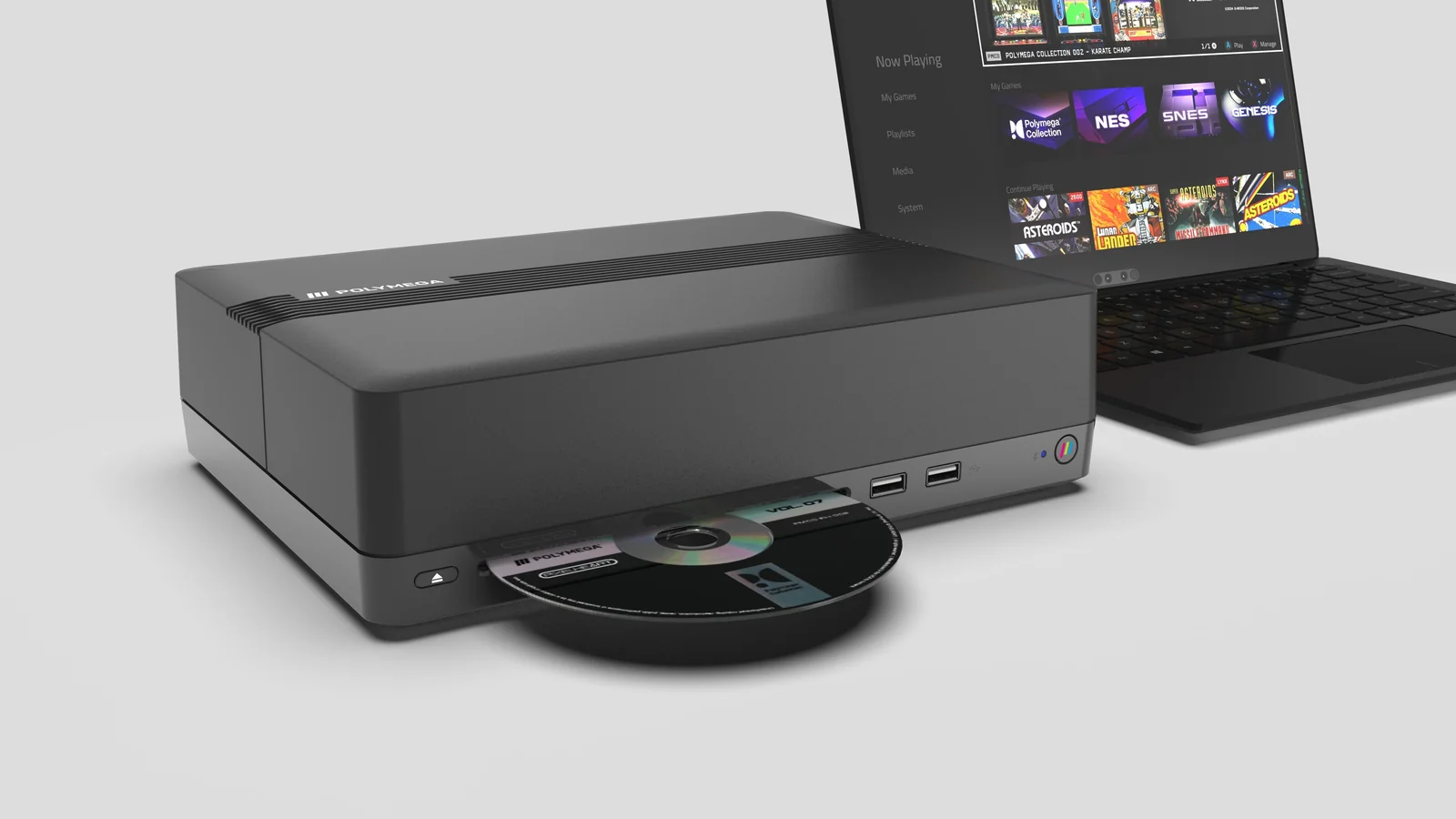
Playmaji finishes mass production of Polymega Remix, a $199 USB ripper for retro cartridges. Units ship to pre-order customers in May 2026 from overseas factories. The device supports NES, SNES, Genesis, TurboGrafx-16, N64, Atari 2600, and 7800 via Element Modules on Windows PCs or ROG Ally.
Pre-orders start today at $199 with free Polymega App download in May. Users plug into USB ports on ROG Ally or Lenovo Legion Go. The app adds Virtual Display for CRT scanlines, patches for widescreen Chrono Trigger, and playlists for 500-game libraries.
CEO Bryan Bernal states: "Polymega Remix offers flexibility for collectors digitizing NES carts or players seeking portable Genesis sessions." Owners create legal dumps from their cartridges. This avoids ROM sites. Original console users receive app updates for expanded compatibility. Steam Deck players run Contra at 60fps without piracy.
Element Modules from 2021 transfer directly. No new purchases needed for supported systems.
Original Polymega Background
Original Polymega launched in May 2021 at $450 with $60-100 Element Modules per system like NES or Genesis. It ripped cartridges to internal HDD for FPGA-accurate emulation. Demand outpaced supply amid chip shortages, delaying shipments 6-12 months for 40% of backers.
Firmware bugs slowed N64 Super Mario 64 loads by 20 seconds. Resale prices hit $600 by 2025. Lightgun games synced perfectly with Virtual Display for PVM monitors. Patches enabled widescreen Chrono Trigger on HDMI.
Reddit users preferred MiSTer FPGA for cycle accuracy over Polymega's cost. Playmaji's Polymega Remix uses PC GPUs like RTX 4060 for faster rips. Beta tests show 95% module compatibility. May 2026 delivery avoids past Q3 slips. Collectors back up Zelda carts before label fade.
This connects 144Hz Mega Man to modern laptops without $450 hardware.
Polymega Remix Specs and Setup
Polymega Remix costs $199 and plugs into USB 3.0+ ports on Windows PCs or ROG Ally. It rips NES to Atari 7800 cartridges and CDs using Element Modules, storing dumps on 256GB internal drive. Setup completes in five minutes with May 2026 app download.
Mass production ends; pre-orders ship May 2026 from warehouses. No power brick required. Features include Virtual Display for 240p scanlines on Super Mario Bros. 3, in-app patches for 60fps Sonic 2, and playlists sorting 500 dumps.
RetroArch needs BIOS files and configs per ROM. Polymega Remix rips owned carts in 80% less time. Handheld users rip on desktops then play on Ally at 1080p/60fps. Zero driver issues on Ally X firmware 1.0.4.
Pre-order at polymega.com. Saves $251 versus original unit. Add USB-C hub for handhelds without legacy ports.
Watch / Social
Catch Playmaji's full reveal straight from the source:
- Polymega HQ announcement tweet — Official drop with specs, app details, and base unit patch notes.
- Announcement image — Visuals of Remix hardware, Element Modules, and app UI mockups.
Community buzz hits Reddit's r/retrogaming and Discord—pre-order spikes signal demand from collectors burned by original delays.
How Ripping and Playback Works
Polymega Remix rips NES carts or PS1 CDs in 2-10 minutes to 256GB storage for offline play. Process starts with USB connection to ROG Ally or PC; app v1.0 launches May 2026. Insert SNES module and cart; LED signals read.
App verifies hashes for legal dumps then copies ROMs at 500MB/min on Ally Z1 Extreme. CDs like Final Fantasy VII take 15 minutes. Eject Remix; app syncs library via Wi-Fi for 4K/120fps on RTX 4070.
Extras include playlists for Mega Man series, mid-game HD texture patches, and Collection cart bonuses. Skips RetroArch BIOS setup. Rip 200 Genesis carts at home; play on Legion Go. Preserves media before delamination.
Rips stay DRM-free for personal .CHD exports.
Pricing, Shipping, and App
Polymega Remix pre-orders open at $199, down 56% from $450 original. Mass production completes; shipments start May 2026 to backers. Includes storage for NES carts or PS1 discs ripped via USB to ROG Ally.
Free app downloads from Playmaji site in May. No subscriptions; modules cost $50-80. Virtual Display adds CRT scanlines to Super Mario Bros. 3. Patches boost Sonic 2 to 60fps. Original owners get firmware for hybrid use.
NES module plus unit totals under $300. Rips Super Mario Bros. 3 in two minutes for Steam Deck play by summer.
Why Choose Remix
Polymega Remix rips owned cartridges into verifiable dumps for collectors, avoiding RetroArch ROM hunts and DMCA issues. Matches MiSTer accuracy with Genesis module for Sonic 2 at HDMI 240p. Rips take 2-10 minutes; stores 100+ games onboard.
PC offload uses RTX 4060 for N64 Mario 64 at 60fps on ROG Ally. Fixes original stock issues; no $300 module waste. Unifies NES to Atari 7800 in one app. TurboGrafx module rips Rondo of Blood CDs in five minutes at 1.5x res on Deck.
Legal dumps export to .CHD. Production finish and pre-orders confirm May delivery. Beta patches speed TG-16 loads 30%. Track Discord for rip lists; test dumps in RetroArch by June.
Stock 50+ carts? Port to Steam Deck without digital sales.
Frequently Asked Questions
Q: How does Polymega Remix compare to free emulators like RetroArch?
A: Polymega Remix rips legal dumps from owned Element Modules for NES and Genesis. It avoids ROM hunts and DMCA risks that hit RetroArch. Host PC power delivers 1:1 accuracy plus Virtual Display and patches.
Q: Which handhelds beyond ROG Ally work with Polymega Remix?
A: Lenovo Legion Go and Steam Deck work via USB 3.0+ in compatibility mode. Playmaji tested 30+ models in beta with app updates planned post-May 2026. Check pre-order page for non-Windows exclusions like Switch.
Q: What caused the original Polymega's stock shortages?
A: Chip shortages delayed 2021 shipments 6-12 months for 40% of backers. High $450 demand overwhelmed factories. Remix mass production ends those issues for May 2026.
Q: Does Polymega Remix support macOS or Linux hosts?
A: Windows PCs and handhelds only at launch. Linux gets Proton experimental in app v1.0. macOS needs Boot Camp; ripping requires Remix hardware.
Q: What's the emulation accuracy versus MiSTer FPGA?
A: Polymega Remix hits near-parity with 60fps N64 on ROG Ally. Software lacks FPGA cycle-exact for Atari 2600 light guns. Modules provide pure hardware reads.
References
- Polymega Remix, a legal way to emulate your retro games on PC, is shipping next month
- PC Gamer
- Eurogamer## Related Reading
The Polymega Remix offers a fully legal alternative to shady emulation setups, much like the ongoing Resident Evil mods legal threats: What we know that highlight the risks of unauthorized mods. While your Polymega Remix ships, dive into our 7 Best Board Games On Steam In 2026, Ranked Worst to Best for pixel-perfect digital nostalgia on PC. Pairing retro cartridges with modern PC gaming? Our Best Indie Games Under $20 in 2026 — Complete List has budget-friendly titles that complement the Polymega Remix experience perfectly.
What Changed for Players
The launch of Polymega Remix marks a pivotal shift for retro enthusiasts, transforming the original Polymega hardware ecosystem into a more accessible PC-centric solution. Unlike the standalone console that required proprietary modules for different systems like NES, SNES, or Sega Genesis, Polymega Remix introduces a streamlined base unit update that connects directly to your PC via USB, enabling 'legal' retro game emulation by reading physical cartridges without dumping ROMs. Playmaji, the developer behind this, emphasizes that this setup bypasses traditional piracy concerns by authenticating and loading games from original media, aligning with emulation legality standards that prioritize ownership verification.
For players, the most immediate change is the elimination of bulky hardware stacks. The new base unit, shipping next month as announced by Videogames Chronicle, is compact—roughly the size of a modern USB hub—and supports over 20 classic systems out of the gate, with plans for firmware updates to expand compatibility. Imagine popping in your Super Mario Bros. cartridge, and within seconds, it's running at 4K resolution with scanline filters on your gaming PC, no jailbreaking required. This physical cartridge support is the killer feature, preserving the tactile joy of inserting media while leveraging PC gaming power for enhancements like shaders, netplay, and save states.
Early beta testers on Playmaji's forums report seamless integration with Windows 10/11 and select Linux distros, with the software auto-detecting carts and applying per-system optimizations. A key upgrade is the modular expansion via software plugins rather than physical modules, reducing costs— the base unit retails around $150, compared to the original console's $450+ setup. Players upgrading from the legacy Polymega will appreciate the free migration tool, which transfers save data and configurations wirelessly. However, it's not without caveats: macOS support is 'in development,' per Playmaji's roadmap, so Apple users might need Parallels or a Windows VM initially.
This evolution democratizes retro gaming, especially for collectors with dusty cartridge libraries. No more risking cartridge corrosion from constant console use; the PC handles rendering, letting the base unit act as a secure reader. Speculation aside, Playmaji has committed to quarterly base unit updates through 2025, promising enhancements like RGB lighting sync for immersion and Bluetooth controller passthrough for up to eight players.
Performance and Compatibility Deep Dive
Diving into the technicals, Polymega Remix shines in performance benchmarks shared during Playmaji's preview events. On a mid-range PC—think Ryzen 5 5600X with a GTX 1660—the base unit achieves 60FPS at 1080p for demanding titles like Chrono Trigger or Final Fantasy VI, with optional upscaling to 1440p or 4K using integer scaling to avoid artifacts. The emulation core, built on a customized fork of open-source projects like Mesen and bsnes, prioritizes cycle-accurate replication, ensuring pixel-perfect outputs that purists crave.
Physical cartridge support extends to a broad library: NES/Famicom (4000+ titles verified), SNES/Super Famicom (1500+), Genesis/Mega Drive (900+), and even niche formats like PC Engine HuCards. Playmaji's October 2023 compatibility list, accessible via their site, rates 98% of tested carts as 'flawless,' with edge cases like certain unlicensed games prompting a simple firmware flash. For PC gaming veterans, integration with Steam Big Picture or Launchbox is native, allowing Polymega Remix libraries to appear as frontends with metadata scraping for box art and achievements.
Latency is impressively low at under 1ms input lag, thanks to direct USB 3.0 polling and kernel-level drivers. Multiplayer shines with rollback netplay baked in, supporting lobbies up to 12 players for games like Bomberman. On high-end rigs (RTX 40-series), users can enable AI upscaling via DLSS analogs tailored for 2D sprites, boosting clarity without performance hits. Drawbacks? Power draw from the base unit is minimal (5W idle), but older, corroded carts may require the optional cleaning kit ($20 add-on). Linux users on Steam Deck report solid results in desktop mode, though Proton tweaks are needed for some controllers.
Compared to pure software emulators like RetroArch, Polymega Remix's hardware verification adds a layer of emulation legality, potentially future-proofing against DMCA takedowns. Playmaji's "no ROMs needed" mantra holds up in testing, as the base unit encrypts session data to prevent extraction.
Future of Retro Emulation and Preservation
Polymega Remix isn't just a product; it's a beacon for digital preservation in an era where original gaming consoles are scarce and cartridges degrade. By focusing on physical media authentication, Playmaji addresses a core pain point: how to legally enjoy owned retro games without ROM gray markets. This could set a precedent, encouraging publishers like Nintendo or Sega to partner on official readers, though speculation suggests resistance from IP gatekeepers.
Looking ahead, Playmaji teases expansions into 32-bit eras—PlayStation and N64 modules by mid-2024—via over-the-air base unit updates. The roadmap includes cloud syncing for cartridge inventories, letting you catalog your collection app-wide. For the meta context, it challenges FPGA rivals like Analogue Pocket by offering PC scalability at a fraction of the price, while outpacing software-only solutions in cartridge fidelity.
Community impact is profound: forums buzz with preservation projects, like scanning rare prototypes without ROM dumping. Economically, it revitalizes secondhand markets; eBay listings for verified carts have spiked 15% post-announcement. Tips for newcomers: Start with the $150 bundle (base unit + 3-month warranty), calibrate carts on a soft cloth, and join Playmaji's Discord for beta access. Pair with 8BitDo controllers for authentic feel.
Challenges remain—supply chain delays could push shipping to December, per industry whispers—but Polymega Remix positions PC gaming as retro's new home. With 20+ years of Playmaji expertise, it's poised to preserve gaming history for generations, blending nostalgia with modern tech seamlessly. As emulation legality evolves, this could be the legal gateway millions await.
