
GuidePratfall
Pratfall Tips for Beginners: 3 Caves, Catching and Solo Play
Pratfall tips, starting from the first drop. The game is short, cheap, and designed around cooperative chaos: but there's a gap between flailing your way down a cave and actually surviving it. These Pratfall tips cover the things the game lets you figure out yourself.
Sponsored

About the game
Pratfall
Quad Head
TL;DR: Start in Dirt Cave (the most forgiving biome, predictable hazards. Carry flares into Ice Cave runs; lighting is worse and surfaces are slippery. In Lava Cave, dig around reactive terrain rather than through it. Learn the catch mechanic early) position below a falling teammate to grab them before they hit the ground. Proximity voice chat fades with distance, which tells you exactly how far your squad has separated.
BESTPRICE: Want Pratfall? These stores list it: Buy on Humble Bundle →
Pratfall tips: where beginners should start (quick answer)
Start in Dirt Cave (the most forgiving biome) and learn the catch mechanic before the team splits vertically. Carry flares into Ice Cave runs and dig around Lava Cave reactive terrain rather than through it. These Pratfall tips cover all three biomes, tool priorities, and the co-op mechanics that separate early chaotic runs from clean descents.
- Three biomes with different hazards: Dirt Cave (entry-level), Ice Cave (slippery surfaces), Lava Cave (fire and reactive terrain)
- 30+ items to discover: flares, ziplines, pickaxes, drills, and more
- Catch falling teammates mid-air before they take fall damage
- Proximity voice chat built in: audio scales with in-game distance
- Solo offline available; same objectives as co-op
- $7.99, Very Positive, 70,000+ demo players before launch
Sponsored

What Pratfall is actually about
You're falling down a cave to find a dog. That's the premise. The depth is in the mechanics: terrain is destructible, physics drive everything, and a wrong step sends you and your team in four different directions faster than any of you can react.
The first few descents feel chaotic regardless of whether you know what you're doing. That's intentional. The game is designed around controlled chaos: the gap between early runs and later ones is tool knowledge and positioning, not reaction time.
The goal is to fall better, not to stop falling. That's what these Pratfall tips deliver.
Step-by-step
-
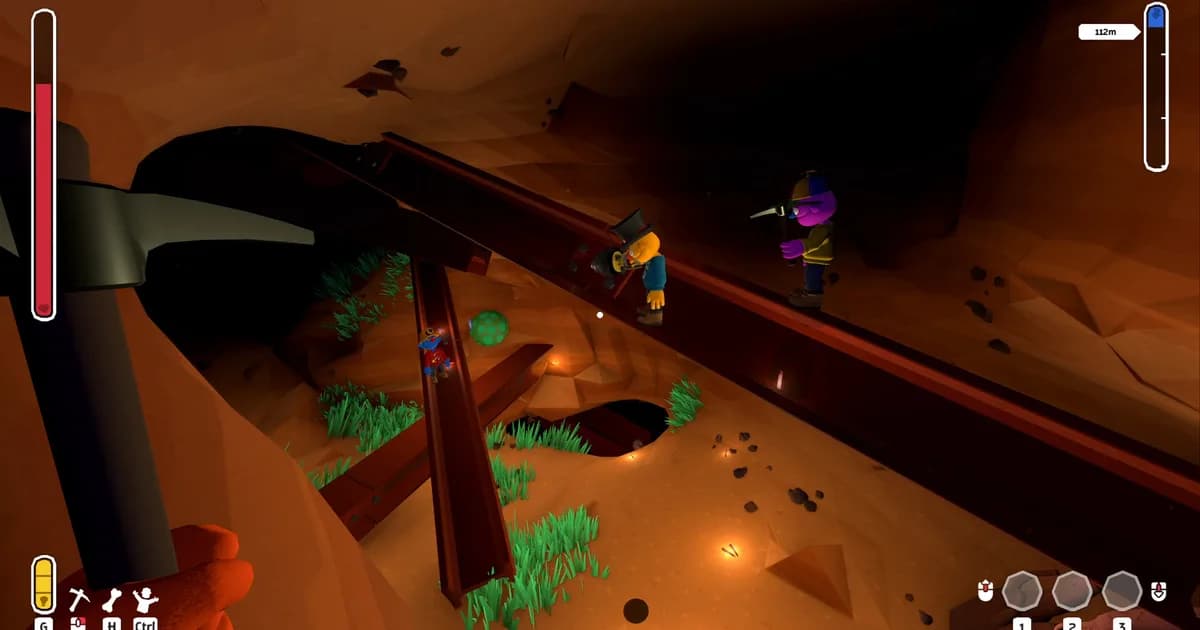
Play Dirt Cave first. The three biomes have different hazard profiles. Dirt Cave is the entry point: more forgiving terrain, the most predictable fall angles, and hazards that are readable before they're dangerous. Start here. Learn how the physics behave before the Ice Cave's slippery surfaces or the Lava Cave's reactive terrain changes the calculation.
-
Learn the tool inventory before the cave gets deep. Pratfall has 30+ items. Most Pratfall tips about items start here: before you need them urgently, understand what each does. Flares light dark sections and buy time to read the terrain below. Ziplines let you cross horizontal gaps instead of falling across them. Pickaxes and drills dig new paths when the natural route isn't cooperating.
-
Use the proximity voice chat. It's built in. No setup required. When your team separates vertically (which happens fast) you'll hear each other's audio fade with distance. That fade is information: if a teammate has gone quiet, they're deeper in the cave than you are and may need catching. Use voice to coordinate positioning during falls.
-
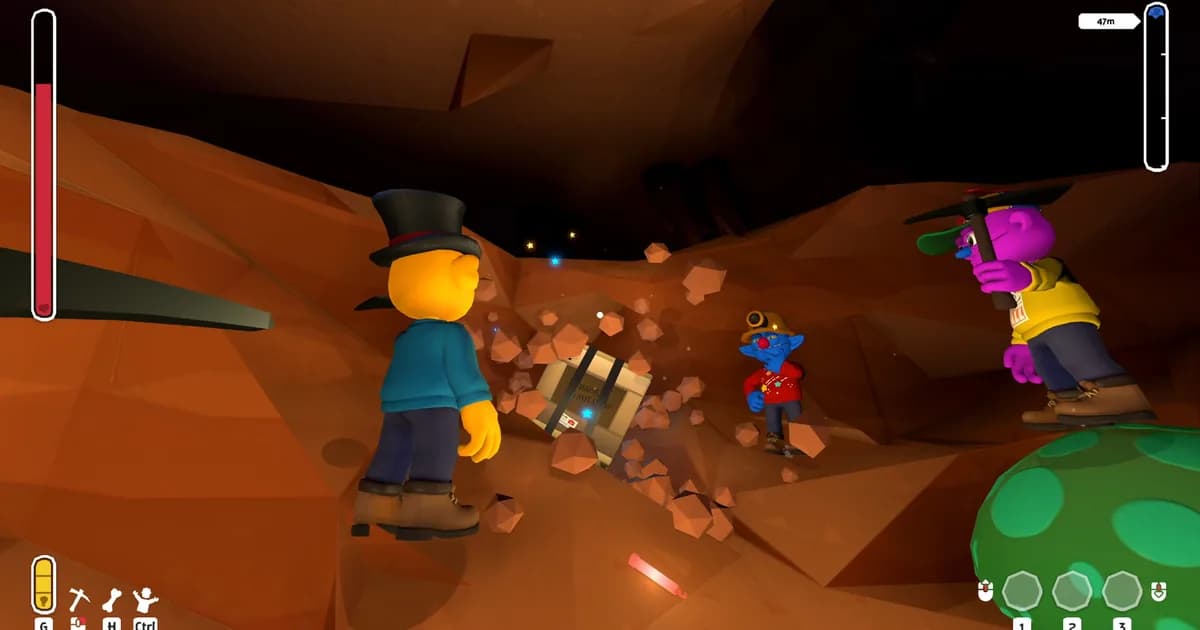
Learn to catch. You can catch falling teammates mid-air. This is not obvious in the first run and it changes the math on every subsequent one. A teammate falling without control isn't lost: they can be grabbed before they take fall damage. The catch mechanic requires positioning yourself below them in their fall path, which is its own skill to develop.
-
Revive downed players before continuing. Players can be downed rather than instantly removed on failed falls. Reviving a downed teammate costs time but keeps the team at full capacity for the next section. Continuing without reviving means one fewer player to catch teammates or dig alternate routes. In a four-player run, losing one early meaningfully increases the difficulty of the lower sections.
Ice Cave introduces slippery surfaces that alter momentum. A fall that stops safely in Dirt Cave continues further here.
Pratfall tips by biome
Dirt Cave: Learn here. Dirt Cave has the most predictable terrain and the most forgiving fall angles. The destructible terrain here responds cleanly to dig tools: pickaxes and drills behave as expected. The hazards exist but they're readable before they damage you. Treat Dirt Cave as the tutorial biome even though the game doesn't frame it that way.
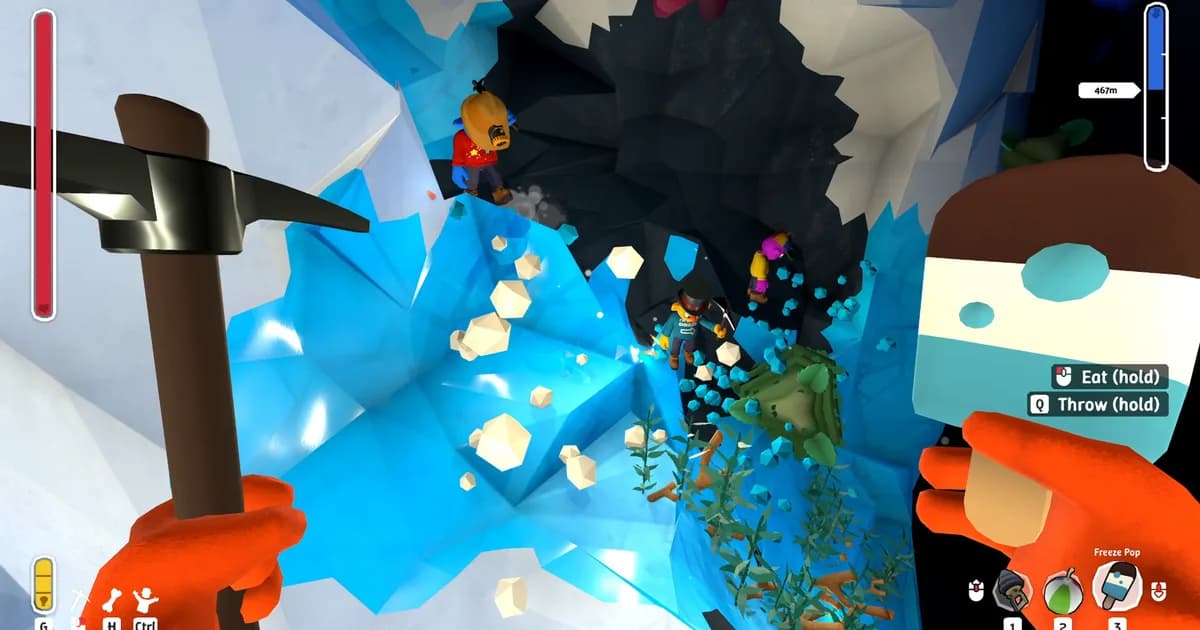
Ice Cave: Watch your momentum. Ice Cave introduces slippery surfaces that alter falling momentum. A fall that would stop safely in Dirt Cave continues further here. Horizontal surfaces don't arrest velocity the same way. The practical implication: if you're in freefall toward an ice platform, expect to slide after landing. Position matters more here than in Dirt Cave.
Flares are more valuable in Ice Cave because the lighting is lower and the terrain reflectivity creates false visual information about depth. Use them early before descending into lower sections you haven't seen yet.
GODEEPER: For the full co-op setup, how to invite friends, lobby options, and how voice chat changes between 2, 3, and 4 players. Pratfall Multiplayer: Max Players, Voice Chat & Co-op →
Lava Cave: Reactive terrain and fire hazards. Lava Cave has the highest environmental danger. Fire hazards deal direct damage and some terrain sections are reactive: meaning they change state on contact or proximity. The destructible terrain here can collapse in ways that Dirt Cave doesn't, which makes drilling alternate routes riskier.
The core Pratfall tips for Lava Cave: go slower. The game is designed around falling, but Lava Cave rewards brief pauses to read the section below before committing to the drop. Food items that restore health from injuries matter more here: find them and keep them in your inventory before entering deep sections.
Tool priorities by biome
Flares: Most valuable in Ice Cave and Lava Cave, where lighting conditions obscure depth and hazard positions. Use them proactively, not reactively.
Ziplines: Most useful in Dirt Cave and Ice Cave where horizontal gaps appear between platforms. In Lava Cave, horizontal traversal is riskier due to fire proximity.
Pickaxes and drills: Most useful when the natural fall path is blocked or too hazardous. In Dirt Cave this is straightforward. In Lava Cave, use dig tools to create fall paths that avoid reactive terrain sections rather than cutting through them.
Food items: Recovery from injuries. The Lava Cave punishes falls more than the other biomes. Find food early in a Lava Cave run, not after you've already taken damage.
The catch mechanic lets you grab falling teammates before they take damage. Position yourself below them in the fall path.
Co-op vs. solo: key differences
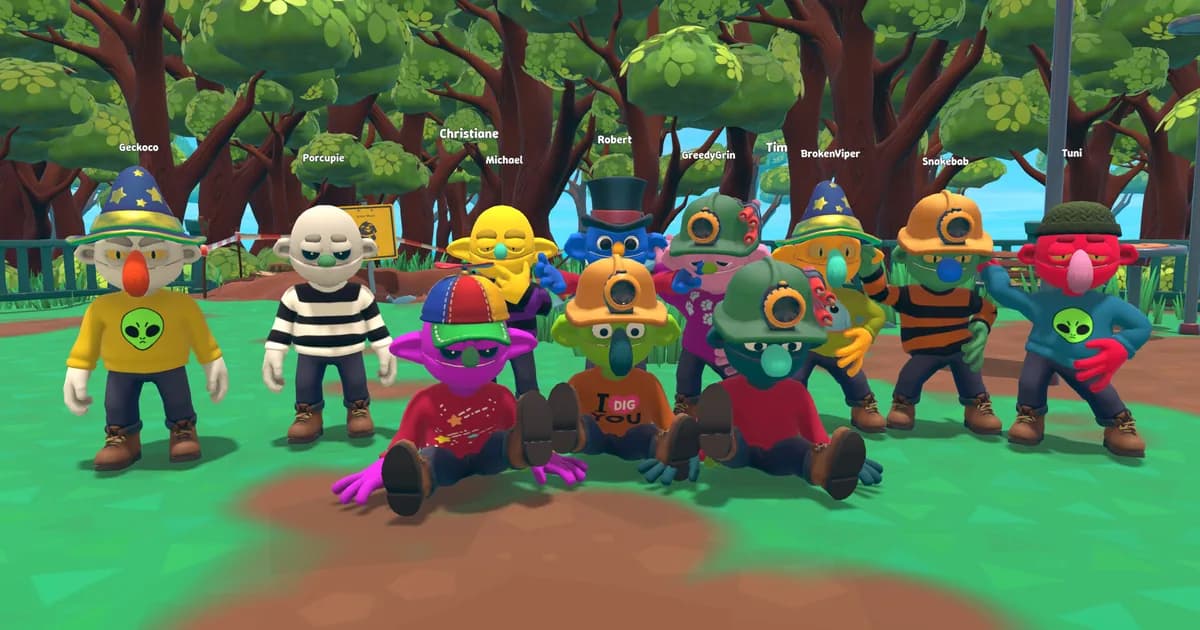
Co-op with four players creates audio chaos that the proximity voice chat turns into usable information. When all four players are close together, communication is clear and catching is easy. When they've separated across multiple vertical sections, the fade in voice audio tells you the team's distribution at a glance.
Solo play removes the catching mechanic (there's no one to break your falls) but also removes the complexity of coordinating four directions of chaos simultaneously. For learning biome layouts, item locations, and the physics behavior of each cave type, solo runs are genuinely useful.
The weekly challenge mode runs on the same biome set but with leaderboard stakes. It's worth attempting after you've completed a few co-op runs with the full team: the Pratfall tips you've internalized from cooperative play transfer directly to challenge scoring.
Not sure if Pratfall is worth buying? The Pratfall game overview covers who it's for, what the co-op experience actually feels like, and whether solo players get enough value. For the full co-op setup and multiplayer details, the Pratfall multiplayer guide covers player count, voice chat settings, and co-op mode in depth.
For value context, Pratfall at $7.99 sits well within the range covered in best indie games under $20: one of the cheaper co-op games with built-in voice chat released this year.
Pratfall tips: the short list
Communicate early. Before the team splits vertically, establish where everyone is going. Once you're in separate cave sections, the proximity voice chat fade tells you distance but not direction.
Catch before reviving. Catching mid-air is faster than letting a teammate fall and then reviving. If you can position for the catch, do it instead of waiting.
Dig around, not through. In Lava Cave especially, cutting through reactive terrain sections with a drill is slower and more dangerous than digging a clean path adjacent to the hazard.
The dog is the objective, not the score. The cave generates procedurally, so optimizing a run feels different every session. Focus on reaching the dog, not on efficiency: the efficiency comes with familiarity, and these Pratfall tips give you the head start.
Weekly Challenge is harder than casual co-op. Don't enter it until you've completed at least two clean co-op runs. The challenge mode uses the same mechanics but removes the learning safety net.
GODEEPER: Once challenge mode clicks, shaving seconds off a clear becomes its own game. Pratfall Speedrun Tips: Clear Caves Faster in 2026 →
Frequently asked questions
How many players is Pratfall? Standard online co-op centers on 4 players, the stable tested count. Steam's own store page now lists Pratfall as "1-6+ players," and the official Custom Game Mode supports lobbies up to 250. Solo offline play is also available.
What are the three biomes in Pratfall? Dirt Cave (entry-level, most forgiving), Ice Cave (slippery surfaces), and Lava Cave (fire hazards and reactive terrain). Each biome is procedurally generated.
What tools are available in Pratfall? 30+ items including pickaxes, drills, flares, and ziplines. Pickaxes and drills let you dig alternate paths. Flares light dark sections. Ziplines cross horizontal gaps.
Can you play Pratfall solo? Yes, solo offline play is supported. Same cave objectives, same biomes, same physics. Good for learning before co-op.
How much does Pratfall cost? $7.99 base price. Launched with a 20% discount at $6.39. Check Pratfall on Steam for current pricing.
How does proximity voice chat work? Built into the game: no third-party software needed. Audio fades with in-game distance. Players sound clear when close together and quieter when separated vertically.
Related Reading
- Pratfall Speedrun Tips: Clear Caves Faster in 2026: cave-by-cave route strategy, exact items that save time, and how Weekly Challenge leaderboards reward it.
- Pratfall Guide 2026: Max Players, Biomes, Items & Tips: the full hub covering player count, biomes, items, and whether Pratfall is worth buying at 90% Very Positive.
- Pratfall Advanced Tips: Catch, Weekly Challenge, Lava Cave: the catch mechanic negates fall damage, Weekly Challenge cave is fixed per week for routing, and Lava Cave-specific bomb rules.
- Pratfall Multiplayer Guide (Player Count and Lobby Setup): player cap details, the Custom Game Mode, and co-op role tips for groups of 2-4.
References
- Pratfall on Steam
- Quad Head on X (Twitter)
- Pratfall Discord
- Pratfall complete guide: max players, more-players mod, items, biomes, and all gameplay guides
Was this guide helpful?
About the author

GameBrief's byline for metroidvanias, RPGs, comparisons and design history. Places each game in its genre and argues both sides before picking one.
- Metroidvanias and RPGs
- Comparisons and design history
- Sources listed per article
Keep reading
Pratfall Multiplayer: Player Count, Voice Chat and Joining
Guides · 7 min
Pratfall Biomes Guide: Dirt Cave, Ice Cave, and Lava Cave
Guides · 8 min
Pratfall Items Guide: 11 Named Items, Flares & More
General · 10 min
Pratfall Guide 2026: Max Players, Biomes, Items & Tips
General · 23 min
Pratfall Speedrun Tips: Clear Caves Faster in 2026
General · 8 min
Pratfall Advanced Tips: Mechanics the Game Won't Teach You
General · 7 min
Sponsored
Disclaimer
This article is published for informational and entertainment purposes. It does not constitute professional financial, legal, or technical advice. Game performance, online services, patch schedules, and store listings change. Verify critical details (pricing, system requirements, regional availability) with publishers and storefronts before you buy. Affiliate links, where present, help support our editorial work and are labelled in our affiliate disclosure.
Comments
Loading comments…