
GuidePratfall
Pratfall Multiplayer: Player Count, Voice Chat and Joining
Four is the sweet spot the developers name themselves; bigger lobbies work, your PC just has to survive them.
VerdictPlay with four, host on EOS if voice keeps cutting out, and treat anything past eight as a party trick.
Pratfall multiplayer is built for four. The Steam page technically allows lobbies of up to 250, but the developers' own advice is the line to remember: "4 is safe, 8 is rough, 12 is ambitious, more kills your PC." Below: how to get friends in, how joining mid-run works, and what to do when proximity voice cuts out.
Sponsored

Updated 2026-10-16: Corrected the player count (the 250 cap is a general Steam feature line, not part of Custom Game Mode, which is a rules editor) and replaced unsourced claims about solo offline play, host migration and private-only lobbies with what the patch notes say.
Sponsored

How many players can play Pratfall?
| Question | Answer |
|---|---|
| Player cap | Up to 250 in online co-op (Steam feature list) |
| What the developers recommend | 4 is safe, 8 is rough, 12 is ambitious |
| Solo | Yes: "solo or with friends" |
| Platform | Windows, Steam only; consoles being worked on |
| Voice | Proximity voice chat, Steam Voice or EOS |
| Join a run in progress | Yes, since Patch 1.1 |
| Price | $7.99 |
Steam's short description puts it as "a co-op game for 1-6+ players," which is the honest framing: small groups are the design, and big lobbies are something the game tolerates rather than balances for. We'd plan every regular session around four. Players say it holds up at the small end too: one Steam reviewer found that "Two players was fun, but it seems like a 6+ lobby would be ideal."
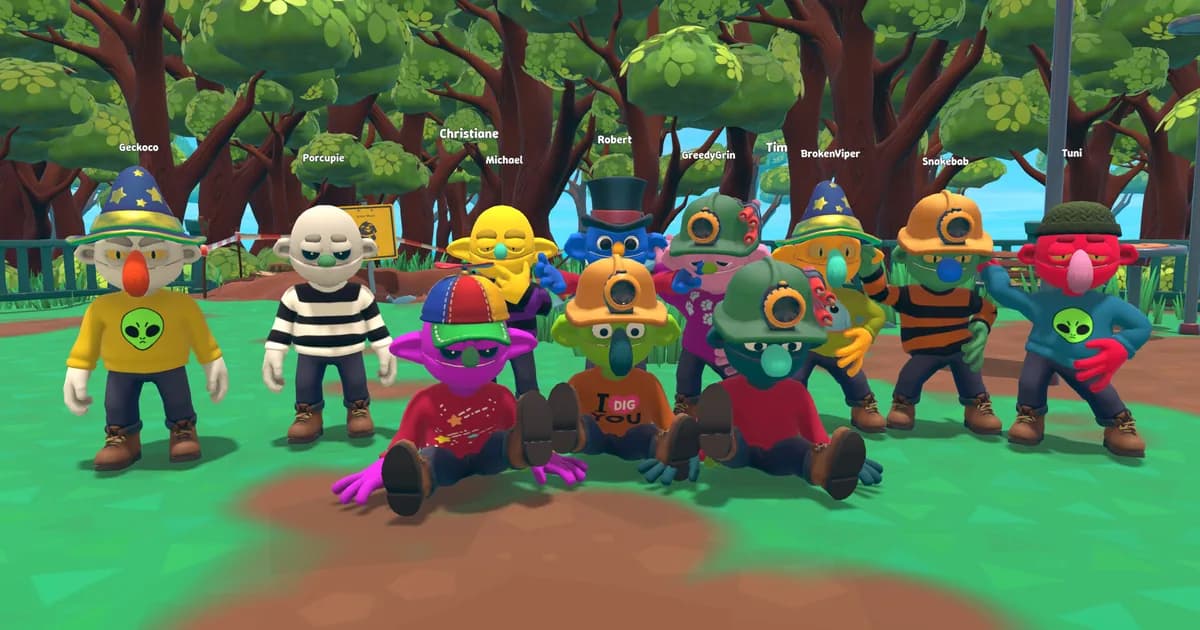
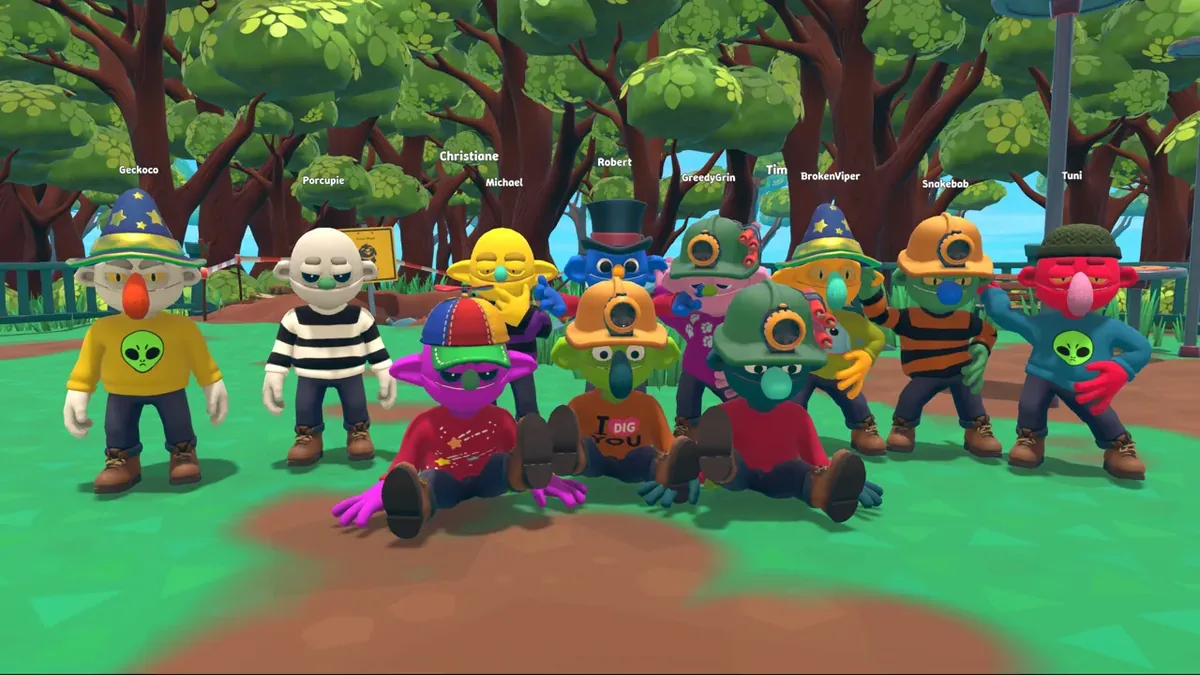 The dog park is where a lobby gathers before the drop, and where costumes get shown off.
Screenshot: Steam store page
The dog park is where a lobby gathers before the drop, and where costumes get shown off.
Screenshot: Steam store page
BESTPRICE: These stores list it: Buy on Humble Bundle →
How to invite friends and join mid-run
Getting into Pratfall multiplayer starts with the lobby type. The default is Open For Friends, a change the developers made in an early hotfix. From there:
- Host from the park. Since the Parks & Recreation update, only the host can start the game in the park.
- Invite friends. Once a run has started you can still invite from the pause menu, or let friends join normally.
- Room codes need a public lobby. Codes were added in June for easier invites, but only work if the lobby is set to public in the options.
- Late joiners are fine. Patch 1.1 (May 11) moved mid-run joining out of beta. The host gets a join request popup, and accepting it restarts the current cave at the last hydrant. The developers called that "not ideal" but the best option without a bigger rework.
If you can't connect at all, the June patches added an alternative network backend, EOS, for players having trouble with Steam's. It's selectable in the options.
One co-op detail worth knowing: pausing only freezes the worm and bats when every player has the pause menu open, and it never pauses the timer for achievements or the weekly challenge.
Proximity voice chat, and the EOS fix
Voice is spatial: who you hear depends on where they are in the cave. That's most of the comedy when someone falls three shafts down mid-sentence, and players care about it. One early Steam forum thread begged the developers to replace Steam's in-game voice because "without proximity chat it really loses the charm."
The fixes came in steps:
- Patch 1.1 added a separate push-to-talk button (ALT, remappable) because Steam's push-to-talk misbehaved for some players.
- June brought an "experimental" alternative voice chat in the options.
- Beans & Gadgets (September) switched the game's own voice chat to EOS Voice Chat. You need to host via EOS to use it.
- Patch 1.3.2 (October 5) improved voice effects with less crackling, and fixed a black screen when hosting after the previous host left or timed out.
If voice keeps dropping, host on EOS first. That's the developer's own answer: when a player reported voice "cutting out" in a Steam discussion in September, developer Tim replied, "Have you tried EOS? We are using a different voice system there."
*Pratfall's release trailer, from the official Quad Head channel.*Catching, reviving and the co-op tools
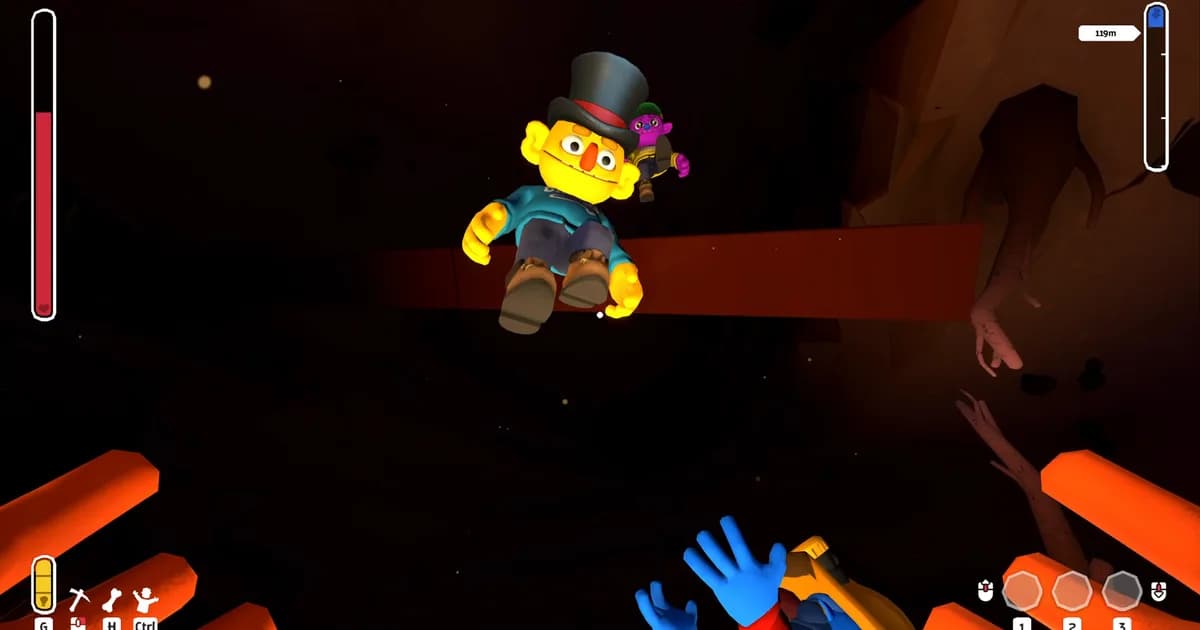
Co-op in Pratfall is mostly about falling together. The Steam page sums up the toolkit: catch friends who fall, revive them if they're down, "or don't." Before launch, the developers noticed many players ignored catching, so the game now shows a button prompt when you look at a player above you.
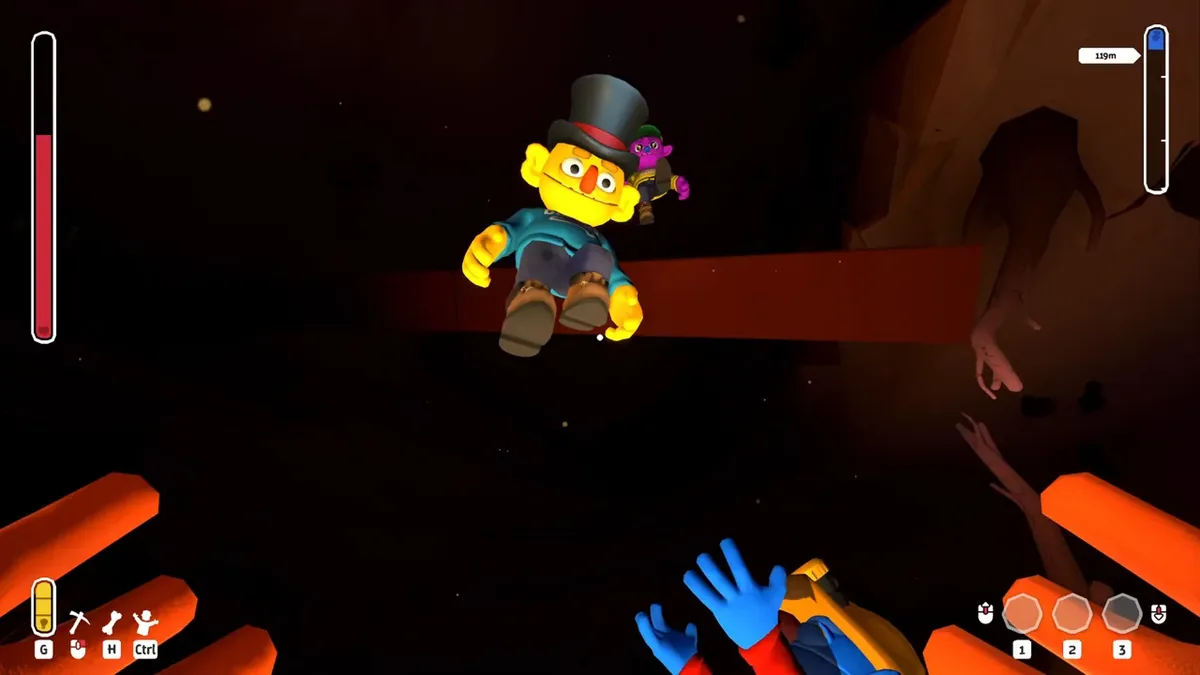 Catching a falling teammate: line up under them and reach.
Screenshot: Steam store page
Catching a falling teammate: line up under them and reach.
Screenshot: Steam store page
Every run is procedurally generated across three biomes (Dirt Cave, Ice Cave and Lava Cave), with destructible terrain and more than 30 items at launch. Our Pratfall items guide covers which tools help a group most, and the biomes guide covers what changes from cave to cave.
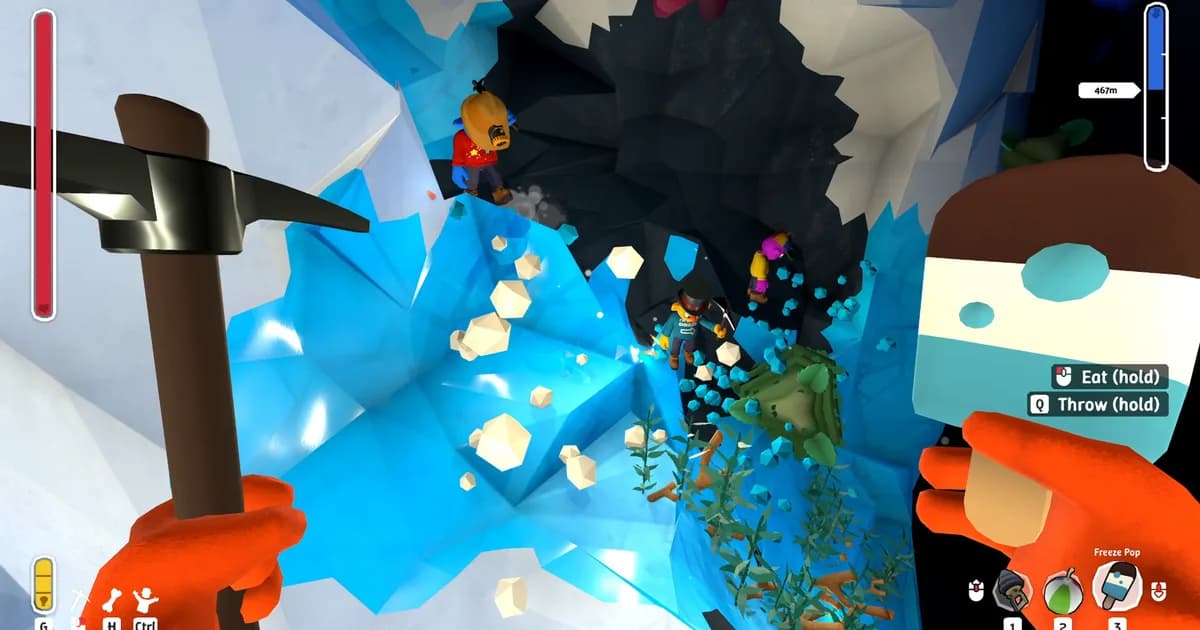
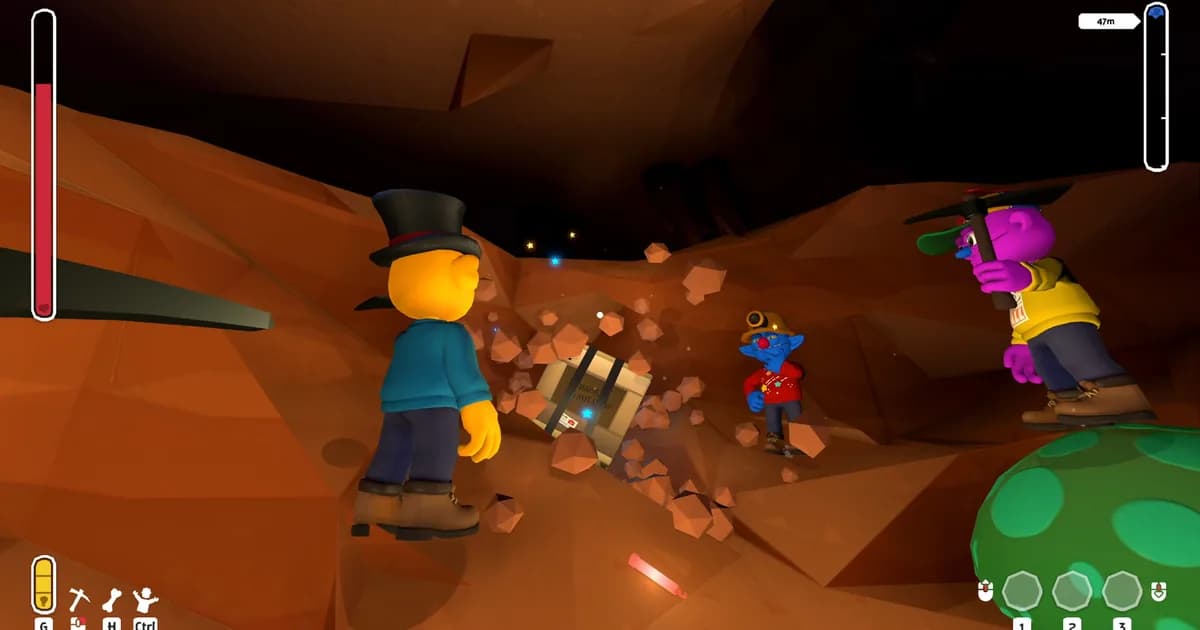
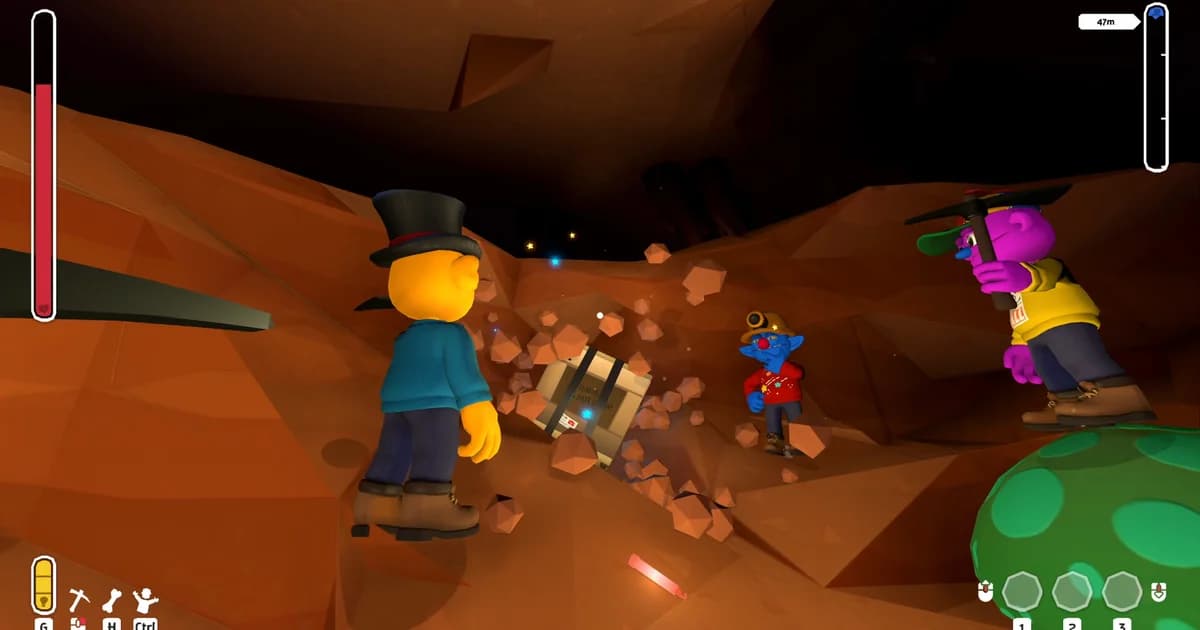
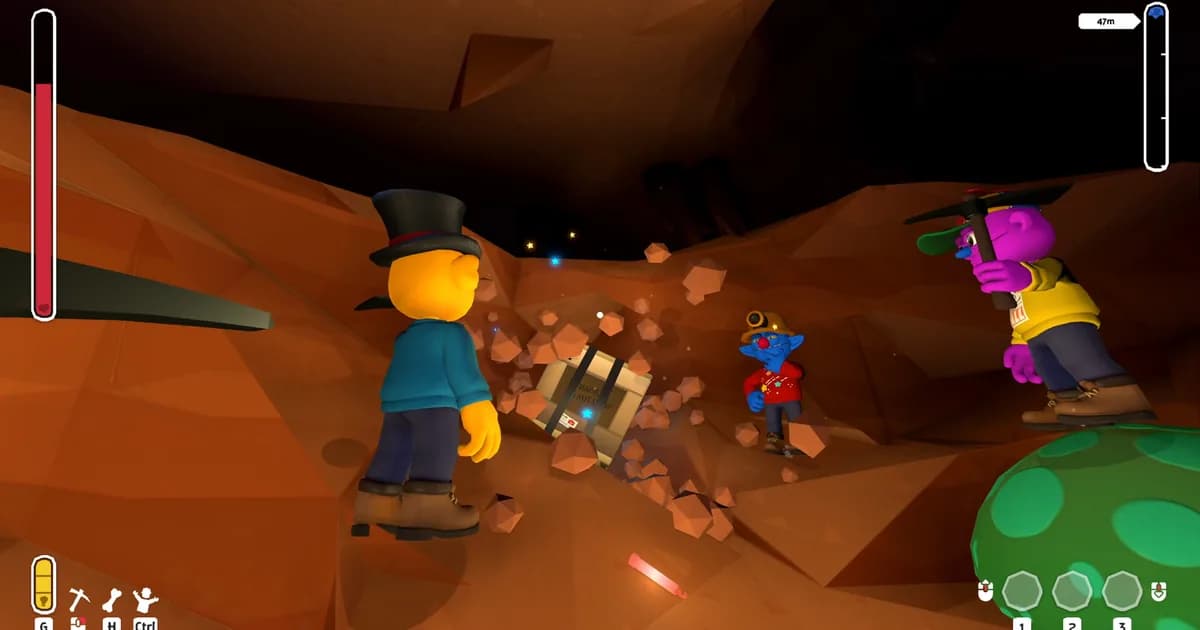
Dirt Cave with three players: one digs, two watch the crate burst.
Screenshot: Steam store page
GODEEPER: Every Pratfall system in one place: biomes, items, cosmetics and the mod question. Pratfall Complete Guide 2026 →
Weekly Challenge and Custom Game Mode
Weekly Challenge gives everyone the same fixed cave seed for a week. You compete globally or with friends for the fastest time, on a leaderboard in the park. When it was announced, biomes rotated week to week and runs were shorter, at 300m deep, for speedrunning. Patch 1.1 added a way for the developers to validate weekly challenge runs and spot cheaters. The Pratfall speedrun tips go deeper on routing.
Custom Game Mode isn't a bigger lobby; it's a rules editor. It launched on the beta branch on April 25 and went into the main game two days later, with 30+ rules and 9 presets. Examples from the developers: Peaceful (no enemies), swapping all ice with cheese, infinite ammo, and team checkpoints at hydrants.
Tips for a full squad
Pick the host with the best connection. Mid-run joins and lobby starts all go through the host.
Call your drops. Catching only works if someone's underneath and looking up.
Dress differently. The game launched with 80+ cosmetics, and later updates added 65 in Gumballs & Glory, 20 more in Parks & Recreation and 13 pickaxe cosmetics in Beans & Gadgets. The cosmetics and gumball machine guide explains how to unlock them.
Check mods before a group session. Mod support arrived in May with a simple mod loader on the main menu; see the best Pratfall mods before you install anything for a group.
Plenty of groups have tried it: the developers announced 500,000 games sold in late July, and English Steam reviews sit at Very Positive, 89% positive. New to the game? Start with the Pratfall tips for beginners.
Frequently asked questions
How many players can play Pratfall? Up to 250 online, per Steam, but the developers' own guide is that 4 is safe, 8 is rough and 12 is ambitious. Plan around four.
Does Pratfall have voice chat? Yes, built-in proximity voice. If it cuts out, host via EOS to use the game's own EOS Voice Chat.
Can friends join a run in progress? Yes, since Patch 1.1. Accepting a join restarts the current cave at the last hydrant.
Is Pratfall on console? Not yet. The developers said in July they're working on a way to bring it to consoles.
What is Weekly Challenge Mode? A fixed cave seed for everyone that changes weekly, raced for the fastest time on a leaderboard in the park.
References
- Pratfall on Steam: feature list, player-count line, reviews
- Patch 1.1: mid-run joining, push to talk, pausing
- New Update: Beans & Gadgets: EOS Voice Chat
- 60,000 Units & NEW Game Mode: Custom Game Mode rules and presets
- Devlog #02: Weekly Challenge Mode
- Steam discussion: voice chat cutting out
- Pratfall release trailer on YouTube
Related Reading
- Pratfall Complete Guide: the full overview: biomes, items, and whether it's worth $7.99.
- Pratfall Tips for Beginners: the physics and co-op basics before you fill a lobby.
- Pratfall Items Guide: Pickaxe, Drill, Glow Sticks & More: pickaxe vs drill, glow sticks vs flares, magic beans for traversal, bombs.
- Pratfall Biomes Guide: Dirt Cave, Ice Cave, and Lava Cave: what makes each cave different and which hazards to expect.
- Pratfall Advanced Tips: what to learn once your group can reach the dog reliably.
- Pratfall Review: whether it's worth buying for your group.
Was this guide helpful?
About the author

Indie & JRPG Desk
GameBrief's byline for indie, JRPG, visual novel and cozy games. Warm, direct, and willing to say which one to buy.
- Indie, JRPG and visual novels
- Early access and survival
- Sources listed per article
Keep reading
Pratfall Tips for Beginners: 3 Caves, Catching and Solo Play
Guides · 9 min
Pratfall Biomes Guide: Dirt Cave, Ice Cave, and Lava Cave
Guides · 8 min
Pratfall Items Guide: 11 Named Items, Flares & More
General · 10 min
Pratfall Guide 2026: Max Players, Biomes, Items & Tips
General · 23 min
Pratfall Speedrun Tips: Clear Caves Faster in 2026
General · 8 min
Pratfall Advanced Tips: Mechanics the Game Won't Teach You
General · 7 min
Sponsored
Disclaimer
This article is published for informational and entertainment purposes. It does not constitute professional financial, legal, or technical advice. Game performance, online services, patch schedules, and store listings change. Verify critical details (pricing, system requirements, regional availability) with publishers and storefronts before you buy. Affiliate links, where present, help support our editorial work and are labelled in our affiliate disclosure.
Comments
Loading comments…