
GameBrief · General
Farever Tips for Beginners: First Hours in Siagarta

Reviewing
Farever
Shiro Games · Shiro Games
These Farever tips focus on the gear and party decisions that decide your first few hours in Siagarta, before the dungeon punishes you for skipping them.
TL;DR: Farever launched May 6, 2026 in early access at $19.99 (Shiro Games). In the first two hours, gear synergies matter more than raw level, so read every passive before equipping and don't chase best-in-slot while systems are still changing. Scan every creature for lore and crafting hints. For 4-player co-op, run 2 damage, 1 support, 1 survivability, and never skip the support class.
Farever tips? (quick answer)
Prioritize gear passives over raw item level, match your crafting job to your class, scan every creature, and enter deeper caves only when your pressure-rated gear is ready. In four-player co-op, start with 2 damage, 1 support, and 1 survivability so the group can stay out longer.
Current status: September 18, 2026
Farever remains in Early Access. The official Steam listing showed the standard price at $19.99, with 74% positive from 5,086 English reviews and 75% positive from 256 recent reviews in the snapshot checked for this audit. Gear balance and progression can still change, so use the structural priorities in this guide rather than treating any single item as permanent best-in-slot. For the wider class, gear, and co-op route, use the Farever complete guide hub as the index.
Key takeaways
These farever tips cover the essentials before you spend your first session making avoidable mistakes in Siagarta.
- Farever launched May 6, 2026 in early access on Steam at $19.99. Developer: Shiro Games.
- Siagarta is an open world with temples, underwater caves, platforming sections, and hidden caverns.
- Gear synergies matter more than raw level in the first 2 hours. Read every passive before equipping.
- 4-player co-op best split: 2 damage, 1 support, 1 survivability. Don't skip the support class.
- Scan every creature you can. The scanning system unlocks lore and crafting hints.
- Don't min-max for "best in slot" in early access. Systems are still changing.
Step-by-Step: build your first Farever progression loop
1. Read the passive before equipping: Compare the item's effect with your class and current role, not only its level. The Farever gear guide breaks down how rarity and passive choices interact.
2. Pick a class and matching job: Commit early enough to learn one class's rhythm, then choose a crafting job that supports it. Use the Farever class guide when you need the role tradeoffs in one place.
3. Scan every creature on the route: Treat scanning as progression, not optional flavor. It supplies lore and crafting hints while you are already exploring Siagarta.
4. Stage the cave run: Check pressure ratings, bring the gear tier the cave expects, and agree on roles before entering. If the group lacks survivability, retreat and improve the setup instead of forcing a bad fight.
Farever tips: gear comes first
The first farever tips I'd give anyone picking up Siagarta for the first time: stop reading item levels. Stop comparing numbers. Start reading passive descriptions. These farever tips on gear will save you from the exact session I had where I equipped the wrong items for two hours and wondered why content felt so punishing.
Farever's gear system doesn't reward chasing the highest-tier item in your first two hours. It rewards understanding which passive bonuses stack, which ones complement your class, and which items create synergies that are worth more than a raw damage increase. I spent my first session equipping whatever had the biggest number next to it, and I paid for that by hitting the first cave sequence completely underprepared.
The passive tooltip is small and easy to skip over. Don't skip it. An item two tiers below current maximum with a passive that triggers on dodge and feeds into your class ability is almost always better than a higher-level item with a flat stat bonus. This is one of the most important farever tips I can give you because the game doesn't explain the synergy system up front; it assumes you'll notice over time.
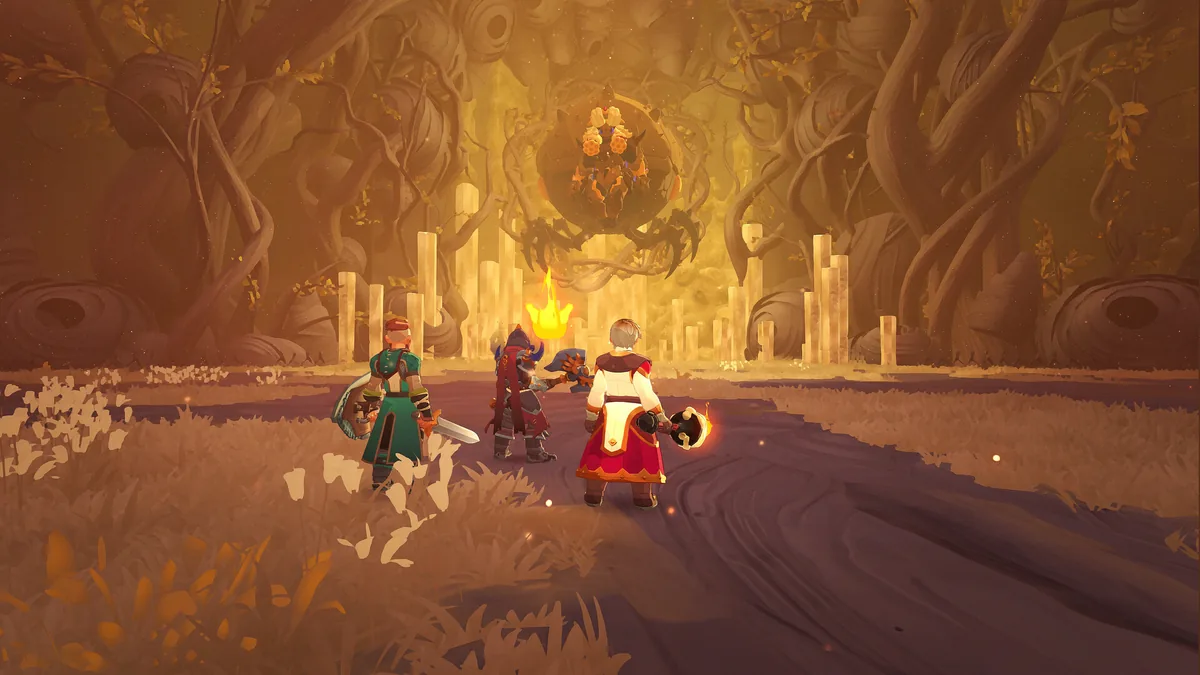 Caption: The gear panel in Farever shows passive descriptions alongside stat values. The passives are where the real decisions happen.
For early access context: this is a Shiro Games production, and they have a strong track record with the genre (Northgard, Dune: Spice Wars). Farever is a different kind of game for them (open world co-op exploration rather than strategy), but the systems design shows the same attention to interconnected mechanics.
GODEEPER: For full launch context on what Farever is and what Shiro Games is trying to build here, read the launch piece. Farever Early Access Launch: What to Expect in Siagarta
Class selection and farever tips on co-op synergies
Farever launched with 4 classes: Warrior (tank), Priest (support), Mage (ranged damage), and Rogue (melee burst). Between the two damage classes, Mage is the safer ranged option and Rogue the higher-risk melee one.
Here's the co-op farever tips breakdown for a 4-player group: 2 damage, 1 support, 1 survivability. Most groups I've seen in the early access launch window run 3 damage and 1 survivability, which works until it doesn't. The support class is being systematically ignored by new players because it doesn't feel impressive in the first 20 minutes, but by hour three, when you're trying to extend a dungeon run and your damage dealers keep needing to pull back, you'll understand why the support slot matters.
The support class's primary function isn't healing in the traditional sense. It's uptime. Groups with a support class active can push further into Siagarta's harder zones before needing to retreat, and they recover faster from failed encounters. That advantage is real but hard to put an exact number on, and it's invisible until the moment it saves your run.
Solo players: don't try to be the support for yourself. Pick a damage class and lean into survivability secondarily. The game has solo-playable content, but the support role is designed for coordination that doesn't exist when you're alone.
Exploring Siagarta: farever tips on what to do first
Siagarta rewards lateral exploration before vertical progression. The farever tips in this section are about resisting the instinct to push forward. The instinct is to push forward, reach the next zone, unlock the next tier. Resist that. These farever tips on exploration will help you find gear and context that most players miss entirely.
Platforming sections in Siagarta hide gear caches that most players rush past because the jumping doesn't look like the path forward. I found three pieces of above-tier gear in the first three hours of my session by backtracking through a platforming sequence I'd initially skipped to reach the next temple. None of those items showed up on any route guide because the sections aren't marked as points of interest.
The creature scanning system is your other exploration priority. Farever's scanning mechanic (think Subnautica's scan tool in concept) logs creature lore and occasionally surfaces crafting hints specific to the creature type. Scan every creature you encounter, especially in the first zone. The hints are often vague, but cross-referencing two or three of them clarifies what crafting recipes you should be targeting. Exploration titles with a similar "scan everything early" philosophy are worth thinking about: Subnautica 2 tips for early access covers the same principle in its scan system, and the logic carries directly to Farever's approach.
The underwater caves require specific gear tiers before you can safely explore them. Each gear piece has a pressure rating. Deep caves will surface a warning before you enter. Pay attention to it. Going in unprepared isn't just a combat difficulty problem; the damage output from environmental pressure can outpace your recovery options at low gear tiers.
GODEEPER: For co-op exploration structure in a game with similar early access DNA, the Subnautica 2 early access guide covers parallel tips on pacing and gear gating. Subnautica 2 Tips for Early Access 2026
Crafting jobs: farever tips on progression priorities
Crafting jobs are separate from your combat class and unlocked through progression. The farever tips here are about avoiding the common mistake of spreading too thin. This is one of the places where new players most often lose time: branching into a second crafting job before their primary job is developed enough to be useful.
The farever tips guidance here is direct: focus on your class's associated crafting job first. Each class has a job that synergizes with its playstyle: a damage class's crafting job will eventually unlock recipes for the passive synergy items that make your gear work. Branching into a second crafting job before that point means you're spreading experience across two half-developed trees instead of one that's actually producing useful output.
How long before you can branch? For most players, somewhere around 5 to 8 hours into the game, you'll have your primary crafting job at a point where it's producing reliable tier 2 gear. That's the comfortable branching point. Going earlier is possible but usually means your initial crafting options are too underpowered to be worth the split.
Co-op farever tips for crafting: coordinate with your group. Four players all pursuing the same crafting job is a significant resource overlap. If your group has a support player, their crafting job should complement the support role's gear needs, not mirror what damage players are already building.
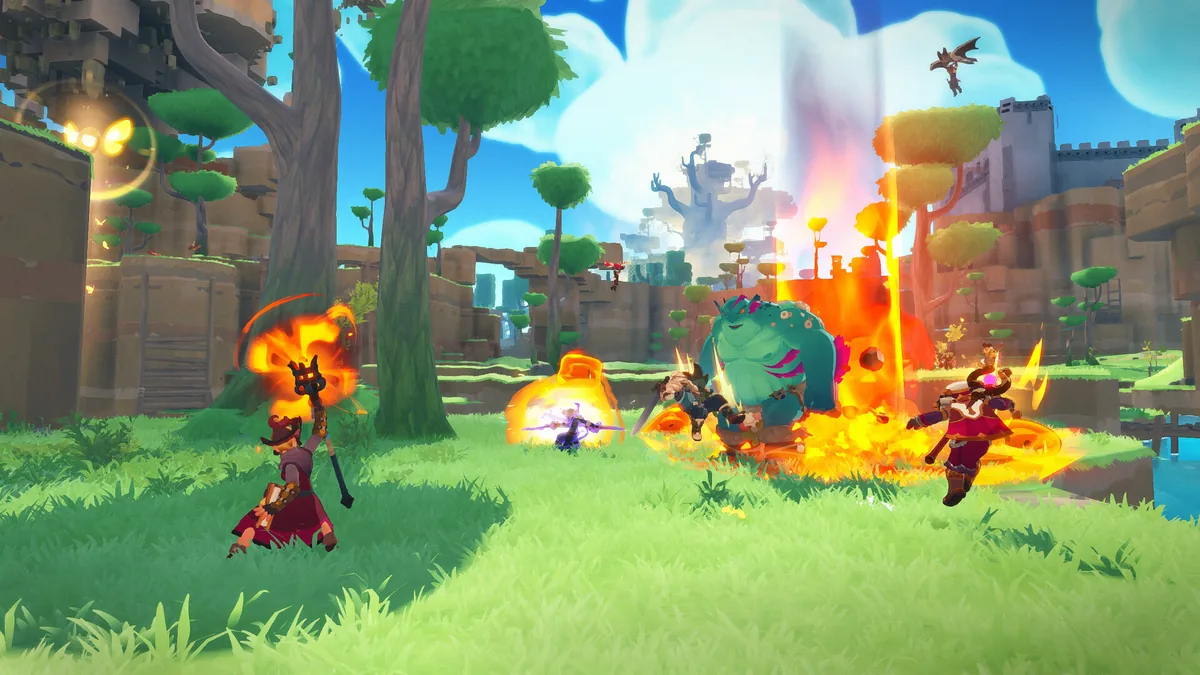 Caption: A 4-player group in Farever showing the class role breakdown in action. The support class is positioned behind the encounter, extending the group's push capacity.
For co-op structure comparison, the Outbound tips guide covers similar coordination principles in a different genre; the fundamentals of role clarity in co-op early access translate.
What not to do: farever tips on early access mistakes
The biggest mistake in Farever early access: optimizing for "best in slot" gear. These farever tips exist specifically to prevent you from investing time in systems that will change before 1.0. It's too early. Systems are still changing. Shiro Games has communicated that gear balance and crafting job trees are both in active development, which means anything you spend 20 hours optimizing right now may be partially obsolete in the next major patch.
Play for understanding the systems, not for optimizing inside them. The farever tips that age best in early access games are always the structural ones: how do gear passives interact, what does the support class actually do, where does the scanning system pay off. Those fundamentals will survive patches. Specific "craft item X from recipe Y at job level Z" advice will not.
The second mistake: skipping the demo content. If you haven't played through the temple introductions slowly, you're missing context the game assumes you have by the time Siagarta opens up. The early access drop-in point is not beginner-friendly without that foundation.
Don't go into underwater caves before gear tier 2 on your chest and legs at minimum. I did this. It was a bad 40 minutes.
Frequently Asked Questions
What are the most important farever tips for beginners? Prioritize gear synergies over raw item level, match your crafting job to your class, and scan every creature you find. Those three habits carry you through the first 10 hours of Siagarta without hitting the most common friction points.
What is the best class in Farever early access? No single class is definitively best. Support is the most underused: it dramatically increases group survivability in co-op. Solo players should lean toward a damage class with survivability secondary.
What is the best co-op composition? For 4 players: 2 damage, 1 support, 1 survivability. Don't skip the support slot; it's the most common mistake in new groups.
Should I enter underwater caves early? No. Check gear pressure ratings before entering. Deep caves require appropriate tier gear; entering underprepared will drain your resources faster than combat alone.
Is Farever co-op or solo? 1 to 4 players. Works solo, but class synergies and the support role are most meaningful with a group.
How much does Farever early access cost? $19.99 on Steam. Launched May 6, 2026.
Related Reading
- Farever Class Guide: All 4 Classes and How to Pick: Farever class guide: all 4 classes at EA launch, role breakdown, best synergies for co-op, and what each....
- Farever Review 2026: Good Bones, Rough Early Access: Farever review: Shiro Games' co-op RPG recovered to Mostly Positive after v0.1.3. Here's what the underlying game does....
- Farever Gear Guide: Items, Loot, and 3-Tier Progression: Farever gear guide covering all 3 item tiers, class-gated passive bonuses, crafting job priorities, and how loot scales....
- Farever How Long to Beat: Early Access Hours and v0.2: Farever how long to beat: roughly 10-15 hours in current EA. The Support class meaningfully extends how long a group can push before retreating.
References
- Farever on Steam
- Shiro Games
- Farever complete guide hub: classes, builds, co-op party, and dungeon guides
Was this guide helpful?
About the author

Indie & JRPG Critic
Indie game evangelist and lifelong JRPG fan covering small studios since 2017. Mumbai-born, London-based. Writes the way she talks.
- 7 years indie games coverage
- JRPG and visual novel specialist
- Narrative design focus
Keep reading



Disclaimer
This article is published for informational and entertainment purposes. It does not constitute professional financial, legal, or technical advice. Game performance, online services, patch schedules, and store listings change. Verify critical details (pricing, system requirements, regional availability) with publishers and storefronts before you buy. Affiliate links, where present, help support our editorial work and are labelled in our affiliate disclosure.
Comments
Loading comments…