
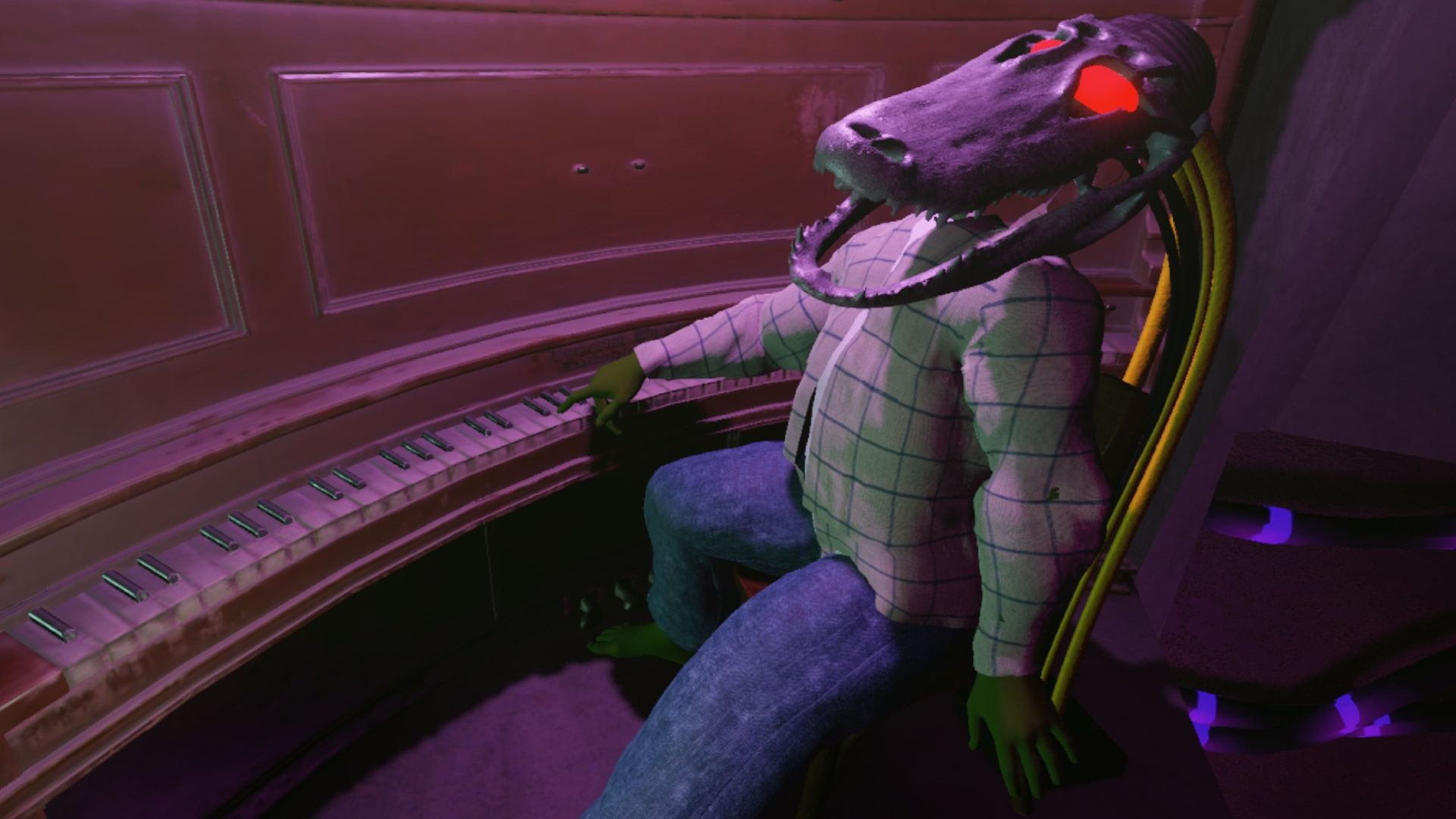
Moves of the Diamond Hand reinvents the dice-rolling RPG genre with its April 13, 2026 early access launch on PC. Players control a circus hopeful navigating a surreal city where every conversation, combat encounter, and sandwich-making session hinges on customizable dice rolls.
TL;DR: This dice-rolling RPG lets players upgrade individual die faces to improve skills like Cooking (which buffs social interactions) and Deception (for trickery). Early access launches April 13 with seven skills, dynamic debuffs, and absurd scenarios like outwitting a dog-man hybrid in a deli basement.
What Makes This Dice-Rolling RPG Different?
Cosmo D Studio's game transforms traditional RPG skill checks into physical dice customization. Players start with standard six-sided dice for each of seven skills, but can spend points to upgrade specific faces. A Cooking die might gain +2 sandwich bonuses, while Deception dice unlock new disguise options. Failed rolls trigger lasting consequences - botch a lockpick attempt and your character gains the "Frustrated" debuff, reducing future mechanical skill rolls by 1.
The circus recruitment premise leads to bizarre scenarios. One early quest involves retrieving a stolen sausage from a sentient vending machine, solvable through Cooking diplomacy or brute-force Deception. Unlike Disco Elysium's serious tone, these absurd situations reward creative problem-solving with laugh-out-loud outcomes.
How Do the Dice Mechanics Actually Work?
Each skill uses its own customized die that players upgrade throughout the 20-hour campaign. The Cooking skill's die might show:
- 1: Burnt offering (-1 to next roll)
- 2-3: Basic sandwich
- 4-5: Gourmet meal (+1 bonus)
- 6: Masterpiece (+2 and heals stress)
Players physically roll these dice during key moments, with animations showing the tumbling cubes. The system creates tangible progression - upgrading a die's worst face from -1 to +0 feels impactful. Early players report spending 30 minutes agonizing over whether to improve their Observation die's 5-face or eliminate their Cooking die's 1-face penalty.
Debuffs add lasting consequences to failed rolls. Three "Frustrated" stacks from failed mechanical checks might force players to seek therapy (a mini-game involving dice-based Rorschach tests) before attempting more repairs.
Why Does Player Choice Matter More Here?
The game tracks 47 distinct character traits that evolve through decisions. Help a NPC cheat at cards, and your "Dishonest" trait grows, unlocking new dialogue options but closing others. Unlike most RPGs where choices branch narratives, here they physically alter your dice. A "Charismatic" trait over 10 might add +1 to all social skill rolls.
Quests adapt to your skills in unexpected ways. The vending machine confrontation changes if you have:
- Cooking 4: Can bribe it with homemade snacks
- Deception 3: Can pretend to be a repair technician
- Strength 5: Can shake it until the sausage falls out
This creates organic replayability - your second playthrough as a brute-force artist plays completely differently from your diplomatic chef.
What's the Visual Style Trying to Achieve?
The game's surreal aesthetic combines PS2-era textures with modern lighting effects. Buildings warp at impossible angles while NPCs sport exaggerated features - one key character has a CRT monitor for a head. This intentional dissonance enhances the circus theme, making the world feel like a funhouse mirror version of reality.
Interface elements lean into the carnival aesthetic. Skill menus resemble ticket booths, while the inventory appears as prize plushies hanging from hooks. Some players find the maximalist UI overwhelming, but it effectively reinforces the game's off-kilter tone.
How Does the Soundtrack Enhance the Experience?
Composer Eli Rainsberry blends calliope music with synthwave, creating a soundtrack that shifts from whimsical to ominous. Each skill has distinct audio cues - successful Cooking rolls trigger a satisfying "ding" like a microwave, while failed Deception attempts play a sad trombone. The audio design turns every dice roll into a visceral event.
Environmental sounds heighten immersion. The circus district constantly hums with distant laughter and popcorn machines, while the industrial zone echoes with metallic groans. Players report turning corners just to discover new audio vignettes, like a mime arguing with a vending machine.
What Are Players Saying About Early Builds?
Reddit threads highlight the emergent gameplay:
- "My 'Sandwich Diplomacy' build convinced the crime boss to surrender by giving him a perfect Reuben"
- "Failed a Deception check so badly my character got arrested for 'excessive lying'"
- "The dice customization makes every skill point feel meaningful"
Some criticize the Cooking skill's dominance in early game, with players dubbing it the "Sandwich Meta." Others note the UI's learning curve - important information sometimes gets lost in the visual noise.
How Does It Compare to Disco Elysium and Baldur's Gate 3?
While sharing DNA with these RPGs, Moves of the Diamond Hand carves its own niche:
| Feature | Disco Elysium | Baldur's Gate 3 | Moves of the Diamond Hand |
|---|---|---|---|
| Skill System | Thought Cabinet | D&D Classes | Customizable Dice |
| Tone | Noir Serious | High Fantasy | Absurdist Comedy |
| Player Freedom | Narrative | Tactical | Mechanical (Dice Physics) |
| Character Growth | Skills | Levels | Die Face Upgrades |
The dice customization offers tactile progression missing in its peers - watching your terrible Cooking die evolve into a culinary masterpiece delivers unique satisfaction.
What Works Best in the Current Build?
- Die Customization: Spending points to replace a -1 face with +2 creates tangible progression
- Emergent Comedy: Failing forward leads to hilarious scenarios like getting adopted by a gang because you failed Deception
- Trait System: Your playstyle physically alters your character's capabilities
- Environmental Storytelling: Every bizarre object (sentient parking meters, etc.) has lore
PRO TIP: Invest in Cooking early - even basic sandwiches provide buffs that help other skills, and the culinary quests are among the game's funniest.
What Needs Improvement?
- Skill Balance: Cooking overshadows other skills in early game
- UI Clarity: Important information gets lost in the visual noise
- Early Game Pacing: The first hour has too many tutorial popups
- Debuff Stacking: Getting multiple penalties can feel punishing
These are addressable in early access - the core dice-rolling RPG mechanics already shine.
Should You Play the Early Access?
For RPG fans craving something genuinely different, yes. The dice customization offers a fresh take on character progression, while the absurd humor provides constant surprises. Just be prepared for some rough edges as the developers refine balance.
What Updates Are Coming Next?
Cosmo D Studio's roadmap includes:
- Q2 2026: New skills (Juggling, Animal Taming)
- Q3 2026: Multi-dice combos (roll Cooking and Deception together)
- Q4 2026: Mod support for custom die faces
Community feedback will directly influence these updates, particularly around skill balancing.
Frequently Asked Questions
Q: How does the dice-rolling mechanic influence character development?
A: You physically upgrade individual die faces for each skill. Replace a -1 penalty with a +2 bonus, making failed checks less likely while creating new success outcomes.
Q: What happens when rolls go badly?
A: Failed checks apply lasting debuffs. Miss a lockpick attempt and gain "Frustrated," giving -1 to mechanical skills until you relieve stress through therapy or drinking.
Q: How does humor affect gameplay?
A: The absurd world reacts to your failures with comedy. Bomb a Deception check so badly the NPC starts questioning reality, opening new dialogue options.
Q: Can I respec my dice?
A: Yes, but it costs in-game currency and requires finding a "Dice Doctor" NPC. Early players recommend keeping multiple save files to test different builds.
Q: Is there combat?
A: Conflicts resolve through skill checks rather than traditional combat. A "fight" might involve rolling Cooking to distract enemies with sandwiches or Strength to flip tables as cover.
References
- https://www.gamesradar.com/games/rpg/moves-of-the-diamond-hand-is-my-favorite-dice-rolling-rpg-since-disco-elysium-and-its-somehow-even-weirder
- https://www.ign.com/
- https://www.gamespot.com/## Related Reading
Moves of the Diamond Hand stands out as a remarkable dice-rolling RPG, capturing the essence of narrative depth similar to what you find in slice-of-life games. For those interested in exploring the evolution of gaming narratives, the impact of these themes can be seen in our article on why slice-of-life games matter. Additionally, the innovative mechanics in Moves of the Diamond Hand may remind players of the engaging twists found in titles like Mike Flanagan's Hush. As the genre continues to evolve, it's exciting to see how new games push the boundaries of traditional RPGs.
Related Reading
Moves of the Diamond Hand stands out as a remarkable dice-rolling RPG, reminiscent of the narrative depth found in slice-of-life games, which you can explore further in Why slice-of-life games Matter: Exploring Their Narrative Depth. The game's unique mechanics and storytelling approach have drawn comparisons to other innovative titles, such as Mike Flanagan's Hush, which has captivated audiences with its unexpected twists, discussed in Mike Flanagan's Hush has the best horror movie 'twist' of the last 10 years. As players navigate through its immersive world, they may also appreciate the broader impact of cosmic themes in gaming, highlighted in Why cosmic themes games Matter: The New Universe Timeline.
What Makes Moves of the Diamond Hand Stand Out
Moves of the Diamond Hand is a unique entry in the dice-rolling RPG genre, drawing comparisons to Disco Elysium not only for its narrative depth but also for its innovative game mechanics. One of the standout features is its emphasis on player agency and the impact of choices on the unfolding story. Unlike traditional tabletop RPGs that often rely heavily on combat mechanics, this game leans into narrative mechanics, allowing players to shape their characters' destinies through dialogue and decision-making.
The game's setting is richly detailed, offering a surreal world that feels both familiar and bizarre. Players navigate through a series of interconnected stories, each influenced by their previous choices. This creates a tapestry of experiences that can vary significantly from one playthrough to the next, making it a compelling option for those who appreciate story-driven games. The art style, reminiscent of indie games, complements the narrative, enhancing the immersive experience.
Additionally, the game introduces a unique dice-rolling mechanic that adds an element of chance to the storytelling. Players roll dice to determine the outcomes of their actions, which can lead to unexpected twists in the narrative. This randomness keeps players engaged and encourages them to think creatively about their approach to challenges.
Community and Player Engagement
The community surrounding Moves of the Diamond Hand has been vibrant and active since its release. Players often share their experiences and strategies on various platforms, creating a rich dialogue about the game's mechanics and storylines. This engagement is crucial for any indie game, as it fosters a sense of belonging among players and encourages new players to dive in.
Developers have also taken note of player feedback, with regular updates and patches aimed at refining gameplay and addressing any issues. For instance, a recent patch introduced new narrative branches based on community suggestions, demonstrating the developers' commitment to enhancing the player experience. This responsiveness not only improves the game but also strengthens the bond between the developers and the community.
Moreover, fan-created content, such as custom scenarios and character builds, has emerged, showcasing the game's flexibility and the creativity of its player base. This aspect of community involvement is particularly appealing for those who enjoy tabletop RPGs, as it allows for endless replayability and personalization.
Future Prospects and Expansions
Looking ahead, there are exciting prospects for Moves of the Diamond Hand. Speculation about potential expansions is rife among fans, with many hoping for additional storylines that delve deeper into the game's lore. The developers have hinted at the possibility of new content, which could include fresh characters, locations, and even gameplay mechanics that further enhance the dice-rolling RPG experience.
Furthermore, as the indie game market continues to grow, Moves of the Diamond Hand could serve as a benchmark for future titles in the genre. Its success may inspire other developers to explore similar narrative-driven approaches, blending traditional role-playing elements with innovative mechanics. This could lead to a renaissance of storytelling in tabletop RPGs, where players are not just participants but co-creators of their narratives.
In conclusion, Moves of the Diamond Hand stands as a testament to the potential of indie games to redefine genres. With its engaging narrative mechanics, strong community support, and promising future, it is a title that deserves attention from both seasoned RPG veterans and newcomers alike. Whether you're a fan of Disco Elysium or simply looking for a fresh take on the dice-rolling RPG format, this game offers a unique and rewarding experience that is sure to resonate with players.
