
GameBrief · General
Farever Class Guide: All 4 Classes and How to Pick

Reviewing
Farever
Shiro Games · Shiro Games
This Farever class guide breaks down all four classes, Warrior, Priest, Mage, and Rogue, by the role and class systems each one uses. In the checked class data, those systems include resources or abilities, aptitudes, primary stats, talent trees, and weapon styles; party coverage is the guide's team-building recommendation.
TL;DR: Farever has four classes: Warrior (Tank), Priest (Healer), Mage (Caster), and Rogue (DPS). My default 4-player recommendation is one of each, but the checked sources do not publish a universal composition ranking. Solo, I favor Warrior as a recommendation for players who want the Tank role; in a group, fill the role your party lacks.
Farever class guide: key takeaways
- This farever class guide covers all 4 classes at Shiro Games' Early Access launch: Warrior, Priest, Mage, and Rogue
- Each class has a documented identity built from its role, resource or ability system, aptitude, primary stat, talent tree, and weapon style
- Crafting jobs are separate from combat classes; you don't have to craft your own gear
- Priest is the Healer class and is my support recommendation when a group needs sustain
- Default 4-player recommendation: one of each class. For 2-player: a damage class plus Priest when survival is the priority
- Mage is the Caster and Rogue is DPS; their different documented class systems make them a natural pair to test in a group
How the Farever class guide works: the four classes
Farever's four classes are Warrior, Priest, Mage, and Rogue. The class index lists Warrior as Tank, Priest as Healer, Mage as Caster, and Rogue as DPS. Each class page also gives its aptitude, primary stat, talent tree, weapon style, and resource or ability system. This guide uses those documented differences for its party recommendations.
The reliable class distinction is not a hidden gear-bonus gate. The checked class pages document class identity through role, aptitude, primary stat, talent tree, weapon style, and resource or ability system. The Steam page mentions custom gear and weapon skills, but neither source documents a rule that the same item unlocks different class-exclusive passives.
That makes the documented talent tree and resource loop the right starting point for a build. Picking a class means choosing a different combat foundation; inspect current in-game gear and skill tooltips before assuming an item has a class-only bonus.
Crafting is described separately from combat on the Steam page: players can learn gathering professions and specialize in a crafting job. The available source does not say that combat class controls who can craft an item or unlocks a hidden class-specific bonus, so check the current profession and item tooltips in-game.
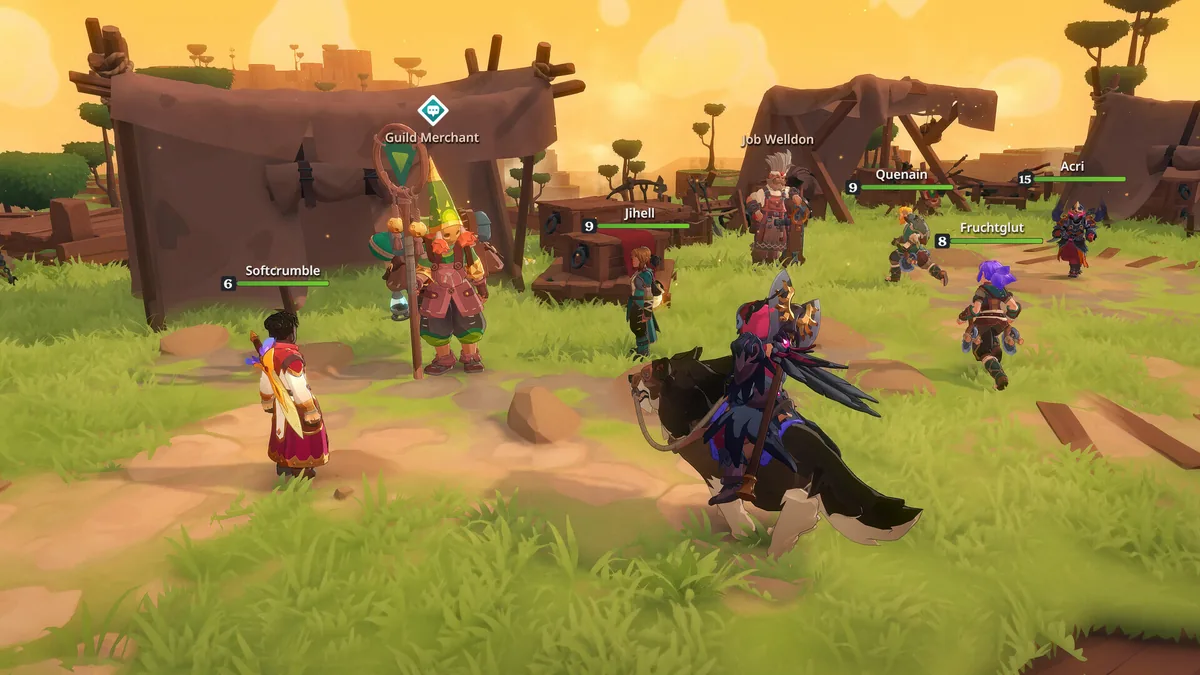 A damage class mid-fight. Class identity is documented through aptitudes, talent trees, resources or abilities, and weapon styles; this guide does not assume unlisted class-specific gear bonuses.
GODEEPER: New to Farever and need the basics before picking a class? Start with survival fundamentals. Farever Early Access Launch Overview
Mage: Caster with Spark and Chaincast
The class page lists Mage as a Caster with Spark as its resource, Intellect as its primary stat, Wizard as its aptitude, and dual weapons. Spells consume Spark, and staying above the documented Flow threshold triggers enhanced effects and bonus power.
Mage's documented talent tree is centered on Chaincast. The source describes chaining skills within a time limit to earn a no-cooldown skill that can trigger conduits for free. That is the mechanic to verify in current tooltips; the checked sources do not establish a generic Mage gear path of elemental passives or cooldown reduction.
For play, spacing is a sensible recommendation for a ranged Caster, but the exact solo difficulty and party damage ranking are recommendations rather than class rules documented by the source.
For a Mage build, start with the Chaincast/Spark loop and read the current talent tooltips before choosing nodes. The source names the talent-tree branches, including Conduit: Spark Explosion, High Voltage, and Conduit: Lifebolt, but it does not support a blanket claim that all Mage gear grants elemental or cooldown-reduction passives.
Rogue: DPS with Combo Points and Lethal Poison
The class page lists Rogue as DPS with Combo Points as its resource, Dexterity as its primary stat, Assassin as its aptitude, and daggers as its weapon style. Rogues generate Combo Points through attacks and skills, then spend them on powerful finishing moves.
Its documented talent tree is centered on Lethal Poison, which the source describes as a stackable poison that amplifies its effect. Speed and precision are part of the class description; claims about a specific crit or mobility passive should be checked against the current talent tooltip rather than assumed.
In play, committing only after reading enemy openings is a reasonable recommendation for a dagger DPS class. The exact solo-clear speed and "burst specialist" ranking are guide advice, not mechanics confirmed by the class page.
The source-backed skill expression is managing Combo Points and the Lethal Poison stack loop; use current tooltips to decide when to finish rather than relying on an invented class passive.
Priest: Healer with Prayers and Sunlight
For team-building purposes, this farever class guide treats Priest as the Healer slot rather than a passive filler.
That is a recommendation about party coverage, not a claim about a hidden Priest mechanic or a community-wide balance consensus.
The class page lists Priest as Healer with Faith as its primary stat, Cleric as its aptitude, and dual weapons. It describes Prayers that build over time and can be released for healing, shielding, or radiant damage.
The Priest talent tree is centered on Sunlight. The source says Sunlight benefits the Priest and allies by dealing damage with the next final combo attack, and its tree includes healing, shielding, and light-damage effects. The checked source does not document party-wide cooldown reduction or a Priest gear bonus, so those are not treated as mechanics here.
If someone volunteers for Priest in a co-op session, they are filling the documented Healer role and the Prayers/Sunlight systems described above; the value of that slot depends on the group's build and execution.
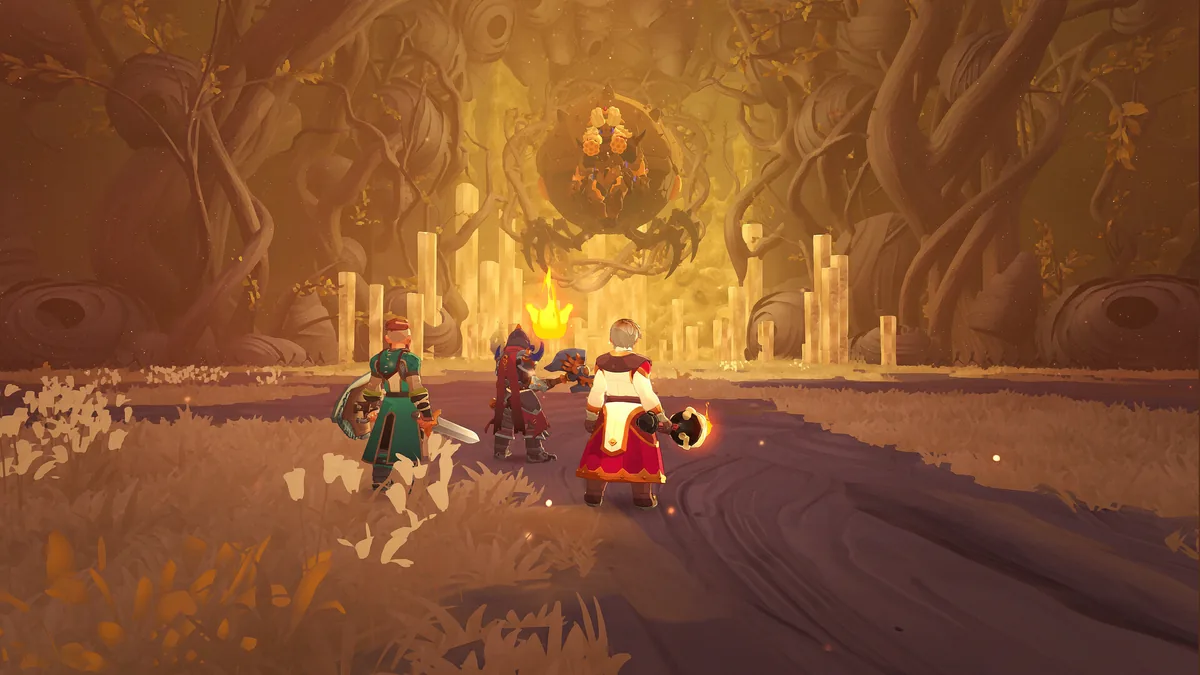 The Priest in Siagarta. The class page documents Prayers and the Sunlight talent tree; exact party formations remain a play recommendation.
Warrior: Tank with Rage and Hemorrhage
The class page lists Warrior as Tank with Rage as its resource, Strength as its primary stat, Fighter as its aptitude, and dual weapons. Warriors build Rage while fighting, then spend it on class abilities or self-enhancing buffs.
Its documented talent tree is centered on Hemorrhage, a bleed whose damage depends on the critical hit that triggered it. The source also says the tree can increase Rage generation. Do not turn that into a block or flat-mitigation tree unless the current in-game tooltip explicitly supports it.
For solo play, Warrior is my safest recommendation because the class is documented as Tank; exact survivability and clear-speed rankings will depend on the current build and balance.
For group content, I recommend using the Tank identity to anchor the party while the other classes execute their own resource and talent loops. The source does not publish a universal difficulty threshold for a particular composition.
For a Warrior build, start with the Rage loop and the Hemorrhage tree, then verify the current talent nodes. The checked class page does not establish block chance or flat mitigation as the Warrior's defining passive trees.
Co-op class synergies
This section is specifically for co-op players deciding how to structure groups. The setups below are recommendations from this guide, not official composition rules.
2-player: My default recommendation is a damage class (Mage or Rogue) plus Priest when the group prioritizes healing coverage. A damage class plus Warrior is another reasonable test; the checked sources do not publish a universal 2-player ranking.
4-player default recommendation: One of each, Warrior, Priest, Mage, and Rogue. This gives the party all four documented class identities; whether it clears faster than a duplicate-class group depends on the current build and player execution.
Stacking the same class: Duplicate-class strategies are a player experiment, not a source-documented tier rule. If you do it, compare the result against the four documented class identities and the current talent/skill tooltips rather than assuming a fixed clear-speed or survivability outcome.
The Priest recommendation is about having the Healer role available. The checked source supports Prayers and Sunlight, but does not establish a universal rule for threat, dungeon depth, or how aggressively other classes can play.
GODEEPER: Beginner tips before your first dungeon group. Farever Beginners Guide 2026
For a comparison on class-build interactions in a similar genre, the Far Far West advanced strategy guide covers role-based decision-making in a different 2026 action game.
Frequently Asked Questions
How many classes are in Farever at Early Access launch? Farever has 4 playable classes: Mage (Caster), Priest (Healer), Rogue (DPS), and Warrior (Tank). Their class pages also document Spark, Prayers, Combo Points, and Rage as the relevant resource or ability systems.
What is the best class in Farever for solo play? Warrior is my safest solo recommendation for players who want the Tank role. The source pages establish the class roles and systems, not a universal solo ranking or a guarantee that every class clears every solo situation.
What is the best co-op composition in Farever? My default 4-player recommendation is one of each class: Warrior, Priest, Mage, and Rogue. For 2-player, I recommend a damage class plus Priest when survival is the priority. These are team-building recommendations, not published balance rules.
How does gear work across classes in Farever? The checked class pages document role, resource or ability system, aptitude, primary stat, talent tree, and weapon style. The Steam page mentions custom gear and weapon skills, but these sources do not document class-gated bonuses on the same item. Treat any such claim as unverified until an in-game tooltip or patch note confirms it.
Can I change class in Farever after I start? Class change mechanics at Early Access launch are unconfirmed at time of writing. Check the Farever Steam page for updates as the EA develops.
What is the difference between Mage and Rogue in Farever? The class pages label Mage as Caster with Spark and Rogue as DPS with Combo Points; Mage uses dual weapons and Rogue uses daggers. Any safety, range, or burst ranking is a play recommendation rather than a published balance tier.
Related Reading
- Farever Review 2026: Good Bones, Rough Early Access: Farever review: Shiro Games' co-op RPG recovered to Mostly Positive after v0.1.3. Here's what the underlying game does.
- Farever Beginners Guide 2026: survival fundamentals and the first-hour decisions that set up a class.
- Farever Complete Guide Hub: classes, builds, co-op party, and dungeon guides in one place.
- Farever How Long to Beat: Early Access Hours and v0.2: Farever how long to beat: roughly 10-15 hours in current EA. The Healer class is one of the party roles to consider when planning a run.
References
- Farever on Steam
- Shiro Games official site
- Farever complete guide hub: classes, builds, co-op party, and dungeon guides
Was this guide helpful?
About the author

Senior Critic & Analyst
Former game data analyst turned critic with 11 years covering indie and mid-tier games. Based in Austin. Runs spreadsheets on games most people just play.
- 11 years games criticism
- Former game economy analyst
- Roguelike and strategy specialist
Keep reading




Disclaimer
This article is published for informational and entertainment purposes. It does not constitute professional financial, legal, or technical advice. Game performance, online services, patch schedules, and store listings change. Verify critical details (pricing, system requirements, regional availability) with publishers and storefronts before you buy. Affiliate links, where present, help support our editorial work and are labelled in our affiliate disclosure.
Comments
Loading comments…