
GuideParalives
Paralives Town Life Guide: How the Open World Works
Paralives town life doesn't get enough attention in most guides. Three paragraphs on build mode and a sentence on the town. That's backwards.
The town is where your Parafolk's life actually unfolds. The home is the canvas; the town is everything else. Careers start there. Relationships form there. The social card system that makes conversations feel different from The Sims plays out there. And unless you're tracking the Town Hall's mastery board, you're probably leaving skill progression unlocks on the table.
TL;DR: Paralives town life runs in a connected open world with no loading screens between lots. Conversations use a social card system where personality traits filter available cards. The Town Hall has a mastery board showing community-wide skill leaders. A calendar for organizing parties and weddings is confirmed but not yet live, listed by Paralives Studio as a planned Early Access addition. Townies have independent AI and develop relationships your Parafolk can either build on or ignore.
Paralives town life: what actually happens outside your home lot? (quick answer)
Paralives town life isn't a backdrop. It's a functional game layer with its own mechanics: the social card conversations, the Town Hall mastery board, and the Townies who live alongside your Parafolk without waiting for you to direct them. A community calendar for organized events is planned but not yet in the game.
At launch, the town is a walkable open world. Your Parafolk moves through it as a continuous space, entering shops and community buildings without a loading screen. That's an explicit design choice from Paralives Studio, and it changes how the game feels: neighbors are actually nearby, not conceptually nearby. The mastery board at the Town Hall shows who's at the top of each skill category across the whole population, which creates a low-key competitive layer that's entirely optional but genuinely interesting to track.
Key takeaways
- The town is a connected open world: no loading screens between lots
- Social conversations use cards filtered by personality traits
- The Town Hall has a mastery board showing town-wide skill leaders
- A community calendar for organized events (parties, weddings) is confirmed but not yet live; Paralives Studio lists it under planned Early Access additions
- Townies run on independent AI and develop lives outside your Parafolk's involvement
- Skills develop through any relevant activity, including town events
- Career progression is non-linear: each work day offers 3 upgrade choices
How the open-world town structure works
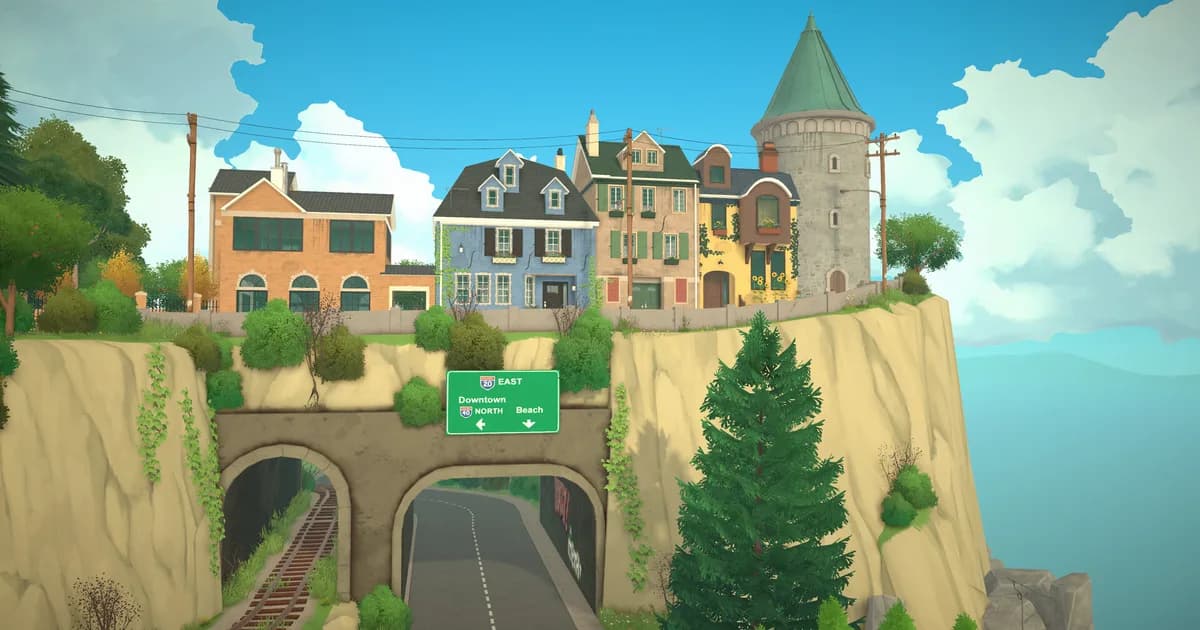
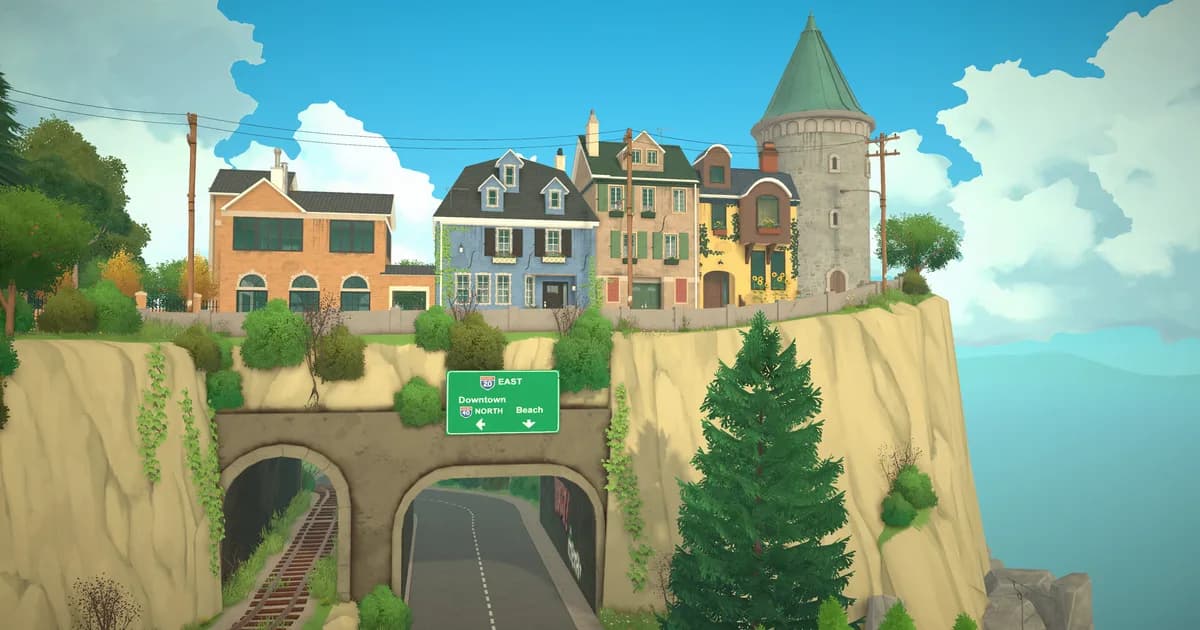
Paralives doesn't split the town into separate lot instances. When your Parafolk walks out the front door, they walk into the neighborhood and through it. Shops, community buildings, the park, the Town Hall: all accessible as a continuous space.
This matters for day-planning. In The Sims 4, leaving the lot is a commitment because it triggers a load screen. In Paralives, your Parafolk can walk to the coffee shop, talk to a neighbor, swing by the career building, and come back without the session feeling interrupted. The town becomes somewhere you actually go, not a place you occasionally visit for career missions.
The tradeoff is visibility. The open world means more things are happening simultaneously. Townies you've never met can walk past while you're in a conversation. Social events you weren't planning for show up in your proximity. The game expects you to manage interruptions in a way that lot-based life sims don't, which is one of the things new players take a few sessions to adjust to.
The town is populated and continuous. Townies move through it independently while your Parafolk does the same.
GODEEPER: For careers and day-to-day routines that overlap with town life, the Paralives tips guide covers how to approach the career upgrade system and manage your Parafolk's needs across a full in-game day. Paralives Tips: 10 Things to Know for Early Access →
The social card system: how conversations work
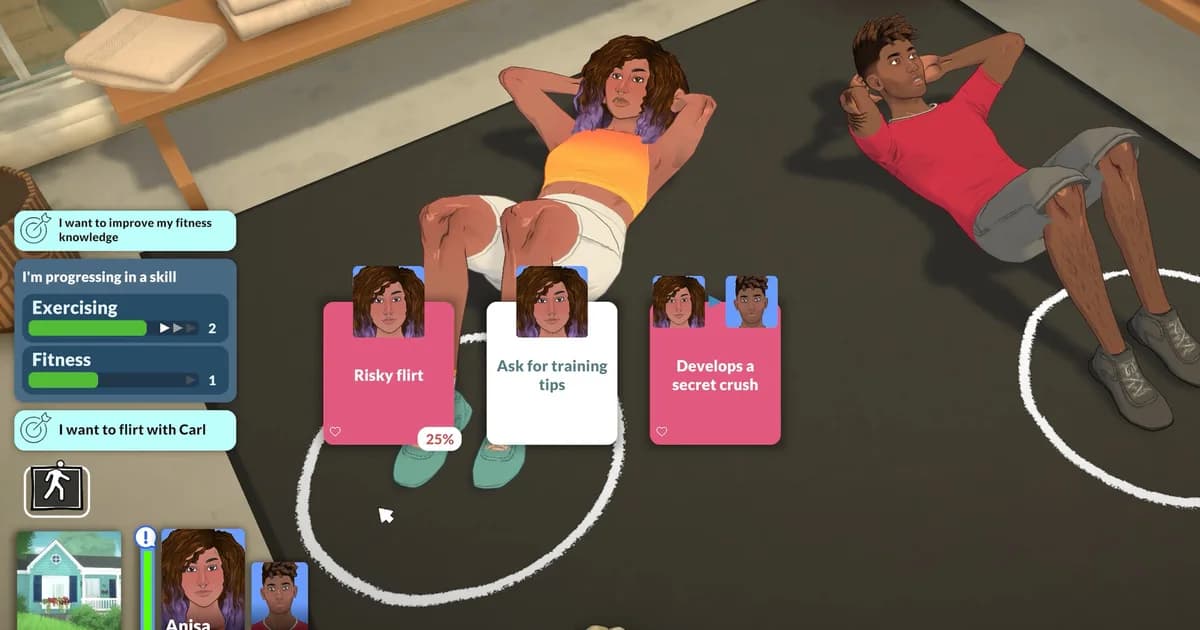
Every social interaction in Paralives runs through a card-based conversation system. When your Parafolk talks to someone, you don't click through a menu of social options: you pick from a hand of cards representing available interactions.
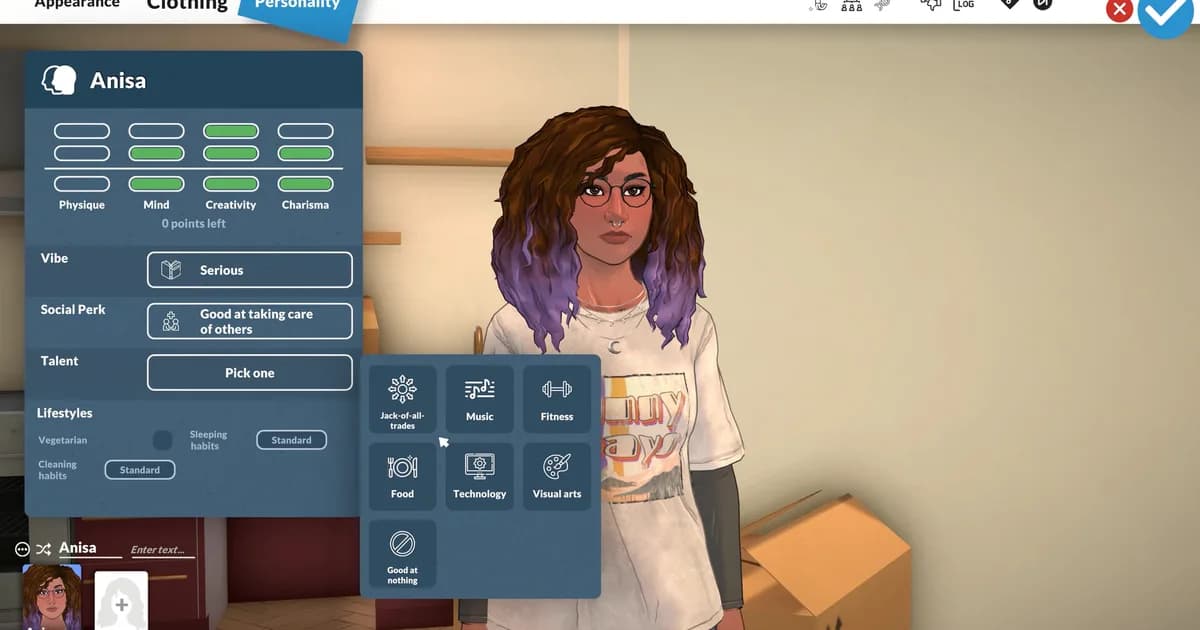
The cards are personality-filtered. An antisocial Parafolk sees "want to leave" cards appearing regularly in conversation, which is exactly the behavior Reddit players have been discovering in Early Access. An outgoing Parafolk gets more options to push a relationship forward. A Para with creative skills might get storytelling or humor cards that others don't. The hand you're dealt in a given conversation reflects who your Parafolk is.
This matters because it means different Parafolk builds produce genuinely different social experiences. You're not just choosing a trait that boosts a stat: you're choosing which social options show up in the game. A career-focused Para with strong social skills has a meaningfully different conversation set than a homebody who barely leaves the house.
Players on Reddit have been vocal about the card system needing more depth. The current implementation works, but the available options thin out quickly once you've moved past the first few relationship stages. You start seeing the same cards repeatedly. Paralives Studio has acknowledged it directly, and it's one of the systems flagged for post-launch expansion.
The social card interface: three cards available based on Anisa's personality and current situation. The "Risky flirt" card would appear less often on an antisocial Parafolk.
Skills, the Town Hall, and the mastery board
Skills in Paralives develop through relevant activity. Social skills grow through socializing. Career skills grow through work. Creative skills grow through making things. There's no XP bar you fill by doing anything: the skill you want to level has to be the thing you're doing.
The Town Hall adds a community dimension to this. The building has a mastery board, which is a leaderboard showing which Parafolks across the entire town have achieved the highest levels in each skill category. Players in Early Access have discovered their Paras appearing on the board after investing heavily in a single skill. It's a passive feature rather than an active goal, but it creates an interesting benchmark: the board tells you where the skill ceiling currently sits across the town's NPC population.
Reaching the top of a mastery category isn't currently tied to explicit rewards in the Early Access build, but the board functions as a useful progress indicator. If your Parafolk is a dedicated cook and they don't appear near the top of the cooking mastery board, you have a clear signal that progression isn't as far along as it feels.
GODEEPER: For launch pricing and whether Paralives is worth picking up in Early Access, the Paralives Early Access review covers what's in the current build and what's still missing. Is Paralives Worth It in Early Access? →
The community calendar: what's coming, not what's live
Worth correcting up front, since it's an easy assumption to make: there is no community calendar in the current build. Paralives Studio's own Steam page lists "Calendar and organizing social events (parties, weddings)" under features "to be added during the Early Access phase," in the same group as weather and seasons, pets, and vehicles. It's a confirmed part of the roadmap, not a rumor, but it isn't something you can open and use today.
For now, relationship-building runs through the mechanics that are live: street-level social card conversations, career coworker interactions, and Townie routines you can insert yourself into by showing up where they already are. Once the calendar does land, expect it to layer organized events on top of that existing social card system rather than replace it, since that's the pattern Paralives Studio has followed with its other confirmed additions.
Check the roadmap list on the Steam store page before you go looking for a feature in-game. Weather and seasons, pets, cars, boats, gardening, and the calendar are all in the same "planned, not present" bucket as of the current build.
Townies: how NPCs live in the world
Townies are the non-player Parafolks who populate the town independently. They have jobs, personalities, skills, and relationships that develop without your involvement. When you see a Townie in a consistent location at consistent times, that's their routine.
The AI doesn't just give Townies a walk cycle. Sebastian, a specific Townie the Early Access community has been documenting on Reddit, has behavior patterns that produce real consequences months into a relationship. Players who married into his life reported being caught off guard by how his traits eventually played out. That's not flavor text running in the background. It's the NPC system actually making decisions that feed back into your game.
The practical upshot: the Townies you invest in are worth a quick trait check before you commit. Their personality determines which social cards they play at you, how they respond to relationship milestones, and what their independent life is doing when you're not watching. A demanding Townie early in a relationship and a demanding Townie six months in are very different problems.
Step-by-Step: building your Parafolk's life in the town
You don't optimize Paralives town life the way you'd optimize a skill tree. The goal is getting a few systems in motion that pay off while you're paying attention to something else.
Day 1-5: Get out of the house. Walk the town, enter buildings, let chance encounters happen. The social card system opens wider options after a few real interactions with Townies who share traits with your Para.
Visit the Town Hall early. Check the mastery board. Find out which skills the NPC population is currently high in. If your Parafolk wants to top the board in something, this tells you where the competition actually is.
Start one career path before the first week ends. Career progression unlocks social interactions outside the home: coworkers have unique card options unavailable to strangers. Building the coworker relationship track in parallel with the skills track is more efficient than treating career and social life as separate progressions.
Lean on repeat Townie interactions in the first ten in-game days. With the community calendar not yet live, the fastest relationship progress comes from repeated street-level conversations with the same Townies rather than a single concentrated event. Consistency beats a one-off encounter.
Track one Townie relationship for the first month. Watch how their behavior changes as the relationship deepens. The Paralives AI builds toward surprises over time, and knowing one Townie well enough to predict their behavior gives you a reference point for reading others.
Tips: common mistakes with Paralives town life
Treating the town as a loading-screen alternative. Some players use the open world to avoid lot-switching and then wonder why Paralives town life feels thin. The town has active mechanics: the mastery board and the Townie AI. If you're only walking through it, you're missing the layer underneath.
Ignoring personality when building a Parafolk. The social card hand is personality-filtered. A Para built without thinking about social traits will have constrained conversation options that can't be fixed after creation without the game's respec options. Think about which card archetypes you want available before you commit to traits.
Expecting the community calendar to already be in the game. It's a confirmed feature on Paralives Studio's roadmap, not something available yet. Don't spend time hunting for a calendar or event-hosting menu in the current build; check the Steam page's planned-features list instead of assuming you're missing a button.
Not checking the Town Hall mastery board. The board is passive information that most players never visit. It's worth checking at the end of each in-game week: it tells you how far your Parafolk's skill progression stands relative to the town population, which is a more useful benchmark than the skill meter alone.
Treating Townies as background. The NPC AI has real personality weight. Players who approach Townies as scenery get surprised by their behavior six in-game months later when relationship consequences become visible. A few early trait checks on Townies you're considering befriending or romancing prevents later complications.
Related Reading
- Paralives Mechanics Guide: Needs, Moods, and Paras: Paralives mechanics guide: how needs decay, what mood bonuses stack, and why Paras behave differently
- Paralives Social Activities: What's In, What's Coming -- a closer look at the community calendar events covered above, plus what's still missing like parties and weddings
- Paralives House Building Guide: Build Mode Explained -- Build Mode, curved walls, and terrain tools for the home your Parafolk lives in while navigating town life
Frequently Asked Questions
What is the Town Hall mastery board in Paralives? The Town Hall has a community leaderboard showing which Parafolks have reached the highest skill levels in the town. Players in Early Access have found their Paras appearing on it after dedicated skill investment. It's not tied to explicit rewards yet but works as a useful progress benchmark.
How do Townies behave in Paralives? Townies are NPCs with independent AI: they have jobs, personalities, and relationships that develop without your input. Their behavior carries real consequences over time. Sebastian, a frequently discussed Townie, has documented personality traits that affect players who build a relationship with him.
How does the social card system work? Conversations use cards you choose from rather than a menu. Your Parafolk's traits filter which cards are available: antisocial Paras see more exit-conversation cards, while sociable Paras get more relationship-deepening options. The hand you're dealt in any conversation reflects your Para's personality.
Can you throw parties and host events? Not yet. Paralives Studio lists a community calendar with organized events, including parties and weddings, under features planned for later in Early Access. It isn't in the current build, though it's an official roadmap item rather than a rumor.
Does Paralives have an open world or loading screens? It's a connected open world with no lot-to-lot loading screens. Your Parafolk walks through the town as a continuous space, which is a deliberate design choice from Paralives Studio.
What skills develop through town activities? Skills develop through relevant actions. Socializing builds social skills. Working builds career skills. The Town Hall mastery board shows where your Para stands skill-wise relative to the town population.
How is Paralives town life different from The Sims? The biggest difference is the open world: no loading screens. The social card system also works differently, with personality traits filtering available cards. The Town Hall mastery board adds a community-wide skill tracking layer that The Sims 4 doesn't have.
References
- Paralives on Steam -- Early Access launch page, $39.99, lists the calendar and social events under planned Early Access additions
- r/Paralives community -- active community documenting Early Access discoveries including Townie behavior and social card mechanics
- Paralives Studio official site -- developer updates on the Town Hall, mastery board, and planned social systems
Was this guide helpful?
About the author

Senior Critic & Analyst
Former game data analyst turned critic with 11 years covering indie and mid-tier games. Based in Austin. Runs spreadsheets on games most people just play.
- 11 years games criticism
- Former game economy analyst
- Roguelike and strategy specialist
Keep reading
Paralives Social Activities: What's In, What's Coming
General · 9 min
Is Paralives Free to Play? No: $39.99 Early Access
General · 6 min
Paralives House Building Guide: 7 Tools and Limits
General · 9 min
Paralives Mechanics Guide: Needs, Moods, and Paras
General · 8 min
Paralives Complete Guide: 11 Guides, Build Mode & Town Life
General · 14 min
Paralives Tips: 10 Things to Know for Early Access
General · 13 min
Game deals · affiliate links

Disclaimer
This article is published for informational and entertainment purposes. It does not constitute professional financial, legal, or technical advice. Game performance, online services, patch schedules, and store listings change. Verify critical details (pricing, system requirements, regional availability) with publishers and storefronts before you buy. Affiliate links, where present, help support our editorial work and are labelled in our affiliate disclosure.
Comments
Loading comments…