
ReviewTides of Tomorrow
Tides of Tomorrow Review: Story-Link Changes Everything
Tides of Tomorrow review: the Story-Link adventure suits Road 96 fans who love choice-driven stories; players who want to act, not watch, should wait.
Tides of Tomorrow review, short version: Road 96 fans should play it; players who want every choice to hit hard should wait for a sale. Digixart's flooded plasticpunk world is the best thing about it, and the Story-Link system, where another player's run shapes yours, is a real idea. Steam players rate it Very Positive. The most upvoted negative reviews say the game never fully commits to its own premise.
Sponsored

About the game
Tides of Tomorrow
Digixart Entertainment SAS · THQ Nordic GmbH
Reception
Pros
- Story-Link mechanic creates genuine narrative variance across playthroughs
- Distinctive plasticpunk aesthetic with strong environmental storytelling
- Five major endings, per the official FAQ, give the Story-Link system room to matter across runs
- Steam fans say chases, boat combat and activities improve on Road 96
Cons
- Negative Steam reviews say many choices feel superficial and the premise is not fully committed to
- Following some players' runs can lock you out of the action, per one widely upvoted complaint
- The ozen resource can run out late and undercut the ending, as one player reports
Verdict
Tides of Tomorrow suits Road 96 fans and players curious about asynchronous storytelling; anyone who needs every choice to land hard, or dislikes spectating another player's path, should wait for a sale.
Updated 2026-10-15: dropped the old score and the per-category marks; the verdict now draws on Steam reviews. Digixart teased a new project at the THQ Nordic Showcase in August.
Sponsored

Tides of Tomorrow review: key takeaways
- Released April 22, 2026 on PC, PS5, and Xbox Series X/S; $29.99 on Steam
- Developed by Digixart Entertainment SAS (Road 96), published by THQ Nordic GmbH
- Core mechanic: your choices in each run shape the starting conditions for another player's subsequent run
- Average playthrough: 10-15 hours per the official FAQ; five major endings
- Steam players rate it Very Positive; the Reception box has live figures and the Metacritic score
- Steam lists 39 achievements
- No generative AI used in the final product: Digixart confirmed this ahead of release
BESTPRICE: Want Tides of Tomorrow? These stores list it: Buy on Eneba → Buy on Green Man Gaming → Buy on Humble Bundle → Buy on Loaded →
Overview
Digixart Entertainment SAS is a French studio that released Road 96 in 2021: a hitchhiking road narrative set on the eve of a fictional election, notable for its procedurally assembled vignette structure and for finding an audience well outside the genre's usual fanbase. THQ Nordic published the European release and returned as publisher for Tides of Tomorrow.
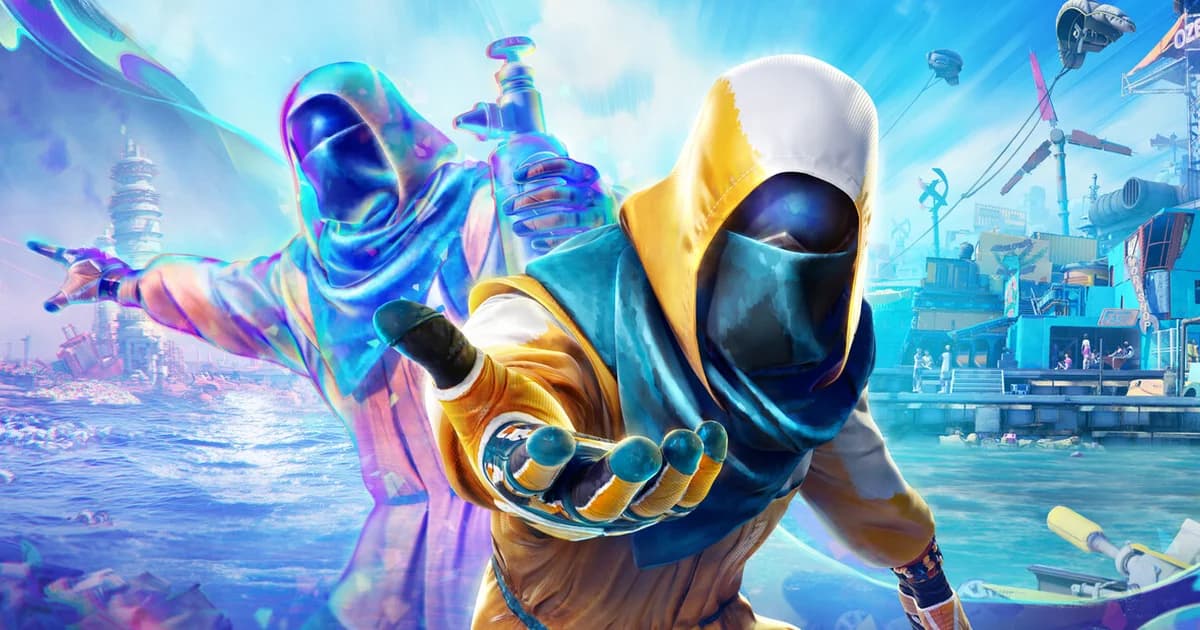
Tides of Tomorrow takes place on Elynd, an ocean world that has been reshaped by a Great Flood. The surviving population occupies floating platforms, salvaged structures, and the upper floors of drowned cities. A new threat (Plastemia, a disease caused by the ocean's plastic saturation) is accelerating. Players take the role of a Tidewalker, a survivor who can navigate the flooded landscape and make choices that determine which factions survive and which collapse.
Three factions structure the political terrain: the Marauders, Reclaimers, and Mystics. The official store confirms those names and presents Story-Link as the system that lets another player's choices influence levels, NPCs, and narrative choices in a later run. This review avoids assigning each faction an exhaustive ideology that the current official description does not spell out.
At $29.99, Tides of Tomorrow sits at the upper edge of the narrative adventure genre's typical pricing. The five-ending structure and cross-player mechanic are the structural justification for that price.
Current status: October 2026
The price remains $29.99 and the store lists 39 Steam achievements. Digixart shipped four patches in the first month, the last (Patch Note 4, May 12) adding DLSS, FSR and a Duck Hunter achievement. Since then the feed has carried only an art post, the August Choices Matter Festival appearance and a first glimpse of Digixart's next project ("A lonely road. The desert wind.") at the THQ Nordic Showcase.
The environmental design carries most of the game's emotional weight: the puzzles are incidental.
Gameplay
The Story-Link system is the game's most structurally original contribution. Before starting a run, the player can choose a partner such as a friend, streamer, DigixArt team member, or stranger. That handoff is not cosmetic: the official description says the other player's choices can change levels, NPCs, and narrative decisions in the new run. The narrative branches are therefore influenced by someone else's prior playthrough without turning the game into direct co-op.
This creates a form of asynchronous multiplayer that is structurally distinct from most examples in the genre. It is closer in principle to Dark Souls' shared bloodstain system or Death Stranding's infrastructure persistence than to competitive or co-operative multiplayer. The link is one-way, unannounced, and delayed: the previous player will never know their decisions shaped someone else's run unless that player tells them. The accumulation happens invisibly. Digixart refers to the player's choices as leaving a "residue."
The important distinction is between the single-player campaign and the online handoff. The campaign itself is not described as co-op; Story-Link is the optional online layer that carries another player's choices into your run. That makes the feature easiest to evaluate as a narrative system: it changes the context around your decisions, rather than asking a second player to share control of the Tidewalker.
The faction system generates the most consequential choices. The official store names the Marauders, Reclaimers, and Mystics as the major factions, while the Xbox Wire interview with game director Adrien Poncet describes Story-Link as a system whose decisions leave marks for later players. That is enough to establish the design's promise without assigning a fixed number to the decisions or claiming a particular route changes a faction by a measurable amount.
Resource gathering exists as an underlying pressure. Materials are needed for crafting, for faction assistance, and for maintaining the raft, and the ozen supply is part of the same pressure. One negative review says the ending was "absolutely ruined for me because there was no ozen for me at the end I ran out of my supply" (Steam review). Our Away From Life early access analysis runs into a similarly unfinished resource layer worth reading for comparison, and Beastro's boss guide shows how a different studio handled the same problem of a support system needing more design attention than the core hook. Skull Horde's review is another useful reference point for how much weight a game's secondary systems should be expected to carry.
Tides of Tomorrow review: what players say works and what doesn't
Story-Link: the clever part, and also the most criticized. The most upvoted negative review on Steam calls the system "clever, but mostly logistical" and says the game "never fully commits to the implications of its own world, its own choices, or its own mechanics" (Steam review). Another says "the following player system locks you out of the actual action so many times it renders the game pointless" (Steam review). Who you follow matters, so pick a partner whose run made different choices.
Choices: "Alot of the choices you personally make feel pretty superficial," says a third negative review (Steam review), while a fan sums it up as "story where your choices really matter" (Steam review). Players split on this more than anything else.
Action and pacing: a Road 96 fan says the game "improved on a lot of aspects that Road 96 felt a bit lacking on," with fluid movement, fast chases and boat combat (Steam review).
Art and world: the one area nobody disputes. One player praises "tons of little objects, details and moments that build to an aesthetic that I would love to see in more projects" (Steam review), and a 52-hour fan calls the visuals "on another level, absolutely beautiful" (Steam review).
Characters: the most common complaint after the choices. "I feel like none of them are really likeable," writes one player who otherwise likes the mechanics (Steam review).
The narrative sequences lean on stylized color and silhouette rather than conventional cutscene staging.
Verdict
Tides of Tomorrow is built for players who find the mechanic interesting enough to play through twice. The first run introduces a world and a system that depends on other players' runs, so the second run, with a deliberately chosen partner who made different choices, is where the design argument is made.
For the best narrative RPGs in 2026, Tides of Tomorrow occupies a specific position: more structurally ambitious than most of its genre peers and less immediately accessible than almost all of them. The Bylina review noted a similar issue with extraneous survival mechanics in narrative games, and the ozen complaint suggests Tides of Tomorrow's resource layer has the same problem.
Who it suits: Road 96 and 11-11: Memories Retold fans, players curious about asynchronous multiplayer in a story game, anyone who will replay with a different Story-Link partner, and players drawn by the plasticpunk art. At $29.99 the idea is the selling point.
Who should wait: players who need every choice to change the story sharply, anyone who dislikes spectating while a followed player's path plays out, and players who struggle to like the cast. If $29.99 is more than you want to commit right now, our best indie games under $20 roundup has lower-cost narrative picks worth checking first.
If narrative-first indies with an unusual central mechanic are what draw you to Tides of Tomorrow, our Mixtape launch coverage, Scriptorium review, and TetherGeist review all cover 2026 releases in the same general lane, each built around a different structural hook. Clair Obscur: Expedition 33's review is worth a look too, for readers weighing Tides of Tomorrow against a much bigger-budget narrative RPG from the same year.
Frequently Asked Questions
How long is Tides of Tomorrow?
Digixart's official FAQ puts an average playthrough at 10 to 15 hours, with five major endings, so repeat runs with different Story-Link partners add more.
What platforms is Tides of Tomorrow on?
Tides of Tomorrow launched April 22, 2026 for PC (Steam), PlayStation 5, and Xbox Series X/S. No Switch or last-generation versions have been announced.
Can I play Tides of Tomorrow offline?
The single-player campaign is separate from direct multiplayer. The Online Story-Link feature requires an internet connection to use another player's choices; the official sources checked here do not document the exact offline fallback, so do not treat “default seed” as a confirmed current implementation detail.
What is the Story-Link mechanic in Tides of Tomorrow?
Players select a Story-Link partner from another completed run before starting. The official store says that partner's choices can affect levels, NPCs, and narrative choices in the new run. Consequences carry forward through the asynchronous handoff.
How many endings does Tides of Tomorrow have?
Five major endings. The path to each is shaped by faction relationships, key story decisions, and the Story-Link partner selected for the run.
Is Tides of Tomorrow similar to Road 96?
Both are non-linear narrative adventures from Digixart. Tides of Tomorrow adds the Story-Link mechanic, a post-flood setting, and a more explicit survival layer. Road 96 is more grounded; this game is structurally more complex.
References
- Tides of Tomorrow on Steam
- Digixart on Story-Link, AI, and design philosophy: Gamereactor
- Tides of Tomorrow official launch trailer
- Tides of Tomorrow official Steam Community FAQ: 10-15 hour average playthrough and five major endings.
- Xbox Wire interview with game director Adrien Poncet: how Story-Link choices leave marks for later players.
- Tides of Tomorrow news on Steam: Choices Matter Festival and THQ Nordic Showcase posts
About the author

Systems & Economy Desk
GameBrief's byline for roguelikes, strategy and simulation. Reads patch notes, wiki tables and Steam stats and puts the numbers on the page.
- Roguelikes, strategy and simulation
- Builds, progression and economy
- Sources listed per article
Keep reading
Above the Snow Review: Alpine Resort Drama Holds Up
General · 10 min
Skull Horde Review: Fast Dungeon Auto-Battler Worth Buying
General · 7 min
Vampire Crawlers Review: poncle's Deckbuilder Delivers
General · 8 min
Kristala Review: PS5 and PC Feline Souls-Like With Caveats
General · 10 min

Scriptorium Review: Medieval Art Without the Monastery
General · 8 min

Moomintroll Winter's Warmth Review: Soft and Quiet
General · 9 min
Sponsored
Disclaimer
This article is published for informational and entertainment purposes. It does not constitute professional financial, legal, or technical advice. Game performance, online services, patch schedules, and store listings change. Verify critical details (pricing, system requirements, regional availability) with publishers and storefronts before you buy. Affiliate links, where present, help support our editorial work and are labelled in our affiliate disclosure.
Comments
Loading comments…