
ReviewAll Hail the Orb
All Hail the Orb Review: A Short, Cheerful Cult Classic
All Hail the Orb review: a pixel-art clicker about summoning cultists and exploring a dungeon. Short, focused, and Very Positive on Steam at $6.99.
All Hail the Orb review, upfront: it knows exactly what it is. A short pixel clicker about summoning cultists to worship a mysterious orb, about four hours to the ending by HowLongToBeat's player logs, under seven dollars, and Very Positive on Steam, which is not the rating of a game that accidentally succeeded. There's also a duck in it, which we'll get to.
Sponsored

About the game
All Hail the Orb
LeGingerDev · GrabTheGames
Reception
Pros
- Very Positive on Steam: the game is doing something right
- Automation shift from manual clicking to cultist management is genuinely satisfying
- No fail states mean anyone can see the ending: a design philosophy that earns its place here
- 46 achievements are actually worth hunting; they push you toward corners of the dungeon you'd otherwise miss
Cons
- Launch shipped with a progression bug severe enough to require a full build rollback
- Over in an evening: lean even at the price point
Verdict
All Hail the Orb is exactly what it says it is: a short, cheerful pixel clicker that earns its Very Positive Steam rating by not wasting your time.
The developer is LeGingerDev, published by GrabTheGames. Released April 20, 2026. If you've never heard of either name, that's not unusual: this is the kind of game that finds its audience by being genuinely good at a small thing rather than by being marketed at a large one.
Updated 2026-10-15: HowLongToBeat now puts the story at about four hours, so the old three-hour figure is gone from the title and the length notes.
Sponsored

Key takeaways
- Released April 20, 2026, priced $6.99 on Steam
- Very Positive on Steam: real enthusiasm, not launch-day goodwill
- Gameplay shifts from manual clicking to cultist automation as the orb gains power
- Dungeon exploration unlocks new systems and mechanics tied to the automation chain
- Launch had a progression bug requiring a full build rollback: fixed in the current version
- No fail states, no punishments, no irreversible mistakes: completion is guaranteed
BESTPRICE: Want All Hail the Orb? These stores list it: Buy on Eneba → Buy on Loaded → Buy on Kinguin →
All Hail the Orb current status: October 2026
The live Steam snapshot checked on October 15 lists $6.99, a Very Positive label, and 1,615 total reviews: 1,525 positive and 90 negative. The official feed's April 26 Hotfix #2 added post-story play, while the official achievement page currently lists 46 achievements. The review's launch-bug criticism remains historical context, not a claim that the current build is still blocked. Sources: All Hail the Orb on Steam, the official news feed, and the official achievements page.
All Hail the Orb review: overview
All Hail the Orb describes itself as "a short, quirky pixel-art incremental game about powering a mysterious orb, summoning cultists, exploring a dungeon and slowly unlocking automation as devotion builds." That description is accurate enough to be useful, which is rarer than it sounds for a clicker/idle game on Steam.
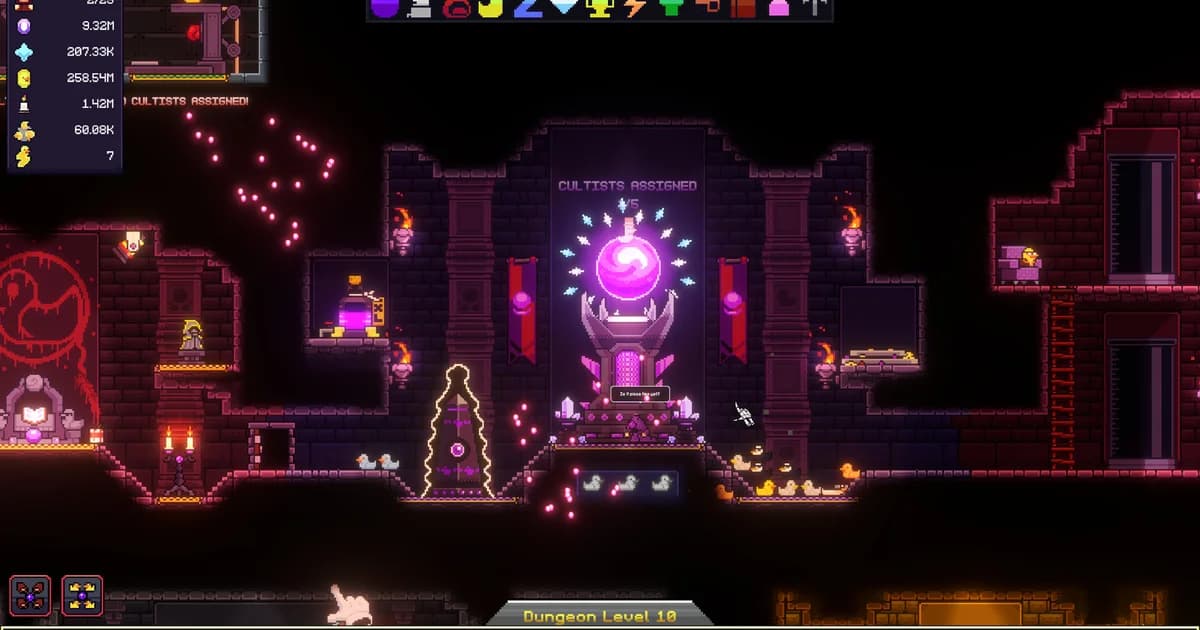
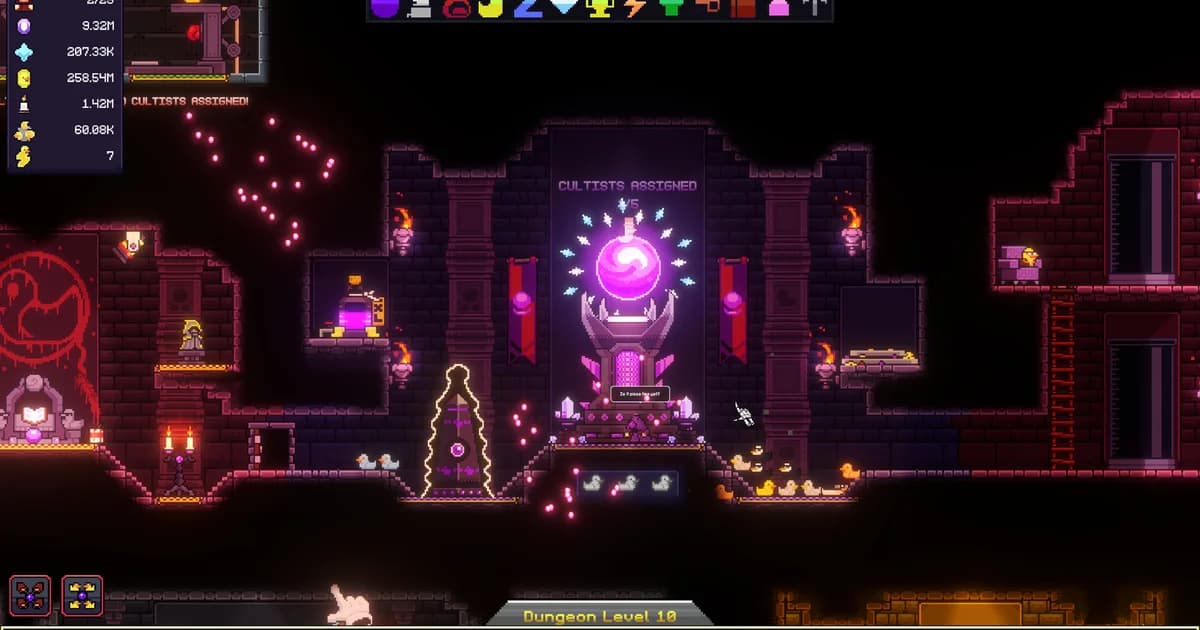
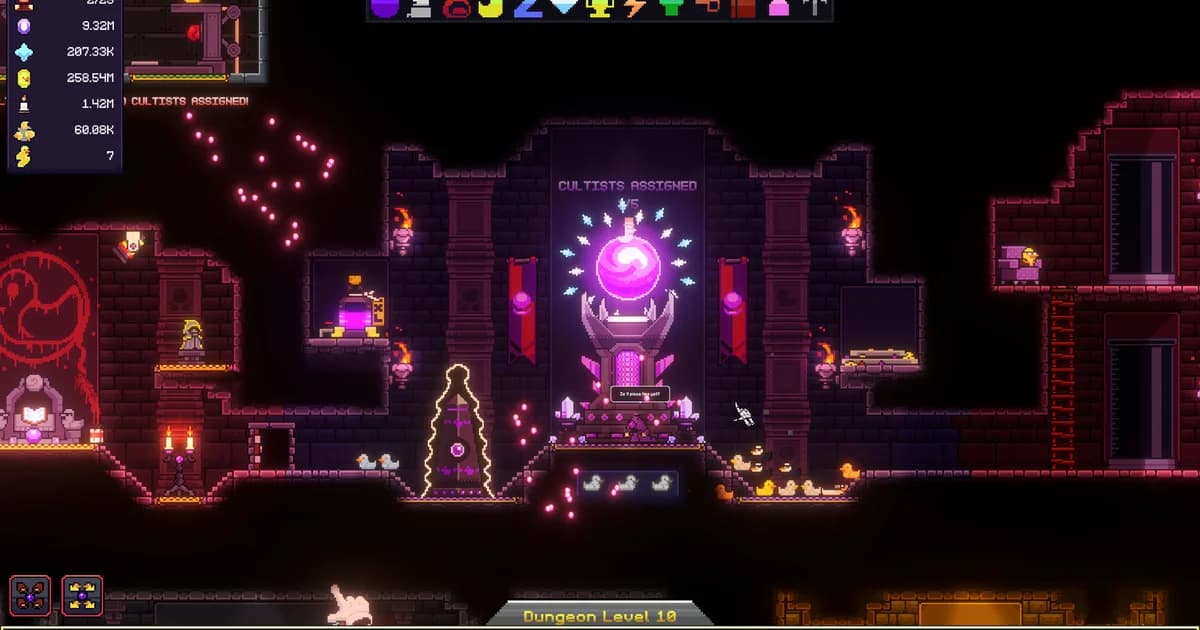
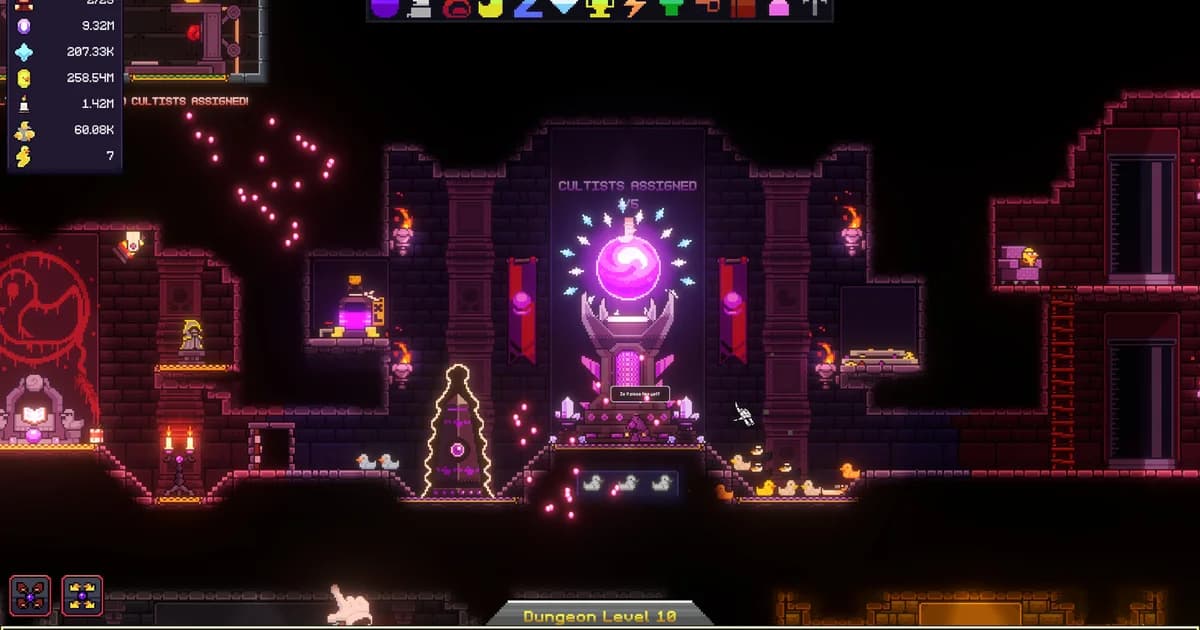
The orb sits in the center of the screen. You click it. Power accumulates. Cultists appear: first one, then a few, then a small congregation arranged with suspicious devotion around the glowing object at the center of your newly developing underground religion. The cultists begin generating power automatically. This is the moment the game changes.
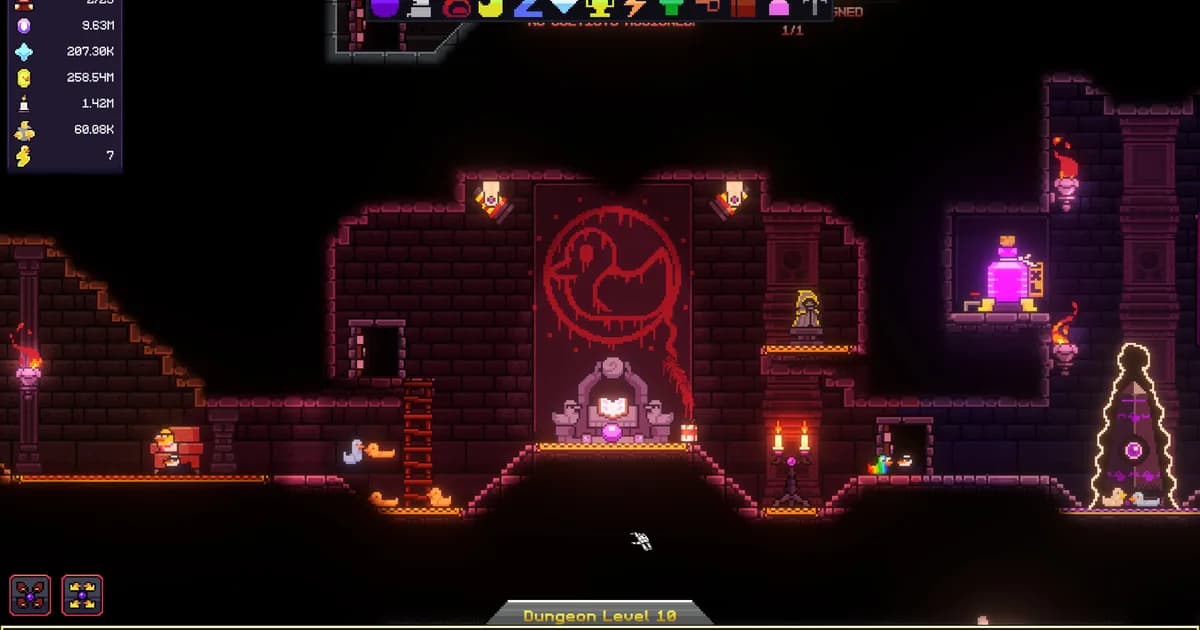
Once automation starts, clicking becomes optional. The player's attention shifts from the orb to the dungeon surrounding it: a pixel-art labyrinth of connected rooms, each holding a new system, a new mechanic, or a new absurdity. (There is a duck. Several, in fact: one Steam reviewer begs the developer to "let people skip the merging ducks animation". Find them yourself.)
The Very Positive score reflects something specific: players expected a short, light experience, got a short, light experience, and felt their time was respected. That is a harder thing to achieve than it looks. A lot of clicker games are padded: they use progress bars and wait timers to extend what would otherwise be a 45-minute game into a week-long process. All Hail the Orb is done in an evening and seems at peace with that.
Gameplay and the automation shift
The clicker phase at the start of All Hail the Orb is functional but not the point. Click, accumulate power, spend power on cultists, repeat. Standard incremental progression. What the game is building toward is the transition: the moment when you've recruited enough of a congregation that the orb sustains itself, and you're free to actually explore.
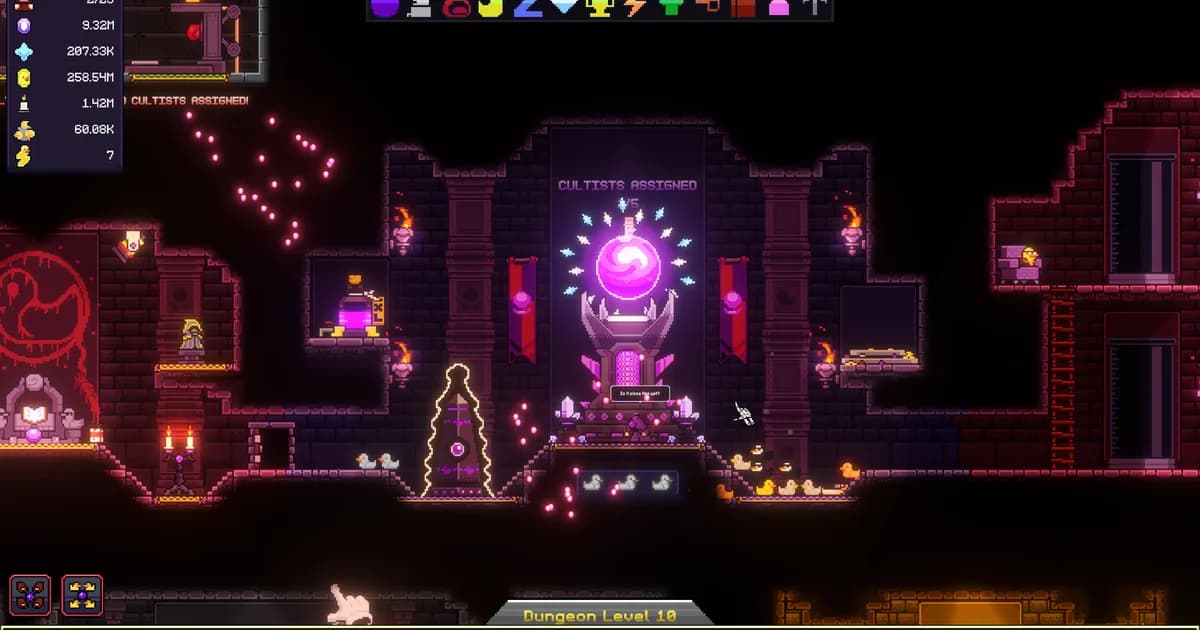
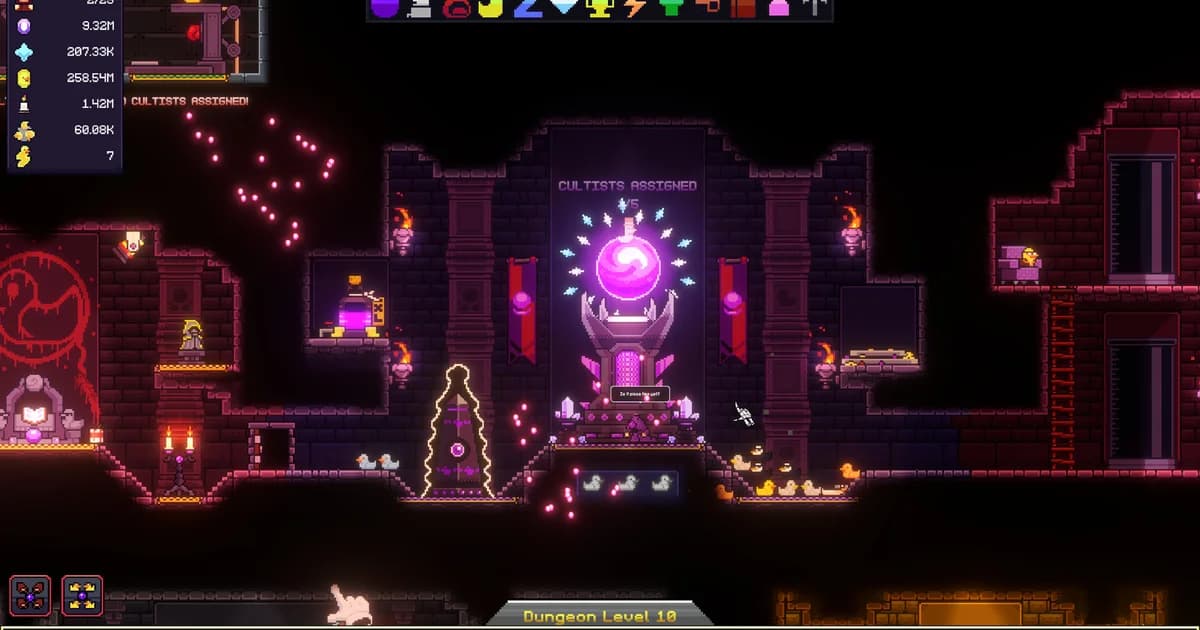
The orb chamber is the game's home screen: cultists line up automatically once you've recruited enough of a congregation.
Dungeon exploration in All Hail the Orb has no combat. None. Rooms are entered, examined, and unlocked. Some rooms contain new automation upgrades. Some contain story beats delivered with light-touch humor. Some contain the duck. The dungeon functions as a content gate: the deeper you go, the more complex your automation chain becomes, and vice versa. The two halves of the game feed each other without either overwhelming the other.
For players who've spent time with games like Vampire Crawlers or Skull Horde (both games with similar dungeon-adjacent premises but significantly higher mechanical complexity) All Hail the Orb will feel like a deliberate exhale. The game is low-stakes in a way that those games are not. It's not a lesser version of a dungeon crawler; it's a different category entirely, one that uses dungeon exploration as a framing device for an incremental game rather than as a challenge system.
The 46 Steam achievements are worth mentioning because they're not filler. Several of them are tied to dungeon rooms that are easy to miss on a first pass: rooms that require specific automation states or power thresholds to access. Achievement hunting in All Hail the Orb doesn't feel like collecting checkboxes. It feels like the game asking you to look at corners you ignored.
Note: The game launched with a progression bug that blocked players from advancing past a specific dungeon area. The developer rolled back to a previous build to address it. The current version is stable. If you purchased at launch and experienced the bug, verify you're on the current build before re-attempting that section.
The automation chain itself grows to include several layers of passive income: cultists generating base power, upgraded cultists generating at higher rates, dungeon-unlocked modifiers affecting the multipliers. None of this requires a spreadsheet. The numbers are friendly and the feedback is immediate. All Hail the Orb is not a game that hides its systems behind obscure interaction rules; it shows you what it's doing and lets you enjoy watching it work.
That is the thing to understand before buying: the satisfaction here is not from mastering a complex system. It's from watching a system run. Idle games live and die on whether the running system is interesting to observe, and Steam reviewers mostly say this one holds up: one calls it "engaging throughout, well paced", another says it "always felt close to the next upgrade".
GODEEPER: The alchemy recipe combinations that unlock the most powerful automation chains: full unlock order across multiple runs. All Hail the Orb Complete Guide →
What doesn't fully work
The launch bug. It happened, it was significant: a progression-blocking issue that required a full build rollback is not a minor patch note. The developer responded quickly, and the fix held. But it's worth naming for context: this is a game that shipped with a problem severe enough that players couldn't finish it. The current version is stable, which matters, but the launch record is what it is.
The brevity question is more subjective. At $6.99, one evening of play is easy to rationalize as reasonable value, and we would. But if you want a game that fills a weekend, All Hail the Orb will not do that. It's designed to be completed. One negative review puts it plainly: "For how short it is honestly seems pricey." Another says progression "falls apart a bit" after about the third resource unlock, when some upgrades max out with little impact.
The comparison point is this: at the same price as All Hail the Orb, the best indie games under $20 list includes games with ten, twenty, and forty-hour runtimes. Budget gaming is a competitive space. All Hail the Orb earns its place in that space by being very good at a short thing rather than by trying to be longer than it is.
Dungeon exploration unlocks new automation upgrades: each room feeds back into the idle loop.
All Hail the Orb review verdict
Who it suits: idle and clicker fans who want a whole game in an evening, and achievement hunters: Steam reviewers report 100% in about four hours. No fail states, an automation shift that actually delivers on its promise, and a dungeon that rewards curiosity without punishing the lack of it. It knows what it is and doesn't overstay its welcome, which is worth something in a Steam library full of games that do.
Who should wait: players who measure value in hours. The launch bug is on the record, the run is short, and some reviewers found the late upgrades thin. Older Steam reviews also warn about missable achievements; the April 26 hotfix lets you clean those up after the ending, so that warning no longer applies. If the price per hour bothers you, a sale makes this an easy pick.
GODEEPER: All Hail the Orb sits alongside Die in the Dungeon, Gambonanza, and NetHack 5.0.0 in the 2026 roguelike wave (here's how the picks stack up by price and depth). Best Roguelike Games 2026: 7 Picks for Every Budget →
Frequently Asked Questions
How long does it take to complete All Hail the Orb? HowLongToBeat player logs put the story at about 4 hours and everything at about 5. Achievement hunters can extend that by exploring all dungeon areas and optimizing the automation chain. The game is transparent about being a shorter experience: that's part of its design, not a flaw.
Can you lose progress in All Hail the Orb? No. All Hail the Orb has no fail states, no permadeath, and no punishing setbacks. Progress is always forward. The game was explicitly designed without irreversible mistakes or punishments, which makes it accessible to players who find pressure-heavy games exhausting.
Was the All Hail the Orb launch buggy? Yes. The game launched on April 20, 2026 with a progression bug that blocked players from advancing past a certain point. The developer issued a build rollback to a pre-release version to resolve it. The current version is stable and the progression issue has been fixed.
Is All Hail the Orb worth the price? At $6.99, the value question is straightforward: you're paying for a focused one-evening game with 46 achievements and a Very Positive rating from real players. If you'd pay $7 for a good evening of light entertainment, yes. If you want a game that lasts 20 hours, this isn't it.
What is the gameplay loop in All Hail the Orb? Players begin by manually clicking to generate power for the mysterious orb. Clicking summons cultists, who automate the power generation. This frees the player to explore the dungeon, unlock new rooms and mechanics, and gradually build a self-sustaining devotional system. The loop shifts from active clicking to management as the game progresses.
Is All Hail the Orb available on mobile or console? All Hail the Orb launched on PC via Steam on April 20, 2026. No mobile or console versions have been announced. The game supports Steam Cloud for cross-device save syncing between PC installations.
Related Reading
- All Hail the Orb Tips and Beginners Guide: what to prioritize in the first run before the mechanics open up.
- All Hail the Orb New Player Mistakes: 8 Common Errors: the specific mistakes the review covers, including Library under-staffing, wrong alchemy order, and stamina mismanagement, laid out with fixes.
- All Hail the Orb Stamina Guide: Super Beds Explained: stamina caps cultist output; Super Beds are the main fix and this guide explains the full upgrade path.
- All Hail the Orb Best Build Guide: top build paths by Resonance type for players who want to push high automation fast.
- All Hail the Orb Achievement Guide: All 46 Listed: all 46 achievements including the missable ones, with the April 26 post-story patch update.
- All Hail the Orb Endings Explained: what triggers each outcome and whether you need multiple playthroughs.
- All Hail the Orb How Long to Beat: main story, completionist, and multi-run estimates.
- All Hail the Orb Secrets: Hidden Rooms, Duck, Alchemy: All Hail the Orb secrets guide: the five hidden dungeon achievements, how Resonance Crystal chains.
- All Hail the Orb Obelisk Guide: Stages and When to Advance: All Hail the Orb Obelisk guide: the 6 stages, when to advance vs.
- All Hail the Orb Unlock Tier List: All 9 Discoveries Ranked: All hail the orb unlock tier list: every alchemy discovery ranked by impact, which are.
- All Hail the Orb Automation: Max Cultist Efficiency Guide: All Hail the Orb automation guide: optimal cultist distribution by stage, idle session checklist, stamina.
References
- All Hail the Orb on Steam
- All Hail the Orb official news: Hotfix #2 post-story continuation and later stability fixes
- All Hail the Orb official achievements: current 46-achievement list
- All Hail the Orb on HowLongToBeat: player-logged story and completionist times
- All Hail the Orb release date trailer: uploaded by the developer, LeGingerDev
- GrabTheGames Publisher
About the author

Indie & JRPG Desk
GameBrief's byline for indie, JRPG, visual novel and cozy games. Warm, direct, and willing to say which one to buy.
- Indie, JRPG and visual novels
- Early access and survival
- Sources listed per article
Keep reading
All Hail the Orb Achievement Guide: All 46 Unlocked
General · 14 min
All Hail the Orb Tips Guide: 100% Completion (2026)
General · 8 min
All Hail the Orb Ending Explained: The Finale and Post-Story
General · 7 min
How Long to Beat All Hail the Orb: Story, 100%, Routes
General · 12 min
All Hail the Orb Secrets: Hidden Rooms, Duck, Alchemy
Guides · 12 min
All Hail the Orb Obelisk Guide: Stages and When to Advance
Guides · 13 min
Sponsored
Disclaimer
This article is published for informational and entertainment purposes. It does not constitute professional financial, legal, or technical advice. Game performance, online services, patch schedules, and store listings change. Verify critical details (pricing, system requirements, regional availability) with publishers and storefronts before you buy. Affiliate links, where present, help support our editorial work and are labelled in our affiliate disclosure.
Comments
Loading comments…