
GuideAll Hail the Orb
All Hail the Orb Stamina Guide: Super Beds Explained 2026
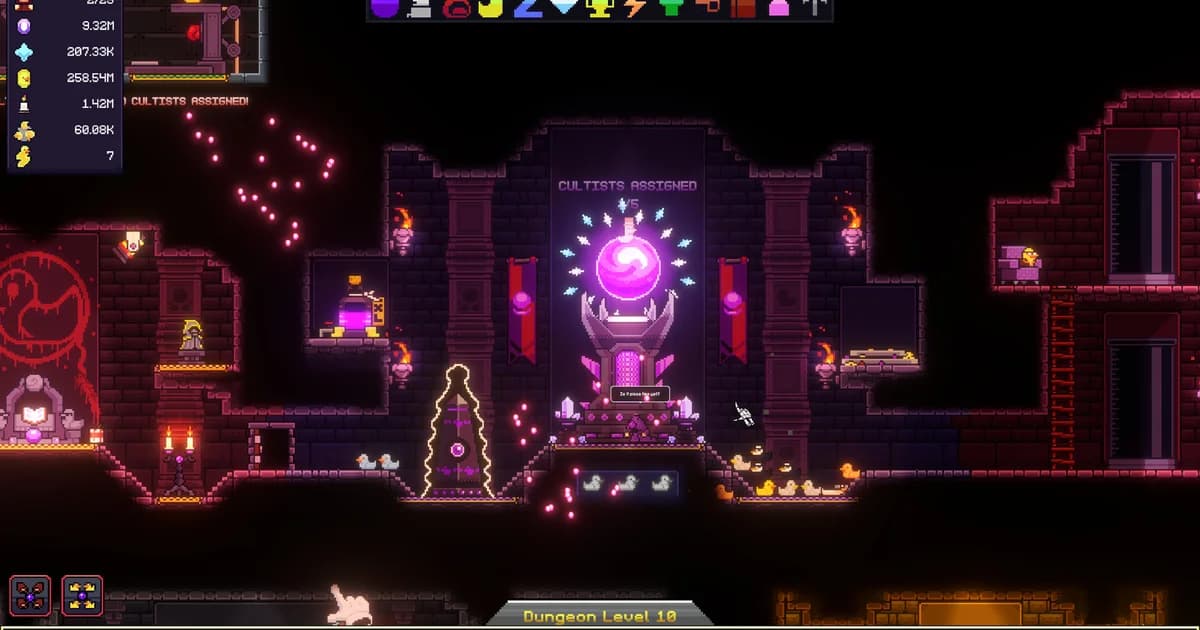
About the game
All Hail the Orb
LeGingerDev · LeGingerDev
All Hail the Orb stamina doesn't show you a bar or a number. It just quietly pulls cultists off their tasks for recovery, then sends them back. Most players don't track it at all. They set up the Library, assign cultists, run a Bench check, and close the game not realizing that a portion of every idle hour is going to recovery. The Devotion total when they get back is lower than it should be. They assume the loop is just slow.
Updated 2026-10-05: The related reading now points to April 26 Hotfix #2 for post-story continuation and the linked cluster uses the current Resonance wording.
TL;DR: Cultists in All Hail the Orb lose stamina while working and enter recovery periods that pull them off tasks. The stamina value isn't displayed, so the effect is invisible unless you're watching. Super Beds is the alchemy discovery that reduces the drain rate for the entire compound. Unlock it after Devotion Resonance Crystal, Crystal Conduit, and Speedy Transit. Library cultists are most affected because their task runs continuously and has no burst-then-idle cycle to absorb the recovery time. Long idle sessions see the biggest output gain from Super Beds.
All Hail the Orb stamina explained (quick answer)
Cultists deplete stamina while they work. Once stamina drops low enough, they stop, recover, and then return. The game shows you none of this directly. You won't see a stamina bar over a cultist's head or a recovery timer on the compound screen. What you see instead is a cultist wandering the compound or sitting idle when their assigned station has tasks waiting.
For short sessions this barely matters. You check in, click through Devotion Resonance Crystal, run a Bench visit, and leave. Recovery cycles don't accumulate in 15 minutes.
For longer idle sessions, including overnight runs, the math changes. A cultist spending 20 minutes out of every hour in recovery is effectively running at two-thirds capacity. Multiply that across a full roster and the Devotion total when you return is noticeably lower than it would be without any recovery downtime.
Super Beds doesn't eliminate recovery. It reduces the rate at which stamina drains, which means cultists stay on task longer before needing a break. That shift in ratio (more work time, less recovery time) is the whole value of the discovery.
How stamina drains and what you can observe
Stamina depletes during active task work. A cultist assigned to the Library runs Knowledge generation continuously, which means they're draining stamina continuously. A cultist in the Grotto works in bursts tied to the grotto's output cycle, so they're not draining stamina every second.
The recovery state is visible if you know what to look for. A cultist in recovery will leave their station and spend time in the compound. If the Library has two cultists assigned and you return after two hours to find only one actively standing at the Library while the second is wandering the floor, the second is likely mid-recovery. This is the stamina system showing itself.
What the UI doesn't tell you: how long recovery will last, how much stamina burned, or when the cultist comes back. You get the behavior, not the numbers.
This matters most for idle sessions you can't monitor in real time. You leave the game running, trust that your setup is working, and come back to whatever the compound produced. The stamina cycle is silently shaping that number the entire time you're away.
GODEEPER: Full breakdown of cultist distribution across roles, the idle session checklist, and the Knowledge bottleneck that delays alchemy unlocks. All Hail the Orb Automation Guide: Max Cultist Efficiency →
Why Library cultists take the biggest hit
Not all cultist roles are equally sensitive to recovery downtime.
Grotto cultists follow the grotto's output cycle. When the grotto has no output ready, they're waiting anyway. Their recovery periods blend into that natural wait. You don't lose meaningful production because there was nothing to harvest during recovery.
Library cultists are different. The Library generates Knowledge continuously as long as cultists are present and working. There's no output cycle, no natural pause. Every second a Library cultist spends in recovery is a second where Knowledge generation is slower or stopped.
Knowledge drives alchemy discovery availability. New discoveries appear at the Bench when your resources cross thresholds. With two Library cultists (the recommended minimum), if one is regularly in recovery, you're running below the Knowledge rate you planned for. Discovery thresholds arrive later. The compounding automation loop is slower than it should be.
This is why the stamina issue hits experienced players harder than newcomers. New players aren't optimizing Knowledge generation yet. Players in stages 3 and 4, actively working toward Crystal Conduit and the passive Devotion chain, are the ones who notice their Bench staying quiet longer than expected.
The fix is the same: Super Beds. But understanding that Library is where recovery costs the most is what tells you why the discovery matters beyond the generic "cultists work better" summary.
A station sitting empty, the same kind of staffing gap this guide is about: a cultist stuck in recovery leaves a slot idle just like this one.
Super Beds: what it does and when to unlock it
Super Beds is one of the 9 alchemy discoveries available at the Bench. It reduces the rate at which stamina drains during work for all cultists in the compound simultaneously. You don't apply it per cultist or choose which roles benefit. Once unlocked, every cultist's stamina depletes more slowly.
The Bench doesn't show Super Beds until your resources reach its unlock threshold. Like all discoveries, it appears when the game determines you've met the conditions, not on a fixed schedule. The pattern across most runs is that it shows up as a post-core discovery: after Devotion Resonance Crystal, Crystal Conduit, and Speedy Transit are already running.
Priority order:
The core three come first because they compound across the full remaining run:
- Devotion Resonance Crystal multiplies each click's Devotion contribution
- Crystal Conduit runs a passive Devotion loop between clicks
- Speedy Transit reduces cultist transit time across the compound
Super Beds improves the output rate of the cultist roster you've already built. It doesn't compound the Devotion generation chain the way Crystal Conduit does. Its value is proportional to how many cultists you have and how long your sessions run.
Treating Super Beds as optional is a mistake that shows up in your Devotion totals long after you've forgotten about the choice. It's not flashy. It just quietly makes every idle hour better. Grab it when it appears.
GODEEPER: All 9 alchemy discoveries ranked in unlock priority order and how each interacts with the Devotion chain. All Hail the Orb Alchemy Guide: 9 Discoveries Ranked →
Step-by-Step: Diagnosing a Stamina Bottleneck
If you suspect stamina is costing output, here's how to check, in order.
1. Watch cultist positions for 5 minutes without interacting: Assign all cultists to their stations and observe. If cultists leave stations during that window while tasks are queued, they're in recovery. Count how many and how often.
2. Check the Library Knowledge rate: Open the Library view and watch the Knowledge counter. In a healthy setup with two Library cultists actively working, the counter increments steadily. If you see it pause or tick more slowly than expected, one cultist may be in recovery.
3. Track Bench discovery gaps: If you're in stages 3 or 4 and the Bench hasn't produced a new discovery in over an hour despite checking it regularly, Knowledge generation may be slower than your threshold requires. Start by checking Library staffing for anyone in recovery.
4. Compare idle-session output against expectations: Come back after a long idle session and see what your Devotion counter actually gained. Compare it against what the Crystal Conduit loop plus cultist count should produce. If it's consistently lower than expected, stamina recovery is probably part of why.
5. Re-test after unlocking Super Beds: Run the same idle session length again and compare. The gap usually closes noticeably on sessions longer than two hours.
Stamina tips for idle sessions
Once Super Beds appears at the Bench, grab it before your next idle session. There's no reason to defer it. The discovery runs continuously from the moment it's unlocked, so every hour you wait is an hour it isn't working.
The roster size matters. A two-cultist compound sees modest improvement. Six cultists see substantially more, because Super Beds reduces recovery drain across all of them in parallel. As you add cultists across stage transitions, the per-session gain grows with the roster.
Don't advance Obelisk stages right before a long idle. Stage transitions reset dungeon elements and can disrupt cultist assignments temporarily. If you're planning an overnight session, let the current stage stabilize first. Leave the compound mid-stage, not mid-transition.
Library staffing stays at 2-3 even with Super Beds active. Some players add a fourth Library cultist thinking it'll improve Knowledge generation. It doesn't. The fourth cultist returns less than expected and pulls capacity from another role. Super Beds improves what your existing Library staff produce; it doesn't shift the optimal headcount.
Check the Bench before you close the game. If Super Beds has appeared and you miss it, the next idle session runs without it. The check takes 10 seconds. Worth doing every time you open the compound screen.
Quackletta's duck-rolling screen, a separate reward loop from the Alchemy Bench discoveries like Super Beds that this guide is actually about.
When Super Beds matters most (and when it doesn't)
Short sessions (under 30 minutes): the stamina effect is minimal. You're actively interacting, clicking through Devotion Resonance Crystal, and making Bench visits. Cultist recovery cycles don't accumulate meaningfully in that window.
Medium sessions (1-2 hours of idle): Super Beds produces a measurable but modest improvement. You'd see the difference in Devotion totals, but it's not dramatic at this scale.
Long idle sessions (overnight, or away for 4+ hours): this is where Super Beds does the most work. Recovery cycles compound across hours. A cultist spending a portion of every hour in recovery versus one spending a smaller portion (with Super Beds active) produces a substantially different total across six hours. The bigger your roster and the longer your sessions, the more the discovery is worth.
Players who run the game primarily in short bursts get less from Super Beds than players who leave it idle overnight. Both benefit, but the overnight crowd notices it immediately.
Related Reading
- All Hail the Orb Automation Guide: optimal cultist distribution by stage, idle session checklist, and the Knowledge bottleneck diagnosis.
- All Hail the Orb Alchemy Guide: all 9 discoveries ranked in priority order, the Library-to-Eureka Moments chain, and the April 26 post-story update.
- All Hail the Orb Best Build Guide 2026: the full automation sequence with Obelisk timing and the compounding passive Devotion loop.
- All Hail the Orb Complete Guide 2026: hub for all AHTO guides across alchemy, automation, secrets, endings, and achievements.
- All Hail the Orb Tips for Beginners: first-session decisions and what to automate before touching the Obelisk.
- All Hail the Orb Ending Explained: What Happens After: All Hail the Orb ending explained: the 1B Devotion finale and April 26 post-story continuation.
- All Hail the Orb Review: A Three-Hour Cult Classic: All Hail the Orb review: a pixel-art clicker about summoning cultists and exploring a dungeon.
- All Hail the Orb Obelisk Guide: Stages and When to Advance: All Hail the Orb Obelisk guide: the 6 stages, when to advance vs.
- All Hail the Orb New Player Mistakes: 8 Common Errors: All Hail the Orb new player mistakes: under-staffing the Library, wrong alchemy order, advancing too.
- All Hail the Orb Resonance Guide and Crystal Conduit: the documented chain condition and the current-tooltip caveat.
- All Hail the Orb Achievement Guide: the achievement checklist that pairs with the automation setup.
References
- All Hail the Orb on Steam: official store page and community hub
- LeGingerDev on Steam: developer page and update history
Frequently asked questions
What does stamina do in All Hail the Orb? Stamina depletes as cultists work. When it runs low, cultists leave their posts for recovery before returning to tasks. The value isn't shown in the UI. You observe it as cultists absent from stations while tasks are queued, or as slower-than-expected output after idle sessions.
What is Super Beds in All Hail the Orb? An alchemy discovery that reduces the rate at which cultist stamina drains during work. It applies to every cultist in the compound at once, not per role. The effect is largest for long idle sessions and larger rosters.
When should I unlock Super Beds? After the core three: Devotion Resonance Crystal, Crystal Conduit, and Speedy Transit. These compound the Devotion generation chain first. Super Beds then improves the output rate of your existing cultist roster. Grab it immediately when it appears at the Bench.
How do I know if stamina is limiting my output? Watch cultist positions for a few minutes without interacting. If cultists leave their stations when tasks are queued, they're in recovery. For the Library specifically: watch the Knowledge counter. A pause or slower increment rate during what should be active generation usually means a cultist is recovering.
Does Super Beds affect Library cultists the same as others? It applies equally to all cultists, but Library cultists benefit more in practice. The Library runs Knowledge generation continuously with no natural pause. Any recovery period for a Library cultist stops that generation entirely, unlike Grotto cultists whose recovery often overlaps with natural output wait periods.
How much does Super Beds increase output? LeGingerDev hasn't published exact numbers. The gain is proportional to session length and roster size. Short sessions see modest improvement; overnight runs with 6+ cultists see a much larger gap compared to running without it.
Can I see stamina levels directly? No. The UI doesn't display stamina values or recovery timers. The only indicators are cultist behavior: leaving posts, wandering the compound, or being absent from stations when tasks are available.
Was this guide helpful?
About the author

Indie & JRPG Critic
Indie game evangelist and lifelong JRPG fan covering small studios since 2017. Mumbai-born, London-based. Writes the way she talks.
- 7 years indie games coverage
- JRPG and visual novel specialist
- Narrative design focus
Keep reading
All Hail the Orb Unlock Tier List: All 9 Discoveries Ranked
Guides · 8 min
All Hail the Orb New Player Mistakes: 8 Common Errors
Guides · 13 min
All Hail the Orb Automation: Max Cultist Efficiency Guide
Guides · 11 min
All Hail the Orb Walkthrough: Every Guide by Stage
General · 11 min
All Hail the Orb Alchemy Recipes: Complete List of All 9
Guides · 13 min

All Hail the Orb Resonance Guide and Crystal Conduit
Guides · 8 min
Game deals · affiliate links

Disclaimer
This article is published for informational and entertainment purposes. It does not constitute professional financial, legal, or technical advice. Game performance, online services, patch schedules, and store listings change. Verify critical details (pricing, system requirements, regional availability) with publishers and storefronts before you buy. Affiliate links, where present, help support our editorial work and are labelled in our affiliate disclosure.
Comments
Loading comments…