
ReviewVampire Crawlers: The Turbo Wildcard from Vampire Survivors
Vampire Crawlers Review: poncle's Deckbuilder Delivers
Vampire Crawlers review: poncle's cheap turn-based deckbuilder suits Vampire Survivors fans who want combos; players who hate meta grinding should wait.
Vampire Crawlers review, short version: at under ten dollars, Vampire Survivors fans should buy it; players who hate meta-progression grind should skip it. poncle's follow-up to Vampire Survivors is a complete genre pivot from bullet-hell auto-battler to turn-based deckbuilder, developed alongside Nosebleed Interactive and released on PC via Steam on April 21, 2026. Steam players rate it Overwhelmingly Positive, and the free Death Parade update landed on October 12.
Sponsored

About the game
Vampire Crawlers: The Turbo Wildcard from Vampire Survivors
poncle, Nosebleed Interactive · poncle
Reception
- Steam user reviews, all languages
- Overwhelmingly Positive
- 96% positive of 19,403 reviews
- Checked on Steam
Pros
- Turboturn combo chains reward build knowledge without demanding frame-perfect execution
- Free Death Parade update (October 12) added a new stage, three dungeons and two new Crawlers
- Adjustable pacing lets the same mechanics serve deliberate deck-builders and speed-run attempts equally
- Environmental dungeon traversal: walls, shovels, floor transitions: gives runs real texture
Cons
- Negative Steam reviews say the game falls apart past the early game and the HUD wastes screen space
- Meta progression pushes repeat grinding of the same dungeons until you buy the right upgrades
Verdict
Vampire Crawlers suits Vampire Survivors fans and deckbuilder newcomers who want cheap, compulsive combo runs; players who dislike meta-progression grind or want varied enemies should wait.
Updated 2026-10-15: dropped the old score and the unsourced run-length and difficulty estimates; the verdict now draws on Steam reviews, and this page covers the Death Parade update and the mobile launch.
Sponsored

Current status: October 2026
Vampire Crawlers is $7.99 on Steam right now, 20% off its $9.99 list price, and players rate it Overwhelmingly Positive (the Reception box has the live figures and the Metacritic score). The free Death Parade update arrived on October 12 on all platforms with 1 new stage, 3 new dungeons, 2 new Crawlers, 2 new weapons plus an evolution and a utility card, 4 gems, 4 Arcanas and 2 relics, and new ways to manage your hand and put discarded cards to work. The same day, the game launched on iOS and Android. Steam lists 161 achievements and full controller support. For a wider genre comparison, see Best Roguelike Games 2026.
The result is better than the pivot had any reason to be.
Vampire Crawlers review: Key Takeaways
- Released April 21, 2026 on PC (Steam); iOS and Android followed on October 12
- Developer: poncle + Nosebleed Interactive | Publisher: poncle
- Price: $9.99 list, $7.99 in the current 20% sale
- Genre: Turn-based deckbuilding roguelite
- Run length: about an hour for a full dungeon, per one Steam reviewer; 161 achievements
- Steam reviews: Overwhelmingly Positive
Vampire Crawlers review: Overview
The collaboration context matters. Nosebleed Interactive made Turbo Golf Racing, a game with clean multiplayer mechanics and tight movement systems. That background shows in Vampire Crawlers: the dungeon traversal and floor structure feel deliberate rather than bolted-on, which is not something a solo project typically delivers on the first iteration. poncle's mechanical instincts, Nosebleed's structural experience: the pairing is legible in the output.
The premise is a full-scale transplant. Vampire Survivors was a top-down auto-battler where surviving waves of enemies long enough to collect experience and chain weapon evolutions was the entire game. Vampire Crawlers keeps the characters, the enemy names, the general aesthetic vocabulary. The control mechanics are entirely different. You move through a dungeon, engage enemies in turn-based combat, and build a card deck that grows and changes across a run. The Turboturn™ system is the central mechanic: that word gets a trademark in the game's own menus, which either signals confidence or humor, possibly both.
What caught attention during the lead-up to this release was the severity of the pivot. poncle did not iterate on Vampire Survivors. He left it. Whether that was the right commercial decision is outside the scope of this review, but the willingness to abandon a proven formula for something structurally unrelated is rare enough on its own to note.
Gameplay
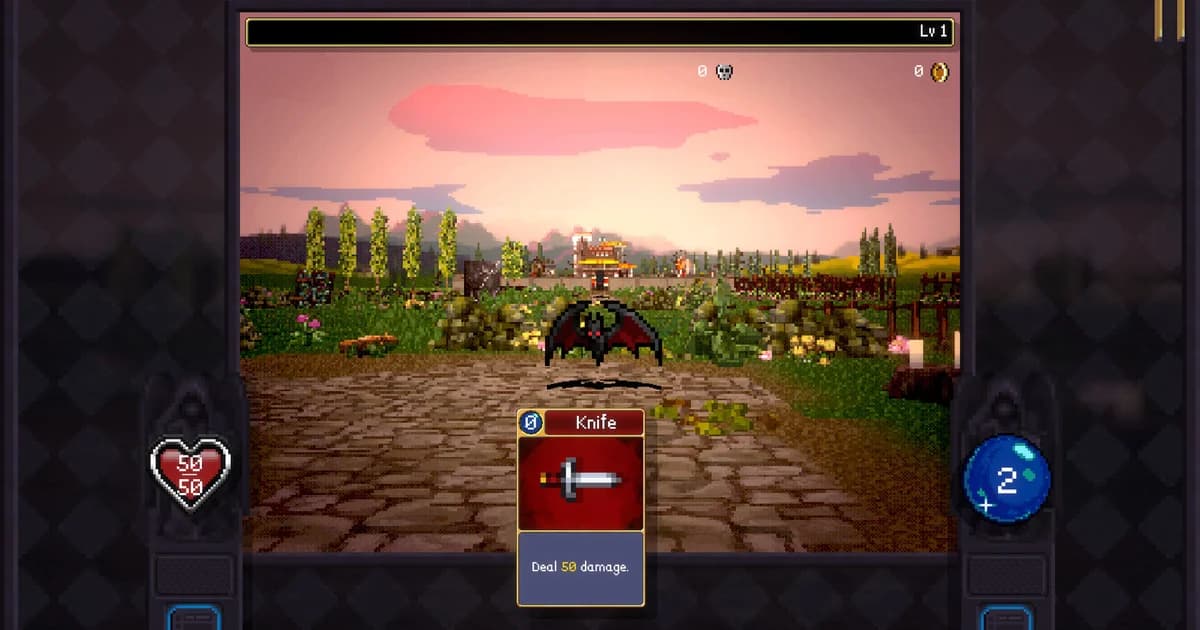
The Turboturn system is the core. Each turn, cards from your hand are played in ascending mana cost order: cheapest card first, most expensive last. Each card applies a multiplier to the next one in the chain. A 1-cost card dealing 5 damage, followed by a 3-cost card dealing 12, results in the second card dealing more than 12. Add a third and fourth card and the final hit compounds those multipliers further. A well-constructed chain of five or six cards can hit for two or three times the raw totals.
The skill expression is: given the cards currently in your hand, in what order do you play them to maximize the final card's damage? That question changes every run because the deck changes every run. Experience pickups from defeated enemies let you choose new cards to add. Item drops modify existing cards. Weapon evolutions (carried over from Vampire Survivors as a structural concept) create cascading effects in the late run that can break the game balance in your favor if the build coheres.
The dungeon design adds more than expected. Floors have functioning walls, which constrains enemy movement and creates navigational decisions that don't exist in the original game. Finding a shovel lets you skip to a lower floor without clearing every room: a time-investment tradeoff. Some areas have environmental hazards. These mechanics are not complex individually, but they make the space between combats feel inhabited rather than transitional.
Note: A full run through all of a dungeon's floors takes about an hour, according to one Steam reviewer, against 5 to 30 minutes for a typical Vampire Survivors run (Steam review). Plan sessions accordingly.
The opening card pool is thin by design: each run expands the available card pool for future runs, a common pattern in the genre. Death Parade has already added new weapons, an evolution, Arcanas and relics on top, so the card space is not a final state.
Cards in hand are played in ascending mana-cost order: here Axe (cost 2) and King Bible (cost 0) are queued for the next turn.
Replayability
The build space is the primary replayability driver. poncle structured Vampire Survivors' endgame around challenge runs and character-specific unlock conditions. Vampire Crawlers applies the same pattern: the card pool available at the start of each run expands as prior runs are completed, meaning early runs play different from late runs in a way that rewards continued investment rather than penalizing it.
For context on what else came out this week: Pratfall launched its co-op cave-exploration roguelite on the same general calendar window. The genres don't overlap, but both games are betting on run-based structures at low price points. Vampire Crawlers has more legacy IP momentum. Whether that translates to long-term community retention is a question the game's card unlock system is designed to answer affirmatively.
Characters push toward different card archetypes, though one Steam reviewer warns that "Builds are determined on character select. You will suffer if you try to deviate" (Steam review). That is a lighter differentiation than, for example, what the best roguelike games of 2026 top tier delivers, but at $9.99 the content density is consistent with the price.
Vampire Crawlers launched April 21, 2026. The playable characters and their card archetypes are covered in the text above.
Verdict
poncle changed genres and delivered a deckbuilder with a mechanic, the Turboturn chain, that players keep coming back to. A 29-hour fan calls it "An honestly phenomenal deckbuilder game, that manages to take the magic that made Vampire Survivors fun to play, and relocates that same energy to a new format" (Steam review). A former skeptic writes "Reminder to other Hearthstone/MtG haters: a roguelike deckbuilder is nothing like the games you hate" (Steam review).
The negative reviews come from people who played a lot. One "LOVED the first 5-8 hours" but says that past the early game "it just falls apart," starting with a HUD where "2/5th of my screen" is "useless black bars" (Steam review). Another says the level progression "forces you to grind the same dungeons over and over again until you have bought 'the optimal' upgrades" (Steam review), and a 47-hour player calls the boss mechanic "one of the worst ever devised" (Steam review). Even a positive review notes "No enemy gimmicks. Each enemy is functionally the same but with a different sprite" (Steam review).
Who it suits: Vampire Survivors fans who want the same compulsive loop in a slower format, deckbuilder newcomers (it explains itself and costs less than most lunches), and players who enjoy sequencing combos. Death Parade gives returning players a new stage and dungeons for free. Our best indie games under $20 roundup has more picks at this price tier.
Who should wait: players who dislike meta-progression grind, anyone who wants varied enemy behaviour and boss design, and players who need the follow-up to feel like Vampire Survivors. This is not that game, and it doesn't try to be. (Our All Hail the Orb review covers a similarly budget-friendly roguelite.)
The Bylina review this site published recently covers another indie game with strong mechanical identity that asks you to learn its systems from scratch. Our Vampire Survivors Legacy of the Bloodmoon coverage covers poncle's own flagship game's latest expansion, useful context for how the studio's pricing philosophy carries over here. Gambonanza's review and Skull Horde's review are both worth a look too, for readers who want more budget-friendly deckbuilders and roguelites in the same price range.
Frequently Asked Questions
How long is Vampire Crawlers? There is no story endpoint. One Steam reviewer says a full run through all of a dungeon's floors takes about an hour, and another reports 100% of the 161 achievements at around 33 hours played.
Does Vampire Crawlers have controller support? Yes, as of a post-launch update. Steam now lists full Xbox, PlayStation, and Steam Input controller support, including a controller-driven cursor added for the card interface, which wasn't there at launch.
Is Vampire Crawlers worth buying if you've never played Vampire Survivors? Yes. The game uses Vampire Survivors characters as flavor, not as prerequisite knowledge. Every mechanic is introduced in-game. Prior familiarity speeds up character recognition but changes nothing about how the mechanics work.
How does the Turboturn system work? Each turn, cards are played in ascending mana cost order. Each card's damage output multiplies the next card's. A tightly sequenced chain of five or six cards can hit for several times the raw listed total. Finding the right sequence for your current build is the core skill loop.
Is Vampire Crawlers hard? Steam reviewers split on this. One calls it boring and too easy, another says the meta progression means basically all the content can be trivialized, while a negative review says you have to grind the same dungeons until you buy the optimal upgrades.
Related Reading
- Vampire Survivors: Legacy of the Bloodmoon: poncle's other 2026 release in the Vampire Survivors line.
References
- Vampire Crawlers: The Turbo Wildcard on Steam
- Vampire Crawlers official announcements: Death Parade release notes, mobile launch and dev updates
- poncle: developer of Vampire Survivors and Vampire Crawlers
- Nosebleed Interactive: co-developer; UK-based studio specializing in card and roguelite mechanics
About the author

Systems & Economy Desk
GameBrief's byline for roguelikes, strategy and simulation. Reads patch notes, wiki tables and Steam stats and puts the numbers on the page.
- Roguelikes, strategy and simulation
- Builds, progression and economy
- Sources listed per article
Keep reading

Skull Horde Review: Fast Dungeon Auto-Battler Worth Buying
General · 7 min
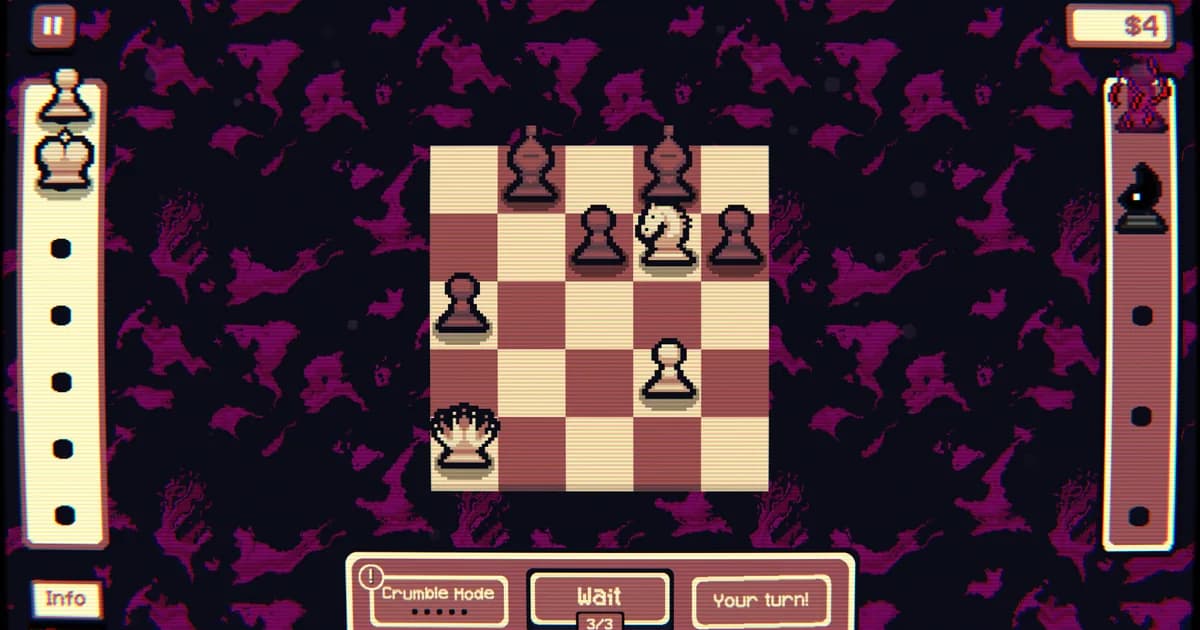
Gambonanza Review: Chess Balatro or Something Better?
General · 8 min

Tides of Tomorrow Review: Story-Link Changes Everything
General · 10 min

Kristala Review: PS5 and PC Feline Souls-Like With Caveats
General · 10 min

Scriptorium Review: Medieval Art Without the Monastery
General · 8 min

Moomintroll Winter's Warmth Review: Soft and Quiet
General · 9 min
Sponsored
Disclaimer
This article is published for informational and entertainment purposes. It does not constitute professional financial, legal, or technical advice. Game performance, online services, patch schedules, and store listings change. Verify critical details (pricing, system requirements, regional availability) with publishers and storefronts before you buy. Affiliate links, where present, help support our editorial work and are labelled in our affiliate disclosure.
Comments
Loading comments…