
GuideWindrose
Windrose Naval Tactics Guide: All 5 Tactics Ranked 2026
Windrose naval tactics don't just tweak numbers. They change how you engage, when you engage, and what the shape of a session looks like. Most players stick with whatever tactic they unlocked first because the system isn't explained anywhere in-game. The five real options are Ambush, No Quarter, Stretch The Supply, Shipshape, and Silence the Guns: picking the wrong one for your playstyle means leaving value on the table in every fight you take.
Sponsored

About the game
Windrose
Kraken Express
This guide covers all five naval tactics, the cannon rotation technique that pairs with them, and the fleet engagement strategies that differ by biome.
TL;DR: The five real Naval Tactics are Ambush, No Quarter, Stretch The Supply, Shipshape, and Silence the Guns, all unlocked at Smugglers of Port Royal Level 3. Stretch The Supply is the community's go-to for sustained fights (pairs well with Keelhold); Shipshape favors speed over raw output. The cannon rotation technique (left broadside → right broadside → bow in sequence) improves your effective damage output regardless of which tactic you're running. Ambush rewards a strong opening volley; No Quarter is boarding-specific.
BESTPRICE: Want Windrose? These stores list it: Buy on Eneba → Buy on Loaded →
Windrose naval tactics: quick answer
Naval tactics are equippable upgrades from the Shipwright's Workshop, unlocked through Smugglers of Port Royal Level 3. You equip one at a time. The five real options are:
| Tactic | What community reports say | Best for |
|---|---|---|
| Stretch The Supply | Pairs with Keelhold, built for long fights | Sustained encounters |
| Shipshape | Favors mobility and speed over raw output | Repositioning-heavy fights |
| Ambush | Increases opening volley damage | Burst-first engagement style |
| Silence the Guns | Likely targets enemy cannon fire (unconfirmed specifics) | Suppression-focused play |
| No Quarter | Improves boarding effectiveness | Boarding-first playstyle |
Level 3 Smugglers reputation unlocks access to all five. You can swap tactics between sessions at the Shipwright's Workshop. Exact numeric effects for Stretch The Supply, Shipshape, and Silence the Guns aren't independently documented yet: treat the descriptions here as directional community consensus, not confirmed patch-note specifics, and verify in-game before committing to a build around them.
GODEEPER: Full breakdown of the Smugglers of Port Royal faction, how to reach Level 3 efficiently, and what each level unlocks beyond naval tactics. Windrose Faction Tier List 2026: Best Order to Level →
Sponsored

Key takeaways
- The five real Naval Tactics are Ambush, No Quarter, Stretch The Supply, Shipshape, and Silence the Guns
- Stretch The Supply is the community's go-to pick for sustained, long fights and pairs with Keelhold
- The cannon rotation technique is tactic-agnostic: it works with any tactic equipped
- Ambush rewards players who master approach positioning and opening-volley timing
- No Quarter only makes sense if boarding is your primary engagement method
- Exact numeric effects for Stretch The Supply, Shipshape, and Silence the Guns aren't independently documented; verify in-game before building around them
- All tactics require Smugglers Level 3; reach it before the Cursed Swamps or you're playing without the system
The cannon rotation technique
Before tackling individual tactics, this is the foundational technique that affects every ship combat encounter regardless of which tactic you're running.
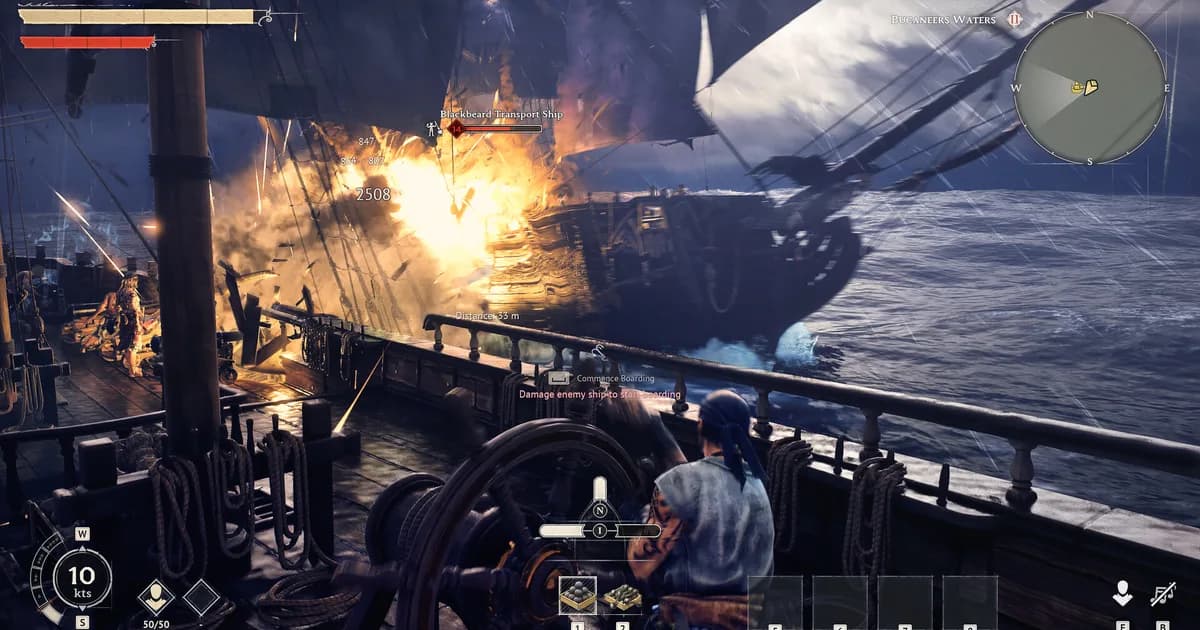
Your ship has three independent cannon positions: left broadside, right broadside, and bow. Each has its own reload timer. The mistake most players make is firing all three simultaneously in a volley, then waiting through a full combined reload while enemies keep shooting.
The rotation: fire the left broadside, maneuver to bring the right broadside to bear, fire, bring the bow around, fire. You're using the travel time between positions to cover the reload on the positions you've already fired. The result is near-continuous damage output instead of burst fire followed by dry reloads.
The community nickname for this is "Perfectly Ordered Cannons," because the rotation is only possible if you're positioning the ship intentionally between each fire rather than sitting static and waiting. It rewards aggressive maneuvering. Passive players who hold position and volley get maybe 40% of the damage output that the rotation achieves over a 90-second fight.
Whichever of the five tactics you have equipped, the rotation technique still applies: it's the foundational skill, independent of tactic choice.
All five naval tactics
A note before the breakdown: Ambush and No Quarter have specific, independently confirmed mechanics (below). Stretch The Supply, Shipshape, and Silence the Guns are real tactics (their names are confirmed against multiple sources), but their precise numeric effects aren't independently documented anywhere yet. Treat those three descriptions as community-consensus direction, not verified patch-note specifics, and check the in-game tooltip before committing.
Stretch The Supply
The community's standout pick for sustained, long fights. It's consistently paired with Keelhold in player discussion of endgame Frigate builds, which suggests it's oriented around outlasting an opponent rather than ending a fight quickly. If your sessions run long (extended fleet engagements, boss fights with multiple phases), this is the tactic players reach for.
Shipshape
The speed-over-output pick. Where Stretch The Supply is about sustaining a long fight, Shipshape shows up in discussion of players who prioritize mobility and repositioning. If you're spending more time maneuvering than exchanging fire, or you're not confident in your positioning yet, this is the safer choice while you learn ship combat.
Silence the Guns
Rounds out the five tactics. Based on the name and its place in the roster alongside Ambush and No Quarter, it likely suppresses or reduces enemy cannon effectiveness in some way, but this isn't independently confirmed. If you pick it up, test it against a pirate fleet ship before relying on it in a harder encounter.
Ambush (B tier)
Ambush adds bonus damage to your opening cannon volley when you initiate combat. The first exchange in a new encounter deals more than it would with any other tactic.
Two conditions make Ambush work: you need to consistently win the approach (be in position to open at optimal range before the enemy can react) and your sessions need to have a lot of short fights rather than extended engagements. Pirate camp sailing circuits in the Foothills fit both conditions. Each camp has 2-3 ships, encounters resolve quickly, and a Blackbeard ship at 22 kn speed can approach from angle before most enemies adjust.
Where it falls apart: anything that takes longer than 3-4 exchanges. In those fights, the Ambush opener becomes a small fraction of total output, and a sustained-fight tactic like Stretch The Supply pulls ahead over many exchanges.
Ambush is a legitimate pick for experienced players who have mastered approach positioning. It's not a beginner tactic.
No Quarter (B tier, boarding-specific)
No Quarter improves boarding effectiveness: the damage your crew deals during boarding actions and the speed at which boarding encounters resolve.
The niche is real. A Blackbeard Brigantine captain who leads boarding parties instead of rotating broadsides will see better results with No Quarter than without it. Boarding gives better loot per encounter when it works because you're collecting from the ship rather than just sinking it.
The problem is that No Quarter only makes sense if boarding is your consistent strategy. Stretch The Supply and Shipshape both improve the approach phase of a fight, which happens in every encounter. No Quarter only applies after you've already won the approach and brought a ship to boarding range. Choosing No Quarter means committing to boarding as your primary damage source, which requires positioning skills and timing that casual players often don't have.
For players who want to build boarding-focused runs: No Quarter is your tactic. For everyone else, it's C tier.
Pre-session ship checks matter. Having the right tactic equipped before you sail determines what options you have once contact happens.
Fleet engagement strategy by biome
The tactics only solve half the problem. The other half is how you approach fleet composition and engagement order.
Coastal Islands: Encounters are 1v1 and 2v1 at most. The cannon rotation technique covers everything here; whatever tactic you have equipped is fine.
Foothills: Ship circuits in the Foothills regularly produce 3v1 situations. The correct approach: demast one ship with Bar Shots to remove it from the engagement temporarily, then run the rotation technique on the ship that can still maneuver. Don't fight three mobile ships simultaneously if you can take one out of the chase first.
Cursed Swamps: Naval encounters here frequently happen in partially blocked terrain with 3-4 ship fleets that include higher-tier enemies. If you're equipped with Shipshape or another mobility-leaning tactic, use it to break contact when the engagement angle goes wrong. Never commit to a static broadside fight in the Swamps if terrain is pinching you: the goal is always to create a clean 1v1 situation against the nearest threat first.
The world map tracks faction control, discovered ports, and cleared dungeon locations, useful for planning efficient multi-island routes.
GODEEPER: How to combine camp circuits and sailing routes in the Foothills to maximize Old Salt Insignia drops, which feed both faction reputation and Piastre income. Windrose Pirate Camps Farming Guide: XP Loop and Respawn →
Piastre economics of ship combat
Ship combat generates Piastre through loot from sinking and boarding. 36lb cannons unlock at Rogue Buccaneers Level 4 and cost 500 Piastre per plan. Understanding how session design affects Piastre return shapes how you plan runs.
Boarding generates more Piastre per encounter than sinking. A sunk ship drops a fraction of its cargo. A boarded ship lets you loot the hold directly. If your session is going well and a target reaches boarding state (the Sword icons appear above the ship), it's worth the boarding commitment for the loot multiplier.
The caveat: boarding takes longer and leaves you stationary. Against a 3-ship fleet, boarding one while two others are still mobile is a good way to take sustained fire during the boarding action. Only board when you can either neutralize the remaining ships first with Bar Shots or handle the engagement solo.
Old Salt Insignias drop from defeated ships in the Foothills and Cursed Swamps and are worth +80 faction reputation each. Running ship combat isn't just Piastre income. It's the fastest reputation source in the game, which accelerates every faction upgrade including the next Shipwright's Workshop tier.
Related Reading
- Windrose Ship Combat Guide: Bar Shots, Raking and Sea Tips: the foundational ship combat guide covering bar shots, critical hits, and how to handle outnumbered encounters.
- Windrose Best Ship Build Tier List 2026: Blackbeard vs Brethren variant debate, the full cannon and hull bracing priority order, and why Keelhold changes ship survivability math.
- Windrose Faction Reputation Guide: Level Factions Fast 2026: how to farm Old Salt Insignias efficiently, why ship combat is the fastest reputation source, and which faction to prioritize for Smugglers Level 3.
- Windrose Faction Tier List 2026: Best Order to Level: what Smugglers Level 3 unlocks, the full vendor comparison, and the faction order that gets you naval tactics before the Cursed Swamps.
- Windrose Complete Guide 2026: the full progression path, where ship combat fits in the overall loop, and the biome unlock order.
- Windrose Israel Hands Boss Guide: Foothills Fight & Loot: Windrose Israel Hands boss guide: how to beat the Foothills boss, parry his combo, dodge the Poison Dash....
- Windrose Ashlands: Release Window and Confirmed Plans: Windrose Ashlands release date: Kraken Express said 'at least 6 months' on April 29, so.
- Windrose Endgame Guide: What to Do After the Story: Windrose endgame guide: faction Level 3 priority order, Frigate build-out, Steel gear farming loops, and.
- Windrose Best Weapons Tier List 2026: All Tiers Ranked: Windrose best weapons tier list 2026: Steel Halberd S-tier, Copper Sword B, Stone tools F.
- Windrose Max Level 15: Fastest XP Paths in Early Access: Windrose max level is 15 in Early Access.
References
- Windrose on Steam: official store page, patch notes, and ship combat system details from Kraken Express
- Windrose Steam Community Discussions: community tactics discussion, cannon rotation threads, and Naval Tactic tier debates
Frequently Asked Questions
What are the best naval tactics in Windrose? Stretch The Supply is the community's standout pick for sustained, long fights, and it's often paired with Keelhold. Shipshape is the go-to for players who value mobility and speed over raw output. Exact numeric effects for both aren't independently documented yet, so verify in-game before committing to a build.
How do you unlock naval tactics? Through Smugglers of Port Royal faction reputation at Level 3. All five tactics (Ambush, No Quarter, Stretch The Supply, Shipshape, Silence the Guns) become available simultaneously. Equip one at a time from the Shipwright's Workshop between sessions. The fastest path to Level 3 is consistent ship combat in the Foothills and Cursed Swamps: Old Salt Insignias from those naval encounters give +80 reputation each.
What is the cannon rotation technique? Fire your three cannon positions (left broadside, right broadside, bow) in sequence rather than all at once. Each position has an independent reload cooldown. Using travel time between firing angles to cover the reload of previously fired positions produces near-continuous damage output. Volleying all three simultaneously wastes two-thirds of your potential fire rate.
What does Stretch The Supply do? Community reports consistently pair it with Keelhold for long, sustained fights. It's the pick when you expect a fight to run many exchanges rather than resolve quickly. Exact mechanics aren't independently confirmed yet.
What does Shipshape do? Favors mobility and repositioning over maximizing per-exchange damage. It's the safer pick while you're still learning ship combat positioning, or in biomes where clean engagement angles are hard to get. Exact mechanics aren't independently confirmed yet.
What is the Ambush tactic for? Opening volley burst damage. Works best for players who master approach positioning and run sessions with many short fights rather than extended engagements. In Foothills pirate fleet circuits, Ambush combined with the speed advantage of a Blackbeard ship produces strong early damage. In longer encounters, a sustain-focused tactic like Stretch The Supply likely outpaces Ambush's front-loaded bonus over many exchanges.
Was this guide helpful?
About the author

Systems & Economy Desk
GameBrief's byline for roguelikes, strategy and simulation. Reads patch notes, wiki tables and Steam stats and puts the numbers on the page.
- Roguelikes, strategy and simulation
- Builds, progression and economy
- Sources listed per article
Keep reading
Windrose Foothills Guide: 5 Priorities for Gear and Boss
General · 9 min
Do Mines Respawn in Windrose? Full Ore Timer Guide
General · 4 min
Windrose Israel Hands Boss Guide: Foothills Fight & Loot
Guides · 8 min
Windrose Armor Guide: 6 Rare Sets, Bonuses and Upgrade Order
General · 11 min
Windrose Talent Tree Guide: Best Talents and Builds 2026
General · 9 min
Windrose High Priestess Boss Guide: 4 Attack Zones & HP
Guides · 10 min
Sponsored
Disclaimer
This article is published for informational and entertainment purposes. It does not constitute professional financial, legal, or technical advice. Game performance, online services, patch schedules, and store listings change. Verify critical details (pricing, system requirements, regional availability) with publishers and storefronts before you buy. Affiliate links, where present, help support our editorial work and are labelled in our affiliate disclosure.
Comments
Loading comments…