
ReviewMoonlight Peaks
Moonlight Peaks Review: 88% Positive, Thin on Romance
Moonlight Peaks review: the coffin-at-sunrise farming loop is a fresh twist, but romance is shallow and the mid-game drags. Who should buy, who should wait.
Moonlight Peaks review, short version: buy it for the farming, not the romance. The coffin-at-sunrise loop is a genuinely fresh twist on a familiar formula, and Steam players rate it Very Positive. But the romance system is thin, the middle stretch drags, and at least one major outlet called the character writing anemic. At its full price, players after relationship depth should wait for a sale.
Sponsored

About the game
Moonlight Peaks
Little Chicken · XSEED Games, Marvelous Europe
Reception

Pros
- The coffin-at-sunrise structure is a real twist on the farm-sim clock, not a reskin
- Farming, foraging, and potion-crafting loop feels honed, not half-finished
- Gothic art direction and the Nokturna card minigame add real texture
Cons
- Romance system is shallow: one date activity per character across just seven families
- Pacing sags in stretches with no active quest to chase
- Character writing has been called thin by more than one outlet
Verdict
Moonlight Peaks suits cozy farm-sim fans who want a gothic night-time twist; players after deep romance or a fast-paced mid-game should wait for a sale.
Updated 2026-10-15: dropped the old score; the verdict now draws on Steam reviews, and the post-launch check covers patch 1.3.9.
Sponsored

Key Takeaways
- Released across the announced July 6-7, 2026 window on Steam, Switch, Switch 2, and Google Play Games
- $34.99 at full price
- Steam reviews: Very Positive (current figures in the Reception box)
- 59 achievements, seven resident families, roughly two dozen romanceable characters
BESTPRICE: Want Moonlight Peaks? These stores list it: Buy on Humble Bundle →
Moonlight Peaks overview: vampire life-sim basics
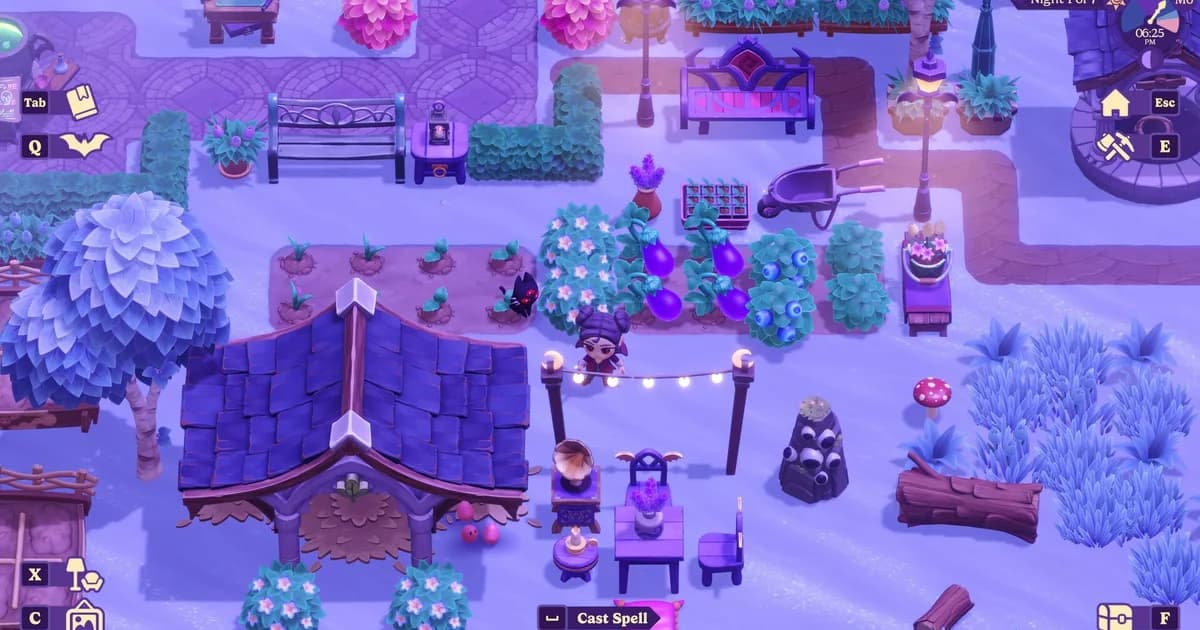
Little Chicken built Moonlight Peaks around a simple inversion: you're a vampire who inherited a gothic homestead, and because vampires can't work in daylight, every activity (farming, foraging, spell-casting, potion-making, socializing) happens at night before the game drags you back to your coffin at sunrise. Publishers XSEED Games and Marvelous Europe aren't newcomers to this genre; XSEED's Story of Seasons localization history shows in how the farming systems are paced and explained.
The free demo had been public for months before the July 6-7 launch, which is longer than most life-sims give players to test the loop before committing. That mattered here: the crop and potion systems this review is most positive about are exactly what the demo showcased, while the social layer this review is most critical of sits past the point most demo players would have reached. Anyone who tried the demo and liked the farming half was, in effect, seeing the game's strongest section.
The pitch works better than it has any right to. Racing moonrise instead of racing sunset sounds like a cosmetic swap on paper, but it changes how you plan a session: you're not winding down toward evening, you're building toward a hard cutoff that yanks you back to the coffin whether you're ready or not.
The seven families you're untangling the history of, the Draculas, the Ambrosias, the Khazans, the Logans, the Webbs, the Hosus, and the Hendersons, each get their own achievement track and their own corner of town. Shapeshifting and spell-casting sit on top of the farming loop rather than beside it: you'll learn spells that speed up gathering runs and shift form to reach parts of the map that are otherwise closed off, so the "magic" systems feed the economy loop instead of existing as a separate combat layer the game never really commits to.
Moonlight Peaks' farming loop, and where it thins out
The core systems are the strongest part of Moonlight Peaks. Raising mystical crops, foraging around the gothic map, and brewing potions all feel like a team that has shipped farm-sim mechanics before, not a first attempt bolted onto a vampire skin. The Nokturna card minigame, playable against named town NPCs, works as its own system rather than a throwaway distraction tacked on to pad the box art.
Homestead customization gets the same level of care. What starts as a forgotten, half-collapsed farm gradually turns into whatever gothic sanctuary you want it to be, with new tools unlocking room to raise magical livestock and grow rarer crops as you progress. It's not a radically new take on the base-building side of the genre, but it's executed cleanly, and the gothic art direction means even a fairly standard farmhouse upgrade path looks distinct from what Stardew Valley or Story of Seasons offer in the same slot.
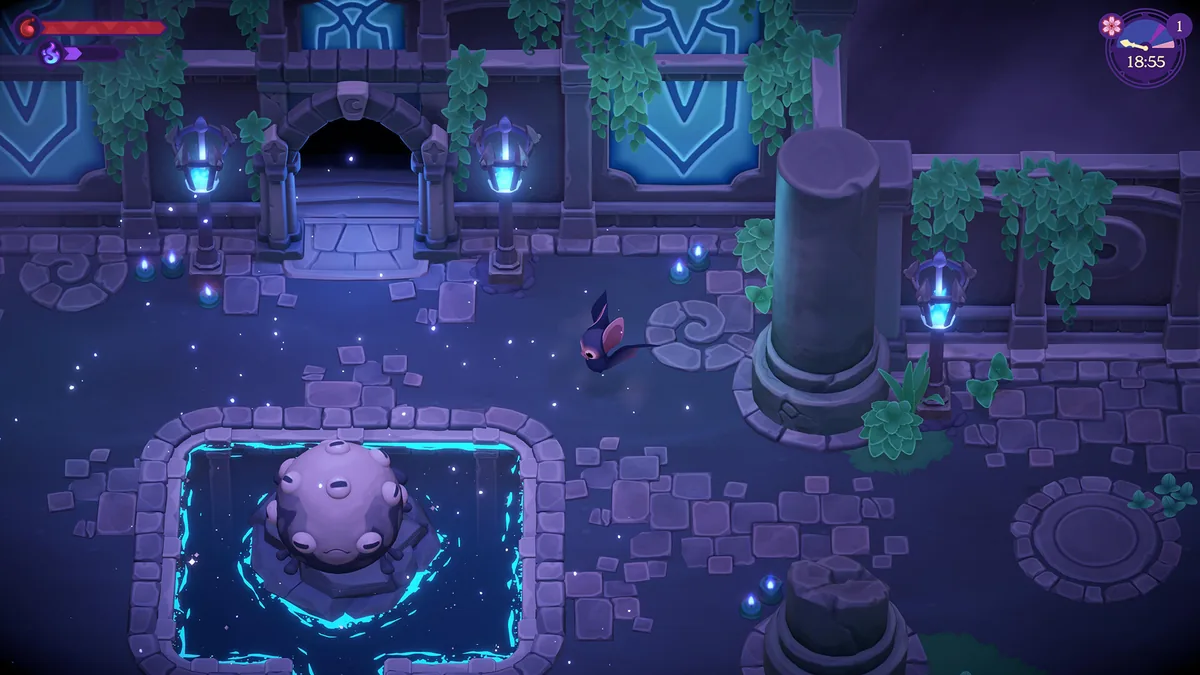 Exploration outside the farm leans hard into the gothic setting rather than reusing generic fantasy-town assets.
Where it thins out is the social layer, which is the part a life-sim like this usually gets judged on hardest. Each of the roughly two dozen romanceable characters has exactly one date activity, not a rotating set, and with only seven families total, it's entirely possible to end up simultaneously dating a parent and their adult child. That's not a hypothetical edge case; it's a structural consequence of the family-count math, and it reads as an oversight rather than an intentional choice.
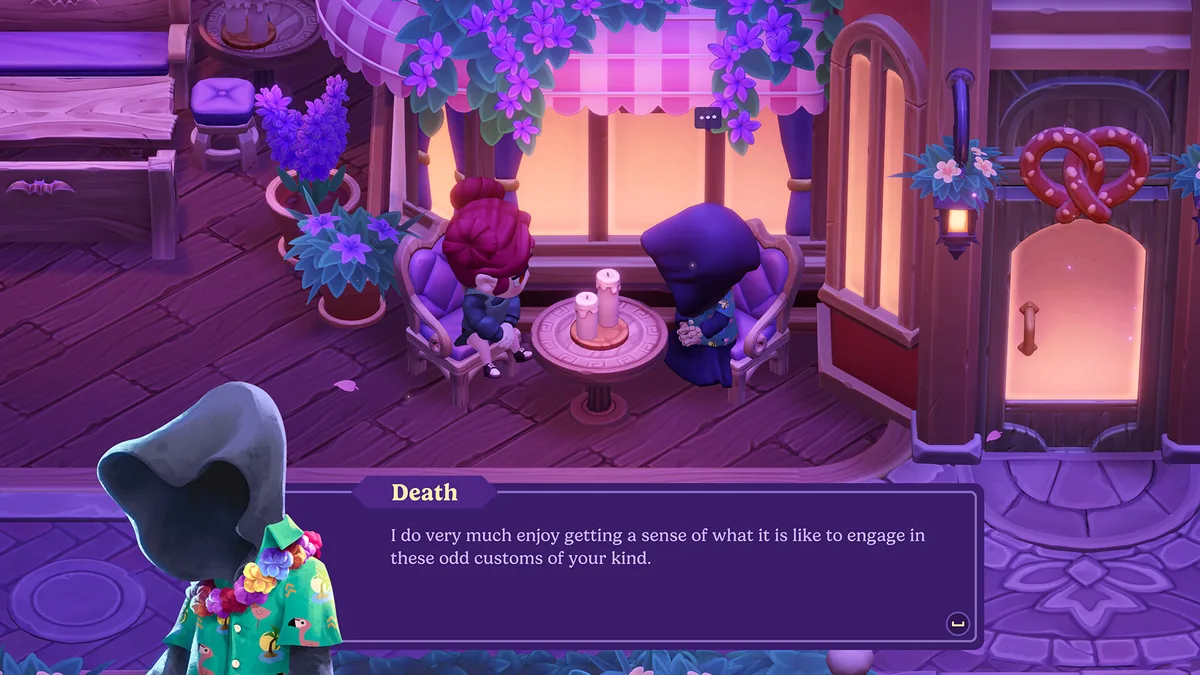 The cast includes properly odd, memorable characters like Death, though the writing around them doesn't always land as sharp as the character concepts.
One major outlet went further, headlining its review around "anemic" writing and dialogue that struggles to feel distinct. Steam players are split on that: plenty praise the cast, but the long-play negative reviews describe the same middle stretch where the pacing sags, with runs of in-game days and no active quest pulling you forward, just farm maintenance while you wait for the next story beat.
None of that sinks the game. It's a mismatch between how much craft went into the systems and how much went into the people operating them. Little Chicken clearly spent its budget on the farming loop, the crafting chains, and the nocturnal structure, and the writing team got what was left over. For a life-sim, where the social layer usually carries as much weight as the mechanical one, that imbalance is the single biggest thing standing between this and a genre standout.
Platforms and performance
Moonlight Peaks launched across Steam, Nintendo Switch, Switch 2, and Google Play Games in the announced July 6-7 window, which is a wider simultaneous spread than most life-sims manage at launch. Full controller support is built in on PC, and since so much of the interaction is menu- and inventory-driven, a controller suits it. Physical Switch and Switch 2 releases with English-language support were planned for the Japanese market on top of the digital rollout.
No major performance complaints turned up in the research for this review, which is a low bar for a farming sim to clear but worth confirming given how crowded this genre got in 2026. Since launch, the official patch history has added a more useful qualification: early updates addressed short freezes, save-file recovery, gamepad interaction, missing crops, quest progression, and house-upgrade issues.
Post-launch check
Moonlight Peaks has moved past the launch build without changing the review's central criticism. Patch 1.2.3 added bulk cooking, more flexible museum quality rules, shorter gaps between some main quests, and fixes for relationship, wedding, travel, and seasonal-event problems. Patch 1.2.6 restored the pre-1.2.3 wine, beer, and honey economy after players said the rebalance made earning money harder; it also expanded bulk cooking to 25 items and reduced the minigame to one play per batch. Patch 1.2.7 fixed a quest continuation issue and an infinite loading screen tied to house upgrades.
Patch 1.3.9 in early October raised moonshine, mana wine and juice sell prices back to their pre-1.2.3 values, let fish used as decoration rotate, and guaranteed some rare spawns (Goliath, Nokturna cards and others) after a fixed number of tries. Steam players still rate it Very Positive and the price remains $34.99. Those updates improve the farming and quality-of-life side, but they do not change the relationship structure discussed above.
Verdict
Steam's reviews line up with that split. A positive one calls it "a charming entry into the genre, with a fun cast of characters and plenty of genuinely funny dialogue," while adding that "progression feels a little slow at times" (Steam review). The negative ones come from people who put in serious hours: one "loved this game before it got repetitive and overall boring" (Steam review), another calls it beautiful with interesting characters "but feels like a pointless slog" because unlocks only ease the grind late (Steam review). Decorators have their own complaint: "The grid system is incredibly rigid" (Steam review).
Who it suits: cozy farm-sim fans who want the coffin-at-sunrise structure and a gothic setting, and players who come for crops, potions and the Nokturna card game rather than deep relationships. The core loop is honed enough to carry long sessions.
Who should wait: anyone who wants Stardew Valley or Story of Seasons-level relationship depth, players who quit farm sims when the mid-game grind slows, and decorators who want free placement. At full price that gap is real; Little Chicken keeps patching, so a sale after a few more updates is the safer buy.
If you're deciding between this and other 2026 life-sim launches, Paralives is asking a similar "is it worth it at this price" question from a different angle, and Farm to Table is worth a look if the vampire framing isn't the draw for you.
Related Reading
- Grave Seasons Farming Sim: another farming sim that uses a darker mystery hook to reshape the cozy routine.
- Tales of Seikyu 1.0 Launch: a supernatural farming alternative for players who want more creature folklore.
- Starsand Island Farming Guide: a practical farming comparison for readers focused on crop and crafting depth.
- Vampire Crawlers Review: another recent indie using vampire imagery in a very different genre.
- Vampire Survivors: Legacy of the Bloodmoon: a broader vampire-themed release comparison.
- Moonlighter 2 Review: a different shop-and-adventure loop for players comparing progression pacing.
- Moonlighter 2 Price Guide: another current-price reference for comparing premium indie life-sim-adjacent releases.
Frequently Asked Questions
Is Moonlight Peaks worth $34.99? If the vampire framing and nocturnal structure appeal to you, yes, though it's pricier than several genre peers. If you're mainly after deep romance writing, wait for a sale.
How is the romance system in Moonlight Peaks? Shallow compared to the farming loop. Each romanceable character has only one date activity, and with just seven families, players can end up dating a parent and their adult child at once.
What platforms is Moonlight Peaks on? Steam, Nintendo Switch, Nintendo Switch 2, and Google Play Games, all sharing the July 6-7, 2026 launch window.
Is Moonlight Peaks like Stardew Valley? The farming and crafting loop is Stardew-adjacent, but the coffin-at-sunrise structure and vampire premise make the daily rhythm feel distinct.
Does Moonlight Peaks get repetitive? There are stretches, particularly mid-game, with no active quest pulling you forward, which several reviewers flagged as sagging pacing rather than a hard wall.
References
- Moonlight Peaks on Steam: current $34.99 price, 59 achievements, and live review data
- Moonlight Peaks official Steam announcements: official 1.2.3, 1.2.6, 1.2.7 and 1.3.9 patch notes used for the post-launch check
- Moonlight Peaks family guide: dedicated game-wiki roster check for the seven named families in this review
- Moonlight Peaks Official Release Date Trailer: official trailer from publisher XSEED Games
- Little Chicken / Moonlight Peaks official site: developer information
About the author

Indie & JRPG Desk
GameBrief's byline for indie, JRPG, visual novel and cozy games. Warm, direct, and willing to say which one to buy.
- Indie, JRPG and visual novels
- Early access and survival
- Sources listed per article
Keep reading
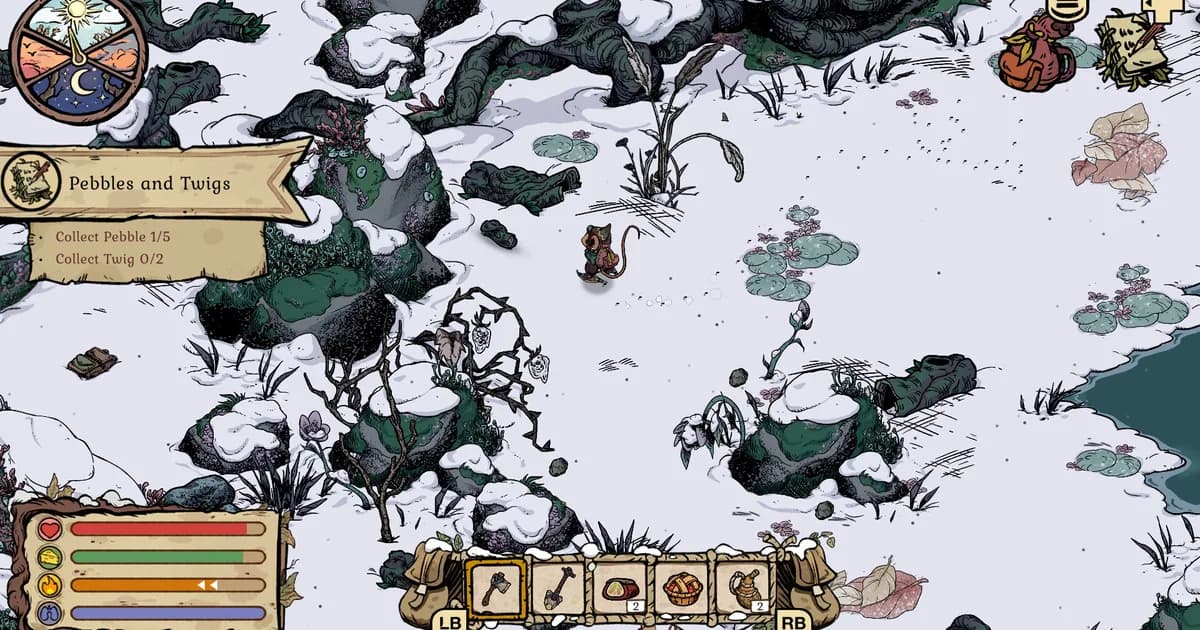
Winter Burrow Review: Cozy Survival With Real Depth
Reviews · 9 min

Denshattack Review: Tony Hawk on Trains, 98% Positive
General · 9 min
Timberborn Review: The Beaver City-Builder Nails 1.0
General · 7 min
Raccoons to Riches Review: The Shop Sim Done Right
General · 8 min
The Mermaid Mask Review: SFB's Locked-Room Mystery
General · 8 min
Gurei Review: Every Boss Kill Changes What Comes Next
General · 7 min
Sponsored
Disclaimer
This article is published for informational and entertainment purposes. It does not constitute professional financial, legal, or technical advice. Game performance, online services, patch schedules, and store listings change. Verify critical details (pricing, system requirements, regional availability) with publishers and storefronts before you buy. Affiliate links, where present, help support our editorial work and are labelled in our affiliate disclosure.
Comments
Loading comments…