
GameBrief · General
Tainted Grail Best Builds: 5 Real Community Setups 2026
Reviewing
Tainted Grail: The Fall of Avalon
Questline · Awaken Realms
Tainted Grail best builds guides online tend to confidently rank five paths into an S-tier-to-C-tier list. We went looking for where that ranking actually came from. It doesn't exist anywhere in the community, not on the official wiki, not in Steam Community guides, not on Reddit. What does exist is a lot of real players describing real builds with real stat numbers, and that's a better foundation for a guide than an invented tier list.
This guide covers the six real stats that drive every build, then walks through five build patterns that actually show up repeatedly in Steam Community discussions and Reddit threads, with the stat allocations and specific gear players report using.
TL;DR: Six stats drive builds: Strength, Endurance, Dexterity, Spirituality, Practicality, and Perception. Spirituality governs spell power and mana, not alchemy, that's Practicality's job. No official tier list exists, but five build patterns come up constantly in community discussion: spellsword (dual weapon plus spell), full mage (fragile, high damage), stealth archer, crit-perception, and parry/lifesteal melee. Origin Potions let you respec if you change your mind.
What is the best build in Tainted Grail? (quick answer)
There's no single best build, community discussion is genuinely split across several viable approaches. The spellsword hybrid (one-handed weapon plus a spell in the off-hand) comes up most often as a flexible, durable option. A full mage build hits harder but trades away survivability. Perception-based crit builds and Strength/Endurance melee builds are also common and well-documented.
The six stats, and what they actually govern
Every build in Tainted Grail comes from six base stats, no class picker exists. Here's what each one confirmed does, based on the game's own stat screen and community-verified breakdowns:
- Strength: melee damage, stamina, and reduced armor weight penalty
- Endurance: health, carry capacity, and stamina regeneration
- Dexterity: attack speed, stealth effectiveness, and ranged damage
- Spirituality: spell power, max mana, and mana regeneration
- Practicality: crafting bonuses, weak-spot damage, resource cost reduction, and sell prices, this is also where alchemy potency lives
- Perception: critical damage, critical chance, and sneak-attack damage
The single most common mistake in build guides for this game, including an earlier version of this one, is claiming Spirituality governs alchemy. It doesn't. Alchemy is a Practicality-governed proficiency. If you're building a potion-heavy character, Practicality is the stat to raise, not Spirituality.
A seventh factor sits outside the six stats but shapes every build on this list: armor weight. Equip under 20% of your total carry capacity and you're classified Light, with roughly a 20% bonus to stamina and mana regen, movement, attack speed, cast speed, and dash speed, plus three dashes available. The 20% to 50% band is Medium: two dashes, no bonus or penalty either way. Cross 50% and you're Heavy, down to one dash with a speed penalty across the board. Strength and Endurance both raise the weight thresholds, which is why a mage or stealth archer chasing Light status leans on those two stats even when neither is the build's main focus, and why a two-handed Strength build has to invest in Endurance just to avoid losing a dash.
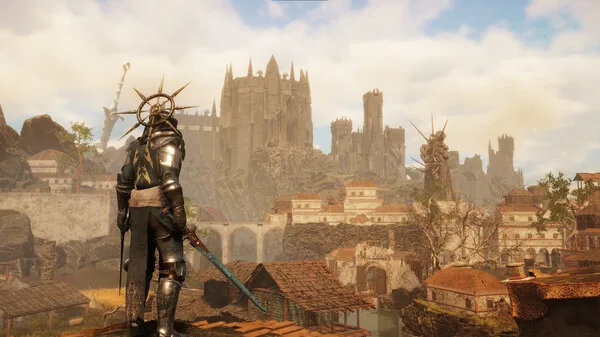
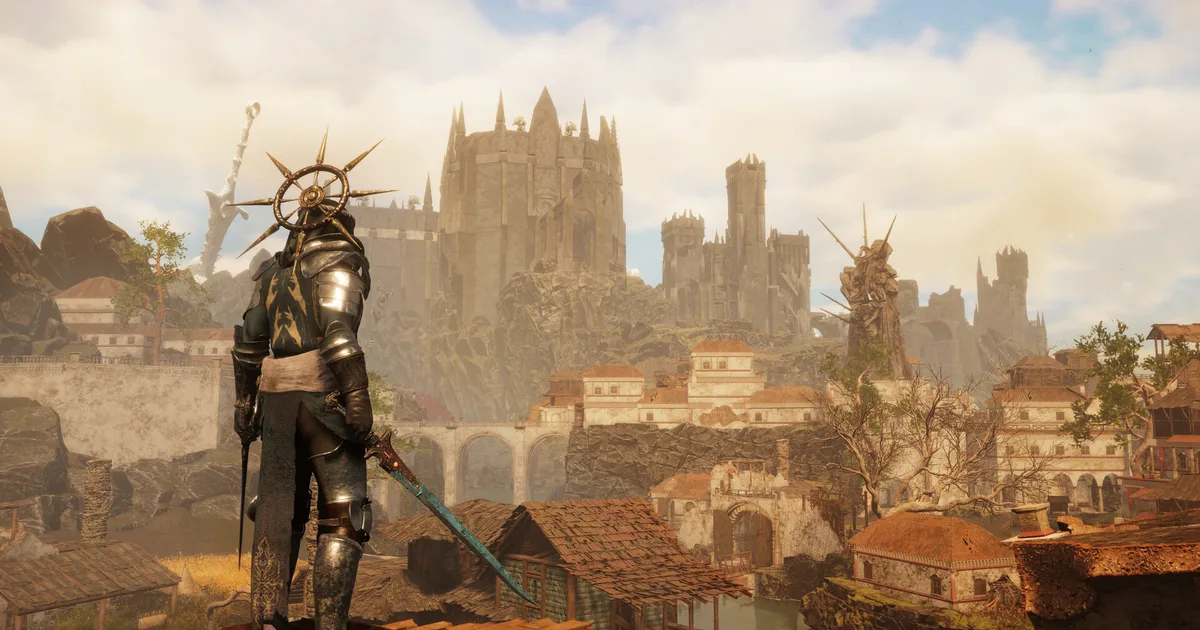
 The open world runs from Island Asylum through Horns of the South, Cuanacht, and Forlorn Swords, with Sarras added by the Sanctuary of Sarras expansion.
GODEEPER: The regions referenced throughout this guide, and what to expect from each one. Tainted Grail Zones Guide →
1. Spellsword: weapon in one hand, spell in the other
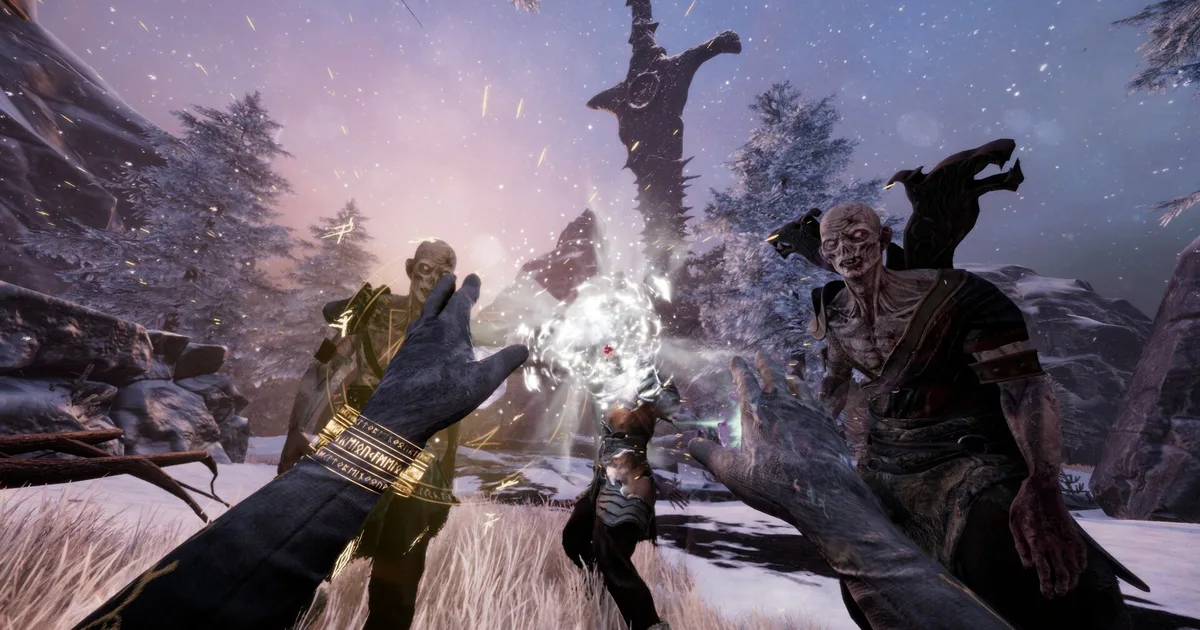
This is the build that comes up most often across Steam Community discussion threads. The core idea: a one-handed weapon in your main hand, a spell in your off-hand, switching between them mid-fight rather than committing fully to either.
One player who finished the game with this approach reported ending at roughly 15 Strength, 17 Spirituality, and 10 Endurance, running dual-wielded weapons with fire and ice properties for a claimed +110% damage bonus, supplemented by homing fire-bolt spells and parry timing. Another commenter on a separate thread put it simply: "I'm fond of the weapon and spell combo. One handed weapon in one hand, and spell in the off hand."
Real spells that show up repeatedly in these builds include Scorching Pathway (a horizontal burning wave found in Seal's Tomb, Horns of the South) and Scorching Blaze, both fire-based. Community testing on burn damage notes it scales as a percentage of enemy health rather than flat damage, which is why players report it staying relevant against high-level enemies.
2. Full mage: high ceiling, low durability
Full magic builds push Spirituality as the dominant stat and lean on spells for essentially all damage output. The tradeoff is consistent across every account of this build: it hits hard and it's fragile. One Steam reviewer running a full-magic character described it as "made of rice paper."
Community stat advice for this build: max Spirituality, but consider putting a small amount into Endurance early for survivability and to access certain armor sets. One player's specific recommendation was to put skill points into "spirituality, combat, spell power" in that order, maxing the first spell-power node before chasing bonus spellpower from gear.
Gear is the actual answer to that fragility, not just stat allocation. Mana Shield items redirect a percentage of incoming damage from health to mana before it lands, and several late-game sets stack it well past a token amount: pieces from sets like the Arcanist's set and Perceval's set each add roughly 10% to 20%, and a handful of staves add a flat percentage on top while restoring mana on hit. Stack it to 100% and a hit that would otherwise kill a fragile mage gets fully absorbed by mana instead, which is the mechanical reason experienced players call full mage sturdier in practice than its "rice paper" reputation suggests, once you've actually built toward the gear rather than just the stat. Patch 1.25, which shipped July 20, 2026, added a third option here: the Dolorous Pilgrim armor set, built around a bleed-and-self-sacrifice loop where spending mana in combat applies Bleed to you and nearby enemies, and several pieces convert that self-inflicted Bleed into extra Spell Power. It came bundled with five new wands. Treat it as a bleed-focused mage sub-build rather than a straight upgrade to the Mana Shield approach above.
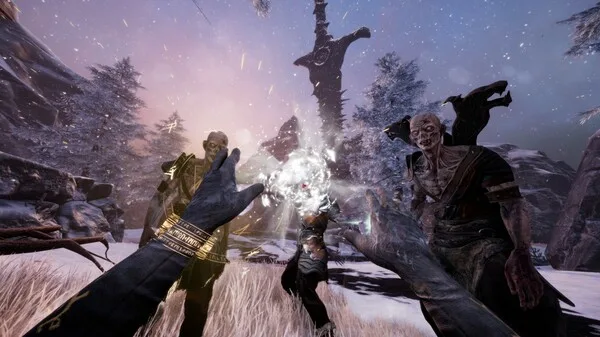
Named spells that recur in mage build discussion: Thunder Lash (a lightning spell praised for its light-cast DPS), Hailstone paired with the Wand of Piercing Cold (freezes enemies for 8 to 10 seconds), and summon spells (wolves, skeletons) used as damage-soaking companions rather than direct damage. A hybrid variant some players run pairs Spirituality investment with stealth for repositioning, since a fragile spellcaster benefits from avoiding hits entirely rather than tanking them. A different Spirituality path goes wide instead of tall: the Astral Bonds skill raises your summon limit to four allied creatures, turning a solo glass cannon into a controlled group fight where your summons soak hits instead of your mana or health doing it.
 Full mage builds trade durability for damage ceiling. Positioning and spell timing matter more here than in weapon-based builds.
3. Stealth archer
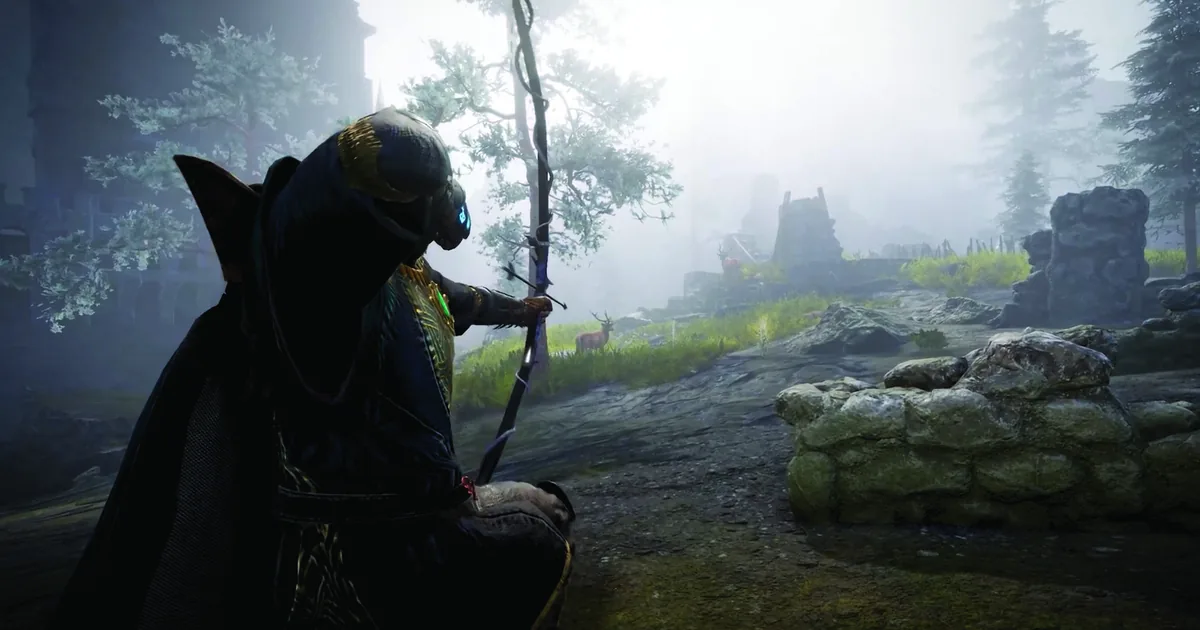
Yes, the name is a direct nod to a certain other open-world RPG, and it's the community's own joke, not something we're imposing. Multiple Steam Community threads use the exact phrase "stealth archer" to describe a Dexterity and Perception build centered on sneak-attack multipliers.
One player's description of the build: "OP AF with all the perks you get for stealth damage paired with the full set of the assassin's outfit." That same player supplemented ranged sneak attacks with dual-wielded maces for a fast parry window when stealth wasn't an option. Another commenter noted archery works well as a backup damage source before magic becomes reliably strong, around character level 10.
Patch 1.25 added seven new bows and the Scalesong armor set, but it's worth being clear about what that set is actually for: it's built around a heavily-armored ranged playstyle, not the Light-armor stealth approach this section covers. Scalesong pieces scale Ranged Damage directly off your Armor value and cut incoming damage while you're aiming, which is a real option if you want the archery half of this build without the sneak-attack commitment. Just know it pulls you toward Heavy armor and away from the extra dash a Light stealth archer relies on for repositioning.
4. Crit-perception build
Perception governs critical hit chance and critical damage directly, and a build stacking it produces a noticeably different combat rhythm than the other approaches here. One player-reported crit build reached approximately 80% crit chance through gear and perks, with additional perks restoring stamina and health specifically on critical hits, creating a self-sustaining combat loop where landing crits keeps you topped up to keep fighting.
This build pairs naturally with fast weapons, since crit chance applies per hit, and a higher swing rate means more chances per second for a crit to land. It doesn't require heavy investment in any other stat to function, which makes it a reasonable build to layer on top of a primarily physical character.
GODEEPER: A full breakdown of how Perception-driven crit stacking works, including specific coating and skill combos. Tainted Grail Crit Build: Perception and Bleed →
5. Parry-focused and lifesteal melee
Two related but distinct approaches show up often enough to be worth covering together. The first is parry-centered: one player described running "a variant of Parry God either with Eclipse Shard or the Duelist Sword/Parrying Dagger combo," built around consistent parry timing backed by Strength and Endurance for damage and survivability.
The second is a lifesteal build, described by its player simply as "2h very offensive with max lifeleech," where the philosophy is that more damage output directly means more healing through drain effects, turning aggression itself into sustain. A two-handed weapon path was the specific example given, though the lifeleech philosophy could apply to other weapon types with the right gear.
Both variants share a Strength and Endurance foundation and both trade the higher damage ceiling of spell-based builds for a build that's considerably more forgiving to actually play, especially for players newer to first-person action combat.
Common mistakes
- Assuming Spirituality boosts alchemy. It doesn't. Practicality governs alchemy, crafting, and sell prices. Confusing the two stats misallocates points for anyone building around potions.
- Treating any "S-tier build" list as official. No tier list exists in the game's own systems or in verified community sources. Builds here are described by real popularity and documentation, not a fabricated ranking.
- Overcommitting to full mage without a survivability plan. Every real account of this build mentions its fragility. Pair it with positioning, stealth, or at least some early Endurance.
- Ignoring Origin Potions. A full respec option exists. If a build isn't working out, that's a reason to try something else, not a reason to abandon the character.
BESTPRICE: Don't own Tainted Grail: The Fall of Avalon yet? A Steam key through Gameseal is often cheaper than buying direct on Steam. Get Tainted Grail on Gameseal →
Frequently Asked Questions
What is the best build in Tainted Grail Fall of Avalon? There's no official tier list, the community's own consensus is spread across several viable setups. The spellsword hybrid (dual weapons plus fire or ice spells) is one of the most-discussed for its damage and flexibility. A pure mage build hits harder but is fragile, described by one Steam reviewer as "made of rice paper."
What are the six stats in Tainted Grail? Strength, Endurance, Dexterity, Spirituality, Practicality, and Perception. Spirituality governs spell power, max mana, and mana regeneration. Practicality governs crafting, alchemy, and sell prices. Perception governs critical hit chance and damage.
Does Spirituality affect alchemy in Tainted Grail? No, that's a common misconception. Alchemy is governed by Practicality, not Spirituality. Spirituality is dedicated to spell power, max mana, and mana regeneration.
Is pure melee viable in Tainted Grail? Yes. Real community builds lean on Strength and Endurance for two-handed or sword-and-board setups, often paired with lifesteal or parry-focused perks. It's slower to build damage than a spell-based approach but considerably more forgiving to play.
What is a good crit build in Tainted Grail? Perception drives critical hit chance and critical damage. Community-reported crit builds reach roughly 80% crit chance with the right perks, and some pair crit procs with stamina and health recovery on hit for a self-sustaining loop.
Is the mage build strong in Tainted Grail? Yes, but fragile. Players consistently describe full-magic builds as high-damage but low-durability, one reviewer called their mage character "made of rice paper." Community advice is to pair Spirituality investment with some Endurance early, or lean on positioning and stealth to avoid getting hit at all.
Can you respec your build in Tainted Grail? Yes. Origin Potions allow a full respec of stats and skills, so an early stat mistake isn't permanent. This makes experimenting with different builds low-risk once you've found a respec source.
Related Reading
- Tainted Grail Fall of Avalon Guide: Hub: every Tainted Grail guide on this site in one place.
- Tainted Grail New Game Plus Guide: What Carries Over: Tainted Grail New Game Plus: keep level and gear, lose recipes and King's Powers. How
- Tainted Grail Lore Guide: Arthurian World Explained: Tainted Grail lore guide: how Fall of Avalon remixes Arthurian myth, who the major factions
References
- Tainted Grail: The Fall of Avalon on Steam (Questline/Awaken Realms, current price and review score)
- Tainted Grail Steam key on Gameseal: often cheaper than the direct Steam price.
- Tainted Grail: The Fall of Avalon official wiki (stat system reference)
- Patch 1.25 official notes on Steam (Questline, July 20, 2026, source for the Dolorous Pilgrim and Scalesong armor sets and new wands/bows)
- r/TaintedGrail on Reddit (community build discussions)
- Tainted Grail: The Fall of Avalon Steam Community discussions (build threads cited throughout this guide)
Was this guide helpful?
About the author

Critical game theorist with a background in film criticism. Writing for print and digital outlets since 2015. Specialises in genre analysis and design heritage.
- Background in film criticism
- 10 years games coverage
- Genre theory and design history specialist
Keep reading

Disclaimer
This article is published for informational and entertainment purposes. It does not constitute professional financial, legal, or technical advice. Game performance, online services, patch schedules, and store listings change. Verify critical details (pricing, system requirements, regional availability) with publishers and storefronts before you buy. Affiliate links, where present, help support our editorial work and are labelled in our affiliate disclosure.
Comments
Loading comments…