
GameBrief · General
Tainted Grail Regions Guide: The Real 5 Areas (2026)
Reviewing
Tainted Grail: The Fall of Avalon
Questline · Awaken Realms
This Tainted Grail regions guide exists because a lot of other zone write-ups list areas called Misty Horns, Cuanacht Village, and Frozen Peaks. None of those exist. We checked against the game's own wiki and an independent Steam Community map guide, and the real region list is different enough that following one of those other guides would have you looking for places that aren't on the map.
This guide covers the five real regions, verified against the official Tainted Grail wiki, in the order most players actually progress through them.
TL;DR: Five real regions: Island Asylum (prologue), Horns of the South, Cuanacht, Forlorn Swords, and Sarras (paid DLC). Fast travel works through discoverable gates, not "Menhir Stones," that's an unrelated collectible system. The Corrupted Temple, where you fight the fallen knight Perceval, is in Cuanacht. New Game Plus carries your level and gear but resets world state and applies a cumulative armor penalty per cycle.
What are the real regions in Tainted Grail? (quick answer)
Five: Island Asylum as the prologue, then Horns of the South, Cuanacht, and Forlorn Swords as the base game's three main regions, plus Sarras if you own the Sanctuary of Sarras expansion. Progression isn't hard-gated between them, which is exactly why players wander into a harder region too early and hit a difficulty wall that feels unfair but isn't.
Tainted Grail regions current status: September 2026
The live Steam snapshot checked on September 18 lists $44.99, 87% positive from 19,793 English reviews, and 83% from 573 recent reviews. The official Patch 1.25 / Bonus Content #4 notes added the archer and sorcerer playstyles, Scalesong and Dolorous Pilgrim sets, bows and wands, Ultra+ difficulty, and recipe, quest-item, accessibility, and challenge changes. Those additions do not change the five-region route documented here; Sarras remains the Sanctuary of Sarras DLC region. Sources: Tainted Grail: The Fall of Avalon on Steam and the official announcements feed.
Key takeaways
- Real region order: Island Asylum, Horns of the South, Cuanacht, Forlorn Swords, and Sarras (DLC)
- Fast travel uses discoverable gates, plus a separate Ethereal Cobweb-fueled bonfire system
- The Corrupted Temple, home to the Perceval fight, is in Cuanacht, not an earlier region
- Forlorn Swords is currently the last base-game region, a cold-climate area
- Sarras adds an underwater region and three swappable skill trees (Warrior, Rogue, Mystic)
- Progression isn't hard-gated, so checking your build before pushing into a new region matters
Island Asylum: the prologue
Island Asylum is a prison facility, positioned off the main island, and it's where the game starts. Caradoc, a former Knight of the Round Table now working against Arthur, guides you off the island through a questline the wiki calls "The Great Escape." Several named NPCs populate the facility, including Brother Cassian, Brother Syrius, Daiga, Helge, and Sirja, worth talking to since the prologue closes off once you leave.
Enemies here are Red Death Infected, Red Guards, Red Priests, and other undead, consistent with the facility's history as a plague research center. Two optional bosses live here: the Frantic Berserker, unarmed but reflecting melee damage back at you (ranged or magic only), and the Wailing Effigy. Loot includes Dodge Greaves, Raider's Skirt, Sirja's Cape (boosts loot chance), a Pickaxe, a Superior Bow, and Origin Potions, which let you fully respec your build later.
Neither optional boss is required to finish the prologue, but skipping them means leaving real value behind. The Origin Potions specifically are worth prioritizing, since a full respec option early in the game means any stat mistakes you make while still learning the six-stat system aren't permanent. Given how much confusion exists around what Spirituality and Practicality actually govern, having a free respec banked before you leave the prologue is a genuinely useful safety net.
The Great Escape questline is also where the game establishes its central conflict, Caradoc's motivations against Arthur, without spelling everything out immediately. Players who rush past the NPCs mentioned above tend to find themselves confused by references to this conflict later on, since a lot of that context is delivered through the very side conversations that are easy to skip on a first playthrough.
GODEEPER: Full strategy for both Island Asylum bosses, including the Frantic Berserker's reflect mechanic. Tainted Grail Boss Guide: Key Fights and Strategies →
Horns of the South: the first mainland region
Horns of the South is where the game opens up. Enemies here include Bears, Buggane, Corpse Eaters, Deranged Archers, Flamegobblers, Grindylow, Lost Knights, Marrowghasts, Outlaws, Redcaps, Undead, Wolves, and Wyrdspawn or Wyrdspirit types, a noticeably wider roster than the prologue's undead-only lineup.
The region's lore centers on Merlin's experiments on knights, trying to make Arthur immortal. Sewal's Tomb, in the Sunken Village, ties into this directly, tied to Sewal Firstfoot, the region's founder, believed dead but actually one of Merlin's test subjects. It's also where the Scorching Pathway fire spell is found, in a side-tunnel chest, a spell that shows up constantly in real community build discussion for its scaling burn damage.
No official level range exists for this region, despite what some guides claim with suspicious precision. The honest answer is that the game doesn't hard-gate you here, and going in with a build that hasn't developed any combat proficiency yet is the actual risk, not a specific missed number.
Cuanacht: home to the Corrupted Temple
Cuanacht is reached after a story item obtained during the Horns of the South main quest, which makes Horns of the South a prerequisite even though the Corrupted Temple itself sits in Cuanacht, not the earlier region. This is a common point of confusion in older guides that place the temple incorrectly.
Notable locations include the Cuanacht Main Square (a fast travel point), Farmlands, Plains, Sagremor Castle, Delia's Workshop, the Abyss of Sagremor, Gates of Knowledge, the Corrupted Temple Ruins (a separate area from the Corrupted Temple proper), and several nature-spirit shrines. Bosses here include Queen Sagremor, an undead lich type, Sir Gawain, Sir Bertilak, two bandit leaders named Cindermar the Firebringer and Sanguinor the Crimson, and Perceval, the fallen knight fought at the top of the Corrupted Temple's tallest tower after clearing a legion of tainted priestesses on the way up.
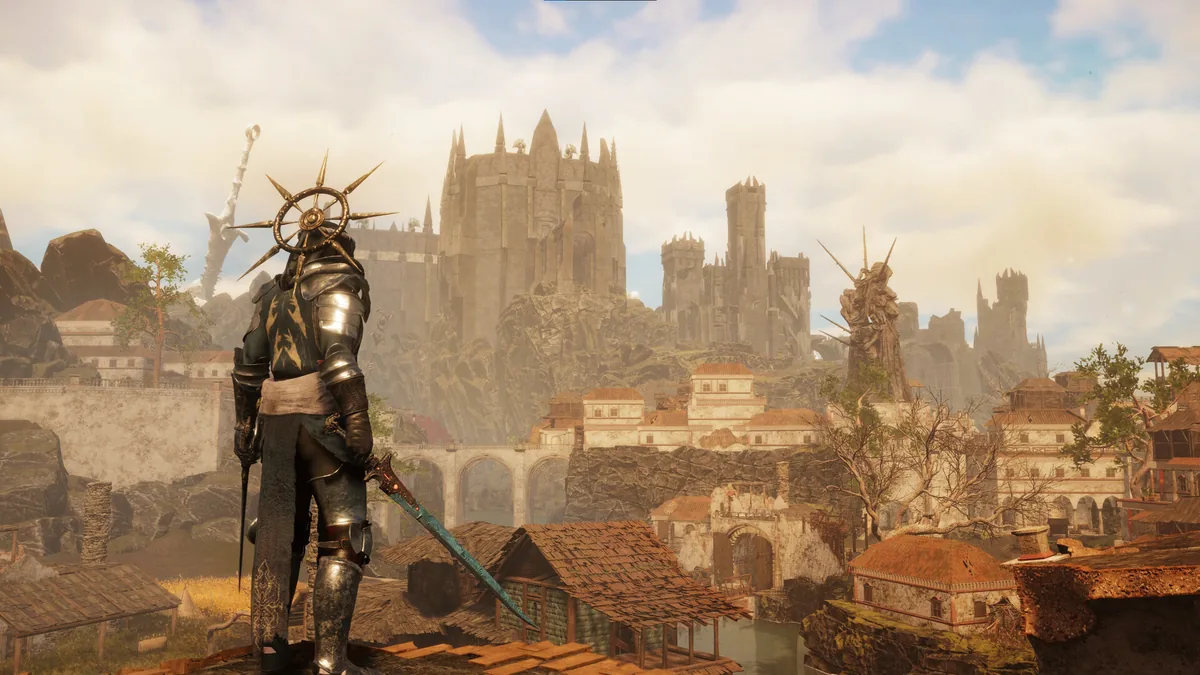 Cuanacht's settlements sit beneath Sagremor Castle, one of the region's key landmarks and the boss Queen Sagremor's namesake.
GODEEPER: Full breakdown of the Perceval fight and Cuanacht's other named bosses. Tainted Grail Boss Guide: Key Fights and Strategies →
Forlorn Swords: the current last region
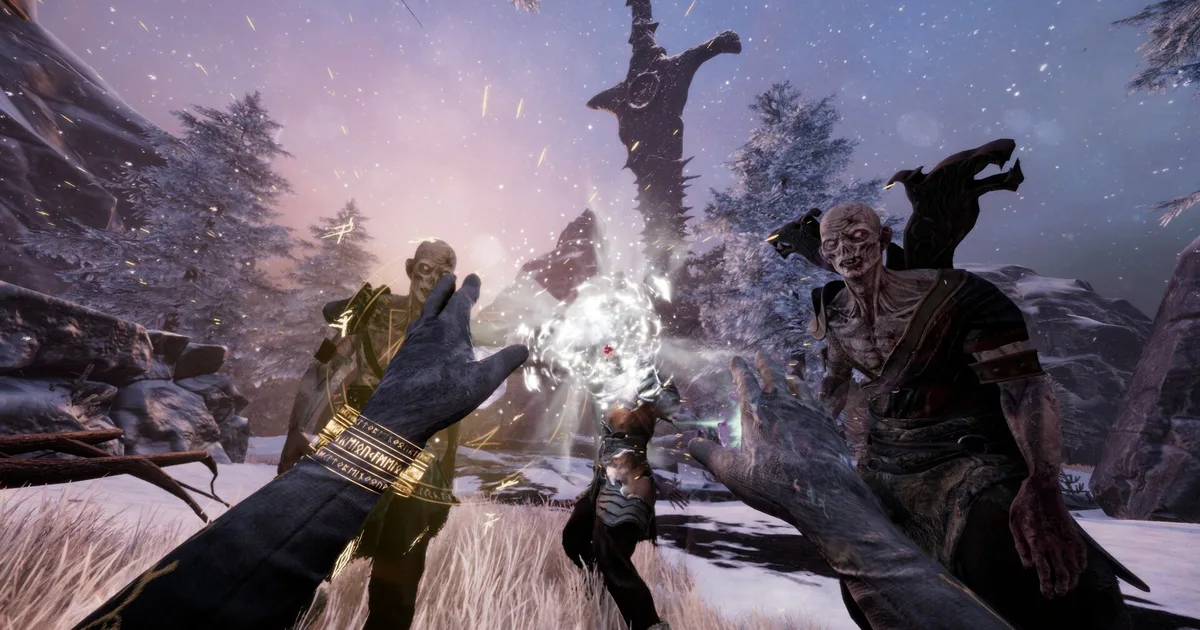
Forlorn Swords is a snow-covered, cold-climate region, and as of this writing it's the last base-game region before Sarras. Enemies shift again here: Bears, Corpse Eaters, Flamegobblers, Frostbitten Warriors, Ice Weavers, Sleepwalkers, and Wights. Notable locations include the village of Ulfr (with the Seat of the Elders and Hall of the Stonewardens), the house belonging to Vigdis and Egill, an area called Elevator Pass, and fast travel points at Volker Village, Gunnvaldr Village, and the Capital.
Some community discussion flags this region as rougher around the edges than the others, and there's a recurring bit of disappointment that it's the current endpoint rather than a more dramatic final destination, players have specifically asked "where's Camelot?" in Steam discussions. Treat that as genuine community sentiment, not a bug report.
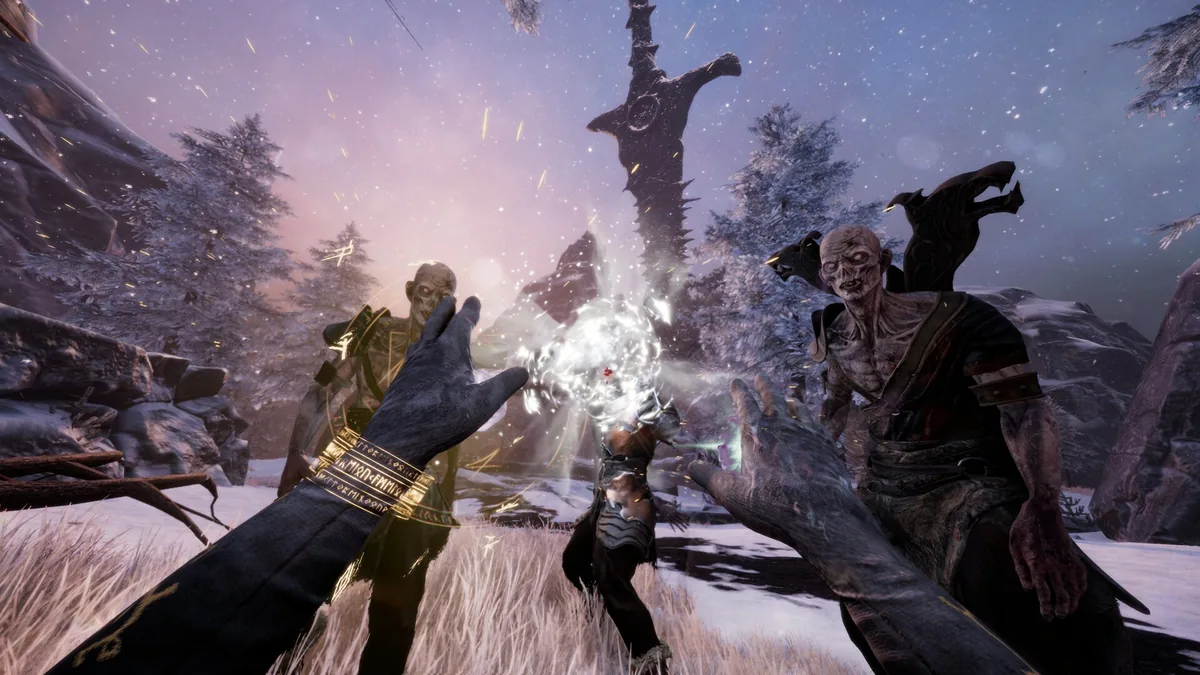 Forlorn Swords brings a full enemy shift, Frostbitten Warriors and Wights replace the undead types seen in earlier regions.
Sarras: the Sanctuary of Sarras expansion
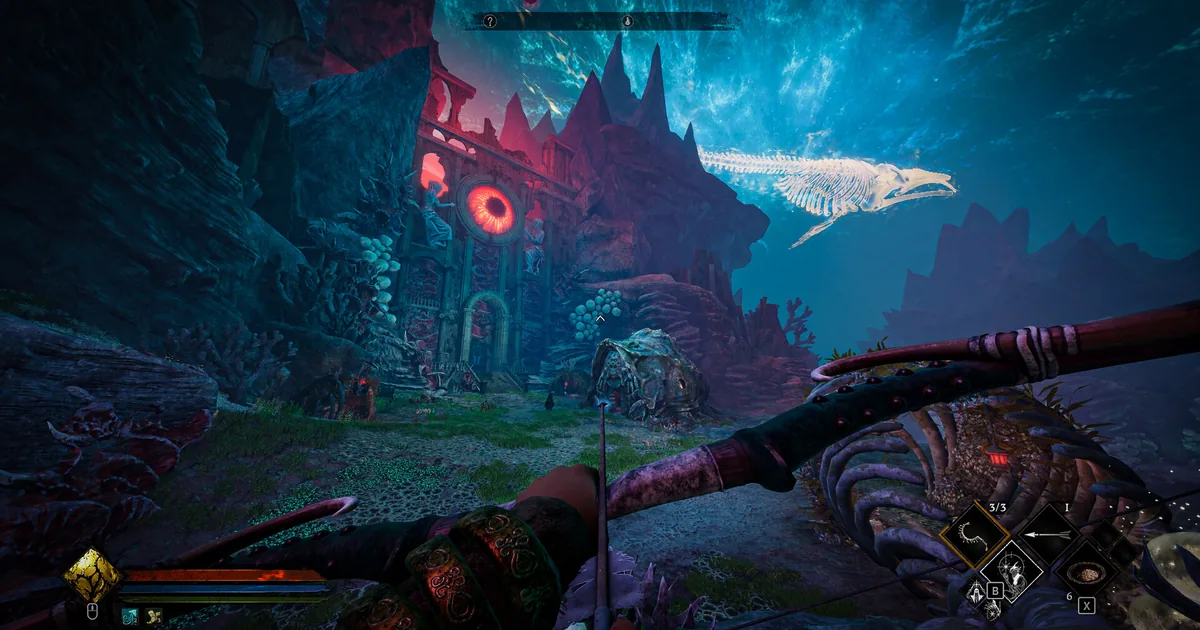
Sarras is separate from the base game's region list, added through the paid Sanctuary of Sarras DLC ($14.99, released December 2025). It's an underwater, Atlantis-style realm with more than 20 dungeons and roughly 15 hours of content, following Nimue and a group of deserters who defied Arthur, tangled up with Merlin's retribution. Enemies scale to your level, and the region locks permanently once its content is finished, though you can freely re-enter before that point.
The DLC's headline mechanical addition is three new skill trees, Warrior, Rogue, and Mystic, unlocked through sacred shrines. Only one is active at a time, but you can swap between them freely. These trees are widely reported to persist through New Game Plus cycles, which makes them a genuine long-term investment rather than a one-off DLC bonus.
Fast travel and progression
Fast travel runs through gates you have to physically find before they're usable, plus a separate system where burning Ethereal Cobwebs at a bonfire lets you travel. Neither is the "Menhir Stones" network some guides describe, Menhir Statues and Figurines are a real but entirely unrelated collectible and ward system.
Region progression isn't hard-gated. Nothing stops you from wandering into Cuanacht or Forlorn Swords underleveled, which is the actual source of most "this game is too hard" complaints, not a hidden mechanic. The practical fix is checking your build's development, not memorizing a specific level number that no official source actually publishes.
New Game Plus carries your level, attribute points, skill points, and full inventory into a new cycle. What resets: world state, quest-based powers including King's Powers, learned recipes, and keys. Each cycle also applies a cumulative armor penalty, confirmed at -50 armor at NG+1, -100 at NG+2, and so on, which is a real tradeoff worth knowing about before committing to a heavy-armor build across multiple cycles.
GODEEPER: Full breakdown of what carries over into NG+ and how the armor penalty math works. Tainted Grail New Game Plus Guide →
Step-by-Step: plan the region route
Step 1: Finish Island Asylum before treating the mainland as open. Clear the prologue bosses and collect the respec value before leaving, because the island closes behind the main quest.
Step 2: Use Horns of the South as the first mainland check. Follow the story item that opens Cuanacht, but do not mistake the absence of a hard level gate for a recommendation to rush every encounter.
Step 3: Enter Cuanacht with a developed combat plan. Find the fast-travel points, prepare for the Corrupted Temple route, and confirm your build before committing to Perceval and the other named fights.
Step 4: Treat Forlorn Swords and Sarras as separate decisions. Forlorn Swords is the current last base-game region; Sarras requires its DLC, so check ownership before planning the underwater route and its three skill trees.
Related Reading
- Tainted Grail Fall of Avalon Guide: All 14 Guides Hub: Tainted Grail Fall of Avalon guide hub: real builds, bosses, NG+, regions, and survival tips.
- Tainted Grail Alchemy Guide: Recipes and Stations 2026: recipe book and station locations across the real regions.
- Tainted Grail Tips: 12 Things to Know Before You Start: broader beginner tips covering stat priorities and early mistakes.
- Tainted Grail Survival Guide: Combat, Rest, and Threats: resource management and rest mechanics across every region.
References
Was this guide helpful?
About the author

Senior Critic & Analyst
Former game data analyst turned critic with 11 years covering indie and mid-tier games. Based in Austin. Runs spreadsheets on games most people just play.
- 11 years games criticism
- Former game economy analyst
- Roguelike and strategy specialist
Keep reading

Disclaimer
This article is published for informational and entertainment purposes. It does not constitute professional financial, legal, or technical advice. Game performance, online services, patch schedules, and store listings change. Verify critical details (pricing, system requirements, regional availability) with publishers and storefronts before you buy. Affiliate links, where present, help support our editorial work and are labelled in our affiliate disclosure.
Comments
Loading comments…