
ReviewTimberborn
Timberborn Review: The Beaver City-Builder Nails 1.0
Beavers, droughts and water physics that will happily flood the district you just finished. Update 1.1 adds tools, not mercy.
VerdictBuy it for a logistics sandbox with real failure states; skip it if you need a campaign or goals beyond surviving and growing.
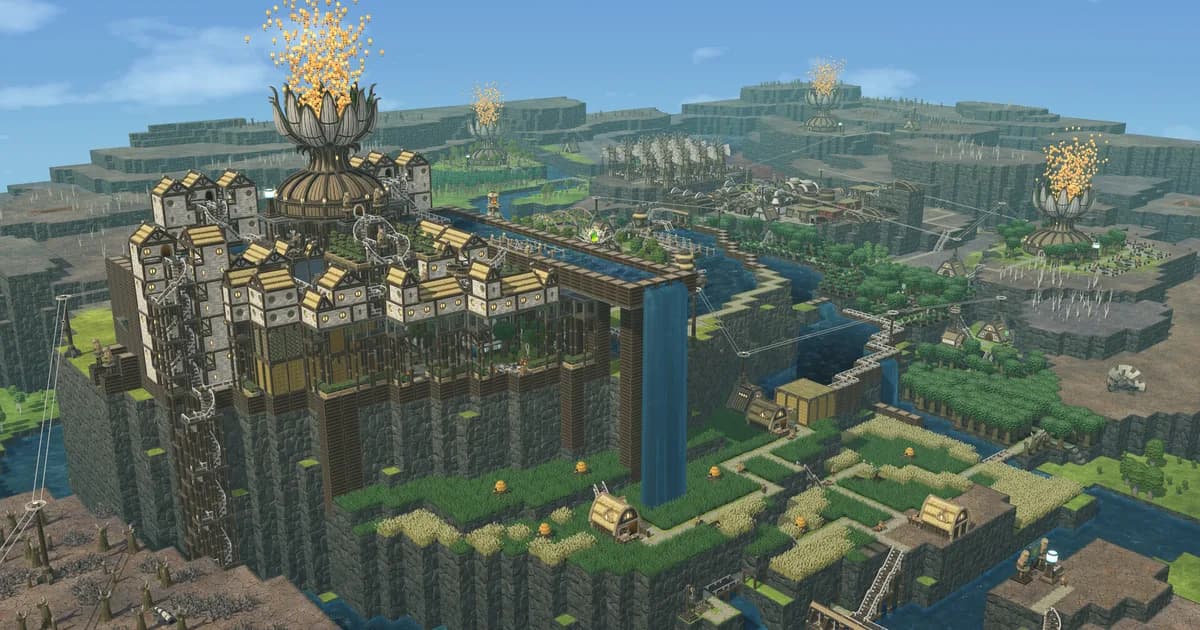
Timberborn review verdict: this is a city-builder that trusts its water physics enough to let you wreck your own colony, and it's better for it. A dam placed carelessly can flood a district you just finished, and a drought can stop every water wheel you own. Update 1.1 adds more tools for reading and controlling that water without removing the consequences.
Sponsored

About the game
Timberborn
Mechanistry · Mechanistry
Reception
- Steam user reviews, all languages
- Overwhelmingly Positive
- 95% positive of 42,171 reviews
- Checked on Steam
Pros
- Water physics and drought cycles turn resource management into a genuine puzzle, not busywork
- Folktails and Iron Teeth play like different games, not reskins of the same tech tree
- Vertical building on stacked terrain is a real spatial puzzle most city-builders don't attempt
- Update 1.1 adds useful statistics, watertight buildings, Tier 4 monuments, and new map options without flattening the core puzzle
Cons
- The early hours undersell how deep the water and automation systems eventually get
- The 1.1 statistics are not retroactive, and the strongest new structures reward starting a fresh colony rather than simply loading an old one
Updated 2026-10-15: Corrected the faction differences to Mechanistry's own faction guide, switched the playtime to HowLongToBeat, and removed pump-depth and bot-recharge figures we could not source.
Sponsored

Timberborn status: October 2026
Timberborn is on Update 1.1, released September 3, with follow-up patches through October 6 on the main branch and a Build-a-Map contest running since October 8. When we checked on October 15 it cost $34.99 on Steam with no discount and was rated Overwhelmingly Positive across all languages. Steam lists Windows and macOS, not Linux, and the store page does not list controller support.
Update 1.1 adds statistics for goods and population, watertight buildings including the Airlock and Impermeable Tubeway, Tier 4 monuments, two new attractions per faction, Succulent, the Nomads and Pillars maps, workwear, and relays that accept more than two inputs. Existing 1.0 saves remain compatible, but Mechanistry says the new statistics are not retroactive and recommends a new game to experience the update cleanly. That makes 1.1 a meaningful refresh for returning players, not just a small balance patch.
BESTPRICE: Want Timberborn? These stores list it: Buy on Eneba (NA key) → Buy on Humble Bundle → Buy on Gameseal → Buy on Kinguin →
Key Takeaways
- Timberborn hit 1.0 on March 12, 2026, after four years in Early Access, developed and published by Mechanistry
- $34.99 on Steam (full price when we checked on October 15)
- Overwhelmingly Positive on Steam across all languages
- Mechanistry has said the game sold over 1 million copies in its first two years alone
- Two playable factions, Folktails and Iron Teeth, with genuinely different tech and reproduction systems
- 1.0 added Sensors, Relays, and Timers; Update 1.1 adds statistics, watertight structures, monuments, attractions, and maps
Overview
Mechanistry is an independent Polish studio, and Timberborn has been its focus since it entered Early Access on September 15, 2021. The premise does a lot of the work on its own: humans are gone, beavers evolved, and you're building a colony in a world where droughts and toxic "badwater" make every water source a resource you have to actively manage, not just find. That's not flavor text. It's the entire design spine of the game.
The design lesson shows up fast: the store tells you to "stockpile food and keep fields and forests alive even after rivers dry up," and a colony that didn't store water ahead of time will feel it. Our beginner guide to Timberborn's dams and drought cycles walks through exactly how to avoid that on your first colony. Four years and one full release later, the promise was real. This isn't a cozy builder wearing a beaver skin, the way Amberspire leans into a lighter dice-city-builder tone. It's a genuinely demanding logistics game that happens to be adorable.
Gameplay
The core loop is deceptively simple: gather wood, build housing, route water, expand, survive the next drought, repeat at a bigger scale. What makes it work is that every one of those steps interacts with the others in ways that aren't always obvious until they bite you. The store sells it as "3D water physics and terraforming": you put up dams and floodgates, dig canals and tunnels with explosives, and reshape the terrain, which means a terraforming choice from hours earlier can flood a district you just finished building. Players describe the pull of that loop vividly: a player in their fifties says there's always "just one more thing" to do before you stop, "and suddenly it's two a.m."
What works: the vertical building is a real spatial puzzle. Space is limited, so you stack lodges and workshops on top of each other, build platforms and bridges, and decide whether a district runs on wind or a hydro setup, which changes where you're willing to build in the first place. The two factions genuinely play differently rather than sharing a skin. Mechanistry's own faction guide has Folktails growing their population when beavers spend time in their lodges after work, using only renewable power and fueling their bots with Biofuel, while the Iron Teeth breed kits in Breeding Pods, burn logs and water in Steam Engines, pump from deep with extended pipes, and run bots that need a Control Tower signal to work efficiently.
What doesn't: the opening hours undersell the game. Your first colony looks like a pleasant wood-and-thatch village with a couple of dams, and it takes a while before the systems that make Timberborn special (automation chains, deep water logistics, multi-district power routing) actually show up. If you bounce off the first two hours, you're bouncing off the tutorial, not the game.
The 1.0 update's automation framework is the single biggest addition across its Early Access history: Sensors, Relays, and Timers let you script conditional logic into your production chains. Not every veteran welcomed what came with it; a 500-hour player's negative review argues that removing the Sluice artificially "raises the game's complexity floor" and pushes casual builders toward guides.
Update 1.1 makes the planning layer easier to inspect. Goods and population statistics show where a district is actually failing instead of making you infer every shortage from a storage building's warning. Watertight structures then give you more precise control over the water network: the Airlock is "like a tunnel but integrated in a levee," so beavers cut through a reservoir wall instead of climbing over it, and the Iron Teeth's Impermeable Tubeway does the same horizontally without leaking. These are not flashy additions, but they target the exact information and routing problems that make late colonies hard to debug.
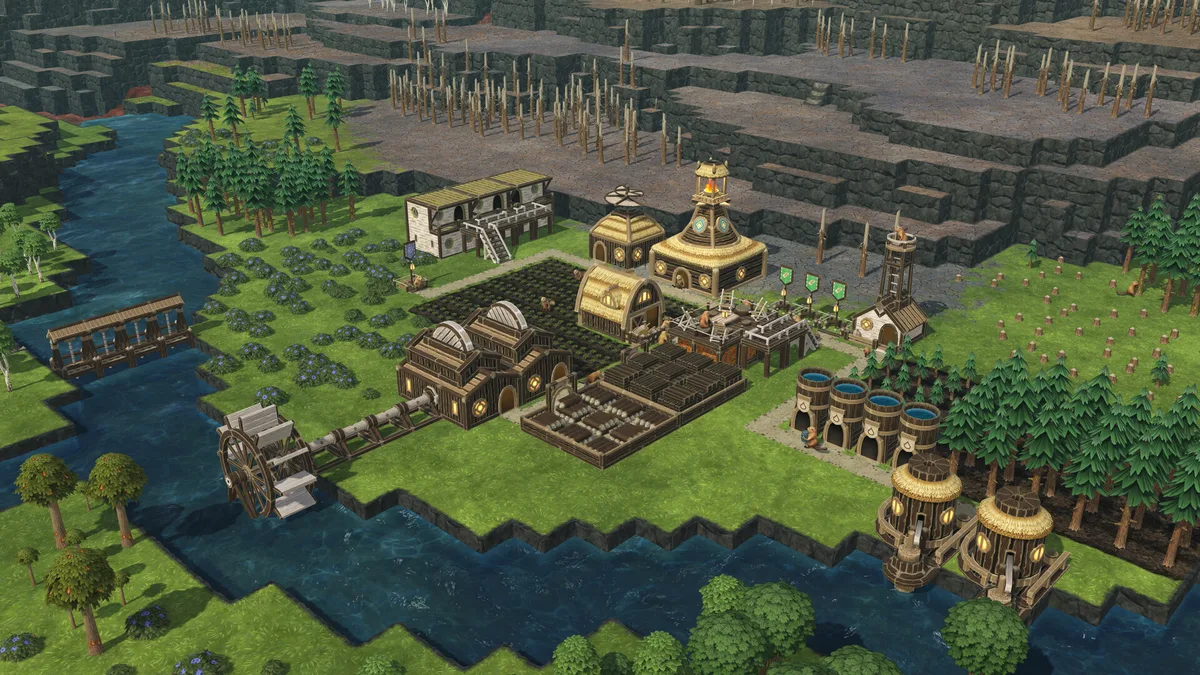 An early wood-and-thatch colony: water wheel power, fields beside the river, and stepped terraces waiting above. (Screenshot: Timberborn, Mechanistry)
Replayability
Between two factions, several official maps (1.0 added the unconventional maps Oasis, Pressure and Spillage alongside the existing ones), and adjustable difficulty, Timberborn doesn't run out of new problems to hand you. A completed Folktails colony and a completed Iron Teeth colony on the same map genuinely feel like different playthroughs, not the same build with a different coat of paint. The automation update adds a whole extra layer for players who've already "solved" a map and want a harder logistics puzzle rather than a bigger one.
The 1.0 launch also added new map objects that change how you plan a colony from the start: Unstable Cores, Thorns, Water Seeps, Geothermal Fields and Badtide Drains all force different terraforming decisions depending on which map you land on. Update 1.1 adds Nomads and Pillars to that map conversation (on Nomads, the water flow shifts as cycles change, so your beavers may need to migrate), plus Tier 4 monuments and two new attractions per faction that give a mature settlement more ambitious long-term goals. Aquifers can be drilled for extra water sources and Reserve Storage arrived with them, which matters more the longer a colony runs. None of this is optional flavor. Every one of these systems changes what a "safe" district layout actually looks like, which is why a second or third colony on a new map still feels like it's teaching you something, not repeating the first one.
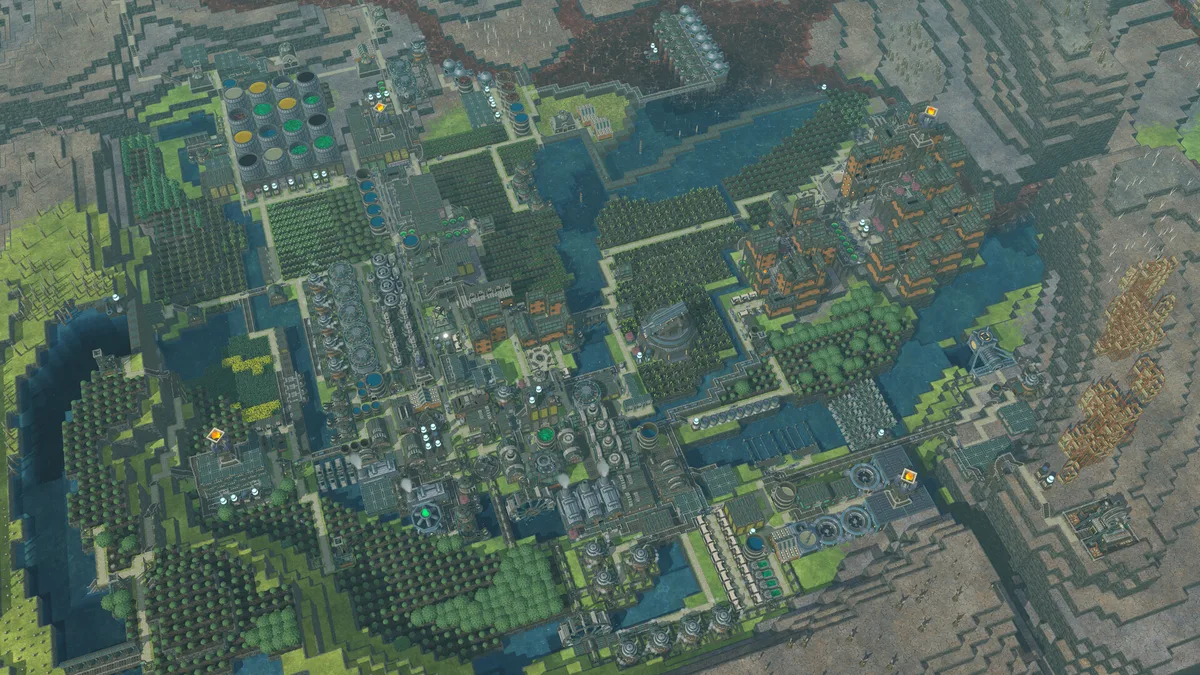 A sprawling late-game settlement: at this size, the automation framework is what keeps the production chains manageable. (Screenshot: Timberborn, Mechanistry)
Verdict
Who it suits: players who want a logistics sandbox with real failure states, the kind where a bad terraforming call floods a district you spent hours on. Timberborn was already one of the better city-builders in Early Access; 1.0 added a real automation system and Update 1.1 improves the information layer. One fan calls it one of the top colony sims "in the market", and another sums up the hook as "Oh. Yeah this is fun." at 3am.
Who should wait: players who need a campaign or clear goals. Even a positive review notes it leaves you lacking clear objectives other than "Survive and get Bigger." One negative review says that once the player has "a basic survival setup", everything left is a sandbox. Another, on hard difficulty, felt there is "no point in continuing" once the droughts were beaten. It's also not for players who want a chill, low-stakes builder; the drought cycles are designed to punish complacency, on purpose.
Frequently Asked Questions
How long is Timberborn? There is no campaign or hard end state, so length depends on how long you keep building. HowLongToBeat lists about 23 hours for a main playthrough, 43 with extras and 64 for completionists; players who want clear goals say they stop once the droughts are under control.
Does Timberborn have controller support? The Steam page does not list controller support; it lists a mouse-only option. Check the current store page if that changes in a later update.
Is Timberborn worth it? Yes, for players who enjoy sandbox logistics: Steam players rate it Overwhelmingly Positive, and Update 1.1 added statistics, watertight structures, Tier 4 monuments, attractions, and new maps. Wait if you need a campaign or clear objectives; that is the main complaint. It was $34.99 with no discount when we checked on October 15.
What genre is Timberborn? A city-builder and colony simulator with survival-adjacent resource pressure. Think water and wood management with vertical terraforming, not a combat game.
Is Timberborn hard? You set the pressure: Steam lists adjustable difficulty, and one player found even hard difficulty ran out of challenge once the droughts were beaten. The demanding part is the water: droughts and toxic badtides recur, so you stockpile and route water before they hit.
What's the difference between Folktails and Iron Teeth? Folktails grow their population when beavers spend time in their lodges after work, use renewable power (water, wind, muscle, geothermal) and fuel their bots with Biofuel. Iron Teeth breed kits in Breeding Pods, build Steam Engines, Large Water Wheels and Deep Water Pumps, and their bots need a Control Tower signal to work efficiently.
If Timberborn's mix of logistics and terraforming clicks for you, our best indie automation and logistics games roundup covers more of the genre, and our Slay the Spire 2 review is worth a look if you want something to alternate with when you need a break from beaver spreadsheets.
More builder and automation games
- Timberborn Beginner Water Mechanics Guide: droughts, dams, badwater, and the first colony's water priorities.
- Best Base-Building and Colony Sim Games 2026: where Timberborn ranks against Going Medieval and six other colony builders.
- Romestead Early Access Review: settlement building with bosses, biomes, and production restrictions.
- Paralives Complete Guide Hub: a life-sim builder with a different approach to district and household planning.
- shapez 2 Mods Guide: factory routing and automation for players who prefer pure logistics.
- StarRupture Review: hostile-world expansion and base management.
- Scrap Mechanic Review: construction problems where physical systems drive the solution.
- Combolands Roguelike Citybuilder: a shorter, run-based take on city building.
References
- Timberborn on Steam (current price, platform list, reviews, and feature details)
- Timberborn Update 1.1 official announcement: statistics, watertight buildings, Tier 4 monuments, maps, and save compatibility notes.
- Mechanistry's Folktails and Iron Teeth faction guide
- Timberborn 1.0 launch announcement
- Mechanistry press release: one million copies sold
- Timberborn on HowLongToBeat
- Mechanistry official developer site
- Timberborn official 1.0 launch trailer
About the author

Indie & JRPG Desk
GameBrief's byline for indie, JRPG, visual novel and cozy games. Warm, direct, and willing to say which one to buy.
- Indie, JRPG and visual novels
- Early access and survival
- Sources listed per article
Keep reading
Timberborn Beginner Guide: Dams, Wheels, and Drought Tips
General · 14 min

Security 51 Review: Papers Please Meets Area 51 Horror
General · 7 min
Corsair Cove Review: Vertical Building After Launch
General · 7 min

Creature Kitchen Review: A Tiny, Overwhelmingly Positive Hit
General · 5 min

IRON NEST Review: The Heavy Turret Simulator Done Right
General · 10 min

Denshattack Review: Tony Hawk on Trains, 98% Positive
General · 9 min
Sponsored
Disclaimer
This article is published for informational and entertainment purposes. It does not constitute professional financial, legal, or technical advice. Game performance, online services, patch schedules, and store listings change. Verify critical details (pricing, system requirements, regional availability) with publishers and storefronts before you buy. Affiliate links, where present, help support our editorial work and are labelled in our affiliate disclosure.
Comments
Loading comments…