
ReviewBlack Jacket
Black Jacket Review: The Roguelite That Earns Its Tension
Black Jacket review: 91% Very Positive on Steam from 1,750 reviews. This blackjack roguelite builds tension through bet timing, suits, and story.
Reviewing
Black Jacket
Mi'pu'mi Games GmbH · Skystone Games
Score
Reviewed build: 1.0
Pros
- Blackjack foundation makes the core loop legible within 20 minutes, not 5 hours
- Journey modifier system stays genuinely surprising through all 21 tiers
- Narrative layer gives losses emotional weight beyond card math
- Tension peaks even in strong runs, no coasting to an easy finish
- 42 achievements that organically unlock the four hidden suits through play
Cons
- Difficulty wall at Journey 8-12 is steep and deliberate, and not for everyone
- Third suit often functions as situational coverage rather than a true strategic identity
Verdict
Black Jacket is the most tension-consistent deckbuilder since Slay the Spire, and it earns that tension through narrative stakes rather than raw mechanical complexity.
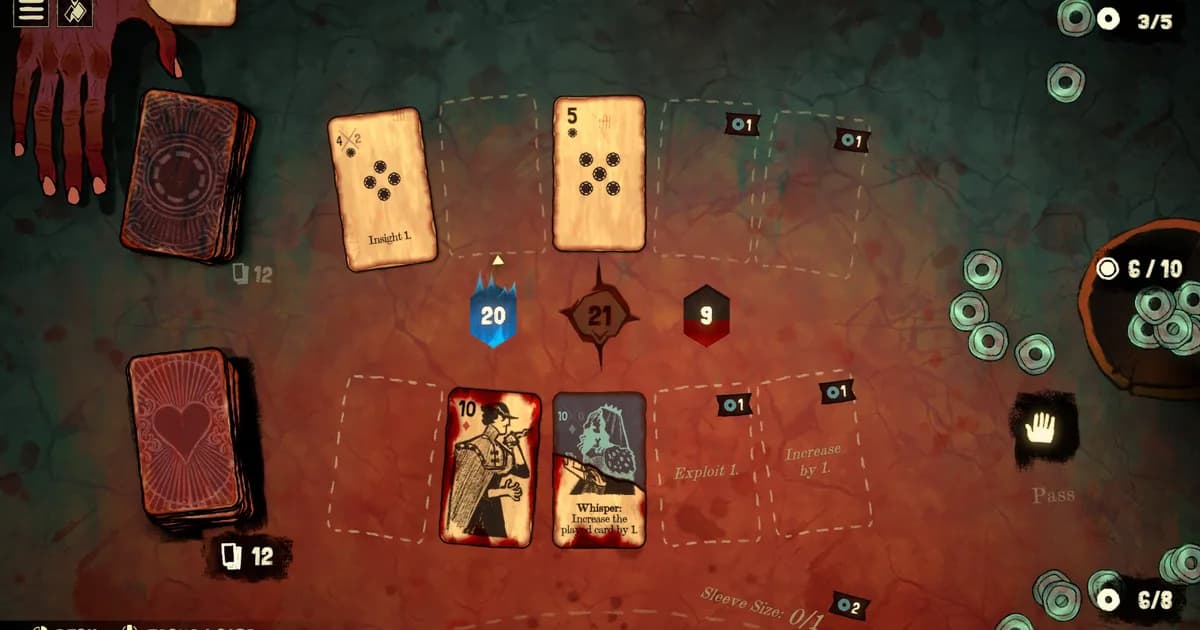
Black Jacket review starts with the blackjack table and what Mi'pu'mi Games did to it. The table is in hell. The chips are souls. The hands are real (no deck, no discard, no virtual shuffles). You draw real cards from a real deck, and you bet against demonic opponents who are doing the same.
That's the pitch, and it sounds like a theme. What makes Black Jacket work is what it hides inside the theme.
Black Jacket review: what you're playing (quick answer)
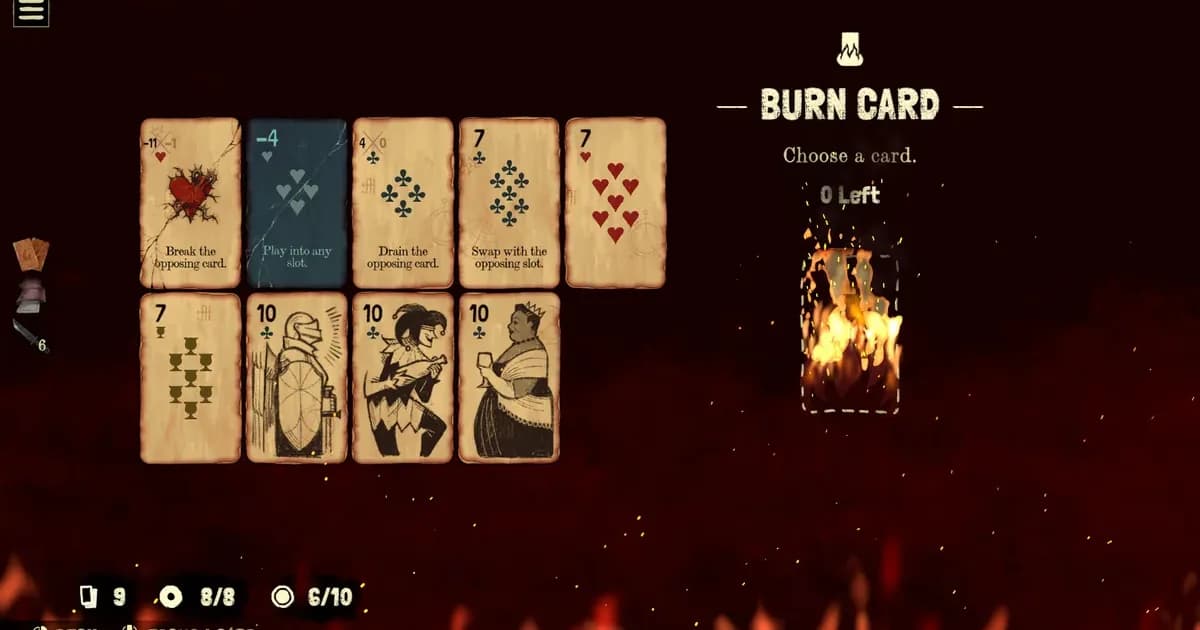
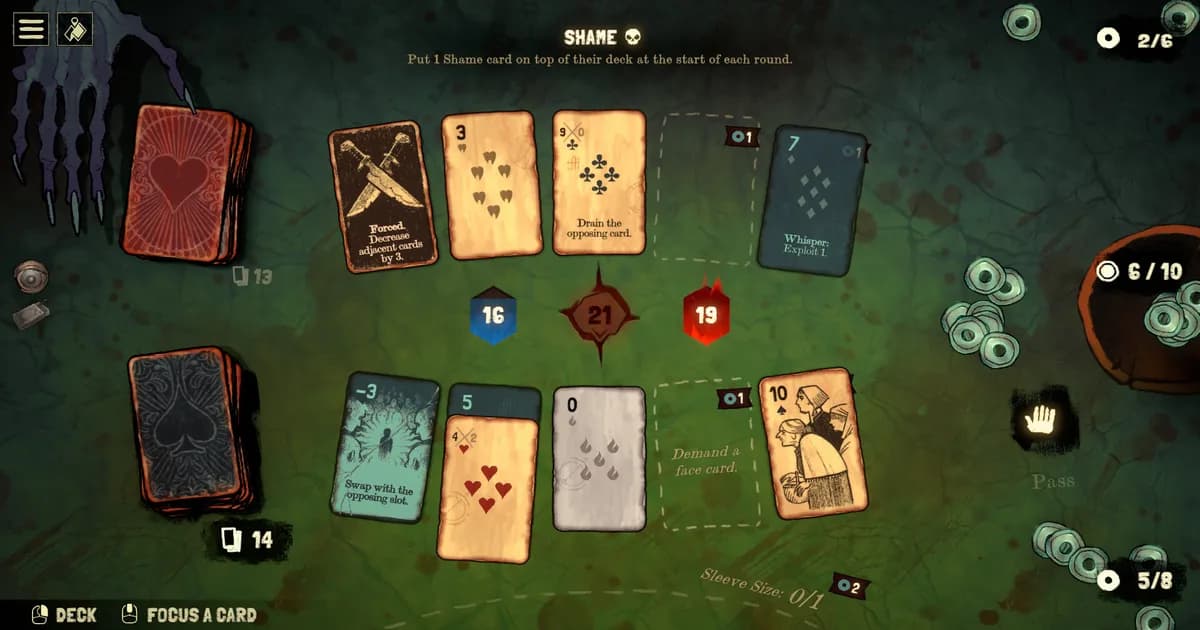
A roguelite deckbuilder where each run takes you through a sequence of blackjack encounters against increasingly punishing opponents across 21 difficulty tiers called Journeys. Before each run, you pick 3 of 8 suits. Each suit provides specific card values for your deck and adds a secondary mechanic beyond raw card math. Clubs lets you manipulate opponent card values. Hearts plays negative cards that can break opponent hands. Diamonds controls your draw order. Spades plays into any slot.
Four more suits unlock through play: Flames (ignite cards to remove them permanently), Greed (sleeve cards to compound their value), Teeth (lower opponent card scores), Tumors (devour cards for increasingly powerful single-slot effects). Each unlock has a specific in-run trigger rather than a purchase gate. You earn Flames by burning 15 cards across your runs. You earn Tumors by winning 50 encounters. The 42 Steam achievements map directly onto this progression, so you're tracking the game's own goals without a separate checklist. For a ranked breakdown of each suit's ceiling, the Black Jacket suit tier list has the full analysis.
Current status: September 2026
Black Jacket launched on May 12, 2026 and is currently $14.99 on Steam, with 91% positive from 1,750 reviews and 94% from 137 recent reviews. The store lists 42 achievements and Steam Deck Verified status. Official patch 1.0.7 added the final cutscene and more bug fixes; the developer's roadmap still points to weekly challenges and more content, without fixed delivery dates.
Key takeaways
- Roguelite deckbuilder with real blackjack as the mechanical foundation
- 8 suits, 3 chosen per run: 4 available at start, 4 unlocked through in-run milestones
- 21 Journey difficulty tiers, each adding modifiers that change how opponents play
- 91% Very Positive overall on Steam (1,750 reviews)
- Available on PC, PS5, Xbox Series X/S, Nintendo Switch; all launched May 12, 2026
- Steam Deck Verified; $14.99, no active discount
Gameplay
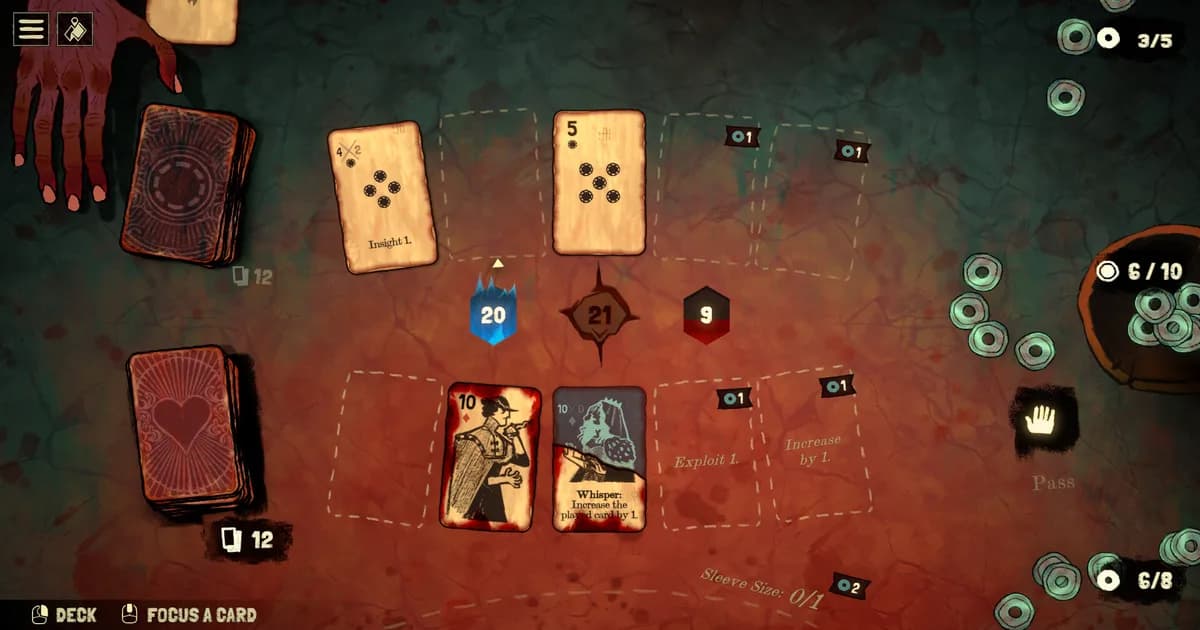
The core loop: you draw cards and try to reach 21. Your opponent does the same. You bet Soul coins on each hand, and the match ends when one side's chip total reaches zero. Between encounters, shops offer card additions, removals, and upgrades. You're building the deck during the run, not before it.
The bet is where the actual thinking lives. A game of blackjack where you can't control the bet isn't a game. It's a slot machine. Black Jacket's bet sizing is the strategic layer that separates "I had a good hand" from "I played a good run." Overbetting in round two of a match leaves you unable to press an advantage in round three. Underbetting lets opponents grind your chip count down with wins on mediocre hands. The suit mechanics are the ceiling of Black Jacket's depth, but the bet is the floor, and you need to understand the floor first.
The Journey map shows encounter types before you commit to a path. Red node clusters lead toward harder modifiers. The WILDCARDS display at bottom shows your five suit-based options going into that encounter.
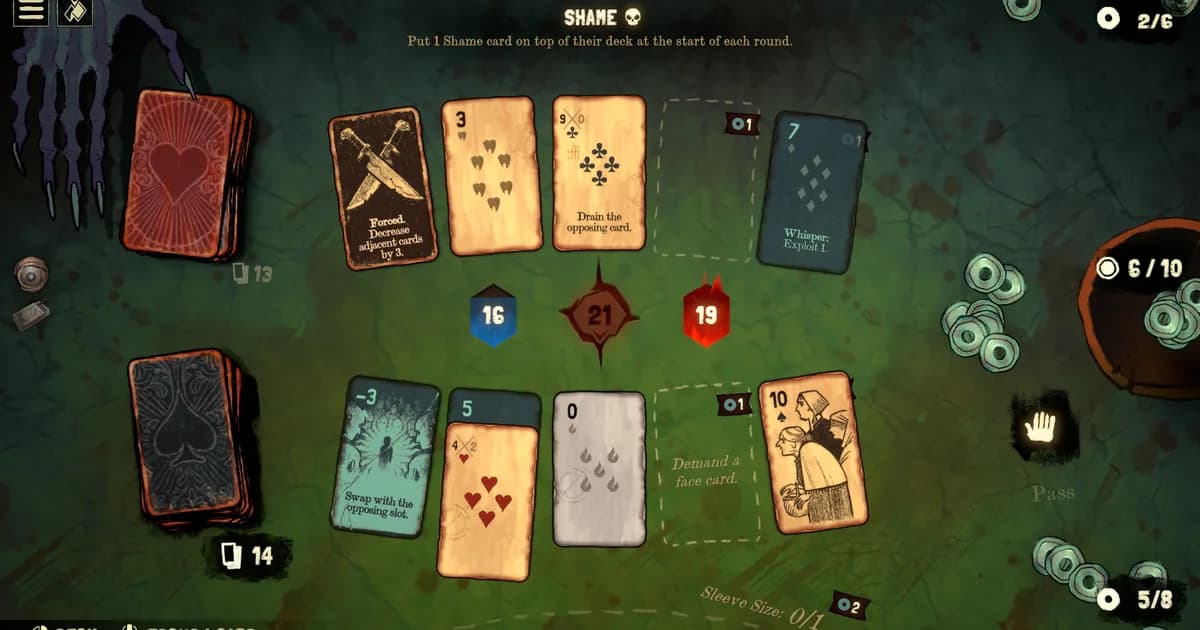
Journey modifiers are what keep the game from becoming a math problem you solve once. Each Journey adds rules on top of the base blackjack: an opponent who draws a card whenever you bust, or a modifier that caps the suits you can play in a single turn, or a rule that gives the opponent extra coins when your hand total is exactly 21. You read the modifier before choosing your run's strategy. A Diamonds deck that beats Journey 9 cleanly might fold to Journey 10's modifier if it specifically punishes draw manipulation. The modifier system makes you redo your planning at every tier rather than finding a single dominant strategy and riding it.
GODEEPER: How each suit's mechanic scales through the Journey tiers, with the specific card combinations that work at Journey 12 and above. Black Jacket Deck Building Guide: Best Suits and Combos 2026
The difficulty wall around Journey 8-12 is real and by design. The game doesn't signal it gently. You'll be clearing Journey 7 feeling competent, then hit Journey 8 and suddenly lose three runs in a row. This isn't a flaw. It's where the game stops letting you coast and starts demanding you understand why your deck works. Some players will bounce off this. The 91% Very Positive rating suggests most find the wall fair once they get through it.
What Black Jacket does that Balatro doesn't attempt
The Balatro comparison is inevitable and accurate: both take a card game and build a roguelite around the loop of draw, play, score. The comparison also has limits.
Balatro is a pure mechanical construction. The best Balatro run is optimized. You find the joker interactions, build the combo, execute. There's no pretense that it's about anything other than the satisfying feel of a machine running at maximum efficiency.
Black Jacket has a story. You're in hell for a reason, and the reason unfolds across runs. The narrative isn't intrusive; it surfaces in NPC dialogue between encounters and in the nature of the opponents you face. But it adds a layer that changes what a loss means. In Balatro, a failed run is a failed optimization. In Black Jacket, a failed run carries the weight of the story you were in the middle of. The tension stays high even in runs you're winning because the game never lets you fully disengage from what's at stake.
This is harder to design than it sounds. Most roguelites either ignore narrative entirely (pure systems) or try to integrate it and end up with systems that feel like excuses for cutscenes. Black Jacket's narrative layer is low-key enough that it doesn't interrupt the run's flow, but it's present enough that the table feels like it matters.
The game's key art captures the tone accurately: high-stakes gambling in hell, with opponents who are not quite human and not quite friendly.
GODEEPER: The Journey modifier tiers in detail, including what specifically changes at Journeys 6-10 vs. the endgame Journeys 16-21. Black Jacket Journey Guide: All 21 Journeys Explained
Black Jacket review: verdict
This is the most tension-consistent deckbuilder I've played since Slay the Spire, and it earns that tension through narrative stakes rather than raw mechanical complexity. The blackjack foundation is a genuine advantage: you understand the win condition in your first five minutes and spend the next twenty hours learning all the ways the suits, bets, and Journey modifiers complicate it. That's a better curve than most deckbuilders manage.
The difficulty wall at Journey 8-12 will filter some players, and that's fine. The game is built for the players who want to be filtered. If you stopped at Journey 7 and felt like you'd seen enough, you probably have. If you're still thinking about run decisions at Journey 5, the game has 16 more tiers of reasons to keep going.
At $14.99, it's an easy yes for anyone who finished Balatro and wanted something with more narrative edge. If a seasonal sale drops the price further, treat that as a bonus rather than something to wait for, it's worth full price. If you're still unsure, the free demo covers enough to judge the loop before buying.
Rating: 8.2/10
If Black Jacket's publisher, Skystone Games, is a name worth tracking for you now, their next release couldn't be more different in genre: Mistfall Hunter is a co-op extraction ARPG rather than a solo card roguelite, with its own pricing and edition breakdown worth reading before you buy.
Related Reading
- Black Jacket complete guide: the full suit, Journey, boss, and economy index.
- Black Jacket achievements guide: all 42 achievements and how the hidden suits unlock.
- Black Jacket blackjack tips guide: practical early-run decisions and bet timing.
- Black Jacket Soul Coin economy guide: how to protect your bankroll between encounters.
- Black Jacket boss guide: encounter patterns and the final boss route.
References
- Black Jacket on Steam: official store page, reviews, and update history
- Black Jacket Launch Trailer (YouTube): official launch trailer from Mi'pu'mi Games, May 12, 2026
- Mi'pu'mi Games official site: developer's Black Jacket page with press kit and media
- Black Jacket Steam Community Hub: community deck discussions and Journey tier breakdowns
- Black Jacket official announcements: patch 1.0.7 and the current development roadmap
Frequently Asked Questions
Is Black Jacket worth buying? Yes, especially if you enjoyed Balatro or Slay the Spire. The blackjack foundation makes the loop legible faster than most deckbuilders. The Journey modifier system stays fresh through 21 difficulty tiers. Steam currently shows 91% Very Positive from 1,750 reviews.
How is Black Jacket different from Balatro? Balatro is a pure mechanical deckbuilder with poker. Black Jacket adds a narrative layer: you're gambling souls in hell, and the story of why you're there unfolds through play. The bet-or-fold tension each round also differs from Balatro's ante structure.
How many suits are in Black Jacket? Eight suits total. Four are available from the start: Clubs, Hearts, Diamonds, and Spades. The other four unlock through specific in-run achievements: Flames (burn 15 cards), Greed (discover 70 cards), Teeth (awaken 20 cards), and Tumors (win 50 encounters).
How hard is Black Jacket? Journeys 1-5 are accessible to anyone who knows blackjack. The difficulty steepens significantly around Journey 8. Past Journey 12, intentional deck construction is required. Journey 21, the hardest tier, stacks three modifiers simultaneously and takes most players many attempts.
Is Black Jacket on console? Yes: PlayStation 5, Xbox Series X/S, and Nintendo Switch, alongside PC. The game is also Steam Deck Verified. All versions launched simultaneously on May 12, 2026.
Does Black Jacket have a demo? Yes, a free Steam demo covers the opening Journeys. Worth trying before buying, especially if you want to verify the blackjack loop clicks for you before committing to the full 21-Journey structure.
About the author

Indie & JRPG Critic
Indie game evangelist and lifelong JRPG fan covering small studios since 2017. Mumbai-born, London-based. Writes the way she talks.
- 7 years indie games coverage
- JRPG and visual novel specialist
- Narrative design focus
Keep reading
Black Jacket Update Roadmap: Weekly Challenges Next
General · 3 min
Black Jacket Achievements: All 42, Ranked by Rarity
General · 9 min
Black Jacket Suit Tier List: All 8 Suits Ranked 2026
General · 14 min
Black Jacket Deck Building Guide: Best Suits and Combos 2026
General · 15 min
Black Jacket Journey Guide: All 21 Journeys Explained
General · 16 min
Black Jacket Soul Coins Guide: Economy & Coin Management
Guides · 12 min
Game deals · affiliate links

Disclaimer
This article is published for informational and entertainment purposes. It does not constitute professional financial, legal, or technical advice. Game performance, online services, patch schedules, and store listings change. Verify critical details (pricing, system requirements, regional availability) with publishers and storefronts before you buy. Affiliate links, where present, help support our editorial work and are labelled in our affiliate disclosure.
Comments
Loading comments…