
GuideBlack Jacket
Black Jacket Boss Guide: All 5 Bosses and Curse Counters
This Black Jacket boss guide breaks down all five named bosses and the prep that gets you past the Journey 8-12 wall where most runs die. Reed is the entry-level fundamentals check you meet first. The other four are fixed demonic opponents that layer a curse on top of the Journey modifiers, and each curse punishes one specific habit: Morgan punishes your sleeve, Niv punishes blind draws, Ivel punishes you after you have already won, and Better carries a curse called Abandoned that the community is still working out in full.
Sponsored

About the game
Black Jacket
Mi'pu'mi Games · Skystone Games
TL;DR: Reed opens the boss roster as a fundamentals check, no single gimmick, just coins, sleeve timing, and tie-breaker rules under pressure. Morgan, Niv, Ivel, and Better each apply a curse that changes a table rule, not just a bigger coin pile. Morgan punishes sleeve storage (commit cards early), Niv pads your draws with extra and train cards (bring Insight for draw control), Ivel adds negative cards after you win a round (keep coin reserves and disruption-resilient decks), and Better's Abandoned curse is still being mapped out by the community. Bosses rotate between runs, so plan two or three nodes ahead on the Realm path tree and draft the counter in the shop before the boss node.
Sponsored

Black Jacket Boss Guide: Quick Answer
There are five named bosses in the current roster: Reed, Morgan, Niv, Ivel, and Better. Reed tests fundamentals; Morgan punishes sleeve storage; Niv makes blind draws dangerous; Ivel disrupts the post-win state; and Better carries the still-undocumented Abandoned curse. Bosses rotate, so use the Realm path tree and draft a counter before the node.
Current status: September 18, 2026
Steam currently lists Black Jacket at $14.99 with a Very Positive rating across 1,834 total reviews. The official 1.0.6 balance notes say the patch reduced Insight effects in each boss's Realm 1 decklist and changed one boss's decklists across all realms while keeping its general difficulty intended to remain the same. The five-name roster is cross-checked against the Opponents wiki; Better's Abandoned effect remains undocumented, so this guide does not invent a counter.
Continue with the Black Jacket Complete Guide Hub, deck-building guide, Journey guide, Soul Coins guide, achievements guide, and update roadmap for the systems around each boss node.
How Black Jacket boss fights actually work
A Black Jacket boss is not just an opponent with more Soul coins. It is a fixed demonic dealer that brings a curse, a rule modifier that sits on top of whatever the current Journey already changed. The curse is the whole fight. It targets a specific way of playing and makes that way actively dangerous.
You still win the same way you win any encounter: end with more Soul coins than the boss. The goal was never to hit 21 and it is not 21 here either. What changes is that your normal line of play, the one that carried you through the regular nodes, might be exactly what the curse is built to punish.
That reframes boss prep. You are not gearing up for a damage check. You are identifying which of your habits the boss turns against you, then drafting around it before you ever sit down at the table.
GODEEPER: Boss counters depend entirely on which three suits you drafted at run start. If you are not sure which suits give you the tools to adapt, start here. Black Jacket Deck Building Guide: Best Suits 2026 →
Black Jacket boss guide: Reed and the fundamentals check
Reed is the boss you meet first, and he doesn't carry a curse in the way the other four do. There's no single gimmick to identify and counter. Instead, Reed's fight tests whether you've actually absorbed the basics: coin management, sleeve timing, exploit cards, the difference between a blackjack and a normal 21, and how tie-breaker rules resolve.
That makes Reed less about drafting a specific counter and more about not making a beginner mistake under real pressure for the first time. Players who've been sloppy about sleeve timing or coin spending in normal nodes tend to feel that sloppiness catch up with them here, since Reed doesn't offer the forgiving pace of an early normal encounter.
The practical prep is simple: before Reed, make sure you actually understand your own deck's basic loop. If you've been winning normal nodes on autopilot without tracking why, slow down for this fight specifically.
Black Jacket boss guide: Morgan and the sleeve curse
Morgan's curse punishes cards stored in your sleeve. The sleeve is normally a safety net, a place to bank a useful card for a later round. Against Morgan, that net becomes a liability.
The counter is a habit change, not a deck rebuild. Before Morgan's node, stop banking cards for later. Commit what is in your sleeve while it is still safe to do so, and play the rounds against her on the table directly rather than leaning on stored value. If your whole run is built around a sleeve-dependent engine, that is the warning sign: you want a line that can win hands as they come, not one that defers value into a curse that taxes deferral.
Practically, that means spending the shop before Morgan on tools that resolve on the table, not on cards you intend to hold. A deck that wins now beats a deck that wins later against this boss every time.
Black Jacket boss guide: Niv and blind-draw pressure
Niv stuffs your deck with extra cards and train cards, which makes blind draws much riskier than they are in a normal hand. When you draw without information against Niv, you are pulling from a deck Niv has deliberately polluted.
Insight cards are the direct answer. Insight lets you see or influence what is coming, which converts a blind gamble into an informed decision. Against a padded deck, that information is the difference between a controlled total and a bust you did not see coming.
The prep is to weight your shop stops before the Niv node toward draw control rather than raw coin value. A few coins of value mean nothing if you cannot trust your next draw. If you went into the run without any Insight access in your suit picks, play conservatively against Niv: take fewer speculative draws, and accept smaller, safer round wins instead of swinging for big totals into a deck you cannot read.
The Realm path tree is a branching map from start to boss. Reading which boss node is coming two or three steps out is what lets you draft the counter in the shops before you arrive.
Black Jacket boss guide: Ivel and post-win disruption
Ivel is the trickiest of the four Realm Bosses because Ivel breaks the assumption every other encounter lets you keep: that a won round stays won. Ivel can add negative cards even after you win a round, so a clean victory is not actually clean.
The implication is that you cannot bank on a winning round to stabilize your coin count. You have to prepare for disruption that lands after the moment you would normally relax. Keep Soul coin reserves through the rounds that follow a win rather than spending down to the felt the instant you are ahead. And favor a deck that can absorb injected negative cards, one that does not collapse when its expected board state gets altered out from under it.
Against Ivel, the mental shift is to treat every won round as provisional. Play the round after a win with the same care as the round itself, because Ivel's curse is specifically designed to catch the player who exhales too early.
Black Jacket boss guide: Better and the Abandoned curse
Better is the fourth Realm Boss, rotating in alongside Morgan, Niv, and Ivel. Its curse is named Abandoned, confirmed via the game's own community wiki, though the wiki entry for it is currently a stub and doesn't spell out the exact table-rule change the way Morgan's sleeve-punish or Niv's draw-pollution are documented. Rather than guess at a specific mechanic that isn't confirmed anywhere, the honest read right now is: expect Abandoned to be a genuine curse like the other three, not a filler encounter, and treat the fight with the same four-question prep (coin reserves, sleeve exposure, draw control, disruption resilience) you'd use against any Realm Boss until the community pins down the specifics further.
That said, player reports on the community subreddit are worth weighing even without a formal mechanic writeup. Multiple players comparing all four Realm Bosses describe Better as the most manageable of the four, generally rating it easier than Morgan and roughly on par with or easier than Niv. Treat that as a community read, not a confirmed difficulty ranking from the developer.
Better is also tied to its own Face Card set, The Family (Elisabeth, Niv, and The Black Jacket), which unlocks after defeating Better enough times, per a detailed community-sourced Face Card breakdown. If you're working through the face-card puzzle system, Better's defeats are what unlock that specific set.
How boss curses stack with Journey modifiers
The reason bosses feel manageable early and brutal later is that the curse never fights alone. From the mid-Journeys on, the boss curse sits on top of the Journey's own modifiers, and the two compound.
A sleeve-punishing curse is annoying on Journey 4. On Journey 11, with a Journey modifier already squeezing your coin economy, the same curse can end the run. This is why the difficulty wall lands where it does: not because the bosses gain raw power, but because the curse-plus-modifier stack leaves no room for an unfocused deck that tries to do everything at once.
The takeaway: the deeper you go, the more a boss fight rewards a deck with a clear identity. A focused Clubs-pressure or Hearts-removal line has an actual plan against a compounded curse. A scattered deck just has more surfaces for the stack to attack.
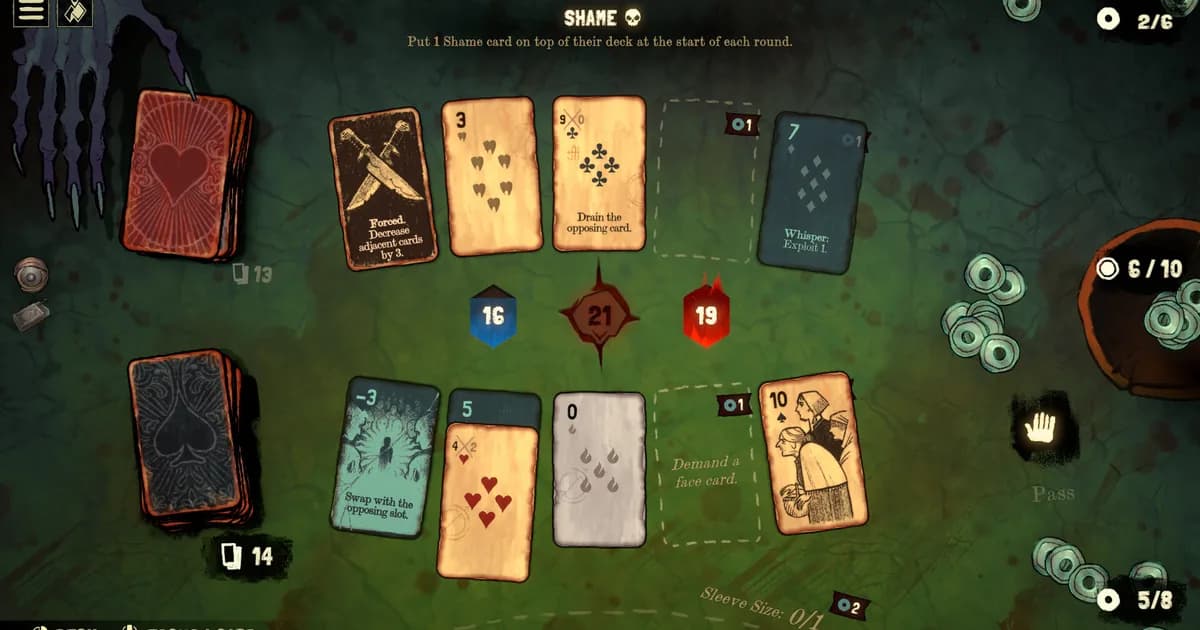
A boss intro screen. Knowing which boss is next, like Niv here, tells you which curse you are drafting against before the first hand is dealt.
GODEEPER: The Journey modifiers are half of every boss fight from Journey 8 onward. Know what each tier adds before you commit. Black Jacket Journey Guide: All 21 Journeys Explained →
Step-by-step: clearing a boss node
Bosses rotate between runs, so you cannot memorize a fixed order. What you can do is read the Realm path tree and prepare. Here is the routine that clears the Journey 8-12 wall.
-
Look ahead on the Realm path tree. It is a branching map of nodes from start to boss: normal, shop, burn or upgrade, boss, and story nodes. Identify which boss node is coming two or three steps out, not when you arrive at it.
-
Diagnose the curse against your deck. Ask the four prep questions: do you have enough coins to eat a few bad rounds, is your sleeve exposed, can you control draws with Insight, and is your deck resilient to disruption? The answer tells you what to shop for.
-
Use the pre-boss shop and burn nodes deliberately. This is where you draft the counter. If Morgan is coming, do not buy sleeve engines. If Niv is coming, buy draw control. If Ivel is coming, hold coin reserves and add resilience. If Better is coming, default to the general four-question prep since the Abandoned curse's specifics aren't fully documented yet. The shop before the boss is the fight.
-
Bet conservatively in the opening rounds. Feel out how the curse interacts with your current board before committing a major bet. The skill that separates Journey 12 clears from failures is knowing the boss pattern before you commit coins, not reacting hand to hand once you are already behind.
-
Win on coins, not on totals. You do not need to dominate every hand. You need to end ahead. Small safe wins that respect the curse beat big swings that walk into it.
Tips for the Journey 8-12 boss wall
A few habits separate players who stall at Journey 8 from players who push past 12.
Draft your three suits with adaptation in mind, not just raw power. A deck that can only do one thing has no answer when the curse targets that one thing. Suits that give you draw control or coin recovery buy you flexibility against whichever boss rotates in.
Do not spend your full coin count before a boss node. The shops that matter most appear mid-Journey, and arriving at a boss with no reserve means you cannot absorb the bad rounds a curse is designed to create.
Treat the burn and upgrade nodes before a boss as counter-drafting opportunities, not generic improvements. The same upgrade is worth more or less depending on which boss is next.
And accept that some run-ending losses are draft problems, not play problems. If you keep dying to Niv with no Insight access, the fix is in your suit selection at run start, not in tighter play at the table.
Frequently Asked Questions
How do boss fights work in Black Jacket? Each boss applies a curse on top of the Journey modifiers. The curse changes a table rule and punishes a specific strategy. You still win by ending with more Soul coins than the boss, but you have to adapt your usual line before the fight.
How do you beat Reed? Reed doesn't have a single gimmick curse. His fight tests fundamentals: coin management, sleeve timing, exploit cards, blackjack versus a normal 21, and tie-breaker rules. Slow down and play clean.
How do you beat Morgan? Morgan punishes sleeve storage. Commit stored cards before her node and run a deck that wins on the table rather than banking value for later.
How do you counter Niv? Niv pads your draws with extra and train cards. Bring Insight cards for draw control and weight pre-Niv shops toward information, not raw value.
What makes Ivel dangerous? Ivel adds negative cards after you win a round. Keep coin reserves through post-win rounds and run a disruption-resilient deck.
How do you beat Better? Better carries a curse called Abandoned, not yet fully documented by the community. Prep with the same four questions you'd use for any Realm Boss; player reports rate it comparatively manageable next to Morgan and Niv.
When do bosses get hard? Journey 8-12, where the curse stacks with Journey modifiers and unfocused decks run out of room.
Do bosses change between runs? Yes. Bosses rotate, so plan around the Realm path tree rather than a fixed order.
Related Reading
The Black Jacket Complete Guide Hub is the central anchor for every Black Jacket system, from suit selection through Journey progression and boss strategy.
The Black Jacket Deck Building Guide covers the three-suit draft that determines which boss counters you actually have access to.
The Black Jacket Journey Guide breaks down all 21 Journeys and the modifiers that stack with boss curses past Journey 8. The Black Jacket beginner tips guide covers the table fundamentals before the first boss.
- Black Jacket Soul Coins Guide: Economy & Coin Management: how you earn and spend coins and manage in-run sinks.
- Black Jacket Suit Tier List: All 8 Suits Ranked 2026: the current suit ranking and the tradeoffs behind each pick.
- Lost Castle 2 Boss Guide: All 12 Bosses & How to Beat Them: another boss-by-boss roguelite reference.
References
- Black Jacket on Steam: official store page, patch notes, and community discussions
- Black Jacket official announcements: official 1.0.6 balance notes and later patch history
- Skystone Games official site: publisher page and studio information
- Black Jacket community wiki: Opponents: boss roster reference, including Better's Realm Boss status
- r/BlackJacket: official community subreddit, source for player-reported Better difficulty comparisons
Was this guide helpful?
About the author

GameBrief's byline for metroidvanias, RPGs, comparisons and design history. Places each game in its genre and argues both sides before picking one.
- Metroidvanias and RPGs
- Comparisons and design history
- Sources listed per article
Keep reading
Black Jacket Complete Guide 2026: All 21 Journeys, Suits
General · 14 min
Black Jacket Soul Coins Guide: Economy & Coin Management
Guides · 12 min
Black Jacket Journey Guide: All 21 Journeys Explained
General · 16 min
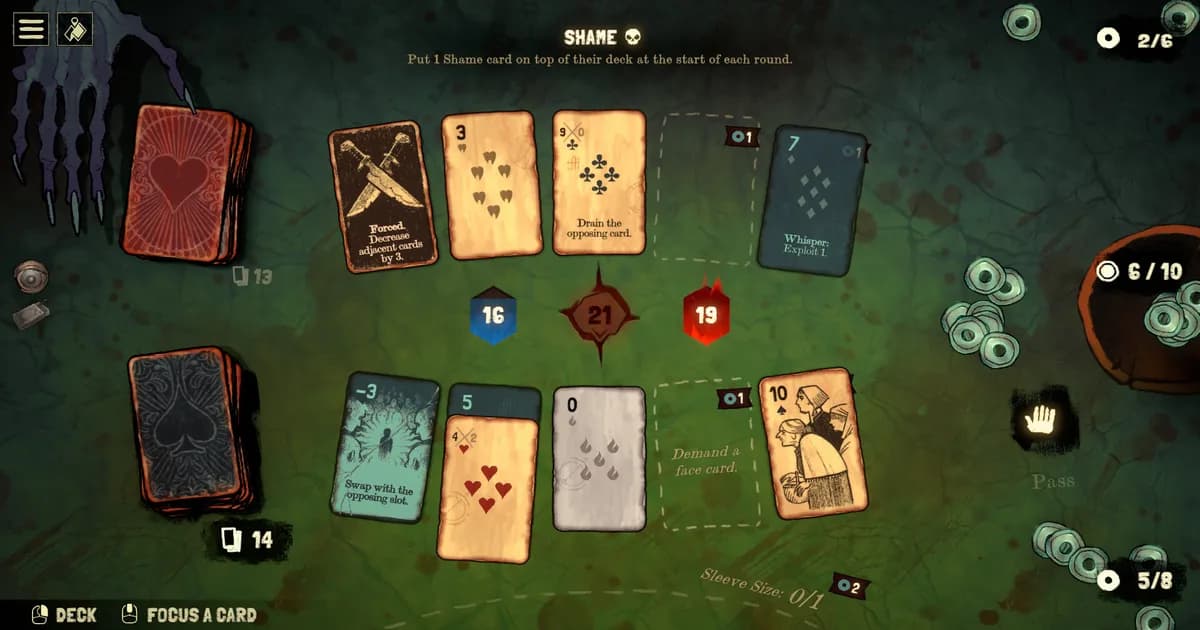
Black Jacket Deck Building Guide: Best Suits and Combos 2026
General · 15 min
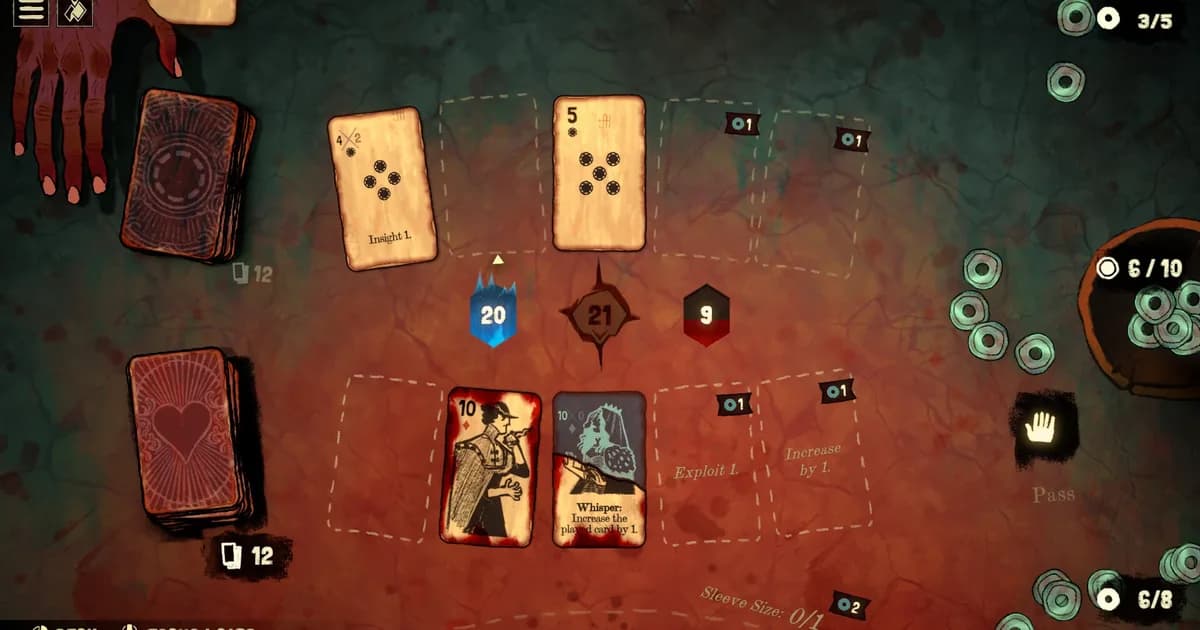
Black Jacket Suit Tier List: All 8 Suits Ranked 2026
General · 14 min
Black Jacket Guide: Blackjack Roguelite Tips for 2026
General · 11 min
Sponsored
Disclaimer
This article is published for informational and entertainment purposes. It does not constitute professional financial, legal, or technical advice. Game performance, online services, patch schedules, and store listings change. Verify critical details (pricing, system requirements, regional availability) with publishers and storefronts before you buy. Affiliate links, where present, help support our editorial work and are labelled in our affiliate disclosure.
Comments
Loading comments…