
GuideBlack Jacket
Black Jacket Suit Tier List: All 8 Suits Ranked 2026
This Black Jacket suit tier list ranks all 8 suits from S to B, with the reasoning behind every placement and the best picks for each Journey band. Black Jacket gives you 3 suit slots per run, and that choice matters more than any single card you draw afterward, so getting the ranking right is the highest-leverage decision in the game.
Sponsored

About the game
Black Jacket
Mi'pu'mi Games GmbH · Skystone Games
TL;DR: Diamonds is the one S-tier suit: draw control, low complexity, correct in every run. Clubs, Hearts, Greed, and Tumors are A-tier engines that each want a deck built around them, with Hearts a high-complexity negative-value removal suit rather than the beginner pick its symbol suggests. Spades, Teeth, and Flames are B-tier support. Start Diamonds plus Spades plus Clubs, then fold in a specialist after Journey 10.
Sponsored

Black Jacket suit tier list: all 8 suits ranked (quick answer)
Here is the full ranking. The 4 standard suits (Hearts, Diamonds, Clubs, Spades) are available from your first run; the 4 special suits (Flames, Greed, Teeth, Tumors) unlock through play.
- S tier: Diamonds
- A tier: Clubs, Hearts, Greed, Tumors
- B tier: Spades, Teeth, Flames
Diamonds is the only suit that is a correct pick in almost any run. A-tier suits are powerful but ask for either opponent knowledge or a deck built around them, and that includes Hearts, whose negative-value mechanic is far more demanding than its familiar symbol suggests. B-tier suits earn a slot as support, not as the engine your run is built on. This is an analysis based on each suit's in-game mechanic and its consistency across the Journey ladder, not a community vote: at the time of writing there is no established public suit tier list for Black Jacket, which is exactly why the question keeps coming up.
Black Jacket current status: September 2026
The live Steam snapshot checked on September 18 lists Black Jacket at $14.99, with 91% positive from 1,755 total reviews and 95% from 134 recent reviews. It released on May 12, 2026. The official feed's Patch 1.0.7 added the final cutscene after a difficulty 21 win, while the 1.0.6 notes explain that opponents use visible card mechanics rather than hidden card-fixing rules. The rankings below remain an editorial recommendation, not an official tier list. Sources: Black Jacket on Steam and the official Steam announcements.
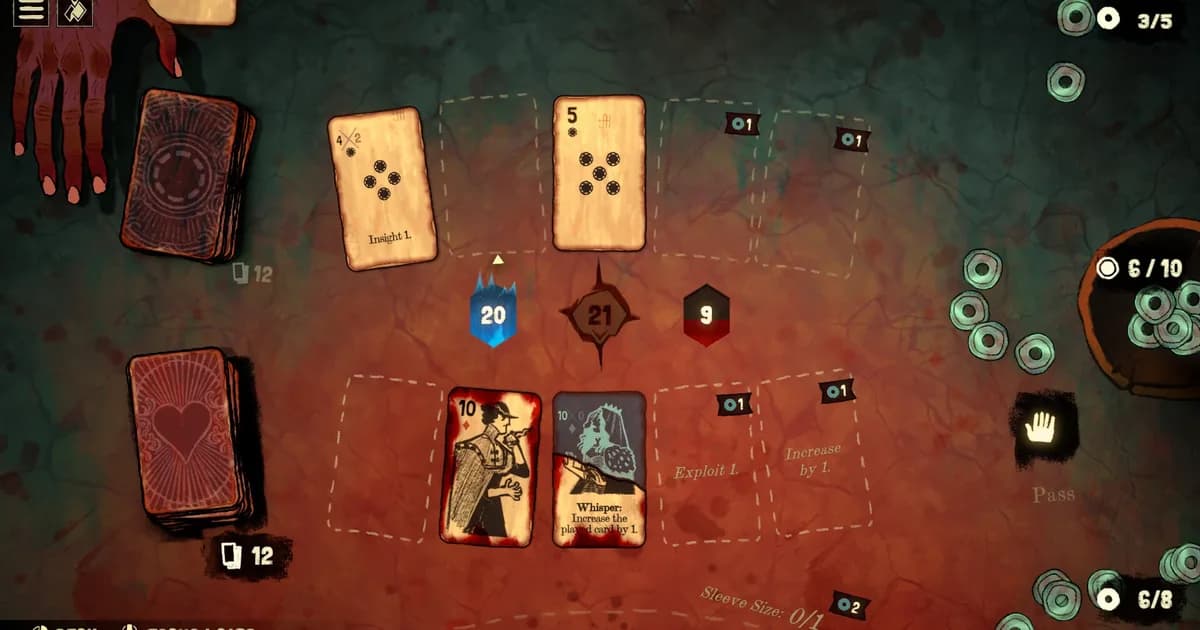
The suit selection screen at run start. Your three standard suits are open from the beginning; the four special suits stay padlocked until you meet their unlock conditions.
S tier: Diamonds
One suit sits above the rest, and it is the least flashy one in the game.
Diamonds (draw manipulation). Diamond cards rearrange the top of your deck so you see and control which cards come up next. That single ability attacks Black Jacket's core problem: blackjack is a game of variance, and Diamonds converts that variance into a decision you control. You bust less, you stand correctly more often, and your other two suits trigger more reliably because you can line up the draws they need. Diamonds is low complexity, works on Journey 1, still works on Journey 21, and supports every other suit in the game. It is the only suit you can pick blind and never regret.
GODEEPER: Once you know which suits to pick, the next skill is shaping the deck around them with card removal and suit coherence. Black Jacket Deck Building Guide →
A tier: Clubs, Hearts, Greed, and Tumors
These suits win runs, but each asks something of you first.
Clubs (value manipulation). Club cards alter card values and reach across the table, draining the opposing card or swapping with the opposing slot. Clubs inverts the usual plan: instead of playing better blackjack, you make the opponent's numbers play worse. It is available from your first run, which makes it the best early specialist, and it scales hardest from Journey 8 onward where opponents run coherent strategies worth disrupting. The cost is knowledge; Clubs is only as good as your read on what the opponent is doing.
Hearts (negative-value removal). This is the suit most players misjudge. Awakened Heart cards take on negative values and can break the opposing card, so Hearts is a removal suit that weaponizes negative numbers. The ceiling is high: breaking the opponent's strongest card at the right moment swings an encounter. But the in-game description flags it as high complexity for a reason, and the familiar Heart symbol fools new players into treating it as a safe starter. It is not. Play it once you understand how awakening and card values interact, and it earns its A-tier slot.
Greed (value scaling). Greed revolves around sleeving cards from your deck or slots, and several Greed cards buff whatever is already slotted. The 10 of Greed, for example, lets sleeved cards gain value instead of busting you. It is a compounding engine that rewards long encounters over fast kills, and it pairs well with any control suit that buys it time. Unlock it by discovering 70 cards.
Tumors (big-number combo). Tumors cards devour other cards and stack the devoured scores onto a single card; fill every slot on that card and a secondary effect triggers. This is the highest ceiling in the game. A fully fed Tumor card can close an encounter by itself, which is why some players will tell you it is the best suit. It stays in A rather than S for one reason: it is the most complex suit, it needs a deck built around feeding it, and a run where the engine never assembles is a dead run. Unlock it by winning 50 encounters.
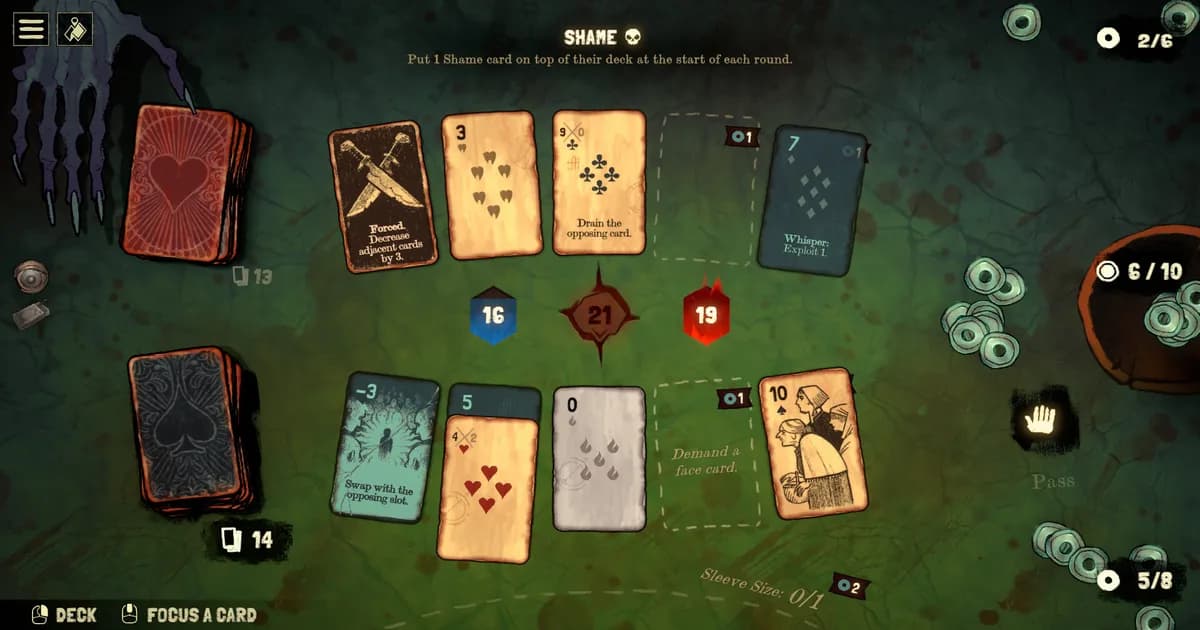
A Flames burn prompt mid-encounter. The card abilities visible here, breaking, draining, and swapping the opposing card, are exactly the suit identities the tier ranking is built on.
B tier: Spades, Teeth, and Flames
None of these are bad. They are support pieces that round out a build rather than carry it.
Spades (flexibility). Spade cards can be played into any slot and lean toward disrupting the opponent. That flexibility is genuinely useful early: you are never stuck without a legal placement. Its weakness is the flip side of its strength. It never specializes, so by Journey 12 a focused suit almost always does more than Spades' even spread. It is the best B-tier pick for a beginner's third slot.
Teeth (opponent control). Teeth cards lower the score of the opponent's cards, dragging their totals down until their strong draws stop mattering. It is genuinely strong into bosses that lean on high single-hand totals, which keeps it relevant in the endgame. It lands in B because that strength is situational: against opponents who win on tempo or curses rather than raw totals, Teeth does much less. Unlock it by awakening 20 cards.
Flames (removal and tempo). Flames cards apply ignite, and a card ignited twice burns away and is exhausted for the rest of the run. Some Flames cards ignite your own deck and others the opponent's, so it doubles as deck thinning and disruption. The double-edged nature is exactly why it sits in B: a misfired ignite on your own key card hurts, and the payoff rarely matches what a focused A-tier engine produces. Unlock it by burning 15 cards.
Black Jacket suit tier list: picking your suits for the run
The ranking changes how you play depending on where you are on the ladder.
For Journeys 1 to 10, run Diamonds plus Spades plus Clubs even after you have unlocked special suits. Diamonds does the draw control, Spades keeps you flexible, and Clubs gives you a simple way to drain or swap the opponent's cards. This is the band where consistency beats ceiling every time, and it is the band where Hearts looks tempting and quietly loses you runs.
For Journeys 8 to 15, start folding in a higher-complexity specialist. Clubs is already pulling weight, so this is where Hearts becomes worth learning: a Hearts plus Diamonds plus Clubs line keeps your draw control while adding hard removal through negative values.
For Journeys 14 to 21, the highest-ceiling combinations come online. Tumors plus Teeth plus Clubs is the demanding endgame build: Tumors as the engine, Teeth to suppress the opponent's totals while you assemble it, and Clubs for targeted disruption. It is not recommended until you have cleared Journey 12 with something simpler, because if the Tumors engine never forms you have spent two suit slots on nothing.
A note on suit coherence that the tier ranking assumes: a suit only earns its placement if it makes up enough of your deck to trigger reliably. Aim for 60 to 70 percent of your deck in your primary suit. A Tumors deck that is only 20 percent Tumors cards never assembles the combo and plays like a B-tier mess regardless of where the suit ranks here.
Tips for every tier
- Pick your engine before your support. Decide which one suit your run is built around, then choose the other two to protect or feed it. A run with three "support" suits and no engine stalls out by Journey 12.
- S beats A on consistency, not power. Diamonds outranks every A-tier suit not because it does more, but because it is correct more often. Ceiling is worth less than reliability until you can pilot the harder suits.
- Hearts is the most misjudged suit in the game. Its negative-value removal is strong, but the in-game tag says high complexity. Do not let the friendly symbol talk you into it on Journey 2.
- Unlock order is not power order. You unlock special suits by playing, so Flames and Greed arrive early. That does not make them better than Diamonds, which outranks every special suit.
- Re-read the Journey modifiers before locking suits. From Journey 16 on, a stacked modifier can quietly turn an A-tier suit into a liability. Reading the modifier list and reselecting suits is a correct, skilled decision, not a waste of time.
GODEEPER: Suit choice is only half a winning run. The Journey modifiers stacked on top decide whether your suits even function. Black Jacket Journey Guide: All 21 Journeys →
Step-by-Step: choose a Black Jacket suit package
Step 1: Start with your engine. Pick Diamonds for the safest draw control, or choose an A-tier suit only if you already understand the mechanic it asks you to feed.
Step 2: Add a support suit. Use Spades for flexible placement, Clubs for opponent manipulation, or Teeth when the Journey rewards lowering enemy totals.
For the exact card-removal choices that make this step work, compare the Black Jacket deck-building guide before locking the run.
Step 3: Check the Journey modifier. Read the modifier before locking the run. A strong suit can become a liability when the rule punishes its normal card pattern.
Step 4: Match the deck to the suit. Remove cards that do not feed the engine, then verify the current card tooltip because balance patches can change individual effects.
Use the Black Jacket achievements guide to check the cumulative unlock milestones for special suits instead of assuming they unlock by Journey number.
Related Reading
- Black Jacket Complete Guide 2026: every system in one place, including all 8 suits, the 21 Journeys, and the Soul coin economy.
- Black Jacket Deck Building Guide: how to turn a suit pick into a coherent winning deck through card removal and coherence targets.
- Black Jacket Journey Guide: All 21 Journeys: what each Journey band throws at you and which suits hold up at the top.
- Black Jacket Soul Coin Economy Guide: the resource that decides whether any of these suits get to do their job.
- Lost Castle 2 Weapons Tier List: 9 Categories Ranked: Lost Castle 2 weapons tier list: all 9 confirmed categories ranked for 1.0, with the standout weapon in each.
- Black Jacket Boss Guide: Morgan, Niv, Ivel Curse Counters: Black Jacket boss guide: how to beat Morgan, Niv, and Ivel, what each boss curse.
- Black Jacket Achievements Guide: Unlocks and Challenges: the cumulative goals that unlock the four special suits.
- Black Jacket Beginner Guide: Blackjack Roguelite Tips: the core round rules before committing to a specialist suit.
- Black Jacket Review 2026: the broader take on the deckbuilder's risk and reward loop.
- Black Jacket Update Roadmap: official post-launch direction and patch context.
References
- Black Jacket on Steam: official store page, suit and curse mechanics, and patch notes from Mi'pu'mi Games and Skystone Games.
- Black Jacket Steam Community Hub: player guides, suit unlock discussion, and developer announcements.
- Black Jacket Wiki: suit mechanics and achievement unlock conditions checked for this ranking.
Frequently Asked Questions
What is the best suit in Black Jacket? Diamonds is the best all-round suit and the only S-tier pick. It rearranges the top of your deck so you control which cards come up next, which turns the blackjack variance problem into a skill problem. It is strong from Journey 1 to Journey 21, low in complexity, and pairs well with every other suit. Nothing else in the game is correct in as many situations.
How many suits are in Black Jacket? There are 8 suits. Four are the standard playing-card suits you start with: Hearts, Diamonds, Clubs, and Spades. Four are special suits you unlock through play: Flames, Greed, Teeth, and Tumors. You pick 3 suits at the start of every run, and that choice locks your deck's identity for the whole run.
How do you unlock the special suits in Black Jacket? Each special suit is tied to a cumulative achievement. Flames unlocks after you burn 15 cards, Teeth after you awaken 20 cards, Greed after you discover 70 cards, and Tumors after you win 50 encounters. You earn these naturally over your first 15 to 30 hours, so the special suits arrive roughly in pace with your skill.
Is Hearts a good beginner suit in Black Jacket? No. The Heart symbol looks friendly, but in Black Jacket Hearts is the highest-complexity standard suit: awakened Heart cards take on negative values and can break the opposing card. It is a powerful removal suit in skilled hands, but it punishes the exact mistakes new players make, so it sits in A tier rather than as a starter pick. Beginners should run Diamonds, Spades, and Clubs first.
What is the best beginner suit combination in Black Jacket? Diamonds plus Spades plus Clubs is the most forgiving start. Diamonds controls draw variance, Spades plays into any slot so you are never stuck for a placement, and Clubs drains or swaps the opponent's cards. This combination clears Journey 1 through 10 reliably while you learn what the special suits do. Add Hearts, Greed, or Tumors only once you understand the deck.
Is Tumors the strongest suit in Black Jacket? Tumors has the highest ceiling of any suit because a fed Tumor card can end an encounter on its own, but it is not the strongest pick for most players. It is the most complex suit and needs a deck built around feeding it, so it sits in A tier rather than S. New players win more consistently with Diamonds as the backbone.
Was this guide helpful?
About the author

Indie & JRPG Desk
GameBrief's byline for indie, JRPG, visual novel and cozy games. Warm, direct, and willing to say which one to buy.
- Indie, JRPG and visual novels
- Early access and survival
- Sources listed per article
Keep reading
Black Jacket Deck Building Guide: Best Suits and Combos 2026
General · 15 min
Black Jacket Journey Guide: All 21 Journeys Explained
General · 16 min
Black Jacket Soul Coins Guide: Economy & Coin Management
Guides · 12 min
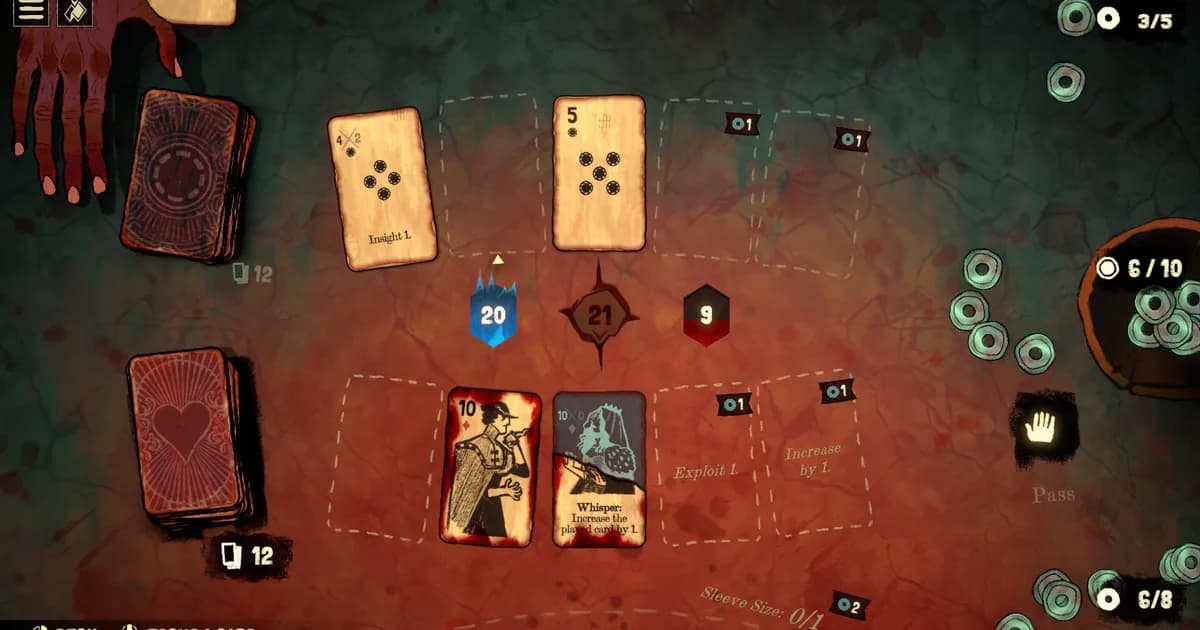
Black Jacket Complete Guide 2026: All 21 Journeys, Suits
General · 14 min
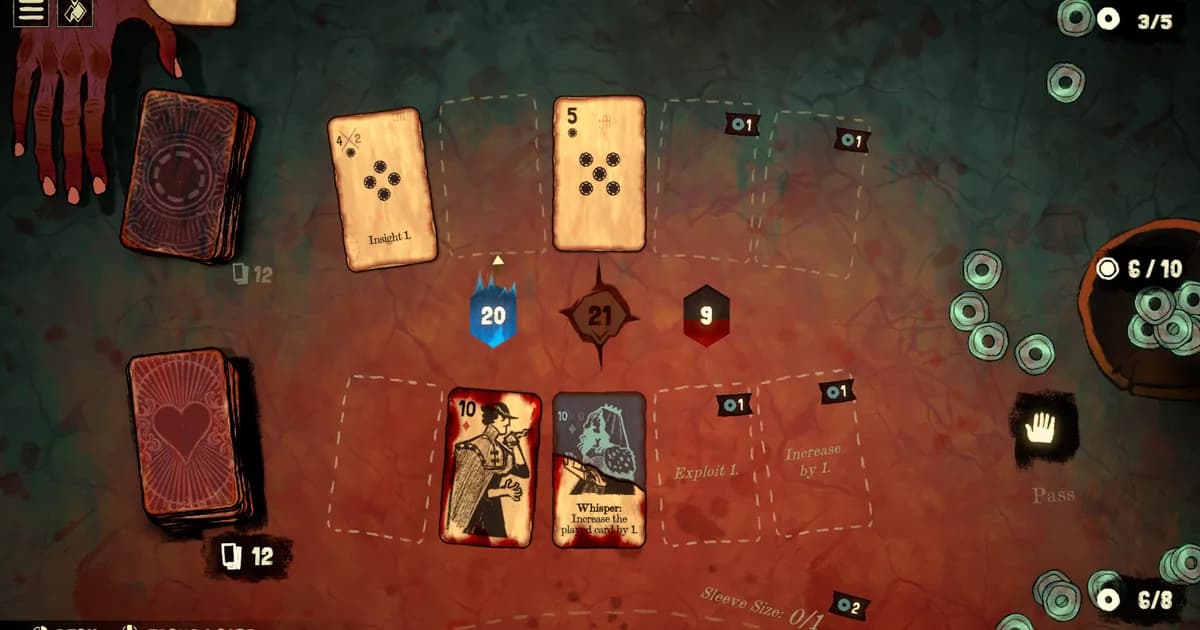
Black Jacket Boss Guide: All 5 Bosses and Curse Counters
Guides · 15 min
Black Jacket Guide: Blackjack Roguelite Tips for 2026
General · 11 min
Sponsored
Disclaimer
This article is published for informational and entertainment purposes. It does not constitute professional financial, legal, or technical advice. Game performance, online services, patch schedules, and store listings change. Verify critical details (pricing, system requirements, regional availability) with publishers and storefronts before you buy. Affiliate links, where present, help support our editorial work and are labelled in our affiliate disclosure.
Comments
Loading comments…