
GuideBlack Jacket
Black Jacket Journey Guide: All 21 Journeys Explained
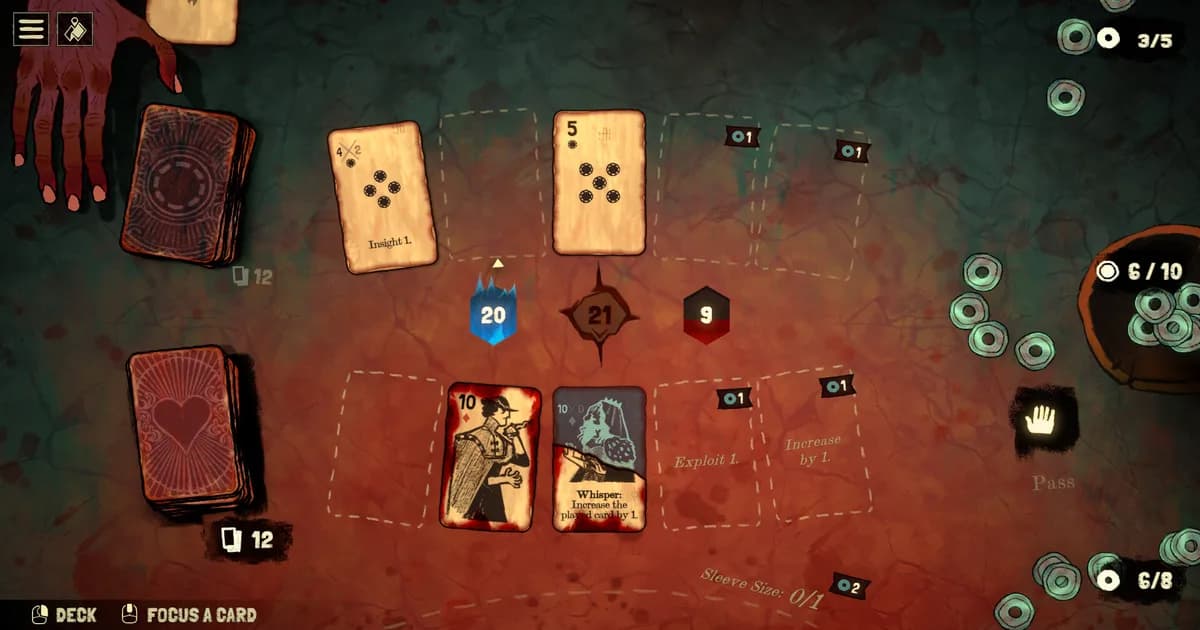
This Black Jacket journey guide covers all 21 Journeys: how the modifier system works, what changes at each difficulty band, the deck strategies that clear each tier, and where the real walls are. Black Jacket's 21 Journeys aren't equal steps up a difficulty slider. They're four distinct phases, each with a different set of rules for what matters and what gets you killed.
Sponsored

About the game
Black Jacket
Mi'pu'mi Games GmbH · Skystone Games
TL;DR: Black Jacket has 21 numbered Journeys, and the official store page confirms that cards, suits, curses, and artifacts can change the rules. The four bands below are an editorial learning map, not official tier names. Read the visible modifier screen before committing to a deck.
Sponsored

Black Jacket journey guide: how Journeys work (quick answer)
Each Journey is a numbered difficulty tier with one or more active modifiers. You select the Journey level before starting a run; the game's achievement confirms a Journey 21 clear exists. The active modifier is visible before you begin, which means you can see what you're walking into and pick suits accordingly.
Modifiers change rules, not just numbers. One modifier might give opponents an extra draw per hand. Another might reward you with bonus Soul coins for specific hand values. A third might restrict when certain suits can be played. That variety is what makes Journey progression feel like a game within the game.
Journeys can change the opponent, artifact, curse, and card pressure in a run. The official patch history confirms fixes to the Sacrifice curse and card/artifact synchronization, but it does not publish a permanent Journey-by-Journey modifier table.
Current status: September 2026
Black Jacket's latest official patch feed lists Patch 1.0.7 in August, including a final cutscene after defeating the final boss on difficulty 21 and additional fixes. The developer's June roadmap also described weekly challenges as the next planned patch and more content after that. Journey 21 is confirmed by the game's Steam achievement, but the exact modifier combination and balance can change, so use the run's preview screen rather than a static tier table.
GODEEPER: Suit selection, deck archetypes, and the Soul coin economy explained for new players. Black Jacket Guide: Tips and Suit Selection 2026
Key takeaways
- Journey modifiers are visible before you start a run; always read them before picking suits
- The real difficulty wall is Journey 8-10, not Journey 1-3
- Artifact selection becomes as important as card selection in the upper half of the Journey ladder
- Journey 15+ requires a purpose-built deck; random card pickups stop working
- Journey 21 is the highest numbered difficulty confirmed by the Steam achievement; read its live modifier screen.
Step-by-step: clearing a Black Jacket Journey
- Read the Journey preview. Note every visible modifier before choosing a deck or suit.
- Choose one primary interaction. Favor a suit and card plan that is helped by, or at least neutral to, the active rules.
- Protect the economy. Size bets conservatively until you know how the modifier changes coin flow.
- Use shops to remove dead weight. A tighter deck makes curse and modifier pressure easier to read.
- Rebuild for the next Journey. Treat a clear as information about the next modifier, not proof that the same deck is universal.
For the systems behind that loop, compare the Black Jacket achievements guide, the Black Jacket update roadmap, and the Black Jacket review before deciding whether an older deck recommendation still fits the current build.
Journeys 1-5: learning the system
Journeys 1-5 are the tutorial tier, even if they don't say so. The modifiers in this band are additive and forgiving. Opponents play more predictable blackjack. Your deck's suits are starting to show what they do, but you're not under pressure to make them work correctly yet.
What changes across this band:
Journey 1 is baseline. No modifier. The game is showing you how suit mechanics work in clean conditions. Use this to understand your draw order, how your suits trigger, and when to stand vs. hit under normal blackjack probability.
By Journey 3, opponents have started using their own card effects. Clubs and Spades opponents will occasionally disrupt your draw or manipulate their own hand. You'll notice the difference from Journey 1. The correct response isn't to panic-remove every card you don't understand; it's to start tracking what the opponent's deck is doing.
Journey 5 is where overconfident players first die. Aggressive players who cleared Journeys 1-4 by going all-in on every hand meet their first opponent who counters that approach directly. If you're here, the lesson is: the betting decision is as important as the card decision. You can win a hand and still lose a round.
What works here: Almost any three-suit combination clears this band. Diamonds plus Spades plus Clubs is the easiest. Don't overthink suits; focus on understanding what your deck is doing.
Each Journey plays out across a node map like this one. Early Journeys keep the branching simple; later ones add more forks and harder-to-avoid encounter types.
Journeys 6-10: the first pressure wall
Journey 6 is where the modifier system starts doing real work. Modifiers in this band begin interacting with your economy, not just your card play. A modifier that reduces your starting coin total or removes the bonus you were counting on from a specific hand type changes the calculus of every betting decision.
What changes across this band:
Journey 6-7 introduce modifiers that feel like inconveniences. One run might restrict a card type you relied on. Another might give opponents a specific buff that makes one of your suits less effective. The correct adjustment is usually one card swap at the next shop, not a full strategy overhaul.
Journey 8-9 is the real wall. Negative-effect cards start appearing in your deck more consistently, cards that trigger on draw, force bad decisions, or block suit mechanics. Deck size matters now: a padded deck full of dead weight draws those negative cards often enough to decide runs on its own, while a tight, focused deck draws them less often and lets you remove them faster at shops.
Journey 10 is the first checkpoint where most players realize they've been playing the game wrong. This is where players who never prioritized card removal at shops discover they can't remove afflictions fast enough. If you're stuck here, the answer is almost always: remove more cards, buy fewer cards, and stop padding the deck.
What works here: Diamonds primary for draw control, which reduces the variance of hitting afflicted cards at critical moments. Spades secondary for flexible placement. At Journey 9-10, the Clubs suit becomes genuinely valuable for draining and swapping the opponent's strongest cards.
Journeys 11-15: disruption and curse management
The disruption band is where curse mechanics become a primary pressure point. Curses are negative status effects applied to your run, separate from deck afflictions. They modify rules at the encounter level: changing how bets work, what happens when you bust, or how opponent cards interact with your hand.
What changes across this band:
Journey 11-12 introduce curses that modify your economy. The Sacrifice curse, which appeared in early builds and was patched in May 2026, is a representative example of this tier's difficulty. Curses at this level punish specific strategies that worked fine on Journey 8. If your build relies on one core mechanic, Journey 12 often has a curse that specifically taxes that mechanic.
Journey 13-14 stack curse effects with modifier effects. You might face an opponent with a specific deck archetype (a fixed behavioral pattern) AND have an active curse AND have the Journey modifier all running simultaneously. The boss encounter at the end of each tier has its own behavioral pattern on top of all of this.
Journey 15 is the last comfortable milestone before the endgame band. Players who clear Journey 15 have usually internalized the core lesson: suit coherence, aggressive card removal, and artifact selection that counters the active modifier.
What works here: High suit coherence. Lean your deck heavily toward one primary suit rather than spreading evenly across three. Artifacts that neutralize curse effects become priority acquisitions. Teeth and Tumors suits come into their own here for players who can read the opponent and commit to a single scaling engine.
GODEEPER: Every system in Black Jacket explained in one place, including suit descriptions and Soul coin economy. Black Jacket Complete Guide 2026
Journeys 16-21: endgame and stacked modifiers
The endgame band is where the game stops being generous about anything. Modifiers in this range include multiple simultaneous effects. The opponent pool includes harder behavioral archetypes. Artifact selection at the start of each encounter is as important as your deck construction.
What changes across this band:
Journey 16-18: two or more modifier effects are active simultaneously. The combination determines what's viable. A build that clears Journey 16 comfortably might fail Journey 17 if the modifier combination specifically counters your strategy. This is the first tier where starting a run, reading the full modifier list, and deciding whether to proceed with a different suit selection is a legitimate and correct decision.
Journey 19-20: artifact interactions with the active modifiers become the primary skill expression. You're not just collecting good artifacts; you're collecting artifacts that specifically offset the current modifier combination. An artifact that triggers on bust, for example, becomes a first-priority pick on a Journey that has a modifier increasing bust probability, and a low-priority pick on a Journey where busts are punished.
Journey 21 is the highest numbered difficulty referenced by the Steam achievement. The exact modifier combination is presented by the current run, so players who reach it should read that screen, identify which suit and artifact choices answer it, and remove aggressively rather than carrying a bloated deck into the fight.
Clearing Journey 21 is a meaningful mastery checkpoint. The achievement exists, but the live achievement percentage and any future Journey content can change, so this guide does not present a permanent global rate or claim a higher numbered tier.
What works here: Any build that was purpose-designed for the specific modifier combination. General guidance is less useful than specific artifact selection. Tumors becomes its best possible version at Journey 18+ if you've kept your deck small and fed a single card long enough for the payoff to hit.
Suit selection happens before every run. At Journeys 16-21, matching your suit pick to the active modifiers matters as much as the deck you build around it.
How to read a Journey modifier before starting
The modifier screen appears before you confirm your run. Most players glance at it and start anyway. The players who clear the upper half of the Journey ladder stop and actually ask: does my planned deck interact favorably with this modifier, or against it?
Three questions to ask before confirming a run:
Does this modifier tax my primary suit? If yes, consider swapping one of your three suits for something that benefits from or is neutral to the modifier. Starting a Greed build into a modifier that penalizes sleeving, or a Tumors build into one that caps card values, is compounding your difficulty for no reason.
Does this modifier change the betting math? A modifier that reduces starting coin total means your bet sizing for the first encounter changes. Starting a run planning to bet 40% of your coins per round and then discovering you start with half the normal coins creates a crisis by round 2.
Is there an artifact in the current pool that directly offsets this modifier? You can't see the artifact pool before starting, but you know what categories of artifacts exist. If the modifier creates pressure through bust probability, artifacts that trigger favorably on bust become first priorities when they appear.
Artifacts and curses: what changes by Journey tier
Artifacts and curses are the hidden difficulty layer that players don't see until they've been playing long enough for them to become decision points.
Artifacts are passive bonuses that trigger on game conditions. At Journeys 1-7, they're quality-of-life additions. By Journey 12, they're the primary way to survive modifier combinations that would otherwise shut down your strategy. Artifact selection at each encounter matters more than deck additions at the same point.
Curses apply negative effects to the encounter or run. They appear more frequently and with more severe effects as Journeys increase. The Sacrifice curse at Journey 12+ has particular bite: it punishes a specific pattern of play that works earlier in the game. If you're not hitting a wall with curse management, you may not have reached the tier where curses matter. When you do, the answer isn't to find a curse-immune deck; it's to find artifacts that offset the curse's specific effect.
Common mistakes at each Journey tier
Journeys 1-5: Overbetting every hand. The betting game is a long-run coin management problem. Winning by 50 coins over 5 hands is better than winning by 200 coins on hand 1 and then not having enough to bet on hand 5.
Journeys 6-10: Not reading the modifier before starting. Journey 8-10 is where modifier-unaware runs start losing. Spending 30 seconds reading the modifier saves a 20-minute failed run.
Journeys 11-15: Ignoring artifact priorities. Players who got here on strong deck building without artifact strategy get stalled here. Start evaluating artifacts as primary acquisitions, not secondary bonuses.
Journeys 16-21: Bringing a lower-tier deck to a higher Journey without rereading the modifier. Re-evaluate card removal targets before every run at this tier.
All Black Jacket guides
- Black Jacket Guide: Blackjack Roguelite Tips 2026: suits, deck building, Soul coin basics, and how to survive the first 10 Journeys.
- Black Jacket Complete Guide 2026: hub for all Black Jacket content including all 21 Journeys, suits, deck building, and boss strategies.
Related Reading
-
Black Jacket Guide: Tips and Suit Selection 2026: the foundational guide covering suit selection, the blackjack loop, and Soul coin management.
-
Black Jacket Complete Guide 2026: hub article with the Journey overview.
-
Rune Dice Complete Guide 2026: another roguelite with escalating modifier pressure.
-
Die in the Dungeon Complete Guide 2026: a comparison for readers who like run-based progression.
-
Black Jacket Suit Tier List: All 8 Suits Ranked 2026: suit context for a modifier-led run.
-
Black Jacket Deck Building Guide: Best Suits and Combos 2026: card removal and combination basics.
-
Black Jacket Soul Coins Guide: Economy & Coin Management: economy decisions between encounters.
-
Black Jacket Boss Guide: Morgan, Niv, Ivel Curse Counters: boss and curse context.
References
- Black Jacket on Steam: official store page and patch notes from Mi'pu'mi Games and Skystone Games
- Black Jacket official announcements: Patch 1.0.7, the Journey roadmap, and balance notes
- Hotfix 3 patch notes (May 2026): Sacrifice curse fix, Flames suit card fixes, and additional stability improvements
- Black Jacket Steam achievement list: confirms the Journey 21 clear achievement
- Black Jacket Steam Community Hub: community discussion of Journey modifiers and deck strategies
Frequently Asked Questions
How many Journeys are in Black Jacket? 21 Journeys, each adding one or more modifiers. The first five serve as a tutorial. Most players first hit difficulty pressure at Journey 6-8 and their personal wall between Journey 8 and 12.
What is a Journey modifier? A rule change active for the entire difficulty tier. Modifiers can reduce starting coins, give opponents extra draws, restrict suit play, alter bust penalties, or change how artifacts trigger. You can preview the modifier before starting a run.
What is the hardest Journey? Journey 21 is the highest numbered difficulty confirmed by the Steam achievement. Read its live modifier combination and boss pressure before committing to a deck; do not assume an old three-modifier pattern is permanent.
How do artifacts work in Black Jacket? Artifacts are passive bonuses acquired between encounters. They trigger automatically based on game conditions. At higher Journeys, choosing artifacts that offset the active modifier becomes the primary skill expression.
What are curses in Black Jacket? Curses are negative status effects that apply during encounter or across a run. The Sacrifice curse was patched in Hotfix 3 (May 2026) to fix a boss-fight bug. Curses appear more frequently in Journeys 8+.
Can you skip Journeys? No. Journeys must be cleared in order to unlock the next. You can replay lower Journeys without losing progress on higher ones.
What deck works for Journey 21? There's no universal answer. Journey 21 requires a build purpose-designed for its specific live modifier combination. High suit coherence, aggressive card removal, and artifacts that counter the visible pressure are the constants.
Was this guide helpful?
About the author

Indie & JRPG Desk
GameBrief's byline for indie, JRPG, visual novel and cozy games. Warm, direct, and willing to say which one to buy.
- Indie, JRPG and visual novels
- Early access and survival
- Sources listed per article
Keep reading
Black Jacket Deck Building Guide: Best Suits and Combos 2026
General · 15 min
Black Jacket Soul Coins Guide: Economy & Coin Management
Guides · 12 min
Black Jacket Complete Guide 2026: All 21 Journeys, Suits
General · 14 min
Black Jacket Boss Guide: All 5 Bosses and Curse Counters
Guides · 15 min
Black Jacket Suit Tier List: All 8 Suits Ranked 2026
General · 14 min
Black Jacket Guide: Blackjack Roguelite Tips for 2026
General · 11 min
Sponsored
Disclaimer
This article is published for informational and entertainment purposes. It does not constitute professional financial, legal, or technical advice. Game performance, online services, patch schedules, and store listings change. Verify critical details (pricing, system requirements, regional availability) with publishers and storefronts before you buy. Affiliate links, where present, help support our editorial work and are labelled in our affiliate disclosure.
Comments
Loading comments…