
GuideBlack Jacket
Black Jacket Soul Coins Guide: Economy & Coin Management
This Black Jacket Soul Coins guide breaks down how the economy actually works: how you earn coins, the in-run sinks that quietly bleed you dry, and how to bank enough to reach the run's real goal, bribing the ferryman. Soul coins are the single currency in Black Jacket, and they do double duty as both your bet and your upgrade resource. That double role is exactly why coin management is the skill that separates a cleared run from one that wins hands and still ends broke.
Sponsored

About the game
Black Jacket
Mi'pu'mi Games · Skystone Games
TL;DR: Soul coins are your only currency: you win them by beating opponents, bet them each hand, and spend them at shops between encounters. The in-run sinks (blinds, sleeve costs, slot expenses, lost pots) bleed you faster than you expect. The best shop upgrades appear mid-Journey, so preserve a reserve early instead of spending to win hands by big margins. The run's real goal is banking enough to bribe the ferryman, not winning every hand.
Sponsored

Black Jacket Soul Coins? (quick answer)
Black Jacket Soul Coins are both your betting bankroll and your upgrade budget. Win hands without inflating risk, pay attention to sleeve and slot costs, keep a reserve for mid-Journey shops, and measure every raise against the ferryman payment at the end of the run.
Black Jacket current status: September 2026
The current Steam US snapshot lists Black Jacket at $14.99 with a Very Positive rating across 1,744 total reviews. It released on May 12, 2026, is single-player, and lists 42 achievements. The official Steam news feed's August 3 Patch 1.0.7 notes the final cutscene after difficulty 21 and additional fixes; the June 25 Patch 1.0.6 notes also clarify that bosses use visible mechanics rather than hidden card-fixing rules.
Sources: Black Jacket on Steam, the official Steam news feed, and the Black Jacket Suit Tier List.
Black Jacket Soul Coins: how the economy works
Start with the single most important reframe: in Black Jacket you are not trying to hit 21. You are trying to end the run with more Soul coins than you needed, enough to pay the ferryman and escape. The blackjack is the means. The coins are the point.
Soul coins are the only currency, and they wear two hats at once. They are your bet: every hand you put coins into a pot, and the winner takes it. They are also your upgrade resource: between encounters you spend coins at shops on the upgrades that define your build. Because the same pile funds both jobs, every coin you commit to winning a hand is a coin you cannot spend on a build-defining upgrade, and vice versa. That tension is the entire economy.
When you win a round, the pot comes to you. When you lose a round, your bet goes into the opponent's pot. So a loss is not just a missed gain, it is a transfer: the coins you bet now belong to the demon across the table. This is why reckless betting compounds so fast. A bad raise does not cost you the raise, it funds your opponent.
GODEEPER: Your suit picks determine how efficiently you convert coins into board advantage. The right three-suit draft makes every coin you bet do more work. Black Jacket Deck Building Guide: Best Suits 2026 →
The in-run sinks that bleed you dry
Most players lose coins faster than they realize because the sinks are spread across the whole hand, not just the visible bet. Know where the coins actually go.
Blinds and forced bets put coins into the pot before you have agency. You pay to play the hand regardless of how good your board is.
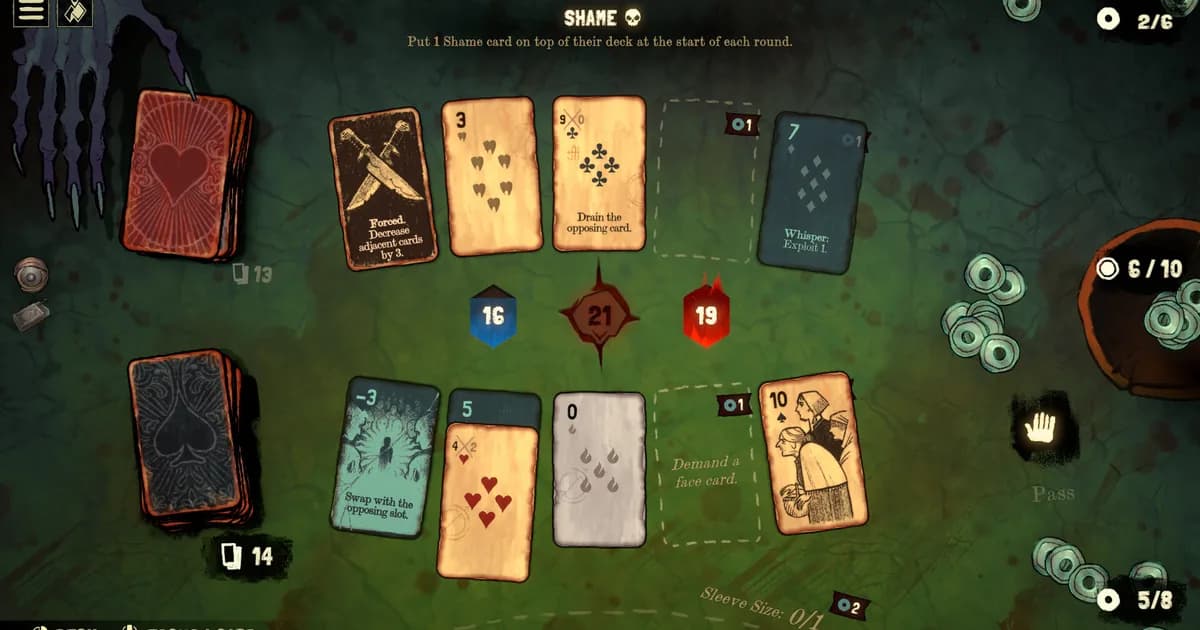
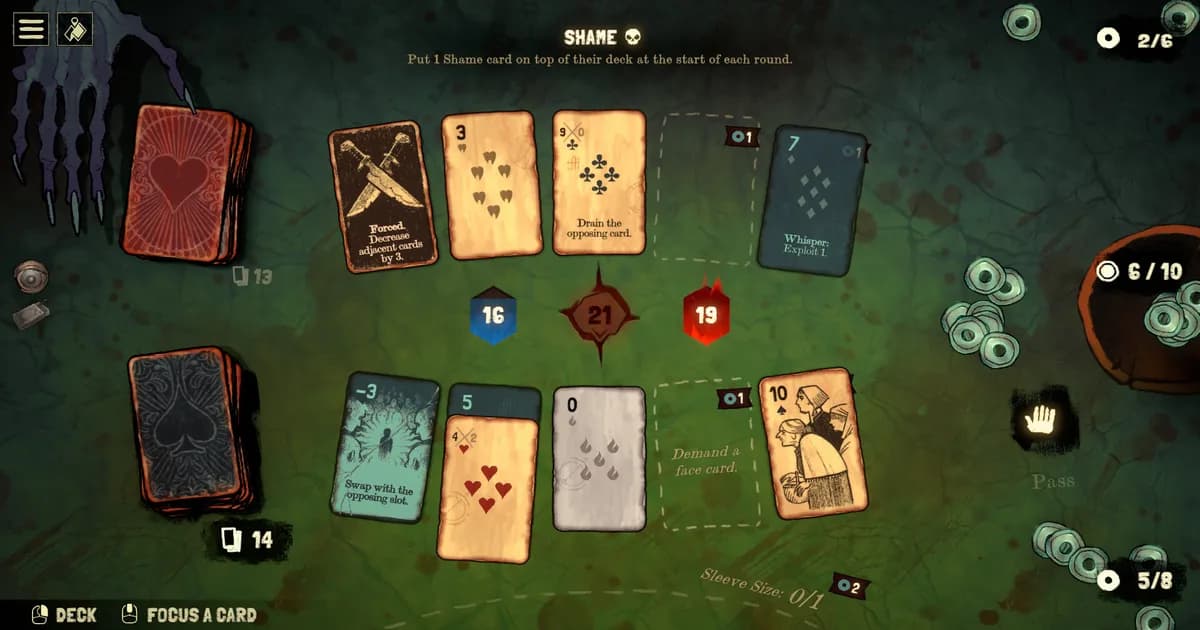
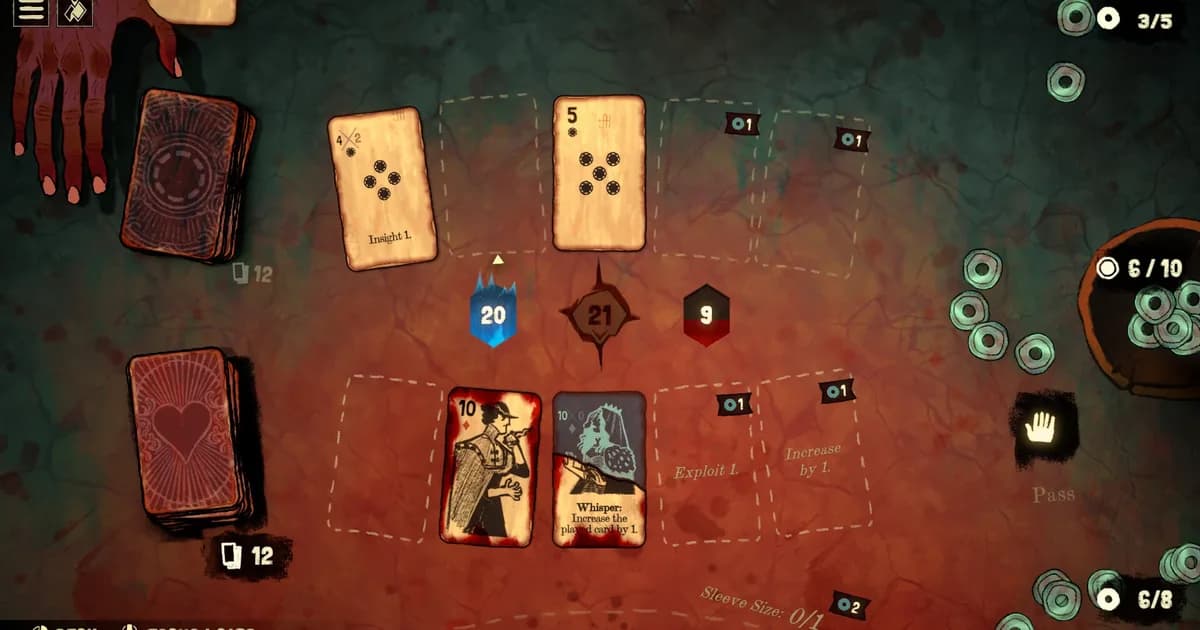
Sleeve activation costs. The sleeve lets you hold a card for later, but each use costs coins. This is the sneakiest drain in the game because it feels free, it feels like smart planning, and it quietly empties your reserve. The rule: only sleeve a card when you have a concrete plan for that exact card. Sleeving on spec, holding a card because it "might be useful," bleeds your economy dry one activation at a time.
Slot expenses and opponent pressure effects add further coin costs depending on the table state and which curses or modifiers are active.
Lost rounds are the big one. Every coin in a lost pot goes to the opponent. This is why bet sizing matters more than it looks: the downside of a raise is not the raise, it is gifting an inflated pot to the demon when the board turns.
Coins and cards both leave your economy through actions like this. Every sink, from burns to sleeve costs to lost pots, is a coin not available for the next shop.
Bet sizing: can you afford to lose it?
The single most useful coin-management habit is a question you ask before every raise: can I afford to lose this bet?
A larger pot is greater risk, not guaranteed reward. The pot only comes to you if you win the round. If you lose, the entire inflated bet transfers to the opponent, and now you are not just behind on this hand, you are behind on coins you needed for the next shop.
Raising is correct when two things are true: your board is genuinely strong, and the swing wins you a meaningful coin lead rather than a marginal one. Raising on a coin-flip board is how runs quietly die, because over a full Journey those coin-flips average out to a steady transfer of coins to your opponents.
Conservative betting is not passive play. Winning early rounds by safe margins keeps your reserve intact for the moments that actually decide the run: the mid-Journey shops.
Why mid-Journey shops decide your build
The reason early coin preservation matters so much is timing. The best upgrades appear in mid-Journey shops, not at the start. A run that spends everything winning early hands by big margins arrives at those shops without the coins to buy what matters.
Think of the early Journeys as setup. Your job there is not to maximize coins won per hand, it is to arrive at the mid-Journey shops with enough reserve to actually purchase the build-defining upgrades when they appear. A player sitting on a healthy coin reserve at the right shop buys the upgrade that carries the rest of the run. A player who spent it all to win Journey 2 by a wide margin watches that same upgrade go by unaffordable.
This is the core trade-off the economy forces: short-term hand dominance versus long-term build power. The coins are the same coins. You cannot do both with them.
Your three-suit pick decides how efficiently each coin converts into board advantage. Coin-recovery suits like Hearts change the whole math of how much reserve you need.
GODEEPER: Bosses apply curses that punish specific coin and board strategies. Knowing which boss is coming changes how much reserve you want before a node. Black Jacket Boss Guide: Morgan, Niv, Ivel Curse Counters →
The ferryman: the sink that frames everything
Every coin decision in Black Jacket ultimately answers to one question: can you pay the ferryman? The ferryman is the run's escape route and its final coin sink. You accumulate Soul coins across the run specifically to buy passage out of hell.
That reframes everything upstream. A run that wins every hand but spends down to nothing has not won, it has missed the point. The metric that matters is not your hand win rate, it is whether your coin trajectory is heading toward enough to pay the ferryman by the end.
Practically, that means keeping a mental running total: am I on pace? If you are winning hands but your reserve is flat because the sinks are eating your gains, that is a warning the run is drifting even though the table looks fine. The ferryman does not care how many hands you won. He cares whether you brought enough coins.
Step-by-step: managing Soul Coins through a run
-
Open conservative. In early encounters, win rounds by safe margins. Do not raise to dominate. Build a reserve.
-
Audit every sleeve. Before sleeving a card, name the specific plan for that exact card. No plan, no sleeve. This single discipline saves more coins than any other.
-
Size bets against the downside. Before any raise, confirm you can afford to lose it. Raise only on a strong board for a meaningful lead.
-
Bank for the mid-Journey shop. Treat the strong upgrades that appear mid-run as the real spending target. Arrive with enough to buy them.
-
Track the ferryman pace. Keep a rough sense of whether your coin total is trending toward enough for passage. If wins are not translating into a growing reserve, tighten your sinks.
-
Spend decisively when it matters. Coin preservation is not hoarding. When the build-defining upgrade or the run-saving rune is in front of you, buy it. A reserve exists to be spent at the right moment, not admired at the end of a lost run.
Tips for a healthier Soul Coin economy
The habits that keep a run solvent are mostly about resisting plays that feel productive but drain you.
Do not sleeve to feel safe. The sleeve is a timing tool with a coin cost, not a comfort blanket. Most economy collapses trace back to speculative sleeving.
Do not chase a lost lead with bigger bets. When you fall behind on coins, the instinct is to raise to catch up. That accelerates the transfer to your opponent. Tighten instead, win safe rounds, and rebuild.
Treat each shop as the question "what does this run need," not "what can I afford." Buying a cheap upgrade because it is cheap wastes coins that the next shop's better upgrade needed.
And remember the loss-transfer rule on every hand: a coin you lose is not gone, it is now your opponent's. That framing alone makes most reckless raises feel as expensive as they actually are.
Frequently Asked Questions
How do you earn Soul Coins in Black Jacket? By winning hands against opponents. The pot comes to you on a win; your bet goes to the opponent on a loss. Soul coins are the single currency used for betting, shops, and ultimately the ferryman.
What do you spend Soul Coins on? Blinds and forced bets, sleeve costs, and slot expenses within a hand, plus shop upgrades between encounters. The final sink is bribing the ferryman to escape.
Why does sleeving cost coins? The sleeve is a paid timing tool, not free storage. Sleeving without a concrete plan for the exact card bleeds your reserve.
How do you manage coins across a run? Preserve early, win by safe margins, bank for mid-Journey shops where the best upgrades appear, and spend decisively when a build-defining upgrade shows up.
Should you always raise? No. Confirm you can afford to lose the bet first. A bigger pot is bigger risk that funds your opponent if the round goes wrong.
What is the ferryman? The run's final coin sink and escape route. You bank Soul coins to pay for passage out of hell, which is the real goal behind every coin decision.
Related Reading
The Black Jacket Complete Guide Hub anchors every Black Jacket system, from suits and deck building through Journey progression and the Soul coin economy.
The Black Jacket Deck Building Guide covers the three-suit draft that determines how efficiently you turn coins into board advantage.
The Black Jacket Boss Guide explains the boss curses that punish specific coin and board strategies, and how much reserve to hold before a boss node.
The Black Jacket Journey Guide maps the encounters where your reserve has to survive.
The Black Jacket Achievements Guide covers the completion goals that sit alongside the ferryman route.
The Black Jacket Update Roadmap tracks the post-launch balance and content direction.
- Black Jacket Suit Tier List: All 8 Suits Ranked 2026: Black Jacket suit tier list: Diamonds is the standout S tier, Hearts is a high-complexity removal suit, not.
- Black Jacket Journey Guide: All 21 Journeys Explained: Black Jacket journey guide: all 21 Journeys by tier, modifier types, deck strategies that clear.
References
- Black Jacket on Steam: official store page, patch notes, and community discussions
- Skystone Games official site: publisher page and studio information
Was this guide helpful?
About the author

Systems & Economy Desk
GameBrief's byline for roguelikes, strategy and simulation. Reads patch notes, wiki tables and Steam stats and puts the numbers on the page.
- Roguelikes, strategy and simulation
- Builds, progression and economy
- Sources listed per article
Keep reading
Black Jacket Complete Guide 2026: All 21 Journeys, Suits
General · 14 min
Black Jacket Boss Guide: All 5 Bosses and Curse Counters
Guides · 15 min
Black Jacket Journey Guide: All 21 Journeys Explained
General · 16 min
Black Jacket Deck Building Guide: Best Suits and Combos 2026
General · 15 min
Black Jacket Suit Tier List: All 8 Suits Ranked 2026
General · 14 min
Black Jacket Guide: Blackjack Roguelite Tips for 2026
General · 11 min
Sponsored
Disclaimer
This article is published for informational and entertainment purposes. It does not constitute professional financial, legal, or technical advice. Game performance, online services, patch schedules, and store listings change. Verify critical details (pricing, system requirements, regional availability) with publishers and storefronts before you buy. Affiliate links, where present, help support our editorial work and are labelled in our affiliate disclosure.
Comments
Loading comments…