
GuideMeccha Chameleon
Meccha Chameleon Guide: How the Camouflage System Works
About the game
Meccha Chameleon
lemorion_1224 and Haganeiro
Meccha Chameleon sold 10 million copies in 16 days, and almost none of that came from marketing. This Meccha Chameleon guide covers the one system that actually explains the hype: freehand paint camouflage, the scoring model that rewards standing near danger instead of hiding from it, and the lobby-size math that decides whether your session holds together.
Two things surprised me researching this: the "solo dev" framing that's floated around online undersells it, since it's actually a two-person team, and the scoring system punishes exactly the play style most people default to on their first round.
TL;DR: Meccha Chameleon is a hide-and-seek game where Hiders freehand-paint their character to blend into the environment instead of picking a costume. Built by a two-person team (lemorion_1224 and Haganeiro) in about two months, it hit 10 million sales in 16 days with zero marketing budget. $5.99, Very Positive on Steam, and peaked at 340,534 concurrent players. Recommended lobby size is 2-10; the hard cap is 24 but stability drops off past 13.
How does the Meccha Chameleon camouflage system work? (quick answer)
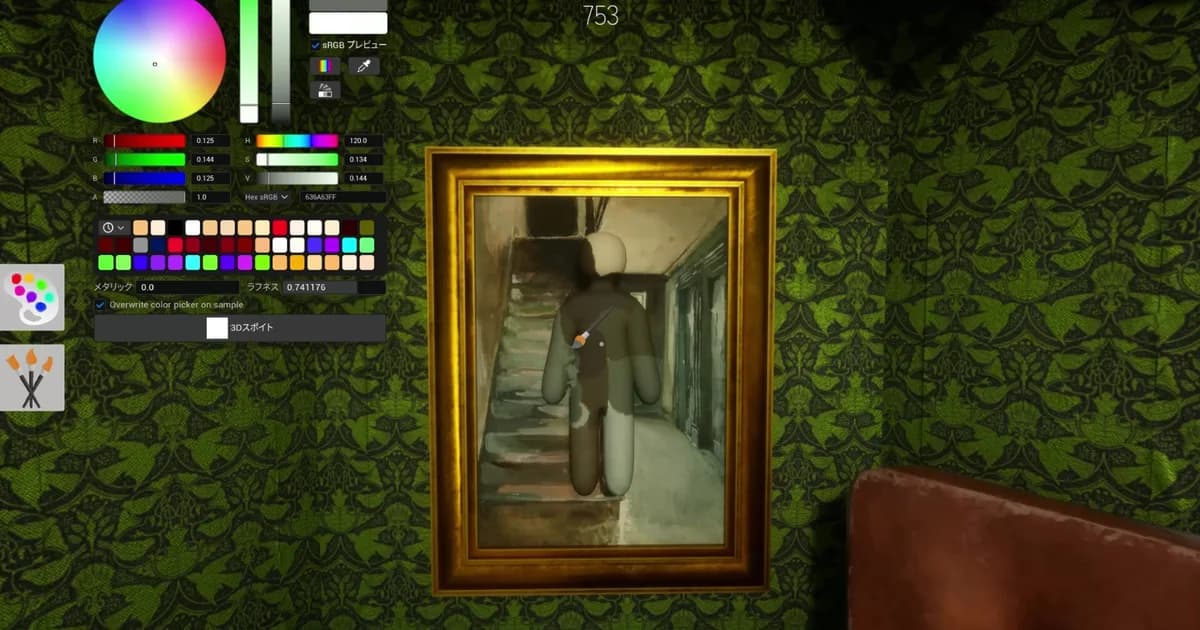
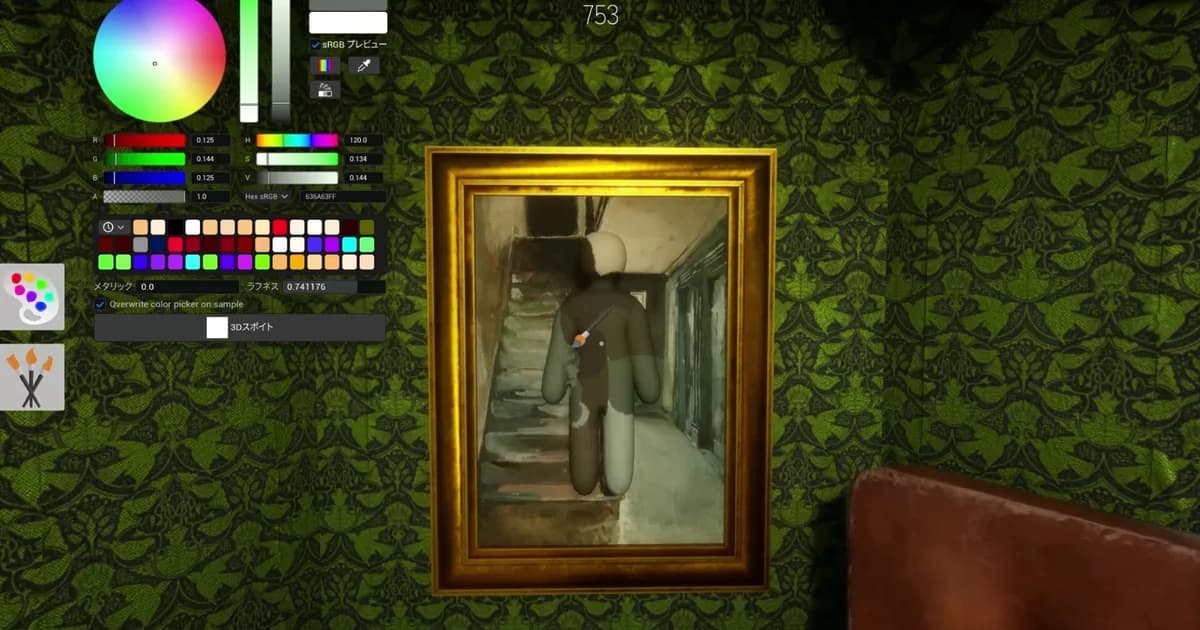
Press F to open paint mode. It's a real color tool, not a costume picker: a color wheel, RGB and HSV sliders, saved palette swatches, metallic and roughness sliders, and a 3D eyedropper you can drop directly onto a wall, floor, or prop to sample its exact color. Your character never swaps to a different model. It stays humanoid and squishy at all times, so a good disguise depends entirely on how carefully you paint it, not on which object you picked.
The eyedropper is the single most important tool in the kit. Sampling a wall's color directly beats guessing at a similar-looking swatch almost every time, because lighting shifts a surface's actual rendered color more than it looks like it should.
Key Takeaways
- Freehand paint camouflage, not a costume list: color wheel, RGB/HSV sliders, metallic/roughness sliders, 3D eyedropper
- Built by a two-person team (lemorion_1224, Haganeiro) in about 2 months with zero marketing spend
- 10 million sales in 16 days: 5 million in the first 10 days, 5 million more in the next 6
- Peaked at 340,534 concurrent players, a top-50 all-time Steam concurrent count
- Scoring rewards staying near a Seeker's line of sight without being caught, not just hiding still
- Recommended lobby size: 2-10 players. Hard cap: 24, but stability drops fast past 13
- $5.99 on Steam with a Very Positive review label; review totals are a moving number
Meccha Chameleon guide: painting a disguise that actually works
The failure mode almost everyone hits in their first few rounds is picking a color that looks close enough from memory and calling it done. It isn't. Lighting changes how a surface renders compared to how you remember it looking, so a swatch that seems right from across the room reads as slightly off up close, which is exactly the distance a Seeker checks at.
Sample first, always. The eyedropper exists specifically so you never have to guess: point it at the wall, floor tile, or prop you're matching and let it pull the exact value. Then check the metallic and roughness sliders, since a matte wall painted with a glossy setting will catch light differently than its surroundings and give you away even with the right base color.
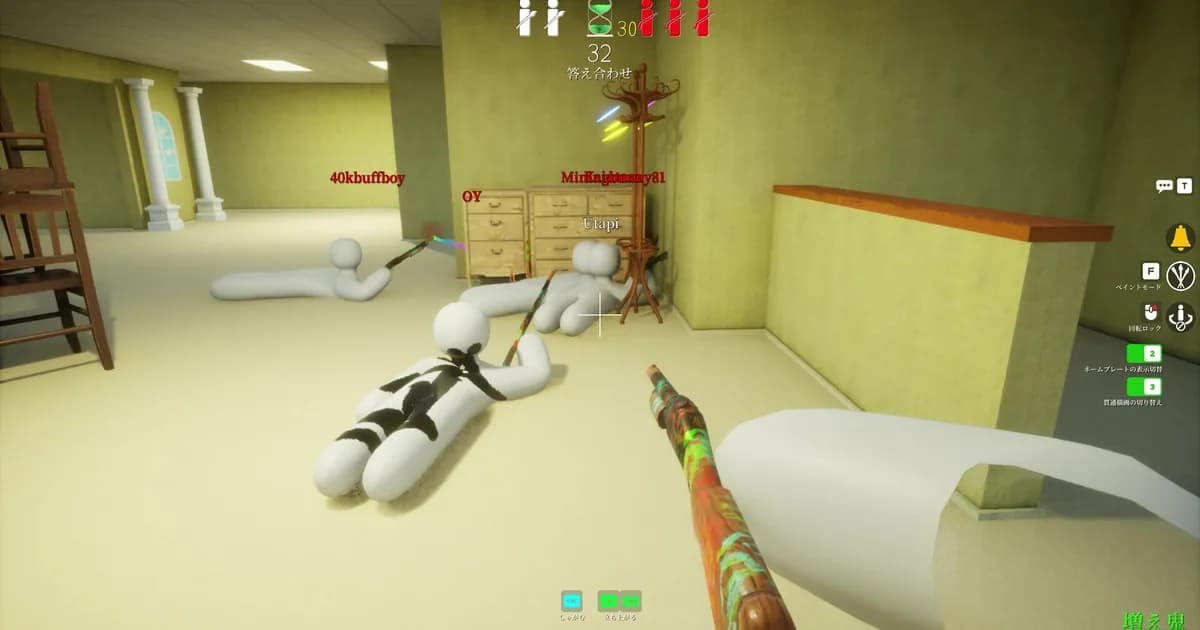
A cluttered surface like this shelf forgives a slightly imperfect paint job better than an open, flat wall would.
Posing matters as much as color. Since your character keeps its humanoid shape, you're not just painting, you're also choosing a pose that reads as part of the environment rather than as a person standing in a hallway. A framed portrait, a suit of armor, a decorative statue: all of these work because a still, deliberately-posed human shape can plausibly be mistaken for an object, but only if the pose commits to the illusion.
GODEEPER: If freeform disguise mechanics like this appeal to you, Hidden in Plain Sight runs the opposite version of the idea: you blend into a crowd of identical AI instead of painting yourself into a static scene. 8 Best Indie Social Deduction Games for Steam Fest 2026 →
Why the scoring system changes how you should actually play
Most new players treat Hider rounds like literal hide-and-seek: find a quiet corner, paint well, stay still, hope the timer runs out. That's a low-scoring strategy. Meccha Chameleon calculates your Hider score from how close you are to a Seeker and how long you stay inside their field of view without getting caught. Distance and duration both count. A Hider tucked into a corner the Seeker never visits scores low even if they're never found, because they were never actually at risk.
The higher-scoring play is uncomfortable at first: paint yourself into something the Seeker is standing directly next to, hold the pose, and let them look right at you without clocking it. It rewards nerve more than it rewards a good hiding spot, which is a different skill than what the genre usually asks for.
For the current mode and map roster, use the Meccha Chameleon modes and maps guide. The advanced tips guide goes deeper on clones and Hunter-side scanning, while the achievements status guide explains why match goals are not Steam unlocks. If you are experimenting with the PC version, the Meccha Chameleon mods guide separates Workshop maps from code mods. The complete guide hub keeps those updates in one place.
The post-round reveal strips the paint job away and shows exactly where everyone was hiding, which is half the fun of watching a replay back.
Step-by-Step: setting up your first strong disguise
This is the part of the Meccha Chameleon guide worth bookmarking, since it's the same five-step routine every strong disguise follows.
- Scout your surroundings during the prep phase. Look for surfaces with enough visual complexity that a slightly imperfect paint job still reads convincingly: patterned wallpaper, cluttered shelves, and furniture with visible wear all forgive small mismatches better than a flat, single-color wall does.
- Use the eyedropper on your chosen surface before you touch a single slider by hand. This gives you a verified base color instead of a guess.
- Adjust metallic and roughness to match the surface type. Fabric and wood are almost always low-metallic with moderate roughness. Anything reflective (glass, polished metal, ceramic) needs the metallic slider pushed up or you'll shine under normal lighting.
- Pose to match an object silhouette, not just a color. A person-shaped blob painted wall-colored still reads as a person if it's standing in an open floor space. Commit to a pose that could plausibly belong there.
- Reposition if your first spot gets checked and survived. A Seeker who walks past you once may double back. Moving to a second prepared spot, if you scouted one, is safer than staying put and hoping.
Tips: getting the most out of a session
Match lobby size to the mode you actually want. The developers' own recommendation of 2-10 players holds up in practice: Basic mode plays best with 2-4, and Growing Demon mode needs the wider 6-10 range to feel chaotic in the right way rather than just short. The developers haven't published exact rules for how Growing Demon differs from Basic beyond the name, so treat the extra chaos as something to feel out in a lobby rather than a documented mechanic.
Don't host large lobbies on an older PC. The 14-24 player range is explicitly host-dependent. Performance in that range scales with the host's processor and upload bandwidth, and a host disconnect ends the session for every player in the room, not just the host.
Reserve your best hiding spot for your last life, not your first. Rounds usually give you more than one chance. Burning your strongest disguise idea immediately means you're improvising under worse conditions later, when it matters more.
GODEEPER: For the mechanics of a completely different kind of party-scale multiplayer chaos, Pratfall's Custom Game Mode pushes lobbies up to 250 players in a physics cave-diving co-op. Pratfall Multiplayer & Player Count Guide →
How a two-person team hit 10 million sales with no marketing
No Meccha Chameleon guide is complete without the sales figure, since it's what pulled most new players in: 10 million copies in 16 days, with 5 million of that arriving in just the first 10 days and the second 5 million in the 6 days after. It was built by two people, lemorion_1224 (maps and models) and Haganeiro (systems), in about two months, and the team spent nothing on marketing.
What actually drove it was clip culture. The moment-to-moment gameplay, painting yourself into a portrait frame or a suit of armor and watching a Seeker walk past inches away, is inherently funny and inherently shareable, and that translated directly into TikTok, YouTube, and Twitch clips without anyone needing to pay for it. Streamers including Shroud, xQc, Jynxzi, and TheBurntPeanut all picked it up, and the game's concurrent player count climbed to a peak of 340,534, landing it among Steam's top 50 all-time concurrent counts.
Related Reading
- Meccha Chameleon Complete Guide: the hub for every Meccha Chameleon guide on this site.
- Meccha Chameleon Modes and Maps: Every Confirmed Map: all 4 modes and all 11 official maps by patch date.
- Meccha Chameleon Advanced Tips: Clones, Poses, Hunter Play: the clone system and community pose strategy this guide doesn't cover.
- 8 Best Indie Social Deduction Games for Steam Fest 2026: the closest genre neighbors, ranked and verified against live Steam data.
References
- Meccha Chameleon on Steam: official store page, $5.99, Very Positive reviews
- MECCHA CHAMELEON reaches 10 million sales, Inven Global: reporting on the sales milestone and two-person dev team
Frequently Asked Questions
What is Meccha Chameleon? Meccha Chameleon is a hide-and-seek party game where Hiders freehand-paint their character to blend into walls, floors, and props before a Seeker hunts them down. It sold 10 million copies in 16 days after its June 9, 2026 launch.
Who made Meccha Chameleon? A two-person team: lemorion_1224 handled maps and models, and Haganeiro handled system development. They built it in about two months with zero marketing spend, and it spread entirely through TikTok, YouTube, and Twitch clips.
How many players can play Meccha Chameleon? The developers recommend 2 to 10 players for the smoothest experience. The hard lobby cap is 24, but stability starts to depend heavily on the host's connection past 13 players, and a host disconnect ends the match for everyone.
How does scoring work in Meccha Chameleon? Hiders are scored on how close to, and how long within, a Seeker's line of sight they stay without getting caught. Standing still in a far corner scores low. Blending into something the Seeker is standing right next to scores much higher.
Is Meccha Chameleon free to play? No. Meccha Chameleon costs $5.99 on Steam and has a Very Positive review label. Review totals change over time, and it peaked at 340,534 concurrent players, one of Steam's biggest concurrent counts of 2026.
Do you pick a costume in Meccha Chameleon or paint it yourself? You paint it yourself. Your character keeps its humanoid shape at all times; there's no swapping to a fixed prop model. Camouflage quality depends entirely on how well you sample colors, match lighting, and set the metallic and roughness sliders, not on picking from a list.
Was this guide helpful?
About the author

News Reporter
Games journalist and news hound with 7 years covering industry moves, studio announcements, and patch notes. Chilean. Writes tight, edits tighter.
- 7 years games journalism
- Industry and esports specialist
- Early access coverage
Keep reading
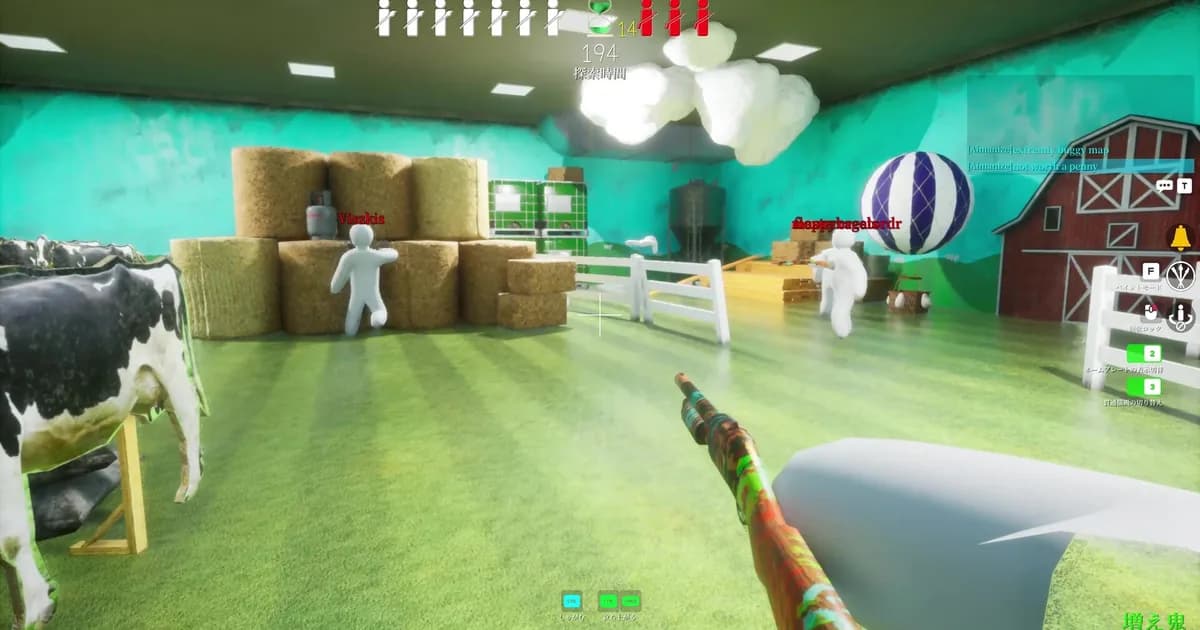
Meccha Chameleon Modes and Maps: Every Confirmed Map
General · 9 min
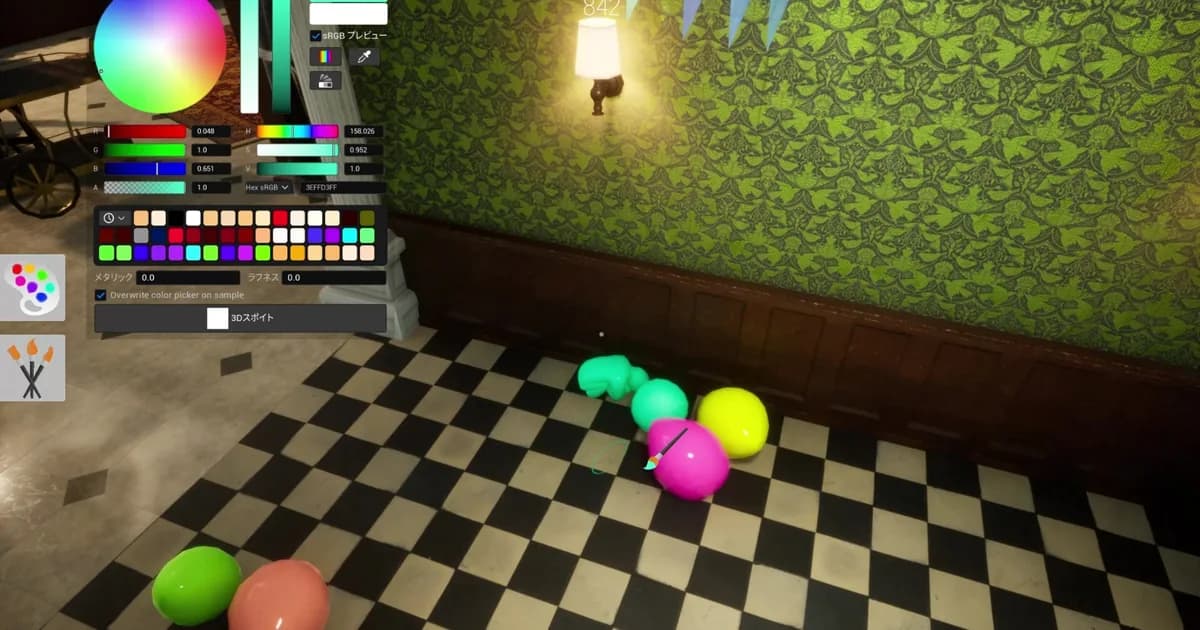
Meccha Chameleon Advanced Tips: Clones, Poses, Hunter Play
General · 9 min
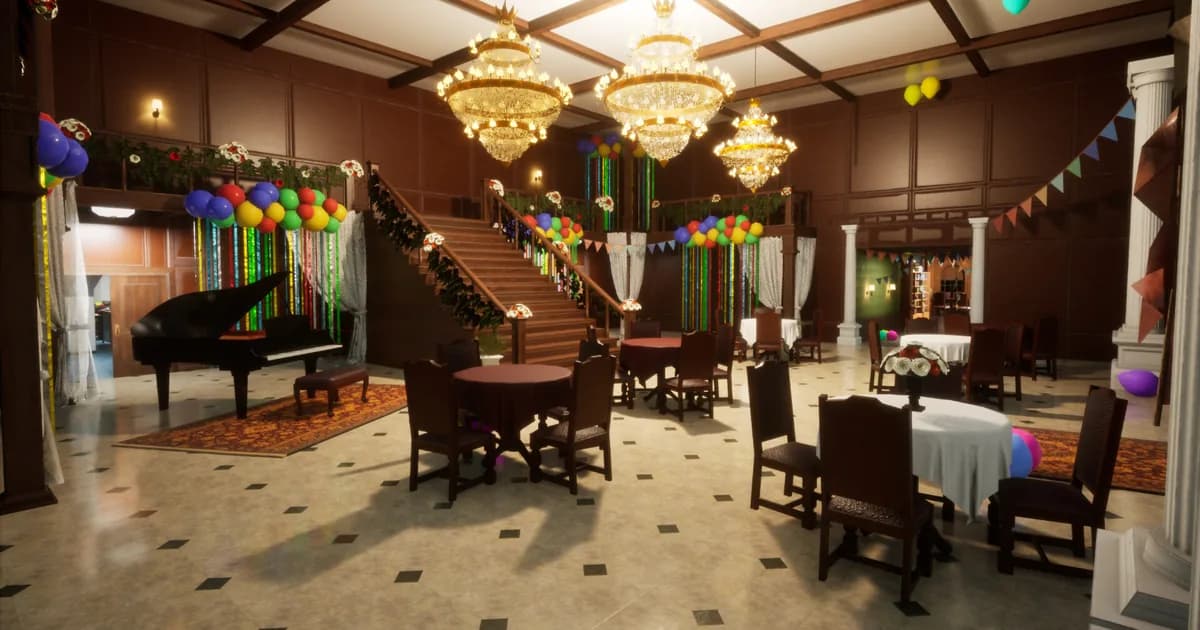
Meccha Chameleon Complete Guide: Modes, Maps, Tips
General · 13 min
Meccha Chameleon Map Guide: 19 Maps and Hiding Routes
General · 18 min
Meccha Chameleon Multiplayer: Friends, Codes & Crossplay
General · 12 min
Meccha Chameleon Achievements Guide (2026): Steam Status
General · 13 min
Game deals · affiliate links

Disclaimer
This article is published for informational and entertainment purposes. It does not constitute professional financial, legal, or technical advice. Game performance, online services, patch schedules, and store listings change. Verify critical details (pricing, system requirements, regional availability) with publishers and storefronts before you buy. Affiliate links, where present, help support our editorial work and are labelled in our affiliate disclosure.
Comments
Loading comments…