
GuideBlack Jacket
Black Jacket Deck Building Guide: Best Suits and Combos 2026
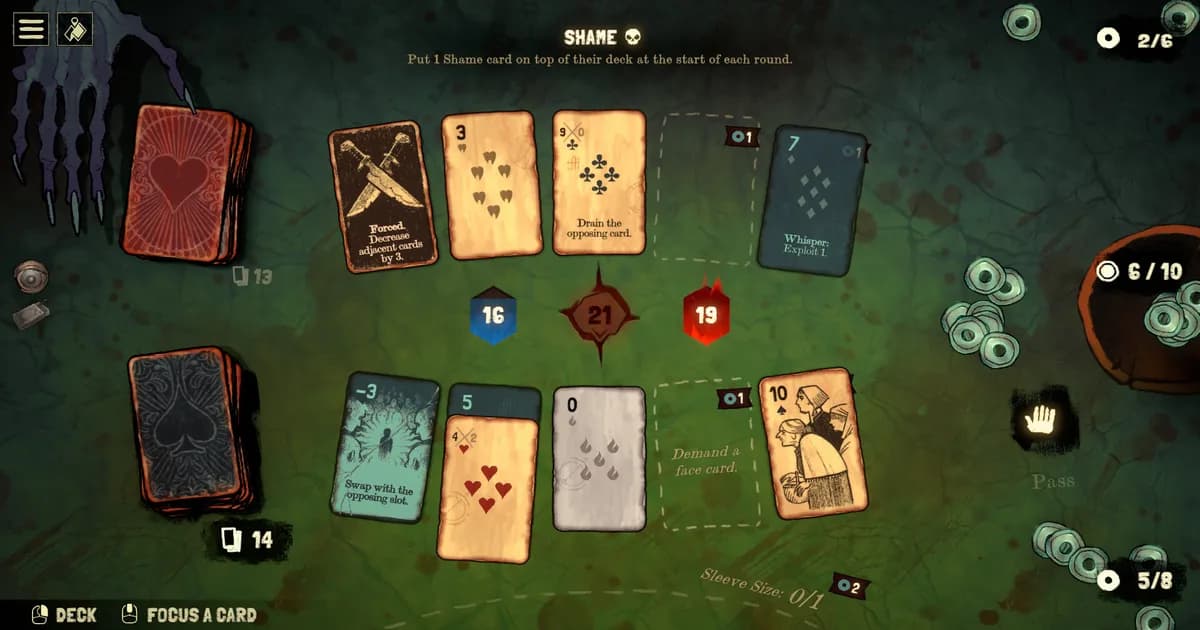
This Black Jacket deck building guide covers the full build system: which suits work together, how card removal actually functions, the buy vs. remove decision at every shop, and the specific combinations that carry runs into Journey 12 and beyond. The deck building in Black Jacket is less about collecting powerful cards and more about achieving a small deck where every draw does something.
Sponsored

About the game
Black Jacket
Mi'pu'mi Games GmbH · Skystone Games
TL;DR: The best beginner suit combination is Diamonds plus Spades plus Clubs; Hearts looks friendly but is a high-complexity negative-value suit, so leave it until later. Card removal is underused by almost every new player; a focused 12-card deck will usually draw its engine more reliably than a padded 24-card deck. For Journey 8+, treat 60-70% primary-suit coverage as a practical editorial target, not an official threshold.
Sponsored

Black Jacket deck building guide: how deck building works (quick answer)
Black Jacket's deck building works differently from most deckbuilders. You pick 3 suits at run start, and those suits define which cards appear as options throughout the run. You don't build from scratch; you shape a starting deck toward suit coherence by removing weak cards and adding suit-specific tools.
The two levers are card addition (buying at shops) and card removal (using removal slots at shops). Most players spend their first 5 hours buying cards. The players who clear Journey 12+ spend most of their shop budget on removal.
Black Jacket deck building current status: September 2026
The live Steam snapshot checked on September 18 lists $14.99, 91% positive from 1,755 total reviews, and 95% from 134 recent reviews. The official feed's Patch 1.0.7 added the final cutscene after a difficulty 21 win; the 1.0.6 balance notes and the wiki remain the references for individual suit/card behavior. The deck-size and coherence numbers below are editorial targets from the guide, not developer-set thresholds. Sources: Black Jacket on Steam, the official announcements, and the Black Jacket Wiki.
GODEEPER: The complete system overview including Journey modifiers and Soul coin economy. Black Jacket Complete Guide 2026
Key takeaways
- Pick 3 of 8 suits; your deck's identity is locked in at run start
- Aim for 12-16 cards total; anything over 20 is a padded deck
- Card removal is almost always more valuable than card buying from Journey 6 onward
- Suit coherence is best treated as a practical 60-70% primary-suit target, not a hard game threshold
- Diamonds plus Spades plus Clubs is the most forgiving beginner combination; Hearts is high-complexity, not a starter suit
- Clubs, Teeth, and Tumors are high-ceiling suits that reward reading the opponent and building around one engine
The 8 suits: strategic overview
Before choosing a combination, you need to know what each suit does. Here's the practical breakdown:
Diamonds (draw manipulation): Your draw order becomes controllable. Cards let you see and reorder upcoming draws. This reduces blackjack variance and makes the "hit or stand" decision cleaner. For beginners, Diamonds is the most valuable suit because it converts luck into skill. Picking Diamonds as primary or secondary means you bust less and stand correctly more often.
Hearts (negative-value removal): Awakened Heart cards take on negative values and can break the opposing card. Hearts weaponizes negative numbers to remove the opponent's strongest plays, which is powerful but the highest-complexity standard suit in the game. The familiar symbol is misleading: this is not a forgiving beginner pick. Best once you understand how awakening and card values interact.
Spades (flexibility): Spade cards can be played into any slot and lean toward disrupting the opponent. They provide coverage without commitment. The weakness is the flip side of that strength: they don't specialize, so they don't solve a specific problem the way Diamonds or Clubs do. Best as a third suit to round out two more specialized choices.
Clubs (value manipulation): Club cards alter card values and reach across the table, draining the opposing card or swapping with the opposing slot. Clubs inverts the usual game plan: instead of playing better blackjack, you make the opponent's numbers play worse. This is strongest when you understand what the opponent's deck is trying to do and can target the right cards.
Flames (removal): Flames cards apply ignite. A card ignited twice burns away and is exhausted for the rest of the run. Some Flames cards ignite your own deck, others the opponent's, so it doubles as deck thinning and opponent disruption. Unlocked by burning 15 cards. High skill cap; rewarding when it clicks.
Greed (value scaling): Greed revolves around sleeving cards from your deck or slots, and several Greed cards buff whatever is already slotted. The 10 of Greed lets sleeved cards gain value instead of busting you. A compounding suit that rewards long encounters over fast kills. Unlocked by discovering 70 cards.
Teeth (opponent control): Teeth cards lower the score of the opponent's cards, dragging their totals down until their strong draws stop mattering. Reactive suit; you're reading what the opponent is building and shrinking it. Strong into bosses that lean on high single-hand totals. Unlocked by awakening 20 cards.
Tumors (big-number combo): Tumors cards devour other cards, stacking the devoured scores onto a single card; fill every slot on that card and a secondary effect triggers. The most complex suit and the highest ceiling: a fed Tumor card can close an encounter alone. Unlocked by winning 50 encounters.
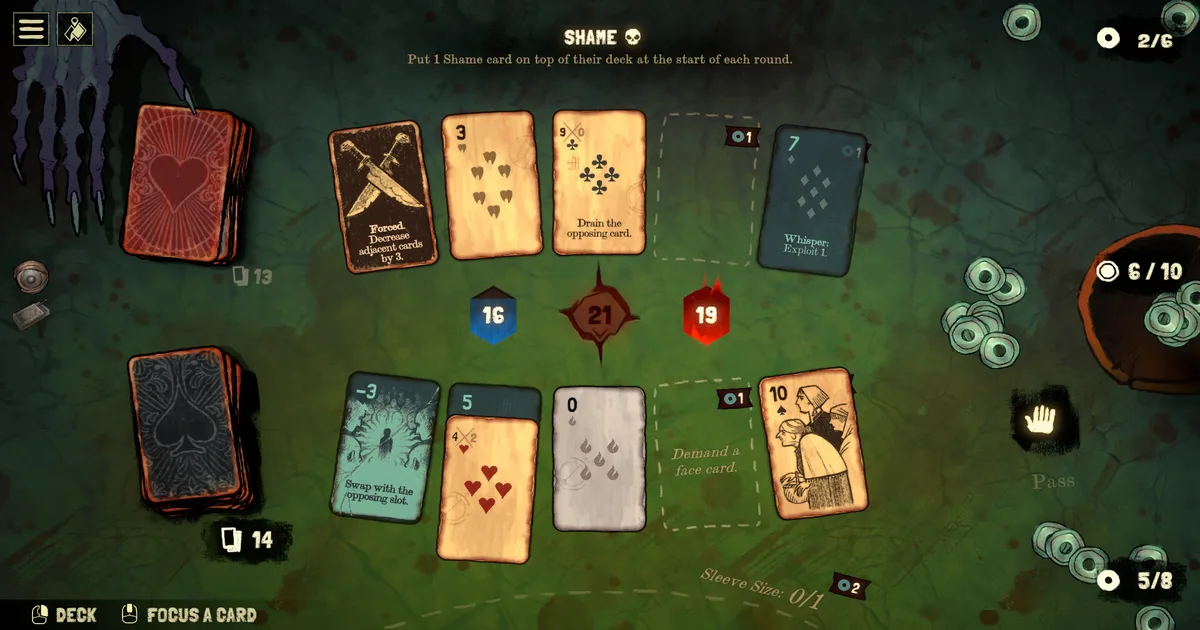 Suit selection happens once and locks your deck's identity for the entire run. Take time to read each suit's mechanic description before confirming.
Best suit combinations by playstyle
Beginner (Journeys 1-10): Diamonds + Spades + Clubs
This is the most forgiving start for new players. Diamonds handles the variance problem (you know what's coming), Spades plays into any slot so you are never stuck for a placement, and Clubs gives you a simple way to drain or swap the opponent's cards. Hearts is the trap pick here: its negative-value mechanic is powerful but high-complexity, so it punishes the exact mistakes beginners make. Leave it for later.
Aggressive (Journeys 6-15): Clubs + Diamonds + Spades
Clubs as primary for opponent disruption, Diamonds as secondary to control your own draws, Spades as coverage. This build punishes opponents who rely on specific deck strategies and rewards players who've learned which opponent types appear in each Journey tier. Requires understanding when to use Clubs disruption tools versus when to play clean blackjack.
Endurance (Journeys 8-18): Greed + Diamonds + Clubs
Greed primary to sleeve and buff your strongest slotted cards so the deck compounds over a long encounter, Diamonds for draw control, Clubs to drain or swap the opponent's best cards before they land. This build plays a very long game. It's not fast or explosive; it grinds opponents down while the Greed engine snowballs. Works best in Journey tiers where long encounters are more common.
Late-game combo (Journeys 14-21): Tumors + Teeth + Clubs
Tumors as primary for the big-number engine, Teeth to suppress the opponent's totals while you build, Clubs for targeted disruption. This is the highest-ceiling combination in the game and the most demanding to execute. You need to feed Tumors cards consistently for the payoff, use Teeth to buy the time to do it, and have a Clubs plan that doesn't dilute the coherence of the other two. Not recommended until you've cleared Journey 12 with a simpler build.
How card removal actually works
Most players use removal slots occasionally. Players who clear Journey 15+ use removal slots aggressively, treating them as the primary shop interaction.
Here's the math: With a 20-card deck where 6 cards don't belong to your primary suit, you draw a non-suit card roughly 30% of the time. In a hand where you need your primary mechanic to trigger, that 30% chance of drawing the wrong card is often the difference between a winning and losing round.
Remove down to 12-16 total cards, and that non-suit draw frequency drops to 10-15%. That's a meaningful difference in how reliably your strategy executes across a full run.
What to remove first:
- Starting deck filler cards with no suit tag and no mechanic
- Cards that belonged to a suit you no longer prioritize
- Afflicted cards (negative-effect cards that appear in Journey 8+) are always priority removal
- Cards with high coin costs that you never have the tempo to play correctly
What to keep:
- Any card that triggers your primary suit's secondary mechanic
- Cards with low cost that can be played in multiple situations
- Cards that specifically counter the active Journey modifier
The removal vs. buy decision: When a shop offers one removal slot and one interesting new card, calculate which does more for your trigger rate before the next major encounter. At Journey 1-5, buying is usually right. At Journey 6+, removal wins most of the time.
Deck size targets by Journey tier
| Journey tier | Target deck size | Reasoning |
|---|---|---|
| 1-5 | 15-20 cards | You're still learning what your suits do |
| 6-10 | 14-17 cards | Modifier pressure means consistency matters more |
| 11-15 | 12-15 cards | Afflictions demand room to remove without crippling the deck |
| 16-21 | 11-14 cards | Three-modifier stacking requires tight execution |
These are targets, not hard rules. A 13-card deck that's perfectly coherent beats an 11-card deck with two afflicted cards you haven't removed yet.
Suit coherence: the concept most players miss
Suit coherence is the percentage of your deck's cards that belong to your primary suit. It determines how often your main mechanic triggers per hand.
A deck with 60-70% primary suit cards is coherent. Your mechanic fires reliably, and you can plan around it. A deck with 40% primary suit is incoherent. Some hands, the mechanic fires multiple times. Others, it doesn't fire at all. The unpredictability in the incoherent deck is what kills runs at Journey 8+.
How to build toward coherence: start by removing all non-suit filler from the starting deck. Then be selective about what you add: only add cards that belong to your primary or secondary suit, and only remove off-suit cards when removal slots appear. By Journey 5-6, a coherent build has 8-10 cards in its primary suit out of a 14-16 card total.
The exception: Spades as a third suit doesn't need coherence. It's coverage. Keep it to 1-2 cards in the deck at all times.
GODEEPER: Journey progression explained by tier, including what modifiers appear and which strategies survive each band. Black Jacket Journey Guide: All 21 Journeys Explained
Shop timing: when to spend vs. save
The other half of deck building is Soul coin management at shops.
Early shops (Journeys 1-5): Spend conservatively. These shops set up your mid-run configuration. Don't blow your entire coin reserve on a flashy card in the first shop. Save 40-50% of coins past the first shop; the second shop usually has better suit-specific options.
Mid-run shops (Journeys 6-12): These are where the run-defining upgrades appear. Good mid-run shops offer high-tier suit-specific cards and powerful removal options. If you spent everything at the early shops, you're making weak choices here.
Late-run shops (Journeys 13+): The shop at this point is mostly about artifact selection and targeted removal of afflictions. Don't spend on cards you don't immediately need.
One rule that applies at all stages: never drop below a comfortable bet size for the next encounter. If you're spending down to 8 coins and the next bet requires 15 to be competitive, you've made an error. The coin reserve is both currency and insurance.
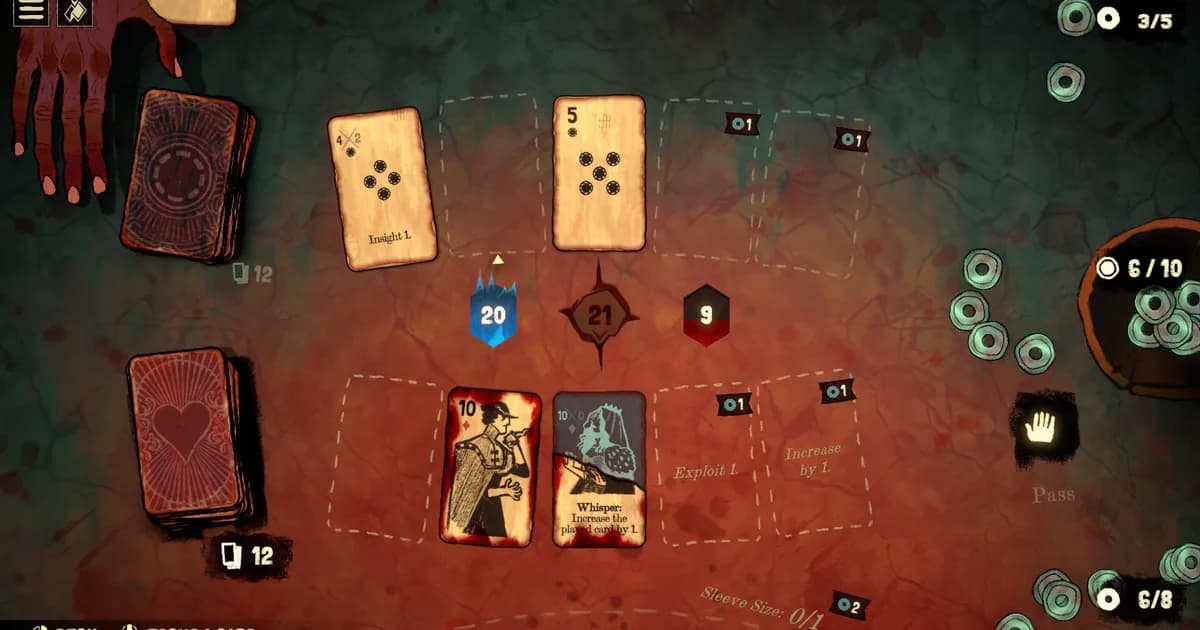
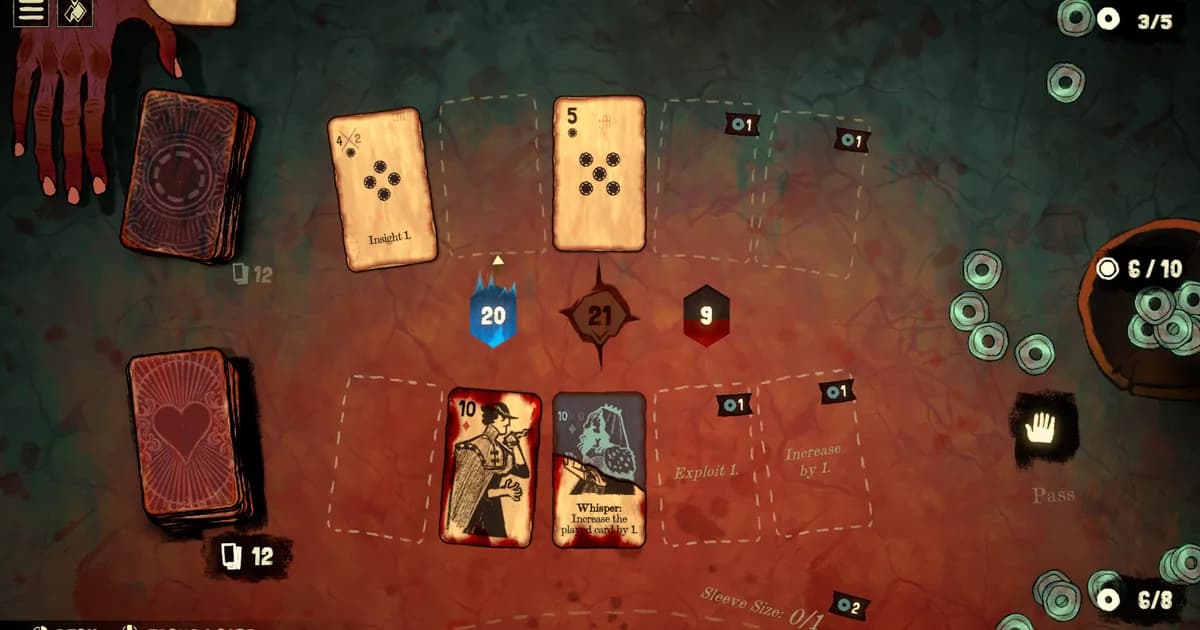
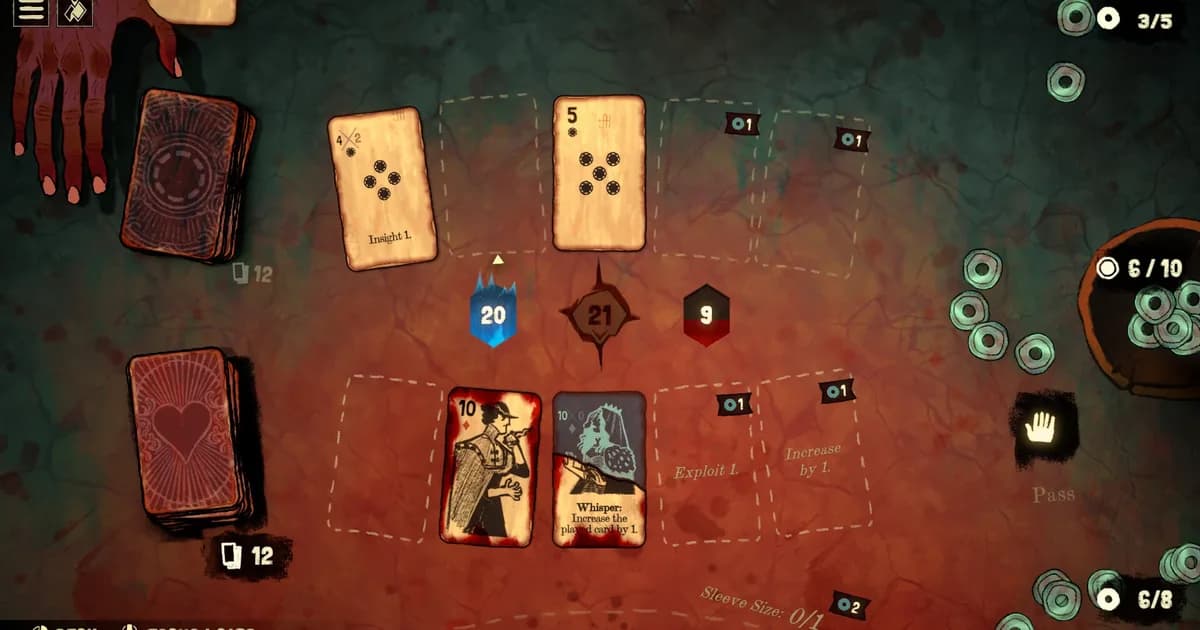
The shop buy-vs-remove decision: the removal slot (right side) is almost always the stronger pick from Journey 6 onward. Coins saved here fund the mid-run upgrades that define the rest of the run.
Step-by-Step: tighten a Black Jacket deck
Step 1: Lock the engine. Choose the primary suit before spending coins. Diamonds is the safest draw-control anchor; specialist suits need a clear plan for the cards they feed.
Step 2: Remove dead weight first. At each shop, compare a removal slot with a new card. Remove filler or off-theme cards unless the new card directly advances the engine you already chose.
Step 3: Check coherence after every shop. Use the 60-70% primary-suit range as a practical target, then inspect the actual deck and current Journey modifier rather than treating the percentage as a hard rule.
Step 4: Save for the next meaningful shop. Keep enough Soul coins for the next encounter and prioritize a targeted removal or suit-specific card over a flashy purchase that does not improve the run's plan.
All Black Jacket guides
- Black Jacket Complete Guide 2026: hub covering all suits, the Journey system, Soul coin economy, and boss encounters in one place.
- Black Jacket Guide: Tips and Suit Selection 2026: beginner guide with suit selection advice and the core rules that break new players.
- Black Jacket Journey Guide: All 21 Journeys Explained: Journey band breakdown with deck strategies for each difficulty tier.
- Black Jacket Achievements Guide: the suit-specific milestones that reward experimenting with the less obvious engines.
- Black Jacket Review 2026: how the deckbuilding loop and Journey pressure hold up over a full run.
- Black Jacket Update Roadmap 2026: confirmed patches and the developer's current direction for the roguelite.
Related Reading
- Black Jacket Complete Guide 2026: the hub for all Black Jacket content including all 8 suit descriptions and the Journey progression overview.
- Black Jacket Guide: Tips and Suit Selection 2026: foundational guide for beginners covering the blackjack loop, Soul coin basics, and early deck decisions.
- Black Jacket Journey Guide: All 21 Journeys Explained: the companion to this guide covering which deck strategies work at each Journey tier and how modifier pressure changes at Journey 8, 12, and 16.
- Rune Dice Complete Guide 2026: another roguelite where class/build coherence follows the same design logic as Black Jacket's suit system.
- Black Jacket Boss Guide: Morgan, Niv, Ivel Curse Counters: Black Jacket boss guide: how to beat Morgan, Niv, and Ivel, what each boss curse punishes, and the....
- Black Jacket Soul Coins Guide: Economy & Coin Management: Black Jacket Soul Coins guide: how you earn and spend coins, the in-run sinks that bleed you dry,....
- Black Jacket Suit Tier List: All 8 Suits Ranked 2026: Black Jacket suit tier list: Diamonds is the standout S tier, Hearts is a high-complexity.
References
- Black Jacket on Steam: official store page and patch notes from Mi'pu'mi Games and Skystone Games, including suit mechanic descriptions
- Black Jacket Steam Community Hub: community suit tier threads and deck composition discussions
- Black Jacket Wiki: suit, shop, keyword, and card-removal mechanics
- Black Jacket official announcements: balance, hotfix, and Journey updates
Frequently Asked Questions
What are the best suits in Black Jacket? For beginners: Diamonds plus Spades plus Clubs. Diamonds control draw order, Spades play into any slot for coverage, Clubs drain or swap opponent cards. Hearts is a high-complexity negative-value suit, so save it for later. For Journey 8+, Clubs primary becomes viable for disruption builds.
How many suits can you pick? Exactly 3 of 8. Locked in at run start.
Should I buy or remove cards? Remove from Journey 6 onward. A 12-card coherent deck beats a 24-card padded one. Removal is almost always the higher-value shop action.
What is suit coherence? The percentage of your deck that belongs to your primary suit. Target 60-70% primary suit for reliable mechanic triggers.
What is Clubs good for? Disrupting opponents: discarding their cards, corrupting their draws, increasing bust probability. Best when you understand opponent deck patterns. Most effective at Journey 8+.
When should I pick Tumors? Only once you can feed it consistently. Tumors devours cards and stacks their scores onto one card for a payoff effect, so it rewards long encounters and a deck built around it. Not for beginner play or Journey 1-10 focused runs.
How many cards should I have in my deck? 12-16 for most Journey tiers. At Journey 16-21, lean toward 11-14. Never go above 20 if you're struggling with consistency.
Was this guide helpful?
About the author

Systems & Economy Desk
GameBrief's byline for roguelikes, strategy and simulation. Reads patch notes, wiki tables and Steam stats and puts the numbers on the page.
- Roguelikes, strategy and simulation
- Builds, progression and economy
- Sources listed per article
Keep reading
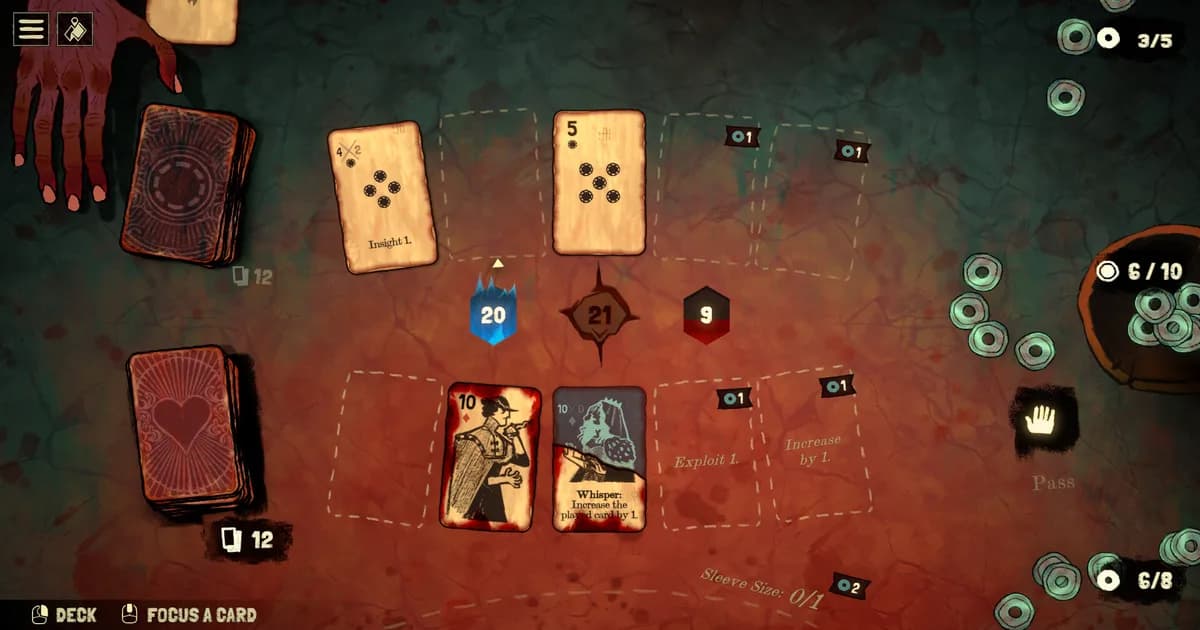
Black Jacket Journey Guide: All 21 Journeys Explained
General · 16 min
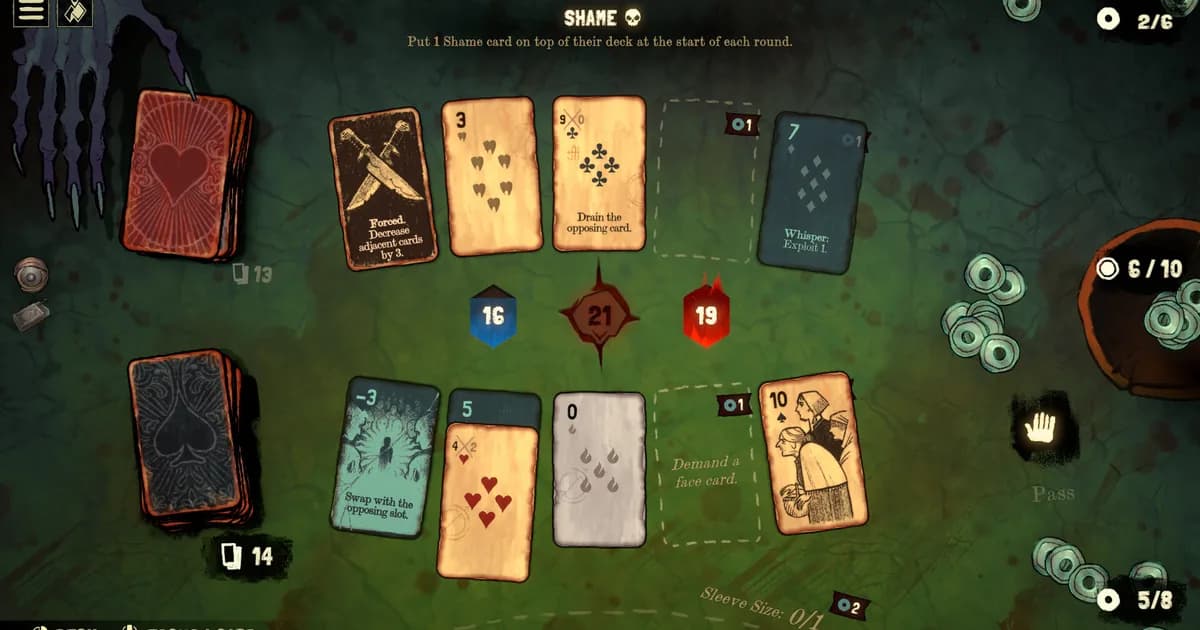
Black Jacket Soul Coins Guide: Economy & Coin Management
Guides · 12 min
Black Jacket Complete Guide 2026: All 21 Journeys, Suits
General · 14 min
Black Jacket Boss Guide: All 5 Bosses and Curse Counters
Guides · 15 min
Black Jacket Suit Tier List: All 8 Suits Ranked 2026
General · 14 min
Black Jacket Guide: Blackjack Roguelite Tips for 2026
General · 11 min
Sponsored
Disclaimer
This article is published for informational and entertainment purposes. It does not constitute professional financial, legal, or technical advice. Game performance, online services, patch schedules, and store listings change. Verify critical details (pricing, system requirements, regional availability) with publishers and storefronts before you buy. Affiliate links, where present, help support our editorial work and are labelled in our affiliate disclosure.
Comments
Loading comments…