GameBrief · General
Windrose Bosses: Loot Tables, Weak Spots & Named Attacks

Reviewing
Windrose
Windrose bosses are gear gates. Each one ends a biome, locks you out of the next crafting tier, and tests a specific mechanic the game often doesn't explain clearly. This guide covers the three confirmed Windrose story bosses with full attack pattern breakdowns, weak spots, and loot tables. No filler, no vague "dodge the attacks" advice.
A note on scope: earlier versions of this guide also covered an "optional Ghost Captain boss" in a "Temple Dungeon." That content could not be independently corroborated in any source checked, including Steam's own community discussions, which return zero results for the exact phrase against dozens to hundreds of hits for each of the three bosses below. It has been removed rather than left live as unverified.
TL;DR: Three bosses matter: Richards (Copper tier, poise shields + melee), Israel Hands (Iron tier, Poison Lunge + Spirit Cannon, evasion over parry), High Priestess (Steel tier, pustule → poise break → mouth weak spot). Named attack patterns and loot tables for each below.
Key takeaways
- Three story bosses block biome progression: Richards (Coastal Islands), Israel Hands (Foothills), High Priestess (Cursed Swamps)
- Poise shields appear on Richards and run as a universal mechanic: break them with heavy attacks to open a stagger window
- Israel Hands has five named attacks; his ranged phase should be evaded, never parried
- High Priestess is a two-stage mechanic fight: hit pustules to deplete poise, then commit to the open mouth during her stagger window
- Crude weapons (mace, halberd) deal a flat damage bonus to the High Priestess: this is not optional
- The Boar Whistle (unlocked via an Ancient Village altar puzzle) lets you summon Truffle, an armored pig that tanks Israel Hands aggro
All Windrose bosses at a glance
| Boss | Biome (levels) | Type | Weak spot / core mechanic | Key drop |
|---|---|---|---|---|
| Richards | Coastal Islands (1-5) | Story | Break poise shields with heavy attacks, punish the stagger | Gates Foothills progression |
| Israel Hands | Foothills (6-10) | Story | Evade his ranged phase (never parry it), punish recovery | Charon's Obol + Soul Eater (Ancient Chest) |
| High Priestess (the frog boss) | Cursed Swamps (11-15) | Story | Pop pustules to break poise, commit to the open mouth (~4s) | Endgame gate; crude weapons bonus |
How Windrose Bosses Work
Every boss in Windrose shares the same underlying architecture: a poise system, a weak spot phase, and a gear check.
The poise system is visible beneath each boss's health bar as a row of shield icons. While those shields are active, normal attacks barely register. Heavy attacks and successful parries chip poise shields faster than light combos. When all shields break, the boss staggers briefly: this is your punish window. Get all your damage in before the shields regenerate.
Weak spots are boss-specific. Richards exposes himself after poise breaks. Israel Hands becomes punishable after each named attack's recovery frame. The High Priestess has a dedicated pustule system that feeds into a separate stagger state.
Gear checks are non-negotiable. Each boss is tuned to the gear tier at the end of their biome. Going in underleveled doesn't make the fight harder: it makes the fight into something close to impossible because the poise shields won't break cleanly and the boss's unblockable attacks will one-shot you.
For the broader preparation context, the Windrose complete guide covers crafting chains by biome, the Rested buff setup, and the consumable economy across all three zones.
Coastal Islands Bosses (Levels 1-5)
One story boss in the Coastal Islands. Gear requirement: Copper tier, all 5 armor pieces and primary weapon at level 5.
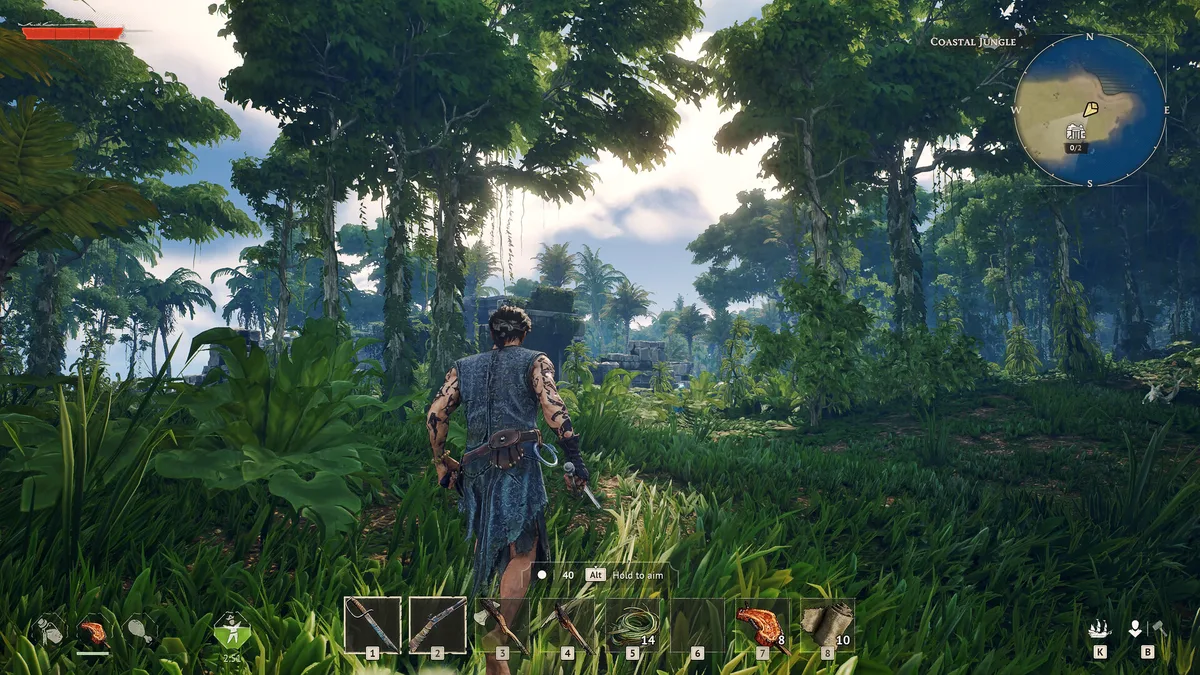 The Coastal Islands boss: the first major encounter and the one that teaches the poise-then-weak-spot attack loop.
| Boss | Level | Type | Weak Spot | Key Loot |
|---|---|---|---|---|
| Thomas Richards | 5 | Story (required) | Stagger window after poise break | Foothills access, Iron progression unlock |
Thomas Richards
Quest: "Revenge Is Best Served Cold": triggered after collecting 4 Black Marks in Blackbeard's waters. Richards is located behind a wooden gate at the back of a Coastal camp.
Gear check: Primary weapon, firearm, and all 5 armor pieces must be at level 5. Below this threshold, you won't break his poise shields fast enough, and his unblockable attacks deal one-shot damage.
Attack patterns:
| Attack | Telegraph | Counter |
|---|---|---|
| Double Swing | Standard two-hit combo, pause after second hit | Punish during the pause |
| Overhead Unblockable | Red glow before strike | Dodge sideways |
| Grab | Rushes and reaches with left hand | Dodge to his right at the last second |
| Grenade Volley | Grenade icons appear on ground | Move clear of the marked zones |
Poise shields are the actual fight mechanic. Richards takes minimal damage while his shields are up, you're just trading hits for no result. Heavy attacks from a greatsword break shields significantly faster than light combos. When shields break, he staggers. That stagger is your damage window. Use everything, heavy attacks, skills, all of it, before the shields come back.
The arena has cover objects placed throughout. These are not decoration. Use them to break his rifle line of sight during the opening phase. Cross to melee range through cover. Once at melee range, Richards switches to his attack patterns above and his rifle stops being a factor.
Post-fight: Defeating Richards unlocks the Foothills biome and all Iron-tier crafting recipes simultaneously. One fight opens the entire mid-game crafting progression.
GODEEPER: The Foothills has Iron crafting, Sulfur deposits, and the full Israel Hands boss context: here's what to do the moment you arrive. Windrose Foothills Biome Guide →
Foothills Bosses (Levels 6-10)
One story boss and one optional boss in the Foothills progression. Gear requirement: Iron tier.
| Boss | Level | Type | Weak Spot | Key Loot |
|---|---|---|---|---|
| Israel Hands | 9-10 | Story (required) | Recovery frames after each named attack | Soul Eater, Charon's Obol, 30 Undead Essence |
Israel Hands
Quest: "Needle in a Haystack": Israel Hands is Blackbeard's quartermaster. His lair requires completing the questline. He's not accessible by just wandering into the Foothills.
Gear check: Iron tier. A greatsword or mace is strongly recommended: these weapons stagger Israel Hands more reliably than lighter options, and stagger windows are significant damage opportunities.
All five named attacks:
| Attack | Telegraph | Counter |
|---|---|---|
| Poison Lunge | Crouches low, then dashes straight ahead | Dodge sideways, not backward: trail persists |
| Sword Combo | One to three hit melee sequence | Parry or dash through; safe to punish after |
| Spirit Cannon | Shoulder wind-up animation, ghostly projectile | Sidestep during the wind-up |
| Deadly Whirlwind | Spinning animation | Create distance immediately, 3+ dodge rolls |
| Spectral Charge | Full-arena dash with brief tracking | Dodge perpendicular to his dash direction |
Ranged phase management: During Spirit Cannon and Spectral Charge phases, parrying is unreliable for most players. The timing window is too tight, and mistiming a parry against Israel Hands is punished harder than a missed dodge. Don't try it. Run the arena perimeter. His attacks track partially: a moving target is consistently safer than a static one trying to land parries.
The Boar Whistle option: An Ancient Village altar puzzle (requiring a 20 Meat offering at the altar) unlocks the Boar Whistle item. This summons Truffle, an armored pig companion who tanks Israel Hands' aggro. This isn't documented anywhere in-game. With Truffle drawing attention, you can apply free damage from behind while Israel Hands ignores you. It doesn't trivialize the fight, but it removes the ranged phase pressure almost entirely.
The Rapier strategy: The Rapier of a Thousand Cuts applies stacking bleed up to five stacks. Apply stacks quickly, then reposition to range while the damage-over-time ticks through. This is an effective light-weapon approach that compensates for not having the stagger advantage of heavier builds.
Loot: Soul Eater (Rare two-handed greatsword, life drain special attack, F key, 3-minute cooldown, scales with Agility and Vitality), Charon's Obol (required to open the Cursed Swamps gate), 30 Undead Essence, 50 XP. The Soul Eater is in an Ancient Chest in the boss room: don't leave the arena without looting it. This is the only confirmed source of the weapon; treat any claim of a second, optional source with the same skepticism this guide now applies to the removed "Ghost Captain" content above.
Cursed Swamps Bosses (Levels 11-15)
One story boss in the Cursed Swamps. Gear requirement: Steel tier recommended, Iron workable with clean mechanics.
| Boss | Level | Type | Weak Spot | Key Loot |
|---|---|---|---|---|
| High Priestess | 12-15 | Story (required) | Open mouth during stagger (4-second window) | Second Charon's Obol, endgame schematics |
High Priestess (the frog boss)
The High Priestess is the giant toad / frog boss of the Cursed Swamps, which is what most players are searching for when they look up the "Windrose frog boss." She is a large frog-like entity covered in glowing yellow pustules, and breaking her poise reveals the Tainted Priestess, a humanoid flower inside her body. Her body fills more of the arena than any earlier boss, so evasion is harder, and she adds a long-range tongue attack and wide AoE hand slams to the pustule-and-mouth core loop.
Quest: "Forgotten Relics": the Cursed Swamps story boss and the current Early Access endgame ceiling. Her arena has reduced visibility from fog and bog terrain that slows movement. Plan around both.
Gear check: Steel tier is recommended. Iron-tier players have beaten her, but the fight requires clean mechanics and no mistakes across a long engagement. Steel crafting unlocks through Ancient Scraps from Ancient Ruins in the Cursed Swamps: run one or two ruins before attempting the boss.
The pustule mechanic (the entire fight structure):
The High Priestess has glowing yellow pustules visible across her body. These are not visual decoration: they are the actual fight mechanic. Hitting pustules depletes her poise bar, not her health directly. When poise empties, she staggers. Her mouth opens. The open mouth is the weak spot. You have approximately 4 seconds before the mouth closes. This window is all of your damage output for that cycle.
Hit pustules → deplete poise → stagger → attack open mouth → repeat until dead
Don't hold back during the mouth window. Commit all stamina, all ability charges, everything: before the mouth closes. Players who deal two or three hits and then wait waste the window. The recovery time between stagger cycles is long. Each wasted window costs you significant fight time.
Attack patterns:
| Attack | Position Trigger | Counter |
|---|---|---|
| Two-Swipe Foreleg Combo | Frontal approach | Dodge backward or sideways |
| Roll Into AoE Slam | Attacks from her sides | Back off immediately |
| Tail Swipe (Unblockable) | Follows her two-swipe combo | Dodge forward through her body |
| Projectile Vomit | She opens mouth, target locked | Sidestep during the mouth open wind-up |
| Plague Thrall Summon | Throughout fight, irregular | Clear adds before focusing pustules |
Position matters: Where you stand determines which attacks she uses. Standing in front of her triggers the foreleg combo. Attacking from her sides triggers the roll-slam. The unblockable tail swipe follows the two-swipe combo: the counter is to dodge forward through her, not backward into the swing.
Weapon loadout: Crude weapons (maces and halberds specifically) deal a flat damage bonus against the High Priestess. A Steel-tier mace outperforms a Steel-tier sword in this fight regardless of other stats. Craft or acquire one before entering the Cursed Swamps. For pustule targeting at range when Plague Thrall adds are blocking melee access, Drake's Double-Barreled Pistol handles the poise chip from distance.
Consumables: Non-negotiable. Her Plague Thrall adds apply stacking damage-over-time plague effects on hit. One or two stacks drain health faster than the fight's direct damage. Required stack:
- Healing Potions (Great): full stack
- Anti-plague consumables: minimum four per player in co-op, more is better
- Elixir of Pain Relief: activate before entering, not mid-fight
Co-op setup: AoEs in this fight punish clustering. Spread out. One player maintains close range to hit pustules and handle melee aggro. Others maintain spread positions for pustule hits from different angles. Every player earns boss loot and quest completion regardless of position.
Loot: Second Charon's Obol, endgame schematics. The questline ends with a "To be continued..." marker: additional biomes and progression are planned for future Early Access updates.
GODEEPER: Full Steel crafting chain, Ancient Ruins priority, all Cursed Swamps enemies: everything you need before attempting the High Priestess. Windrose Cursed Swamps Guide →
Boss Fight Tips for Windrose Bosses
These tips apply universally across Windrose bosses: not just one fight.
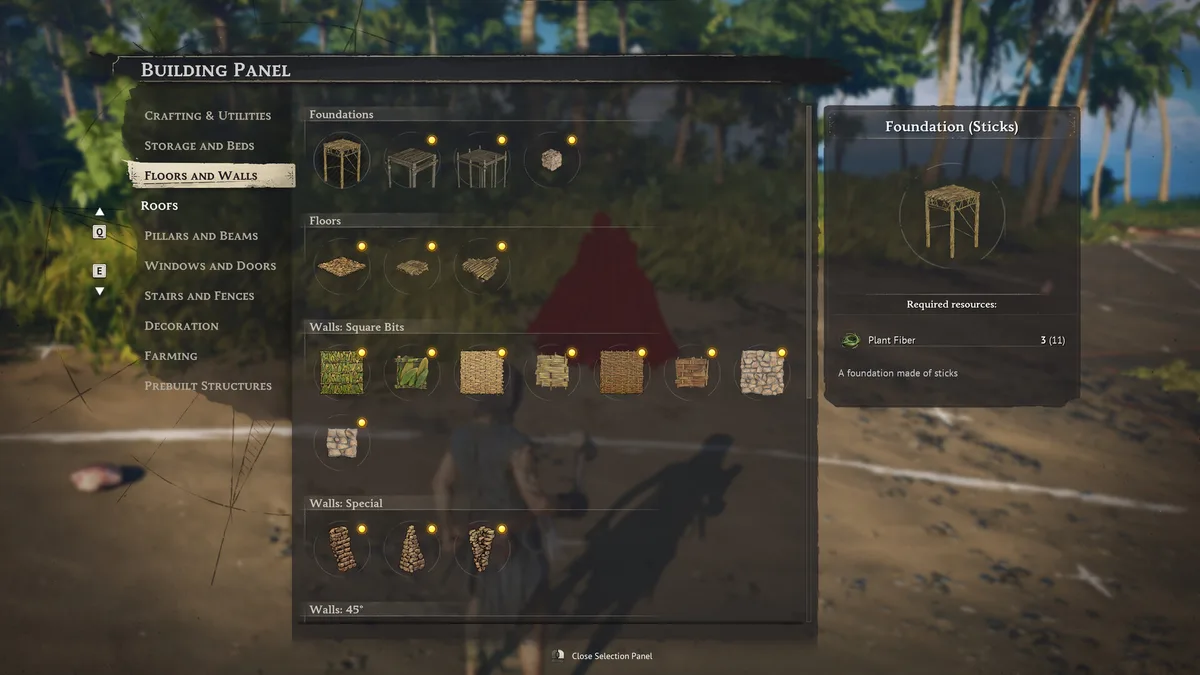 Storm Djinn second phase: the safe zone is on the left side when the lightning arm activates.
Pre-fight checklist (applies to all three story bosses):
-
Complete the biome's crafting chain first. The gear check is real. Copper for Richards, Iron for Israel Hands, Steel for the High Priestess. The crafting chain is the fight prep: skipping it makes the boss harder than intended.
-
Activate the Rested buff. Comfort level 5 (five comfort items near your bonfire) gives 2.5x stamina regen for approximately 15 minutes. More stamina means more dodge rolls and more attack chains before you have to back off.
-
Load your consumable stack at base. Healing Potions (Great), Elixir of Pain Relief, food buffs from your Fire Pit. For the High Priestess, add anti-plague consumables. Stock more than you think you'll need: the trip back after a wipe is longer than the fight.
-
In co-op, assign roles before entering. One player tanks aggro and holds the boss's attention. Others hit weak spots from angles the boss isn't tracking. Decide this before the first pull, not after the first wipe.
-
Use consumables early, not at critical health. The Elixir of Pain Relief has a duration: it needs to be active at the start of the exchange, not when you're already below 20% health. Healing Potions go in at 40-50% health, not 10%.
For deeper build context on what weapon types perform best against Windrose bosses (including the crude weapon interaction and stagger breakpoints) the Windrose weapons tier list covers all options by biome.
All three Windrose bosses follow the poise-then-weak-spot architecture covered at the top of this guide. Master that loop and the individual patterns become variations on the same theme.
Frequently asked questions
How many bosses are in Windrose? Windrose Early Access has three story bosses (one per biome) plus one optional boss. Richards is the Coastal Islands gate boss (levels 1-5), Israel Hands is the Foothills gate boss (levels 6-10), and the High Priestess is the Cursed Swamps endgame boss (levels 11-15).
What is the weak spot for the High Priestess in Windrose? The High Priestess has two-stage weak spots. First, hit the glowing yellow pustules distributed across her body, this depletes her poise bar, not her health directly. When poise empties she staggers and her mouth opens. The open mouth is the actual damage weak spot. You have roughly 4 seconds before the mouth closes.
What does Israel Hands drop in Windrose? Israel Hands drops Charon's Obol (required to open the Cursed Swamps gate), 30 Undead Essence, and 50 XP on defeat. There is also an Ancient Chest in the boss room containing the Soul Eater: a two-handed Rare greatsword with a life drain special attack (F key, 3-minute cooldown, scales with Agility and Vitality).
What gear do you need to beat each Windrose boss? Richards requires Copper-tier gear (all 5 armor pieces and your primary weapon at level 5). Israel Hands requires Iron-tier gear. The High Priestess is comfortable at Steel tier: Iron is possible but the fight is substantially harder and leaves no room for mistakes.
What are the attack names for Israel Hands in Windrose? Israel Hands has five named attacks: Poison Lunge (crouches then dashes forward leaving a toxic trail, dodge sideways), Sword Combo (one to three hit melee sequence, parry or dash through), Spirit Cannon (ghostly projectile fired from his shoulder, sidestep on the animation wind-up), Deadly Whirlwind (spinning AoE sweep), and Spectral Charge (full-arena dash with brief tracking).
What consumables do I need for the High Priestess in Windrose? Bring Healing Potions (Great) (a full stack. Anti-plague consumables are mandatory because the Plague Thrall adds she summons apply stacking damage-over-time effects. One or two plague stacks will drain your health faster than the fight's direct damage. Elixir of Pain Relief gives passive damage reduction for the fight duration) activate it before entering the arena, not mid-exchange.
Related Reading
- Windrose Roadmap 2026: Ashlands Biome Next, Full Patch Log: Windrose roadmap 2026: Ashlands biome is next, 1.0 expected 2027-28. Full patch notes from launch plus everything Kraken....
- Windrose Armor Guide: All Sets, Stats, Upgrade Order 2026: Windrose armor guide: three tiers, five slots, 30-40% efficiency gap in Swamps for mixed Iron-Steel. Upgrade order, crafting....
- Windrose Talent Tree Guide: Best Talents and Builds 2026: Windrose talent tree: 14 skill points, 3 branches, one commitment at level 10. Combat wins for Swamps, survival....
- Windrose Foothills Guide: Camps, Iron Gear, Israel Hands: Windrose Foothills guide: levels 6-10, Iron crafting chain, Veteran Corsair camp circuits, Israel Hands strategy, and which faction....
- Windrose Faction Reputation Guide: Level Factions Fast 2026: Windrose faction reputation guide: Old Salt Insignias (+80) are the fastest path to Level 2. Priority order, biome....
- Windrose Naval Tactics Guide: All 5 Tactics Ranked 2026: Windrose naval tactics guide: the real 5 options (Ambush, No Quarter, Stretch The Supply, Shipshape, Silence the Guns), cannon rotation technique,....
- Windrose High Priestess Boss Guide: the full fight breakdown for the Cursed Swamps endgame boss, the current content ceiling.
- Windrose Ashlands: Everything Confirmed So Far (2026): Windrose Ashlands release date: Kraken Express said 'at least 6 months' on April 29, so.
- Windrose Endgame Guide: What to Do After the Story: Windrose endgame guide: faction Level 3 priority order, Frigate build-out, Steel gear farming loops, and.
- Windrose Cooking Guide: Fire Pit, Food Buffs, Camp Tips: Windrose cooking guide: Fire Pit costs 10 wood and 5 stone, doubles as a comfort.
- Windrose Faction Guide: All Factions and How to Progress: Windrose faction guide: all four factions covered, Journal quest XP system explained, Insignia types, which.
References
- Windrose on Steam: official Early Access page, patch notes, and developer announcements
- Windrose Bosses (The Games Wiki): community-documented attack patterns and loot tables
Was this guide helpful?
About the author

Senior Critic & Analyst
Former game data analyst turned critic with 11 years covering indie and mid-tier games. Based in Austin. Runs spreadsheets on games most people just play.
- 11 years games criticism
- Former game economy analyst
- Roguelike and strategy specialist
Keep reading




Disclaimer
This article is published for informational and entertainment purposes. It does not constitute professional financial, legal, or technical advice. Game performance, online services, patch schedules, and store listings change. Verify critical details (pricing, system requirements, regional availability) with publishers and storefronts before you buy. Affiliate links, where present, help support our editorial work and are labelled in our affiliate disclosure.