
GuideLost Castle 2
Lost Castle 2 Co-op Guide: All 4 Player Modes Explained
Up to four players, online or on one screen, and a revive you'll lean on far more than any build choice.
VerdictPlay it with friends: one survivability-first anchor, spread weapon types, stay close enough to revive. Save Ethereal Nightmare 4 and 5 for a drilled group.
This Lost Castle 2 co-op guide starts with the number that sat unconfirmed on this very site until Hunter Studio's own patch notes settled it: up to 4 players. Here's every way to play together, what we know about how a group run differs from solo, and how to build a run around a group instead of a solo character.
Sponsored

About the game
Lost Castle 2
Hunter Studio · Hunter Studio
Updated 2026-10-21: Removed the claim that enemy difficulty scales with player count (no source states it), corrected the review attribution and the weapon category count, and added the source table.
TL;DR: Lost Castle 2 co-op supports up to 4 players across three formats: full online co-op, shared/split-screen co-op, and Remote Play Together for playing online without everyone owning the game. Reviving teammates is part of co-op, and the run ends when everyone is down, so keep the group close and give it at least one sturdy build.
BESTPRICE: Want Lost Castle 2? These stores list it: Buy on Eneba → Buy on Loaded →
How many players can play Lost Castle 2? (quick answer)
Up to 4 players, confirmed in Hunter Studio's own update notes rather than left as marketing copy. You can play online, split-screen on one machine, or through Remote Play Together if not everyone in your group owns a copy.
Sponsored

Key takeaways
- Lost Castle 2 supports up to 4 players across three co-op formats: online, shared/split-screen, and Remote Play Together.
- Hunter Studio has not published a co-op difficulty scaling rule, so do not assume four players make a run easier.
- Reviving downed teammates is a core survival mechanic in group runs, more important than clearing rooms fast.
- Survivability-focused builds (from the game's Soul Inscription and Resonance system) gain extra value in co-op, since someone alive to revive others matters more than raw damage output.
- Ethereal Nightmare 4 and 5, added at 1.0, are the toughest difficulty tiers; bring a group with good revive habits.
The three ways to play Lost Castle 2 co-op
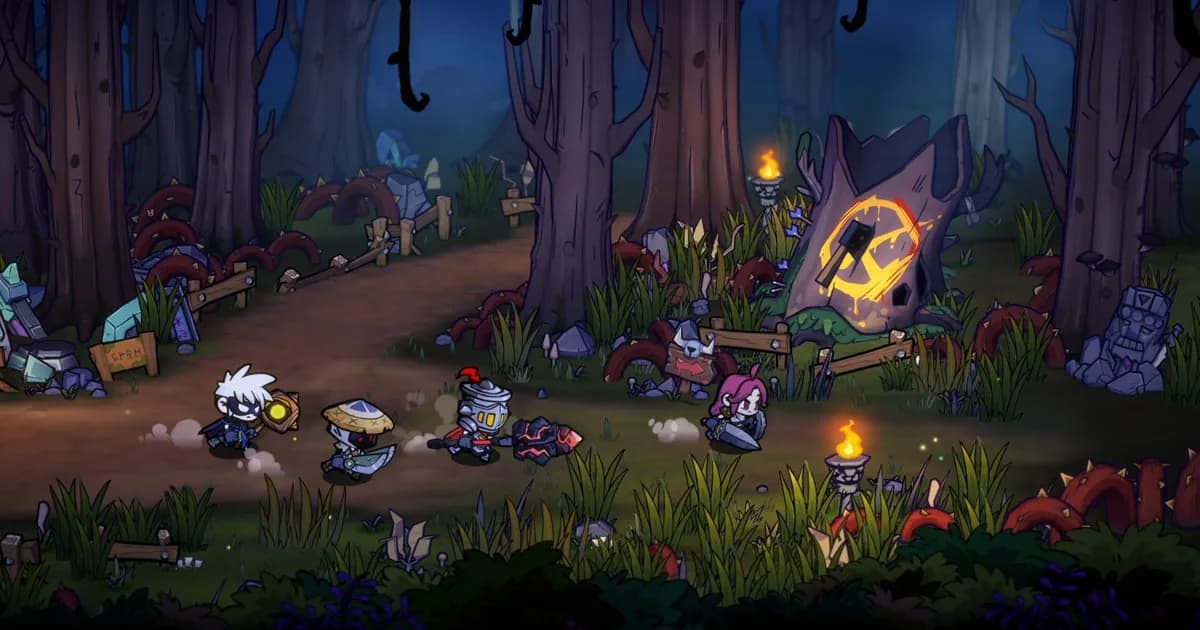
Online co-op is the standard option: every participant owns the game and connects over the internet, each running their own client.
Shared/split-screen co-op runs multiple players on a single machine, which is genuinely uncommon for a roguelite with this much on-screen enemy density. If you're playing locally with someone, this is the option, no second PC or console required.
ThaiGameGuide's four-minute setup video walks through shared-screen co-op on one PC with mouse and keyboard plus controllers, then plays a two-player session:
*Video: Lost Castle 2 shared-screen setup on PC, ThaiGameGuide YouTube channel (player video)*Remote Play Together lets you invite friends into a session without everyone owning a copy of the game. One person hosts and owns the game; others join through Steam's remote play infrastructure. This is the option worth knowing about if you want to try co-op with someone before they commit to buying it themselves.
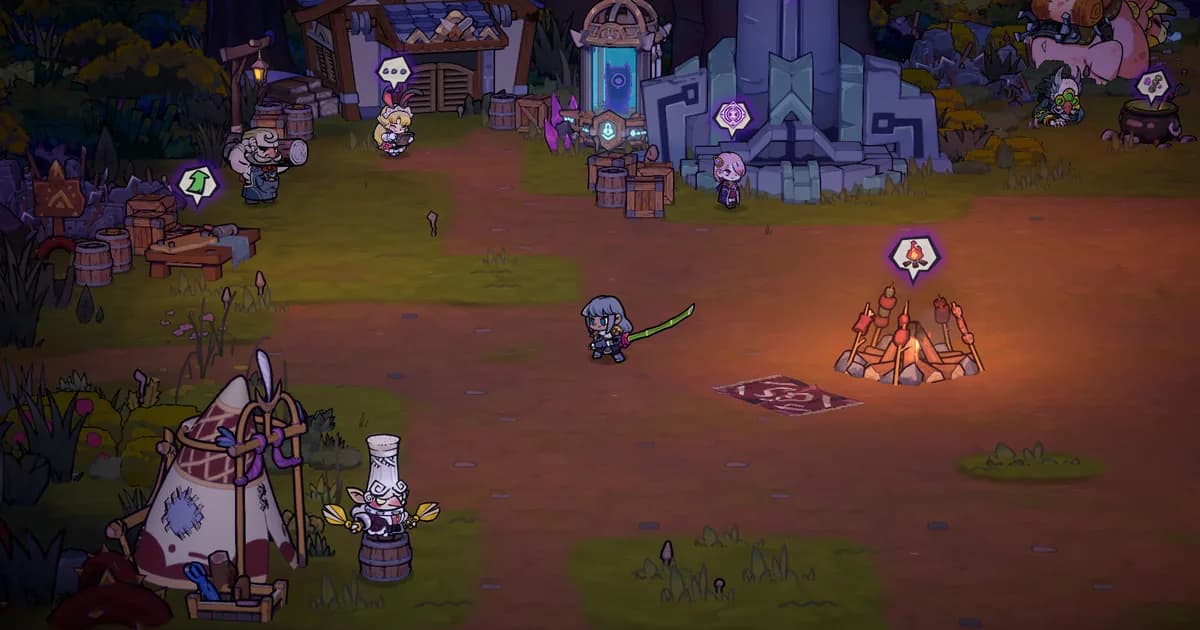
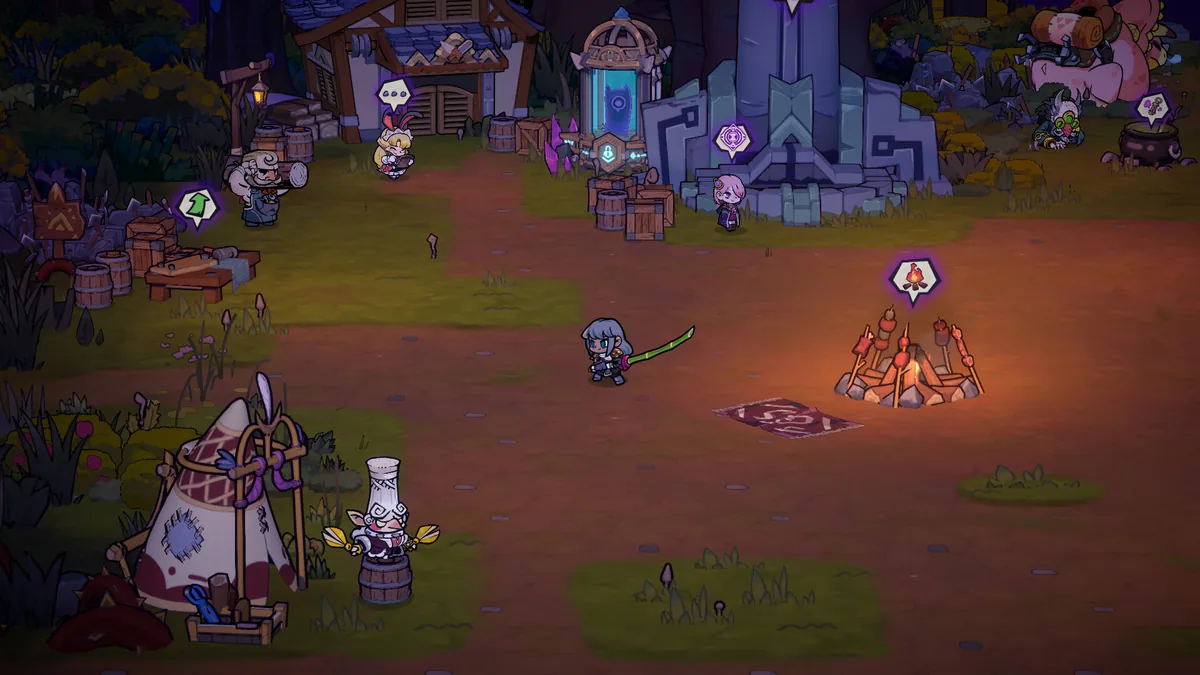 The hub area between runs, where a co-op group checks gear, upgrades, and rest bonuses before heading back into the castle together.
Whichever format you pick, co-op sessions start from the hub, not mid-run. That matters for groups coordinating loadouts: everyone gets a chance to check the blacksmith, the merchant stalls, and any rest-site bonuses before committing to a run, rather than getting dropped into a dungeon floor already in progress. If your group wants to plan weapon-type coverage across four players before a run, the hub is where that conversation happens, not three floors in.
What actually changes when you add players
Hunter Studio's patch notes and Steam page do not say whether enemy health or numbers scale with the size of the group, so this guide does not claim either way. Don't assume a group of four is automatically safer than a well-built solo character on the same difficulty tier.
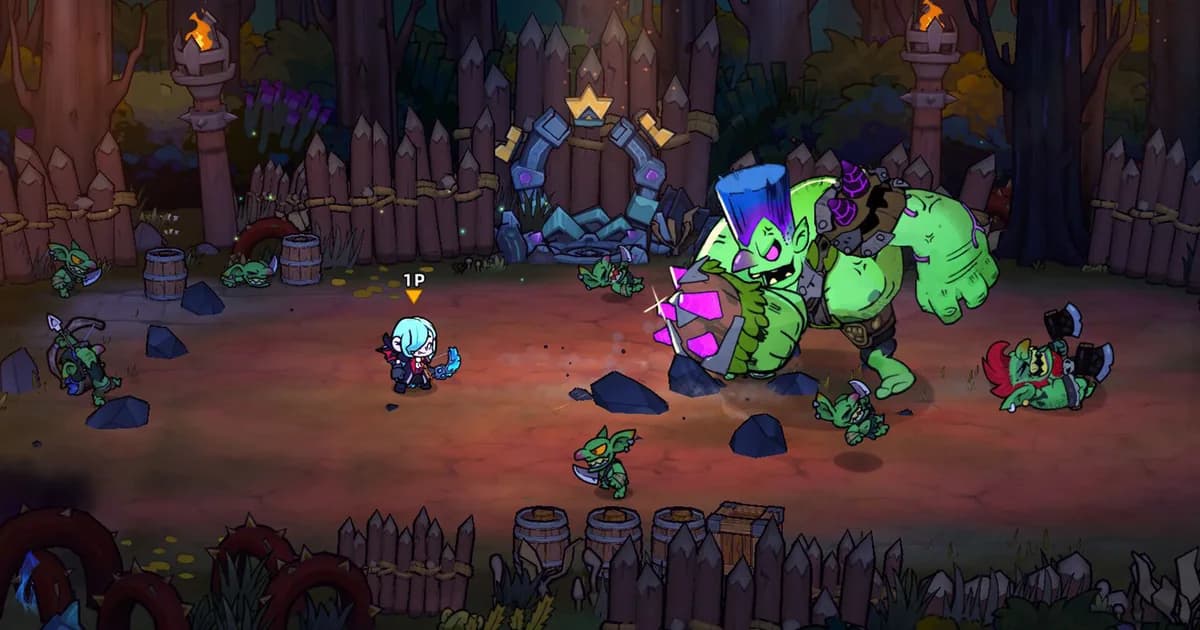
The mechanic that matters most in practice is reviving downed teammates. A patch during the February beta fixed a bug where "players were unable to revive teammates in online co-op," and another fixed the run failing to settle "after all players died." In other words, the run survives as long as someone is standing. A downed player who isn't revived is a real setback for the whole run, which changes how you should approach positioning: staying within revive range of your group matters more than splitting up to clear rooms in parallel, even though splitting up looks faster in the short term.
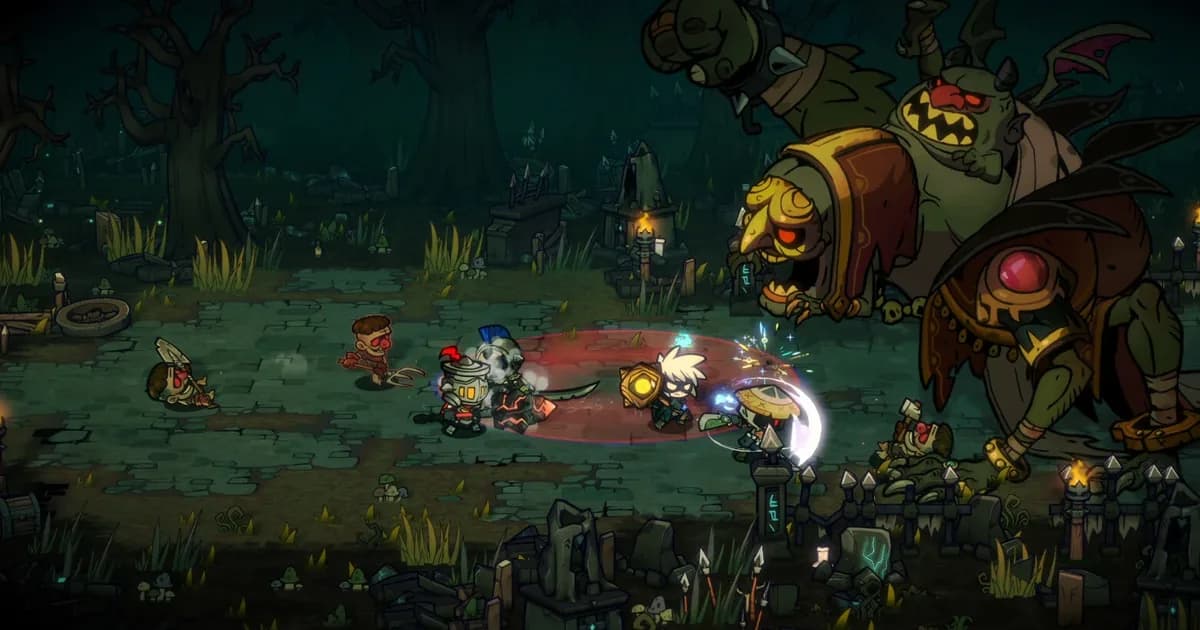
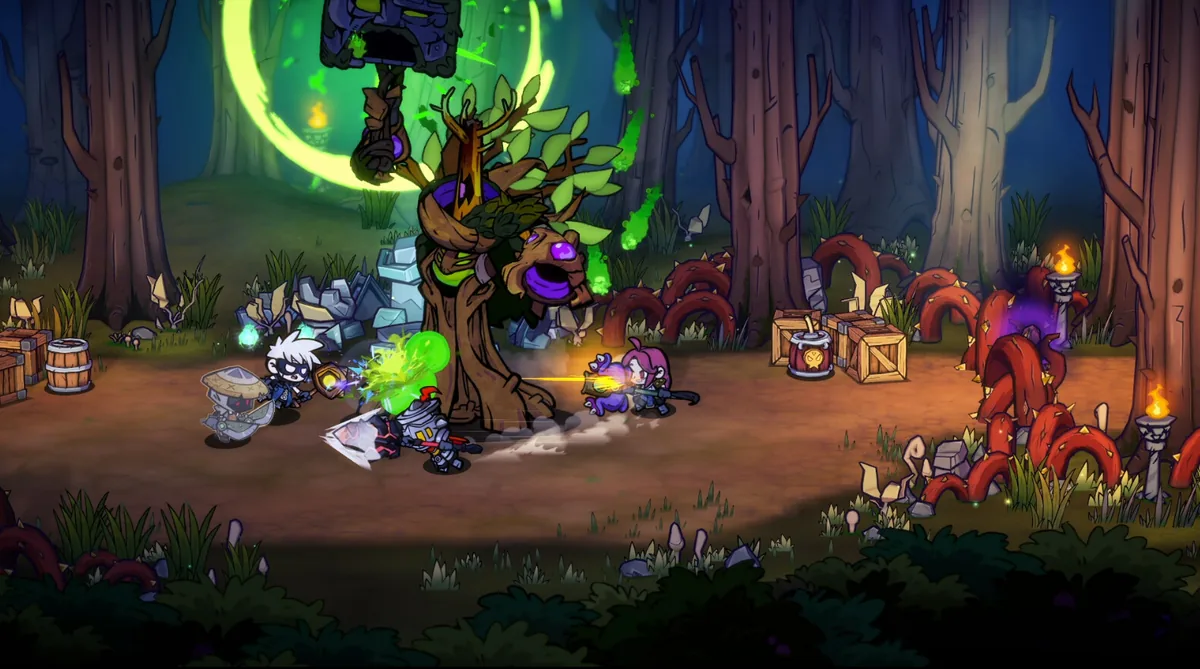 A full 4-player group taking on a forest boss together, the exact scenario where staying within revive range matters most.
GODEEPER: The Soul Inscription and Resonance III build unlocks referenced below are covered in full in the dedicated builds guide. Lost Castle 2 Builds Guide: The Soul Inscription System →
Building a character for co-op instead of solo
Lost Castle 2's Soul Inscription and Resonance system rewards experimentation, and co-op changes which builds are worth prioritizing. A build that maximizes solo damage output at the cost of survivability is a liability in a group: if that character goes down, someone else has to break off and revive them, which costs the whole team tempo. Soul Stones that trade some damage ceiling for sustain or defensive utility gain real extra value in co-op specifically because staying alive to revive others is worth more than solo kill speed.
Across the game's weapon categories, this doesn't mean picking only defensive weapons: it means at least one player in a 4-person group should lean survivability-first so the group always has an anchor. The other players have more room to run damage-focused builds once that anchor role is covered.
Weapon-type spread matters more in co-op than it does solo, too. A group where everyone picks the same weapon category ends up chasing the same Soul Inscriptions, and nobody's covering the crowd-control or ranged niches that come up against certain room layouts. A group that spreads across Two-Handed, ranged, and Dual Blades weapons naturally covers more playstyles at once. Coordinating this before a run, rather than letting four people grab whatever looks strongest individually, is a genuinely easy win that costs nothing but a minute of conversation in the hub.
Tips for your first co-op run
- Don't split up to clear rooms independently on your first few runs together. Stay within revive range until your group has a feel for how fast enemies close distance.
- Designate at least one survivability-leaning build per group, especially at 4 players, rather than letting everyone chase maximum damage output.
- If you're introducing a friend who doesn't own the game yet, Remote Play Together is the lowest-commitment way to show them co-op before they decide to buy in.
- Save Ethereal Nightmare 4 and 5 for a group that already has solid revive habits from lower difficulties. Hunter Studio's 1.0 announcement calls them "the ultimate test of skill."
- Talk through weapon-type coverage in the hub before heading out, not after the run has already started. Once you're a floor or two deep, respeccing around a gap in the group's coverage costs far more than the minute it would have taken to plan ahead.
- If your group is playing Remote Play Together, expect the host's hardware to bear more of the performance load than a fully online session would. It's a fine option for trying the game out, but a full online co-op session scales better if everyone plans to keep playing regularly.
Frequently Asked Questions
How many players can play Lost Castle 2 co-op? Up to 4 players. Hunter Studio's own December update notes describe a 4-player co-op mode, and the Steam page lists online, LAN and shared/split-screen co-op plus Remote Play Together.
Does Lost Castle 2 have split-screen co-op? Yes. Lost Castle 2 supports shared/split-screen co-op in addition to full online co-op, which is unusual for a roguelite at this scope. It also supports Remote Play Together for online play without every participant owning a copy.
Does difficulty scale with more players in Lost Castle 2? Hunter Studio has not published a co-op scaling rule in its patch notes or on the Steam page, so this guide does not claim one. Treat your first group run as the test.
What's the best strategy for Lost Castle 2 co-op runs? Keep the group close enough to revive each other. Reviving teammates is part of online co-op (a February beta patch fixed a bug that stopped it), and when every player dies the run ends. Survivability-focused builds gain extra value because someone needs to stay upright to revive others.
Is Lost Castle 2 co-op worth playing over solo? If you have friends to play with, yes. One Steam reviewer who plays with two daughters titled the review "Perfect Couch Co-op for Families and Friends!" Ethereal Nightmare 4 and 5, added at 1.0, are the hardest test whether you go solo or in a group.
Related Reading
- Lost Castle 2 Review: Is the 1.0 Launch Worth It?: the full verdict and how Steam players rate the 1.0 launch.
- Lost Castle 2 Weapons Tier List: 9 Categories Ranked: Lost Castle 2 weapons tier list: all 9 confirmed categories for 1.0, with the standout
- Lost Castle 2 Boss Guide: All 12 Bosses: what to expect once your co-op group reaches each of the game's boss encounters.
- Lost Castle 2 Complete Guide Hub: the wider progression and build index for the full release.
- Lost Castle 2 Advanced Builds Guide: weapon commitment advice for higher Nightmare depths.
- Lost Castle 2 Farming Guide: resource routing when a co-op run needs more upgrades.
- Lost Castle 2 Beginner Guide: first-run weapon and survival basics before grouping up.
- Lost Castle 2 Achievements Guide: Party Adventure, the one co-op achievement, unlocks when you start an online multiplayer run.
Step-by-Step: setting up a co-op run
1. Choose the mode: Pick online co-op, shared screen, or Remote Play Together based on how the group is connecting.
2. Divide the build plan: Let each player use the weapon category and Inscription their drops support instead of forcing identical builds.
3. Recheck the current patch: Confirm multiplayer fixes and current weapon behavior in the official notes before treating an old team route as permanent.
References
- Lost Castle 2 on Steam
- Lost Castle 2 official Steam announcements: the December update (4-player co-op mode), the February beta patches (revive and all-players-died fixes) and the 1.0 announcement (Ethereal Nightmare 4 and 5)
- Steam review: Perfect Couch Co-op for Families and Friends
- Hunter Studio on X
- Lost Castle 2 shared-screen setup video: ThaiGameGuide, player video, January 28, 2026
- Lost Castle 2 Steam key on Eneba: Global key, compare with the Steam price.
- Lost Castle 2 Steam key on Loaded: compare the price with Steam before you buy.
Was this guide helpful?
About the author

Action & Design Desk
GameBrief's byline for platformers, horror and action games. Dry, short paragraphs, strong opinions about tutorials and boss design.
- Action, platformers and horror
- Tutorials, onboarding, boss design
- Sources listed per article
Keep reading
Lost Castle 2 Farming Guide: Gold and Materials Fast
General · 7 min
Lost Castle 2 Advanced Builds Guide: EN4-5 Meta 2026
General · 10 min
Lost Castle 2 Memory Shards: All 11 & Mage Tower Guide
General · 13 min
Lost Castle 2 Achievements Guide: All 85 Explained
General · 21 min
Lost Castle 2 Ethereal Nightmare Guide: All 5 Depths
General · 12 min
Lost Castle 2 Boss Guide: All 12 Bosses & How to Beat Them
General · 13 min
Sponsored
Disclaimer
This article is published for informational and entertainment purposes. It does not constitute professional financial, legal, or technical advice. Game performance, online services, patch schedules, and store listings change. Verify critical details (pricing, system requirements, regional availability) with publishers and storefronts before you buy. Affiliate links, where present, help support our editorial work and are labelled in our affiliate disclosure.
Comments
Loading comments…