
ReviewGurei
Gurei Review: Every Boss Kill Changes What Comes Next
Gurei review: Lobo Sagaz's boss rush steals Kami powers on each kill and scales difficulty to your fight order. Who it suits and who the retry cost loses.
Gurei review starts with the one thing that makes the entire game work: you don't just kill bosses. You take what they had.
Sponsored

About the game
Gurei
Lobo Sagaz Studio · Astrolabe Games
Reception
Pros
- Power-stealing mechanic makes every boss fight a permanent build decision
- Dynamic difficulty: same Kami can open or close the game depending on your chosen path
- Defeated Kami as spectral companions adds genuine personality between fights
- Simultaneous PC, PS5, and Switch launch is rare for a debut indie studio
- Samurai cinema visual language is clean and distinct
Cons
- Reviewed from demo build only: full game scope and length unverified
- No user reviews at launch; community meta knowledge still forming
Verdict
A boss-rush built around a single idea that actually changes how every fight in the game plays out.
Every Kami you defeat in Lobo Sagaz's debut action game gives Rei a new ability before the next fight. A stronger dash. A weapon that executes weakened enemies. The capacity to heal. The particular skill varies by Kami, but the principle doesn't: you enter each fight with everything you took from the fights before it, and what you chose to take shapes what you can do.
That's not unusual for the genre. What's unusual is what Gurei layers on top of it.
Updated 2026-10-15: This review was first written from the pre-launch demo period. It now covers the July 23 launch through linked Steam player reviews, and we removed demo impressions we cannot document.
TL;DR: Gurei is a challenging boss-rush action game where killing Kami spirits steals their power and permanently changes the fight order's difficulty. Developer Lobo Sagaz Studio (debut release, published by Astrolabe Games) launched July 23 on PC, PS5, Switch, and Switch 2 at $19.99. Steam players rate it Very Positive; the complaint that keeps coming up is how much a failed run costs you.
BESTPRICE: Want Gurei? These stores list it: Buy on Eneba →
Gurei review: what the power-stealing actually means (quick answer)
In most boss-rush games, the order you fight bosses changes the experience but not the bosses themselves. In Gurei, it changes both.
The game features a dynamic difficulty system where each Kami's strength is calculated based on your chosen path, not a preset value. A Kami you fight first is calibrated differently than the same Kami fought after you've cleared several others. The implication: saving a boss you find difficult for later doesn't just mean you'll be stronger when you face them. It also means they'll be stronger. Hope to never leave the one you struggle most with for last.
This is the mechanic that gives Gurei's structure real weight. The difficulty isn't just about which powers you've collected. It's about what you've implicitly communicated to the game about your preferences. Fight every easier Kami first, and you've ensured the remaining ones are calibrated as your climax. Fight a hard one early and survive it, and you've acquired a power the late game is partially designed around you having.
Sponsored

Key takeaways
- Boss-rush action game by debut studio Lobo Sagaz, published by Astrolabe Games
- Kill a Kami, steal their unique power permanently for the rest of the run
- Boss order is free choice; dynamic difficulty scales each Kami to your path
- Defeated Kami travel with Rei as spectral companions with their own dialogue
- Basic combat: sword attacks, dodges, head stomps; each Kami adds one ability to this set
- Launched July 23, 2026 on PC, PS5, Nintendo Switch, and Nintendo Switch 2; Very Positive on Steam
Gameplay
Rei's baseline moveset is deliberately constrained. Sword attacks, a dodge, head stomps on staggered enemies. The game doesn't pad the toolkit. It gives you what you need to survive and stops there, because the skills you earn from Kami are the expansion, not decoration.
What that creates in practice is a combat system that feels meaningfully different depending on which fights you've cleared. A player who took a healing ability early has a different risk tolerance than one who prioritized an execute weapon. The same Kami fights differently against each of those players because the players themselves fight differently.
Players disagree about how that feels in the hands. One 17-hour reviewer calls it "smooth, it's tough, it's fair," noting the deliberate lag on the front and back of each move means "you can't just spaz out and trust quick reflexes" (Steam review). A player who quit at under an hour says "The dash has a noticeable delay before it kicks in," so "you're fighting the controls instead of the boss" (Steam review).
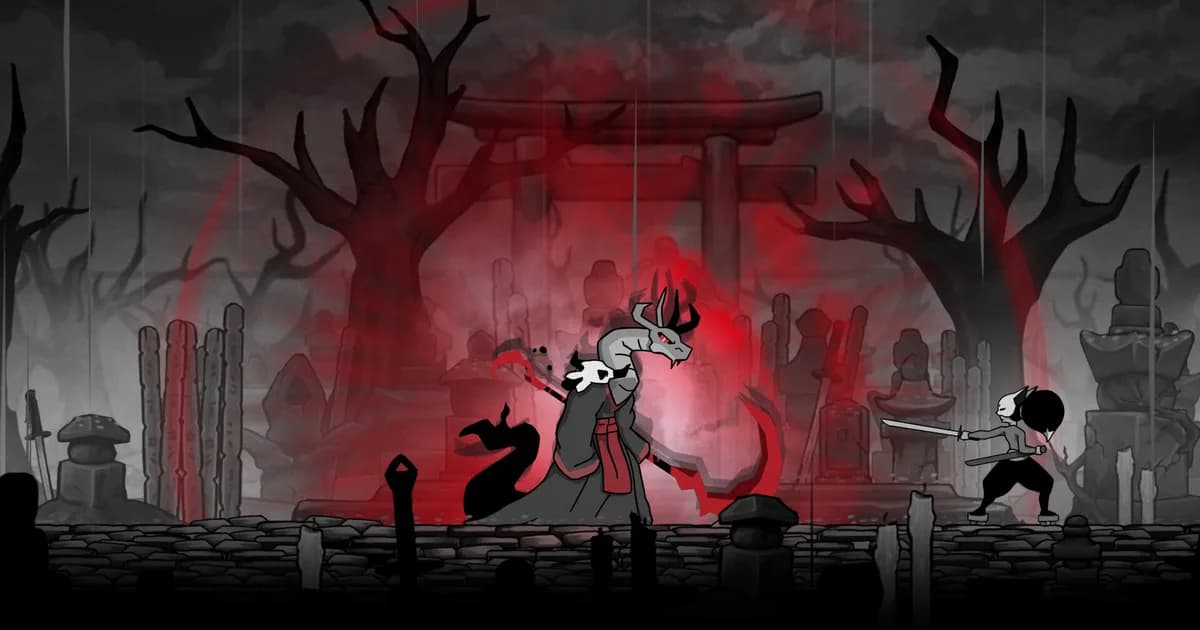
A mid-fight moment from the pre-launch demo footage. Dodge timing against Kami requires reading the wind-up, not reacting to the strike.
GODEEPER: For another July 2026 action indie built around a single core mechanic that changes everything else: Black Jacket Review: The Roguelite That Earns Its Tension →
What Lobo Sagaz added beyond the bosses
The castle setting between human and spirit worlds is where Gurei spends its personality budget. After each Kami is defeated, Rei doesn't just take their power. She carries them.
The fallen Kami travel with Rei as spectral companions. They talk. Sometimes what they say is useful, filling in lore or giving you a read on how a mechanic works. Sometimes, Lobo Sagaz notes, they'll be less helpful. Players who finished it say the writing lands: one praises its "remarkable ability to add depth and feeling to characters with just a handful of lines" (Steam review), and another says the small world is "packed with interesting NPCs and minigames" (Steam review).
What the companion system signals is that Lobo Sagaz isn't treating this as a difficulty exercise with mythology painted on top. The chambara cinema visual language, the castle between worlds, the strangeness of the encounters between bosses: those look like choices the studio cared about, not backdrop sourced to hit a setting quota.
On the platform side: simultaneous PC, PS5, Switch, and Switch 2. For a debut studio, that's not a small thing. Astrolabe Games is handling publishing and presumably the console porting logistics, but the breadth of that launch still tells you something about how Lobo Sagaz planned for this.
GODEEPER: Another July 2026 launch that commits to atmosphere over surface spectacle: The Mermaid Mask Review: SFB's Locked-Room Mystery →
The castle between worlds. Environment design is deliberately strange rather than merely ornate, which matches the tone of the Kami encounters.
Gurei review: verdict
The core mechanic works: stealing Kami power changes what you can do, and the dynamic difficulty ties the order you fight in to both your toolkit and your remaining challenge. Steam players rate it Very Positive, and the fans single out the bosses: "the main appeal is how well designed and layered the movesets of the bosses are" (Steam review).
The negative reviews are almost all about the cost of failure. You have a limited life pool, and losing it restarts the run; the most upvoted negative review calls the late game "Too punishing and frustrating" because "Failed? Start the entire run over" (Steam review). Another lists "no practice mode" and "Only one try on the final boss" as the reasons it got old (Steam review).
Who it suits: boss-rush and "get good" players who enjoy learning patterns, like route planning, and are happy to replay a short game from the start. At $19.99 it is a strong pick for fans of Nine Sols-style boss design, and it sits comfortably among the best indie games under $20.
Who should wait: anyone who hates losing progress, players who need a practice mode to learn late bosses, and people sensitive to a delayed dash. If Lobo Sagaz adds a practice or checkpoint option, that changes the call. Until then, Dinoblade's boss rush mode lets you drill bosses back to back without the walk between them.
If another challenging July 2026 indie with a distinct power system appeals: DRG Rogue Core's early access state guide covers a different kind of punishing loop.
Related Reading
- Black Jacket Review 2026: another July indie where a single mechanical commitment changes every decision afterward
- The Mermaid Mask Review 2026: SFB Games' July 16 launch, a different genre with the same belief that atmosphere is load-bearing
- DRG Rogue Core Early Access State July 2026: if you want punishing but fair combat with team-play variance
- Solarpunk Game Review: Floating Island Survival 2026: Floating-island survival on Steam. Dual research-table and Traderbot system, 12 islands,....
References
- Gurei on Steam: official store page, demo available
- The Kami Awaits on Every Platform (Steam announcement, May 2026): Lobo Sagaz confirming simultaneous PS5 and Switch launch alongside PC on July 23
- Gurei Steam Next Fest June 2025 demo announcement: studio post announcing the playable demo for Next Fest
Frequently Asked Questions
What is Gurei? Gurei is a challenging action game by Lobo Sagaz Studio where you play Rei, a human spirit fighting Kami bosses in any order. Defeating a Kami permanently steals their power, adding it to your combat options. Difficulty scales based on which Kami you've fought and in what sequence.
Is Gurei hard? Yes. Gurei is explicitly designed as an unforgiving game. You have a limited life pool, a failed run starts over, and Steam reviewers say there is no practice mode and only one try at the final boss. The dynamic difficulty means saving a hard boss for last can make it significantly harder than fighting it early.
Is Gurei on console? Yes. Gurei launched July 23, 2026 simultaneously on PC (Steam), PlayStation 5, Nintendo Switch, and Nintendo Switch 2. Full controller support confirmed.
Is there a Gurei demo? Yes. Lobo Sagaz released a Boss Demo in October 2024, and the game appeared at Steam Next Fest in June 2025. Both offered playable combat against specific Kami bosses.
Who made Gurei? Lobo Sagaz Studio developed Gurei. Astrolabe Games is publishing it. This is a debut release for the studio, launched simultaneously across PC, PS5, and Switch.
How much does Gurei cost? Gurei is priced at $19.99 on Steam. The simultaneous console launch is included, though console pricing may vary by region and storefront.
About the author

Action & Design Desk
GameBrief's byline for platformers, horror and action games. Dry, short paragraphs, strong opinions about tutorials and boss design.
- Action, platformers and horror
- Tutorials, onboarding, boss design
- Sources listed per article
Keep reading
Raccoons to Riches Review: The Shop Sim Done Right
General · 8 min

Security 51 Review: Papers Please Meets Area 51 Horror
General · 7 min
Moonlight Peaks Review: 88% Positive, Thin on Romance
General · 8 min
Denshattack Review: Tony Hawk on Trains, 98% Positive
General · 9 min
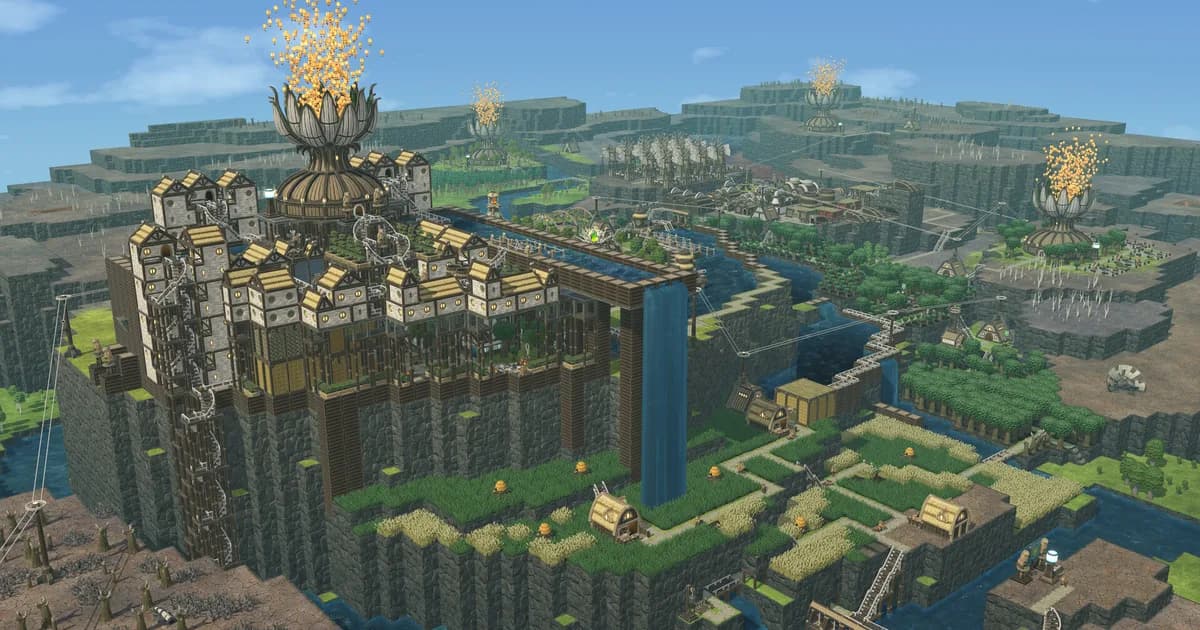
Timberborn Review: The Beaver City-Builder Nails 1.0
General · 7 min
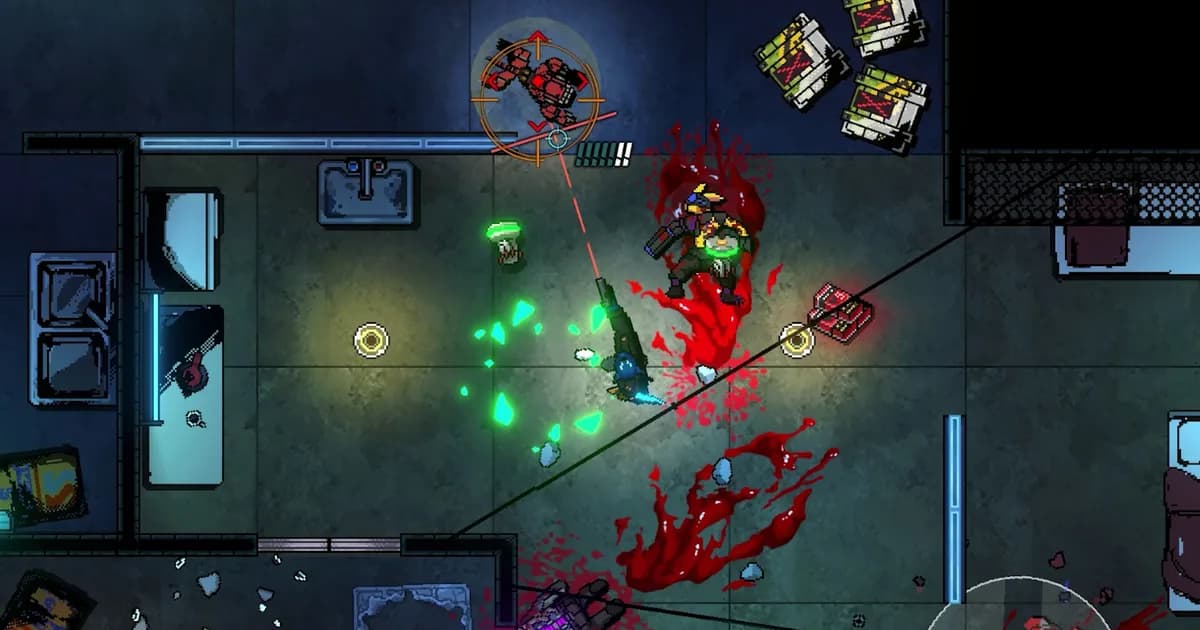
Kusan Review: City of Wolves, 54 Stages, One Life Per Room
General · 7 min
Sponsored
Disclaimer
This article is published for informational and entertainment purposes. It does not constitute professional financial, legal, or technical advice. Game performance, online services, patch schedules, and store listings change. Verify critical details (pricing, system requirements, regional availability) with publishers and storefronts before you buy. Affiliate links, where present, help support our editorial work and are labelled in our affiliate disclosure.
Comments
Loading comments…