
GuideAbiotic Factor
Abiotic Factor Chemistry Guide: Tinctures, Flasks 2026
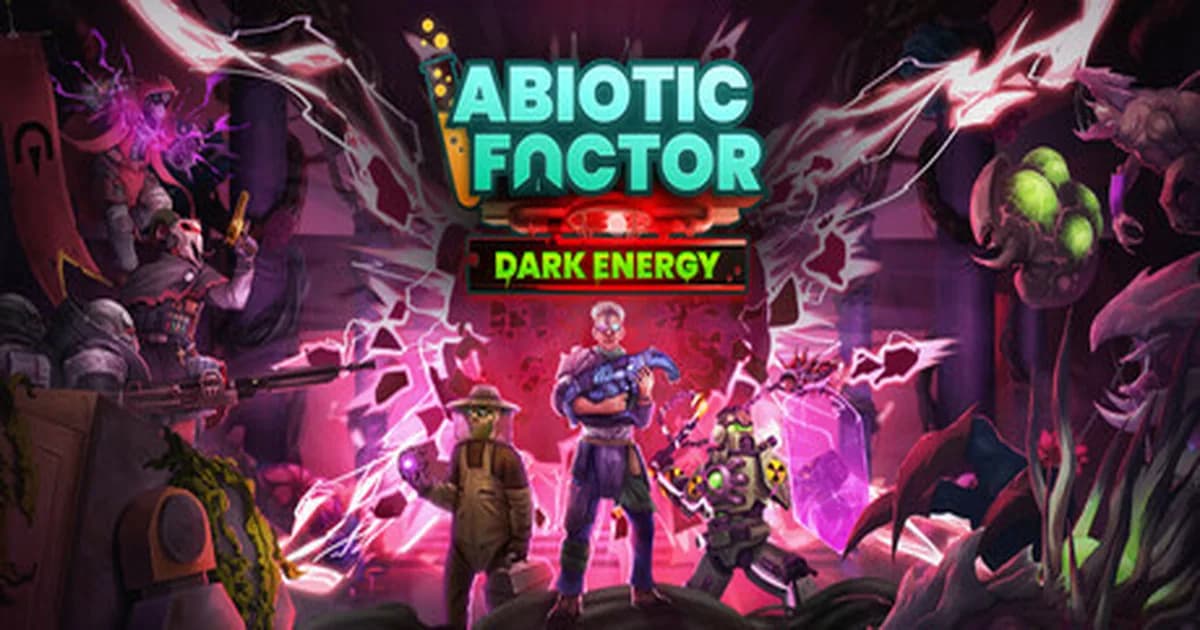
This abiotic factor chemistry guide covers the Cosmic Companions update's crafting system, which the developers pitched as "a deep and wide Chemistry system that rewards experimentation." That's accurate. Abiotic Factor does not hand you a recipe list. You're expected to experiment, and if you walk in blind you will waste materials.
Sponsored

About the game
Abiotic Factor
Updated 2026-10-16: Review totals refreshed, and the 1.4.0 status line now quotes the Community Update #4 post directly. A third-party description of the system was replaced with the developers' own words.
Here's what the system actually produces, how the workflow runs, and where to start.
TL;DR: Chemistry runs on two separate stations. The Distillation Bench breaks organic items, creature parts, food, minerals, and anomalies down into one of 16 distillation types. The Chemistry Bench then combines three distillations (each slot holds up to 8 doses, 15-second mix time) into a coating, flask, or tincture. There are 10 coating types, 12 flask types, and 10 tincture types. Get the ratio wrong and you get an Unstable Flask that explodes instead. Unlock Peccary taming via chemistry too. New portal world: Alpen Signal Observatorium, accessed via the Hydroplant's western waterways.
BESTPRICE: Want Abiotic Factor? These stores list it: Buy on Eneba → Buy on Green Man Gaming → Buy on Humble Bundle → Buy on Gameseal → Buy on Kinguin →
What does the Abiotic Factor chemistry system add? (quick answer)
Two new crafting stations that didn't exist before Cosmic Companions: the Distillation Bench and the Chemistry Bench. The first turns raw materials into one of 16 distillation types; the second combines three of those distillations, up to 8 doses per slot, into a coating, flask, or tincture. That's 32 possible outputs across three categories, all gated behind experimentation rather than a recipe book. The system also enables Peccary taming, which is its own rabbit hole.
Sponsored

Current status: October 2026
The current official chemistry reference is the 1.4.0 Community Update 4 line. The July 13 update added "dozens of new devices, high-tech gear, exotic pets" and more, and the current Steam hotfix line reaches 1.4.0.28206 on July 27. The wiki's Chemistry reference still lists 16 distillations, 10 coatings, 12 flasks including Unstable, and 10 tinctures; Hotfix 1.3.0.26036 made Portal Flask recipes reliable and removed unstable recipes from the Compendium. The article's roster and ratios below follow that current reference rather than older Cosmic Companions launch posts.
Abiotic Factor chemistry: key takeaways
- Two stations, not one: the Distillation Bench breaks materials down, the Chemistry Bench combines them
- The Chemistry Bench has 3 flask slots, each holding up to 8 doses of a single distillation, and a 15-second mix time
- 16 distillation types exist (Vigorous, Fizzy, Alien, Foggy, Brainy, Void, Mycological, Charged, Boiling, Expanding, Unnerving, Fleshy, Unstable, Occult, Endothermic, Noxious Sludge), feeding 10 coating, 12 flask, and 10 tincture recipes
- Get a combination wrong and the bench produces an Unstable Flask, which explodes with knockback instead of giving you the item
- The Portal Flask recipe is 8 Alien, 4 Void, and 2 Unstable Distillation; its formula was patched in Hotfix v1.3.0.26036 post-launch
- Peccary taming is now unlocked via chemistry progression
- New portal world: Alpen Signal Observatorium, accessible through Hydroplant's western waterways
- The M.O.P. 9000 (cleaning tool) is a separate Cosmic Companions addition, not chemistry-dependent
- The game has moved past Cosmic Companions (1.3.0) into patch 1.4.0 (Community Update 4, July 2026)
How the chemistry workflow works
Step-by-Step: Distillation → Recipes → Output
1. Distill raw materials: Use the Distillation Bench to convert eligible food, creature parts, minerals, and anomalies into one of the 16 distillation types.
2. Load the Chemistry Bench: Put up to 8 doses of each required distillation into its three flask slots, then start the 15-second mix.
3. Test and scale the recipe: Run an unfamiliar ratio in a small batch first. A wrong combination creates an Unstable Flask, while a confirmed ratio produces a coating, flask, or tincture.
Two stations, two stages. You can't skip distillation and jump straight to a flask; distillations are required intermediates for every output category, and the two benches are separate crafted objects, not one machine.
Stage 1: the Distillation Bench. It has one big input flask on the left and an output flask on the right. Drop in organic items, creature parts, food, minerals, or Weird Science anomalies, hit the red button, and it breaks the material down into one of 16 distillation types: Vigorous, Fizzy, Alien, Foggy, Brainy, Void, Mycological, Charged, Boiling, Expanding, Unnerving, Fleshy, Unstable, Occult, Endothermic, and Noxious Sludge. Yield varies wildly by source item: a single Pumpkin breaks down into 12 Vigorous Distillation, while Beeswax only gives you 1. Check what you're about to throw in before you burn your entire stock on a low-yield item.
Stage 2: the Chemistry Bench. Three flask slots, each one holding up to 8 doses of a single distillation type. Load the right combination, interact with the red valve, and it mixes for 15 seconds before producing a coating, flask, or tincture. Get the ratio wrong and the bench doesn't just fail quietly: it produces an Unstable Flask, which explodes with a small knockback blast on use. That's the single most common new-player mistake with this system, dumping a full 8-dose load into an untested combo instead of testing with a small batch first.
Three output categories, each serving a different role:
Tinctures (10 types, including Curative, Berserker, and Restorative) buff you and your allies. These are the most immediately useful if you're running co-op. Shared buffs in a 1-6 player game are obviously worth the crafting cost, and tinctures are consumables so you'll keep making them throughout a run.
Weapon coatings (10 types) add per-hit elemental effects to existing weapons: acid, bounce knockback, or thermal damage layered onto whatever you're already carrying. Coating durability isn't a fixed hit count. It's tied 1:1 to the weapon's own durability: every point of durability the weapon loses, the coating loses one too, so a coating on a fresh weapon lasts longer than one slapped onto something already half-broken. Apply one from your inventory by right-clicking the coating, selecting "apply coating," then left-clicking the target weapon. A weapon can only carry one coating at a time, and some (like Bounce) only work on melee weapons even though the game lets you attempt the application on a ranged weapon first.
Throwable flasks (12 types) are area-effect throwables. The Portal Flask is the most talked-about one: on impact it opens a micro-perforation that pulls a random hostile entity through from the other side, most often a Pest (35% chance) or a Peccary (17.5%), up to 50 summons active at once. Craft three at a time from 8 Alien, 4 Void, and 2 Unstable Distillation. It got a balance pass in Hotfix v1.3.0.26036 that made the formula more reliable. Other flask types (Blizzard, Concussive, Corrosive, Updraft, and more) produce very different effects, so the Portal Flask isn't the only one worth crafting.
GODEEPER: Subnautica 2 has its own deep crafting progression system built around DNA modification and alien biology. Subnautica 2 DNA Modification Guide →
Chemistry materials appear in biology and chemistry wings of the facility. They look identical to standard loot until you open a container.
Where to find chemistry materials
Raw materials for distillation don't have a special icon. They're the food, creature drops, and lab clutter you've probably already been picking up: organic items, creature parts, cooking ingredients, minerals, and Weird Science anomalies all feed into the 16 distillation types. Both benches are crafted at a Crafting Bench and require the Chemistry skill, which levels through normal play rather than a gated unlock.
Farming efficiently means chasing yield, not just availability. The gap can be huge: a Pumpkin converts into 12 Vigorous Distillation, while Beeswax only gives you 1. Grab the high-yield item and skip the extra trips.
If you're farming specifically for the Portal Flask (8 Alien, 4 Void, 2 Unstable Distillation), three items cover the whole recipe with distillation to spare:
- Anti-Fungal Gelatin, collected from the monument at Village Den da'ko Yeer, converts into 32 Alien Distillation. One piece covers four Portal Flask batches on its own.
- Powdered Crystal, dropped by IS-0139, Power Leech, or Giant Power Leech, converts into 4 Void Distillation. One kill covers the exact Void requirement.
- Plutonic Blood, harvested from a Volatile Exor (or traded for a Plutonic Carapace at the Dusk Reactor's Atomic Division offices), converts into 4 Unstable Distillation. That's twice what the recipe needs.
The Chemistry Bench has three flask slots, not raw-material slots. Fill them with distillations (never raw materials) and activate to produce a coating, flask, or tincture depending on your combination. Run small batches of anything unfamiliar before committing a full 8-dose load; not every combination is documented, and a bad one gives you an exploding Unstable Flask instead of the item you wanted.
Tips for using the chemistry system efficiently
Don't hoard distillations. The instinct is to stockpile before committing to a recipe. Resist that. Run small batches, see what comes out, then scale up whatever works. The system is built for experimentation, not pre-planning.
In co-op, split material gathering across your team. One person farms weird science materials while others push normal progression, then pool for distillation runs. Tinctures affect everyone in the party, so the crafting cost scales down fast when you're playing with even two people.
The Portal Flask formula changed in Hotfix v1.3.0.26036. If you're using day-one community guides, their flask recipes may behave differently now, and some are still written against the older 1.3.0 build rather than the current 1.4.0 patch. Check Steam patch notes before trusting early chemistry guides, and keep a batch small the first time you test any recipe you haven't confirmed yourself.
Peccary taming isn't a day-one unlock. You need to advance the chemistry system to a certain point before the option appears. Treat it as a mid-game milestone. Once you have a Peccary, use the Companion Pet Slot if you're taking it anywhere dangerous; they go into a downed state there instead of just dying.
The M.O.P. 9000 (the cleaning mop) is not a chemistry output. It's a separate craftable item. You don't need distillations to build it. The community wanted a cleaning mechanic for a long time and this is it.
The Chemistry skill (required to craft both benches in the first place) levels through use, like every other skill in the game. Don't hoard materials waiting to "feel ready": running distillations and crafting outputs is what improves it, not reading about it. And if you're staring at a Chemistry Bench wondering why nothing worked, remember it's not silent about failure: a bad combination produces an Unstable Flask that explodes on use rather than just refusing the craft. That's your signal to test smaller next time, not a bug.
The distillation loop: gather anomalous materials, run small batches, then scale up the recipes that work for your playstyle.
The Voices of the Void: new portal world
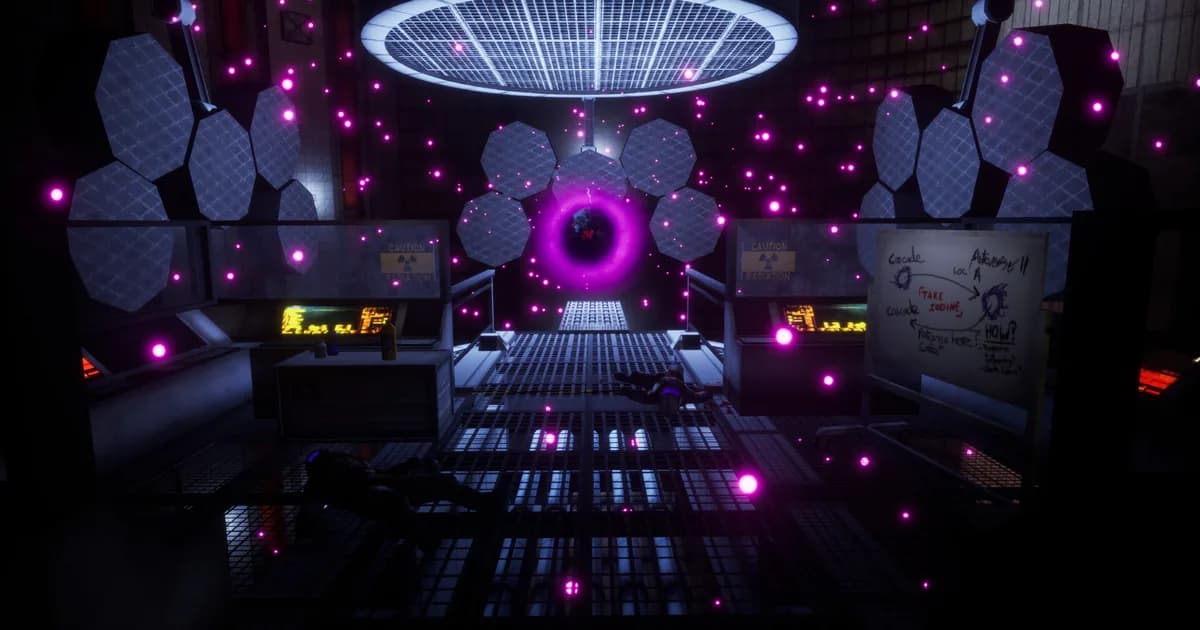
Access: Hydroplant, western waterways. Dr. Newman's field notes mention unusual perforation readings near that area. Follow the signal. The observatory itself is in the Dunkeltaler Forest, just across from Voussoir.
The devs call it "anomalous," which in Abiotic Factor means something weird and dangerous is there. Bring supplies you're not worried about losing.
GODEEPER: Co-op survival games live and die by how well players split crafting responsibilities, and Abiotic Factor's chemistry loop is no exception. Outbound Co-op Roles Guide →
Frequently Asked Questions
What does the Abiotic Factor chemistry system do? It runs on two benches. The Distillation Bench breaks materials into one of 16 distillation types, and the Chemistry Bench combines three of those (up to 8 doses each) into tinctures, weapon coatings, or throwable flasks. It's a deep progression system that rewards experimentation.
How do I start the chemistry system in Abiotic Factor? Craft a Distillation Bench and a Chemistry Bench at a Crafting Bench, using materials found in the Cascade Research Facility's labs. Both require the Chemistry skill. Once built, start distilling; the game expects you to experiment, and not every recipe is documented.
What is the Portal Flask in Abiotic Factor? It creates a micro-perforation that pulls a random hostile entity through on impact, most often a Pest (35% chance). The recipe is 8 Alien, 4 Void, and 2 Unstable Distillation for three flasks. Hotfix v1.3.0.26036 fixed the formula for more reliable results.
How do I access the Voices of the Void portal world in Abiotic Factor? Explore the western waterways of the Hydroplant area. Dr. Newman's notes mention unusual perforation readings near that location. The Alpen Signal Observatorium portal world becomes accessible after investigating that signal.
Can I tame Peccaries in Abiotic Factor now? Yes. The Cosmic Companions update added Peccary taming through chemistry advances. Once tamed, Peccaries fight beside you and some variants produce harvestable resources over time.
What does the M.O.P. 9000 do in Abiotic Factor? The M.O.P. 9000 is a cleaning tool added in Cosmic Companions. It lets you clean up blood, remains, and mess from your base. Purely quality-of-life.
Is Abiotic Factor worth playing in 2026? With Overwhelmingly Positive reviews on Steam (96% of English reviews), it's one of the highest-rated survival games currently available. The game has kept expanding past Cosmic Companions into patch 1.4.0.
What happens if I mix the wrong distillations in Abiotic Factor? The Chemistry Bench produces an Unstable Flask instead of your intended item, and it explodes with a small knockback blast when it fails. Run unfamiliar combinations in small batches, not full 8-dose loads, until you confirm the recipe actually works.
Related Reading
- Subnautica 2 Oxygen and Survival Guide: If Abiotic Factor has you in a survival crafting mood, Sub2 handles resource management very differently. Worth comparing the two approaches.
- Outbound Van Build Guide: Another co-op survival game where build optimization matters from session one.
- Die in the Dungeon Complete Guide: For something mechanically different: a dice-based roguelite with its own deep crafting-adjacent upgrade loop.
- Abiotic Factor Pets Guide: Peccaries, DBNO, and Companions: How Peccary taming works, the DBNO survival mechanic, and companion slot vs. pet bed.
- Abiotic Factor Complete Guide Hub: the main hub for progression, areas, bosses, and system guides.
- Abiotic Factor Beginner Guide: early priorities before investing heavily in chemistry.
- Abiotic Factor Portal Worlds Guide: how the portal-world progression connects to chemistry.
- Abiotic Factor Tarasque Boss Guide: preparation for a late-game fight after the chemistry loop is online.
- Abiotic Factor Pets Guide: Peccaries, DBNO, and Companions: companion slot and taming details that chemistry unlocks.
- Abiotic Factor Complete Guide Hub: the central index for the game's current systems.
- Abiotic Factor Portal Worlds Guide: portal progression beyond the chemistry benches.
- Abiotic Factor Beginner Guide: early progression context for chemistry materials.
References
- Abiotic Factor on Steam: Deep Field Games, published by Playstack, full release July 22, 2025, current review snapshot, and patch 1.4.0
- Cosmic Companions Update, Official Steam Announcement: patch notes and Pets 2.0 details
- Hotfix v1.3.0.26036 (Steam): Portal Flask formula fix
- Chemistry Bench, Abiotic Factor Wiki: flask slots, dose capacity, and full coating/flask/tincture roster
- Distillation Bench, Abiotic Factor Wiki: the 16 distillation types and how raw materials convert into them
- Chemistry, Abiotic Factor Wiki: current distillation, coating, flask, tincture, and recipe rules
Was this guide helpful?
About the author

Indie & JRPG Desk
GameBrief's byline for indie, JRPG, visual novel and cozy games. Warm, direct, and willing to say which one to buy.
- Indie, JRPG and visual novels
- Early access and survival
- Sources listed per article
Keep reading
Abiotic Factor Beginner Guide: Tips and First Steps 2026
General · 8 min
Abiotic Factor Pets: All 25 Pets, Mutations, Best Picks
General · 19 min
Abiotic Factor Tarasque Boss Guide: Weak Points, Drops
General · 11 min
Abiotic Factor Portal Worlds Guide: All 23 Explained
General · 11 min
Abiotic Factor Complete Guide: Portals, Pets, Tarasque 2026
General · 17 min

Abiotic Factor Entropic Break Delayed to Q1 2027 DLC
General · 3 min
Sponsored
Disclaimer
This article is published for informational and entertainment purposes. It does not constitute professional financial, legal, or technical advice. Game performance, online services, patch schedules, and store listings change. Verify critical details (pricing, system requirements, regional availability) with publishers and storefronts before you buy. Affiliate links, where present, help support our editorial work and are labelled in our affiliate disclosure.
Comments
Loading comments…