
GuideAbiotic Factor
Abiotic Factor Beginner Guide: Tips and First Steps 2026
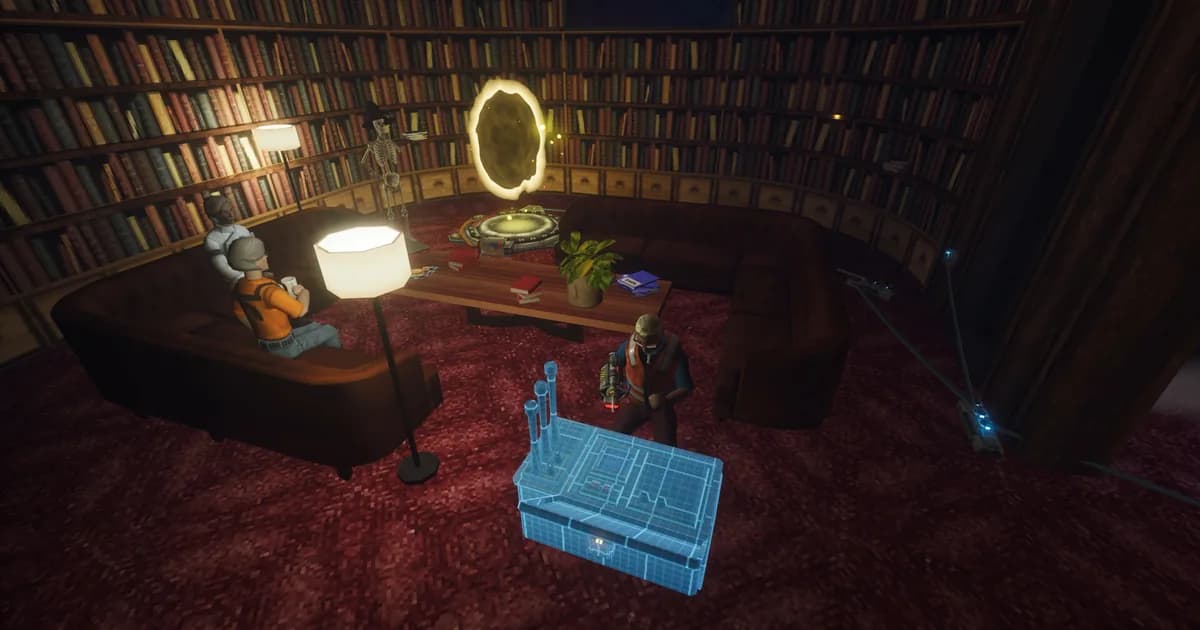
This Abiotic Factor beginner guide starts where the game leaves off: no instructions, just you inside the Cascade Research Facility where the experiments went wrong. You're a scientist. The lab is your workplace, and it's trying to kill you.
Sponsored

About the game
Abiotic Factor
Deep Field Games
The game doesn't give you a tutorial. It expects you to poke at things, read environmental cues, and figure out the progression at your own pace. That's the design. With 57,000+ Steam reviews at 95.8% Overwhelmingly Positive, the approach clearly works. This guide covers what new players actually need to know to get their footing without spoiling what's ahead; the Abiotic Factor complete guide hub is the next stop once you want the full facility map.
Updated 2026-10-05: Steam currently lists Abiotic Factor at a $34.99 price with a $27.99 sale, and current chemistry documentation identifies the Distillation Bench and Chemistry Bench as the two crafting stations.
TL;DR: Establish a base area before pushing into new zones, build basic crafting stations before you need them, and don't rush the chemistry system (it's mid-game). Co-op works best when players split roles: one handles base operations while others scout. The game rewards reading the environment over grinding a crafting list. You have 80+ hours, so slow down.
BESTPRICE: Want Abiotic Factor? These stores list it: Buy on Eneba → Buy on Loaded →
What is Abiotic Factor? (quick answer)
A co-op survival crafting game set in an underground research facility that suffered a catastrophic anomalous event. You're a scientist trying to survive in your own workplace, which is now overrun with creatures and threats you weren't equipped to deal with before your morning coffee. Play solo or with up to 5 others (1-6 players total). Available on PC at a $34.99 list price, currently $27.99 on Steam, with 80+ hours of content.
GODEEPER: The Cosmic Companions update added a deep chemistry system that unlocks mid-game, including distillation, weapon coatings, and throwable flasks. Full walkthrough: what the system produces and where to start →
Sponsored

Key takeaways
- Abiotic Factor doesn't give you a recipe list or waypoints. Read the environment to navigate.
- Establish a base area before pushing into unfamiliar zones.
- Chemistry is a mid-game system; don't prioritize it in hour one.
- Co-op supports 1-6 players across Online, LAN, and Cross-Platform.
- Role division makes the early game significantly less chaotic.
- The Cascade Research Facility escalates: early zones are manageable; deeper sections introduce more varied armed threats.
- 80+ hours of content means the game is not designed to be rushed.
Step-by-Step: What to Do First in the Cascade Research Facility
The game starts you inside the facility without clear direction. Here's what actually matters in the first session.
1. Find a stable base area: The first defensible room you find is probably not the best long-term location, but it's enough for now. You need somewhere to place crafting stations and store materials without losing everything to an encounter. A room with a single entrance you can monitor works for the initial setup.
2. Gather nearby before exploring far: New players frequently push into unexplored sections before their crafting tools can support it. The facility is large. Exhausting the materials near your starting zone before pushing out gives you more options when you encounter something unexpected further in.
3. Build your early crafting stations first: Every advanced system in Abiotic Factor builds on basic crafting infrastructure. Getting your workbenches placed early unlocks options that make exploration safer. The materials for the first crafting tier are near your starting point; the game doesn't ask you to go far for the initial setup.
4. Read the environment: Abiotic Factor uses the facility itself to direct you. Unread logs on terminals, equipment in specific states, anomalous objects in unusual places: these aren't decoration. They're navigation cues. Players who ignore these spend sessions stuck while players who read notes and examine terminals move forward naturally.
Don't expect the game to tell you when you've done enough preparation. You'll know when you can handle what's ahead because you'll stop dying to it.
Co-op setup and role division
Abiotic Factor's co-op runs Online, LAN, and Cross-Platform for 1-6 players on the same save file. The host starts a session; anyone who joins contributes to that save. When someone leaves mid-session, the progress stays.
Role division matters in the early game because the facility is large enough that a base operations player and an exploration player cover ground significantly faster than two people doing both things at once.
Two-player co-op: One person focuses on base crafting and infrastructure while the other explores. This split is effective from session one and stays useful until late-game when both players can safely handle new zones. The base player keeps crafting options expanding while the explorer brings back rare materials.
Four-to-six player groups: Base operations can take two players (one building, one organizing storage), while the rest explore in pairs. Running solo into unfamiliar zones is risky at any group size. Pair off for any area you haven't cleared before.
Communication helps but isn't mandatory. The co-op structure doesn't demand constant coordination. Knowing what your partner is handling stops you from duplicating effort. Even just agreeing on "you build, I scout" before a session changes how efficiently you progress.
Co-op exploration means having backup when you run into something like this mid-facility. Splitting up in an unfamiliar area leaves one player facing it alone.
Progression milestones to aim for
Abiotic Factor doesn't label its progression stages. These are the phases most players identify once they understand the system structure:
Early: survival basics. Basic crafting stations, reliable health sustain, a secure base area. This phase ends when you're not losing materials to random encounters and you've stabilized your starting zone.
Mid: facility expansion. Pushing into new facility sections, finding specialist materials, upgrading your tools. You've accumulated "weird science materials" without knowing what they're for. They're for chemistry, which becomes relevant here.
Mid-to-late: chemistry and companions. Once you reach Cascade Labs, the Distillation Bench turns materials into Distillations, and the Chemistry Bench combines them into Coatings, Flasks, and Tinctures. Peccary taming uses a Pheromone Flask followed by three Anteverse Wheat, Nachos, or Bread. This is a substantial system with its own learning curve; treat it as a separate game layer that starts mid-run, not a day-one priority.
Late: portal worlds and deep facility. Beyond the main Cascade Research Facility zones, portal worlds open. The Hydroplant connects to Voussoir through the Neutrino Detector, and a Neutrino Mapper can activate the Dunkeltaler Forest portal after Voussoir. Later sections introduce more varied armed threats.
None of these phases have time limits. Spending 25 hours in the early phase is a valid way to play. The game supports every pace.
GODEEPER: Peccary companions are a mid-game unlock with a survival mechanic that changes how you play the field. How Peccary taming works, what DBNO means, and the 30-second revival window →
Common mistakes in the first 10 hours
Ignoring weird science materials. Anomalous drops and facility loot include items that look identical to standard materials but have specific uses later. Don't discard, sell, or set these aside. They go into the chemistry system when you get there. Treating them as junk is the most common storage mistake.
Pushing too far too fast. The facility escalates in difficulty. Early zones are workable from the start. Later zones are not. New players who push exploration before establishing crafting tools and a stable base find themselves in areas they can't clear. Overextension causes more failed sessions than any enemy type.
Splitting up in unfamiliar zones. In co-op, dividing to cover more ground sounds efficient. In practice, if one player hits something they can't handle and goes down, the other player is too far away to help. Explore unfamiliar zones together. Split up after you've confirmed a zone is clear.
Skipping environmental reading. The facility gives you navigation cues through its own design: notes, terminal logs, anomalous objects. Players who don't read these get stuck because they missed the direction the game gave them two rooms ago. Slow down and look at things.
Waiting too long on chemistry. The weird science materials accumulate over time. The Distillation Bench and Chemistry Bench are mid-game content, not optional end-game content. Starting them late means missing mid-game buffs and the Peccary taming system. When both benches are available and you have a stockpile of weird science materials, start running small distillation batches.
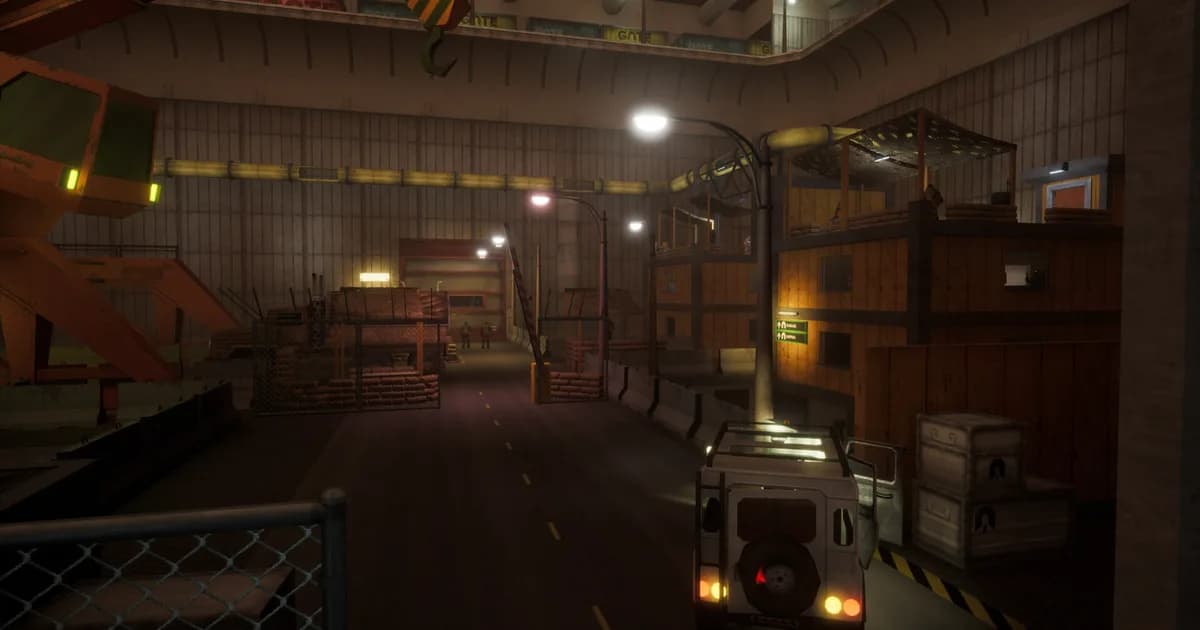
Pushing into unfamiliar territory before you're ready puts you face-to-face with encounters like this one, faster and more aggressive than what the early zones threw at you.
Tips for 1-6 players
Keep storage organized by material type from the start. Abiotic Factor's crafting inventory grows complex quickly. Five organized containers are much easier to manage than one cluttered one.
In co-op, communicate which sections each player is responsible for. This applies to both zones you're exploring and crafting responsibilities. Explicit coordination beats parallel improvisation every session.
The game expects experimentation. This applies to the whole facility, not just chemistry. Unfamiliar items are worth examining. Rooms that look significant usually are. The game's reward for curiosity is finding things most players miss.
The facility has multiple connected areas: the main Cascade Research Facility, the Hydroplant, the Torii Home World, and others. Each introduces new threats and new materials. Don't treat the starting zone as the whole game.
80+ hours is a realistic play estimate. The game is not designed to sprint to an ending. Enjoy the facility.
Related Reading
- Abiotic Factor Chemistry Guide: Cosmic Companions 2026: the mid-game system explained in full, covering distillation, tinctures, weapon coatings, throwable flasks, and the Portal Flask formula change.
- Abiotic Factor Pets Guide: Peccaries, DBNO, and Companions: how Peccary taming works after the Cosmic Companions update, the DBNO 30-second window, and what changed in Hotfix v1.3.0.26036.
- Abiotic Factor Complete Guide Hub: a map of the facility, systems, and progression guides.
- Abiotic Factor Portal Worlds Guide: what changes when you leave the Cascade facility for a portal world.
- Abiotic Factor Tarasque Boss Guide: preparation for one of the later creature encounters.
- Abiotic Factor Entropic Break and Mod Support: the current expansion and official mod-support context.
- Subnautica 2 Beginner Guide 2026: another co-op survival game with a deep exploration loop; good comparison for understanding how Abiotic Factor's system depth compares.
- Fields of Mistria Beginner Guide: Your First Season: Fields of Mistria beginner guide: farm setup, starting tools, and the exact order to unlock your pickaxe, axe,....
- Voidling Bound Beginner Guide: 6 Mistakes to Avoid: Voidling Bound beginner guide: start with Kwipeck, put your first point in Vitality, and breed before you splice.....
- Palworld Guide 2026: 287 Pals, Bosses, Bases, and Combat: another co-op survival game with base building, if you want a second one to play alongside Abiotic Factor.
References
- Abiotic Factor on Steam: official store page, patch notes, and Cosmic Companions update details
- Chemistry, Official Abiotic Factor Wiki: the Distillation Bench, Chemistry Bench, and resulting items
- Pheromone Flask, Official Abiotic Factor Wiki: the confirmed Peccary taming item and food requirement
- Hydroplant, Official Abiotic Factor Wiki: the Voussoir and Dunkeltaler Forest portal route
- GATE-101, Official Abiotic Factor Wiki: the 1-6 player game description
- Cosmic Companions status report, official Steam news: Pets 2.0 and chemistry roadmap context
- r/AbioticFactor: community discussions, progression advice, and new player help threads
- Abiotic Factor Steam key on Eneba: Global key, compare with the Steam price.
- Abiotic Factor Steam key on Loaded: compare the price with Steam before you buy.
Frequently Asked Questions
Is Abiotic Factor good for solo players? Yes. The game scales for 1-6 players and works well solo. You set your own pace, handle every system yourself, and the facility atmosphere is more intense without teammates. Most solo players log 80+ hours.
How do you start a co-op session? Online, LAN, and Cross-Platform co-op for up to 6 players. Host starts a session, others join. Everyone shares the same save file. No extra setup beyond a Steam connection.
What should I do first? Establish a base area, gather nearby materials, build your early crafting stations. Don't push into new zones before you have tools to handle what you'll find there. Read terminal logs and examine anomalous objects; those are your navigation cues.
When does the chemistry system unlock? Chemistry becomes available after reaching Cascade Labs. It uses a Distillation Bench to make Distillations and a Chemistry Bench to combine them into Coatings, Flasks, and Tinctures. Weird science materials accumulate over time, so get basic survival working first.
How many players can play co-op? 1 to 6. Online, LAN, and Cross-Platform all supported. Same save file for solo and co-op.
Is Abiotic Factor worth buying? 57,000+ Steam reviews at 95.8% Overwhelmingly Positive. The list price is $34.99, currently $27.99 on Steam, for 80+ hours of content and 1-6 player co-op. One of the highest-rated survival games available.
What enemies does the game have? Anomalous creatures in early zones, with more varied armed threats deeper in. The difficulty escalates deliberately as you progress.
Was this guide helpful?
About the author

Systems & Economy Desk
GameBrief's byline for roguelikes, strategy and simulation. Reads patch notes, wiki tables and Steam stats and puts the numbers on the page.
- Roguelikes, strategy and simulation
- Builds, progression and economy
- Sources listed per article
Keep reading
Abiotic Factor Chemistry Guide: Tinctures, Flasks 2026
General · 12 min
Abiotic Factor Pets: All 25 Pets, Mutations, Best Picks
General · 19 min
Abiotic Factor Tarasque Boss Guide: Weak Points, Drops
General · 11 min
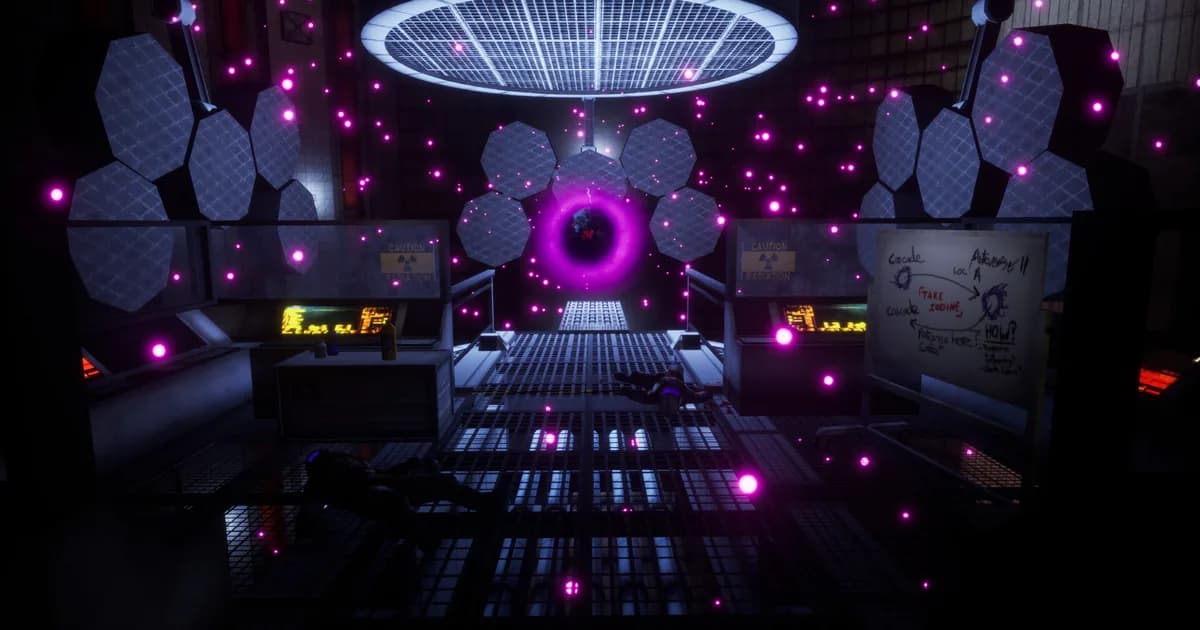
Abiotic Factor Portal Worlds Guide: All 23 Explained
General · 11 min
Abiotic Factor Complete Guide: Portals, Pets, Tarasque 2026
General · 17 min
Abiotic Factor Entropic Break Delayed to Q1 2027 DLC
General · 3 min
Sponsored
Disclaimer
This article is published for informational and entertainment purposes. It does not constitute professional financial, legal, or technical advice. Game performance, online services, patch schedules, and store listings change. Verify critical details (pricing, system requirements, regional availability) with publishers and storefronts before you buy. Affiliate links, where present, help support our editorial work and are labelled in our affiliate disclosure.
Comments
Loading comments…