
GameBrief · General
Abiotic Factor Complete Guide: Portals, Pets, Tarasque 2026
Abiotic Factor complete guide: beginner tips, all 23 portal worlds, chemistry and pets systems explained, plus the Tarasque boss fight strategy.
Reviewing
Abiotic Factor
Deep Field Games
This Abiotic Factor complete guide pulls together everything GameBrief has published about the game into one hub: what it actually is, where to start, how the chemistry and companion systems work, every named Portal World, and how to beat the Tarasque. Deep Field Games' co-op survival crafting game sits at Overwhelmingly Positive across more than 58,000 Steam reviews, and the Cosmic Companions update added enough new systems that even players with 80+ hours already logged have new things to figure out.
The current build covers 1-6 player co-op, a mid-game chemistry crafting system, Peccary taming and day-to-day pet care, 23 named Portal Worlds, and the Containment Block Anning fight against the Tarasque.
TL;DR: Abiotic Factor is a $34.99 co-op survival crafting game for 1-6 players, set in the underground GATE research facility, and it currently sits at Overwhelmingly Positive across 58,000+ Steam reviews. The Cosmic Companions update added a chemistry system (tinctures, weapon coatings, throwable flasks), Peccary taming plus the DBNO pet-revival mechanic, and a new Portal World, on top of the 23 that already existed. The Tarasque, a heavily armored boss weak to fire and electrical damage, is the main facility's signature fight. New players should start with the beginner guide, then branch out into whichever system interests them.
Key takeaways
- Developer: Deep Field Games. Publisher: Playstack. Full release: July 22, 2025. Price: $34.99 on Steam (appid 427410).
- Overwhelmingly Positive across 58,000+ Steam reviews. 1-6 player co-op across Online, LAN, and Cross-Platform, all on the same save file whether you're playing solo or with a group.
- 80+ hours of content, and the game gives you no waypoints or recipe list. Navigation comes from reading terminal logs, room states, and anomalous objects.
- The Cosmic Companions update added a chemistry system (distillation into tinctures, weapon coatings, and throwable flasks), Peccary taming, the DBNO pet-revival mechanic, and the M.O.P. 9000 cleaning tool.
- 23 named Portal Worlds (also called Anteverses) exist outside the main facility, each with distinct enemies and materials. Natural resources inside them reset weekly; the main facility never resets at all.
- The Tarasque, found in Containment Block Anning, is the main facility's signature boss fight: weak to fire and electrical damage, resistant to bullets and explosives, with three real weak points.
- Chemistry (the crafting system) and companions (the day-to-day pet care system) are two separate guides on this site. See the "Pets and companions" section below for exactly how they differ.
What is Abiotic Factor?
Abiotic Factor is a co-op survival crafting game where you play a scientist trapped inside the underground GATE research facility after an anomalous event wrecks the place. You can play solo or with up to 5 others, gathering materials, building a base, and pushing deeper into the facility and its Portal Worlds at whatever pace you want. There's no tutorial. The game expects you to read the environment and work things out for yourself, and with 58,000+ mostly glowing reviews behind it, that approach has clearly landed with players.
Developer Deep Field and publisher Playstack announced the game's first paid DLC, Entropic Break, at the PC Gaming Show 2026. It's confirmed to move the setting out of the underground facility entirely, into a tropical GATE Leaf Test Facility with surrounding islands, open-ocean and submarine exploration, a new enemy faction called the Fanatics, and a new Flesh Dimension portal world, alongside a free base-game update shipping alongside it. It's targeting a Fall 2026 release on Steam, PS5, and Xbox Series X|S, but no specific date has been announced yet, so treat anything more detailed than that as speculation.
Beginner tips
New players walk into the Cascade Research Facility with no direction and no recipe list. The beginner guide covers what actually matters in your first few sessions: find a stable, single-entrance room before you do anything else, gather what's nearby before pushing into unexplored sections, and get your early crafting stations placed as soon as you can. The facility itself tells you where to go next, through terminal logs, room states, and anomalous objects left in odd places. Players who ignore those cues are the ones who get stuck.
Co-op works best with a role split: one player handles base operations while the other explores, and that division stays useful well past the early game. In four-to-six player groups, base operations can take two people while the rest explore in pairs. Splitting up solo into unfamiliar zones is the single most common way a co-op session goes sideways, since a player who goes down alone has nobody nearby to help.
The guide also flags chemistry as a mid-game system specifically so new players don't feel like they're behind for not touching it in hour one. Weird science materials pile up naturally through normal exploration; hold onto them instead of scrapping them, because they're the whole foundation of the chemistry system covered later in this hub.
Since the game itself never labels its own progression, the beginner guide breaks the run into rough phases instead. Early on, it's basic crafting stations, reliable health sustain, and a secure base area; that phase ends once you've stopped losing materials to random encounters. Mid-game is facility expansion into new sections and specialist materials, which is also when the weird science materials you've been stockpiling start to matter. Mid-to-late is chemistry and companions, a big enough system that it's worth treating as its own layer rather than a day-one priority. Late-game opens up the portal worlds and deeper facility sections, where scientist enemies with laser weapons start showing up. None of these phases have a time limit; spending 25 hours in the early phase is a completely valid way to play.
The facility itself isn't one contiguous space, either. Beyond the main Cascade Research Facility, connected areas like the Hydroplant and the Torii Home World each introduce their own threats and materials, and the game doesn't flag when you're crossing from one into the next. Treating the starting zone as the whole game is one of the more common ways new players undersell how much content is actually here.
- Abiotic Factor Beginner Guide: Tips and First Steps 2026: first steps in the Cascade Research Facility, co-op role division for 1-6 players, and the progression milestones that actually matter.
Portal worlds guide
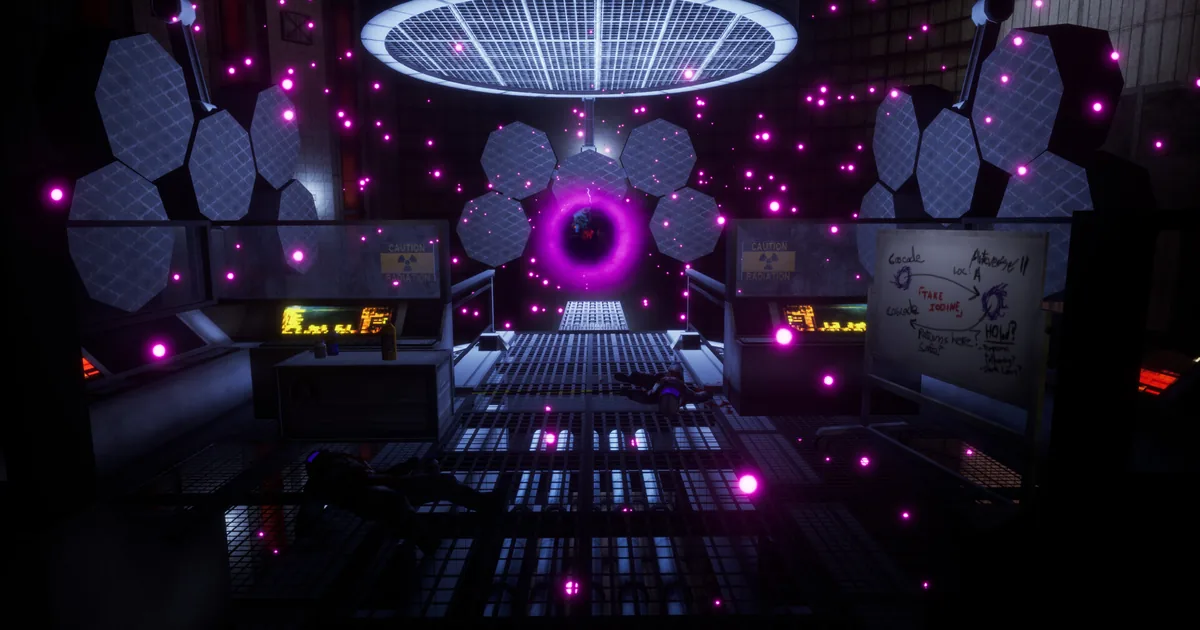
Once you've got a foothold in the main facility, the next layer of the game opens up: Portal Worlds, self-contained dimensions the game's own internal terminology calls Anteverses. There are 23 named ones as of the current build, reached through portals scattered around the facility, and each has its own enemies, materials, and in some cases its own boss fight.
The mechanical detail that matters most: natural resources inside Portal Worlds (ore deposits, plants, harvestable nodes) reset on a timer, currently midnight between Tuesday and Wednesday, and again between Saturday and Sunday. Anything you've placed yourself, structures, stored items, base components, doesn't reset. The main Cascade Facility is the odd one out here: it never resets at all, which is exactly why Portal Worlds function as the game's renewable-resource layer instead of the facility proper. Treat them as a farming rotation, not a one-time loot run, and time your visits for just after a reset window rather than right before one.
Albatross is worth calling out specifically: it hosts a major boss encounter, IS-0117, nicknamed the Wayseeker, a multi-phase fight entirely separate from the Tarasque back in the main facility. The newest addition, Dunkeltaler Forest, arrived with the Cosmic Companions update, accessed through a portal inside the Hydroplant near the path to Robotics, and requires a Neutrino Mapper crafted from Voussoir materials before the portal activates. It also ties thematically into the Alpen Signal Observatorium, a crossover reference to the indie horror game Voices of the Void.
Not every Portal World unlocks the same way, and that's part of why the system feels underexplained the first time you run into it. Some just require finding the physical portal during normal exploration. Others are gated behind specific story progress or higher-tier equipment, like an upgraded Keypad Hacker. North Pole is a good example of how varied the roster actually is: it's a snowbound world that leans into cold-resistance and shelter mechanics rather than the combat-first threats some of the other 22 worlds emphasize, so don't judge a Portal World's difficulty from its aesthetic alone.
The Cosmic Companions update didn't just add Dunkeltaler Forest in isolation. The same patch brought the chemistry system covered in the next section, a Pets 2.0 overhaul supporting multi-pet carrying and tameable Peccaries, more than 100 new items, new Blunt-category weapons, and new mobility tools, so a returning player checking patch notes for the first time in a while has more to catch up on than just one new zone.
- Abiotic Factor Portal Worlds Guide: All 23 Explained: the full named list, how the weekly resource reset works, and what makes Dunkeltaler Forest different from the other 22.
Pets and companions
Two guides on this site cover companion-related systems, and it's worth being explicit about what each one actually handles, since they sound like they overlap but don't.
The chemistry guide covers the crafting system the Cosmic Companions update introduced: distillation, which converts weird science materials into intermediate components, and the three output categories those distillations feed into: tinctures (buffs for you and your allies), weapon coatings (30 to 60 hits of elemental effects like poison, burning, or debuffs layered onto existing weapons), and throwable flasks (area effects, including the Portal Flask, whose formula changed in Hotfix v1.3.0.26036). Peccary taming is unlocked through this system once you've advanced the distillation loop far enough, but the chemistry guide treats that unlock as one milestone among several, not its main focus.
The pets guide picks up from there: it's about what happens once you actually have a tamed Peccary, not how you get one. That means the DBNO (Down But Not Out) mechanic, where all pets now enter a downed state instead of dying instantly when they take lethal damage, with non-companion pets getting a 30-second window to be revived before permanent death (and reviving at 25% health rather than the pre-hotfix 50%). It also covers the Companion Pet Slot versus pet bed distinction: a companion pet follows you actively in the field, while non-companion pets stay at base in a bed and still produce resources passively. Precious pet variants get one specific protection worth knowing: they're immune to scientist laser attacks, though standard laser weapons equipped by players can still hurt them.
There's also a practical, day-to-day side to keeping a Peccary alive that has nothing to do with crafting: certain variants produce harvestable resources on a timer, using a press-and-hold interaction since Hotfix v1.3.0.26036 (it used to be a simple tap), and pets now actively avoid fire, lava, and campfire pits rather than wandering into them. The guide's advice boils down to checking your companion's downed state during lulls in combat, not sending a freshly-revived pet at 25% health straight back into the same fight, and swapping to a bed-kept backup Peccary before pushing into laser-heavy sections if your active companion is running low.
In short: read the chemistry guide to understand how you unlock and craft with the system. Read the pets guide to understand what to actually do once a Peccary is following you around.
- Abiotic Factor Chemistry Guide: Tinctures, Flasks 2026: the full distillation workflow, where to farm the three core reagents, and the Portal Flask formula change.
- Abiotic Factor Pets Guide: Peccaries, DBNO, and Companions: the DBNO revival window, Companion Pet Slot versus pet bed, and keeping pets safe around lasers and environmental hazards.
Tarasque boss guide
The Tarasque is the main facility's signature fight, and it looks unwinnable the first time you see its HP bar. It lives in Containment Block Anning, inside the Containment area of Cascade Laboratories, and doesn't wander outside that block, so you always know exactly where the fight starts.
Most of its body is heavily armored, which is why standard hits against its torso or limbs barely register. The three real damage windows are its head, the tentacles on its chest, and its back flaps, and that last one only opens once you've hit the chest tentacles enough to force it to kneel. Damage type matters as much as targeting: the Tarasque is weak to fire and electrical damage, and resistant to bullet and explosive damage, so a loadout built entirely around firearms will grind through this fight far slower than one built around fire or shock weapons.
Its two attacks are a 100-damage melee swing that staggers on hit, and an explosive Smash dealing 100 to 250 damage, wide enough that a bad roll alone can take you from full health to critical. Heavy armor or a high Fortitude stat matters more solo than in a group, since there's nobody else to eat a hit while you reposition. Winning gets you a guaranteed Tarasque Ichor and Tarasque Skull every time, and the fight respawns 7 in-game days later. One thing to watch: leaving Containment Block Anning and coming back resets the fight's HP completely, so a mid-fight retreat is a restart, not a pause button.
Two practical habits separate a clean win from a wipe here. First, swap to fire or electrical gear before you walk into Containment Block Anning, not mid-fight when a weapon swap costs you an opening. Second, track the kneel state rather than just the HP bar: the moment it kneels is your cue to shift targeting to the back flaps, and watching only the health number means you can miss that window entirely. In a group, tamed Pests or Electro-Pests make solid aggro decoys, since they won't meaningfully damage the Tarasque but pulling its attention for even a few seconds is often worth more than the marginal damage a player could land in that window.
- Abiotic Factor Tarasque Boss Guide: Weak Points, Drops: attack patterns, the exact three weak points, and the loadout that actually works against it.
All Abiotic Factor guides
Every Abiotic Factor guide currently live on GameBrief, in one place:
- Abiotic Factor Beginner Guide: Tips and First Steps 2026: first steps, co-op role division, and progression milestones for new players.
- Abiotic Factor Portal Worlds Guide: All 23 Explained: the full named list of Portal Worlds, the weekly resource reset, and the newest addition, Dunkeltaler Forest.
- Abiotic Factor Chemistry Guide: Tinctures, Flasks 2026: the distillation crafting system added in Cosmic Companions, from raw materials to finished tinctures, coatings, and flasks.
- Abiotic Factor Pets Guide: Peccaries, DBNO, and Companions: how Peccary care works after taming, the DBNO revival mechanic, and keeping pets safe in the field.
- Abiotic Factor Tarasque Boss Guide: Weak Points, Drops: the main facility's signature boss fight, its weak points, and what it drops.
Related Reading
- All Abiotic Factor coverage: every Abiotic Factor guide, review, and news post published on GameBrief, in one index.
- Abiotic Factor Beginner Guide: Tips and First Steps 2026: first steps, co-op setup, and the mistakes that cost new players their first ten hours.
- Abiotic Factor Portal Worlds Guide: All 23 Explained: every named Portal World, how the weekly resource reset works, and the Albatross boss fight.
- Abiotic Factor Chemistry Guide: Tinctures, Flasks 2026: distillation, tinctures, weapon coatings, and throwable flasks explained end to end.
- Abiotic Factor Pets Guide: Peccaries, DBNO, and Companions: the DBNO mechanic, Companion Pet Slot versus pet bed, and Precious pet variants.
- Abiotic Factor Tarasque Boss Guide: Weak Points, Drops: location, attack patterns, weak points, and drops for the main facility's boss fight.
References
- Abiotic Factor on Steam: official store page, current price, and reviews
- Cosmic Companions Update, Official Steam Announcement: patch notes covering chemistry, Pets 2.0, and the M.O.P. 9000
- Portal Worlds - Official Abiotic Factor Wiki: the wiki's category page for every Portal World
- r/AbioticFactor: community discussions, progression advice, and new player help threads
Frequently Asked Questions
What is Abiotic Factor? A co-op survival crafting game where you play a scientist trapped in the underground GATE research facility after an anomalous event. Play solo or with up to 5 others, gather materials, build a base, and push into the facility's Portal Worlds at your own pace.
How many players can play Abiotic Factor? 1 to 6 players across Online, LAN, and Cross-Platform co-op. Everyone shares the same save file, so you can switch between solo and co-op sessions without losing progress.
How many Portal Worlds are in Abiotic Factor? 23 named Portal Worlds (also called Anteverses) as of the current build, each with its own enemies and materials. Natural resources inside them reset on a weekly timer; the main facility itself never resets.
What's the difference between the chemistry guide and the pets guide? The chemistry guide covers the crafting system: distillation, tinctures, weapon coatings, and flasks. The pets guide covers what happens after you tame a Peccary through that system: the DBNO revival mechanic, companion slots, and field safety.
Where do you find the Tarasque and what does it drop? Containment Block Anning, inside Cascade Laboratories. It's weak to fire and electrical damage, and drops Tarasque Ichor and a Tarasque Skull at a 100% rate, respawning 7 in-game days after it's killed.
When does the chemistry system unlock in Abiotic Factor? Mid-game, once you've built a chemistry workstation from lab section materials and reached Chemistry skill tier 2. It's not a day-one system; get basic survival and a stable base going first.
Is Abiotic Factor worth playing in 2026? Yes. It sits at Overwhelmingly Positive across 58,000+ Steam reviews, and the Cosmic Companions update added a chemistry system, Peccary taming, and a new Portal World on top of an already substantial 80-hour survival game. $34.99 on Steam.
About the author

Senior Critic & Analyst
Former game data analyst turned critic with 11 years covering indie and mid-tier games. Based in Austin. Runs spreadsheets on games most people just play.
- 11 years games criticism
- Former game economy analyst
- Roguelike and strategy specialist
Keep reading

Disclaimer
This article is published for informational and entertainment purposes. It does not constitute professional financial, legal, or technical advice. Game performance, online services, patch schedules, and store listings change. Verify critical details (pricing, system requirements, regional availability) with publishers and storefronts before you buy. Affiliate links, where present, help support our editorial work and are labelled in our affiliate disclosure.
Comments
Loading comments…