
GameBrief · Guides
Outbound Co-op Guide: 4-Player Roles & Van Builds 2026

Reviewing
Outbound
Square Glade Games · Square Glade Games
This outbound co-op guide is for the group that piled into a co-op session, watched one person build while three others gathered, and ended up with a van full of raw materials and no workstation to process them. That breakdown is the most common failure mode in Outbound co-op, and it is entirely fixable with a five-minute conversation before you start.
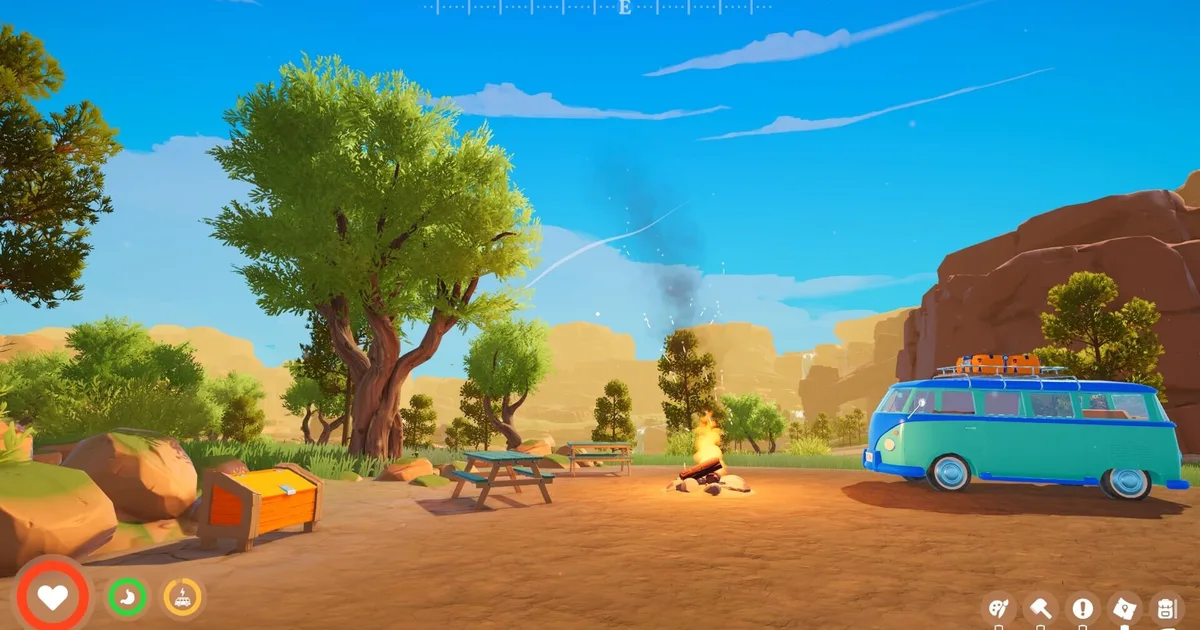
Outbound, from Square Glade Games, launched May 11, 2026 on Steam for $24.99. The core concept: 1 to 4 players share one electric camper van, one battery, one build path, one dog, and one set of decisions about where to go next. No combat. No enemies. The tension is the shared battery meter and the weight of every module you add to the van.
TL;DR: Outbound co-op (1-4 players) shares one van, one battery, and one build path, so the failure mode is everyone gathering while no one builds the workstations to process it. Split roles before you start: one builder/electrician managing modules and the battery, the rest gathering and scouting. Watch van weight (every module costs energy) and treat the shared battery meter as the real clock. Solo works but loses the role-division that makes the system click.
Outbound co-op guide? (quick answer)
Outbound co-op works best when one player owns the van and battery decisions while the others gather, scout, and report blueprint choices. Agree on roles before the world starts, compare every signal-tower draw, and keep the shared battery and van weight visible to the whole group.
Outbound current status: September 2026
The current Steam US snapshot lists Outbound at $24.99 with a Mostly Positive rating across 1,770 total reviews. It launched on May 11, 2026, supports online co-op for up to four players, and lists 32 achievements. The official August 11 Patch 1.1.8 notes fixes for empty Download Terminals and multiplayer stability; an August 18 post says the Wildlife Update is in development rather than giving a release date.
Sources: Outbound on Steam, the official Steam community news feed, the Outbound complete guide hub, and the Outbound van build guide.
Step-by-Step: set up an Outbound co-op world
1. Choose the host: use the player with the most stable connection and make sure everyone can join before committing to the world.
2. Assign the van owner: give one player responsibility for modules, weight, and battery calls while the others gather and scout.
3. Compare blueprint draws: pause at each signal tower, list each player's options, and agree on the upgrade that helps the whole van.
4. Call energy breaks: stop non-essential workstation use before the shared battery reaches a crisis, then regroup before the next route segment.
Key takeaways
- All players share one van, one battery, one build. Every decision is a group decision in this outbound co-op guide
- Best 4-player split: 2 gatherers, 1 builder, 1 scout
- Battery drain increases with simultaneous workstation use. Assign one battery monitor
- Blueprint draws at signal towers are different per player. Compare before accepting
- Van weight directly affects handling speed and battery drain on rough terrain
- No combat, no enemies. Difficulty is resource and energy management
- One dog companion from Paws and Whiskers Lodge fetches items and carries supplies
How the Outbound co-op guide works: one van, four decisions
Every outbound co-op guide starts in the same place: everything is shared. The van is shared. The battery is shared. The build is shared. The travel route is shared. Outbound does not give each player a private base or a separate progression track. You are collaborating on one object moving through one world.
That shared architecture is what makes co-op different from solo. In solo, every decision you make is yours alone to evaluate. In co-op, the decision to add a greenhouse shelf to the van increases weight for everyone, drains battery for everyone, and benefits everyone. This outbound co-op guide is built around making those shared decisions efficiently, and identifying what order to make them in.
Weight affects handling on rough terrain and battery consumption. Heavier van equals slower mountain traversal and higher drain per kilometer. Every workstation, storage unit, and decorative module contributes. This matters most before mountain segments and when the group is pushing for a new signal tower in a biome with limited solar coverage.
The one dog companion, obtained from the Paws and Whiskers Lodge, fetches items and carries supplies on resource runs. It is not a replacement for gatherers but it takes the edge off single-player gathering when the team splits roles aggressively.
Role splitting in Outbound co-op
The outbound co-op guide splits the 4-player game into four functional roles. These are not locked in by the game. The game does not assign them. You have to agree on them yourself, which is where most groups stumble.
Gatherer role (1-2 players)
Gatherers run resource nodes, collect raw materials, and return them to the van. In a 4-player group, use two gatherers in the early and mid game when raw materials are the bottleneck. Gatherers need to communicate which nodes they are running to avoid doubling up on the same source. Two players hitting the same node is two players worth of time wasted.
Builder role (1 player)
One player stays at the van, processes materials through workstations, and constructs new modules. This is not a glamorous role. It is also the most important one. A group without a dedicated builder accumulates raw materials it cannot use. The builder is also the person who knows the van's current weight budget and can flag when the next module proposal puts the group over a comfortable handling threshold.
Scout role (1 player)
One player advances toward signal towers, marks blueprints, and identifies terrain for the next route segment. The scout is the group's forward awareness. Before a biome transition, the scout should report back on: what energy sources are available in the next zone, which terrain sections will be difficult for a loaded van (steep slopes, tight passes), and which signal tower blueprint options were present.
Best 4-player split for outbound co-op
2 gatherers, 1 builder, 1 scout. Adjust the split based on the current phase. Early game is resource-bottlenecked: shift to 3 gatherers with the scout pulling double duty. Mid-game when you have materials stockpiled: shift to 2 builders processing the backlog.
For 3-player groups: 1 gatherer, 1 builder, 1 multi-role. For 2-player groups: both gather until enough materials for the first module, then split into dedicated builder and dedicated gatherer.
 Caption: Four-player session in Outbound with solar panels deployed. The builder stays near the van while gatherers work the surrounding area.
GODEEPER: For a full overview of Outbound's mechanics and what makes it worth playing, see the Outbound review 2026.
Battery drain: the outbound co-op guide approach to shared power
Battery management is where outbound co-op guide advice matters most. Sessions unravel here. Solo play lets you pace workstation use naturally. In co-op, four players each using a workstation simultaneously can drain a well-charged battery in minutes.
Assign a battery monitor. One player, usually the builder, watches the battery meter and calls warnings at specific thresholds. A reasonable system: yellow warning at 40%, stop all non-essential workstation use at 20%. The group needs to know these thresholds before they are relevant.
Energy source planning before biome transitions. Three energy sources in Outbound: solar panels under open sky, wind turbines at elevation, and water wheels near running water. Before entering a new biome, agree on which source you will rely on. Sparse open-sky biomes support solar. Mountain terrain favors wind turbines if you have them built. A biome transition without planning your energy source is a biome transition you will leave prematurely when the battery dies.
Do not run all workstations at night. Solar panels do not charge after dark. Running full workstation capacity at night against a battery that is not recovering is how groups end the session with a dead van at a bad location.
The outbound co-op guide rule that applies here: treat the battery like a shared resource that everyone depletes and everyone is responsible for. One player treating it as someone else's problem will strand the group.
Blueprint coordination in this outbound co-op guide
Blueprint draws are the most interesting co-op mechanic in Outbound. No outbound co-op guide can skip this section. At each signal tower, every player receives a different set of blueprint options. No two players get the same draw. This prevents groups from min-maxing into identical upgrade paths and forces genuine coordination.
The process that works: before any player accepts a blueprint, everyone lists what they were offered. Then discuss. You are looking for two things: which upgrades reduce weight or improve energy efficiency (highest priority in almost every scenario), and which upgrades are redundant.
Redundancy is the common mistake in this outbound co-op guide context. Two players both taking decoration or aesthetic blueprints in the same session means neither player spent their draw on something functional. One aesthetic upgrade per session is fine. Two is waste.
 Caption: The signal tower blueprint screen in Outbound. Each player's column shows a different set of options, requiring group discussion before anyone accepts.
Blueprint priority in co-op:
- Weight reduction or energy efficiency upgrades: take immediately, these scale for the whole game
- Processing speed or fabrication upgrades: take in the mid-game when you have a builder role established
- Storage upgrades: take when you have a gatherer surplus and nowhere to put materials
- Aesthetic or comfort upgrades: take only after functional priorities are satisfied
The scout role player often sees signal towers before others. They should never accept blueprints alone without reporting options to the group first.
GODEEPER: If you're new to Outbound's energy and resource systems, start with the Outbound Tips Guide: First Hours, Van Setup, and Energy, which covers the solo mechanics before you stack co-op complexity on top.
Van weight decisions as a group
Every module added to the van has weight. This outbound co-op guide treats weight as a resource, not just a side effect of building.
The question in the outbound co-op guide comes up most at the greenhouse shelf decision. Greenhouse gives food security, which matters for long sessions in resource-sparse biomes. It also adds significant weight. The correct answer depends entirely on your planned route. If the next three biome segments are mountain terrain, adding greenhouse before that run makes the traversal slower and more expensive on battery. If the next segment is flat with good solar, add it now.
Outbound co-op guide rule for weight decisions: before adding any module heavier than a storage unit, the builder announces the proposed addition and asks for route objections. This takes thirty seconds and prevents the frustrating situation where the group realizes mid-mountain that the van is handling like it is full of bricks because someone added three workstations without checking the slope profile.
Heavy van is specifically bad for mountain terrain in Outbound. It is not just slower, it drains more battery per meter of elevation gain. On a mountain segment without wind turbines built, a heavy van can require turning back before reaching the next signal tower.
For more on Outbound's full mechanical picture, the Outbound launch feature covers what Square Glade Games built and why it works as a co-op framework. This outbound co-op guide focuses on the multiplayer layer; that article covers the solo experience and design context.
Frequently asked questions
How many players can play Outbound co-op? Outbound supports 1 to 4 players in co-op. All players share one electric camper van, one battery, and one build path. This outbound co-op guide recommends a minimum of 2 players to make role splitting effective.
What is the best role split in Outbound co-op? For 4 players, use: 2 gatherers, 1 builder, 1 scout. This outbound co-op guide uses this as the default split because it covers all phases of the progression cycle simultaneously without bottlenecking any single task.
How does battery drain work in Outbound co-op? Multiple players using workstations simultaneously drains the shared battery faster than solo play. This outbound co-op guide recommends assigning one player to monitor battery level and calling low-power warnings before the base goes dark.
How do blueprints work in Outbound co-op? At each signal tower, different players receive different blueprint options. Each player gets a unique draw. This outbound co-op guide recommends comparing notes before accepting offers and prioritizing weight-reduction and energy-efficiency upgrades first.
Does van weight matter in Outbound co-op? Yes. Every workstation added increases van weight, which slows handling on rough terrain and raises battery drain. The outbound co-op guide recommends group discussion before adding heavy modules, especially before mountain route segments.
What platforms is Outbound on? Outbound launched May 11, 2026 on PC and Xbox Series X|S, with PS5 and Switch versions releasing May 14, 2026. Price is $25.
Is there combat in Outbound? No. Outbound has no enemies and no combat. Tension comes from energy and resource management. This outbound co-op guide is built entirely around those systems.
Related Reading
-
Outbound Release Date: Launched May 11, 2026, 3 Days Early: Outbound release date moved to May 11, three days early. The co-op van-life game launched at 7.8 and.
-
Outbound Van Build Guide: Module Order and Weight Budget: Outbound van build guide: which modules to build first, weight budgets per stage, and how.
-
Outbound Beginner Tips: 10 Things to Do in Hour One: Outbound beginner tips cover van selection, the 20-item sprint cap, Homing Boots, and signal tower.
-
Outbound Energy Guide: Solar, Wind, and Battery Setup: Outbound energy guide: which two sources to pair, when to swap, and the sequencing rule.
-
Subnautica 2 Base Building Guide: Location and Setup: Subnautica 2 base building guide: where to build, module priority order, hull integrity thresholds, power.
References
- Outbound on Steam
- Square Glade Games
- Outbound tips guide
- Outbound complete guide hub: van builds, base locations, energy, co-op, and survival tips
Was this guide helpful?
About the author

Senior Critic & Analyst
Former game data analyst turned critic with 11 years covering indie and mid-tier games. Based in Austin. Runs spreadsheets on games most people just play.
- 11 years games criticism
- Former game economy analyst
- Roguelike and strategy specialist
Keep reading




Disclaimer
This article is published for informational and entertainment purposes. It does not constitute professional financial, legal, or technical advice. Game performance, online services, patch schedules, and store listings change. Verify critical details (pricing, system requirements, regional availability) with publishers and storefronts before you buy. Affiliate links, where present, help support our editorial work and are labelled in our affiliate disclosure.
Comments
Loading comments…