
GameBrief · General
Outbound Review: Van Life Co-op That Actually Delivers
Outbound review: Square Glade's $24.99 van-life co-op makes shared base building, energy management, and biome exploration work for groups of up to four.

Reviewing
Outbound
Square Glade Games · Square Glade Games
Score
Reviewed build: 1.0
Pros
- One shared van forces genuine co-op decisions rather than parallel solo play
- Weight-mobility tradeoff makes build choices matter beyond aesthetics
- Energy management (solar/wind/water) adds depth without combat overhead
- Blueprint randomization from signal towers keeps co-op runs from converging
Cons
- No enemies means low urgency: failure pressure stays abstract throughout
- Solo play loses the coordination layer that makes the systems interesting
Verdict
Outbound delivers on its specific promise: shared van logistics as co-op design: at a fair price, but the low-stakes design leaves solo players and combat-seekers underserved.
The outbound review most worth reading right now is one that asks whether it actually plays the way the pre-launch marketing suggested. It does.
Square Glade Games built their debut around a specific theory of co-op design: that sharing a home forces better collaboration than sharing an enemy. Most multiplayer survival games put a monster between you and safety. Outbound gives you one van, one battery, and an open world to drive through. The friction comes from logistics, not enemies.
That bet pays off for the right group. Whether your group is the right group is the only question this outbound review actually needs to answer.
Key takeaways
- $24.99 full release (not early access): PC/Xbox launched May 11, PS5/Switch May 14
- 1-4 players share one electric camper van: one battery, one build, one dog
- No combat: challenge comes from energy management and resource logistics
- Weight directly affects mobility: a heavier van handles differently and draws more power
- Signal towers in each biome offer different blueprint options per player in co-op
- 85% positive demo from 50,000+ testers; over 1 million Steam wishlists before launch
The current Steam snapshot is 73% positive from 1,785 reviews, with recent reviews at 75% from 65 reviews. That reception is a live signal rather than part of the 1.0 review score below. Square Glade has also continued shipping content after launch.
What is Outbound?
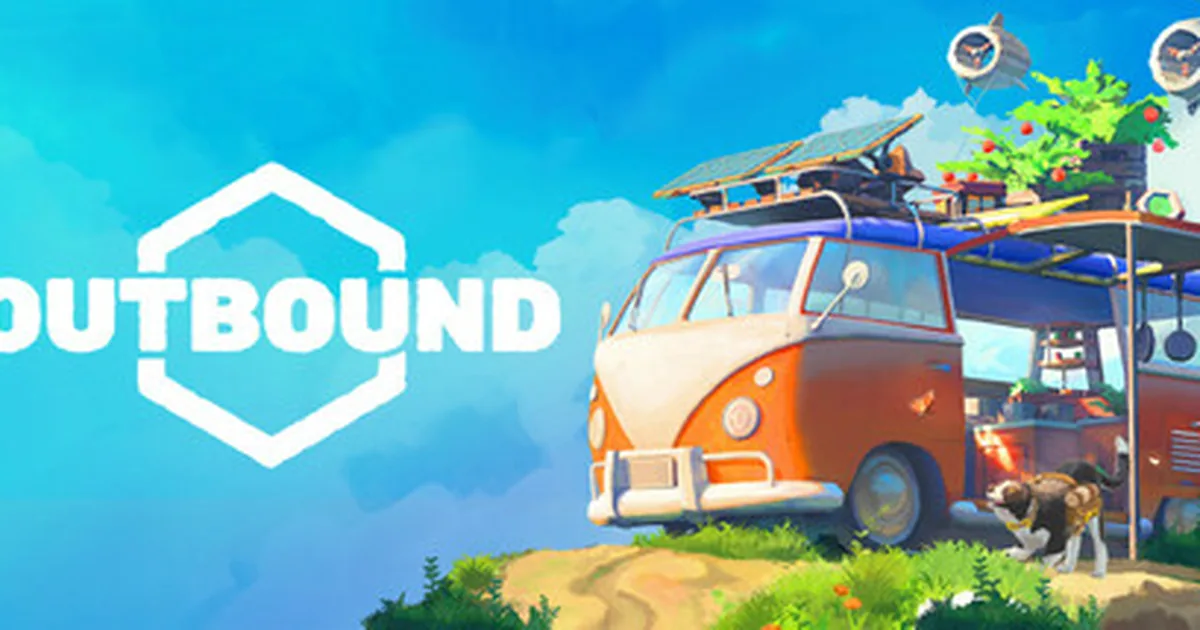
Outbound is a sandbox crafting and exploration game about building a life in a mobile home. You start with an empty electric camper van and equip it into something functional: workstations, storage, sleeping space, a greenhouse shelf for crops on the roof rack. You power it with solar panels, wind turbines, or water wheels depending on terrain. You drive into new biomes, reach signal towers for new blueprints, and keep building.
Square Glade's genre label is "cozyvival": their blend of cozy life-sim and survival crafting. Both halves are real. The survival side creates actual logistics pressure: managing power and resources has stakes. The cozy side is genuine: no enemies, no permadeath, no combat systems. The worst outcome is a dead van in a bad location, which you solve by conserving power or driving to better terrain.
This is Square Glade's first title, self-published by Square Glade Games. Their Kickstarter hit its goal in under two hours in August 2024. The demo that followed pulled 85% positive from 50,000 testers and built over 1 million Steam wishlists. That pre-launch signal is unusually strong for a debut studio. The 1.0 release holds up.
For the date context: Outbound originally shared a launch date with Subnautica 2 before moving to May 11. The full platform and pricing breakdown is in our Outbound launch analysis.
The shared van as co-op system
The decision to put every player in one vehicle is the review in miniature. It forces genuine co-op.
Games like Valheim give each player their own base. Grounded has shared structures but individual inventories. Outbound gives you one van: one build, one battery, one travel path. If your group builds heavy (full workstation suite, extended storage, extra power hardware), everyone is moving slower for the session. The weight is a van stat, not a character stat. It affects handling on rough terrain and power draw, which means it affects everyone equally and continuously.
The build decisions your group makes have downstream consequences. A fully equipped van has everything you might need but responds sluggishly on steep terrain and drains faster when multiple systems run at once. A lighter van moves better and lasts longer per charge, but you're doing fewer things simultaneously. This is the kind of tradeoff most co-op games assign to combat: damage vs. defense, speed vs. health. Outbound assigns it to home design.
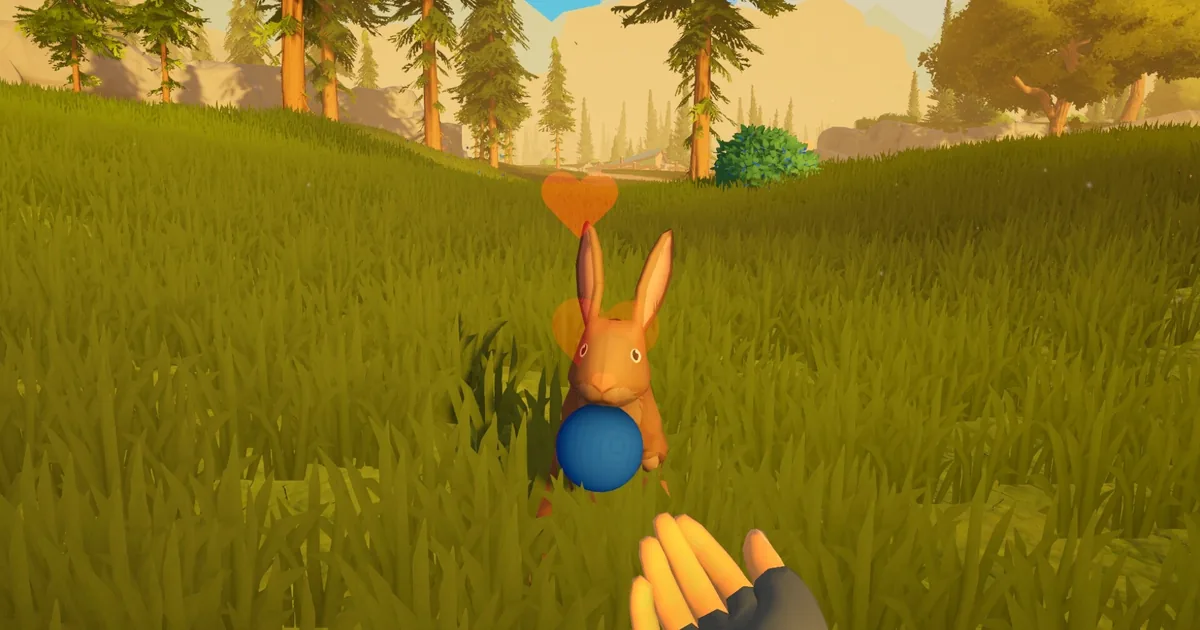
The dog from the Paws & Whiskers Lodge responds to commands, fetches items, and carries supplies back to the van. It's a small system. It also appears in nearly every screenshot anyone has shared from this game, which tells you it lands exactly the way Square Glade intended.
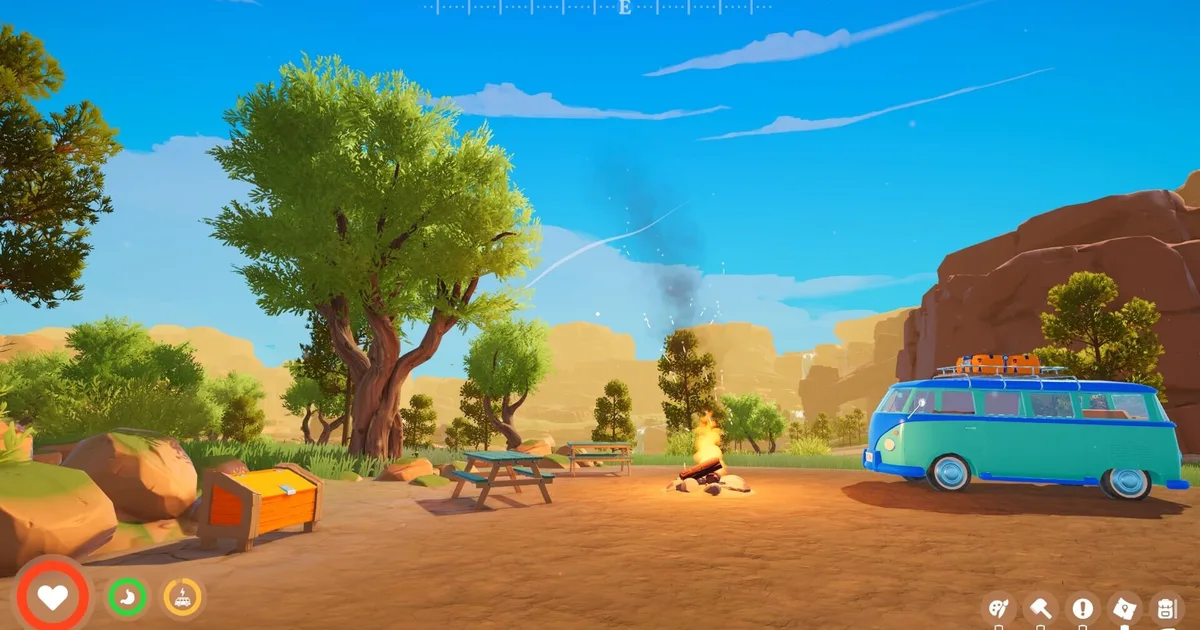
The customized van: every structural addition changes both capability and mobility.
Energy management and the build system
The energy loop is the mechanical core. Your battery drains from workstations, lighting, climate systems, and driving at speed. Three charging sources:
Solar panels work best in open terrain with clear sky. Reliable in coastal and plains biomes, useless at night or in dense forest.
Wind turbines generate when you're at elevation with exposure. Mountain terrain suits them well. Sheltered valleys give poor output.
Water wheels need positioning near running water. They work, but they tie you to a specific spot on the map.
No source is universally optimal. Before driving into a new biome, your group is already thinking about whether solar or wind is going to work in that terrain. It's a small planning layer that most co-op games route through loadout choices instead.
Blueprint acquisition runs through signal towers, and this is where the co-op design gets interesting: at each tower, different players in the same session get different blueprint options. No two players unlock the same thing from the same tower. A four-player group hitting one tower gets four different sets of new building options. This prevents groups from converging on an identical "optimal" van over multiple sessions, and it means the same content plays differently with different groups.
Building is modular. Parts slot into the van's interior and exterior grid, and both weight and space constrain what fits. The weight cost of each component has real vehicle effects: this could have been a flat stat penalty but was instead tied to handling and power draw, which makes it feel like it matters rather than just restricting you.
Biome exploration
Each biome has its own resource profile, terrain type, and power generation conditions. The coastal zone combines sandy beaches with rocky cliffs and redwood forest close by, giving you varied resources within short range. Mountain terrain creates good wind generation but harder driving. Open plains sit in between.
There's no story to complete. Outbound's pull is reaching the next signal tower, unlocking the next resource tier, and seeing what the next biome looks like. This is sandbox exploration without a narrative goal, and whether that's a feature or a limitation depends entirely on what you want from a co-op game.
The world rewards slower travel. You can park near a resource node, process material on-site, and move on. Or you can find terrain with ideal solar and wind conditions and build out a more permanent setup. The game accommodates both play styles without pushing you toward either.
GODEEPER: For practical first-session decisions on van weight, energy source selection, and signal tower priority, the Outbound Tips guide covers the early hours in detail.
Outbound post-launch updates: fishing and the Wildlife roadmap
The biggest shipped content addition is the June Fishing Update, also called Patch 1.1. It added fishing, three fishing rods, fish tanks, and fishing huts on maps 1, 2, and 4. The announcement also says the patch added no new achievements. Patch 1.1.8 followed on August 11 with additional fixes.
The next announced direction is the Wildlife Update. Square Glade's August 18 Gamescom announcement said the team was working toward releasing it soon, but it was not marked as live in the official announcement at this audit. That makes fishing a current feature and wildlife a roadmap item. The distinction matters if you are buying for a fuller survival ecosystem rather than the existing cozy logistics loop.
Outbound review: the case for no combat
The design choice that any outbound review has to answer honestly is the absence of enemies. Square Glade made a real argument: put the tension in logistics, not threats. Energy runs out. Resources run low. You can end up parked somewhere without good charging options at night. These are problems, but you solve them by making better decisions: not by fighting anything.
For players who find logistics satisfying, this is the point. No spawn timers means you're thinking about where to park and how to power your workstations, not threat management. Sessions can be as long or short as your group wants without clearing anything before stopping.
For players who want immediate stakes, Outbound doesn't deliver them. The worst outcome is a power shortage and a slower drive to better terrain. Nothing hunts you. Nothing respawns in your base while you're away. The pressure is real but it never spikes.
Solo play works but loses the best parts. Energy management as a shared resource (where one player's workstation use drains the battery another player is relying on) is interesting. Solo, it's just individual budgeting. Blueprint randomization per player at signal towers is interesting. Solo, it's just a single draw. Outbound solo is a pleasant exploration loop. Outbound with 2-4 people is the actual game.
Outbound: full 1.0 release, self-published by Square Glade Games.
Outbound review verdict
The bottom line in any outbound review: does the game do what it claims? Outbound does exactly what it set out to do, at a price that fits the scope. $24.99 for a full 1.0 release with 4-player co-op and a build system that creates genuine group decisions is fair. Weight-mobility tradeoffs give builds meaning. Energy management gives sessions structure without combat overhead. Blueprint variation across players at signal towers prevents the game from collapsing to one optimal van build after the first session.
The limits are intentional and real. No combat means low urgency. No story means no narrative endpoint. Solo play misses most of what makes the systems work. These aren't flaws: they're design choices that Square Glade made explicitly and honestly. The "cozyvival" label isn't softening; it's an accurate description of what this game is.
A group that enjoys logistics and exploration and wants 20+ hours of van life co-op will get exactly that. A group expecting combat tension or a story won't find either.
Rating: 7.8 / 10. Square Glade said what they were building and then built it. That's rarer than it sounds.
Steam lists Outbound at $24.99 at this audit. Sale pricing rotates, so check the official store page before buying rather than relying on an old launch discount.
Frequently asked questions
Is Outbound worth buying? At $24.99 for a full release with up to 4-player co-op, yes for players who enjoy base building, logistics, and open-world exploration without combat. If you want enemies, progression tension, or a narrative endpoint, Outbound isn't that game.
Is Outbound good solo? Playable but diminished. The shared-base energy management and role-splitting are designed for groups. Solo works as a relaxing exploration loop, but you lose the coordination dynamic that makes the van base interesting to build.
How long is Outbound? No official completion time. The open-world structure has no story endpoint: it's a sandbox with biome progression. Covering one or two biomes runs 3-5 hours. Groups working through all biomes and fully upgrading a van will likely put in 20+ hours across sessions.
Does Outbound have combat? No. No enemies, no combat systems, no PvP. The pressure comes from energy management and resource logistics. Square Glade describes this as "cozyvival": survival systems without combat.
What platforms is Outbound on? PC (Steam and Epic Games Store) and Xbox Series X|S launched May 11, 2026. PlayStation 5, Nintendo Switch, and Nintendo Switch 2 launched May 14, 2026.
Is Outbound cross-platform? Cross-play status wasn't confirmed in pre-launch materials. The simultaneous PC and Xbox launch suggests it may be supported, but Square Glade hadn't officially confirmed it at the time of this review.
How does the energy system work in Outbound? Your van runs on a battery charged by solar panels, wind turbines, or water wheels. Each source works under different conditions: solar needs open sky, wind needs elevated terrain, water wheels need running water nearby. In co-op, multiple workstations draw from the same battery simultaneously, making power management a shared logistics problem.
What has changed since launch? Patch 1.1 added fishing, three rods, fish tanks, and fishing huts on maps 1, 2, and 4. Patch 1.1.8 followed in August. The Wildlife Update was announced but was not live at this audit.
Related Reading
- Outbound Co-op Guide: Crew Roles and Energy Management
- Outbound Best Base Locations: Camp Setup Guide
- Mina the Hollower Review: Yacht Club's Gothic New World: Mina the Hollower review: Yacht Club's six-year gothic action-adventure at $19.99. Harder than Shovel Knight, denser than it....
- Luna Abyss Review: Bullet Hell in First-Person Horror: Luna Abyss review: Kwalee's first-person bullet hell on PC. Junji Ito atmosphere, projectile-dense combat, and Fawkes' prison story....
- Romestead Review: Roman Survival That Earns the Raid: Romestead review: Beartwigs' Roman survival town-builder: undead night raids, god system tech trees, and 1-8 player co-op across....
- CALX Review 2026: Moebius Aesthetics, Metroid Bones: CALX review: True Colors' debut action-adventure on PC, June 4. 10-15 hours on planet Syro with four AFX....
- Outbound Van Build Guide: Module Order and Weight Budget: Outbound van build guide: which modules to build first, weight budgets per stage, and how.
- Outbound Beginner Tips: 10 Things to Do in Hour One: Outbound beginner tips cover van selection, the 20-item sprint cap, Homing Boots, and signal tower.
- Outbound Energy Guide: Solar, Wind, and Battery Setup: Outbound energy guide: which two sources to pair, when to swap, and the sequencing rule.
References
- Outbound on Steam: store page, system requirements, community reviews
- Outbound official announcements: Fishing Update, Patch 1.1.8, and Wildlife Update status
- Outbound Official Release Date Trailer: official gameplay footage and release date reveal
- Outbound complete guide hub: van builds, base locations, energy, co-op, and survival tips
About the author

Senior Critic & Analyst
Former game data analyst turned critic with 11 years covering indie and mid-tier games. Based in Austin. Runs spreadsheets on games most people just play.
- 11 years games criticism
- Former game economy analyst
- Roguelike and strategy specialist
Keep reading


Disclaimer
This article is published for informational and entertainment purposes. It does not constitute professional financial, legal, or technical advice. Game performance, online services, patch schedules, and store listings change. Verify critical details (pricing, system requirements, regional availability) with publishers and storefronts before you buy. Affiliate links, where present, help support our editorial work and are labelled in our affiliate disclosure.
Comments
Loading comments…