
FeatureMina the Hollower
Mina the Hollower Review: Yacht Club's Gothic New World
Mina the Hollower review: Yacht Club's six-year gothic action-adventure is live at $19.99. Steam is Very Positive at 88% from 5,596 English reviews.
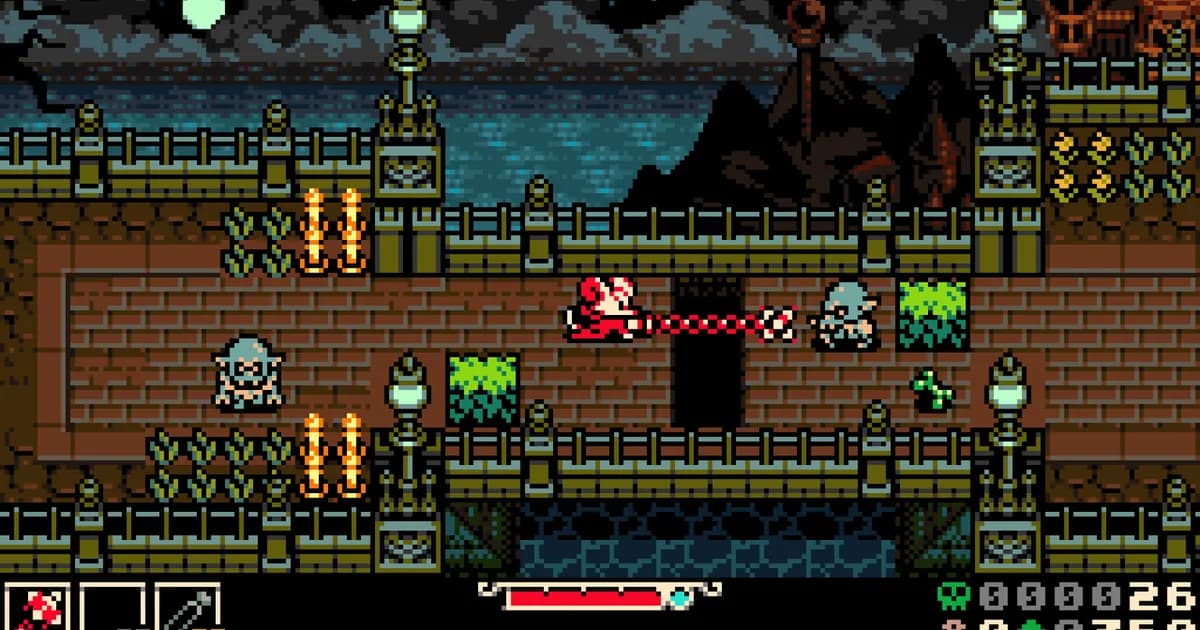
Mina the Hollower review coverage carries extra weight. Yacht Club Games isn't just a studio people like: it's one of the few indie developers that shipped a defining game, then spent years making DLC campaigns better than the base product. When they announced Mina as their first new IP since Shovel Knight, the games industry paid attention. Six years of it.
The game is available now at $19.99 on everything from PC to Switch 2. Here's what to know.
TL;DR: Mina the Hollower is Yacht Club Games' first new IP since Shovel Knight, out now at $19.99 across PC, PlayStation, Xbox, Switch, Switch 2, macOS, and Linux. It's a single-player, exploration-first action game (the studio frames it as their "Zelda" to Shovel Knight's "Mario") built on whip combat plus a burrow dodge used for movement and evasion. The difficulty is real, with an early miniboss serving as a notable skill check before the world opens up. Steam's English reviews currently sit at 88% positive from 5,596 reviews.
Mina the Hollower review? (quick answer)
Yes. At $19.99, Yacht Club Games delivers a 25-30 hour nonlinear action-adventure with Soulsborne-style boss depth, seven distinct New Game Plus modes, and the production quality that defined Shovel Knight. The difficulty is real but tunable via built-in accessibility options; the world is the kind that expands as your tools do.
- $19.99 at launch on PC, PS5, Xbox, Switch, Switch 2, macOS, and Linux: single-player only
- Yacht Club frames it as their "Zelda" to Shovel Knight's "Mario": nonlinear, interconnected, exploration-first
- Core loop: whip combat plus a burrow dodge used for movement, evasion, and repositioning
- The difficulty is real: previews flagged a specific early miniboss as a significant skill check before things open up
- Accessibility modifiers cover reduced damage, more currency, and health recovery after fights
- 25-30 hours for a full run; seven distinct New Game Plus modes for repeat playthroughs
- Steam's English review aggregate is currently Very Positive at 88% from 5,596 reviews, with recent reviews at 83% from 280
- Six-year development cycle with Jake Kaufman's chiptune soundtrack and a Game Boy Color visual philosophy
What Mina the Hollower actually is
Top-down action-adventure in early Zelda territory, built with the production craft of a studio that spent a decade perfecting retro aesthetics. Victorian gothic setting. An interconnected world. A protagonist with a whip and a set of sidearms that change how you fight.
The preview consensus landed hard on two comparisons: Zelda-style exploration and Soulsborne-style boss design: fights that punish you until you internalize the pattern, then become something you want to run again. The burrow mechanic sits at the center of both. Diving into soft ground isn't just a dodge; it's a repositioning tool and a gap closer. Screens of enemies and trap layouts require it. Swinging the whip is only half the conversation.
The departure from Shovel Knight is the structure. Shovel Knight was linear: levels in sequence, clear progression, a defined stage for every concept. Mina's world is interconnected. Secrets live behind breakable walls and gaps that require abilities you unlock later. The route through isn't obvious from the start. Previews called this a "stark departure" and meant it as a compliment.
Sean Velasco put it clearly before launch: Mina is Yacht Club's Zelda. Shovel Knight was their Mario. Same studio, different mode: one about moving forward, one about returning to spaces with new tools and different eyes.
GODEEPER: If you're deciding what else to spend $20 or under on this spring: Best Indie Games Under $20 in 2026 →
The mechanics: whip, burrow, and what separates it
Mina's combat has two layers. The whip handles most encounters. Sidearms (functionally analogous to Shovel Knight's relics or Castlevania's subweapons) offer situational options, each with upgrade paths that unlock new moves rather than just stat increases. Previews described these as enabling "wholly new battle dynamics," which suggests the upgrade system meaningfully reshapes fights rather than just scaling damage numbers.
The burrow is the more interesting piece. It requires specific terrain (not every surface accepts it) which means learning the level is part of learning the fight. The early miniboss that previews flagged as overtuned tests exactly this: players who approach it as a pure damage trade will hit a wall; players who use timed burrows and the right sidearm find the rhythm. That progression from "this feels unfair" to "I understand what it wants" is the core loop.
Multiple weapons at launch, confirmed names include the Nightstar whip, Whisper and Vesper daggers, and the Blaststrike Maul, each with distinct move sets and upgrade paths. The NG+ suite offers seven distinct modes, shuffled item placement, mirrored world layouts, remixed difficulty, which is more structural variety than most games put into a second-run system. Whether that holds a third or fourth playthrough is now a player-reception question rather than a launch unknown.
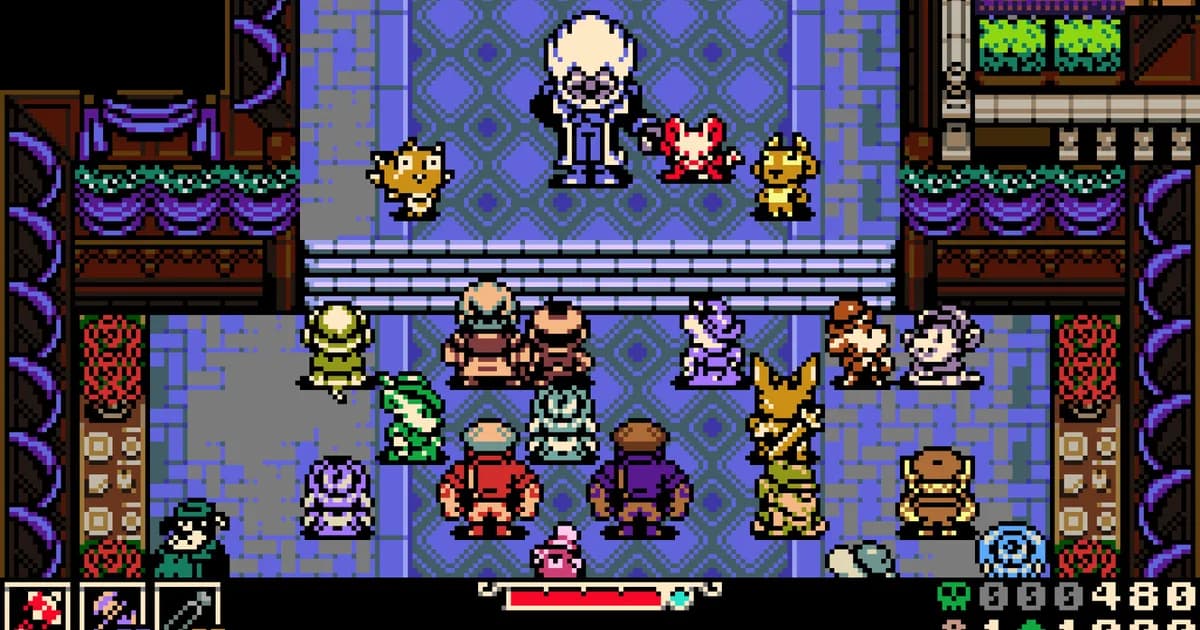
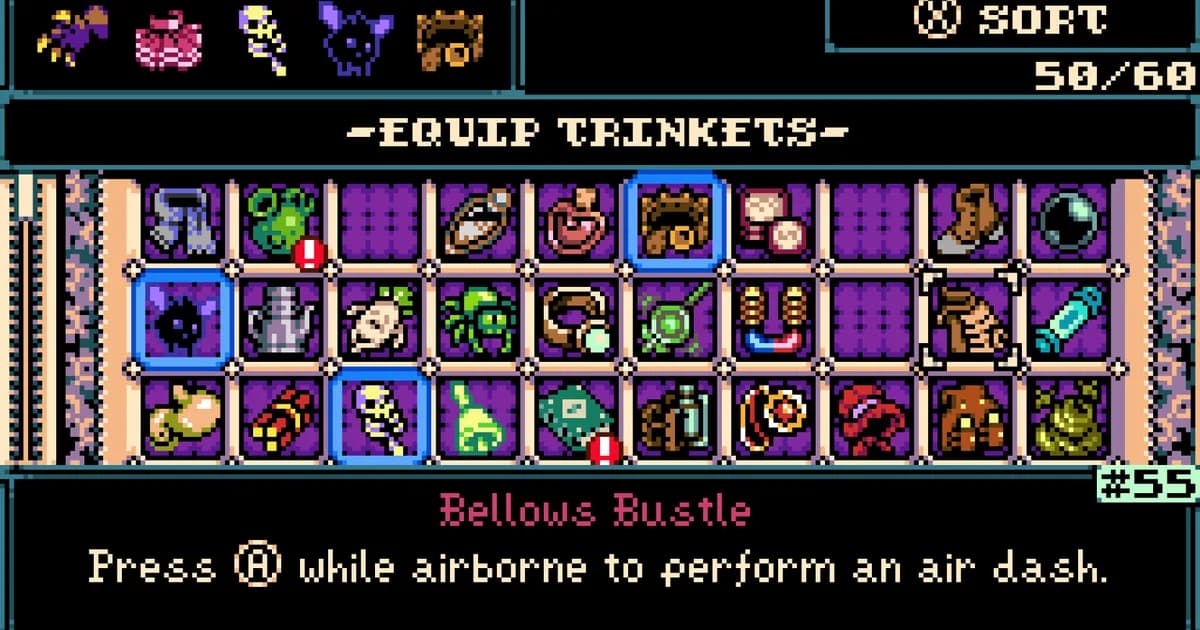
A hub screen gathering the cast of NPCs and creature types Mina crosses paths with, a reminder of how much lives outside the whip-and-burrow combat loop.
Yacht Club's honest bet
The pricing decision was deliberate. Velasco said $19.99 was set "to sell": an acknowledgment that consumers have more good games competing for their attention and money than they can spend. Yacht Club chose clarity over margin.
The studio is candid about the toll. "I'm tired," Velasco told Loot Level Chill. "It does feel like we survived a battle. Mina was a long and difficult project, and it took a lot out of the team." Six years is long. The Switch 1 port was the most technically demanding work of the whole development, despite appearing simpler than the other targets. Mina shipped across seven platforms simultaneously, with Switch 2 mouse support and PlayStation light bar functionality on day one.
This is a studio betting its identity on a second game. Shovel Knight was their entire public existence for a decade. If Mina holds, if the 25-30 hour nonlinear world delivers what the previews suggested, Yacht Club has proven they can build something structurally different and still worth caring about. The question now is whether launch matches the preview.
GODEEPER: For another game testing the boundary between genres this spring: Luna Abyss Review: Bullet Hell in First-Person Horror →
What the launch build confirms (and where preview caveats still matter)
Preview coverage from the final build was consistently positive, and the live build now has a sizable positive Steam sample. A few points still matter when weighing the launch version.
The density is real. Nintendo Life's preview roundup described every screen as "meticulously crafted and packed with secrets": breakable walls, hidden gaps requiring later abilities, an interconnected design that rewards returning with new tools. This kind of world is hard to get right; when it works, it makes the game feel bigger than its runtime.
The boss design earns the Soulsborne comparison. Not just the difficulty, but the structure: a boss that looks impossible until you understand what it asks, then becomes something you want to run again in NG+. That arc (confusion to comprehension to mastery) is the specific thing Soulsborne does that most action games don't.
The early difficulty wall is real. The first major miniboss was consistently flagged across multiple previews. Players who don't have burrow timing down yet will hit it hard. Yacht Club built accessibility modifiers for this reason, and being transparent about them in interviews suggests they understood some players would need them.
The long-term replayability question is the remaining judgment call. Seven NG+ modes with structural variation sound substantial on paper, and the current Steam aggregate is strong, but only repeated playthroughs can show whether the modes stay distinct enough to justify multiple completions.
Should you buy Mina the Hollower at $19.99?
The case is straightforward. Yacht Club makes games where every element is accounted for. The studio behind Shovel Knight spent six years on a $19.99 gothic action-adventure with a 25-30 hour interconnected world, seven NG+ modes, Jake Kaufman's soundtrack, and accessibility options that don't compromise the core design. Preview consensus from the final build was enthusiastic across the board, and Steam's English reviews currently stand at 88% positive from 5,596 reviews.
The real question is difficulty tolerance. This is not a forgiving game by default. If the "punishing until the pattern clicks" structure of early Soulsborne isn't your version of fun, use the modifiers: they're there and they're not a lesser version of the game. If you want co-op, shorter sessions, or something more linear, Mina isn't that.
For players who want a dense world to learn over 20+ hours and can treat challenge as design rather than obstacle, the case for $19.99 is straightforward. The content volume holds up before you even open the NG+ menu. For other indie games worth considering at this price point and difficulty level, the best roguelike games in 2026 roundup covers the wider field.
Frequently Asked Questions
Is Mina the Hollower worth buying? At $19.99 with 25-30 hours of content and seven NG+ modes, yes. The difficulty is genuine but tunable via the built-in accessibility options.
How hard is Mina the Hollower? Harder than Shovel Knight, and different in kind: the challenge comes from boss pattern learning and world navigation rather than tight linear platforming. An early miniboss is a flagged difficulty spike. Modifiers are available.
How long is Mina the Hollower? 25-30 hours for a full first run. Seven NG+ modes extend that with structural variation.
Is it multiplayer? No. Single-player only, no co-op or online modes.
What platforms? PC, macOS, Linux, PS5, Xbox Series X|S, Nintendo Switch, and Nintendo Switch 2. $19.99 on all.
Related Reading
- Mina the Hollower Complete Guide: 60 Trinkets, 2 Endings: the hub for every Mina the Hollower guide on this site, organized by system.
- Mina the Hollower Tips: 14 Things to Know Before You Play: Mina the Hollower tips for new players: burrow timing, early survival mistakes, boss pattern approach, NG+ prep, and....
- Mina the Hollower How Long to Beat? 20-30 Hours (2026): Mina the Hollower how long to beat? 20 to 30 hours for the main story, 30+ for 100%,....
- Solarpunk Game Review: Floating Island Survival 2026: Solarpunk game review: Cyberwave's floating-island survival launches June 8. No combat, weather-driven energy grid, 4-player co-op. Free demo....
- Lost Castle 2 Review: Is the 1.0 Launch Worth It? (2026): Lost Castle 2 review: Hunter Studio's beat-'em-up roguelite hits 1.0 June 11. 700k EA units, final story chapter,....
- CALX Review 2026: Moebius Aesthetics, Metroid Bones: CALX review: True Colors' debut action-adventure on PC, June 4.
References
- Mina the Hollower on Steam: store page, platform details, feature list
- Mina the Hollower launch announcement: official launch context and feature scope
- RPG Site interview with Sean Velasco: pricing strategy, DLC plans, development context, Switch 1 technical challenges
- Nintendo Life preview roundup: final build preview consensus, comparisons and concerns
- Loot Level Chill interview: difficulty design philosophy and accessibility options
About the author

Critical game theorist with a background in film criticism. Writing for print and digital outlets since 2015. Specialises in genre analysis and design heritage.
- Background in film criticism
- 10 years games coverage
- Genre theory and design history specialist
Keep reading
Mina the Hollower Preview: What the Full Release Confirms
General · 4 min

Mina the Hollower Tips: 25-30 Hours, 14 Things to Know
General · 9 min
Mina the Hollower How Long to Beat: 20-30 Hours (2026)
Features · 7 min

Mina the Hollower Complete Guide: 60 Trinkets, 2 Endings
General · 14 min
Mina the Hollower Secret Ending: All 2 Routes Explained
General · 13 min
Mina the Hollower Trinkets Guide: All 60 Locations (2026)
General · 20 min
Game deals · affiliate links

Disclaimer
This article is published for informational and entertainment purposes. It does not constitute professional financial, legal, or technical advice. Game performance, online services, patch schedules, and store listings change. Verify critical details (pricing, system requirements, regional availability) with publishers and storefronts before you buy. Affiliate links, where present, help support our editorial work and are labelled in our affiliate disclosure.
Comments
Loading comments…