
GameBrief · Guides
Outbound Dog Companion Guide: Paws & Whiskers Lodge

Reviewing
Outbound
Square Glade Games
The outbound dog companion is one of those features you find mid-run and immediately wonder why you hadn't picked it up sooner. It fetches. It carries. And with upgradeable pouches on top of that, it's a legitimate resource gathering tool rather than just a companion for the vibe.
TL;DR: The outbound dog companion is found at the Paws and Whiskers Lodge, a fixed location in The Coast biome reached via a signposted path behind the signal tower. You choose 1 of 4 dogs there (a permanent, cosmetic-only choice), then it fetches nearby items and carries gear in its pouch. Pouch Upgrade I and II, crafted at the Sewing Table, expand carry capacity over time. Get it early in a run since the benefits compound. Works in solo and co-op both.
How do you get the outbound dog companion? (quick answer)
The Paws and Whiskers Lodge sits in The Coast, the second biome you unlock after the starting region. Follow the path out of the opening woods, and when the terrain opens into the coastal area, look for a large wooden sign marking the lodge just off the path behind the signal tower. Walk under the sign to the pet shop building at the end of it.
Unlike a lot of Outbound's points of interest, this one is a fixed location, not something that shifts by seed. Once you're inside, you'll find four dogs in different coat and eye colors to choose from. Face the one you want and confirm with the "Choose Companion" prompt: the choice is permanent, though all four are functionally identical, so it's a purely cosmetic decision.
Once you adopt the outbound dog companion, it follows your van and responds to your commands during exploration.
Key takeaways
- Outbound dog companion is obtained from the Paws and Whiskers Lodge, a fixed location in The Coast biome behind the signal tower
- Choose 1 of 4 dogs at the lodge; the choice is permanent but purely cosmetic (all four are functionally identical)
- Two core behaviors: fetching items and carrying gear in its pouch
- Pouch Upgrade I and II, crafted at the Sewing Table, increase carry capacity over time
- Early adoption matters because the pouch upgrades take time to develop
- Works in solo and co-op; co-op players tend to split dog-handling duties
- The dog retreats when hurt but doesn't permanently die
Fetching: what the dog actually does with it
The fetching behavior works exactly how it sounds. You can direct the outbound dog companion toward a nearby item or resource node, and it retrieves or interacts with it. This is most useful for scattered loose items after you've gathered from a node, or for items that are technically reachable but annoying to navigate to on foot.
GODEEPER: For the full breakdown of how to set up your base and van before you pick up the dog companion, including which modules give the most return in early runs. Outbound Van Build Guide: Modules and Priority Order →
The range isn't unlimited. The dog operates in a radius around you, so you can't point it at something across the valley. Within its range, it's reliable and quick. Outside that range, it won't go.
Where fetching pays off most is in cluttered terrain where lots of small items are spread across a short stretch. Instead of individually picking up each piece, you can direct the dog and keep moving. The time savings feel small in isolation but add up across a full resource-gathering run.
In co-op, fetching gets more useful because your partner can be loading the van while you direct the dog through the area. The workflow separates more cleanly than in solo where you're doing everything yourself.
Carrying: the pouch system
The outbound dog companion carries items in its pouch, with craftable upgrades (Pouch Upgrade I and II at the Sewing Table) that let capacity grow over time. Patch 1.0.15 didn't add this system: it fixed a multiplayer bug where a pouch's upgraded capacity wasn't syncing correctly between co-op players.
After adopting the dog, you can access an upgrade menu through the companion interaction. Pouch upgrades require specific materials to unlock, similar to van modules. They don't happen automatically; you need to gather the upgrade components and then apply them.
The upgrade tiers add meaningful carry capacity. A fully upgraded pouch lets the dog carry a reasonable secondary load alongside what you're hauling in the van. For solo players, this is particularly useful because you effectively get a portion of a second inventory without a second player.
The key insight from patch 1.0.15 community discussion: the pouch upgrades are worth investing in early even if the early tiers feel modest. The upgrades compound, and a dog with a tier 3 pouch late in a run is noticeably more useful than a fresh-adopted dog.
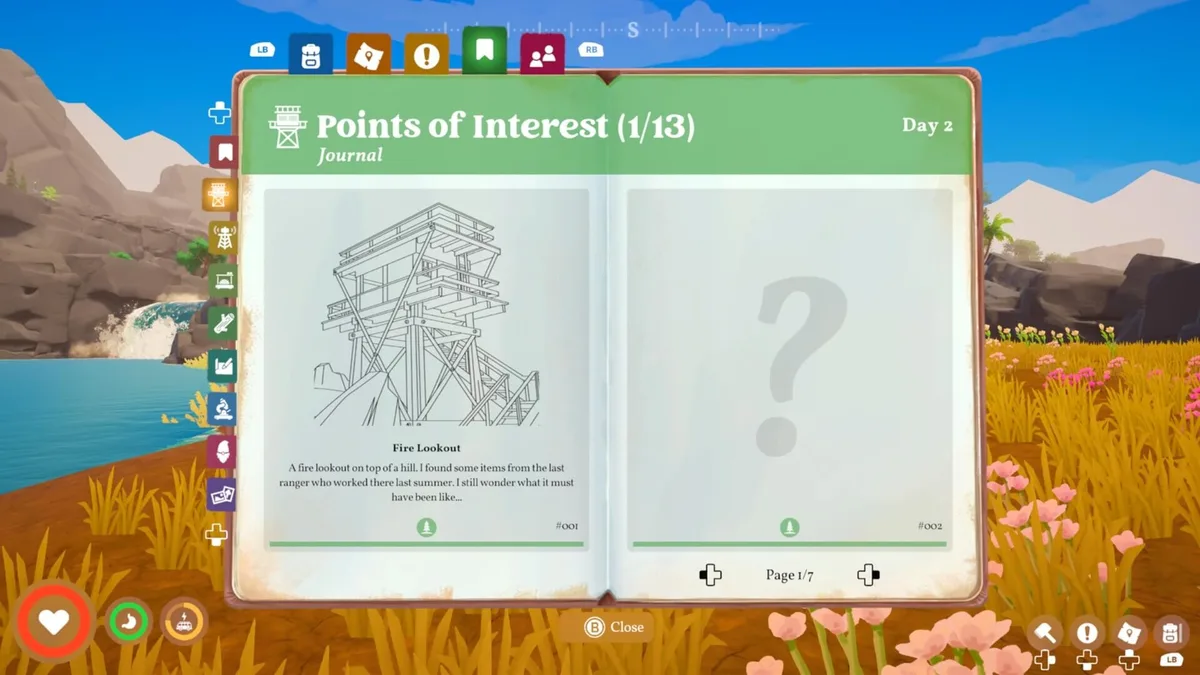 The outbound world where you'll find the Paws and Whiskers Lodge: a fixed location in The Coast biome, not something that shifts between seeds.
Why adopting the outbound dog companion early matters
The outbound dog companion's value scales with your run length. The pouch upgrades are additive: each tier brings more carry capacity, and each resource-gathering loop benefits from the expanded capacity. A dog adopted at the start of a run has more time to pay off those upgrade costs than one found late.
It also takes a few sessions to get comfortable with the dog: when to issue fetch commands, how to route around it, how it fits into your gathering rhythm. If you adopt late, you're still in the learning phase when the run ends.
Solo players feel this more than co-op. In co-op, one player can focus entirely on the dog while the other handles van management, which accelerates the learning curve. Solo, you're juggling both at once, which takes some getting used to.
Make the detour to the lodge even if it's not on your direct route to the next signal tower. The dog pays off for the entire run; the only cost is the travel time to get there. That's a low bar.
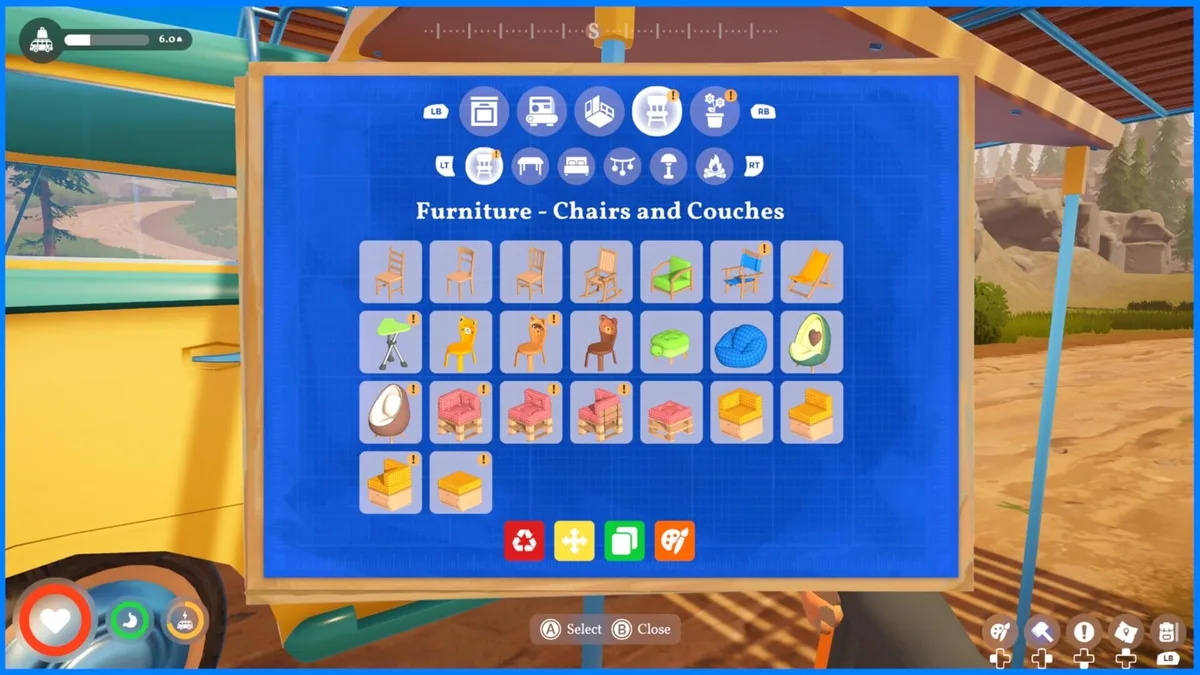 Terrain like this is where the dog's fetch range pays off: loose resources scattered across a short stretch get collected while you break the next node.
GODEEPER: Full guide to Outbound's resource gathering loops, including how the dog companion fits into efficient gathering routes. Outbound Tips Guide: First-Run Advice and Survival Basics →
Outbound dog companion in co-op
The dog works in co-op without any special setup. Both players can issue commands to it, though in practice one player usually ends up as the primary handler. There's no conflict if both players direct it simultaneously; the dog responds to the most recent command.
The natural co-op split: one player drives and handles the van while the other goes on foot with the dog to sweep resource areas. The dog's fetching range and your own gather range together cover more ground than either player working alone.
Pouch upgrades in co-op are shared, not player-specific. If one player invests in an upgrade, both benefit. This means it's worth treating the dog's upgrades as a shared investment and coordinating on which components to gather rather than both players independently hunting the same upgrade materials.
For more on role splitting and logistics in two-player runs, the Outbound co-op guide covers how to divide van management, gathering, and scouting duties.
Outbound dog companion tips
Get to the Paws and Whiskers Lodge as soon as you find it on the map, even if it means a minor route detour. Early adoption translates directly into more upgrade cycles.
Prioritize the first pouch upgrade above most gear blueprints in the early game. The capacity gain from a basic pouch upgrade is comparable to a van storage expansion in terms of practical benefit per run, and the upgrade cost is usually lower.
In solo, use the dog to handle loose item pickup while you break resource nodes. The workflow: you swing, the dog retrieves. You move to the next node, the dog catches up. It breaks the stop-and-pick rhythm that eats time during a gathering run.
The dog retreats from danger but doesn't permanently die. If you're in a hazardous area, the dog may become briefly unavailable. It'll rejoin when conditions are safer. Don't panic; it's not gone.
If the dog seems unresponsive, check that you're in range for fetch commands. If you've moved too far ahead, it'll follow you first and resume responding to commands once it catches up. This is the most common source of "the dog isn't working" complaints in the community.
Related Reading
- Outbound Complete Guide Hub: Full overview of every system with links to in-depth guides.
- Outbound Van Build Guide: Van module priorities for pairing with companion-assisted gathering runs.
- Outbound Signal Tower Guide: How to find towers, activate them, and coordinate blueprints in co-op.
- Outbound Co-op Guide: Two-player mechanics and how to split roles when playing with a partner.
- Outbound Best Base Locations: Campsite placement strategies that work well with dog-assisted gathering loops.
Frequently Asked Questions
How do you get the dog companion in Outbound? Travel to the Paws and Whiskers Lodge in The Coast biome, behind the signal tower. It's a fixed location, not seed-variable. Once there, choose 1 of 4 dogs; the choice is permanent but cosmetic-only.
What does the dog do in Outbound? It fetches items on command and carries gear in an upgradeable pouch. Both behaviors help during resource gathering runs.
Can you upgrade the dog in Outbound? Yes. Pouch Upgrade I and II, crafted at the Sewing Table, are accessible through the companion interaction menu. Upgrades require specific materials.
Is the dog worth getting in Outbound? Definitely, and earlier the better. The outbound dog companion's pouch upgrades compound over a run, and getting it early means more upgrade cycles before the run ends.
Can the dog die in Outbound? It retreats from danger but doesn't permanently die. It'll rejoin after conditions improve.
Does the dog work in co-op Outbound? Yes. Both players can direct it. Pouch upgrades are shared across the co-op session.
References
- Outbound on Steam: official store page and patch notes including companion-related fixes
- r/outboundgame: community reports on dog companion behavior and pouch upgrade mechanics
- Outbound tips guide: general first-run advice that complements companion-assisted gathering strategies
Was this guide helpful?
About the author

Indie & JRPG Critic
Indie game evangelist and lifelong JRPG fan covering small studios since 2017. Mumbai-born, London-based. Writes the way she talks.
- 7 years indie games coverage
- JRPG and visual novel specialist
- Narrative design focus
Keep reading



Disclaimer
This article is published for informational and entertainment purposes. It does not constitute professional financial, legal, or technical advice. Game performance, online services, patch schedules, and store listings change. Verify critical details (pricing, system requirements, regional availability) with publishers and storefronts before you buy. Affiliate links, where present, help support our editorial work and are labelled in our affiliate disclosure.
Comments
Loading comments…