
GuideKristala
Kristala Beginners Guide: Stats, Fonts, and Clan Tips
The opening of Kristala is where the game asks you to learn several systems at once. This Kristala beginners guide covers the mana loop, Font upgrade order, and what your clan choice actually implies about your combat rhythm.
Sponsored

About the game
Kristala
Astral Clocktower Studios
The biggest early mistakes are spending Font upgrades on spells before you have survivability and treating Mana recovery as a passive wait. The official gameplay page ties Mana regeneration to melee engagement, while the Feline Tree documents additional named recovery skills. Our Kristala review covers the broader picture; this guide focuses on a reliable opening.
TL;DR: Kristala's official gameplay page ties Mana regeneration to melee engagement, so do not plan around waiting at range. Early on, spend Ellarial Font upgrades on survivability before spells. The current official sources list three starting clan spell groups: Nisarga, Myrtuna, and Tandara; the patch notes reference Respec Mode, so do not repeat an unverified “no respec” rule.
BESTPRICE: Want Kristala? These stores list it: Buy on Eneba → Buy on Kinguin →
Kristala beginners guide: key takeaways
- Mana regeneration is tied to melee engagement; named Feline Tree recovery skills are separate documented options
- Ellarial Fonts are the core progression system; prioritize Vitality and Willpower before any spell investment
- Clan choice sets your starting magic school and stat distribution, not a permanent lock
- The chainsaw rats in the early dungeon are harder than the first bosses: not a difficulty bug
- The Feline Tree has named Tiger Eye skills, while the developer attributes new traversal abilities to main-story progression
- PC demo saves carry over to the full release; console transfers were pending certification at launch
Sponsored

How mana works: and why passive play can fail
The official gameplay page says Mana is regenerated by engaging in melee combat, so standing back and waiting is not the recovery loop the developer describes. The current Feline Tree source also names Mana Dust and Mana Surge; check their live descriptions instead of assuming every recovery event is a landed counter-hit.
Kristala supports an active combat loop: use the current defensive input, engage in melee, and spend the Mana that your build can recover. Deflection is one option, not proof that every successful deflect has the same recovery result.
When Mana is low, first check the live spell and Feline Tree descriptions, then re-engage safely rather than assuming that waiting restores it.
GODEEPER: Bylina uses a similar hit-to-recover mana design in a Slavic mythology setting (useful reference if you're comparing the two. Bylina Review) Parry Timing and Mana Loop Compared →
The 7 stats: which ones matter first
Seven core attributes govern your character: Vitality, Endurance, Willpower, Strength, Finesse, Eminence, and Malediction.
Every stat contributes to damage negation, so spreading investment doesn't punish you the way hard specialization does in some Souls titles. That said, beginners who spread too evenly can't sustain enough magic and can't take enough hits to actually learn fight patterns. Balancing doesn't mean equal-weighting.
Vitality is health: upgrade it first at every Font until it feels comfortable. Early enemies hit hard enough that surviving to see fight patterns matters more than any damage boost.
Willpower governs Mana and casting according to the checked attribute source. Endurance governs Balance and maximum Equip Load, so do not use Willpower as a synonym for an unverified stamina bar. Two or three early Willpower points can still be a reasonable build recommendation when you plan to cast.
Eminence and Malediction are the two named magic stats. The current official Notice Board lists Nisargan spells with Eminence requirements, Myrtunan spells with Malediction requirements, and Tandaran spells with both. Use those live requirements instead of treating them as two exclusive universal schools.
Strength vs. Finesse depends on your weapon category. The checked attribute source defines Strength for Heavy Weapons and Finesse for Advanced Weapons; inspect the current weapon screen rather than translating those categories into an unsupported dagger/light-blade rule.
Prioritize Vitality and Willpower before any offensive stats: surviving to see fight patterns is the real early-game skill.
Clan choice and magic school basics
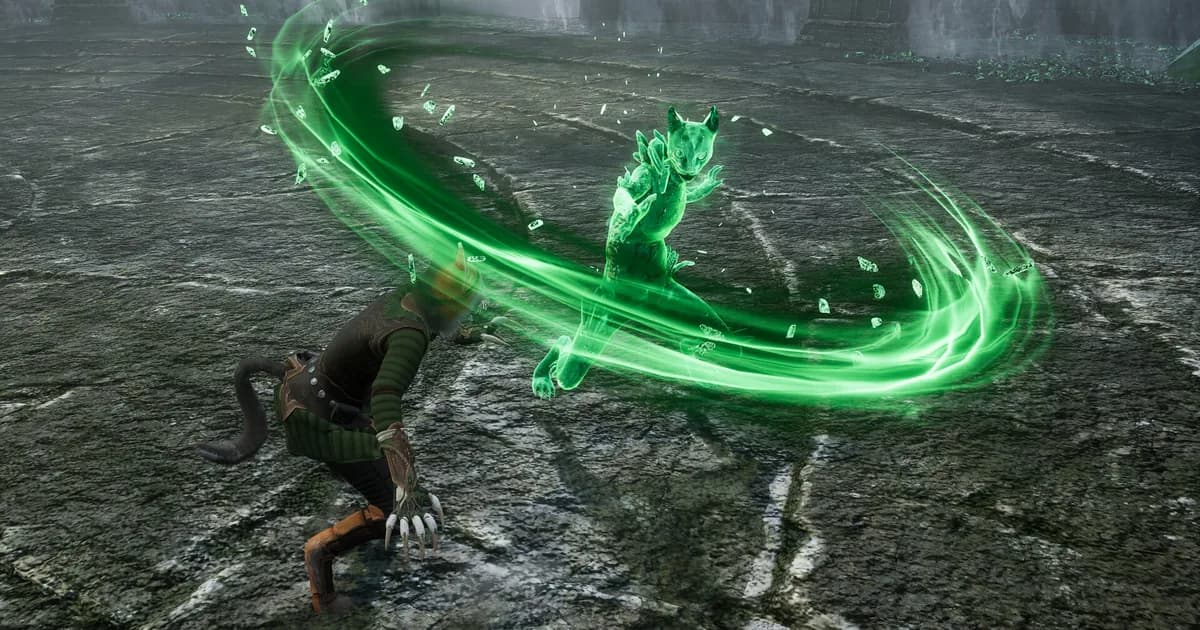
The official developer page currently lists three starting clans: Nisarga, Myrtuna, and Tandara. It says the clan choice determines the type of magic you level; the live Notice Board gives the more precise spell requirements.
Nisarga is listed as Nature magic (Eminence), Myrtuna as Spirit magic (Malediction), and Tandara as Ice magic (Eminence). The Notice Board labels Tandaran spells hybrid, requiring both stats, so individual spell requirements matter.
Myrtuna's current spell group uses Malediction requirements. Read each spell's description rather than assuming every spell in that group has the same curse or damage-over-time behavior.
There are no “other three” currently playable clans in the official starting-choice source. The wider setting names six lore clans, but the current page lists three starting clans. The developer says up to 16 spells can be equipped, while the checked sources do not establish unrestricted cross-clan spell access.
One thing beginners should not assume: the checked official sources do not publish clan-specific Feline Tree starting nodes. The developer site says new traversal abilities unlock through main-story progression; use the live tree and story gates for routing.
Ellarial Font priority: what to upgrade first
Ellarial Fonts are the main progression hubs. They handle stats, spells, the Feline Skill tree, and fast travel. Finding them and using them in the right order is the single biggest variable between players who hit a wall at hour four and players who feel the game open up.
First Font visit: Vitality (2 points), Willpower (1 point). Buy nothing else. You need to survive long enough to see fight patterns, and spell investment before this point is spending on offense while your defense is still unbuilt.
Second Font visit: inspect the current spell requirements for your starting group, then buy a spell you can actually scale. The official Notice Board lists the thresholds and notes that missing attributes increase mana cost and remove scaling; do not assume that every clan follows the same spell profile.
Third Font and after: inspect the Feline Tree's documented Tiger Eye skills and predecessor requirements. The official developer site attributes new traversal abilities to main-story progression, so do not promise that an unnamed “ledge grab” or “sprint-jump” purchase opens a specific shortcut.
The Font mistake almost every beginner makes: buying spells immediately on the first visit because spells feel exciting. They burn mana you can't sustain yet, and they don't offset the survivability problems that are actually killing you.
GODEEPER: For how the full Font system and Feline tree land across the whole campaign, the full review covers it. Kristala Review: How the Progression Holds Up →
The official developer site attributes new traversal abilities to main-story progression; use the live Feline Tree and current story gates rather than assuming an unnamed parkour node opens a specific shortcut.
Step-by-Step: Kristala beginners guide first 2 hours
- Talk to Atreus Stone when you meet him. He explains the mechanic fundamentals. Not optional reading.
- Reach the fishing village: your first major objective, unlocks your first reliable Font access.
- At the first Font: consider Vitality (2 points) and Willpower (1 point) as a recommendation, not a universal mechanic. The live menu is the source of truth for costs.
- Practice deflection on standard enemies before fighting any named ones. The timing window is tight but consistent: it rewards repetition, not guessing.
- If the current map or quest marks a corruption core, inspect it and verify its live reward/path interaction. The checked sources for this sweep do not establish a universal core count or reward rule.
- At the second Font: add your magic stat (1-2 points), then one spell.
- Before fighting any boss: open the Font spell list and equip spells for the encounter before you start it, not after you die once and reload.
- After the first major boss: inspect the Feline Tree and choose a documented skill that matches your combat inputs; story progression, not an unverified clan node, controls new traversal access.
Tips
Jump inputs matter more than they look. The Getting Started page says holding Jump longer produces a slightly larger jump and that running into a jump matters. Treat that as the documented input advice; the checked sources do not prove that a named “sprint-jump” variation gates every early collectible.
The chainsaw rats hit harder than the first major bosses. That is not a difficulty bug. Treat them like a named encounter: slow down, read the attack pattern, don't rush the kill. Players who move through the opening area without trouble and then die five times to chainsaw rats think something broke. Nothing broke.
Check your stats after equipping new gear. Read the current character screen after a loadout change instead of assuming the prose in a guide captures every item interaction.
Use multiple save files. Before a boss or a major area transition, save to a new slot. There's no mid-fight checkpoint system: if you discover a fight is too hard two minutes in, you're restarting from before it. New slots are free.
Don't rush dungeon areas to stay on the main path. The rooms you skip are where spell components, upgrade materials, and Feline Skill tree shortcuts live. The 20-30 hour playtime comes almost entirely from exploration. Players who track straight toward objectives hit a wall in the mid-game that's slow to fix from behind.
If your first character isn't clicking, a second save can be a useful experiment. The wiki's Character Creation page documents 32 traits and 1,632 combinations; it does not establish a universal early stat-ceiling rule, so inspect each trait's current description before rebuilding.
References
- Kristala on Steam
- Kristala Wiki: Getting Started
- Astral Clocktower Studios: Kristala characters
- Astral Clocktower Studios: Kristala Notice Board
- Kristala Feline Tree
- Kristala wiki: Items: Mana-restoring items and Font restoration interactions
- Kristala wiki: Combat, Stats, and More: Willpower, Endurance, and weapon-attribute roles
- Kristala complete guide: all builds, bosses, clans, spells, and guides for the 2026 release
Frequently asked questions
Is Kristala a hard game? Kristala uses Souls-like mechanics such as active deflection and punishing enemies, with a stat system adjustable through Ellarial Fonts. The checked sources do not establish a universal stamina rule or fixed learning-time estimate.
Which clan should I pick in Kristala? For magic-forward gameplay, the developer lists Nisarga as Nature/Eminence, Myrtuna as Spirit/Malediction, and Tandara as Ice/Eminence; the live Notice Board lists Tandaran spells as hybrid. Pure melee builds can use any current starting clan, but inspect spell requirements before planning a hybrid.
What are Ellarial Fonts in Kristala? The checked Getting Started page documents stat upgrades, spell unlocks, Feline Tree progress, teleporting, and restoration at a Font. The developer separately attributes new traversal abilities to main-story progression.
How long is Kristala? The main story takes roughly 20-30 hours on a first playthrough. Completion time varies with optional dungeon content, traversal, and how much you experiment with the three currently listed starting spell groups.
Can you respec in Kristala? The official v1.2.4 patch notes reference Respec Mode and Revert in the Kris Menu. They do not explain which choices it changes, so do not claim that a full respec is impossible or that it switches clans.
How does mana regeneration work in Kristala? The official gameplay page says Mana is regenerated by engaging in melee combat. The Feline Tree names Mana Dust and Mana Surge, and the wiki Items page lists additional Mana-restoring items, so use current inventory and skill descriptions rather than claiming one recovery event is the only option.
Does Kristala have multiplayer? No. Kristala is a single-player game. There is no co-op or multiplayer mode at launch.
Related Reading
Which clan to pick is a starting magic/stat decision. The Kristala Clans Guide explains the three current choices and the live attribute mapping; it does not invent a Feline starting-node map.
For the mana loop and current spell requirements, the Kristala Spells Guide covers the live three-group mapping.
The Kristala Feline Skill Tree Guide covers named Tiger Eye skills and separates them from the official story-based traversal progression.
For stat priorities and Font upgrade order by build type, the Kristala Character Build Guide has the full breakdown: including the first-Font sequence that applies regardless of clan.
Wondering how long the game actually takes? The Kristala How Long to Beat Guide covers main story, 100% completion, and how school choice affects run length.
- Kristala Grottorot Golem Boss: Attack Patterns: wiki-documented attacks and clearly labeled community positioning advice.
- Kristala Hiratrola Boss Guide: How to Beat the Brute: official identity, wiki attack list, and telegraph rules.
- Kristala Elder Samwise Boss: official Shard Guardian identification and community spin reports.
- Kristala Elder Satine Boss: official identity and community-only rhythm terminology.
- Kristala Combat Guide: Deflect, Block, and Mana: current defensive inputs and resource evidence.
- Kristala Lophi Boss Guide: Named Moves and Telegraphs: official developer names and source boundaries.
- Kristala Boss Guide: Named Boss Encounters: five covered encounters, without claiming a complete current roster.
Was this guide helpful?
About the author

Indie & JRPG Desk
GameBrief's byline for indie, JRPG, visual novel and cozy games. Warm, direct, and willing to say which one to buy.
- Indie, JRPG and visual novels
- Early access and survival
- Sources listed per article
Keep reading
Kristala Clans: Eminence, Malediction, and Which to Pick
Guides · 7 min
Kristala Character Build Guide: Stats and Font Priorities
Guides · 11 min

Kristala Spells Guide: Current Groups and Requirements
Guides · 10 min

Kristala Feline Skill Tree Guide: Node Order and Parkour
Guides · 8 min

Kristala Review: PS5 and PC Feline Souls-Like With Caveats
General · 10 min

Kristala Combat Guide: Defensive Inputs and Mana Loop
Guides · 8 min
Sponsored
Disclaimer
This article is published for informational and entertainment purposes. It does not constitute professional financial, legal, or technical advice. Game performance, online services, patch schedules, and store listings change. Verify critical details (pricing, system requirements, regional availability) with publishers and storefronts before you buy. Affiliate links, where present, help support our editorial work and are labelled in our affiliate disclosure.
Comments
Loading comments…