
GameBrief · General
Murim Survival Endgame Guide: Surviving Ascension Mode

Reviewing
Murim Survival
The Murim Survival endgame is Ascension, the post-Normal difficulty named in the game's official Steam description. This guide was refreshed on September 17, 2026 because the old version presented a detailed archetype meta that its cited sources did not establish. The safe starting point is simpler: clear Normal, read the current expedition options, and build around the martial arts, equipment, and traits that are actually available in your save.
TL;DR: Ascension unlocks after clearing Normal. Expeditions are designed around short sessions of roughly 15-20 minutes, waves under a time limit, martial arts, equipment, traits, and permanent progression. There is no source-backed universal run count or best archetype. Enter with one coherent plan, inspect the current Martial Arts Mastery screen, and learn each boss's distinct mechanics rather than following invented thresholds.
Ascension is the game's higher-difficulty continuation after Normal, but the official store does not publish a full table of enemy health, damage, density, or stagger modifiers. That distinction matters for a guide: a player can usefully prepare for greater pressure, but should not be told that one undocumented modifier or one exact archetype requirement is universal. Treat each attempt as a test of the build you assembled, not as proof that a community number is a hidden gate.
This Murim Survival endgame guide covers what the official sources confirm, how to prepare for Ascension, how to use the game's mastery and equipment systems, and how to make useful decisions when the run does not hand you a perfect build.
Murim Survival endgame? (quick answer)
- Ascension is the post-Normal difficulty named on the official Steam page
- Expeditions are short wave-survival runs with a time limit, not a published run-count ladder
- The confirmed progression systems are martial arts, 60+ equipment types, traits, and Martial Arts Mastery
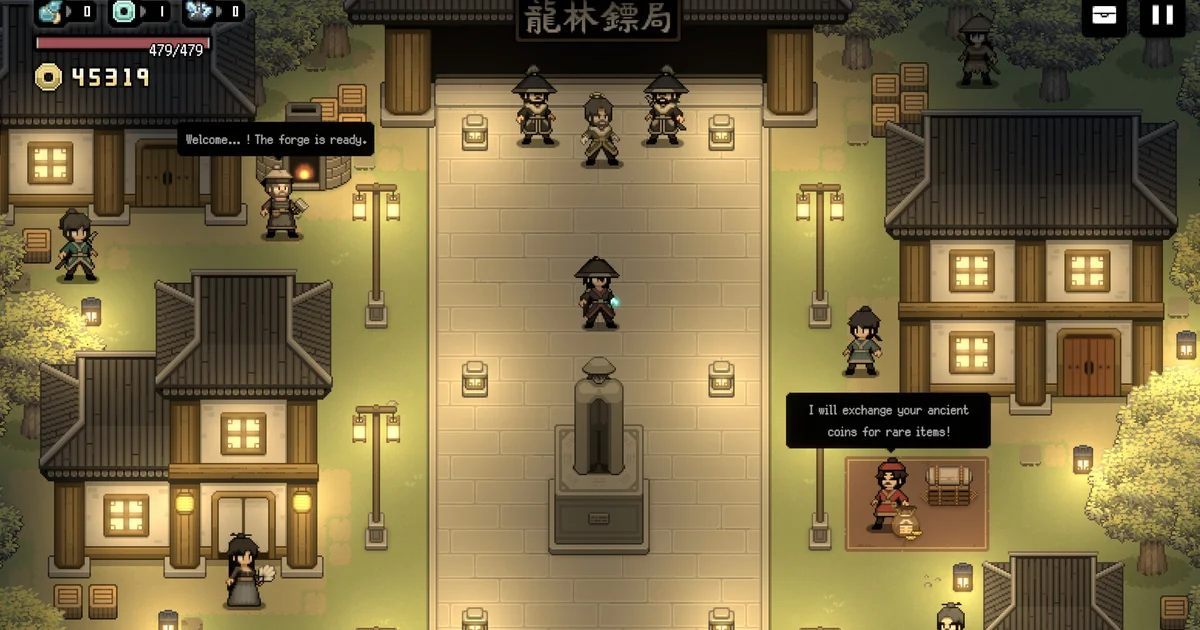
- NPC quests and companions are part of the official progression description
- Bosses have distinct mechanics and attack patterns, so learning the encounter is part of preparation
- Exact archetype thresholds, modifier values, and companion tiers should be checked in the current game rather than invented from an old guide
What unlocks the Murim Survival endgame
Clearing Normal is the confirmed unlock condition. The official store does not say that Ascension appears after run 8, run 12, or run 15, and it does not require a particular number of mastery points. If the option is unavailable, continue the Normal objective path and use the next expeditions to learn the systems rather than grinding toward a guessed number.
The store presents the base loop as surviving waves within a time limit, acquiring martial arts, equipment, and traits, and carrying equipment forward permanently. It also describes Martial Arts Mastery, NPC quests and companions, and bosses with distinct mechanics and attack patterns. Those are the systems that a reliable endgame guide can ask you to inspect. They are more useful than a fabricated tier list because they remain relevant when a balance patch changes a damage value or when a run offers different drops.
Before entering Ascension, open every relevant menu. Confirm which martial arts are active, which traits are doing work, and which equipment pieces have a direct relationship to the plan you want to play. If the game presents an Ascension level or a Snowfield of Memories difficulty option, treat the label shown in your current build as the authority. Older summaries of unlock order are not a substitute for the current UI.
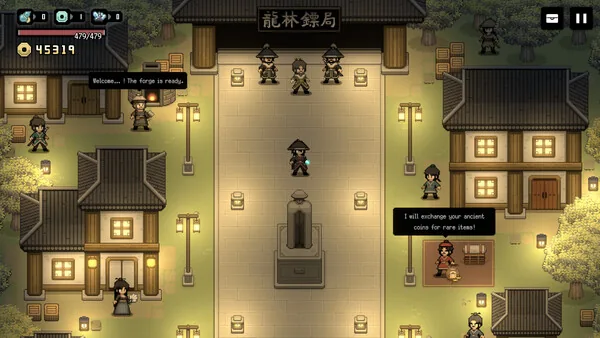 Late-game wave density requires a mastery-synced build: generic kits cap out early.
How to build for Ascension without a fake tier list
The old version of this guide divided the game into three named archetypes and assigned each one an exact mastery gate. The official sources checked for this audit do not publish that taxonomy, those unlock thresholds, or a universal ranking. The better approach is to classify your own build by the job it performs.
Choose one primary job
Decide whether the current run is mainly trying to keep enemies away, control a group, burst down a priority target, or survive through attrition. This is not a claim that the game has four official classes. It is a planning tool for the reward screen. When a martial art, trait, or equipment drop appears, ask whether it improves the same job. A smaller set of mutually reinforcing effects is easier to evaluate than a pile of unrelated bonuses.
Read Martial Arts Mastery before spending rewards
Martial Arts Mastery is an official progression system, but the store page does not list every threshold or say that a particular tree must be taken to a specific depth before Ascension. Open the current mastery screen and read the exact text attached to the next unlock. If the next node improves control, range, survivability, or damage for the job you chose, it is a sensible investment. If it asks you to change the whole plan, record that tradeoff instead of assuming the node is mandatory.
Treat equipment as a run resource
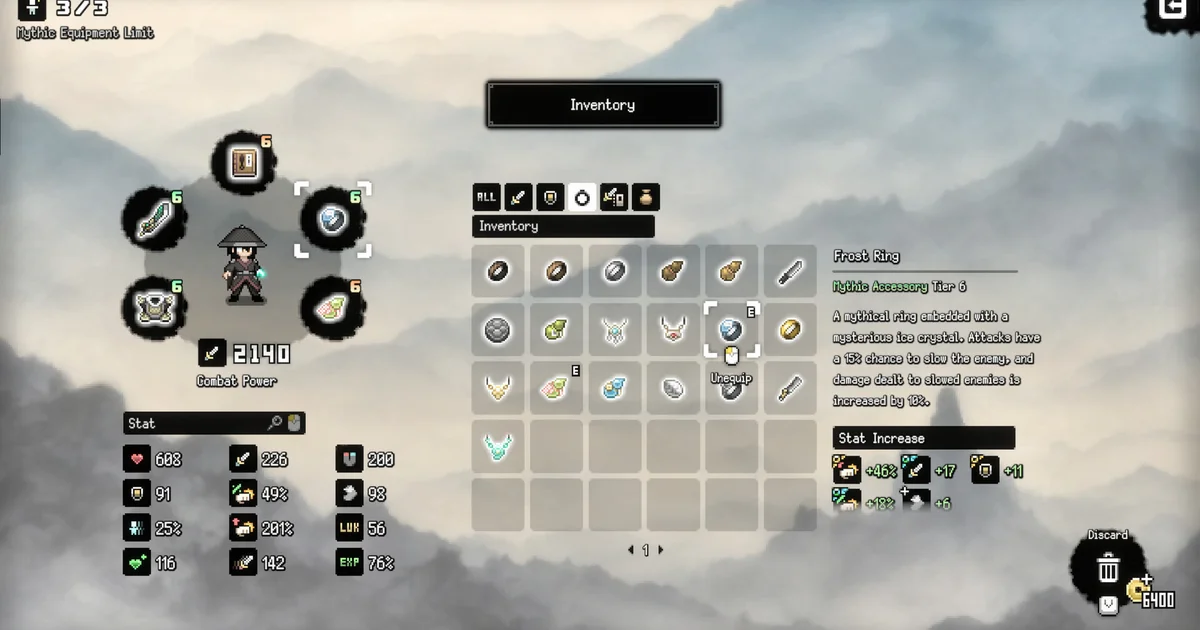
The official store advertises more than 60 equipment types. That number means a fixed build order is unlikely to be correct for every expedition. Keep the pieces that support your primary job, and use the equipment description to decide whether a replacement is a real upgrade or merely a higher number with no synergy. Equipment remains permanently, so learning which drops you personally understand is useful even when a particular run ends before Ascension.
Use traits to close one obvious weakness
Traits are another confirmed part of the progression loop. The common mistake is taking a trait because it is generally good while ignoring the problem that killed the previous attempt. If enemies reach you before a martial art can resolve, choose a trait that buys time or control. If bosses survive the burst window, choose a trait that improves the damage sequence you can execute consistently. Do not claim that a named trait is mandatory unless the current tooltip or an official patch note says so.
Step-by-step Ascension preparation
1. Clear Normal and confirm the mode in the current UI. The official store says Ascension unlocks after clearing Normal. Do not substitute a guessed run count for that requirement. If a patch changes the menu or adds an Ascension level selector, copy the wording shown in your build into your notes.
2. Start from the expedition length. The official description frames expeditions as roughly 15-20 minute runs in which you survive waves under a time limit. That makes the first question practical: can your build complete its main sequence before the timer and before the next wave closes the space? Test the same sequence in Normal rather than judging the build from its theoretical maximum.
3. Pick one primary job. Use damage, control, range, mobility, or survival as the label for your own plan. Keep the next two or three rewards pointed at that job. This does not mean refusing every defensive or utility upgrade. It means knowing why you are taking it and what problem it solves.
4. Inspect Martial Arts Mastery and traits together. A mastery upgrade may look strong in isolation but fail to help the trait package you are building. Read the current unlock text, then choose the upgrade that improves the action you already press successfully. If the game offers a reset or respec, use it to test one change at a time so you can identify what actually improved the run.
5. Test equipment against a boss, not only a wave. The official store explicitly says bosses have distinct mechanics and attack patterns. A weapon that clears ordinary enemies quickly can still fail when a boss asks you to reposition, interrupt, or wait. Enter the next attempt knowing which part of the equipment description you expect to matter during the boss, and discard the plan if the encounter disproves it.
6. Take companion quests seriously, but do not use an invented tier list. NPC quests and companions are confirmed systems. Read the current companion text and choose the option that covers the weakness you have actually seen. The official sources do not establish a universal behavior chart or claim that one companion is always correct for one build, so record your own observations and label them as observations.
7. Reassess after every meaningful reward. Ascension is where a weak link becomes expensive, but the weak link is not always damage. Ask whether you are losing to the timer, ordinary waves, a boss mechanic, or an execution error. Then change one variable. Replacing the entire build after every failed room makes it impossible to learn whether the problem was the build or the decision that used it.
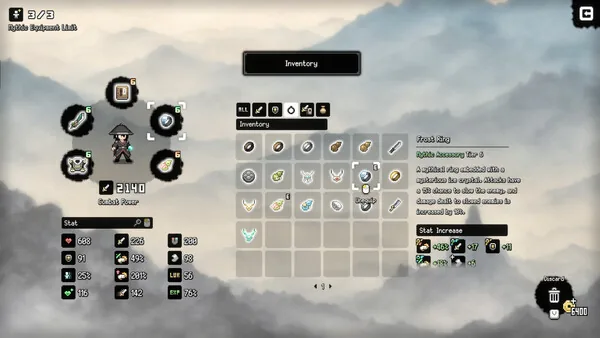 The tier 5-6 equipment gap is where most players stall: the mastery unlock is the gate.
Martial Arts Mastery, companions, and failure analysis
Martial Arts Mastery should be treated as a decision record, not a reason to repeat an unsupported build formula. At each choice, write down the problem the next node solves. If the node improves a martial art you do not use, it may be less valuable than a smaller upgrade that keeps your primary job online. If the node unlocks a new interaction, test that interaction in the next expedition before assuming it is part of the final build.
The same discipline applies to companions. The official store confirms NPC quests and companions, and the community feed documents ongoing balance and information changes, but the checked sources do not give a complete official companion roster with behavior categories. Read the in-game description, note whether the companion helps your actual failure mode, and keep a short record after the run. “This companion helped me stabilize the second boss” is useful evidence. “This is the mandatory companion for ranged kite” is not established by the sources used here.
The most common avoidable mistake is treating a guide's exact number as a hidden requirement. A run count, a named damage threshold, or a supposed mastery variant can be useful personal shorthand, but it should not be presented as a game rule without a current tooltip or official patch note. The second mistake is changing too many inputs after a failure. Keep the martial art plan, equipment plan, and companion plan visible, then change the one category that matches the observed failure.
Finally, learn the bosses. The official store specifically calls out distinct mechanics and attack patterns. A successful Ascension attempt therefore includes encounter knowledge as well as character power: when to hold an attack, which telegraph demands movement, and which reward allows you to return to the intended plan after a defensive detour. This is more durable than a tier list because it survives balance changes.
Official post-launch notes to recheck
The official Steam community feed records several post-launch changes, including updates to translation, combat power, Evolution Active Skill information, Active Skill Synergy, Curios Synergy, Ascension level difficulty for Snowfield of Memories, new Mythic Special Equipment, new Active and Evolved Skills, and Bonus Stat Upgrade. These notes are why this article avoids hard-coding exact damage values or claiming that one older mastery route is still optimal.
Before starting a new Ascension push, open the official news feed and compare its latest notes with the menus in your installed build. If the patch adds a new skill, equipment item, or synergy, first ask whether it changes the primary job you are trying to perform. Then test it in one short expedition. The game already offers a compact loop, so a controlled comparison is faster than rebuilding an entire theory from a stale screenshot.
Frequently asked questions
How do you unlock Ascension mode in Murim Survival? The official Steam description says Ascension unlocks after clearing Normal. Select it from the current expedition flow. The official page does not establish a universal run-count gate.
What's the best build for the Murim Survival endgame? There is no official best-build ranking in the sources checked for this audit. Use one primary job, then align martial arts, equipment, and traits around it. The right choice depends on the drops and mastery text in the current expedition.
How many runs before the Murim Survival endgame? The official requirement is clearing Normal, not reaching run 15. The store describes 15-20 minute expeditions, so use your ability to survive the timer and read boss patterns as the practical readiness check.
Does companion selection matter more in Murim Survival Ascension? Companions matter, but the sources checked here do not publish a universal tier list or behavior taxonomy. Read the current companion description and choose the option that covers the failure mode you have actually seen.
What mastery strategy works for the Murim Survival endgame? Use Martial Arts Mastery to strengthen one coherent plan before branching out. The official store confirms the system but does not publish the deep-concentration thresholds described by the old version of this guide, so follow the current unlock text.
How does Ascension differ from normal difficulty? Ascension is the post-Normal difficulty named by the official store. A complete numerical modifier table is not published there. Compare the current run directly and record which wave, boss mechanic, or timer pressure defeats the build instead of relying on unverified claims about fixed stagger or damage changes.
References
- Murim Survival on Steam: official store page, current review state, 15-20 minute expeditions, Ascension unlock, equipment, mastery, companions, and boss mechanics.
- Murim Survival official Steam community feed: official launch and post-launch patch notes, including Ascension and mastery-related changes.
- Sunwood Games developer page: developer profile and related titles from the studio
Related reading
The Murim Survival builds guide covers the site's broader build discussion. Use it as a starting point, then confirm the current martial arts and equipment text in-game before treating any named route as a recommendation.
The Murim Survival companion guide covers the companion system in full: behavior types, recruitment timing, and how to match companions to your archetype. The endgame companion notes above summarize the key Ascension differences; that guide has the full decision framework.
For players still learning the game's structure before the Murim Survival endgame, the Murim Survival tips guide covers the mastery system, mid-run decisions, and equipment selection from a beginner perspective.
The broader Murim Survival complete guide hub is the best navigation point for the current cluster. You can also cross-check the Murim Survival builds guide, Murim Survival companion guide, and Murim Survival review before committing to an Ascension plan.
For comparison with other progression roguelites, see the Fatekeeper early access review, the Rune Dice complete guide, the LegionBound Ascension guide, the best roguelike games guide, and the Tears of Metal co-op roguelike coverage.
The Murim Survival review covers the full game: 1.0 launch state, the roguelite loop, and whether the mastery system earns long-term investment past the Murim Survival endgame tier.
Was this guide helpful?
About the author

Senior Critic & Analyst
Former game data analyst turned critic with 11 years covering indie and mid-tier games. Based in Austin. Runs spreadsheets on games most people just play.
- 11 years games criticism
- Former game economy analyst
- Roguelike and strategy specialist
Keep reading

Disclaimer
This article is published for informational and entertainment purposes. It does not constitute professional financial, legal, or technical advice. Game performance, online services, patch schedules, and store listings change. Verify critical details (pricing, system requirements, regional availability) with publishers and storefronts before you buy. Affiliate links, where present, help support our editorial work and are labelled in our affiliate disclosure.
Comments
Loading comments…