
GameBrief · General
Murim Survival Review: A Martial Arts Roguelite 1.0
Murim Survival review: Sunwood's martial arts roguelite is $7.99 and Mostly Positive after 1.0. Mastery, 60+ gear types, and the AI disclosure explained.

Reviewing
Murim Survival
Sunwood Games · Sunwood Games
Score
Reviewed build: 1.0
Pros
- Martial arts mastery system adds a genuine cross-run progression layer
- 15-20 minute runs stay fast and feel distinct across different builds
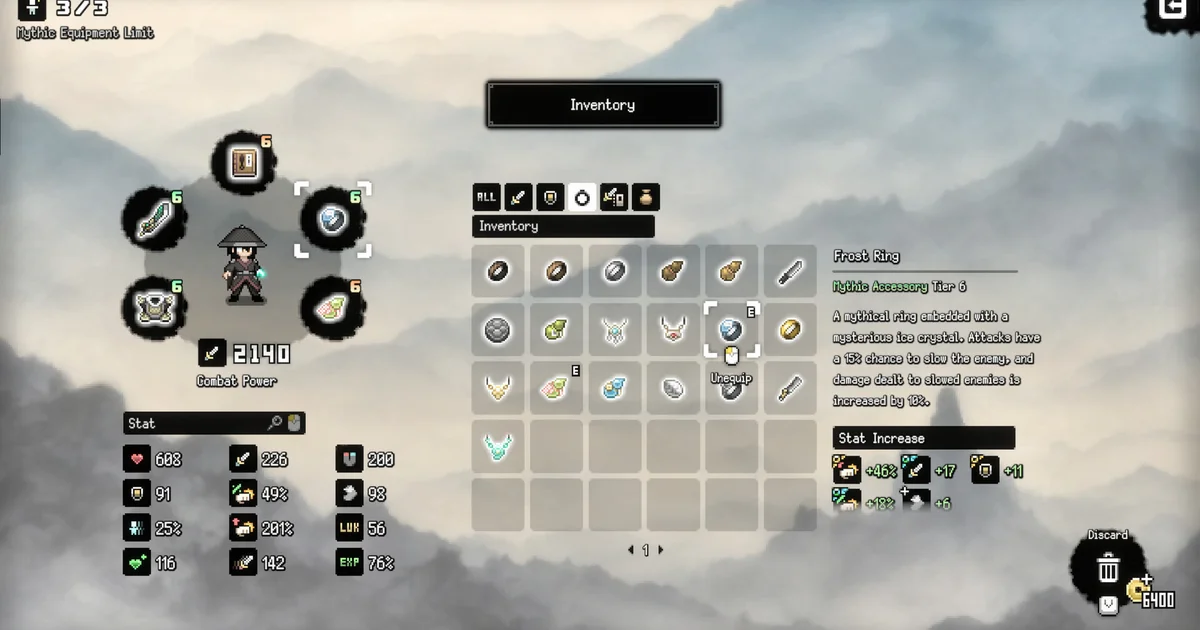
- 60+ equipment types create real build variety beyond percentage bonuses
- Ascension difficulty mode gives post-completion players somewhere to go
- Full audio in 11 languages: unusually strong localization for an indie release
Cons
- AI-generated art and music: disclosed on Steam, but a real quality concern for a paid release
- Core wave-survival loop borrows heavily from Vampire Survivors without fully stepping outside its shadow
- 75% positive after 1.0 signals persistent rough edges
Verdict
Murim Survival 1.0 earns its launch. The martial arts mastery system is more than a skin on a Vampire Survivors loop: it's a genuine second progression layer that accrues across runs. The AI art disclosure is the asterisk you'll need to decide about yourself.
I've been putting off this Murim Survival review for two days because I'm still thinking about the mastery system.
That's the sentence I came back to writing after the second run. The game launched May 4 after fourteen months in Early Access, and I assumed I knew what I was getting before I booted it up.
Current status: September 2026
Murim Survival is a completed 1.0 release at $7.99. Steam currently shows 264 all-language reviews at 75% positive, or Mostly Positive. The official update feed's latest 1.0 follow-ups are balance, translation, and quality-of-life patches from May, including the May 20 translation fix; the launch announcement also says there are no large-scale new-content or DLC plans. The core snapshot remains 15-to-20-minute expeditions, 60-plus equipment types, mastery, companions, and Ascension difficulty.
I was about half right.
Murim Survival review: key takeaways
- Murim Survival 1.0 launched May 4, 2026 after 14 months in Early Access (March 2025)
- Developer Sunwood Games; 75% positive across 264 Steam reviews in the September snapshot
- Roguelite RPG with 15-20 minute expeditions, 60+ equipment types, martial arts mastery system
- Martial arts mastery does not reset between runs: it's a cross-run progression layer
- AI-generated art and music disclosed on Steam page
- Rated 7.0/10: worth its $7.99 asking price for roguelite fans; the mastery system earns it (check Steam for current pricing)
Murim Survival review: overview
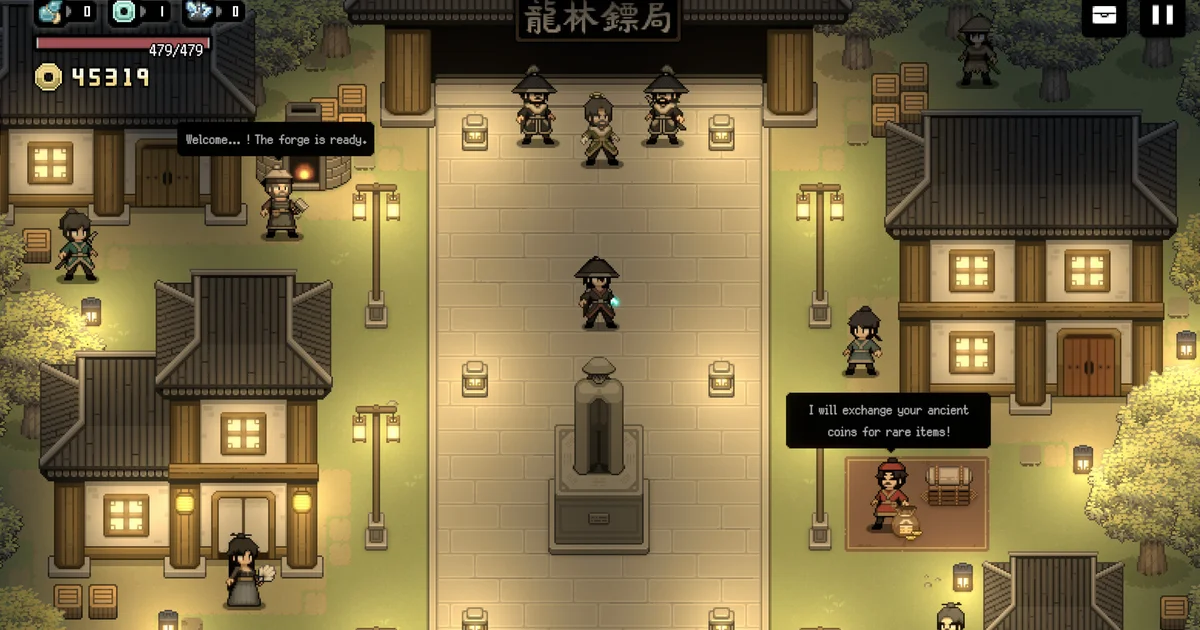
Murim Survival's 1.0 shipped May 4, 2026. Sunwood Games has been iterating on this for over a year (Early Access opened March 17, 2025) and the loop they've landed on is immediately legible. You drop into a ruined world, waves of enemies spawn from every direction, and you survive until the timer runs out or you die. Expeditions run 15 to 20 minutes.
The Vampire Survivors influence is explicit. The structure maps directly: wave-survival, enemies filling the screen, escalating power pickups, short-session design. If you've put hours into that game, you will recognise the rhythm within the first minute. Sunwood doesn't hide this, and frankly they don't need to. What they've built on top of it is why this review exists.
Two things set Murim Survival apart. First: a real equipment loot system with 60+ items that combine into distinct builds rather than just inflating numbers. A shortsword and a specific armour set unlock a parry window. Two particular martial arts combined create a chain attack pattern. These are genuine interactions.
Second: the mastery system. I'll get to that properly: it took me three runs to understand what it was actually doing, and once I did, it changed how I was playing.
At launch, Murim Survival sat at 78% positive across 218 Steam reviews. The current 75% Mostly Positive score across 264 reviews is a better read on the post-launch audience, and it still signals persistent friction that fourteen months of Early Access didn't fully smooth out.
Caption: The expedition map gives you some control over zone type and enemy density before each run: small but meaningful choices that the mastery system rewards you for learning.
Gameplay
The combat loop runs fast. Enemies approach from all sides, you move and build stacks of equipment and passives, and hit escalating boss encounters as the timer climbs. The mid-run difficulty spike is consistent: it's the first real wall and filters out players who haven't built deliberately. The Murim Survival builds guide covers the archetypes this review only sketches.
What Murim Survival gets right that Vampire Survivors sometimes misses: runs feel different from each other in ways that actually matter. Two runs with similar equipment but different martial arts training play differently. The weapon variety is real: a range attack and a shortsword don't just vary in damage numbers, they create different movement patterns and positioning incentives. The former rewards kiting; the latter punishes over-extension.
Sixty-plus equipment types sounds generous until you realise how many are variants of the same base item with different secondary stats. In practice, meaningfully distinct builds run about twelve to fifteen. That's still enough. I found a chain-attack setup on run 7 that I spent three more runs trying to replicate with different starting gear. That replication attempt is where the game holds attention.
NPC companion recruitment is a mid-run feature. Named companions appear during expeditions and fight alongside you with fixed movesets. I recruited the wrong companion for my build twice before I started reading their descriptions more carefully. The game doesn't explain synergies: you work them out yourself.
The Ascension difficulty mode unlocks post-completion. I haven't spent enough time there to rate it fairly, but the design intention is clear: it's for players who want the harder version after building up mastery across many runs. The Murim Survival endgame guide goes deeper on that mode.
The mastery system
Here's what I missed for the first three runs, and what I think will be Murim Survival's actual selling point over time.
The game has two progression tracks running in parallel. The first is equipment: find and equip better gear as runs progress. The second is mastery. Specific martial arts techniques level up through repetition: you use a technique in combat, it gains experience, it eventually unlocks new move variants.
The thing is, mastery doesn't reset between runs. The mastery tips guide turns that idea into a practical early-run plan.
That information is in the tutorial, technically. It didn't stick. I was playing the game as a standard wave-survival roguelite (focusing on equipment, treating each run as isolated) until I cleared a boss in run 4 using a chain-attack pattern I hadn't been deliberately building toward. The reason it worked: I'd been using that technique's early stages in runs 2 and 3 without tracking it. The mastery system had been building underneath my runs the whole time.
Once I understood this, every run became a deliberate investment. Do I push the chain-attack technique further this session, even if it costs me an equipment synergy? That decision shapes a run differently than any single gear pickup. This is where Murim Survival separates from "Vampire Survivors with a skin": it has a real second layer, and that layer compounds over time.
It's not executed flawlessly. Some martial arts are clearly more valuable than others, and the techniques you level early have a compounding advantage over later unlocks. The balance gap is noticeable. But the system works, it's theirs, and it's the thing I kept thinking about.
The AI question
Sunwood Games stated plainly on the Steam store page: "AI was used in the creation of some of the arts and BGM."
This is a disclosed partial use, not a full AI-generation disclaimer. Which specific assets are AI-generated isn't itemised. The character designs (protagonist and enemy types) are stylised and readable in combat, distinct enough to serve the gameplay. Some environmental textures and backgrounds have the smoothed, slightly off quality that tends to characterise AI-generated visual work. The music sits in the background without demanding attention in either direction.
Whether this matters to you is a real question, not a rhetorical one. It's a paid game. The disclosure is there. My own read: the mastery system and the equipment interactions are clearly human design (the synergies are too deliberate, and fourteen months of iteration shows in how the encounter structure holds up. The AI-assisted parts are visible but not load-bearing. "It's not the important parts" isn't the same as "it's fine," though) that's yours to weigh.
Verdict
Caption: High-density waves are where the mastery system shows its value: trained techniques activate without prompting, and a deeply invested build handles density a shallow one can't.
Murim Survival 1.0 is a game that earns its launch. The Vampire Survivors DNA is undeniable: you'll know how familiar this structure is within two runs. But the martial arts mastery system is real design, not decoration. It creates a cross-run investment layer that holds up over a dozen hours in a genre where individual runs often feel disconnected from one another.
The "Mostly Positive" rating isn't a warning to avoid it. It signals edges: the mastery system's early opacity, the balance gaps between martial arts, the AI art disclosure. They're real edges. Whether any of them stop you is a different question.
For roguelite fans who've played through the wave-survival space and want a new mechanic added to the formula: this is worth its $7.99 asking price. The mastery system alone is reason to try it. For players who care about the provenance of every asset in a paid release: the disclaimer is out there, and that's the information you need to make the call.
For a different take on how the roguelite genre is handling complexity in 2026, see our Die in the Dungeon review (a dice-builder that uses a different second layer to similar effect. Blood Vial, also out this month, covers the short-run format from a completely different angle) a micro-FPS where health and movement share the same resource. And Gambonanza, out earlier this week, is worth comparing for how a different game approaches cross-run replayability.
Rating: 7.0/10
Frequently asked questions
Is Murim Survival worth buying at launch? If you like Vampire Survivors-style roguelites and the martial arts theme interests you, yes: especially at its $7.99 price point (check Steam for any active discount). The mastery system adds depth the genre usually skips. The AI art and music is a legitimate concern for players who care about handcrafted visuals.
What is the martial arts mastery system in Murim Survival? Mastery works through repetition: you train specific techniques by using them in combat, levelling them up and unlocking new move variants. Crucially, mastery does not reset between runs. It's a cross-run investment layer running parallel to your equipment progression.
How long are Murim Survival runs? Individual expeditions run 15-20 minutes. The game is designed for quick sessions, but the real hooks (gear unlocks, mastery levels, Ascension mode) accrue across many runs. Expect 10-15 hours before the mastery system fully shows what it can do.
Does Murim Survival have an endgame? Yes. Ascension difficulty mode unlocks after completing the main campaign objectives, designed for players who want a harder challenge once they've built up gear and martial arts mastery across multiple runs.
What happened with the AI art in Murim Survival? Sunwood Games disclosed on the Steam store page that "AI was used in the creation of some of the arts and BGM." It's a partial use rather than full AI generation. Which specific assets are AI-generated is not broken out on the store page.
How does Murim Survival compare to Vampire Survivors? Both are wave-survival roguelites with 15-20 minute run windows. Murim Survival adds an equipment looting system with 60+ items and a martial arts mastery mechanic that carries between runs. The mastery system makes builds feel more deliberate. Sunwood doesn't try to hide the DNA: the first minute makes the inspiration obvious.
Related Reading
- Murim Survival Complete Guide: Builds, Endgame, Tips: the full hub rounding up every Murim Survival guide on the site, from builds to the review verdict.
- Murim Survival Tips: Mastery, Builds, and Early Survival: Murim survival tips covering the mastery system that never resets, equipment synergies worth building toward, and how to....
- Murim Survival Builds Guide: Best Archetypes (2026): Murim Survival builds guide: the three core archetypes that hold up in Ascension mode, which equipment items matter,....
- Murim Survival Endgame Guide: Surviving Ascension Mode: Murim Survival endgame is Ascension mode: enemy density rises, stagger recovery speeds up, and most builds break. Here's....
- Murim Survival Companion Guide: Recruitment and Synergies: Murim Survival companion guide: match movesets to your build archetype, know when to recruit anyway, and read descriptions....
References
- Murim Survival on Steam
- Murim Survival official launch trailer
- Murim Survival official announcements: 1.0 patch and post-launch fixes
- Vampire Survivors on Steam
About the author

Indie & JRPG Critic
Indie game evangelist and lifelong JRPG fan covering small studios since 2017. Mumbai-born, London-based. Writes the way she talks.
- 7 years indie games coverage
- JRPG and visual novel specialist
- Narrative design focus
Keep reading


Disclaimer
This article is published for informational and entertainment purposes. It does not constitute professional financial, legal, or technical advice. Game performance, online services, patch schedules, and store listings change. Verify critical details (pricing, system requirements, regional availability) with publishers and storefronts before you buy. Affiliate links, where present, help support our editorial work and are labelled in our affiliate disclosure.
Comments
Loading comments…