
GameBrief · General
Murim Survival Companion Guide: Recruitment and Synergies

Reviewing
Murim Survival
Murim Survival companion recruitment is tied to quest progress: the official Steam description explicitly says to recruit companions by clearing quests. The public store text does not establish one universal midpoint trigger or publish a complete companion roster. A March 2025 patch note also records that recruiting a different companion can replace the one you already have.
The companion system doesn't explain itself clearly. This guide covers how practical behavior cues map to three build archetypes and what the companion description text is actually telling you. The behavior categories below are field guidance, not official named classes or a substitute for the current in-game description.
TL;DR: Murim Survival companions are recruited by clearing quests, according to the official Steam description. The public docs do not establish one universal trigger, and a 2025 patch note says a different companion can replace an existing one. Match the available companion's behavior cues to your technique archetype, and read the description rather than assuming the portrait tells you everything.
Murim Survival companion guide: key takeaways (quick answer)
- The official store confirms quest-based companion recruitment; exact timing and roster details are not fully documented there
- Read the full description before recruiting. Ten seconds of reading avoids a run-long mismatch
- Three rough behavior types: melee aggressive, melee support/interrupt, and ranged/evasive
- Before the midpoint difficulty spike, take any companion over none
- After the spike, a badly mismatched companion creates coverage gaps but isn't a run-ender
- A March 2025 patch note says recruiting a different companion replaces the existing one
Overview: how companions work in Murim Survival
Companions are recruited by clearing quests, according to the official Steam description. The public store page does not document one universal timing or a full roster table. When the game presents a companion, use the portrait and description as the current-build decision screen rather than treating a midpoint event as guaranteed.
Once recruited, a March 2025 patch note says you can recruit a different companion and replace the existing one. The note does not document every condition or how often this can happen, so compare the new offer before accepting it. The public store page also does not promise that companion behavior scales with mastery; treat the description as the reliable practical signal.
Mastery in Murim Survival is your own build investment. The public store description does not spell out how it changes companion behavior, so the useful question is whether the current companion's displayed range and pressure pattern complements what you're doing.
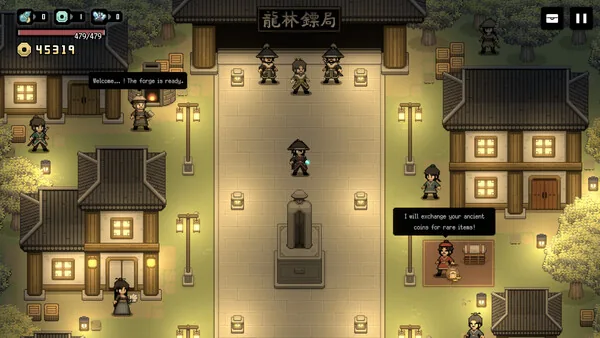 Companion choice affects your passive kit: pick based on your current mastery tree, not just stats.
The three companion behavior types
Not every companion fits a clean category, but most fall into one of three patterns:
Melee aggressive
These companions close distance, engage the nearest enemy, and stay in contact. They generate threat and draw hits, which is useful in some situations and actively harmful in others: particularly ranged kite builds, where pulling enemies to the center breaks positioning.
Melee support and interrupt
These have specific moves designed to create openings: stagger attacks, intercept moves, or disruption skills that temporarily stop an enemy's action. They don't do the highest damage but create windows your own attacks can use. For shortsword chain builds, this is the strongest companion type.
Ranged or evasive
These companions attack from distance or retreat between attacks. They maintain space, don't redirect enemy attention to the center, and fight in patterns that don't require closing range. The best fit for ranged kite builds.
Matching companions to build archetypes
Shortsword chain
The chain attack window closes when an enemy interrupts it. A companion that staggers or distracts a secondary target while you run the chain on the primary target extends the effective range of the build. What you're looking for: interrupt moves, stagger attacks, or anything described as "disruption" or "control."
A melee aggressive companion can work if it generates enough threat to keep secondary enemies occupied. An evasive ranged companion does almost nothing for this build: the chain sequence requires close range, and a companion staying at distance doesn't reduce the interruption risk.
GODEEPER: The chain attack sequence and which armor synergy unlocks the parry window are covered in full in the builds guide. Murim Survival Builds Guide →
Ranged kite
The enemy positioning requirement for ranged kite is the most strict of the three archetypes. You're maintaining distance. A companion that runs into the enemy cluster and redirects attention toward the center breaks the open field you need.
The right Murim Survival companion for ranged kite has ranged attacks or moves with retreating patterns: something that fights without closing range to the enemy cluster. Failing that, an evasive companion that fights defensively and doesn't consistently redirect enemy aggression is second best. A melee aggressive companion is the worst case: enemies end up clustered around the companion in the center, not spread at your preferred range.
Heavy weapon momentum
Heavy weapon runs need spacing during attack recovery. A companion with interrupt or distraction moves that peel one enemy off you while you recover from a missed swing covers the build's weakness. The timing is specific: the window during animation recovery is when you're most exposed, and a companion that redirects one enemy's attention in that moment changes the run.
Any companion that generates threat works better for heavy weapon than no companion. The build's recovery exposure means even a suboptimal companion that draws one hit is worth the slot.
GODEEPER: The full review covers the mastery system, 1.0 launch state, and whether the roguelite loop earns long-term investment. Murim Survival Review →
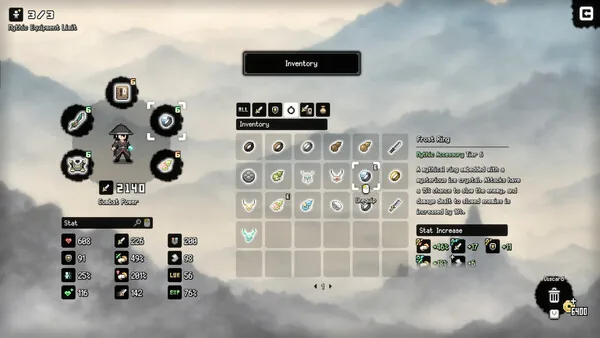 The companion's fixed moveset in action mid-wave: what you see in the description is exactly what you get.
Step-by-step: recruiting the right companion
1. Know your build archetype before the quest reward appears: By the time the companion offer appears, identify whether your technique tree and equipment point toward shortsword chain, ranged kite, or heavy weapon momentum. That gives you a specific filter instead of making a portrait-first decision.
2. Read the full description: Don't click through on the portrait. Read for:
- Range preference (close, mid, ranged)
- Attacking behavior (aggressive, controlled, evasive)
- Specific move types (stagger, intercept, support, pressure)
3. Apply the pre-spike threshold: If the offer arrives before the midpoint difficulty spike, recruit unless the mismatch is severe. This is a field heuristic, not an official timing rule; the public store page only confirms quest-based recruitment.
4. Make the call: If the companion matches your archetype, recruit. If it is a mismatch, assess severity: melee-aggressive pressure is a real problem for ranged kite, while the same pattern can be workable for heavy weapons. If a later offer appears, remember that the patch notes document replacement rather than a permanent no-take-backs rule.
Murim Survival companion tips for the difficulty spike
The midpoint difficulty spike (a consistent wall in every expedition) is the clearest argument for recruiting any companion over none. The spike introduces denser enemy patterns and faster aggression. Without a companion, you're managing all threat yourself during the same phase that tests how much mastery investment you've made.
A companion going into the spike, even a mismatched one, splits enemy aggression. Enemies target the companion, which creates moments where you're not the primary target. In heavy weapon builds especially, those moments matter: recovery windows are shorter when you're not being hit.
After the spike, the run typically opens up. You have more technique variants active, equipment buffs are compounding, and the companion's baseline value shifts from "anyone helps" to "is this companion actively working against my positioning?" Post-spike, a bad match is more costly to assess critically.
The Murim Survival companion recruitment tip most players learn late: the spike changes what a companion is worth. Pre-spike, value = presence. Post-spike, value = synergy.
Reading companion descriptions
The description text uses consistent language across the companion pool. "Closes distance quickly" or "frontal pressure" means melee aggressive: expects to be in range constantly. "Intercepts attacks" or "disrupts combos" means interrupt or stagger behavior, creating openings rather than raw damage. "Retreats after striking" or "mobile pattern" means evasive, repositioning between attacks. "Ranged skill" or "distance preferred" means they fight from further back with minimal enemy redirection. "Draws attention" or "threat generation" means the companion is designed to pull aggression regardless of damage output.
None of these are inherently good or bad. They're only good or bad relative to what your current archetype needs.
Common Mistakes
Skipping the description
The most common Murim Survival companion error is recruiting on portrait alone without reading the description. A companion who looks like a melee brawler might have an evasive pattern. Reading takes ten seconds. Running a mismatched companion for fifteen minutes costs more than that.
Recruiting post-spike by default
The "always recruit" instinct that serves you well pre-spike becomes less accurate after the midpoint. A melee companion in a ranged kite build post-spike creates consistent positioning problems. Post-spike, apply more scrutiny to severe mismatches.
Expecting mastery to compensate
Mastery improves your techniques, not the companion's. If a companion's moveset doesn't fit your build, accumulating more mastery in your preferred technique tree won't change the companion's behavior. Mastery and companion selection are parallel systems, not connected ones.
Frequently asked questions
How do companions work in Murim Survival? Companions are recruited by clearing quests, according to the official Steam description. The store page does not publish one universal timing or full roster table. The March 2025 patch note says recruiting a different companion can replace the existing one, so don't treat the choice as permanently locked without checking the current build.
Which companion is best for the shortsword chain build? Companions with interrupt or stagger moves work best for shortsword chain. The chain attack window closes if an enemy interrupts it: a companion that staggers or distracts a second enemy while you complete the chain on the primary target is worth significantly more than general damage output. Look for description language like "disrupt," "intercept," or "control range" in the companion text.
What companion works for ranged kite builds in Murim Survival? Ranged kite needs a companion that doesn't pull enemy attention to the center of the map. A melee-aggressive companion will run into the enemy cluster, which forces enemies away from your preferred kite range. Look for companions described as "evasive," "mobile," or with ranged skills.
Should you always recruit a companion in Murim Survival? Before the midpoint difficulty spike, yes: any companion is better than no companion. The presence alone adds target priority that reduces incoming pressure. After the spike, a clearly mismatched companion creates coverage gaps. Post-spike, if the available companion is badly mismatched, it's a close call rather than an automatic recruit.
Can you replace a companion mid-run in Murim Survival? Yes. A March 2025 patch note says: "You can now recruit a different companion even if you already have one. (The new companion will replace the existing one.)" It does not document every condition, so compare the offer with your current build before accepting it.
Does mastery affect companions in Murim Survival? The public store page does not document mastery changing companion patterns. Treat mastery as your own build investment and use the current in-game description for the companion's displayed range and behavior.
What should I look for in a Murim Survival companion description? Read for combat range and targeting behavior. "Melee aggressive" or "frontal pressure" means the companion will close distance and engage directly. "Evasive" or "mobile" means they'll retreat and reposition. "Interrupt" or "stagger" means they create openings. Match these to your build's needs.
Related Reading
- Murim Survival Endgame Guide: Surviving Ascension Mode: Murim Survival endgame is Ascension mode: enemy density rises, stagger recovery speeds up, and most builds break. Here's....
- Murim Survival Builds Guide: build archetypes and the technique choices that make companion synergies easier to read.
- Murim Survival Review: the mastery system and launch-state context behind the guide.
- Murim Survival Tips Guide: practical mid-run decisions and equipment priorities.
- Murim Survival Complete Guide Hub: the wider guide index for progression and combat.
- Murim Survival Endgame Guide: how companion value changes in Ascension mode.
- Murim Survival Builds Guide: the build archetypes that make the companion decision easier.
- Murim Survival Complete Guide Hub: the wider progression and combat index.
- Murim Survival Review 2026: launch-state context for the companion system.
References
- Murim Survival on Steam: official store page, current price, review snapshot, and the line "Recruit companions by clearing quests"
- Murim Survival official announcements: developer patches and launch-state updates
- Murim Survival companion patch note: March 2025 note documenting replacement of an existing companion
- Sunwood Games developer page: developer information and other titles from the studio
The Murim Survival tips guide covers the mastery system, mid-run decisions, and equipment selection alongside companion strategy for players still learning the game's structure.
Was this guide helpful?
About the author

Games Critic
Games writer and reluctant optimist who has reviewed over 400 titles across 9 years. Irish, currently in Berlin. Has strong opinions about tutorial design.
- 400+ games reviewed across 9 years
- Platformer and horror specialist
- Narrative design focus
Keep reading

Disclaimer
This article is published for informational and entertainment purposes. It does not constitute professional financial, legal, or technical advice. Game performance, online services, patch schedules, and store listings change. Verify critical details (pricing, system requirements, regional availability) with publishers and storefronts before you buy. Affiliate links, where present, help support our editorial work and are labelled in our affiliate disclosure.
Comments
Loading comments…