
GameBrief · Guides
LegionBound Advanced Builds: Late-Game Class Chains (2026)

Reviewing
LegionBound
Spicy Garlic Games
Reviewed build: Patch 1.12
LegionBound advanced builds start where the synergy guide ends. You know what the three circular loops are. You know which class sits where in the chain. The question after the first ten hours is how to translate that knowledge into builds that actually hold up past wave 30: and why your runs keep collapsing at the same point even when the synergy is active.
TL;DR: LegionBound advanced builds run on synergy-Ascension overlap within tight subchains, not full loop completion. The Warrior group's two most powerful subchains are Warrior,Sorcerer,Witch (damage) and Knight,Smith,Guardian (front-line sustain). Stat priorities shift at each Ascension tier. The anchor-plus-satellite pattern is the strongest endgame structure: 6-8 heroes deep in one loop, 2-3 in a secondary for utility.
LegionBound advanced builds: quick answer
The safest late-run plan remains an anchor loop with a smaller satellite loop: keep 6-8 party slots on the primary synergy chain, then use 2-3 slots for utility. The rankings and wave timings below are this guide's editorial recommendations, not an official developer tier list.
Current status: September 2026
Steam currently describes LegionBound as a party game for up to 50 heroes with 42 classes, each with a synergy subclass, and more than 800 possible Ascension heroes. It lists 83% positive English reviews from 671 reviewers, 81% positive recent English reviews from 32 reviewers, and 30 achievements. The official patch feed currently reaches Patch 1.12, which fixes a faulty-targeting crash, hangs caused by lingering zones, and stuck item disables. Patch 1.1 also added 12 heroes, more than 400 Ascension combinations, 16 new items, and the Brittle, Wet, and Oily status effects, so older build advice should be read against that expanded roster.
Two things matter most past the ten-hour mark: which subchains inside the loops actually return value relative to how many party slots they cost, and a specific build structure that most players stumble into around run twenty without ever naming it.
LegionBound advanced builds: key takeaways
- Subchains beat full loops in most runs: 3-4 adjacent classes give 3-4 active synergy subclasses without needing all 14
- The Warrior group has two distinct power chains: Warrior,Sorcerer,Witch (damage) and Knight,Smith,Guardian (tanking)
- Stat priority changes at each Ascension tier: HP first, then damage multipliers, then synergy item bonuses
- Anchor-plus-satellite is the strongest late-game structure: 6-8 heroes in a primary loop, 2-3 from a secondary
- Recruiting Peasant before two loops are active wastes a party slot for 15+ waves: it's a late-run pickup, not an early target
- Never swap items off a hero before an Ascension merge fires: you lose the item-state bonus that feeds into the merged unit
What changes after 10 hours
Early LegionBound runs are about learning the loop. You pick a synergy group, build toward it, and see if you can close the Tax Collector loop or stack enough adjacent Warriors to activate a few subclasses. Around run ten, most of that is understood.
The wall hits when you apply beginner logic to longer runs. You build the Tax Collector loop because it completed cleanly in your first dozen runs, but it stops scaling at the same point every time. You recruit Peasant early to set up the Protagonist subclass, and the class sits in base form for 20 waves eating a party slot. You take the strongest available hero at wave 15 because their raw stats look good: and realize three waves later that you've snapped your synergy chain.
LegionBound advanced builds exist to solve these specific problems. Not what the loops are, but how to read them at the decision moment.
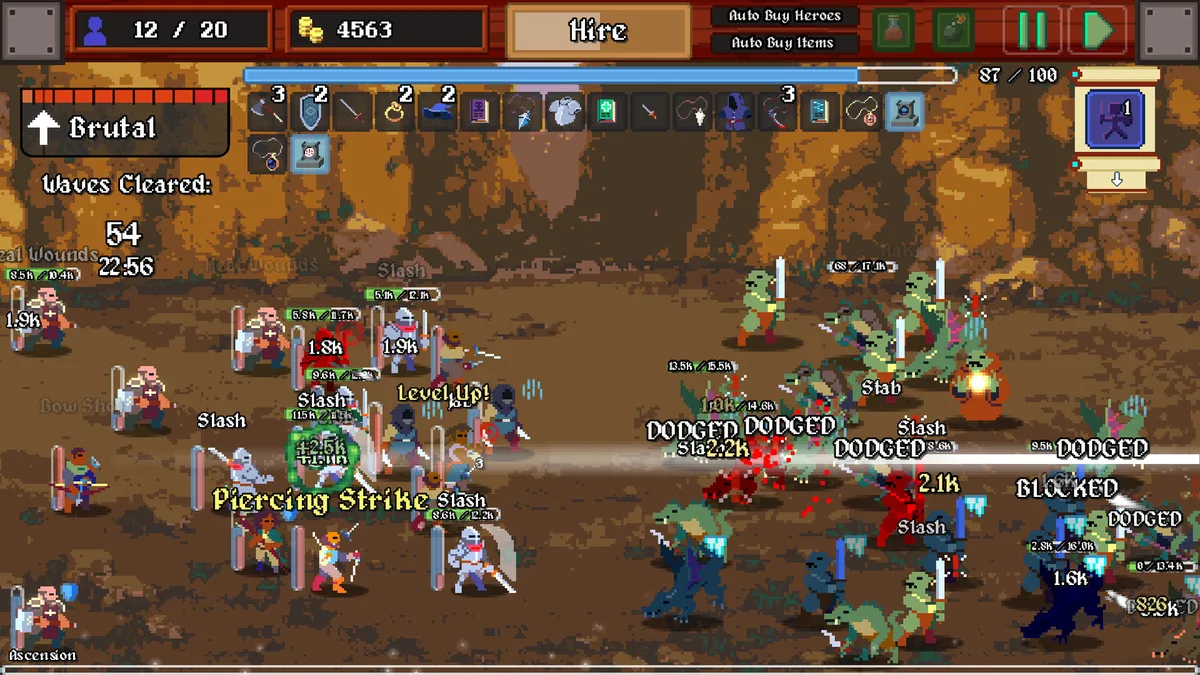 Building deep into one primary loop (not spreading across all three) is what separates mid-game runs from late-game ones.
The two Warrior group power chains
The LegionBound synergy guide maps all 14 Warrior group classes. What it doesn't break down is which subsets of those 14 return the most value per party slot: because not all subchains are equal.
The damage chain: Warrior → Sorcerer → Witch
Three adjacent classes. Three synergy subclasses active simultaneously: Spellblade (Warrior), Warlock (Sorcerer), Hexer (Witch). This is the Warrior group's damage-focused triplet and also the most accessible: Warrior is a starter, Sorcerer and Witch appear early. Running all three Ascended and synergy-active produces the Warrior group's highest damage output in fewer party slots than any other configuration.
The catch: Witch is the third class in the chain, which means you need Warrior and Sorcerer both present before Witch's Hexer subclass fires. If you recruit Witch before Sorcerer joins the party, you're running an unactivated class for however many waves it takes to find Sorcerer. Sequence matters.
The tank chain: Knight → Smith → Guardian → Shield Mage
Four adjacent classes. Four subclasses: Stalwart (Knight), Armorer (Smith), Bulwark (Guardian), Bastion (Shield Mage). This chain provides the highest sustained front-line HP and damage reduction in the game. At Ascension tier 2, an Ascended Knight with Stalwart synergy becomes the single most durable hero in a standard run.
The cost: four classes instead of three, and none of them are starters. You're building this chain from recruited heroes, which means it comes online 5-8 waves later than the Warrior,Sorcerer,Witch opener. The optimal structure runs both chains simultaneously: Warrior,Sorcerer,Witch as your damage layer, Knight,Smith,Guardian as your sustain layer. Seven party slots for seven active synergy subclasses.
GODEEPER: Before running both chains at once, understand how Ascension timing interacts with synergy triggers: especially why you Ascend front-liners first, not damage dealers. LegionBound Ascension Guide: How to Merge Heroes →
Stat priorities by Ascension tier
Stat priority in LegionBound is not static. What's worth buying changes at each Ascension tier, and buying the wrong thing at the wrong tier costs more than the stat difference suggests.
Tier 1 (first Ascension, waves 5-12): HP on front-line heroes is the correct priority. Enemy damage scales quickly and your merged hero is the first thing absorbing sustained fire. At this tier, a defensive item on your Ascended Warrior matters more than a damage item on your Ascended Sorcerer. You're buying time for the tank chain to come online.
Tier 2 (second Ascension, waves 13-22): Damage multipliers on Ascended casters become the priority. By this point, front-line sustain is covered by your tank chain, and enemy health pools have scaled to the point where clearing waves faster is more valuable than absorbing one more hit. A damage multiplier on your Ascended Sorcerer at tier 2 compounds on top of the Warlock synergy multiplier: two multiplicative bonuses on the same hero.
Tier 3+ (third Ascension and beyond, waves 23+): Synergy item bonuses outperform flat stats. An item that activates an additional synergy bonus for your primary loop (or increases the synergy multiplier on classes already running their subclass) is worth more than a higher raw HP or damage number. At this tier, the base stat floor is high enough that multipliers are where meaningful gains come from.
The anchor-plus-satellite pattern
This is the build structure experienced players find around run twenty, usually without naming it. The synergy guide doesn't mention it because it's not about what the loops are: it's about how to use two loops at once without fracturing either.
The structure: commit 6-8 party slots to a primary loop (the anchor), and use 2-3 remaining slots for specific heroes from a secondary loop (the satellite). The satellite heroes aren't there to complete a second loop: they're there because 2 adjacent heroes in a secondary loop still activates the forward class's synergy subclass.
The most common form: Warrior group as anchor, Tax Collector heroes as satellites. Two Tax Collector group heroes in a Warrior-primary party, Barbarian and Tax Collector, for example, activates Barbarian's Berserker synergy without touching a third slot. That's a burst damage subclass operating independently of your main Warrior chain. The Tax Collector hero is doing the same, Strongarm fires the moment Mercenary joins, or Berserker fires when Tax Collector is present.
Why this beats a full dual-loop approach: splitting 50/50 across two loops means neither chain reaches the depth where tier-2 Ascensions compound meaningfully. The anchor-plus-satellite keeps one chain at full depth (Ascended, synergy-active, tier 2 by wave 20) while the satellite adds secondary subclasses at low opportunity cost.
The Barkeep group makes a different but effective satellite. Rogue and Duelist as a 2-hero Barkeep satellite activates Assassin on Rogue and Fencer on Duelist. Two subclasses, two party slots, zero disruption to the Warrior anchor chain.
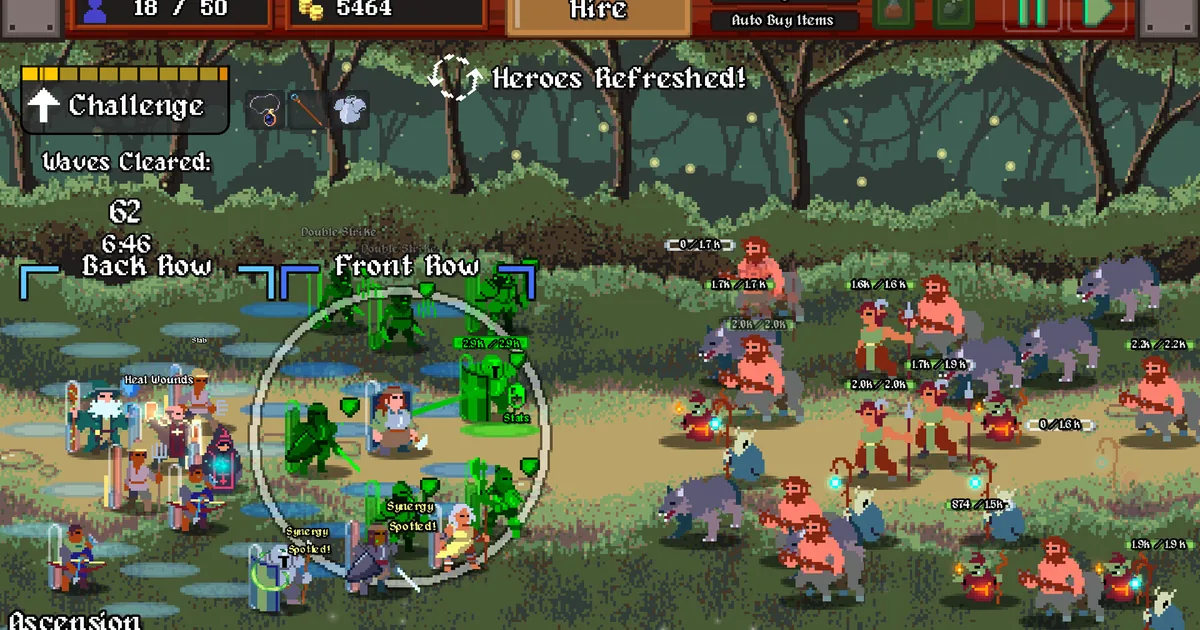
 The anchor-plus-satellite structure in action: deep Warrior group chain with Tax Collector satellites providing secondary synergy subclasses.
GODEEPER: Full class loop tables and which adjacent pairs trigger each synergy subclass: the reference to have open when you're planning which satellite heroes activate without a third slot. LegionBound Synergy Guide: All 42 Classes →
Step-by-step
1. Commit to your anchor chain by wave 3. Decide which Warrior group subchain you're running before wave 4. If you're running Warrior,Sorcerer,Witch, you need Warrior as your starter and Sorcerer as your wave-2 or wave-3 recruit. If you're building toward the full dual-chain structure, you still start with the damage triplet and add Knight once both chains are seeded. Do not split early: wave 1-5 is anchor-seeding time.
2. First Ascension in the anchor chain, wave 5. Warrior or whatever class you're using as the chain's front-liner. The legionbound tips guide covers wave 5 timing in detail: the short version is that enemy scaling makes un-Ascended parties unable to keep pace past this point.
3. Begin satellite recruitment after first Ascension. Once the anchor is Ascended and synergy-active, you have a power spike that buys waves. Use that window to add satellite heroes. Two adjacent Tax Collector or Barkeep heroes, preferably ones that activate each other's subclass without requiring a third. Satellite recruitment happens in the wave-6 to wave-12 window for most runs. Before that, you're still building the anchor. After wave 12, adding new loops gets costly in party slots.
4. Prioritize second Ascension on anchor hero at wave 15. Your tier-2 Ascension target is the class doing the most work in your anchor chain. In a Warrior,Sorcerer,Witch build, that's typically the Sorcerer at wave 15: because Warlock synergy plus a tier-2 Ascension stat multiplier produces the highest damage output of any hero in the build at this stage. Keep satellite heroes un-Ascended if party slots are tight; they're providing subclass value either way.
5. Reassess Peasant at wave 20. If you're running two active loops by wave 20 and have heroes from both evolved, Peasant's Protagonist subclass condition is approaching naturally. At this point, Peasant is worth a party slot. Before wave 20, it sits in base form costing you a slot that would be better used on an anchor or satellite class. Most runs where Peasant is recruited at wave 8 and upgraded at wave 25 would have been stronger with a different class in that slot from wave 8 to 20.
Common late-game mistakes
Breaking the chain for raw stats is the most frequent one. A hero with impressive base numbers from a third loop at wave 15 is not better than a hero who deepens your anchor. Raw stats without synergy subclass activation are floor-tier: the hero you recruit at wave 15 matters less than whether they extend or protect your synergy structure.
Swapping items before an Ascension fires is subtler. The merge reads both heroes' item states at the moment of combination. Moving an item off one hero right before wave 5 (because you think another hero needs it more) means that item doesn't factor into the merge calculation. Keep items on their intended hero until after the merge resolves.
Targeting Peasant's subclass from the start is the third. Protagonist fires when 3 heroes from different groups are evolved. Recruit Peasant at wave 5 and you're committing to a base-class hero in a slot for 15+ waves. Build your anchor and satellite first; Peasant upgrades as a byproduct of doing that right, not a goal that shapes your recruitment from wave 1.
LegionBound advanced builds tips
Know the loop direction before each recruit decision. The synergy table shows which class triggers which subclass. At any point in a run, you should know which hero in your party is next in the loop, and what class would activate their subclass or be activated by them. If you can't answer that in 5 seconds, you haven't internalized the loop well enough to make wave-12 decisions quickly.
One high-tier item on your tier-2 Ascended Sorcerer beats two low-tier items on un-Ascended heroes. Skill tree investment in item quality tiers pays off here: upgrade the item floor on your core anchor classes, not spread low-quality items across a large party.
Tax Collector loop is a training tool, not a ceiling. Its 4-class completeness is excellent for understanding what a finished loop feels like. But the damage ceiling falls below a deep Warrior anchor at tier 2+. Players who run Tax Collector loops through their first dozen runs sometimes stay with it past where it stops scaling. Switching to a Warrior anchor with Tax Collector as a satellite is the specific upgrade to make: not abandoning the loop entirely, just repositioning it.
Check synergy subclass status every 5 waves. Synergy displays the subclass name when it's active. If your Warrior is showing Spellblade, synergy is live. If it's still showing Warrior, something broke: someone died, a class was repositioned incorrectly, the synergy trigger class is absent. Catching this 5 waves after it broke is recoverable. Catching it 15 waves later usually isn't.
Frequently asked questions
What are the best advanced builds in LegionBound? The strongest endgame builds stack Ascension and synergy on the same class within one primary loop. The Warrior damage chain (Warrior,Sorcerer,Witch) and tank chain (Knight,Smith,Guardian) run simultaneously for 7 active synergy subclasses across your core party. Anchor-plus-satellite extends this further with 2-3 secondary loop heroes adding more subclasses at low opportunity cost.
Which class cluster is best for LegionBound endgame? The Warrior group's tank chain (Knight → Smith → Guardian → Shield Mage) produces the highest front-line sustain at Ascension tier 2 and above. Combine it with Warrior,Sorcerer,Witch for damage and you have the game's two strongest adjacent chains running simultaneously.
What stat should I prioritize in LegionBound advanced runs? HP on front-line tanks at tier 1. Damage multipliers on Ascended casters at tier 2. Synergy item bonuses at tier 3+. The priority shifts because enemy scaling patterns change how each stat type compounds mid-run.
What is the anchor-plus-satellite build? Commit 6-8 party slots to a primary loop and use 2-3 remaining slots for adjacent heroes from a secondary loop. The satellite heroes activate each other's subclasses without requiring a full second loop. Warrior group anchor plus 2 Tax Collector group heroes as satellites is the most common version.
What mistakes do advanced players make? Three main ones: taking an off-loop hero for raw stats in wave 12-15 (breaks the chain just as it compounds), swapping items before Ascension fires (loses the item-state bonus from the merge), and recruiting Peasant before two loops are active (15+ waves of a base-class hero in a slot that could extend the anchor).
How does the skill tree help advanced builds? Item quality tier nodes are the most impactful mid-game skill tree investments. They increase how frequently synergy-activating items appear in the shop, which accelerates the tier-2 stat priority shift. Ascension speed nodes come second: they lower the wave threshold for your second merge.
Can I mix all three synergy groups in one build? Yes, but only as a deliberate satellite choice. Running 4 classes from each of the three loops produces generalist parties where most heroes are running base-class stats. The anchor-plus-satellite limits you to one satellite loop for a reason: deep anchor, targeted secondary.
Related Reading
- Legionbound Launches on Steam: 50 Heroes, 30 Classes: Legionbound launches April 27 on Steam: an autobattler where you field 50 heroes from 30
- LegionBound Gold Farming: Coins, Gems, Economy Guide 2026: source-bounded coverage of enemy coin drops, wave depth, Skill Gems, and current economy caveats.
- LegionBound Tier List: All 30 Classes: which classes anchor a loop versus fill it, ranked by synergy value.
- LegionBound Endbringer Guide: the boss these late-game builds are ultimately built to beat.
- LegionBound Warrior Group: All 14 Classes & Synergies: LegionBound Warrior group: all 14 classes in the largest synergy loop, how the circular subclass chain works, and....
- Lost Castle 2 Builds Guide: All 7 Weapon Types at 1.0: Lost Castle 2 builds guide: all 7 weapon types, how Third Layer Inscription Resonance works, and the strongest....
- Legionbound Battle Mode Guide: Endurance Runs 2026: Legionbound Battle Mode explained: how endurance scaling works, when to use it over Adventure Mode,.
- LegionBound Adventure Mode Guide: Route, Build, Win: LegionBound Adventure Mode guide: map routing, camp building choices, when to loop vs fight the.
- LegionBound Ascension Chain: Timing, Risk, Recovery 2026: LegionBound ascension chain guide.
- LegionBound Builds: Beat the Endbringer on Loop 2+: LegionBound builds for loop 2+ Endbringer: dual Warrior subchains, aura positioning, Mine building priority, and.
References
- LegionBound on Steam: store page, Very Positive reviews, $9.99 USD
- LegionBound official announcements: Patch 1.12 fixes and the Patch 1.1 roster and status-effect expansion.
- Spicy Garlic Games: developer page
- LegionBound Synergy Guide: All 42 Classes & Groups: full class loop tables and synergy subclass list
- LegionBound Ascension Guide: How to Merge Heroes: merge timing, stat multipliers, and Ascension protection
- LegionBound Tips (Best Builds & Synergies for Beginners) first-run fundamentals: rows, skill tree priorities, Battle vs Adventure Mode
- LegionBound Launch Overview: launch context and review breakdown
- LegionBound complete guide hub: all classes, synergies, ascension, and battle/adventure mode guides
Was this guide helpful?
About the author

Senior Critic & Analyst
Former game data analyst turned critic with 11 years covering indie and mid-tier games. Based in Austin. Runs spreadsheets on games most people just play.
- 11 years games criticism
- Former game economy analyst
- Roguelike and strategy specialist
Keep reading


Disclaimer
This article is published for informational and entertainment purposes. It does not constitute professional financial, legal, or technical advice. Game performance, online services, patch schedules, and store listings change. Verify critical details (pricing, system requirements, regional availability) with publishers and storefronts before you buy. Affiliate links, where present, help support our editorial work and are labelled in our affiliate disclosure.
Comments
Loading comments…