
ReviewTactical Breach Wizards
Tactical Breach Wizards review: Tom Francis' tactics classic
Tactical Breach Wizards review: 97% positive from 10,460 Steam reviews at $19.99. Tom Francis's wizards bring time rewind, 14 hours, and sharp tactics.
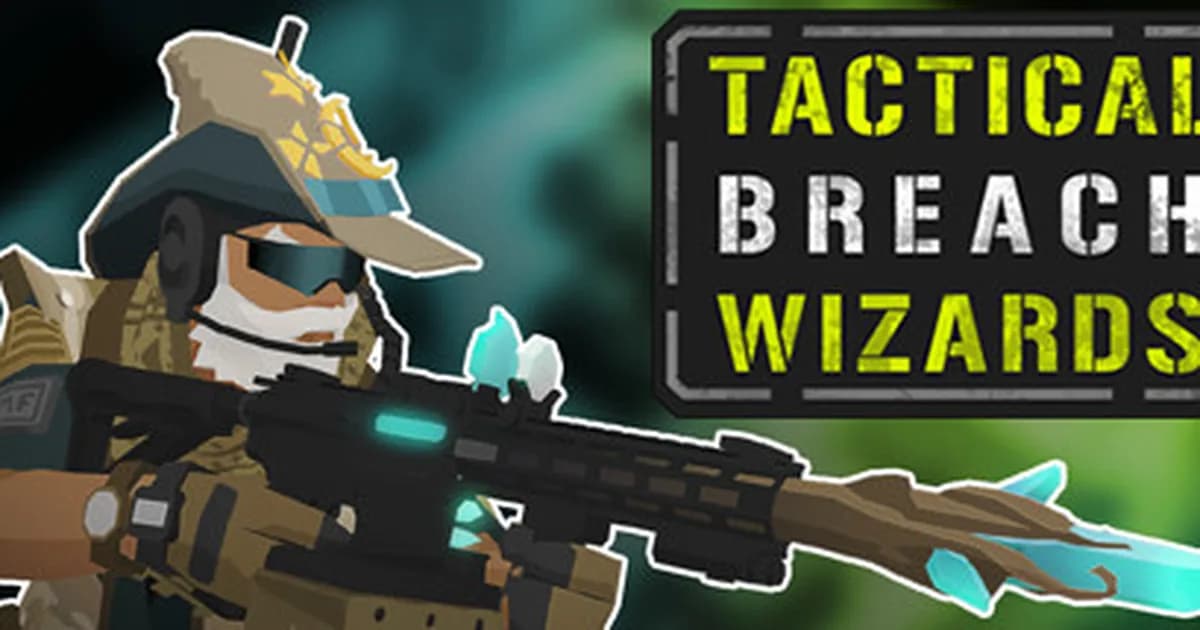
Reviewing
Tactical Breach Wizards
Suspicious Developments · Suspicious Developments
Score
Reviewed build: 1.0
Pros
- Combat puzzles that reward clever thinking over brute force
- Time rewind mechanic removes frustration without removing challenge
- Tight 14-hour runtime: no padding, no bloat
- Sharp, funny writing from Tom Francis throughout
Cons
- PC-only, no console release announced
- Relatively small audience means less community content and guides online
Verdict
One of the best tactical games in years, at a price where it's impossible to argue against. Play it.
Tactical Breach Wizards has 10,460 English Steam reviews in the current checked snapshot, with 97% positive. It costs $19.99 in the US snapshot. Tom Francis made it, and before that he made Gunpoint and Heat Signature: both games with intensely dedicated fanbases that slightly outkicked their player counts.
Tactical Breach Wizards is the best thing he's made.
TL;DR: A turn-based tactics game where modern wizards in kevlar breach rooms and unravel a conspiracy. 14 hours of tight puzzle-combat, a time rewind mechanic that eliminates frustration without eliminating challenge, and Tom Francis writing at his sharpest. The current Steam snapshot is 97% positive from 10,460 English reviews at $19.99. If you like tactics games and haven't played this yet, you've missed one of the better games of the last two years.
Tactical Breach Wizards review: quick verdict
The pitch is pure Tom Francis: inherently weird, immediately legible. Your team of renegade wizards in tactical armor clears rooms using spell combinations and breach tactics. Each mission is a turn-based puzzle. You can rewind time. The writing is funny and specific in the way his games always are.
What's different from Gunpoint and Heat Signature is the polish. This one feels like the work of someone who spent 10 years learning exactly what he wants to make and then made it. No rough edges. No mechanics that feel like first drafts.
Current status: September 2026
The official Steam page lists Tactical Breach Wizards at $19.99, 97% positive across 10,460 English reviews in the checked snapshot, and a 93% recent-review snapshot from 81 reviews. It remains a PC-focused single-player release with a demo, Steam Workshop, and level editor. The official page also confirms the 14-hour campaign and 52 Special Edition commentary recordings.
Key takeaways
- Developer: Suspicious Developments (Tom Francis, Gunpoint / Heat Signature)
- Released: August 22, 2024, PC only
- Price: $19.99
- Steam: 10,460 English reviews, 97.0% positive, "Overwhelmingly Positive"
- OpenCritic: 87 (Mighty), 100% of critics recommend
- Runtime: ~14 hours main campaign, no filler
- Rewind mechanic lets you undo any action mid-turn
- Special Edition includes 52 developer commentary tracks (3+ hours)
What the game actually is
You have a team of four wizards: each with a fixed kit of spells. Missions drop you into environments with guards and objectives. On your turn, you move, cast, push enemies out windows, chain spell effects together. Then the enemies move.
The setting is modern: kevlar vests, earpieces, police dispatch chatter in the background. The powers are explicitly magical: one character hurls lightning, another bends space, another causes enemies to walk forward uncontrollably until they fall off ledges. The combination of tactical military aesthetic with openly cartoonish magic is part of the joke and part of the design: it keeps the game from taking itself seriously at moments when self-seriousness would be annoying.
Each wizard has meaningful limitations. Spells have ranges. Some effects push enemies, which is either useful or dangerous depending on what's behind them. A few abilities have friendly fire implications that matter. The constraints are genuine, and they create actual puzzles: you're not optimizing a dominant strategy, you're working out whether the specific combination of tools you have can clear the specific room you're in.
Each room is a self-contained puzzle. The modern tactical aesthetic and the cartoonish spell effects coexist without explanation: that tension is part of the design.
The rewind mechanic: why it works
Tactics games have a frustration problem. XCOM, Into the Breach, Gears Tactics: all of them have moments where a plan you understood failed because of a mechanical detail you missed: a two-tile range instead of three, a cover mechanic that didn't behave as expected, a misclick on turn 14 of a complex battle. The usual solutions are either "deal with it" or "let the player save-scum."
Tactical Breach Wizards solves this cleanly. You can rewind to any point in your turn. You can go back three actions. You can go back to the start of the turn and try something completely different. The rewind doesn't modify enemy positioning or health: it rewinds your own choices. Enemies still react to whatever you actually do. The challenge remains intact. The frustration from misclicks doesn't.
I initially thought this would make the game too easy. It doesn't. The puzzles are designed around the assumption that you'll rewind, so the solution space is tighter than it would be in a game where permanent mistakes are the difficulty driver. You're solving the puzzle correctly, not just not-failing.
The writing
Tom Francis writes his own games. That's not standard for a developer with his production values, and it shows in a specific way: the characters sound like people he knows rather than genre archetypes. There's a dry wit throughout: the team talks to each other with the slightly-too-casual professionalism of people who have been in crisis situations together long enough to stop being dramatic about it.
The main story runs about 14 hours. It doesn't outstay its welcome. There's a conspiracy plot that actually pays off. Side conversations fill out the characters without padding the runtime.
The Special Edition adds 52 developer commentary tracks from Tom Francis discussing design decisions, story choices, and the logic behind specific puzzles. Combined runtime is over three hours. If that kind of behind-the-scenes content interests you, it's genuinely interesting: Francis is a careful, articulate thinker about game design and he doesn't pad the commentary.
What the current Steam score means
The review score is real. This is not a case of a tiny launch-week sample: the current English Steam snapshot has 10,460 reviews and remains Overwhelmingly Positive at 97%. OpenCritic's 87 with 100% recommend rate from critics who played it at launch matches the game's continued reputation, even though Steam's recent-review sample is smaller.
The underperformance isn't in quality: it's in visibility. Tactical Breach Wizards launched without much marketing noise. Tom Francis doesn't do PR in the conventional sense. The game found its audience through word-of-mouth slowly, which is why you might be hearing about it for the first time now despite it being almost two years old.
That's fine. Some games are better discovered late. The backlog-clearing framing ("best games you haven't played") is a cliché but it's accurate here.
The turn view. Spell ranges are visible, patrol paths are predictable: the game gives you everything you need to plan, then lets the puzzles be hard anyway.
GODEEPER: For another game in the "small studio, exceptional result" category, see Clair Obscur Expedition 33 review: worth it a year later →. Different genre, same impulse toward doing something genuinely good with limited resources.
Verdict
Tactical Breach Wizards is very good. It's the right length, the right price, and it doesn't waste your time at any point in the campaign. The puzzle design is clever without being obtuse. The writing is the best Tom Francis has done. The rewind mechanic solves the single biggest frustration in the genre without making the game easier.
9.5 out of 10. The 0.5 is for the PC-only situation and the relatively thin community around it (fewer guides, less player knowledge sharing than a bigger game). Neither of those things affect the game itself.
If you play tactics games and you haven't played this, it should be next.
Related Reading
- Clair Obscur Expedition 33 Review: Worth It a Year Later: another under-discussed game from a small studio, different genre, same essential quality.
- Die in the Dungeon Complete Guide: another tactics-adjacent indie with a clean mechanical premise and high execution.
- Core Crusher Beginner Guide: another small-scope tactical roguelite worth checking out.
- Solasta II Coverage: a turn-based tactical RPG worth comparing on how it handles party-based combat.
- Rift Wizard 3 Realm 20 Boss Guide: another tactics-forward roguelike worth reading for comparison.
- Rift Wizard 3 Complete Guide: another deep indie tactics game with build choices that reward experimentation.
- Mortal Shell II Weapons Tier List: for readers who want a more combat-heavy alternative to Tactical Breach Wizards' puzzle-tactics approach.
- Skull Horde Review: another compact, mechanically-focused indie worth reading for comparison.
References
- Tactical Breach Wizards on Steam
- Tactical Breach Wizards official Steam announcements
- Tactical Breach Wizards on OpenCritic
- Suspicious Developments: Tom Francis developer page
- Tactical Breach Wizards official launch trailer
Frequently asked questions
Is Tactical Breach Wizards worth buying? Yes. The current Steam snapshot is 97% positive across 10,460 English reviews at $19.99, with a roughly 14-hour campaign and no filler. It remains an excellent late discovery.
Who made Tactical Breach Wizards? Tom Francis, under Suspicious Developments. Previously made Gunpoint (2013) and Heat Signature (2017). This is his most polished game.
How long is Tactical Breach Wizards? About 14-15 hours for the main campaign. Each mission is a discrete puzzle. No grinding, no padding.
What kind of game is it? Turn-based tactics. Modern wizards in tactical gear breaching rooms, combining spells, solving positional puzzles. Time rewind lets you undo any action mid-turn.
Is Tactical Breach Wizards on console? No. PC (Steam) only, released August 22, 2024. No console release announced.
How does time rewind work? You can rewind to any point in your turn: one action back, or all the way to the start. Enemies don't reset, just your choices. It removes frustration from misclicks without touching the puzzle difficulty.
About the author

Indie & JRPG Critic
Indie game evangelist and lifelong JRPG fan covering small studios since 2017. Mumbai-born, London-based. Writes the way she talks.
- 7 years indie games coverage
- JRPG and visual novel specialist
- Narrative design focus
Keep reading
Clair Obscur Expedition 33 Review: Is It Worth It in 2026?
General · 8 min
Tainted Grail Fall of Avalon: free DLC 5, patch 1.23
General · 5 min

Paralives Early Access: Not Free at $39.99, Worth It?
General · 11 min
Mina the Hollower Preview: What the Full Release Confirms
General · 4 min
Best Roguelike Games 2026: 7 Picks for Every Budget
General · 9 min
Best Indie Games Under $20 2026: 7 Top Budget Picks
General · 9 min
Game deals · affiliate links

Disclaimer
This article is published for informational and entertainment purposes. It does not constitute professional financial, legal, or technical advice. Game performance, online services, patch schedules, and store listings change. Verify critical details (pricing, system requirements, regional availability) with publishers and storefronts before you buy. Affiliate links, where present, help support our editorial work and are labelled in our affiliate disclosure.
Comments
Loading comments…