
ReviewClair Obscur: Expedition 33
Clair Obscur Expedition 33 Review: Is It Worth It in 2026?
Clair Obscur Expedition 33 review: 95% positive across 278k Steam reviews, $39.99 at 20% off, and still on Game Pass. Is it worth playing now?
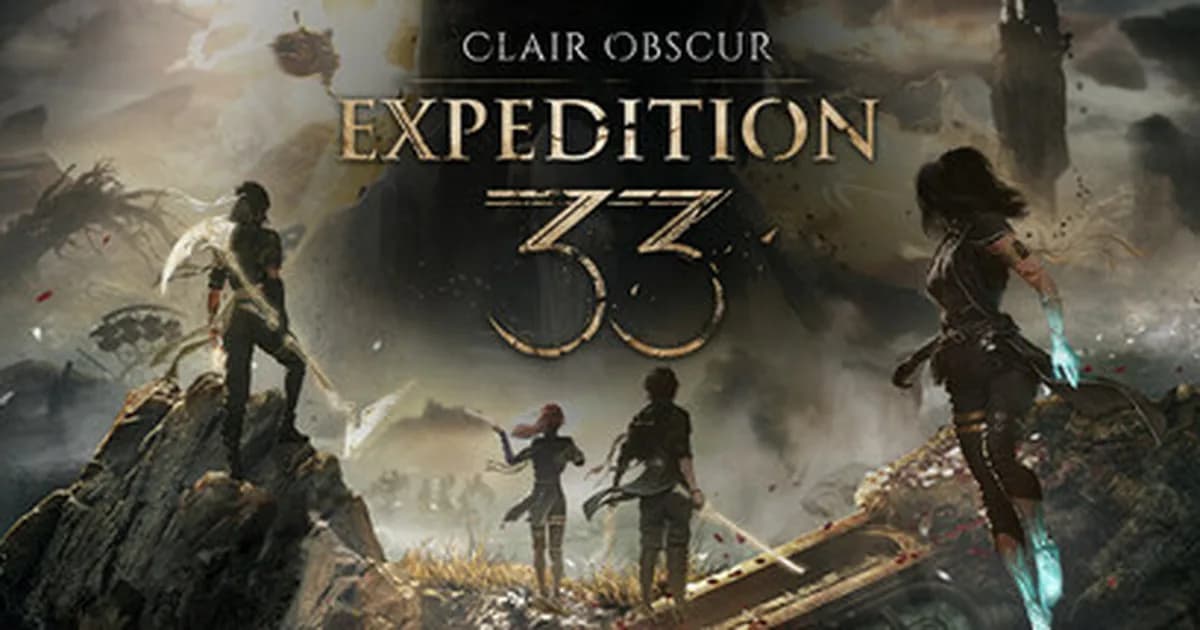
Reviewing
Clair Obscur: Expedition 33
Sandfall Interactive · Kepler Interactive
Score
Reviewed build: 1.0 review; current snapshot through v1.5.6
Pros
- Turn-based combat with parry and dodge timing that rewards engagement
- Exceptional world design with a genuinely original premise
- Acts 1 and 2 tell one of the better RPG stories in recent years
- Available on Game Pass: zero barrier for subscribers
Cons
- Act 3 balance is inconsistent: optional areas far harder than the final boss
- Late-game multiverse plot twist undercuts the emotional investment
- Some difficulty spikes feel punishing rather than fair
Verdict
A landmark RPG from a first-time studio that earns its reputation despite a fumbled third act. If you're on Game Pass, play it today.
Clair Obscur Expedition 33 has about 278,500 Steam reviews in the current all-language summary and remains roughly 95% positive. It released in April 2025, hit 2 million copies sold in twelve days, and landed on Xbox Game Pass the same day. More than a year after release, the question has shifted from "is this worth the hype" to "what should I know going in?"
TL;DR: Clair Obscur Expedition 33 is a 9/10 RPG with a genuinely flawed third act. Acts 1 and 2 are exceptional: strong combat, a distinctive world, and a story that earns its emotional moments. Act 3 introduces balance problems (optional areas harder than the final boss) and a multiverse twist that many players found reductive. On Game Pass, play it now. Otherwise the audited Steam price is $39.99 during a 20% sale, and it's worth it.
Clair Obscur Expedition 33: quick verdict
It earns the score. Sandfall Interactive built an RPG that compares favorably to the established names in the genre. That's notable for a 30-person studio's debut. The combat system, world design, and character writing through two-thirds of the game are exceptional.
The "messy 9/10" framing that the patientgamers community has settled on is accurate. The mess is real. It doesn't make the game less worth playing.
Clair Obscur Expedition 33 status: September 2026
At the time of this audit, Steam's all-language review summary showed 278,519 reviews, 265,284 positive and 13,235 negative, which is about 95.2% positive and still labeled "Overwhelmingly Positive." Steam also showed the $49.99 game at $39.99 with a 20% discount. The official Steam feed lists patch v1.5.6 as live, while Xbox Game Pass remains the lowest-friction way to play.
Key takeaways
- Sandfall Interactive, debut game, ~30-person French team
- Released April 24, 2025: PC, PS5, Xbox Series X/S, Xbox Game Pass day one
- 278,519 Steam reviews in the all-language snapshot, about 95.2% positive, "Overwhelmingly Positive"
- Metacritic: 94 (critic), 9.7 user score
- $49.99 base price, audited at $39.99 with a 20% discount; also included in Xbox Game Pass
- Acts 1 and 2 are exceptional; Act 3 has meaningful balance and story problems
- Runtime: roughly 40-60 hours depending on optional content pursued
What the game is
The premise is the hook: in this world, a being called the Paintress periodically paints a number on a canvas: and everyone of that age dies, immediately, regardless of where they are. The story follows Expedition 33, a group of fighters from the last surviving generation, traveling to reach the Paintress before she paints again.
It's unusual. The setting draws on French art nouveau and surrealism rather than the high-fantasy and science fiction that dominate the RPG genre. The result is a world that feels genuinely unfamiliar: floating islands, impossible architecture, a color palette that shifts between moods without warning.
Sandfall built on a turn-based RPG foundation but added active timing elements. You can parry enemy attacks with precise timing. You can dodge by holding a button with the right window. On offense, hitting a timing cue during your own attacks boosts damage. None of this is mandatory (you can play the game passively) but engaging with it transforms the difficulty from "challenging" to "manageable." Players who skip the timing mechanics frequently report the game being brutally hard; players who engage with them find it balanced and satisfying.
Gameplay: the combat holds up
More than a year after release, the combat is still the strongest argument for the game. Each party member has a distinct role that isn't reducible to the standard tank/healer/damage split. Gustave uses a mechanical arm for break attacks. Maelle switches between stances mid-combo. Lune plays around elemental counters. The party builds feel like actual builds rather than preset archetypes.
The encounter design throughout Acts 1 and 2 regularly presents situations that require thinking through combinations rather than grinding levels. Boss fights, particularly in Act 2, are among the better designed in the genre. They test whether you've understood the parry system without forcing you to master every mechanic simultaneously. For another recent RPG review built around deliberate combat choices, see our Mortal Shell II review.
The difficulty settings cover a wide range. Newcomers to turn-based RPGs can tune the game toward story experience. Veterans can set it to conditions where every fight demands attention. The flexibility means the game genuinely serves both audiences.
The active parry and dodge system runs on top of the turn-based structure: you fight the clock as well as the enemy roster.
The problem with Act 3
This is where the "messy" part comes from, and it's worth being direct about what goes wrong.
The balance breaks down. Act 3 opens up the world significantly: new areas become accessible that were locked before. Several of those areas contain enemies substantially harder than Renoir, the final boss. Players who explore naturally will hit walls that have nothing to do with their ability to understand the game and everything to do with stumbling into content designed for a later point in optional progression. The resulting experience is directionless in a way the earlier acts aren't. Our Rift Wizard 3 Realm 20 boss guide covers a differently-handled late-game difficulty spike, worth a look if pacing problems like this one interest you generally.
The story problem is different. The major twist in Act 3 involves a multiverse reveal (the game recontextualizes what came before through a lens that many players (and critics) found deflating. Acts 1 and 2 build emotional investment through specific, grounded character work. The twist abstracts that investment at the moment it should land hardest. Whether this bothers you depends significantly on your tolerance for the trope) but it bothered enough of the community that "the multiverse problem" is a reliable shorthand in any Clair Obscur discussion.
(For a shorter, tighter-scope RPG without this kind of late-game sprawl, see our Road to Vostok review.)
Is it worth it now?
On Game Pass: yes, without qualification. Play it. The subscription price makes the Act 3 issues irrelevant as a value question, and the game absolutely justifies 40-60 hours of a subscriber's time.
Without Game Pass: at the audited $39.99 sale price, Clair Obscur Expedition 33 is still a straightforward recommendation for RPG players. The genre doesn't get entries at this quality level from debut studios. The Act 3 problems are real but they don't erase Acts 1 and 2. You're buying roughly 25-35 hours of exceptional RPG content followed by 10-20 hours that range from good-with-issues to actively frustrating, depending on how much optional content you pursue.
If you want to avoid the worst of Act 3's balance problems: do the side content as you encounter it in Act 2, not in Act 3. Players who arrive at Act 3 well-leveled find the optional area spikes less punishing. Players who skip optional content through Acts 1 and 2 and then try to catch up in Act 3 have a worse time.
The world design draws from French art nouveau and surrealism: visually unlike anything else in the genre.
GODEEPER: Sandfall Interactive's original $49.99 list price for a debut RPG was itself a notable decision that publisher Kepler Interactive credited as a factor in the game's success. The Subnautica 2 EULA piece covers a related question about what you're actually agreeing to when you buy through Steam. Subnautica 2 EULA Explained, What Krafton's Terms Mean →
Verdict
Sandfall Interactive made a debut that most indie studios don't pull off at any career stage. A 30-person team, a novel premise, no genre shorthand to fall back on. It mostly works. The combat system is legitimate, the world is genuinely distinctive, and the character writing earns its emotional moments in two out of three acts.
The score is 9.0 rather than higher because Act 3 is a real problem, not a minor caveat. The multiverse twist and the balance collapse in optional areas are not small issues. They're the kind of problems that haunt the memory of the game in a way that a weaker Act 1 or 2 wouldn't: because the game got close enough to exceptional that the fumble stings.
Get it on Game Pass. Buy it on sale if you're not subscribed. Skip the optional Act 3 content unless you've completed the main path first.
Related Reading
- Subnautica 2 EULA Explained: What Krafton's Terms Mean: what publishers include in the fine print when buying through Steam.
- Subnautica 2 Early Access Beginner Guide: for context on what early access games look like at the quality end of the spectrum.
- Mortal Shell II Weapons Tier List: another 2026 combat-focused game worth comparing on how it handles late-game pacing.
- Tides of Tomorrow Review: a smaller-scope narrative RPG worth comparing on structural ambition versus polish.
- Solasta II Coverage: for readers who want a turn-based tactical alternative to Clair Obscur's combat system.
- Kristala Complete Guide: another action RPG worth reading if Clair Obscur's combat holds your interest more than its story.
References
- Clair Obscur: Expedition 33 on Steam
- Clair Obscur: Expedition 33 on Metacritic
- Clair Obscur Expedition 33's $50 Pricing: GamingBolt
- Clair Obscur: Expedition 33 official launch trailer
- Clair Obscur: Expedition 33 official Steam announcements: current patch and post-launch updates.
- Clair Obscur: Expedition 33 on X: official game account.
Frequently asked questions
Is Clair Obscur Expedition 33 worth playing? Yes. Steam's current all-language summary is about 278,000 reviews and roughly 95% positive, and day-one Game Pass inclusion makes it hard to skip. The combat is genuinely excellent, and Acts 1 and 2 rank among the better RPG storytelling in recent years. Act 3 has real balance and story problems, but they don't erase what came before.
Is Clair Obscur Expedition 33 on Game Pass? Yes. It launched day one on Xbox Game Pass for both PC and console. If you're subscribed, there's no additional cost.
How long is Clair Obscur Expedition 33? Roughly 40-60 hours depending on how much optional content you pursue. Side content in Acts 1 and 2 is worth doing; optional areas in Act 3 are significantly harder than the final boss, and many players skip them on a first playthrough.
What's wrong with Act 3? Two problems. Balance: optional areas contain enemies much harder than the final boss, creating a confusing and directionless experience for explorers. Story: the major plot twist involves a multiverse reveal that many players found reductive after the grounded emotional work of Acts 1 and 2.
Is it worth buying at full price in 2026? At the audited $39.99 sale price, yes, especially on Game Pass, which costs nothing additional. Steam showed a 20% discount against the $49.99 base price during this update. It's one of the strongest RPG entries in recent years despite the Act 3 issues.
Who made Clair Obscur Expedition 33? Sandfall Interactive, a French indie studio of around 30 people, publishing through Kepler Interactive. Expedition 33 was their debut game.
About the author

Senior Critic & Analyst
Former game data analyst turned critic with 11 years covering indie and mid-tier games. Based in Austin. Runs spreadsheets on games most people just play.
- 11 years games criticism
- Former game economy analyst
- Roguelike and strategy specialist
Keep reading
Tainted Grail Review: Dark Arthurian RPG Worth Playing?
General · 9 min
Tactical Breach Wizards review: Tom Francis' tactics classic
General · 7 min
Warhorse Middle-earth RPG announced: KCD devs confirmed
General · 3 min
LumenTale Memories of Trey: 140 Animon Worth It in 2026?
General · 9 min
Greenhearth Necromancer Review: Undead Farming Done Right
General · 8 min
Sister Ray Review 2026: Brutal Daily Life Side-Scroller
Reviews · 8 min
Game deals · affiliate links

Disclaimer
This article is published for informational and entertainment purposes. It does not constitute professional financial, legal, or technical advice. Game performance, online services, patch schedules, and store listings change. Verify critical details (pricing, system requirements, regional availability) with publishers and storefronts before you buy. Affiliate links, where present, help support our editorial work and are labelled in our affiliate disclosure.
Comments
Loading comments…