
GuideSons of the Forest
Sons of the Forest Enemies Guide: Mutants and Cannibals
About the game
Sons of the Forest
Endnight Games Ltd
Sons of the Forest enemies are a living escalation system rather than one flat list of hit points. Surface cannibals patrol villages and react to the player's actions, while creepy mutants begin in caves and bunkers before spreading into surface areas and base attacks. A guide that calls every hostile creature a cannibal misses the reason the encounters feel different.
TL;DR: Treat regular cannibals as a social, mobile threat and mutants as high-damage specialists. Stay outside village clusters when you do not need a fight, use stealth against Puffies, stun Fingers at the legs, keep space from Twins and large mutants, and save explosives for groups, Sluggy blockages, and high-health targets. Creepy Virginia and Armsy belong to the post-game threat pool, not the normal companion or boss list.
What are the Sons of the Forest enemies? (quick answer)
The game separates its hostile inhabitants into several practical families. Cannibals live on the surface, gather in villages, patrol, threaten bases, and can become more aggressive as the days and the player's actions accumulate. Creepy mutants, also called creepies in the current wiki, are the pale or distorted enemies most players first meet underground. Many later move onto the surface, into cannibal villages, and toward player structures.
Demons, story bosses, and hostile animals are separate categories. The boss guide owns the confirmed boss encounters, while this article focuses on the repeatable enemy families and the tactics that apply before a boss arena. That separation matters because a label such as “mutant” can describe an enemy in a cave, a post-game threat, or a boss-adjacent story character without making all three the same encounter.
Key takeaways
- Cannibals are surface enemies with villages, patrols, leaders, raids, skin pouches, and a changing aggression relationship with the player.
- Muddies are weak early cannibal variants, while Heavies, Fat Cannibals, and golden-masked cannibals demand more respect.
- Painted cannibals are primarily a night visibility variant, while Frank and Eddy change the danger through fire and thrown spears.
- Puffies are blind cave mutants that rely on sound or smell, but they can move quickly and overwhelm a player in groups.
- Fingers are vulnerable to leg attacks, Twins climb walls and ceilings, and Sluggy often blocks cave passages.
- Holey and Legsy are full-game mutants that punish close-range panic. Fight from a clear lane and learn their charge or leap timing.
- After caves open and the game progresses, mutants can reach the surface and base. A defensive plan must account for both families.
Overview: cannibals, mutants, and other hostile families
Surface cannibals
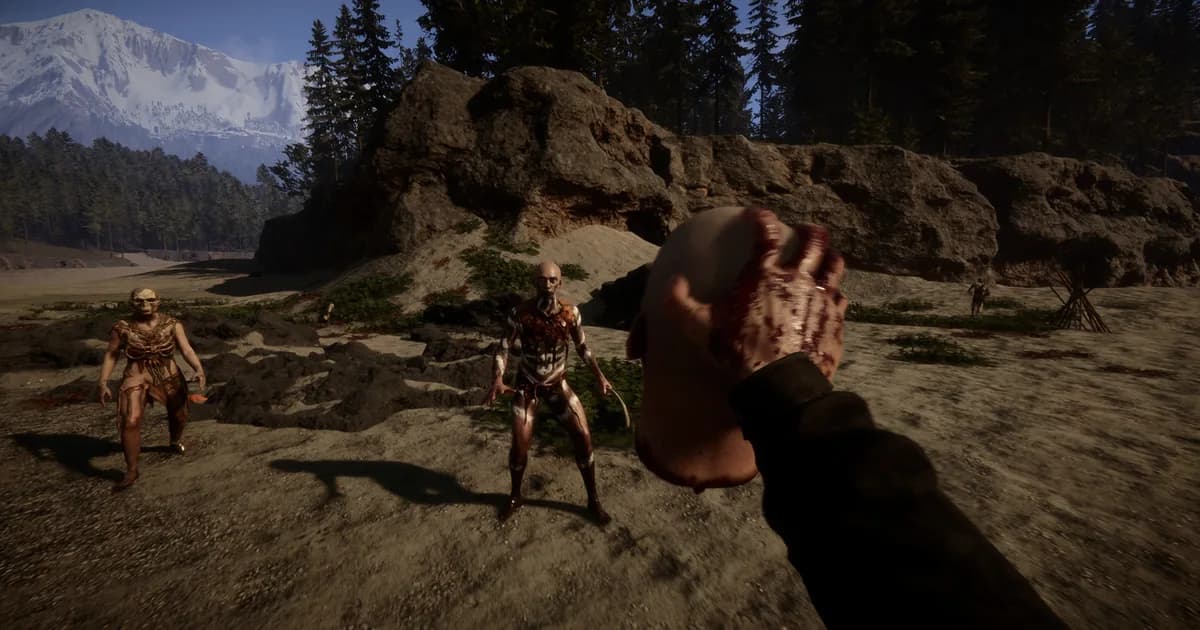
Regular cannibals are the common surface threat. They patrol in groups, work around villages, carry improvised weapons, and can hesitate or retreat when they are intimidated. The current wiki documents an initial neutral state that can shift as days pass and as the player attacks them. That does not mean every encounter can be talked down, but it does mean a new camp does not need to become a permanent battlefield on the first day.
Cannibal villages are more than a collection of tents. They create a reliable source of patrols, activities, leaders, and captive enemies. Structures built near villages or established routes can draw attention, and the enemy AI can choose to approach player construction rather than only chase the player. The map and keycard guide helps you route around villages when your goal is a bunker rather than a clear-out.
Creepy mutants
Mutants or creepies are the dangerous island inhabitants that are not ordinary cannibals. The full-game list includes Mutant Babies, Puffies and their variants, Fingers, Twins, Caterpillar, Sluggy, Legsy, Holey, Armsy, and Creepy Virginia, along with story and demon entries that the wiki catalogs separately. This guide uses the recurring combat threats as the practical roster and does not turn boss names into ordinary mutant recommendations.
Mutants commonly begin in caves and bunkers. As the game advances and underground routes are opened, many variants can appear near cave entrances, on the surface, in cannibal villages, and around bases. Winter and late-game progression can make cave-adjacent areas especially dangerous. A quiet first week is not proof that the world will keep the same spawn pattern.
Demons, bosses, and animals
Demons are late cave and story threats with a different visual language and encounter context. The Puffton couple, the Giant Demon, and mutated Jianyu Zhang are the three confirmed boss encounters covered by the Sons of the Forest bosses guide. Sharks, orcas, and other hostile animals can also kill an unprepared player, but they do not belong in a cannibal or mutant counter table.
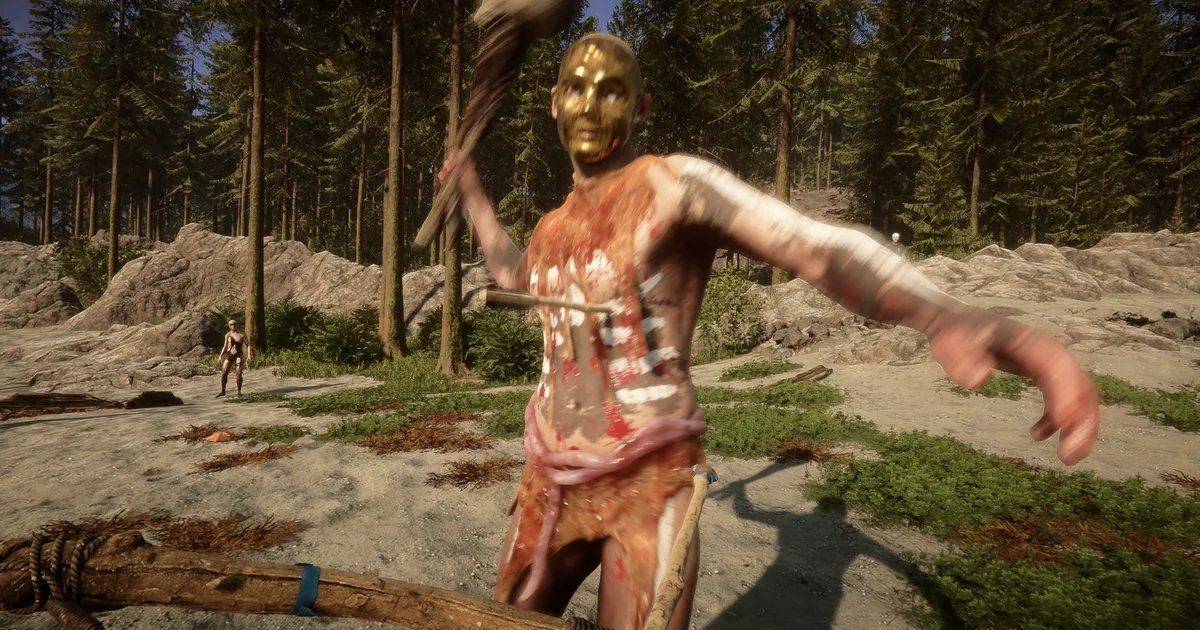 Golden-masked cannibals are surface leaders that resist fear more effectively than ordinary members of a patrol.
Cannibal variants and how to read a patrol
The useful question is not “which cannibal has the most health?” It is “what is this group trying to do, and which member changes the fight?” Let a small group watch you before you sprint into them. A village cluster, a patrol, and a raid can look similar in the dark but demand different positioning.
Regular Cannibals: These are the baseline surface enemies. They arrive in groups, carry simple weapons, climb around the environment, and can be affected by intimidation. Shoot or melee the isolated member only when you have a retreat lane. A narrow doorway or a steep drop can turn a manageable group into a trap.
Muddies: Muddies are weaker, lower-intelligence cannibals that appear early. They are often more nuisance than boss-level threat, but they can reveal that a larger group is nearby. Do not spend rare ammunition to prove a point when a spear, axe, or route change solves the encounter.
Painted Cannibals: The fluorescent paint makes this night variant easy to see. The paint itself is not a separate combat move set, so use the visibility as information. A painted enemy in the treeline can be a warning that the rest of the patrol is closer than it sounds.
Frank: Frank carries a torch and can pour Vodka over himself before lighting himself on fire and charging. Give him a clean lane, avoid being cornered by the burning rush, and do not let the visual effect make you forget the rest of the patrol.
Eddy: Eddy carries three crafted spears and can throw them when the distance is right. Treat him as the ranged member of a mixed patrol. Move laterally, use cover, and prioritize the thrower only when you can do so without letting the other cannibals surround you.
Fat Cannibals: Male and female fat variants have different appearances but share a heavier physical presence and distinct attacks. Their size makes them easier to read in an open clearing, but their swoops and body attacks can knock a player down. Keep a stamina reserve instead of committing to a slow trade.
Heavies: Heavies carry powerful makeshift weapons, including a club made from a skull and spine. A rare outboard motor variant can inflict extreme damage. Do not let a Heavy pin you against a wall. Use ranged attacks, traps, or a retreat route that prevents the heavy swing from deciding the whole fight.
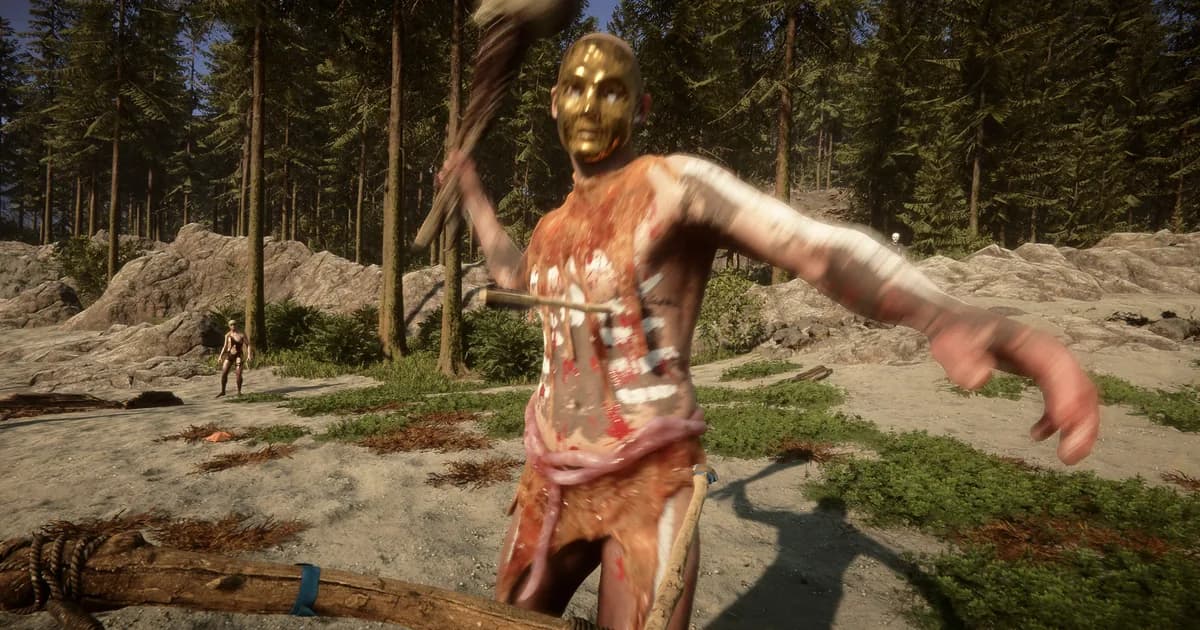
Golden-masked cannibals: The mask signals hierarchy and resistance to fear rather than a magical armor bonus. These leaders are harder to scare away and may appear in villages or lead search parties. The Red Mask does not fool them, so do not treat a disguise as a guaranteed pass. A golden-masked Heavy is a particularly bad target to meet in a narrow base entrance.
Mutants and the safest response to each threat
Puffies, Blue Puffies, and Spotted Puffies
Puffies are the common blind cave mutants. Their lack of visible eyes means they rely on hearing and possibly smell, so stealth has real value when you want to pass rather than fight. They can run quickly when aggravated, and groups can overwhelm a player in large cave rooms or during a base attack. A Stun Gun can create a controlled opening, while bombs and other explosives can clear a cluster. Ranged headshots and leg shots are useful when you have a clean line.
Puffies can also appear on the surface after caves are opened and can join Creepy takeovers of cannibal villages. If a once-quiet village suddenly contains pale crawling enemies, that is a progression change, not a random visual swap. The weapons guide covers the broader ranged and melee choices; the enemy-specific decision is whether you should stay quiet or create enough space to fight.
Fingers
Fingers is a faceless humanoid mutant with finger-like appendages around the mouth and torso. It can move slowly and then charge quickly, making it dangerous in a straight corridor or open snowfield. Its legs are the reliable target: shoot the knees or use a Crafted Spear to stagger it, then finish the opening from range or with a heavy melee attack. Buckshot is strong at close range, and explosives work when the arena gives you room.
Do not stand directly in front of a Fingers and trade swings. The whole-body attack can cover more space than the model suggests, and its high resistance to some attacks makes panic-fire inefficient. A leg stun is a timing tool, not a reason to close distance before the other enemies are accounted for.
Twins
The Twins are two bodies joined at the hip. They can climb cave walls and ceilings, flank through dark spaces, and swing across a wide area. Look up before you settle beside a cave wall or bunker doorway. Ranged fire, buckshot, explosives, and controlled dodges are safer than chasing them through a cramped room.
The important counter is space. Keep a route behind you, avoid letting one half disappear above the camera, and do not assume that a creature moving slowly is committed to a slow attack. Twins can become surface threats near opened cave entrances and during Creepy takeovers.
Mutant Babies
Mutant Babies crawl, shriek, and leap. Their attack is direct, but several at once can flank a player who is focused on a larger mutant. Block or sidestep the leap, hit them once or twice, and keep the group in front of you. Explosives are effective, but a simple melee response is often enough if you have clear footing.
Caterpillar and Sluggy
Caterpillar is a long, double-ended mutant that attacks with repeated body swings. Keep distance and sidestep its flips instead of backing into a wall. Use your strongest practical ranged weapon between its attack cycles and take headshots when the angle is safe.
Sluggy is different because it often blocks a cave passage or exit rather than hunting you through a room. Its folds and limbs make it a poor target for casual melee. Explosives are the clean answer when the route is blocked, so save at least one option for cave obstructions rather than using every explosive on the first group of Puffies.
Holey
Holey is a large, stocky mutant covered with openings and supported by three legs. It has a large health pool among regular enemies and can leap, charge, and swing its body into both players and structures. Melee is risky because a charge can begin while you think the creature is recovering. Use a ranged lane, watch for the leap, and attack after it lands and struggles to get upright.
Legsy
Legsy is a full-game mutant with muscular legs and hands that let it move quickly and leap significant distances. It can smash or swing at close range and is difficult to outrun once it has a clear path. Use open ground, keep your crosshair ready for the leap, and do not let a base wall become the only thing behind you. A ranged plan is safer than trying to test a new melee weapon in the middle of its attack cycle.
Armsy and Creepy Virginia
Armsy and Creepy Virginia are post-game threats associated with staying on the island after the final scene. They are real mutants, but they are not reasons to label normal Virginia as hostile or to add them to the three-boss roster. If you choose the stay branch, prepare a familiar base for a less familiar enemy state. The endings guide explains the leave and stay choices before you commit to that world state.
GODEEPER: Enemy escalation changes the value of a base location. The building, caves and bunkers guide covers defensive walls and bunker routes, while the armor guide explains which protection can be replaced after a mutant raid.
Step-by-Step
1. Identify the family before attacking: Surface village, patrol, raid, cave mutant, demon, and boss are not interchangeable labels. Look at the terrain and movement first. A group near tents may retreat or circle; a Fingers in a cave may charge; a Sluggy may simply be blocking the route.
2. Choose a lane and a fallback: Before shooting, identify a doorway, slope, tree line, or open patch where you can retreat without getting trapped. Heavy cannibals, Twins, Holey, and Legsy punish players who let their back touch a wall. Keep stamina for the dodge or sprint you will need after the first hit.
3. Use the right control point: Shoot legs to stagger Fingers and some humanoid mutants, use the Stun Gun on Puffies when you need a clean capture window, use buckshot at close range against a target that has already entered the lane, and save explosives for clusters, Sluggy, and large mutants. Do not treat every recommendation as a damage test; several are positioning solutions.
4. Clear the fight before harvesting: Creepy mutants can provide Creepy Armor, and cannibal bodies or skin pouches can contain useful materials. Loot after the area is quiet. A corpse animation is not proof that the next enemy wave is absent, especially near a village, cave entrance, or plater defense.
5. Rebuild the base around the new spawn pattern: If mutants begin reaching the surface or a cannibal raid starts targeting your structures, move traps and firing lines rather than only adding more walls. Keep storage, fire, and exits inside the protected area, and avoid a single gate that a Heavy or Holey can turn into a pile-up.
Base raids, villages, and aggression
The island does not require you to clear every village. Cannibals can patrol, watch, investigate, and return. Killing repeatedly can raise their aggression, while restraint and distance can delay a permanent fight. The exact trigger thresholds are not exposed as a simple player-facing meter, so do not promise that one gesture or one spared cannibal makes a camp safe forever.
Building near an existing village, cave, or patrol route changes the risk calculation. Cannibals may place effigies around a base, raid structures, or bring a mixed group that includes a captive or mutant. The best base is not just the prettiest shoreline. It has a retreat route, sightlines, a way to avoid being flanked, and enough room to fight without collapsing your own traps.
The map guide is useful for marking villages and cave entrances as threat zones, even though enemy spawns are not a fixed checklist. The mods guide should be treated as a separate safety concern: spawn or inventory mods can change enemy behavior, so do not use a modded test to claim a vanilla counter works.
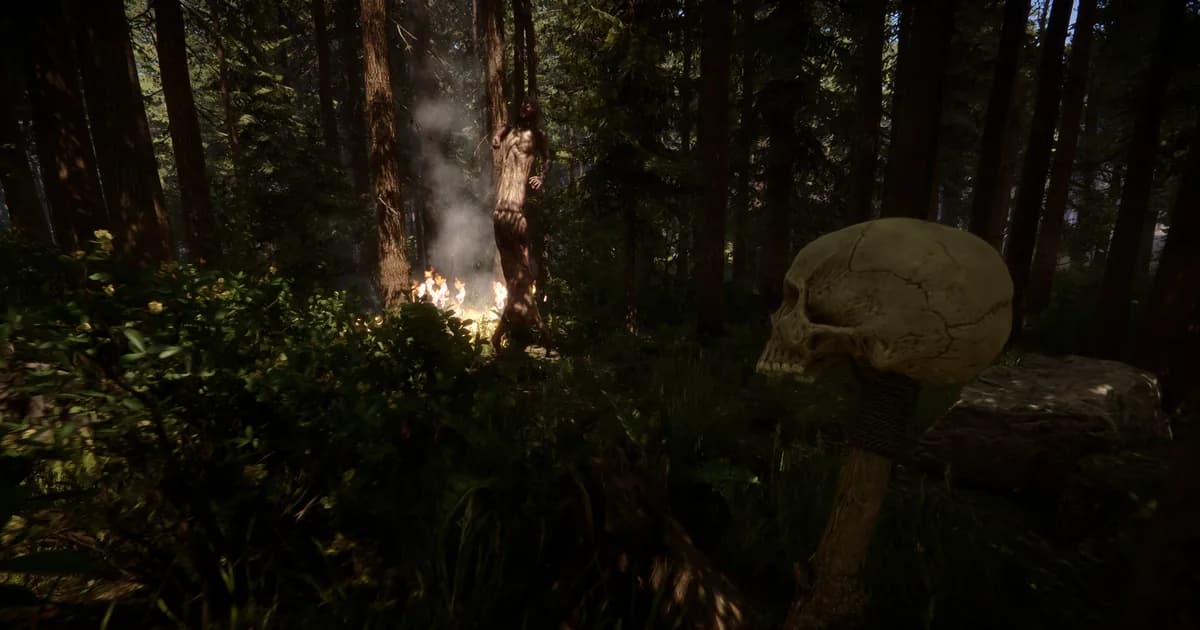
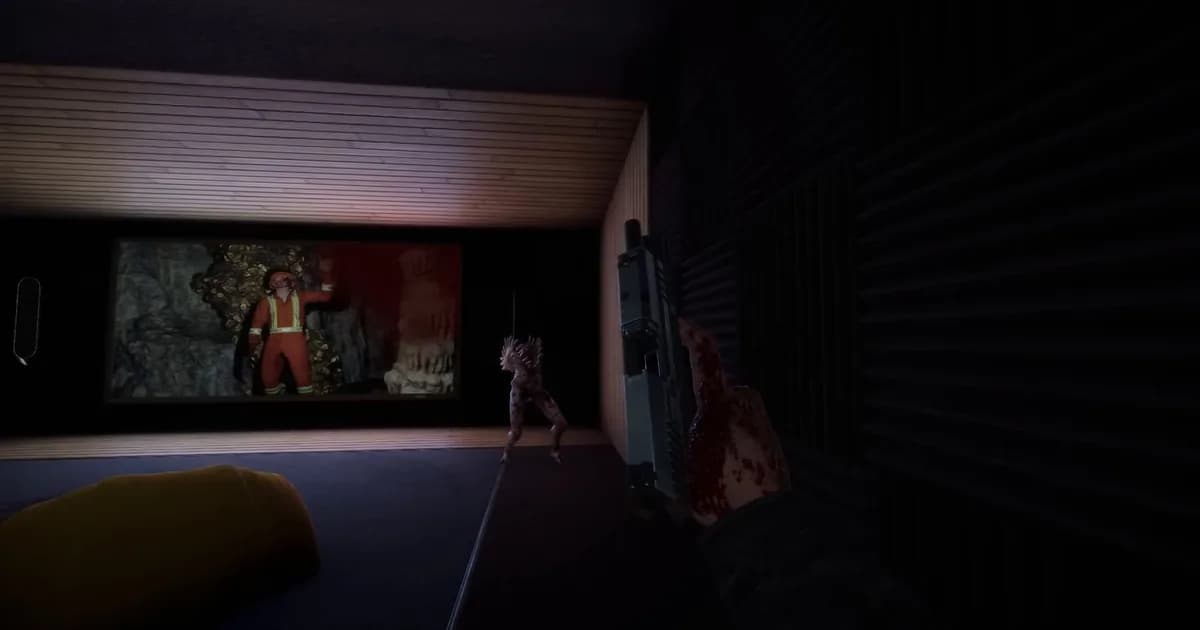
Cave mutants are easier to classify when the player keeps a retreat lane and watches for movement above the flashlight beam.
Loadout planning by encounter
For a first surface patrol: Carry a Crafted Spear or bow, a light source, a few healing items, and enough stamina to retreat. You are learning the patrol's movement, not trying to win a resource contest.
For a village edge: Use a ranged opener, keep the village between you and your escape path only if you can climb or circle it, and expect a masked leader or Heavy to stay in the fight longer. The weapons guide compares the weapon categories without pretending every enemy has one universal weakness.
For a cave: Bring a light source, armor, a close-range fallback, and at least one response for a Sluggy or large mutant. A cave fight is often lost because the player runs forward into the next room after spending the only explosive on an earlier group.
For a base defense: Put distance between the wall and the sleeping or storage area, keep a clear firing lane, and leave yourself a second exit. Armor and traps help, but the best defense is a layout that lets you see a mutant before it is already inside the base.
For the post-game: Expect the stay branch to add threats that did not appear in the same way during a short story run. Keep upgraded armor, ammunition, and a fallback shelter rather than assuming a completed story makes the island peaceful.
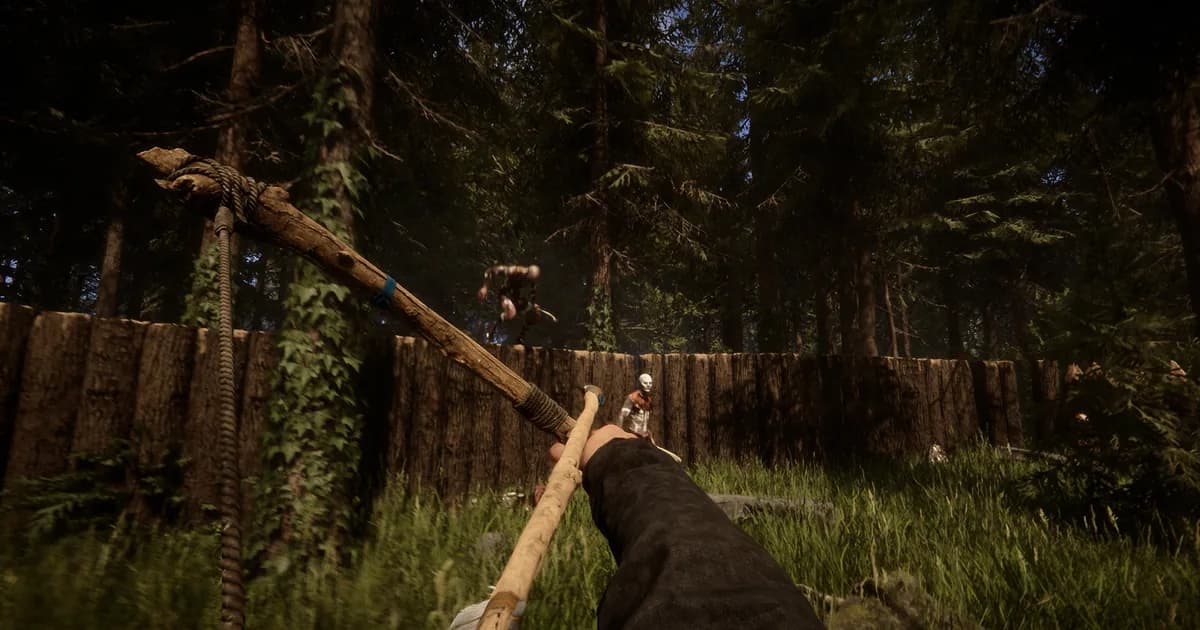
A clear firing lane matters more than a single damage number when a raid mixes cannibals and mutants.
Frequently Asked Questions
What are the main enemy types in Sons of the Forest? The main threats are cannibals, creepy mutants, demons, story bosses, and hostile animals. Cannibals use villages, patrols, raids, and changing aggression, while mutants are usually stronger close-range threats that expand from caves into surface and base areas.
What is the best weapon against mutants? There is no universal best weapon. Use ranged attacks for distance, target legs when a stagger is documented, bring buckshot for close-range targets, and reserve explosives for groups, Sluggy, and large mutants.
How do you deal with Fingers? Shoot its legs or use a Crafted Spear to create a stun, then attack from a safe angle. Keep distance when it charges, and use buckshot or explosives if it closes the gap.
Do mutants attack your base? Yes. Puffies, Fingers, Twins, and other creepy mutants can appear near bases as progression advances. Cannibal raids can also target structures, so use walls, traps, sightlines, and a second exit.
Are Virginia and Armsy the same kind of enemy? No. Normal Virginia is a companion, Creepy Virginia is a hostile mutant, and Armsy is a separate late-game mutant. The bosses guide and companion sections keep those identities separate.
How do you avoid cannibal attacks early? Avoid building beside villages and patrol routes, use stealth when you do not need a fight, watch the group before attacking, and carry a spear or bow with a retreat lane. Early restraint can delay escalation, but no single action makes every camp permanently friendly.
References
- Sons of the Forest on Steam
- Sons of the Forest official Steam news feed
- Sons of the Forest wiki: Enemies
- Sons of the Forest wiki: Mutants
- Sons of the Forest wiki: Cannibals
- Sons of the Forest wiki: AI System
- Sons of the Forest wiki: Villages
- All enemy types in the full-game release
Related Reading
- Sons of the Forest Complete Guide Hub
- Sons of the Forest Armor Guide
- Sons of the Forest Weapons Guide
- Sons of the Forest Bosses Guide
- Sons of the Forest Building, Caves and Bunkers Guide
- Sons of the Forest Map Guide
- Sons of the Forest Endings Guide
- Sons of the Forest Achievements Guide
- Sons of the Forest Mods Guide
Was this guide helpful?
About the author

Critical game theorist with a background in film criticism. Writing for print and digital outlets since 2015. Specialises in genre analysis and design heritage.
- Background in film criticism
- 10 years games coverage
- Genre theory and design history specialist
Keep reading
Sons of the Forest Endings: All 3 Explained in 2026
General · 10 min
Sons of the Forest Armor Guide: All 7 Types Ranked
General · 14 min
Sons of the Forest Map Guide: Caves, Bunkers and Keycards
General · 11 min
8 Best Sons of the Forest Mods: 2026 Verified Picks
General · 19 min
Sons of the Forest Complete Guide: Bosses, Weapons, Building
General · 9 min
Sons of the Forest Building, Caves and Bunkers Guide
General · 9 min
Game deals · affiliate links

Disclaimer
This article is published for informational and entertainment purposes. It does not constitute professional financial, legal, or technical advice. Game performance, online services, patch schedules, and store listings change. Verify critical details (pricing, system requirements, regional availability) with publishers and storefronts before you buy. Affiliate links, where present, help support our editorial work and are labelled in our affiliate disclosure.
Comments
Loading comments…