
GameBrief · General
Wax Heads Guide: How to Match Customers and Find Records

Reviewing
Wax Heads
Patattie Games
This Wax Heads guide covers the one thing that actually trips people up: how the customer matching mechanic works, and how to discover all 80+ records without missing half of them. The game released on May 5, 2026, and the July 31 Cosmetic Update added shelf displays, virtual pets, posters, and other shop-customization options without changing the core recommendation loop.
TL;DR: Wax Heads is a record-shop sim where customers describe a feeling ("something like the last day of summer") rather than a genre, and you match them to the right record by reading the mood, not guessing by category. There are 80+ records to discover, and most players miss half by not following the matching cues. Pay attention to the request language, and the collection fills out as the matches click.
Wax Heads guide? (quick answer)
Listen for the customer's mood, era, scene, and story clues, then cross-reference them in Phonogram, Walking the Cow, the in-store magazines, and the album liner notes. The Dialogue Tracker keeps the conversation visible, there is no timer, and a wrong recommendation gives feedback without damaging the store. The Cosmetic Update adds presentation options, but the matching loop remains the same.
The first time a customer walked into Repeater Records and asked for "something that feels like the last day of summer," I stood there staring at the whole record wall and felt genuinely stuck. Not frustrated: I had all the time I needed. Just aware that this game was asking me to actually think rather than click.
That's what this wax heads guide is for: breaking down the research system, explaining each tool, and making sure you're not just guessing.
Wax Heads guide: key takeaways
- Wax Heads uses four research tools to solve customer puzzles: Phonogram, Walking the Cow, in-store magazines, and album liner notes
- No time pressure: customers wait indefinitely while you research
- The Dialogue Tracker logs customer clues automatically so you don't lose track
- The inventory guide doubles as an 80+ album completion tracker
- RAD!, OK, MEH, and SAD ratings give feedback after each sale: none carry penalties
- Visual cues (customer clothing and style) are a real signal, not decoration
- The game spans 19 tracks across multiple four-day Sides
Overview: how the Wax Heads guide works in practice
Wax Heads puts you behind the counter at Repeater Records, a fictional indie record shop somewhere in England. You're the new hire. Your colleagues have opinions about everything. The neighborhood regulars have opinions about everything. And every customer who walks through the door wants a specific record they can't quite name.
The core loop each shift: a customer arrives, describes what they want in vague terms, and you use the store's research tools to figure out which album in your current inventory fits. Ring it up at the till and you get a rating (RAD!, OK, MEH, or SAD) based on how well you matched the brief.
There's no timer. This is not a queue management game. Customers wait while you browse, read, and cross-reference. The game is organized into 19 tracks (in-game days) grouped into four-day chapters called Sides. Each Side includes not just customer interactions but also miniature tasks: poster design, concert lighting setups, store organizational puzzles, and story-heavy moments that develop the characters around you.
Outside of the recommendation puzzles, Wax Heads is a narrative sim. The fictional bands have histories. The regulars have backstories. The store itself has a quiet question running through it: what does a place like this mean in 2026, and who does it exist for?
This wax heads guide assumes you're playing fresh, but for a deeper look at how all of this holds together as a complete game experience, the Wax Heads review covers the full arc from opening shift through final track.
For adjacent recommendation and management sims, compare the Wax Heads tips guide, Raccoons to Riches review, Black Jacket review, Outbound guide hub, Farever review, Alabaster Dawn Early Access guide, Beastro tips guide, Tales of Seikyu launch coverage, The Doll Shop preview, and Beastro release coverage. They are comparisons, not substitutes for the record-matching steps below.
Step-by-step: how to match customers to records
The core question this wax heads guide is built around: how do you turn a vague emotional description into the right record? Here's exactly how the process works, from the moment a customer opens their mouth to the moment you ring them up.
- Start with the clue type: mood, era, band reference, or story detail.
- Check the Dialogue Tracker and research the clue in the matching store tool.
- Show a plausible record, read the feedback, and ring it up only when the clues line up.
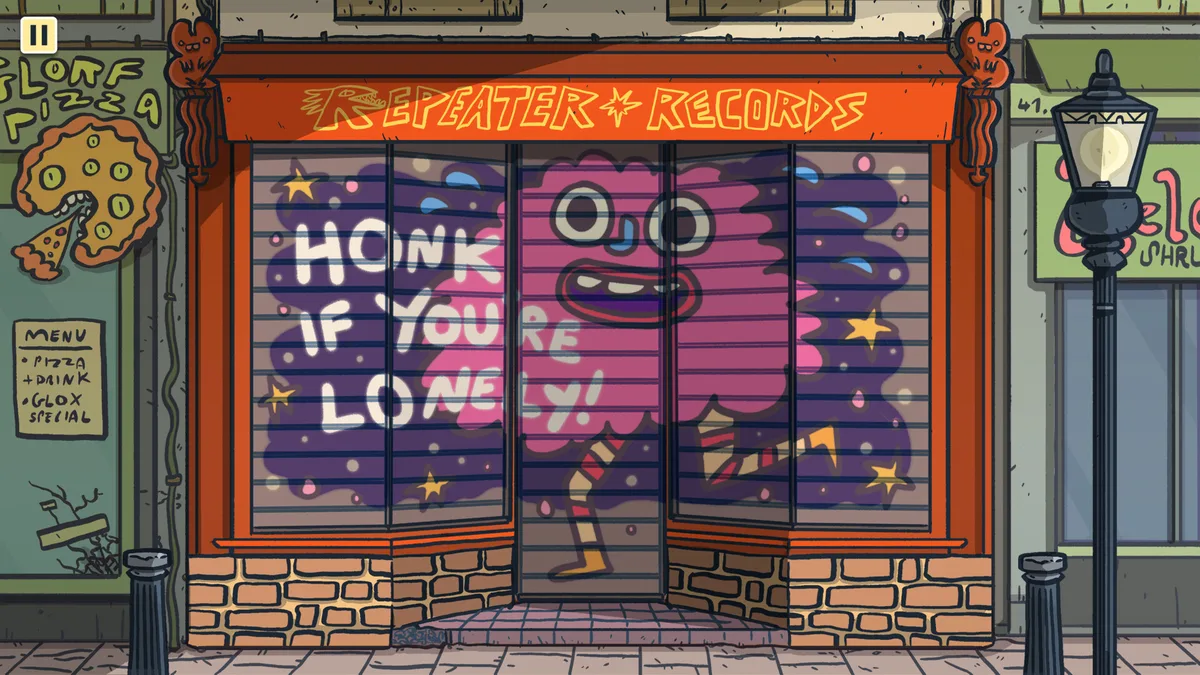 Phonogram open mid-shift: customer posts after a successful sale often hint at what they'll ask for next time.
Step 1: Listen for the actual clue type
Customers use several distinct clue formats. Recognizing which type you're dealing with tells you where to look first:
- Mood/atmosphere clues: "something warm," "melancholy but not slow," "like a party where nobody knows each other yet." Start with album liner notes and the cover art tone.
- Era or scene clues: "sounds like it was recorded in a basement in 1993," "early 80s post-punk." Check Walking the Cow for genre and decade context.
- Band/artist adjacent clues: mispronounced band names, mangled song titles, fan-adjacent references. Check Phonogram posts from other customers for social context.
- Event or story clues: a band that broke up after one record, an album someone's dad used to play. Read the liner notes for fictional press history.
Most customers layer two or three of these. A customer who wants "something melancholy from a band that didn't last" is giving you an era clue and an event clue at the same time.
Step 2: Check the Dialogue Tracker before you browse
The interface includes a Dialogue Tracker that logs everything the customer has said. Check it before touching the record wall. Later in the game, customers will ask for two albums in the same interaction, and the tracker becomes essential for keeping their separate briefs clear.
The tracker isn't just a memory aid: it changes how you read the store's research tools. With the full conversation logged, you can go to Phonogram or Walking the Cow with specific questions rather than browsing.
Step 3: Read the album back first, not the front
The cover art matters, but the real information is on the back. Each of the 80+ albums has fictional liner notes, press history, and sometimes internal sleeve content. Customers rarely describe visual aesthetics: they describe stories, scenes, and feelings. The liner note content is what maps to those.
Cover art helps with atmosphere clues (a bright pop cover vs. a bleak moody image), but if you're relying on cover art alone, you'll get a lot of MEH responses.
Step 4: Use Phonogram for social validation
Phonogram is the in-game social media feed. After you sell a record successfully, customers post about it. Before you ring something up, check Phonogram for posts that mention your customer or related taste signals: previous successful purchases from regulars sometimes surface connections between records you wouldn't notice from liner notes alone.
Phonogram is also where you see hints about future customers. A post mentioning a specific band or mood is sometimes a preview of who's coming in next shift.
Step 5: Use Walking the Cow for critical framing
Walking the Cow is the game's opinionated music blog: sardonic, specific, and genuinely useful. It's closest to a music magazine archive. When a customer's clue references something critical ("I want an album that divided people," "something the critics didn't get at first"), Walking the Cow usually has the angle that helps.
GODEEPER: If you like the narrative simulation side of Wax Heads, inKONBINI covers adjacent territory: a convenience-store slice of life with its own regular cast and quiet story. Is inKONBINI Worth Buying? →
Step 6: Show and read the feedback
You can show a customer an album before ringing it up. If it's wrong, they'll say something like "that's close, but not quite" or "that's not at all what I meant." Those responses narrow the search: "close but not quite" means your genre or era reading is right but the specific album is off. "Not at all" means start over with a different clue type.
This show-and-respond loop is the fastest way to solve difficult puzzles. Don't wait until you're 90% sure: show something reasonable and use the response to triangulate.
Discovering all records: the complete approach
One area where most Wax Heads guides are thin: record discovery isn't just about solving customer puzzles. The 80+ albums in Wax Heads don't all arrive at once. New stock rotates in over the game's 19 tracks, tied to narrative events and Sides progression. The inventory guide (accessible from the phone interface) tracks which albums you've encountered and which you haven't, making it easy to see what you're missing.
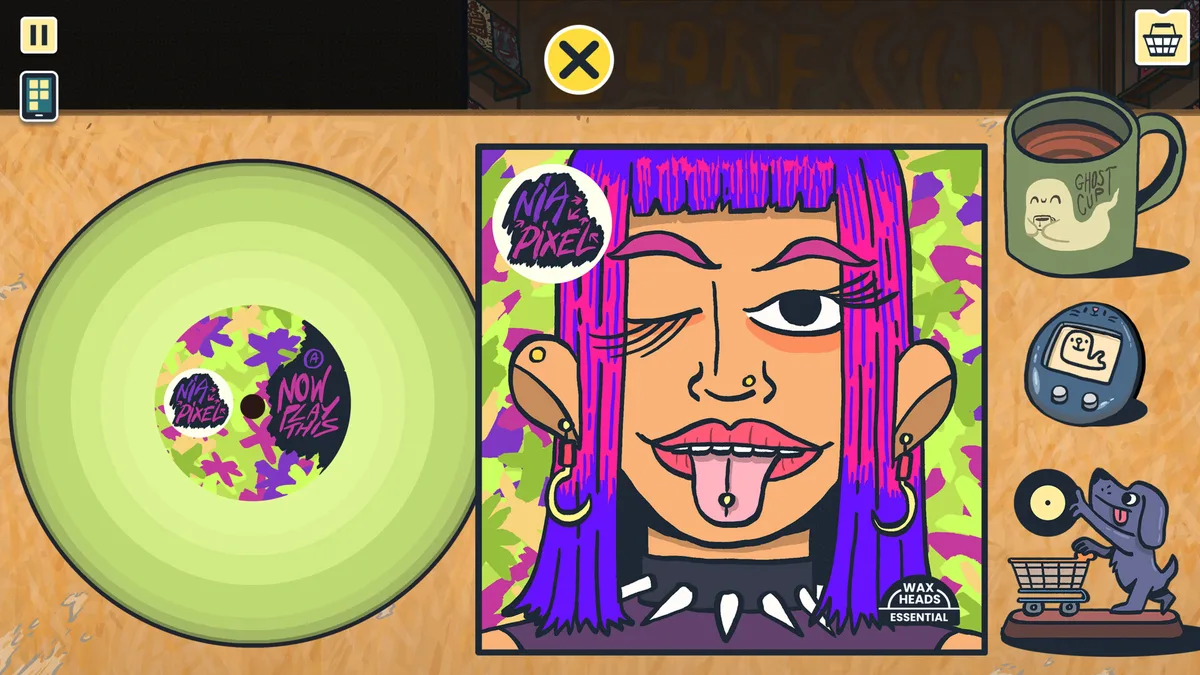 The inventory tracker at full spread: all 80+ albums visible, with liner notes as the primary research tool.
A few things that matter for full completion:
Pay attention to what you're not recommending. Each shift has multiple albums in stock. If a customer only wants one record, you still have the rest of the shift to read the albums you didn't sell. Liner notes, hidden sleeve content, and colored vinyl details all count toward your knowledge base for later puzzles: and toward unlocking those albums in the tracker.
Sides gate some albums. Certain records only appear after specific story beats. You can't brute-force full catalog access in the first hour. Progress through the narrative and the inventory expands.
Phonogram posts sometimes reference albums you haven't held yet. This is the closest thing to a discovery hint system. A social post mentioning a specific band name tells you that album exists and gives you a clue about its content before you've touched it.
The colored vinyl and limited edition details matter. Some customers specifically request editions with unique physical characteristics. Remembering which records in the 80+ catalog had colored vinyl, unusual packaging, or a notable pressing run saves time when those requests come up.
There are 28 Steam achievements. Most tie to completing specific customer arcs and tracking down niche albums. If you're going for full achievement completion, focus on regulars: their multi-shift storylines gate some of the harder-to-find records.
Understanding Customer Personalities
The second thing this wax heads guide covers that most write-ups skip: reading customers visually before they say a word. Every customer in Wax Heads has a distinct visual identity: fashion style, body language, how they stand at the counter. The character design is expressive on purpose. A customer who looks like they walked out of a 1970s prog-rock documentary is not going to want a three-chord punk single. Visual cues are a real signal before any dialogue starts.
Beyond appearance, regulars develop across the 19-track runtime. You'll see the same customers on multiple shifts, and what they asked for previously informs what they'll want next. The game doesn't explicitly flag these connections. You notice them the same way you'd notice that a regular in a real shop always buys something from the same era.
GODEEPER: For another game that makes narrative sense out of a rotating customer cast, the Mixtape launch coverage covers a game in similar emotional territory: nostalgia-driven, music-focused, and centered on customer relationships. Mixtape 2026 Launch: What to Know →
A few personality patterns that come up across the customer cast:
- The vague-by-nature customer: They describe everything in feelings and images. Mood clues will dominate. Trust Phonogram for social context on these.
- The semi-informed fan: They know the general scene but mispronounce everything. Walking the Cow handles the factual translation.
- The specific but evasive regular: They know exactly what they want but won't say it directly. These puzzles rely most on your accumulated knowledge of the catalog across previous shifts.
- The one-time visitor: Minimal context, one interaction. Cover art and liner notes usually carry enough to solve it.
Customers also post on Phonogram after their visit. If you got a RAD! rating, the post often adds context about why that record worked for them: which can retroactively teach you something about that customer's taste profile and help with future requests.
Tips for New Players
A few things this wax heads guide would have told me before my first shift.
Don't skip the first slow hour. The opening shifts feel opaque because the tools aren't sequenced clearly. By your third or fourth customer interaction, the research flow becomes natural. Stick with it.
The receipt emoji are optional, not decorative. After ringing through a sale, you can add emojis to the customer's receipt. It doesn't affect the RAD/SAD rating, but customers react to them: some regulars will comment on your choices in later shifts. Small detail, but it contributes to the relationship-building that makes the narrative land.
Read before you need to. During low-pressure moments in a shift, browse the current inventory even when no customer is waiting. Reading liner notes and sleeve content before a puzzle comes up is faster than reading under the indirect time pressure of a customer standing at the counter.
The Dialogue Tracker clears between shifts. Notes from previous customer interactions don't carry forward automatically. If a regular from last shift gave you context that matters this shift, that information lives in your memory, not the app. Pay attention to what regulars tell you across multiple visits. A good wax heads guide habit: before each new shift, take thirty seconds to recall who you spoke with last time and what they told you.
Don't over-index on any single research tool. Walking the Cow handles critical and era framing. Phonogram handles social and mood signals. Liner notes handle specific facts. In-store magazines fill gaps. Using one tool for every puzzle will leave you stuck: the mechanic rewards cross-referencing.
For a sense of how another recent narrative sim handles onboarding differently, Forage Wizard launched the same week with a much flatter early curve: useful context if you're calibrating expectations for Wax Heads' opening.
Frequently Asked Questions
How many records are in Wax Heads? Wax Heads contains 80+ hand-drawn albums, each with individual cover art, fictional liner notes, and invented press history. The in-game inventory guide doubles as a completion tracker so you can see which albums you've encountered.
How do you match customers in Wax Heads? Customers describe what they want in vague, emotional terms: mood, era, energy level, or mispronounced band names. You cross-reference their clues against album liner notes, the Phonogram social feed, the Walking the Cow music blog, in-store magazines, and your Dialogue Tracker. There is no time limit; the customer waits while you research.
What are RAD, MEH, OK, and SAD ratings in Wax Heads? These ratings appear after you ring up a record at the till. RAD! means you nailed the recommendation. OK is an acceptable near-miss. MEH means the customer isn't impressed. SAD means you missed the mark entirely. None of these ratings damage the store: they're feedback signals, not penalties.
What is the Phonogram app in Wax Heads? Phonogram is an in-game social media feed. After a successful sale, customers post about the album you recommended. You can also use it proactively to see posts that hint at what specific customers are looking for before they walk in.
What is Walking the Cow in Wax Heads? Walking the Cow is the in-game music news and opinion site: sardonic and specific. It functions like a music magazine archive and gives you critical context on fictional bands, helping narrow down recommendations when customer clues are especially vague.
How long does Wax Heads take to complete? The game spans 19 tracks (in-game days) organized into four-day chapters called Sides. Most playthroughs run four to six hours. Completing all 80+ albums in the inventory tracker can extend that if you're thorough.
Does Wax Heads have a demo? Yes. A free Wax Heads demo is available on Steam that lets you try the record recommendation mechanic before buying.
Related Reading
- Wax Heads Tips: Research, Records, and RAD! Ratings: how to use Phonogram and liner notes before customers arrive.
References
- Wax Heads on Steam
- Wax Heads Demo on Steam
- Wax Heads Steam Community hub: official Cosmetic Update and Steam Deck compatibility announcements
- Patattie Games: Publisher page via Curve Games
- Wax Heads Complete Walkthrough Hub: Into Indie Games
- Wax Heads: Thinky Games feature
Was this guide helpful?
About the author

Indie & JRPG Critic
Indie game evangelist and lifelong JRPG fan covering small studios since 2017. Mumbai-born, London-based. Writes the way she talks.
- 7 years indie games coverage
- JRPG and visual novel specialist
- Narrative design focus
Keep reading




Disclaimer
This article is published for informational and entertainment purposes. It does not constitute professional financial, legal, or technical advice. Game performance, online services, patch schedules, and store listings change. Verify critical details (pricing, system requirements, regional availability) with publishers and storefronts before you buy. Affiliate links, where present, help support our editorial work and are labelled in our affiliate disclosure.
Comments
Loading comments…