
GameBrief · Guides
Winter Burrow Warmth Guide: Every Number That Matters (2026)
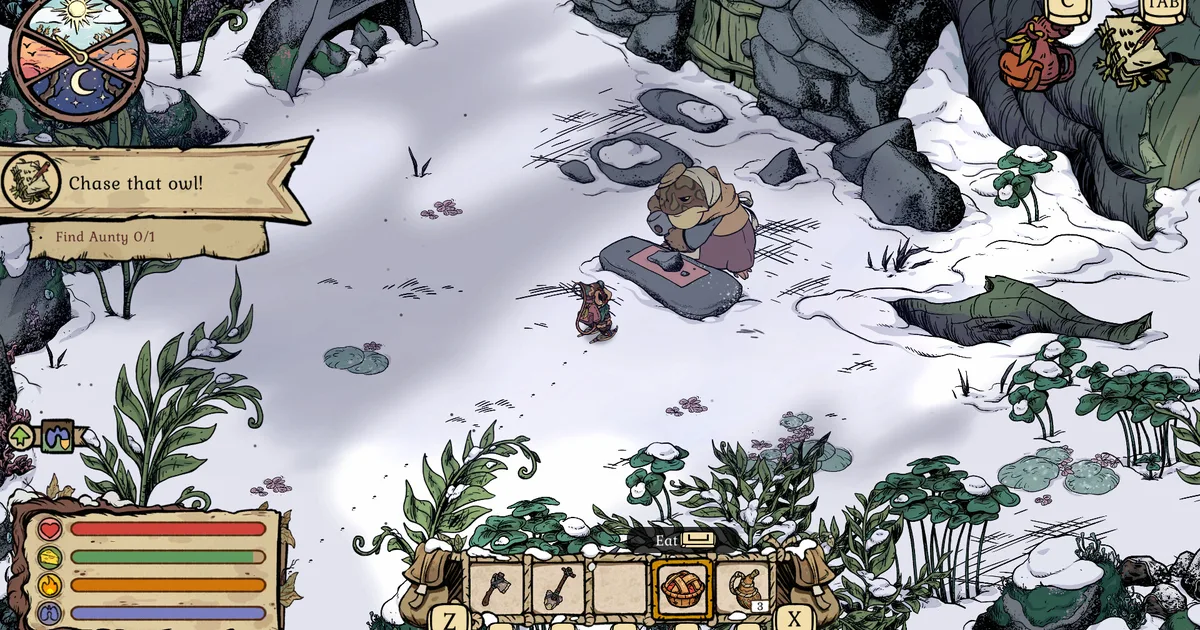
Reviewing
Winter Burrow
This Winter Burrow warmth guide exists because I got lost in the frozen swamp for a solid ten minutes on my second night, watching that orange meter bleed out while I tried to remember which clump of reeds I'd already passed. It didn't kill me. It didn't need to. Pine Creek Games built a whole system around that specific kind of dread, and most coverage of it stops at "eat food and wear a coat."
TL;DR: Warmth drops from cold exposure and restores through food, clothing, campfires, NPC homes, or your own burrow. Clothing carries a flat Cold Resistance percentage (roughly 5% per Linen piece, 10% per Wool piece), and some food adds a separate "Cold Shield" percentage on top of its flat warmth points that decays over the item's listed duration. Hit zero warmth and you pass out rather than die: you wake at home, and only loose resources stay behind, not your tools or clothing. There's no in-game map, so footprints are your real navigation tool.
How does the warmth system work in Winter Burrow? (quick answer)
Winter Burrow tracks warmth as one of four HUD meters alongside health, hunger, and breath. It drains steadily while you're outside in the cold, faster at night and during snowfall, and it's restored by eating warmth-boosting food, wearing knitted clothing, standing near fire, visiting a friend's home, or heading back to your own burrow. Let it hit zero and your mouse passes out, not dies, then wakes up back home.
Winter Burrow warmth guide: key takeaways
- Warmth is one of four HUD bars (health, hunger, warmth, breath), and it depletes from cold exposure, worse at night and in snowfall
- Clothing gives a flat Cold Resistance percentage: roughly 5% per Linen piece (Hat, Coat, Pants), roughly 10% per Wool piece (Hat, Sweater, Trousers) unlocked later
- Some food and tea recipes add a separate "Cold Shield" percentage buffer on top of their flat warmth points, shown as a small shield icon on the item card and decaying over the recipe's listed duration
- You can only cook at your burrow's stove, not on outdoor campfires, so warmth food has to be packed before you leave
- Passing out at zero warmth wakes you at your burrow; dropped resources stay where you fainted, but tools and clothing don't drop
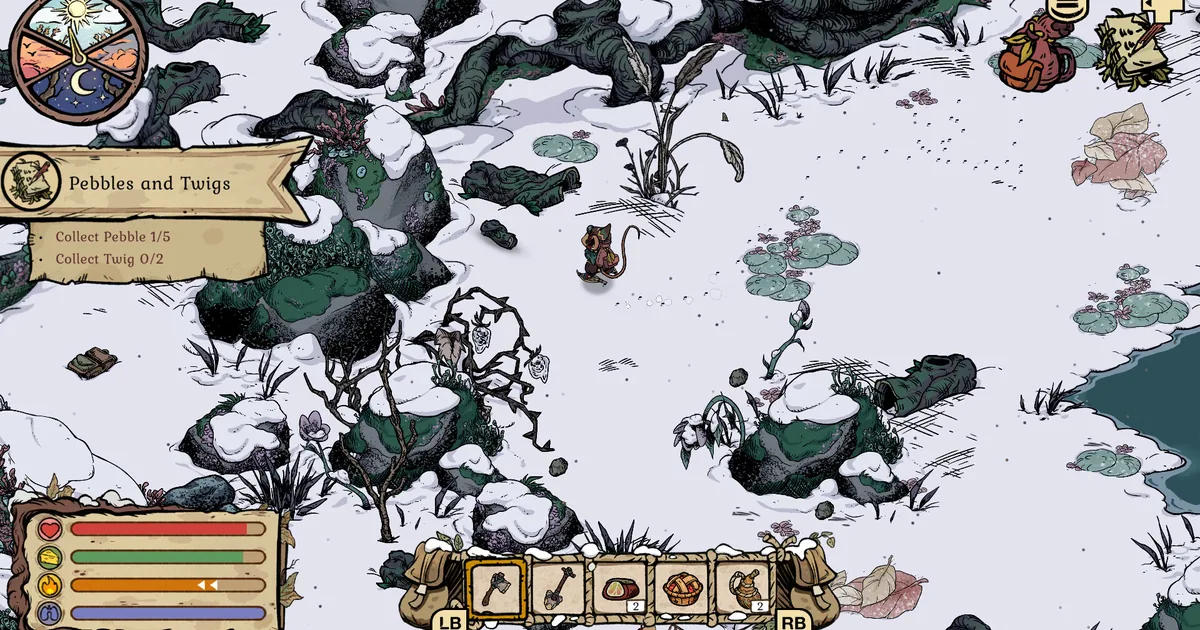
- There is no in-game map; footprints in the snow are the practical way to find your way home, and they fade by the next day
Overview
This guide covers the warmth meter specifically: what raises it, what drains it, the clothing and food math behind it, and what actually happens when it runs out. It won't walk you through the full crafting tree or the Aunt mystery quest line. Those deserve their own space, and cramming them in here would just bury the numbers you actually came for.
Everything here is checked against Winter Burrow's Steam store page, the in-game recipe tooltips (the Beechnut Biscuit's exact +15 warmth, +15 hunger, 10% Cold Shield, one-hour numbers are visible directly on the crafting screen), and a detailed item-by-item breakdown published by ScreenHype that lines up with those same in-tooltip figures. Where a specific number isn't confirmed anywhere, I've said so rather than guessed. If you're brand new to the game and want the wider first-days rundown, our Winter Burrow beginner guide covers the first steps this article assumes you've already taken.
GODEEPER: Curious whether the rest of the game backs up this level of mechanical detail? Our Winter Burrow review breaks down the knitting, cooking, and Aunt mystery systems that sit around the warmth meter.
What raises and lowers your warmth meter
The drain side is simple: standing outside in the cold costs you warmth over time, and the rate gets worse after dark and during active snowfall. Staying in one spot doesn't pause it. Neither does combat with the game's insect enemies, which is a separate, smaller threat.
The restore side has five confirmed methods, and each works differently:
Food and tea. Anything with a flame icon on its recipe card restores a flat number of warmth points, and some also add the Cold Shield percentage covered below. This is the only method you can stock up on before a trip, since cooking itself only happens at home.
Knitted clothing. Hats, coats, sweaters, and trousers made from Flax Yarn or Wool Yarn apply a passive Cold Resistance percentage the whole time you wear them, no consumption involved. Worn clothing is the baseline; food and fire are what you layer on top of it.
Campfires. Some are fixed points you'll find already built in the wilderness; others you build yourself with a Campfire Kit and light with Kindling. Standing near a lit fire restores warmth passively, and sleeping at one advances time the same way your bed at home does.
NPC homes. Visiting Moss, Bufo, Gnawtusk, or Willow's houses counts as warm shelter even though you're technically still outdoors on the map. Aunty's house works the same way when it's available. This is the fastest fix if you're caught out near one of them with nothing else on hand.
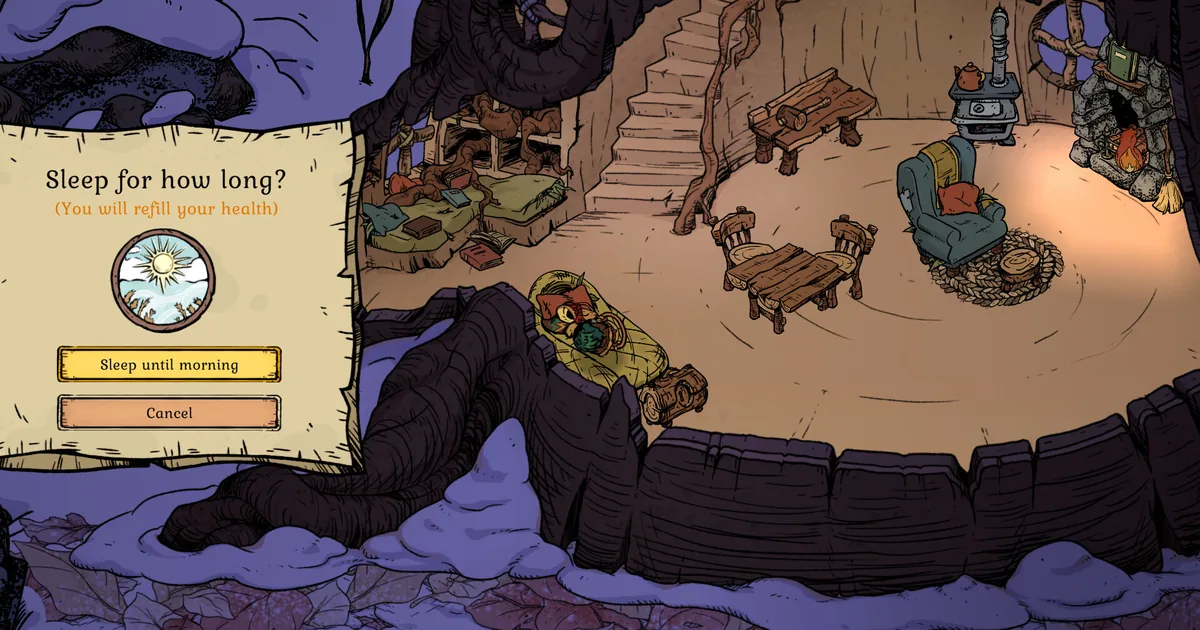
Your own burrow. Walking through your front door clears the cold penalty almost immediately, and sleeping in your bed restores you further while passing time to morning.
The Cold Shield stat, and why the exact percentages matter
This is the part most coverage skips entirely, and honestly it's the more interesting half of the whole system. Some warmth recipes don't just add flat points, they also grant a Cold Shield: a percentage buffer shown as its own small icon on the item card, separate from the number that fills your warmth bar directly. That shield decays across the recipe's listed duration instead of vanishing the instant you eat. Practically, that means a food item with a shield attached buys you a longer safety window than its flat number alone suggests, and I didn't notice this until I started tracking why some trips felt safer than the raw warmth number implied.
You can see this icon language directly on the item cards themselves, not just in a wiki summary; opening any recipe or stored ingredient in the burrow shows a small hourglass for duration and a percentage badge for the shield value sitting right next to the flat point value.
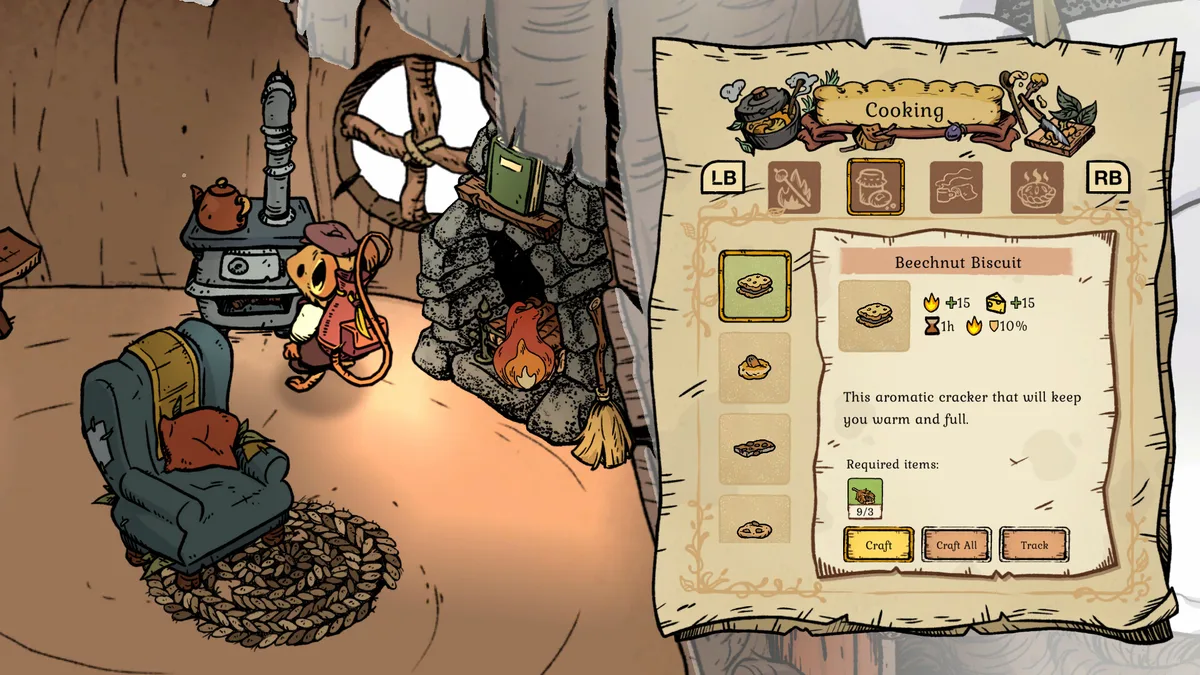 The Beechnut Biscuit recipe card shows the full icon set in one place: a flat warmth stat, a craft-time hourglass, and a separate percentage shield badge, the same icon language a community breakdown of the food table uses for Cold Shield values.
The specific numbers below come from that community breakdown (ScreenHype), cross-checked against the Beechnut Biscuit figures that are directly visible in-game and match exactly:
- Beechnut Biscuit: +15 warmth, +15 hunger reduction, 10% Cold Shield, one-hour duration, needs 3x Beechnut
- Pine-nut Biscuit: +25 warmth, +25 hunger reduction, 20% Cold Shield, two-hour duration, needs 3x Pine Seed
- Elder Tea: +10 warmth, +5 hunger reduction, 10% Stamina Shield, one-hour duration, needs 2x Elderberry
- Blackberry Pie: +50 warmth, +100 hunger reduction, 20% Cold Shield plus a 30% Stamina Shield and a 20% speed boost, eight-hour duration, needs a Beechnut Biscuit, Forest Jam, and 5x Blackberry
None of this is published in official patch notes, and Pine Creek Games hasn't posted a numbers breakdown of its own, so treat these as community-documented rather than developer-confirmed. What isn't in dispute is that the shield system exists as a distinct UI element from the flat warmth number, and that alone changes how you should read your meter: a half-empty bar right after eating a shielded recipe is less urgent than the same bar with nothing backing it up.
Clothing, Cold Resistance, and the story-gated upgrade path
Clothing doesn't get consumed like food does. Once you've knitted a piece and equipped it, its Cold Resistance percentage applies passively for as long as you wear it, which makes it your actual baseline defense rather than an emergency top-up.
The progression is gated by story quests, not by a shop or a currency:
Linen set (Hat, Coat, Pants), roughly 5% Cold Resistance per piece, unlocks once you fix the armchair inside your own burrow. This is your earliest upgrade and it's meant to carry you through the opening hours.
Wool set (Hat, Sweater, Trousers), roughly 10% Cold Resistance per piece, doubling the Linen set's value, unlocks after completing the "find stash in a dark place" quest tied to Gnawtusk. Wool Yarn itself is spun from fur, described in-game as making "the warmest winter clothes," so the naming isn't marketing filler.
Snow Shoes work differently: they add roughly 10% Movement rather than Cold Resistance. The logic is indirect but real. Faster travel means less total time exposed per trip, which is its own way of managing the meter without touching your resistance stat at all.
Campfires and Kindling: the recipes and the catch
You'll run into two different fire-related items, and mixing them up is an easy early mistake. Basic Kindling is what you burn to light a fire that's already there, or one you've built yourself. A Campfire Kit is the structure itself, something you can place at a location of your choosing rather than relying only on the fixed campfires the game seeds into the wilderness.
Community-sourced crafting costs for both:
- Basic Kindling: 1x Beech Plank, 1x Twig, 3x Flax Fiber
- Campfire Kit: 10x Pebble, 3x Beech Wood, 1x Flax Rope
The catch, and this is the detail that actually changes how you should plan a trip: you cannot cook at an outdoor campfire. Cooking only happens at the stove inside your burrow. A campfire warms you passively while you stand near it, but it will not turn raw ingredients into a warmth recipe on the spot. That means your entire food-and-tea buffer for a trip has to be crafted and packed before you leave the front door. Heading out with an empty inventory and planning to "just cook something if I get cold" isn't an option Winter Burrow gives you.
GODEEPER: Want the fuller early-game rundown, including what to craft in what order before your first real expedition? Our Winter Burrow beginner guide covers the first days step by step, warmth included.
What actually happens when you pass out
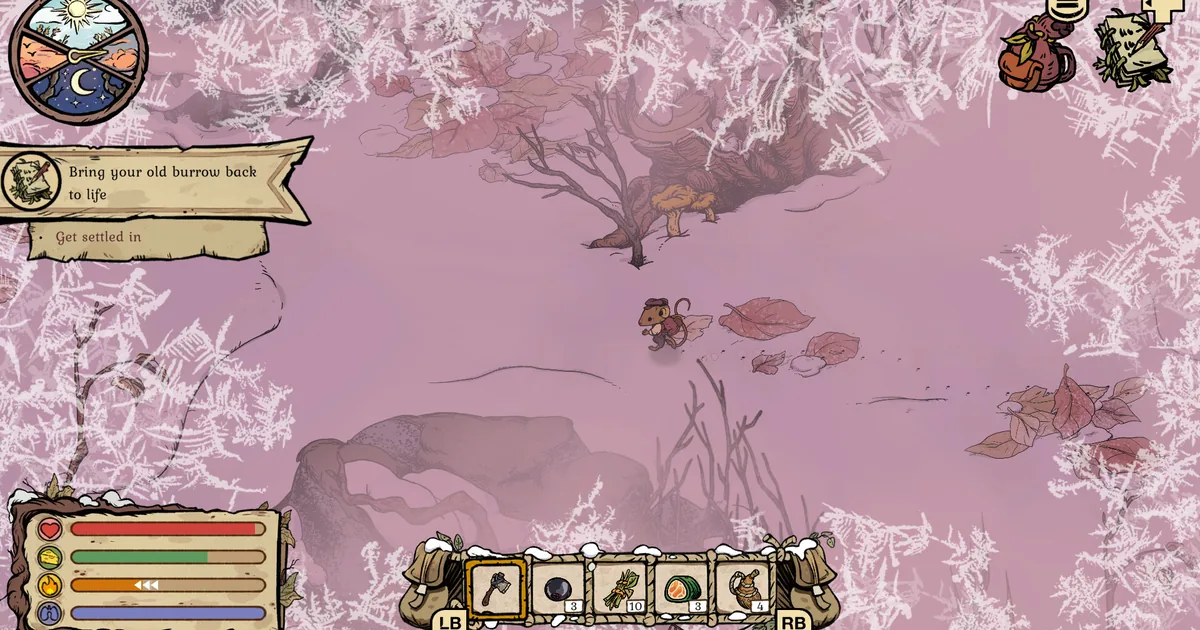
The consequence chain is visual before it's punishing. As warmth runs low, icy frost creeps in around the edges of the screen. Push further and a red vignette layers on top of that as health starts draining alongside it. Reach zero on either meter and your mouse passes out rather than dying outright.
Waking up happens back at your burrow, not wherever you collapsed. Here's the part worth knowing before it happens to you: any loose resources you were carrying stay on the ground at the spot where you fainted, so a bad trip can mean walking back out to retrieve a scattered inventory. Your equipped tools and clothing are the exception; they stay with you and don't drop. If you can't remember exactly where you went down, following your own footprint trail back out is usually faster than guessing, though footprints fade after a day, so this only works if you retrieve your stuff soon.
This is also where the Cold Shield buffer from earlier actually matters in practice: a shielded food item can be the difference between a scare and an actual pass-out on a trip that's running longer than planned.
Tips
Pack before you leave, not when you're already cold. Since cooking is home-only, the two minutes it takes to craft a Biscuit or brew a Tea before heading out is cheaper than a mid-trip retreat.
Don't treat a half-full bar as an emergency if you just ate something shielded. The Cold Shield percentage means your effective buffer is larger than the visible bar for the duration listed on the item.
Use NPC homes as waypoints, not just destinations. If your route passes near Moss, Bufo, Gnawtusk, or Willow's house, treat it as a free warmth top-up on the way rather than something you only visit for quests.
Avoid crossing your own footprint trail. It's your main navigation tool in a game with no map, and doubling back over the same path makes it harder to tell which set of prints is the way home.
Watch dawn and dusk, not just night. The cold ramps up gradually as light fades rather than flipping on a switch at a fixed hour, so the visibility window before a full night drain starts is smaller than it looks.
Common Mistakes
Leaving the burrow with an empty food slot. The single most common way players end up passing out is heading into a long expedition assuming they'll "figure it out," then remembering too late that campfires don't cook anything.
Confusing Kindling with a Campfire Kit. Kindling lights a fire; it doesn't build one. If there's no existing campfire structure nearby, Kindling alone does nothing.
Ignoring the Linen set because it "only" gives 5% per piece. Three pieces stack to a meaningful early buffer, and it's free once the armchair is fixed. Skipping it to save materials for the Wool set just means more trips home in the meantime.
Panicking the second the warmth bar looks low. If you ate a shielded recipe recently, you likely have more runway than the bar alone suggests. Check what you last ate before turning back.
Frequently Asked Questions
What is the warmth system in Winter Burrow? A HUD meter that drops the longer you're exposed to the cold outside. Low warmth triggers icy screen edges, then a red glow as health starts draining. Hit zero and you pass out, waking back at your burrow.
How do you increase warmth in Winter Burrow? Eat warmth recipes, wear knitted clothing, rest at a campfire, visit an NPC's home (all count as warm even though you're technically outside), or return to your own burrow, which clears cold on entry.
What is the Cold Shield stat on Winter Burrow food? A percentage buffer some recipes add on top of their flat warmth points, shown as a small shield icon on the item card. It decays over the item's listed duration rather than instantly, giving you a grace window.
What happens when your warmth hits zero in Winter Burrow? You pass out rather than dying outright. You wake up back at your burrow, and any dropped resources stay where you fainted. Tools and clothing don't drop, so you won't lose your gear.
Can you cook food while out exploring in Winter Burrow? No. Cooking only happens at the stove inside your burrow. Warmth food and tea have to be crafted and packed before you leave, which is why an empty inventory on a long trip is riskier than it looks.
Does Wool clothing give more Cold Resistance than Linen in Winter Burrow? Yes. The early Linen set (Hat, Coat, Pants) adds roughly 5% Cold Resistance per piece, while the Wool set unlocked mid-game adds roughly 10% per piece, doubling your resistance once you've completed the gating quest.
Is there a map in Winter Burrow to help you avoid freezing? No built-in map exists as of the current build. Players navigate by following their own footprints in the snow, which fade the next day. The developers have acknowledged the request but haven't confirmed one is coming.
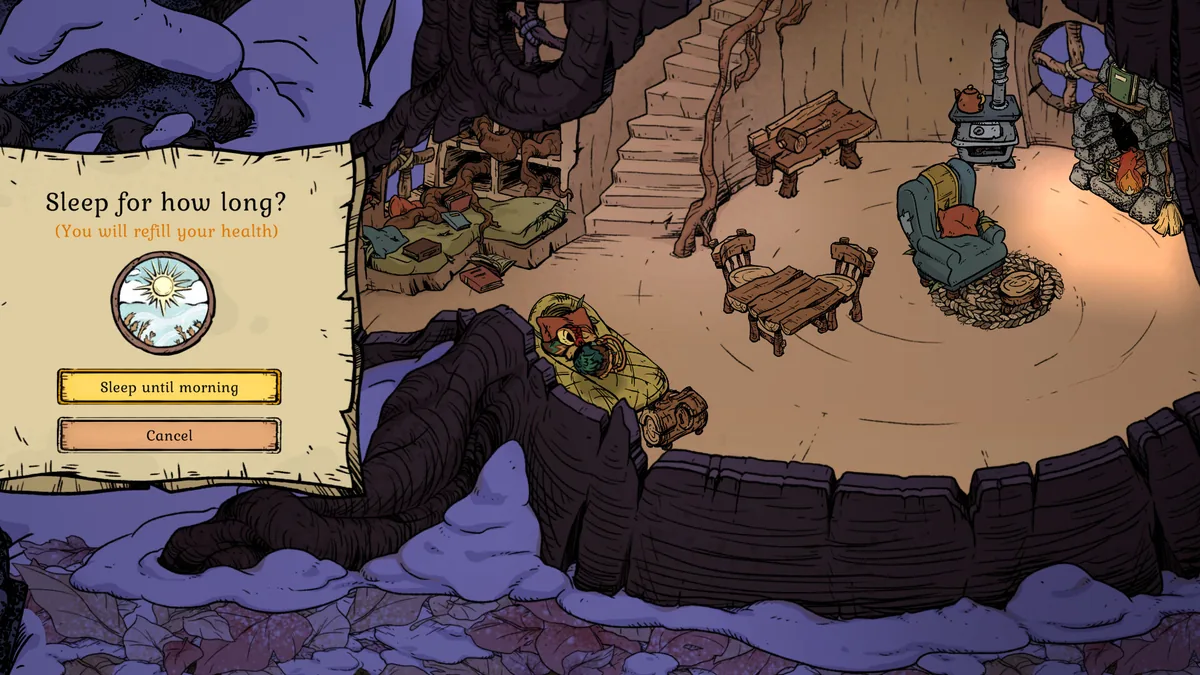 Sleeping at your own bed advances time and tops up your stats, one of the five confirmed ways to reset your warmth meter to full.
Related Reading
- Winter Burrow Review: Cozy Survival With Real Depth: The full 8.0 review covering knitting, cooking, and the missing-Aunt mystery around this same warmth system.
- Winter Burrow Beginner Guide: 7 Tips for Your First Days: What to craft and prioritize in your opening hours, warmth management included.
- Romestead Review: Roman Survival That Earns the Raid: Another survival sim that attaches exact numbers to its meters instead of vague buffs.
- Solarpunk Game Review: Floating Island Survival 2026: A combat-free survival game built around an energy grid instead of a warmth meter.
- Winter Burrow Complete Guide: Warmth, Crafting, Achievements: The full hub tying warmth management into crafting and achievements in one place.
References
Was this guide helpful?
About the author

Indie & JRPG Critic
Indie game evangelist and lifelong JRPG fan covering small studios since 2017. Mumbai-born, London-based. Writes the way she talks.
- 7 years indie games coverage
- JRPG and visual novel specialist
- Narrative design focus
Keep reading

Disclaimer
This article is published for informational and entertainment purposes. It does not constitute professional financial, legal, or technical advice. Game performance, online services, patch schedules, and store listings change. Verify critical details (pricing, system requirements, regional availability) with publishers and storefronts before you buy. Affiliate links, where present, help support our editorial work and are labelled in our affiliate disclosure.
Comments
Loading comments…