
GameBrief · General
Beastro Review: A Cozy Deckbuilder Worth Your Time
Beastro review: the cozy cooking deckbuilder earns its Very Positive Steam rating. Trick-taking combat, the Caretaker system, and where it stumbles.

Reviewing
Beastro
Timberline Studio · Timberline Studio
Score
Reviewed build: 1.0
Pros
- Cooking-to-combat loop is genuinely clever: every ingredient you grow becomes a card
- Trick-taking combat feels distinct from standard deckbuilders
- Caretaker flavor preferences add meaningful strategic depth
- Charming puppet theatre battle sequences with a lot of personality
- Day-one Xbox Game Pass inclusion makes it very easy to try
Cons
- Mid-game restaurant management can feel repetitive before new Caretakers unlock
- Flavor-balancing required to power up Caretakers is not clearly explained
- PC only on Steam (no Mac/Linux), Xbox Series consoles via Game Pass
Verdict
Beastro is a confident debut from Timberline Studio that earns its Very Positive rating by threading cozy farming, cooking minigames, and card-combat into a loop that keeps rewarding you.
The Beastro review question is simple: does a game that asks you to both run a restaurant AND build combat decks actually hold together? After spending time with Timberline Studio's debut, the honest answer is yes, mostly, with a few caveats worth knowing before you buy.
Beastro launched on June 11, 2026 at $19.99 on Steam (a 25% launch-week discount brought it to $14.99 through June 18) and day one on Xbox Game Pass. It's sitting at Very Positive on Steam: 92% positive from more than 500 user reviews. That's a strong number for a small studio's first release. Whether it reflects genuine craft or just goodwill from cozy game fans is what this review is here to figure out.
Key Takeaways
- Cooking and deckbuilding are linked at the ingredient level, not bolted together as separate systems
- Trick-taking combat is a real differentiator from standard Slay the Spire-style deckbuilders
- Caretakers each have flavor preferences that shape your kitchen strategy meaningfully
- A v1.0.2 hotfix already shipped three days after launch, fixing a final boss crash
- Available on Xbox Game Pass from day one
Gameplay: One Loop, Two Halves
The game is set in Palo Pori, a village under monster threat. You play as Panko, a chef whose teacher has gone missing, who ends up feeding a rotating cast of Caretakers, adventurers who venture out to fight the monsters threatening the village. Your job is to grow ingredients, cook dishes, and serve them.
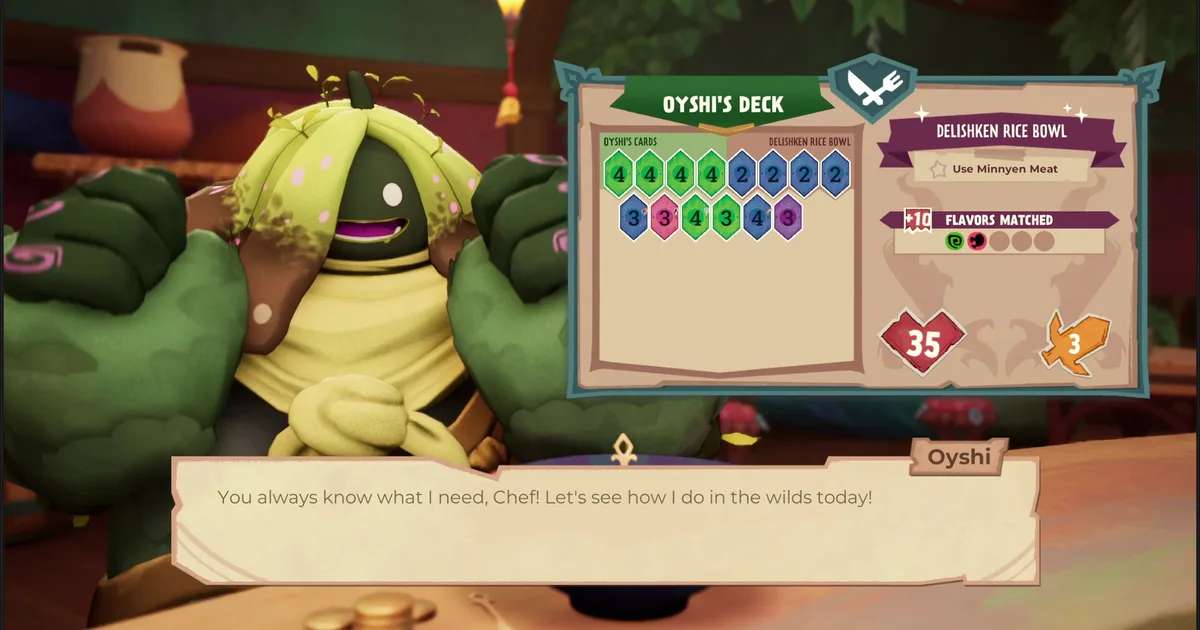
That might sound like a farming sim with cards glued on. It isn't. What Timberline Studio figured out is that the link between the two halves should be mechanical, not just narrative. Every ingredient you grow or forage unlocks a specific card when cooked into a dish. Bitter herbs generate defensive cards. Sweet fruits produce healing abilities. Spicy roots tend toward offensive effects. The Caretaker you feed doesn't just get fed: their whole combat deck changes based on what you served them that morning.
This means the restaurant half of the game has real consequences. You can't just grow whatever's convenient. If a Caretaker is about to face a tough zone, you need to plan their meals a few days out, thinking about which flavor profile will give them the cards they need.
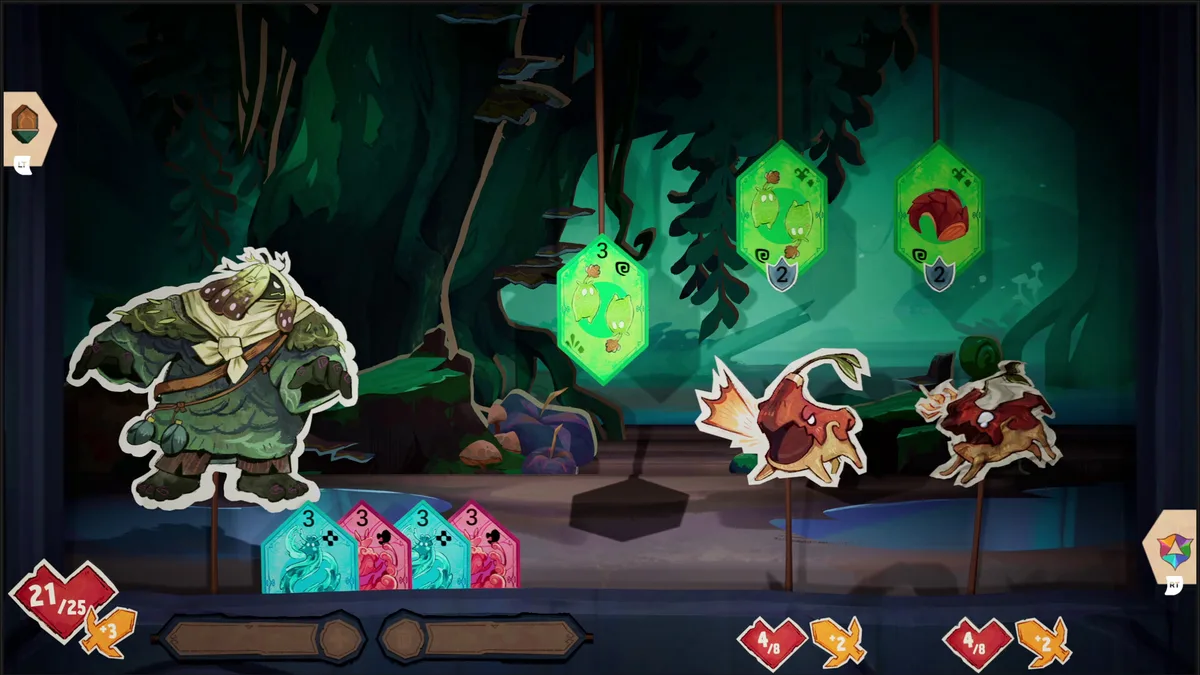 The trick-taking combat layer means you're not just playing cards, you're reading what the monster leads with and responding accordingly.
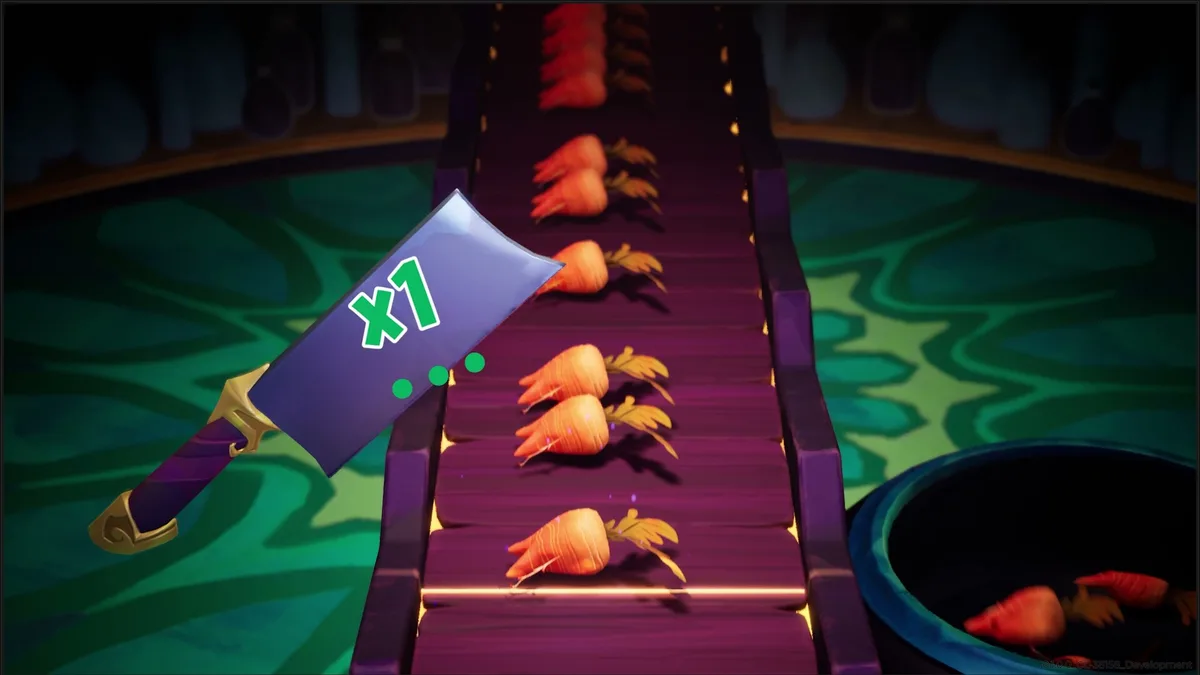
The cooking itself uses minigames. Chopping, flipping, sizzling, all handled through brief timing-based interactions. None of them are hard. They exist to give the ingredient-gathering loop a satisfying physical payoff, and they largely succeed. The timing windows are forgiving, which fits the cozy intent, though players wanting more challenge might find this section a little passive by hour ten.
The Trick-Taking System Is the Real Surprise
Most deckbuilders work the same way: draw cards, play them, deal damage or gain effects, repeat. Beastro's combat layer, which plays out in a puppet theatre sequence after Caretakers return from their venture, draws on trick-taking card games rather than straight draw-and-play.
In trick-taking games like Hearts or Spades, the structure is about who leads and what you're forced to follow. Beastro adapts this: monsters lead with a card type, and you respond from your Caretaker's deck. Certain card types beat others in a matching system that changes per enemy encounter. You can't just play whatever you want; you have to read the encounter structure and have the right cards available.
This is a genuinely different feel from the Slay the Spire school of deckbuilding. It's more reactive and more constrained, which makes deck-building decisions upstream in the kitchen feel more loaded. A Caretaker deck that's all offensive sweet-fruit cards will struggle against an enemy type that requires bitter defensive responses.
That said, the depth took longer to reveal itself than I'd have liked. The first few hours are pretty easy, almost too easy. The trick-taking nuance only clicks around hour four or five, when tougher encounters start punishing decks that are all one flavor.
The Caretaker System: Where Strategy Hides
Each Caretaker comes from a different flavor region of the game world, which shapes their baseline card preferences. Some like bitter, some sweet, some arrive each morning with a daily craving you can choose to fulfill or ignore. Ignoring cravings doesn't break the game, but satisfying them unlocks abilities that otherwise stay locked.
Players on Reddit noted shortly after launch that the flavor-craving system wasn't obvious to newcomers. People were finishing the early hours without realizing their Caretakers had unmet cravings, which meant whole combat abilities stayed locked. The tutorial doesn't explain this clearly enough.
Once you understand it, though, the Caretaker system becomes the game's best source of replayability. Different Caretakers suit different play styles. The ones with bitter leanings tend toward tanky defensive builds. The sweet-profile ones generate healing chains. Mixing and matching Caretakers for a given dungeon run is the layer where experienced players will find the most strategic texture.
 Battles play out through a puppet theatre sequence Caretakers narrate on return. It's charming, and each run feels distinct when decks are built thoughtfully.
The mid-game pacing is the other thing worth flagging. Before you've unlocked enough Caretakers to give the flavor-matching real variety, there's a stretch where the daily loop (gather, cook, serve, check results) starts to feel repetitive. If you're the kind of player who bounces off cozy games when they go quiet for a few sessions, this is the stretch where that might happen.
Note: Timberline Studio shipped a hotfix (v1.0.2) on June 13, 2026, fixing a crash that occurred when players used a specific poison card combination during the final boss fight. If you hit this issue, updating to the latest version resolves it.
Presentation and Audio
Beastro's visual style is colorful and confidently stylized. The village of Palo Pori has genuine character: the different ingredient stalls, the village residents with their own schedules and tastes, the way the kitchen fills with steam during cooking minigames. It's not technically demanding (minimum specs are modest: an i5-4570 and 6GB RAM), but the art direction covers a lot.
The puppet theatre sequences deserve a mention. Battles in Beastro aren't played out directly; your Caretakers go off on their own and come back to tell you what happened, shown through a stylized shadow-puppet show. On paper this sounds like a small studio dodging complex combat animation. In practice it gives the game a personality nothing else in this genre has. I kept watching the puppet recaps even after I'd seen dozens of them. There's something genuinely delightful about watching a shadow-puppet version of your carefully-built Caretaker take down a monster using the exact deck you planned two mornings earlier.
Audio is warm and fits the cozy register: acoustic instrumentation, light percussion, nothing that would wear out a long session. There's no voice acting, which keeps the experience text-driven, but the writing is precise enough that this doesn't feel like a gap.
Verdict
Beastro's Very Positive Steam rating is earned. Timberline Studio built a debut game where the two core systems, cozy restaurant management and trick-taking deckbuilding, are connected at the mechanical level rather than just the narrative one. When a dish you spent two in-game days planning turns a Caretaker into an unstoppable bitter-defensive force, the loop delivers on its promise.
The caveats are real. The flavor-craving tutorial is undercooked. Mid-game pacing drags before the Caretaker roster fills out. The trick-taking depth takes a few hours too long to surface. None of that undoes what works.
At $19.99 on Steam, or free on Game Pass, Beastro earns its rating. Timberline Studio could have just stacked a card game on top of a farming sim and called it a day. They didn't. The cooking shapes the combat at the ingredient level, and that decision makes the whole thing feel designed rather than assembled.
Rating: 8.0/10
Frequently Asked Questions
Is Beastro worth buying on Steam? Yes. At $19.99 and with a Very Positive rating (92% positive from over 500 reviews), Beastro offers 15 to 20 hours of cozy cooking-and-combat content. It's also on Xbox Game Pass if you want to try before committing.
What platforms is Beastro on? Beastro is on PC via Steam and available on Xbox and Xbox Series X/S via Xbox Game Pass. A PS5 version has been listed by the publisher but Steam only confirms PC at launch.
How does cooking connect to combat in Beastro? Every ingredient you grow or forage becomes a card in a Caretaker's deck. Serving a dish with bitter herbs unlocks defensive cards, while sweet fruits unlock healing abilities. The deck you build is a direct result of what you cook.
What is the Caretaker system in Beastro? Caretakers are adventurers from different flavor regions of the world. Each one has unique taste preferences: some crave bitter, some sweet, some just want their daily craving satisfied. Feeding them the right flavor profile boosts their combat stats and unlocks new abilities for their deck.
How long is Beastro? A main story playthrough runs roughly 12 to 15 hours. Completionists chasing Steam achievements and experimenting with all Caretaker flavor builds can stretch it to 20 hours.
Does Beastro have controller support? Yes, Beastro has full controller support on PC, confirmed by Steam. It also plays natively on Xbox via Game Pass.
Is there a demo for Beastro? Timberline Studio ran a demo on Steam before launch, which drew strong community reception. The demo is now offline as of launch day.
Related Reading
- Beastro Complete Guide: Flavors, Decks, Caretakers 2026: the full hub covering every Beastro guide on this site, from flavors and Caretakers to advanced recipes.
- Beastro Deck Building Guide: Best Cards and Combos 2026: Beastro deck building guide: how the mise en place grid shapes your cards, which ingredients.
- Beastro Flavor Guide: How the 5 Tastes Work in Combat: Beastro flavor guide: 5 tastes, how cooking creates your deck, and which flavor pairs enhance or suppress combat.....
References
About the author

Indie & JRPG Critic
Indie game evangelist and lifelong JRPG fan covering small studios since 2017. Mumbai-born, London-based. Writes the way she talks.
- 7 years indie games coverage
- JRPG and visual novel specialist
- Narrative design focus
Keep reading




Disclaimer
This article is published for informational and entertainment purposes. It does not constitute professional financial, legal, or technical advice. Game performance, online services, patch schedules, and store listings change. Verify critical details (pricing, system requirements, regional availability) with publishers and storefronts before you buy. Affiliate links, where present, help support our editorial work and are labelled in our affiliate disclosure.
Comments
Loading comments…