
GuideBesmirch
Besmirch Taxes and Raids: How the New Farm Threat Works
About the game
Besmirch
Gangru Games · 2 Left Thumbs
Besmirch taxes are a new pressure point in the farm loop. The official v0.7 announcement confirms that taxes begin after the first Spring and that refusing them can trigger raids. That gives the current build a meaningful decision, but it does not give us a complete tax table or a finished tower-defense system.
Quick Answer: how do taxes and raids work in Besmirch?
TL;DR: The official v0.7 notes say taxes start after the first Spring. If you refuse to pay, raids can follow. Keep money, food, and combat supplies in reserve, but do not rely on a published tax amount, wall durability value, or universal raid counter. Those details are not in the public update notes checked for this guide.
The important distinction is between what is confirmed and what is still unknown. The tax trigger is official. The refusal consequence is official. The exact amount, timing, enemy lineup, number of waves, and effect of buildings are not documented in the same source. This guide gives you a reliable preparation routine without filling those gaps with rules from another farming or survival game.
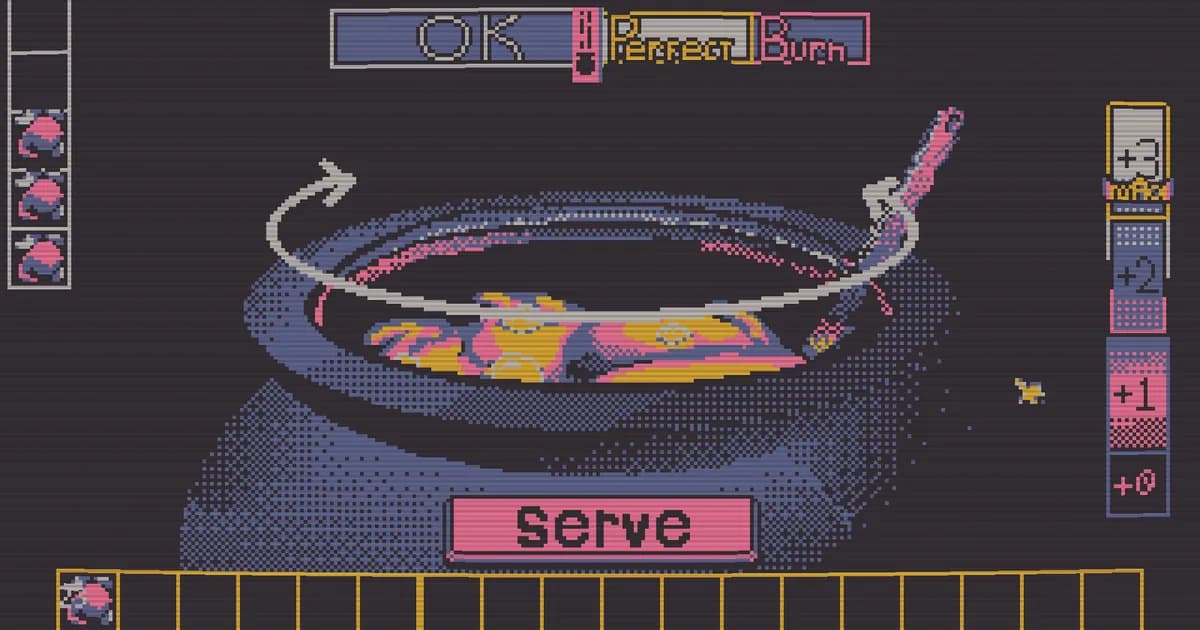
Cooking is one practical way to protect a reserve before a tax decision, but the public update notes do not promise a fixed food value for every dish.
What the v0.7 update actually confirms
The official Besmirch v0.7 announcement lists taxes as a live system and says they appear after the first Spring. It also says that rejecting taxes causes raids. Those two statements are enough to establish a decision loop: reach the relevant seasonal point, receive a demand, then choose between paying and accepting the documented raid risk.
The announcement does not publish a spreadsheet of tax amounts or a complete raid specification. It does not say that every save receives the same demand, that a refusal creates one fixed wave, or that every building has a known defensive rating. If a video or forum post gives a precise universal number, check its build date before treating it as current.
The update also adds other systems around the same economy, including an enhanced crafting menu, new recipes, sprinklers, walls, decorations, and fire. Those additions make preparation more flexible, but they do not turn the farm into a confirmed base-defense game. The Besmirch crafting and building guide records the structures and farm tools that the official update trail names without assigning them undocumented raid statistics.
Step-by-Step: prepare for your first tax demand
1. Reach the seasonal trigger with a reserve: The official note places the start after the first Spring. Do not spend the last of your money on an optional upgrade just before that part of the calendar. Keep a reserve that can absorb a demand whose exact amount is not listed in the public announcement.
2. Separate tax money from harvest food: Besmirch already asks you to manage food, crops, and the Baron's share. Put aside what you need to stay fed before deciding what can be sold or offered. A pile of crops is not automatically spare cash if it is also your next meal or tithe.
3. Keep basic combat supplies available: Refusing taxes is the documented route into raids. If you choose that risk, enter it with the weapon, healing, and stamina supplies you normally use for dangerous nights and dungeons. Do not assume that a raid will use the same enemy patterns as a cave encounter; the public notes do not provide a complete comparison.
4. Finish urgent town work first: Bridge repair, blacksmith progress, and other town tasks compete with the same time and resources as tax preparation. The Besmirch complete guide covers the wider day loop and the town connection. Use that schedule to finish a deadline-sensitive task before converting all of your stock into optional decoration.
5. Read the demand before committing: The safest universal rule is to inspect the current prompt and your current inventory. The checked official notes confirm the existence of taxes, not a fixed formula that lets you calculate every demand from the calendar alone. Treat the in-game prompt as the authoritative value for your save.
6. Choose refusal deliberately: Refusing is not a free way to keep money. The v0.7 notes explicitly attach raids to that choice. Accept the raid risk only when the cash would damage a more important plan or when you are prepared to test the current combat build on a disposable save.
7. Rebuild the reserve after the event: Whether you pay or fight, return to the farm loop with food and basic supplies protected. The next danger may be a darkness cycle, a dungeon trip, or a fire rather than another tax prompt. The Besmirch tips guide is the better companion for planning the day-to-day survival buffer.
Paying taxes versus refusing them
Paying is the predictable branch. It costs money, but it avoids the refusal consequence that the v0.7 announcement calls out. That makes payment attractive when you are still learning the combat loop, when the farm is short on healing, or when a town repair is more urgent than an optional raid test.
Refusing is the risk branch. It preserves the immediate payment, but the official notes say raids can follow. That makes refusal a deliberate trade rather than a hidden discount. If the choice appears while your inventory is already thin, the cash you keep may be less useful than the supplies you will need to survive the resulting attack.
The right answer depends on your save, not on a universal tier list. A player with a stable harvest, a repaired route, and spare combat supplies can use refusal to test the current system. A new player who is still learning the Baron trust system should usually value predictable progress over an undocumented fight.
Do not describe the choice as a confirmed trust formula. The existing Baron guide explains the social system, while the v0.7 notes establish taxes and raids as newer economic pressure. The sources checked here do not state that paying raises trust by a fixed number, refusing always lowers it by a fixed number, or that every raid changes a villager's state in the same way.
What can walls and crafting do for a raid?
Walls are part of the current crafting and building update trail. Wood and stone walls, paths, doors, windows, sprinklers, and decorations are all named in the official notes. That makes walls a sensible construction project when you want a clearer farm boundary or a more organized route.
It does not prove that walls stop raids. The public announcements checked for this guide do not publish wall durability, monster pathing, a raid-defense stat, a gate rule, or a guaranteed safe layout. Build walls for the confirmed building system and for movement clarity. If you test them against a raid, keep the result tied to the current version rather than turning one save's outcome into a universal rule.
The same caution applies to fire. V0.7 adds fire and the update trail describes ways to put it out or stop, drop, and roll. A decorative build can still become a hazard if it blocks your route. Leave room to move between the house, workbench, crops, and any structure you are testing before a tax decision.
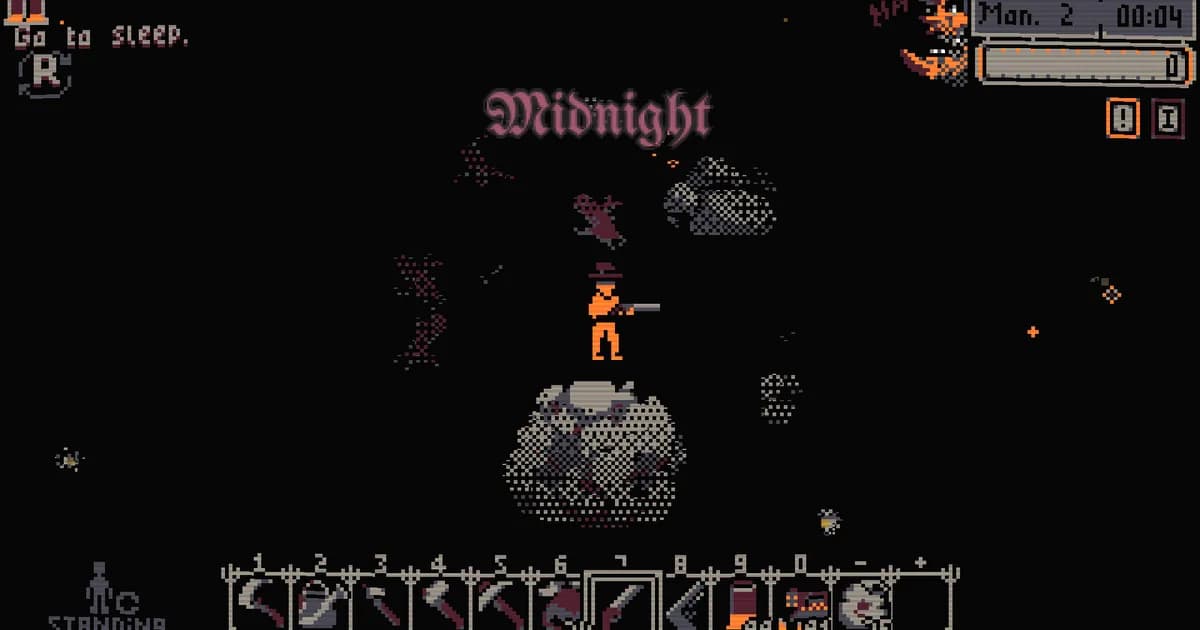
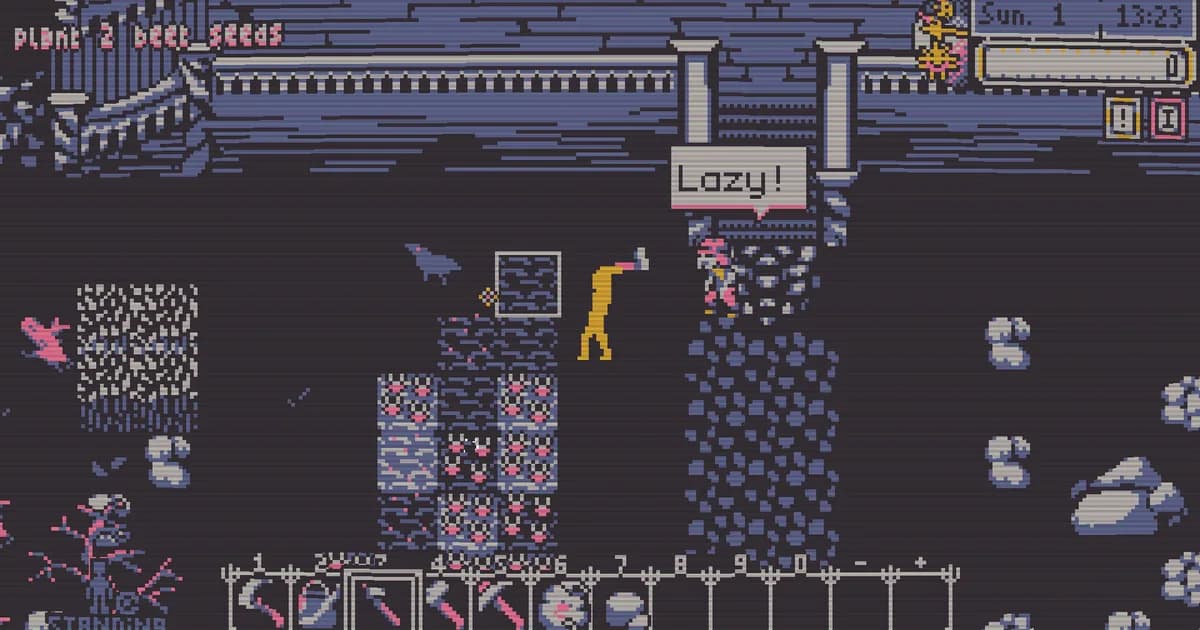
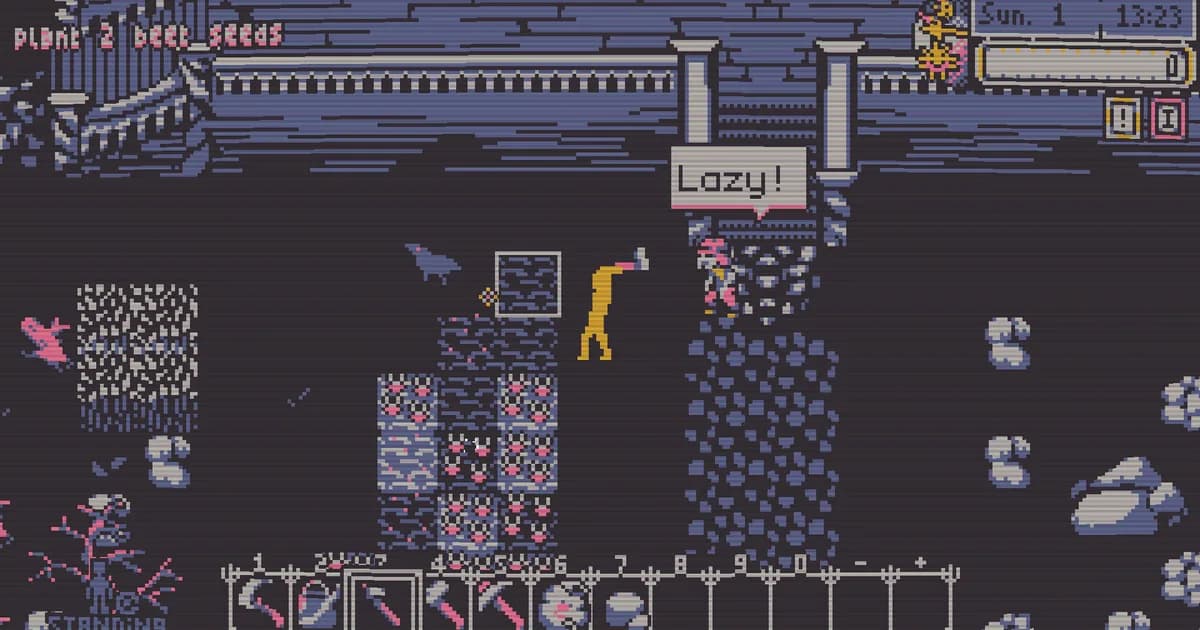
The warning outside the mansion is a useful reminder that Besmirch already uses explicit danger signals; do not treat every new raid prompt as a predictable combat tutorial.
A safe test plan for the refusal branch
If you want to learn raids rather than simply avoid them, make the test intentional. Save a backup before the tax decision if your current build allows it, keep a written note of the season and date, and record the exact prompt. Then note what the refusal changes: when the attack begins, where enemies appear, which supplies you use, and whether structures alter the route.
This is especially important because Besmirch remains in Early Access. A raid observed in v0.7 can change in a later patch, and the official roadmap still includes more monsters, festivals, story content, and deeper dungeons. Label your notes with the build instead of promising that one result will hold forever.
Do not use the unstable branch as an authority for stable raid rules. The developer's unstable updates are useful for understanding what is being tested, but an unfinished branch can have corrupted saves or temporary systems. The Besmirch Early Access overview explains the larger distinction between current content and planned additions.
What the official sources do not document
The sources checked for this guide do not provide:
- A universal tax amount or a complete formula for calculating it
- A guaranteed calendar day beyond the after-first-Spring description
- A complete raid enemy roster, wave count, or spawn map
- Wall durability, gate rules, monster pathing, or a raid-defense value
- A confirmed payment-to-trust conversion
- A final reward table for surviving or refusing a raid
Those are useful future guide topics if Gangru Games publishes the numbers or if a stable in-game data source makes them reproducible. They are not safe facts to invent from the game's farming-horror tone.
Frequently Asked Questions
When do taxes start? The official v0.7 announcement says taxes begin after the first Spring. It does not publish one fixed day for every save.
What happens if I refuse taxes? The same announcement says refusal leads to raids. It does not publish the full raid rules.
Should I pay every time? Paying is the predictable branch. Refusing preserves the immediate payment but accepts the documented raid risk, so choose based on your supplies and current goal.
Do walls guarantee safety? No guarantee is documented. Walls are confirmed structures, but the checked official notes do not state that they stop raids.
Does paying taxes raise Baron trust? The public sources checked here do not publish a fixed trust change for paying or refusing taxes. Keep the tax decision separate from the verified trust guidance.
Are raids finished content? The tax and refusal consequence are documented in v0.7, but Besmirch is still Early Access and the detailed raid roster and defense values remain undocumented.
Related Reading
- Besmirch Complete Guide: Farming, Horror, and the Baron
- Besmirch Baron Trust System: How It Actually Works
- Besmirch Crafting and Building Guide: Workbench to Walls
- Besmirch Tips: 12 Things to Know Before Your First Night
- Besmirch Early Access: FAITH-Inspired Farming Horror
- Besmirch Fishing Guide: Rods, Fishmonger, and Aquarium
- Besmirch Achievements: All 28 Steam Unlocks Explained
- Moonlighter 2 review and dungeon economy context
- Fields of Mistria beginner guide
References
- Besmirch on Steam, official Early Access store listing and current system scope, checked September 28, 2026.
- Besmirch v0.7 announcement, official August 25 update confirming taxes after the first Spring and raids after refusal.
- Besmirch Update #09, official update covering the tax and raid additions in the v0.7 trail.
- Besmirch unstable crafting and raid update, official development note for the changing building and combat context.
- Besmirch Update #10, official unstable-branch status note showing why unfinished systems should be labeled by branch and build.
Was this guide helpful?
About the author

Games Critic
Games writer and reluctant optimist who has reviewed over 400 titles across 9 years. Irish, currently in Berlin. Has strong opinions about tutorial design.
- 400+ games reviewed across 9 years
- Platformer and horror specialist
- Narrative design focus
Keep reading
Besmirch Crafting and Building Guide: Workbench to Walls
General · 10 min
Besmirch Fishing Guide: Rods, Fishmonger, and Aquarium
General · 9 min
Besmirch Achievements: All 28 Steam Unlocks Explained
General · 10 min

Besmirch Baron Trust: 5 Rules for Safer Villager Bonds
General · 10 min
Besmirch Complete Guide: Farming, Horror, and the Baron
General · 17 min
Besmirch Tips: 12 Things to Know Before Your First Night
General · 8 min
Game deals · affiliate links

Disclaimer
This article is published for informational and entertainment purposes. It does not constitute professional financial, legal, or technical advice. Game performance, online services, patch schedules, and store listings change. Verify critical details (pricing, system requirements, regional availability) with publishers and storefronts before you buy. Affiliate links, where present, help support our editorial work and are labelled in our affiliate disclosure.
Comments
Loading comments…