
GameBrief · General
Besmirch Tips: 12 Things to Know Before Your First Night

Reviewing
Besmirch
Twelve Besmirch tips before your first harvest: the land is dying before you touch it, something is walking past your field at midnight, and the Baron is already counting your crops.
That gap (between the ordinary act of planting a turnip and whatever is making that sound outside) is where this game lives. I went in expecting Stardew Valley with a dark filter. I got something stranger and harder, in a good way.
These Besmirch tips come from the early access launch period. The game released May 11, 2026, at $9.99, and players have already identified the mechanics that trip you up. Some of them I found out the painful way. Others came from the Steam community threads. Either way: learn them before you lose a week of crops to a mistake you didn't see coming.
TL;DR: Besmirch is a horror-farming survival game in Early Access at $9.99. The current build covers Autumn and Winter: 6-12 hours of content. Stock up food and blessed candles before Three Days of Darkness every month. The Baron takes a tithe from every harvest. The blacksmith is in town but not obvious from the start: check the map.
Key Takeaways
- Blessed candles before the Three Days of Darkness: running out of them outdoors during the event is a fast way to lose a run
- The Baron's tithe, your own hunger, and the town's starvation all pull at the same harvest; none of them will let you forget them
- Dungeon exploration is a daytime activity until you are very comfortable with the combat system
- Use the in-game map: Gangru added it specifically because early players kept getting lost looking for the blacksmith
- Spring and Summer are in the game but incomplete; the active story runs through Autumn and Winter only
Overview
These tips target the opening hours of Besmirch: specifically the first two or three in-game weeks of Autumn, which is where most players lose their footing. The Early Access version contains 6 in-game weeks of story content across Autumn and Winter (roughly 6-12 hours of playtime at 2 hours per week), with Spring and Summer currently playable but without their full story beats.
Besmirch runs on a horror-inflected farming loop: grow crops, cook food, feed the town, satisfy the Baron, survive the night. The FAITH-inspired pixel art aesthetic sets the tone from the first frame. This is not Stardew Valley. The ground here resents being farmed.
For context on the game's launch details and what the developers have planned for full release, see our Besmirch Early Access launch coverage.
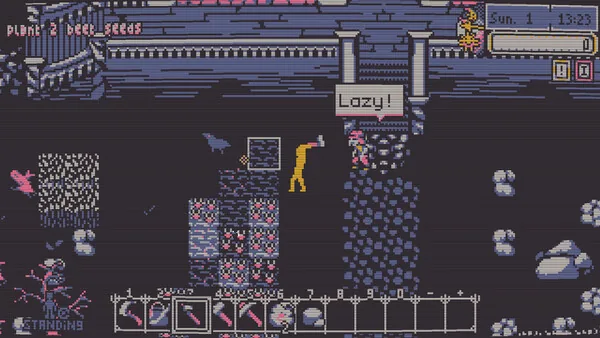 The ability interaction layer isn't visible in the first few encounters: it opens after the third zone.
Besmirch tips that actually help
Step-by-step: applying these in your first run
Early Game: Autumn Weeks 1-2
1. Do the tutorial. Yes, really.
Gangru added an explicit tutorial in the early build, focused on the starvation mechanic. Do not skip it. Who gets fed and who doesn't isn't intuitive here: NPC relationships and faith variables affect which choices hurt you less, and none of that is obvious from the UI. The tutorial walks you through it before the stakes are real. Skip it and you're making blind calls during week 2 when your crop output is already stretched thin.
2. Plant more than you think you need in week 1.
Every seed in Besmirch is a hard-won yield. The land is described as "failing" for a reason: your crop output per plot is lower than farming sims trained you to expect. By the end of week 2, you are splitting your harvest three ways: the Baron's tithe, food for the town, and your own survival. Plant aggressively in week 1 when the pressure is lightest and you have time to tend plots without nighttime interruption.
3. Learn the map before you need it.
A map was added to Besmirch specifically because early players kept getting lost looking for the blacksmith and the main NPC homes. Pull it up the first in-game morning before you start any work. Get your bearings: shop, blacksmith, where the important town residents live relative to your farm. At night, running the wrong direction looking for shelter is how you die: and it happens faster than you'd think.
4. Introduce yourself to every NPC in the opening week.
Town trust builds through repeated interaction, not just through feeding people. The faith system means townsfolk judge you on perceived omens as much as deeds: so a stranger who never visits feels like a bad omen even if your barn is full. Get a read on each person early: what they need, how they talk about the Baron, what they're scared of. You'll be making choices about who eats in week 3 or 4. Knowing them before then changes those calls.
GODEEPER: Besmirch shares its early access scarcity design with another 2026 release we looked at closely. Dead as Disco Guide: Surviving the First Hours →
Mid Game: Surviving the Three Days of Darkness
5. Treat the Three Days of Darkness as a monthly planning deadline.
Every in-game month ends with three consecutive nights of complete darkness. The game tells you this upfront: it's not a surprise. What players get wrong is thinking "prepare" means the afternoon before it starts. It doesn't. You need food stocks, blessed candles, and your crop cycle ideally timed so no seedlings are mid-growth during the lockdown. Start 2-3 in-game days out. The first time I treated it like a last-minute thing, I lost a full week of seedlings to missed watering.
6. Blessed candles are not optional.
One player in the Steam discussions put it simply: they got trapped indoors during the Darkness with no candles and couldn't safely retrieve outdoor supplies for three full nights. The things that move in the darkness are not the same as the regular nighttime mobs. They're worse. Keep a stash of candles. Keep a reserve beyond the stash. Do not burn them on decoration: whatever the faith system benefit, it's not worth the shortfall.
7. Farming and combat gear are two separate resource tracks: treat them that way.
The game features armor and weapons for dungeon exploration alongside your farming tools. Early on it's tempting to divert harvest resources toward combat upgrades, especially when the dungeons and caves look immediately interesting. Resist this. Your food supply chain has to stay functional before your combat loadout. Upgrade the blacksmith-tier gear once you have a crop cycle running reliably, not before.
8. Cook your meals. Raw crops are a waste of goodwill.
Cooked meals restore more of your hunger meter than eating raw, and they build more NPC trust when shared. A raw turnip handed to a neighbor technically counts as feeding them. A cooked meal reads as care. By week 3, when the Baron's tithe is cutting into your reserves and you're trying to keep everyone's trust up simultaneously, the difference matters. Put an hour into learning a handful of basic recipes in week 1. You will not regret it.
GODEEPER: If you want another take on early access survival games with resource-splitting decisions, our guide to Gambonanza Tips covers a different kind of scarcity under pressure.
Late Autumn and Winter
9. Explore dungeons during the day, gear on.
Dungeons and caves hold story secrets tied to the Baron's mansion. They're worth going into: just not at night. The ambient threat outside goes up after dark regardless of whether the Three Days of Darkness is active. Morning is your exploration window. Late afternoon is for cooking and NPC rounds before you button up for the night. That rhythm took me a few in-game days to figure out, and it made everything smoother once I had it.
10. Hoarding crops hurts your standing.
This is the tension the game's designed around: keeping everything for yourself is survival instinct, but the town is watching. If hunger rises in the community and your barn is full, the NPC faith system shifts against you faster than it feels fair. The game wants you to make uncomfortable choices: figure out early what the minimum acceptable share-out is rather than trying to max-hoard and then course-correct after trust has already dropped.
11. Don't sleep on home decorations.
It sounds like a comfort mechanic, but home decorations in Besmirch have functional side effects in the faith system. A few specific decoration items affect how townsfolk perceive your space and your character's standing. If you've been ignoring the decoration tab as flavor content, check back: some of these are worth the resource cost even in a lean run.
Advanced Besmirch tips
12. Time your crop cycles around the Three Days of Darkness window.
Once you understand the monthly rhythm, you can plan your planting schedule so that crops are either fully harvested or in early seedling stage during the Darkness: the phases where missing a watering day does the least damage. Planting mid-growth crops just before the Darkness starts and then being locked indoors for three days is how experienced players watch their entire food supply wither.
Save before major NPC conversations. Early access Besmirch has had hotfixes specifically for crashes during NPC interactions, and the choice-based dialogue with certain town characters can have irreversible consequences. Until the game is more stable, save before any conversation that looks like it's heading toward a significant decision.
Don't ignore the Baron's mansion until winter. Players who wait until Winter to engage with the mansion content find it compressed and harder to parse than players who do early reconnaissance. The dungeons under and around the mansion are accessible in Autumn. Going in with basic gear early just to observe is not wasted time: knowing the layout before you're sent there with urgency changes how you navigate the encounter.
Our best early access games of 2026 list covers the May release window if you're looking for other games in the same rough category.
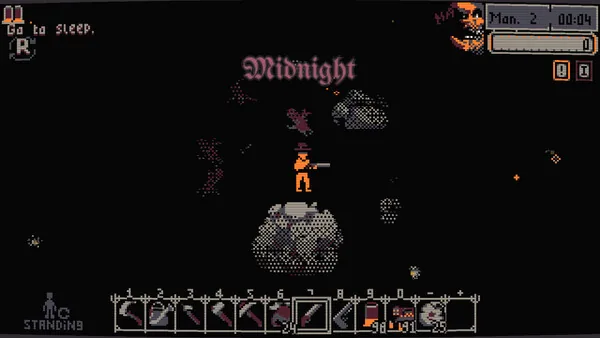 The early skill tree is deceptively linear: the branching that matters starts in the second tier.
Frequently asked questions
How long is Besmirch in Early Access right now? The current Early Access build covers a full in-game annual cycle, but only Autumn and Winter have active story content. Depending on your pace, expect 6 to 12 hours: about 2 hours per in-game week across the 6 available story weeks.
What happens during the Three Days of Darkness in Besmirch? Every in-game month, three consecutive nights of total darkness hit the town. During this period, stronger monsters roam outside and you cannot safely retrieve outdoor supplies. Players who aren't stocked up and sheltered with blessed candles before the darkness starts tend to lose resources or get killed.
Do you have to pay the Baron's tithe every cycle? Yes. The Baron collects his share of your harvest on a recurring basis. Failing to meet the tithe has consequences for your standing in the town, though you do have some flexibility in how you manage what you keep versus what you give. Hoarding too much rather than sharing with townsfolk also costs you trust.
Is Besmirch worth buying in Early Access? At $9.99 (the 20% launch discount expired May 25, 2026), Besmirch offers 6-12 hours of polished content in Autumn and Winter. If you are comfortable with an unfinished Spring and Summer and want to get ahead of full release, it's a reasonable buy. If you prefer complete games, wait: the full release is planned for October 31, 2027.
Can you fail to save the town in Besmirch? There are clear failure states tied to letting townspeople starve and losing their trust entirely. The faith and superstition system means NPCs evaluate you on both your actions and on perceived omens: so even a run of bad harvests can shift community sentiment against you before you've done anything wrong.
Where is the blacksmith in Besmirch? The blacksmith location confuses a lot of early players: it's not immediately obvious from the starting area. Use the map (added in a recent update) to locate the blacksmith's shop in the town. You'll need the blacksmith to upgrade combat gear before exploring dungeons.
Should I use a controller to play Besmirch? Controller support exists but has been flagged by early players as needing more work. The developers are aware of it and patches are in progress. For now, keyboard and mouse is the more reliable input method, especially for precise farming tasks.
Related Reading
- Besmirch Baron Trust System: How It Actually Works: deep dive into the Baron mechanic that determines what you can buy, build, and access in early game.
- Away From Life Early Access Analysis: Another solo-developer survival game from the same early access window with similar rough-edge trade-offs.
- Best Early Access Games Worth Buying 2026: Curated picks for early access survival and indie games at similar price points.
- Die in the Dungeon Review: Review of another 2026 indie that prioritizes systems depth and replayability over early access polish.
References
Was this guide helpful?
About the author

Indie & JRPG Critic
Indie game evangelist and lifelong JRPG fan covering small studios since 2017. Mumbai-born, London-based. Writes the way she talks.
- 7 years indie games coverage
- JRPG and visual novel specialist
- Narrative design focus
Keep reading



Disclaimer
This article is published for informational and entertainment purposes. It does not constitute professional financial, legal, or technical advice. Game performance, online services, patch schedules, and store listings change. Verify critical details (pricing, system requirements, regional availability) with publishers and storefronts before you buy. Affiliate links, where present, help support our editorial work and are labelled in our affiliate disclosure.
Comments
Loading comments…