
GameBrief · General
LegionBound Guide 2026: All Modes, Classes and Builds
LegionBound guide: a $9.99 autobattler RPG with 42 classes, 82% Very Positive on Steam, two modes, 800+ Ascension heroes, and current patch notes.

Reviewing
LegionBound
Spicy Garlic Games
This LegionBound guide covers the full game: what it is, how its systems connect, and where to find the in-depth breakdown for each topic. LegionBound launched April 27, 2026 on Steam from Spicy Garlic Games, carrying an 82% Very Positive label whose review count changes and a $9.99 list price. A standalone free demo is available separately under Steam App ID 4342540.
The short version: an autobattler where you field up to 50 heroes, manage synergy chains between waves, combine heroes into Ascension units, and push through two distinct modes: Battle Mode for endurance runs, Adventure Mode for the roguelite campaign. Between-run skill-tree progression, 42 classes (the original 30 organized across 3 circular synergy loops, plus 12 more added in Patch 1.1), and a decision layer dense enough to carry well past the tutorial.
TL;DR: LegionBound launched April 27, 2026 with 42 classes, over 800 possible Ascension heroes, and skill-tree progression that rewards wipes with future-run progress. Start with Battle Mode if you want the simpler introduction to synergies before tackling Adventure Mode's Endbringer decision. The Tax Collector route is an editorial first-build recommendation, and a free standalone demo is on Steam under App ID 4342540.
Current status: September 2026
LegionBound currently lists a $9.99 base price, 42 classes, up to 50 heroes, and over 800 possible Ascension heroes on Steam. The store label is 82% Very Positive, but the review count changes as players post. The latest official patch located is 1.12 from September 10, which fixed targeting crashes, lingering-zone hangs, and stuck item disables. Patch 1.1 also added 12 heroes, new items, loadouts, and more than 400 Ascension combinations. Use the live in-game preview for class and Ascension decisions because community loop maps can lag behind patches.
LegionBound guide: key takeaways
-
Developer and publisher: Spicy Garlic Games. Released April 27, 2026 on PC (Windows + Linux via Steam), priced at $9.99
-
Two modes: Battle Mode (endurance) and Adventure Mode (roguelite campaign with the Endbringer boss); the official page does not promise a universal Battle Mode boss rule
-
42 classes total. Community launch-roster references split the original 30 into three groups plus Peasant, while Patch 1.1 added 12 more heroes; the official page does not publish a complete named loop map
-
Field up to 50 heroes simultaneously; Ascension combines heroes into upgraded classes, with over 800 possible Ascension heroes listed on Steam
-
Even a wipe earns skill points for future-run progression; Adventure Mode starts fresh and only specific starting-choice nodes affect that mode
-
Tax Collector full loop (4 classes) is the easiest first synergy build; Warrior-group dual chains carry deep endurance runs
-
Battle Mode is an endurance mode; the official page does not publish universal wave breakpoints, so treat tier thresholds below as editorial guidance rather than game rules
-
Free standalone demo available on Steam (App ID 4342540)
-
LegionBound Tips Guide: First Sessions to Late Waves: row rearrangement, between-run progression, hero combinations, and early decision-making without treating a wave number as a universal deadline.
-
LegionBound Launch on Steam: April 2026 Feature Breakdown: what shipped at launch, the Very Positive reception, and what the community found in the first week.
-
LegionBound Gold Farming: Coins, Gems, Economy Guide 2026: how coins drop from enemies and what Tax Collector does in the economy loop.
-
LegionBound Warrior Group: All 14 Classes & Synergies: LegionBound Warrior group: all 14 classes in the largest synergy loop, how the circular subclass...
-
LegionBound Barkeep Group: All 11 Classes & Synergies: LegionBound Barkeep group guide: all 11 classes in the mid-size synergy loop, the subclass chain,...
-
LegionBound Tax Collector Group: All 4 Classes Loop: LegionBound Tax Collector group guide: the only synergy loop you can fully complete, all 4...
-
LegionBound Boss Idol Guide: Patch 1.11 Rework Explained: How Boss Idols work, what Patch 1.11 changed, and the separate False Idols keystone explained.
Overview: what is LegionBound?
LegionBound is a retro autobattler roguelite RPG from Spicy Garlic Games. The core loop: recruit heroes between waves, reposition them between rows, cast unlockable spells and buy passive items that align with unlocked skills, then let battles resolve automatically. You control preparation, not execution. The official store page describes that loop without assigning a fixed number of decisions per wave.
42 classes total: the original 30 are mapped in community launch-roster references, plus 12 more added in Patch 1.1. The Steam page says every class has a synergy subclass. The same page lists over 800 possible Ascension heroes, while the patch note says each new hero brings its own abilities and passives and adds over 400 additional Ascension combinations. Wiping still earns skill points for future-run progression, but Adventure Mode starts fresh.
Two modes use the same recruiting and class-building vocabulary but ask different questions. Battle Mode is an endurance run on different maps. Adventure Mode adds buildings, map choices, modifiers, rewards, and the Endbringer decision; the official store page says the final foe gains power as you build.
The minimum spec is accessible. Windows 10, Intel Core i3 or AMD Ryzen 3, 4GB RAM, integrated graphics, 1GB storage. Linux is supported at the same floor. For the full launch breakdown (first impressions, what the modes look like in practice, what to expect before your first session) the LegionBound launch overview has that context.
Battle Mode vs Adventure Mode
Both modes use identical combat mechanics. The difference is everything around the combat.
Battle Mode is an endurance run on different maps: recruit during the run, keep heroes alive with items, and discover Synergy subclasses. The official page does not establish universal wave spikes, clear deadlines, or a guaranteed wave count for a given loop, so the class rankings below are editorial recommendations rather than promises about Battle Mode results.
Adventure Mode adds buildings with special passive abilities, map choices with difficulty/modifier/reward differences, and the Endbringer. The official store page says the final foe gains power as you build and lets you loop back for more power; it does not define a universal penalty for a building choice or a fixed loop-by-loop stat formula.
Start with Battle Mode if you want a clean view of recruiting and synergy construction before adding Adventure Mode's maps and buildings. That is a practical recommendation, not a measured claim about how many sessions or loops a player needs.
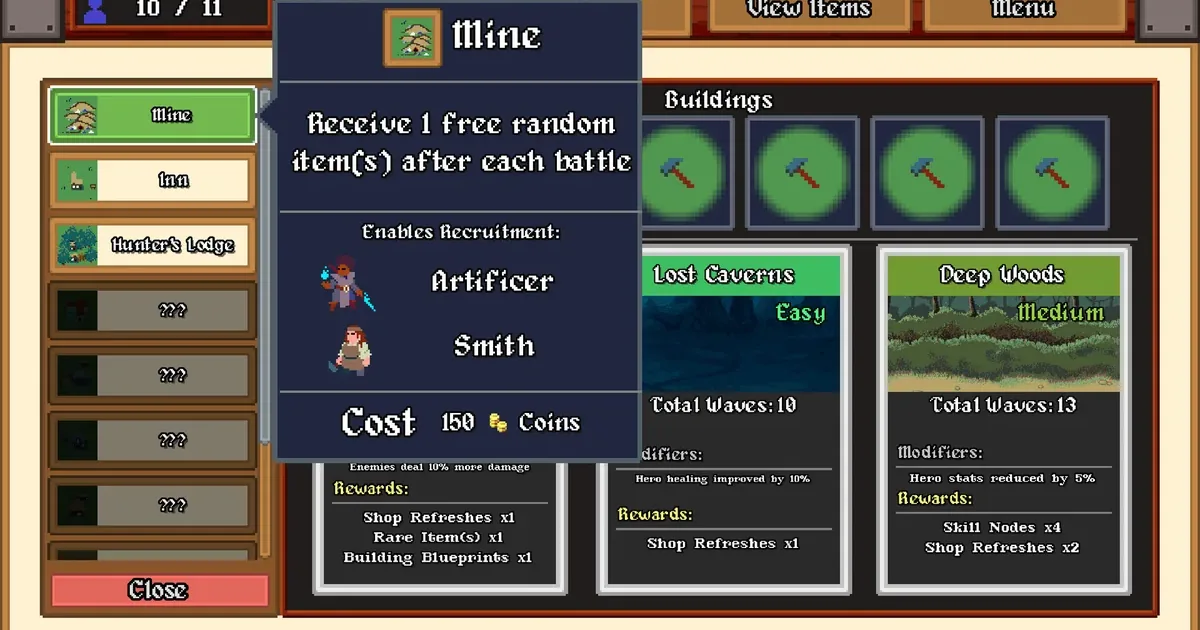
 Adventure Mode's building menu, here showing the Barracks structure and the hero types it unlocks, alongside expedition cards that set wave count and rewards before a run.
The LegionBound Battle Mode guide covers endurance-mode recruiting, wave strategy, and editorial build comparisons; this hub does not treat unsupported breakpoints as universal rules.
- LegionBound Battle Mode Guide: Endurance Runs and Wave Strategy: endurance-mode recruiting, wave strategy, and editorial build comparisons without presenting unsupported breakpoints as rules.
- LegionBound Adventure Mode Guide: Route, Build, Win: map routing, camp building priority, loop strategy, and the Tax Collector setup for first Adventure Mode runs.
The synergy system: the launch 30-class loops
LegionBound has 42 classes total, but the loop breakdown below covers the original 30 only. The official Patch 1.1 announcement confirms 12 additional heroes and says they bring their own abilities and passives, but it does not publish a named loop map. In the launch tables, each class has one documented synergy partner: field both and the leading class can upgrade into its synergy subclass. The subclass is the promoted state of the hero, not a separate recruit.
Three community-documented launch groups:
Warrior group: 14 classes. Three of the five starter classes (Warrior, Wizard, Cleric) belong here, so most players enter this loop naturally. Warrior → Spellblade, Sorcerer → Warlock, Wizard → Magus, Cleric → Mender, and ten more. The longest loop to complete in full, but adjacent pairs still trigger synergy. You don't need all 14 to benefit.
Barkeep group: 11 classes. Two starters (Ranger, Rogue) are here. Ranger → Snapshot, Rogue → Assassin, Barkeep → Alchemist, and eight others. Physical and utility mix. Good as a focused damage cluster once the loop is partially assembled.
Tax Collector group: 4 classes. Tax Collector, Barbarian, Brawler, Mercenary. It is the smallest documented loop, with four corresponding synergy subclasses. This page recommends it as a first experiment; the sources do not promise a universal completion wave.
The Peasant (also called Protagonist) operates outside the three loops. The class reference says its special requirement is three other synergy heroes promoted; it is a later-run target, not a normal loop link.
GODEEPER: The launch 30 classes mapped to their synergy groups, with the 42-class roster and Patch 1.1 caveat kept separate from the verified launch loop table. LegionBound Synergy Guide: Launch 30 Classes →
- LegionBound Synergy Guide: Launch 30 Classes & Groups: the three verified launch loops, synergy subclasses, and activation pairs, with a separate caveat for the 12 Patch 1.1 additions.
LegionBound guide: Ascension: the power spike system
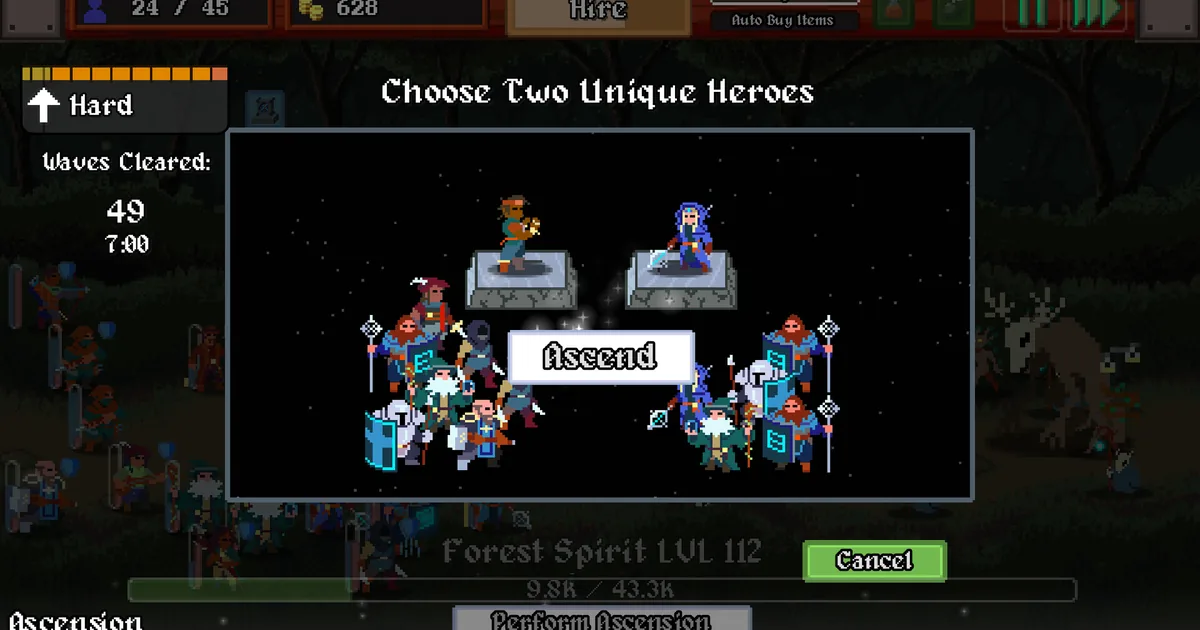
Ascension is the game's hero-combination system. The official store page lists over 800 possible Ascension heroes, and Patch 1.1 says its 12 new heroes add over 400 additional Ascension combinations, each with its own appearance, abilities, passives, and party role. The official sources do not support reducing that system to a same-class merge or a universal item/upgrade formula.
There is no source-backed universal wave deadline for an Ascension. The Steam class guide describes combining synergized heroes into Ascended Units and warns that an Ascended unit does not count as the prerequisite for another synergy, so do not describe Ascension as a same-class merge or assume that an Ascended Warrior can replace the base prerequisite for Spellblade. Use the in-game preview before confirming a combination; Patch 1.1 explicitly added that preview.
The Steam class guide also warns that an Ascended unit does not count as the prerequisite for another synergy. Promote a unit first when the prerequisite is available, then treat Ascension as a separate choice; the official sources do not establish a universal damage multiplier or a death penalty for every combination.
GODEEPER: How to think about hero combinations, the 800+ possible Ascension heroes, and the in-game preview before confirming. LegionBound Ascension Guide: How to Merge Heroes →
- LegionBound Ascension Guide: Merge Timing and the 800+ Outcomes: how to think about hero combinations, the 800+ possible Ascension heroes, and the in-game preview before confirming.
The Endbringer: Adventure Mode's escalating boss
- LegionBound Endbringer Guide: When to Fight and How to Win: when to commit to the fight vs. loop for more power and how the final Adventure Mode decision works.
The Endbringer is the final foe in Adventure Mode. The official store page says the final foe gains power as you build and offers the choice to confront it or loop back for more power. It does not publish a fixed attack sequence, health formula, or threshold table.
The Endbringer is not described by the official page as an ordinary wave. Build advice about burst, sustain, or area damage is an editorial recommendation and should not be presented as a guaranteed targeting rule.
Because the official page only states that the final foe gains power as you build, this guide does not assign a universal loop-by-loop difficulty multiplier.
Battle Mode can be a useful place to practice recruiting, synergy dependencies, and hero combinations before facing the Adventure Mode choice. It does not establish a universal wave threshold or guarantee a particular Endbringer result.
The skill tree: between-run progression with an Adventure caveat
The official store page says that even when you wipe, you still earn skill points, climb the skill tree, and unlock bonuses for future runs. Adventure Mode is a fresh start rather than a fully carried-over tree: in a developer answer, the only skill-tree nodes said to affect Adventure Mode are starting party size and the heroes available at the start. Do not present recruitment speed, item quality, starting gold, or flat damage as a universal priority order without an in-game source.
Best builds and class priority
The easiest build in either mode for new players is an editorial recommendation: the Tax Collector full loop. It uses four launch classes (Tax Collector, Barbarian, Brawler, Mercenary), and the class table documents a synergy subclass for each when its prerequisite is met. The four-class structure is the reason this page recommends it; it is not a guaranteed wave or Endbringer clear.
The advanced editorial build for Battle Mode: combine adjacent launch-roster dependencies rather than chasing isolated class names. Warrior + Sorcerer documents Spellblade on Warrior; Knight + Smith documents Stalwart on Knight. The official sources do not promise that a particular six-hero chain survives a particular wave.
General class priority rules across both modes:
- Commit to 2-3 class types by wave 3. Taking an off-cluster hero because it has better stats breaks synergy math: avoid it.
- Match passive items to your primary cluster. A mid-stat item that activates warrior synergy on a warrior-heavy party outperforms a high-stat item from an incompatible class.
- Rows can be rearranged, but the developer says row position does not make a hero more or less likely to be targeted. Treat front/back placement as a build preference, not a targeting rule.
The full depth (how to read the circular loop structure to find your strongest available chain, stat priorities by Ascension tier, when to branch into a second synergy group) is in the LegionBound advanced builds guide.
- LegionBound Advanced Builds Guide: Dual Chains and Deep Loops: reading the documented dependency loops and deciding when to branch into a second synergy group.
- LegionBound Tier List 2026: Ranking All 30 Classes: S-to-C rankings of all 30 classes by synergy chain value, Ascension power, and speed to payoff.
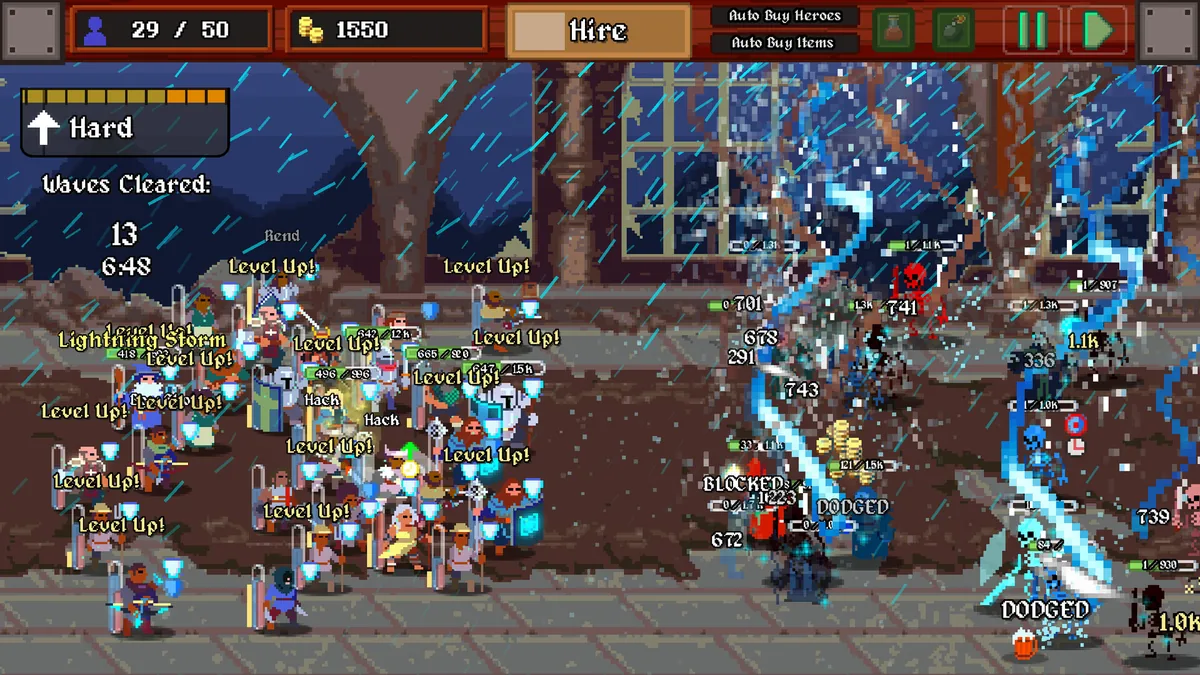
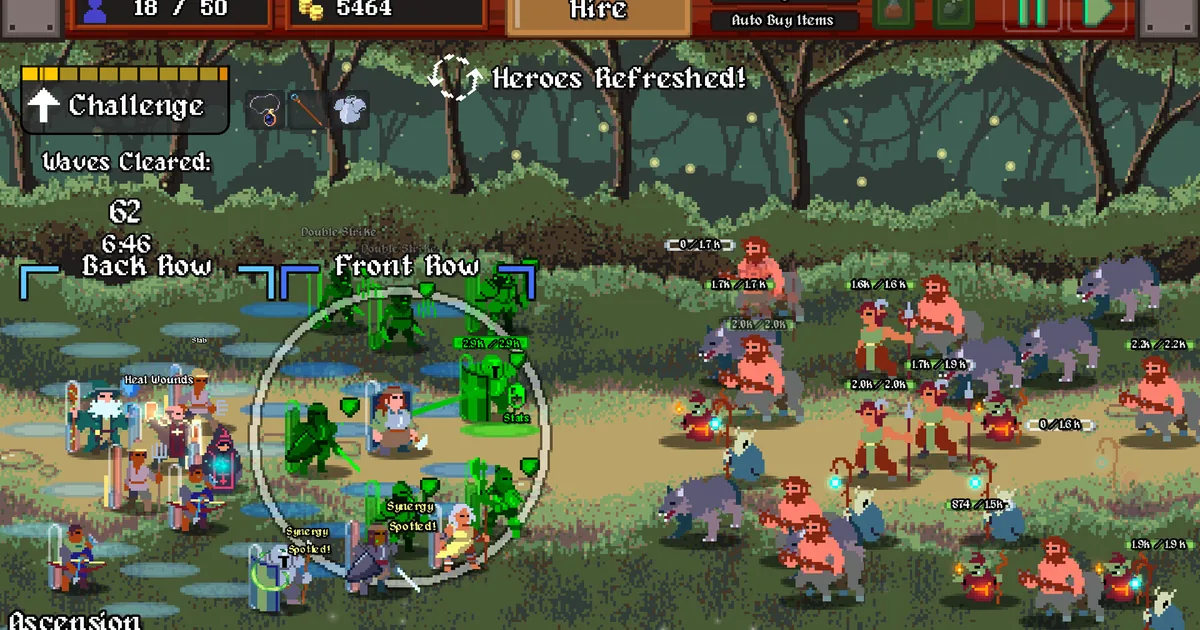
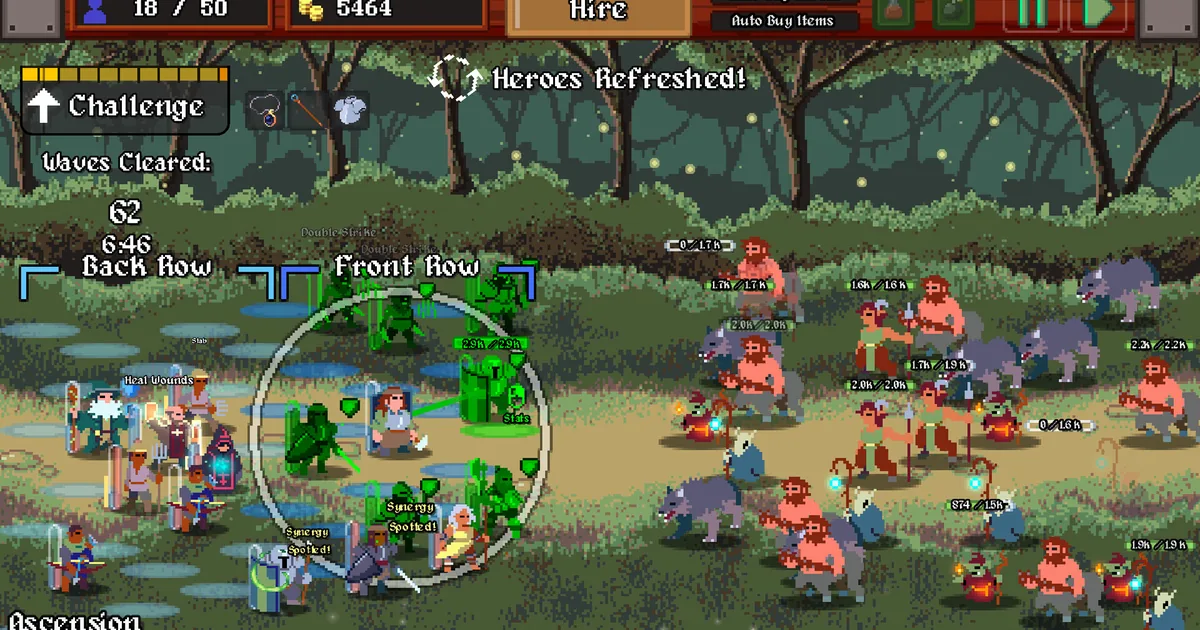
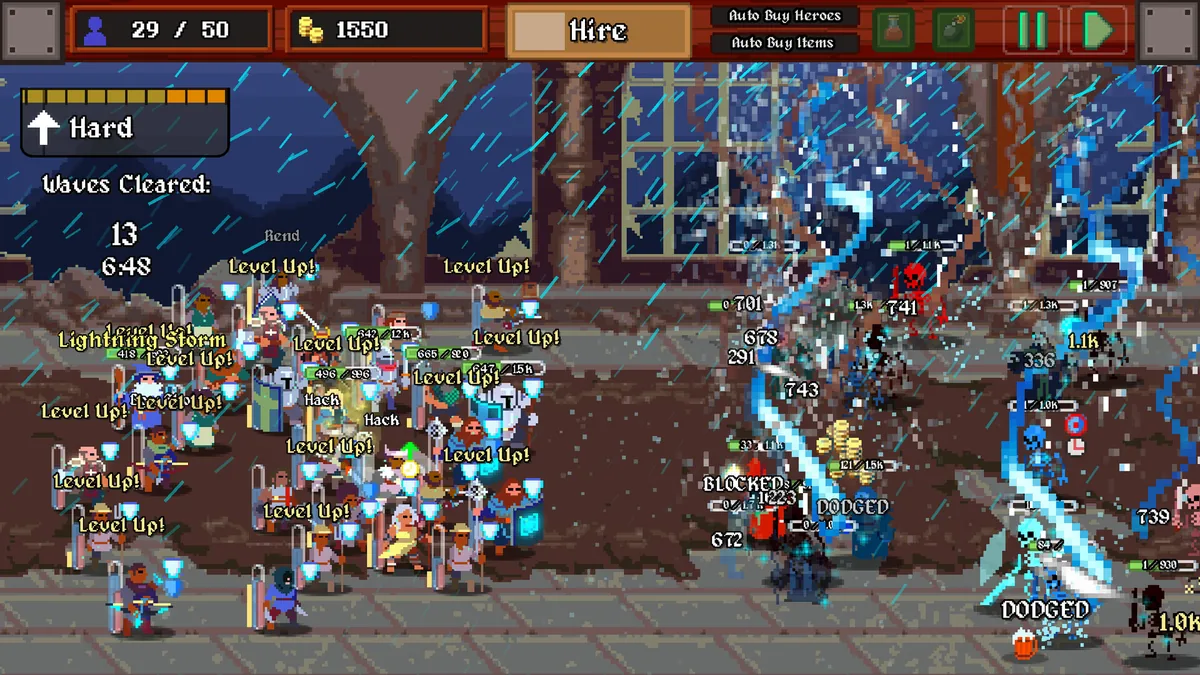 A Battle Mode wave shows the game's crowded autobattler presentation; use the live in-game preview to confirm synergy and Ascension choices.
- LegionBound Ascension Chain: Timing, Risk, Recovery 2026: LegionBound ascension chain guide. Second and third merge timing, high-wave hero protection, and how to...
- LegionBound Ascension Guide: How to Merge Heroes (2026): LegionBound Ascension explained: how to trigger your first merge by wave 5, stack Ascensions with synergy, and protect ascended heroes from permanent loss.
- LegionBound Synergy Guide: Launch 30 Classes (2026): LegionBound synergy guide: the launch 30-class synergy groups, how promotions work, and what Patch 1.1 officially adds to the 42-class roster.
- LegionBound Builds: Beat the Endbringer on Loop 2+: LegionBound builds for loop 2+ Endbringer: dual Warrior subchains, aura positioning, Mine building priority, and the Infinite Skill Tree unlock.
- LegionBound Endbringer Guide: When to Fight and How to Win: LegionBound Endbringer guide: Adventure Mode
LegionBound guide: Analysis and verdict
LegionBound launched April 27, 2026 and currently carries an 82% Very Positive Steam label, with the exact count changing over time. The negative reviews are real and they often point to the same problem: the class system is not explained well enough and players can bounce before the game shows what it is doing.
That's a fair complaint. It's also a specific one. The opening hours can leave the relationship between hero recruiting, synergy promotion, and Ascension unclear. This hub keeps those systems separate where the official sources do, and labels build recommendations as recommendations.
At $9.99 with a standalone demo, the cost of being wrong is low. If the opening explanation leaves gaps (and it does) the guides here cover every system in detail. Start with the tips guide if you want the walkthrough format. Browse the hub links here if you want a specific system.
The LegionBound tips guide is the best first stop for structured guidance on early decisions, row rearrangement, and the between-run progression system.
Frequently asked questions
What is LegionBound? An autobattler roguelite RPG from Spicy Garlic Games. Field up to 50 heroes from 42 classes, build synergy chains between waves, and combine heroes into Ascension units. Two modes: Battle Mode (endurance) and Adventure Mode (roguelite campaign). Released April 27, 2026 on PC via Steam.
How does synergy work? Three circular loops: Warrior (14 classes), Barkeep (11 classes), Tax Collector (4 classes). Field a synergy pair in the right order and the leading class upgrades into its subclass form. Tax Collector's 4-class loop is the fastest to complete.
What is Ascension? Ascension combines eligible heroes into an upgraded Ascension class. Steam lists over 800 possible Ascension heroes, and Patch 1.1 adds over 400 additional combinations. Use the in-game preview before confirming; the official sources do not establish a universal same-class requirement or death penalty.
Is Battle Mode or Adventure Mode better to start with? Battle Mode is the simpler introduction: it is an endurance run, while Adventure Mode adds buildings, map choices, modifiers, rewards, and the Endbringer decision. This is editorial guidance, not a guarantee about progression between modes.
What is the easiest build for new players? Tax Collector full loop: Tax Collector, Barbarian, Brawler, Mercenary. It is the smallest documented launch loop, and each member has a documented synergy subclass when its prerequisite is met. The recommendation is editorial; it is not a guaranteed wave clear.
Does the skill tree carry over between runs? Wipes still earn skill points for future-run progression. Adventure Mode is a fresh start; the developer says only starting party size and the heroes available at the start are affected there by skill-tree nodes.
Is there a free demo? Yes. A standalone free demo is available on Steam under App ID 4342540. It's a separate download from the full game.
Related Reading
- All Legionbound coverage: every Legionbound guide, review, and news post published on GameBrief, in one index.
- LegionBound Builds: Beat the Endbringer on Loop 2+: LegionBound build ideas for later Endbringer attempts, with the source-backed caveat that exact class, aura, and building outcomes are run-dependent.
References
- LegionBound on Steam: official store page describing 42 classes, synergy subclasses, Ascension, rows, modes, and between-run progression
- LegionBound 1.1 - Volatile Elements: official patch note confirming 12 new heroes, their abilities/passives, and 400+ additional Ascension combinations
- LegionBound patch 1.12: official September 10 fixes for targeting, lingering zones, and stuck items
- LegionBound patch 1.117: official August 25 stability fixes
- Developer answers on skill tree, targeting, and unlocks: row targeting, Adventure Mode skill-tree scope, and wave-25 Battle Mode unlock statement
- Hero Class Guide: Steam community reference for class names and prerequisite pairs
- Hero Synergy Groups: Steam community reference for the 30 launch heroes and three dependency loops
- Spicy Garlic Games on Steam: developer page
- LegionBound standalone demo: free Steam demo
About the author

Critical game theorist with a background in film criticism. Writing for print and digital outlets since 2015. Specialises in genre analysis and design heritage.
- Background in film criticism
- 10 years games coverage
- Genre theory and design history specialist
Keep reading
Disclaimer
This article is published for informational and entertainment purposes. It does not constitute professional financial, legal, or technical advice. Game performance, online services, patch schedules, and store listings change. Verify critical details (pricing, system requirements, regional availability) with publishers and storefronts before you buy. Affiliate links, where present, help support our editorial work and are labelled in our affiliate disclosure.
Comments
Loading comments…