
GameBrief · Features
Prime Monster: Card Roguelike From The Sexy Brutale Devs
Prime Monster is a card political roguelike where you play as a monster MP fighting for power. 30 representatives, 15 parties, out May 4, 2026 on PC.

Reviewing
Prime Monster
Cavalier Game Studios
Prime Monster is a card-based political roguelike where you survive in a parliament of literal monsters. You're the Prime Monster: a creature politician hanging onto the top job while 30 other monster MPs try to end your career. It's from Cavalier Game Studios, the UK indie team behind The Sexy Brutale (2017). It releases May 4.
TL;DR: Prime Monster is a card roguelite where you play a monster MP fighting for parliamentary survival. 30 representatives, 15 parties, 4 resources to manage. Very Positive on Steam. From Cavalier Game Studios (The Sexy Brutale). Free demo on Steam before committing.
The Sexy Brutale was a well-made puzzle game with a weird premise and sharp execution. This is a very different kind of game, but the instinct to build mechanics around a specific high-concept idea is consistent with what that team did before.
What is Prime Monster? (quick answer)
Prime Monster is a card-based political roguelite from Cavalier Game Studios, the UK indie team behind The Sexy Brutale. You play a monster MP fighting to hold the top job in a parliament of 30 other monsters across 15 parties. Very Positive on Steam, with a free demo on the store page before you spend anything.
- Card roguelite where you play as a monster MP fighting for political survival
- 30 unique representatives, 15 political parties
- Resources to manage: personal authority, political capital, poll ratings, and cash
- Free demo available on Steam before and after launch
- PC only, May 4, 2026: Cavalier Game Studios (The Sexy Brutale) and Rekoup
What Prime Monster is
Prime Monster's premise is parliamentary satire, played straight. You're a creature in a suit, holding a top job in a government of other creatures in suits. The objective is to keep that job. Parliament doesn't want to let you. Most of the game is about outmaneuvering everyone else in the chamber long enough to survive.
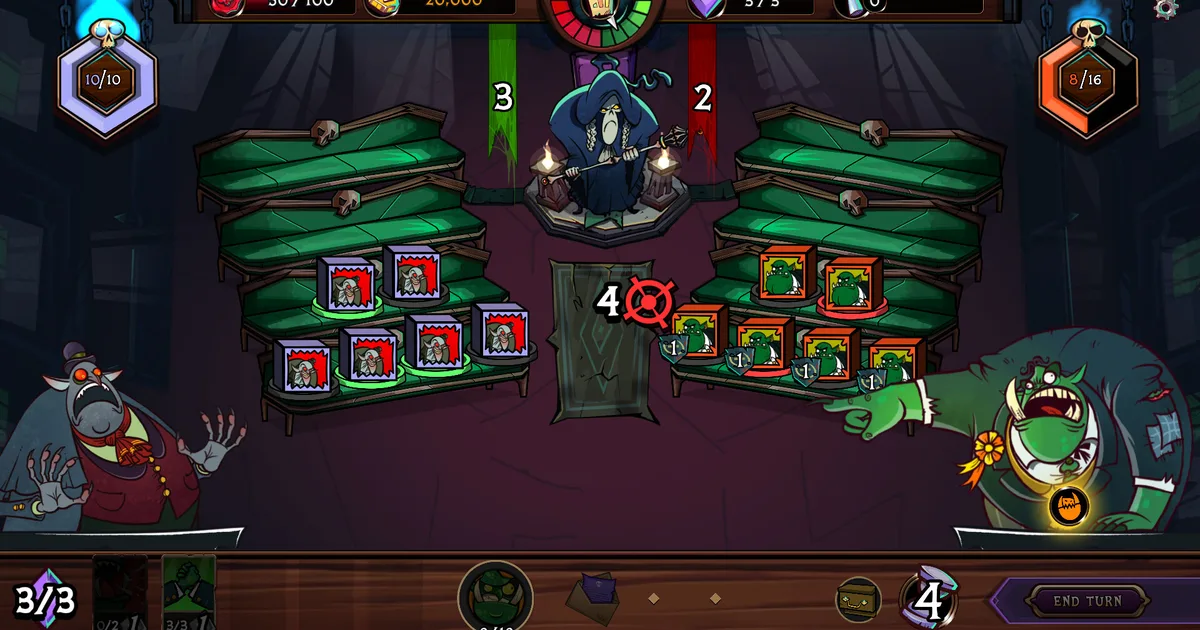
The card system is the primary mechanic. You build a deck of political actions: bills, amendments, procedural moves, interpersonal tactics. Some are blunt (bully a backbencher, threaten a wavering vote). Some are structural (pass legislation that changes how resources work, or that locks out certain opponent strategies for a few turns). The satire comes from the policy content: the absurd laws you can actually push through include things like "Decriminalise arson" and "Allow Same Hex Marriage." The game commits to the premise without softening it into something more conventionally game-y.
The four resources (personal authority, political capital, poll ratings, and cash) sit above the card layer and impose a second management loop. A card play that costs political capital might keep your poll ratings stable but drain the resource you need for next turn's legislation. The tension is between the cards in hand and which of the four bars is currently most at risk.
GODEEPER: For another strong deckbuilder roguelite launching this week, the Die in the Dungeon review covers ATICO's dice-building game that shares genre DNA. Die in the Dungeon Review: Dice-Building With Brains →
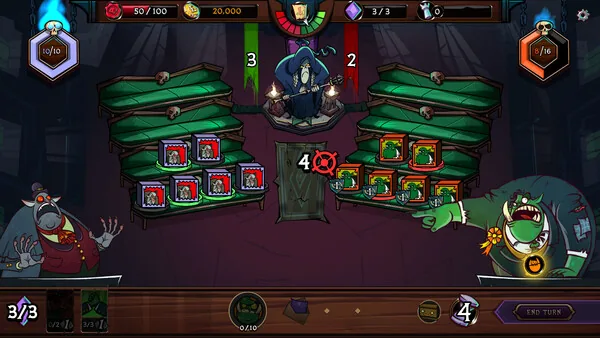 This is the resource tension in practice: every choice trades one bar for another rather than offering a clean upgrade.
The 30 representatives and 15 parties
The parliament isn't just background. Thirty representatives across fifteen parties each have distinct archetypes, and the relationship management layer determines which of them are allies, which are threats, and which can be bought, blackmailed, or threatened into line.
This is where Prime Monster's roguelite replayability is supposed to live. Different party compositions in each run change which moves are available, which resources are most constrained, and which representatives are most dangerous to leave unattended. A parliament where the Swamp Party controls the key committees plays differently from one where the Mountain Faction has an unexpected majority.
Cavalier hasn't published specifics on how much the party compositions actually vary between runs, but the structure suggests genuine variety rather than cosmetic randomness. That's Prime Monster's central replayability claim: each run is a different parliament to survive, not the same encounters reshuffled.
What this is drawing from
The closest reference point is a deckbuilder where the encounter space is a legislature rather than a dungeon. The structural skeleton (runs, resource management, card acquisition, escalating pressure) is familiar from Slay the Spire and games that followed it. The surface is entirely different.
The political satire layer does meaningful work here. It's not just flavor. The policies you can pass change how your resources generate. "Decriminalise arson" is a joke, but it's also presumably a card effect that alters the resource economy for some number of subsequent turns. The content carrying mechanical weight is what separates this from using political imagery as a skin over generic roguelite combat.
The comparison to other narrative roguelites (games like Hades where the story is integrated into the run structure) is relevant but approximate. Prime Monster sounds more mechanically grounded than story-driven, but the premise-first design is in the same family.
For a more traditional take on the genre that launched in the same window, the Vampire Crawlers review covers poncle's deckbuilder, which stays closer to the Slay the Spire formula. Prime Monster is the further left field option of the two.
GODEEPER: For the full genre context and comparisons, the roguelike roundup covers the best options in 2026 across price tiers. Best Roguelike Games 2026: 6 Picks for Every Budget →
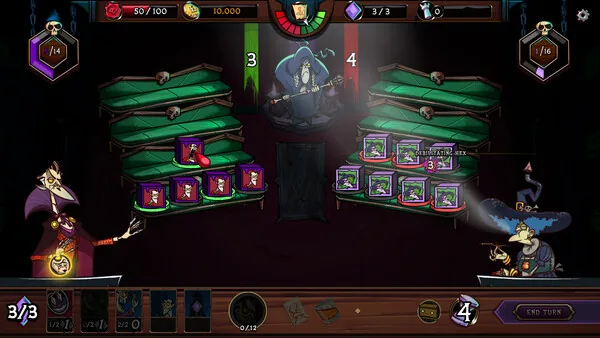 Every matchup pits your card rack against a different opponent lineup, which is where the party composition variance actually shows up.
Is Prime Monster worth buying?
There's a demo. Before spending anything on a high-concept political satire that might not land for you, spend 30 minutes with it. The tone is either going to click or it isn't, and you'll know fast.
What makes this one look promising: Cavalier shipped a complete, coherent game before. The Sexy Brutale wasn't lucky: it was finished well. Most deckbuilders default to fantasy dungeons because the framing is proven. A parliament of monster politicians is harder to pull off, and the specificity suggests a team that had an actual idea rather than a market-tested one.
What to watch for: satire that front-loads the joke sometimes can't sustain it across 20 roguelite runs. "Decriminalise arson" is funny once. The four-resource management system is what will give runs staying power or not: that's harder to assess from previews.
Prime Monster has 290+ Steam reviews at Very Positive (82% positive), a solid range for a niche deckbuilder. The demo remains the better signal for whether the political satire tone clicks for you specifically.
References
- Prime Monster on Steam: store page, demo download, community hub
- Cavalier Game Studios on Steam: developer page including The Sexy Brutale
- Steam has the slightly better price right now: $15.99 (20% off) versus $16.29 on Loaded (sponsored). The two are close enough that it's worth checking both at the time you buy.
Frequently asked questions
What is Prime Monster? A card-based political roguelike from Cavalier Game Studios. You're a monster MP trying to hold onto the top job in a parliament of other monsters. The core loop is deckbuilding plus management of four political resources across roguelite runs.
Who made it? Cavalier Game Studios, the UK indie team behind The Sexy Brutale (2017). Published with Rekoup. It's their first release in nearly a decade.
Is there a demo? Yes: free on Steam before and after launch. App ID 3214480. Highly recommended before buying, since the political satire tone is either going to click or it isn't.
How does the deckbuilding work? You build a deck of political actions and play them to manage four resources: personal authority, political capital, poll ratings, and cash. Cards let you bully, blackmail, threaten, or legislate your way through each parliamentary session. The absurdity of the policies is part of the mechanic, not just flavor.
Is this like Slay the Spire? Same roguelite run structure, completely different surface. Where Slay the Spire uses dungeon combat, Prime Monster uses parliamentary procedure and satirical politics. The deckbuilding layer is familiar; everything around it isn't.
PC only? Yes, Windows only at launch. No console version announced.
Related Reading
- Slay the Spire 2 Co-op Guide: the deckbuilding roguelite Prime Monster is most often compared to, now with co-op.
- Rune Dice Tier List: All 8 Classes Ranked: another roguelite where build coherence outweighs raw card power.
- Prime Monster Review: Corrupt Your Way to the Top (2026): the full verdict on whether the corruption mechanic and deck variety hold up over a full run.
- Prime Monster Deck Tier List: 6 Build Types Ranked (2026): which of the 6 build archetypes actually win runs, ranked.
- Black Jacket Complete Guide: a card-driven roguelite for fans of run-based risk decisions.
- Prime Monster Tips: 11 Things the Game Won't Tell You: Prime Monster tips covering what early runs miss: the exploitation floor, Tactic timing, deck bloat,.
- Prime Monster Advanced Deck Guide: 4 Combos That Win: Prime Monster advanced deck strategies: Drumming Unity chain, Retort loop, No-MP build, and All Pledges.
- Prime Monster Characters Guide: All 3 Builds and Who to Pick: Prime Monster characters guide: Chopper for beginners, Sucksworth for Elder Statesmonster runs, Rotilda for veterans.
About the author

Games Critic
Games writer and reluctant optimist who has reviewed over 400 titles across 9 years. Irish, currently in Berlin. Has strong opinions about tutorial design.
- 400+ games reviewed across 9 years
- Platformer and horror specialist
- Narrative design focus
Keep reading
Disclaimer
This article is published for informational and entertainment purposes. It does not constitute professional financial, legal, or technical advice. Game performance, online services, patch schedules, and store listings change. Verify critical details (pricing, system requirements, regional availability) with publishers and storefronts before you buy. Affiliate links, where present, help support our editorial work and are labelled in our affiliate disclosure.
Comments
Loading comments…