
GuideAlabaster Dawn
Alabaster Dawn Cooking Guide: Palate Level & Healing Bulbs
About the game
Alabaster Dawn
Radical Fish Games
This Alabaster Dawn cooking guide separates the food system's three jobs: combat boosts, Divine Gear recharge, and Healing Bulb recovery. The recipe menu makes those jobs look like one choice, but Palate Level and the last recipe used can change how much value you get from the same pot.
TL;DR: Recipes are reusable, ingredients are consumed, and optional seasonings can add effects. Eating food can charge Divine Gear and improve Healing Bulb recovery. Use a simple recipe early, raise Palate Level through real boost use, and save a stronger recipe for the next difficult fight instead of cooking every time you see a pot.
Alabaster Dawn cooking guide: quick answer
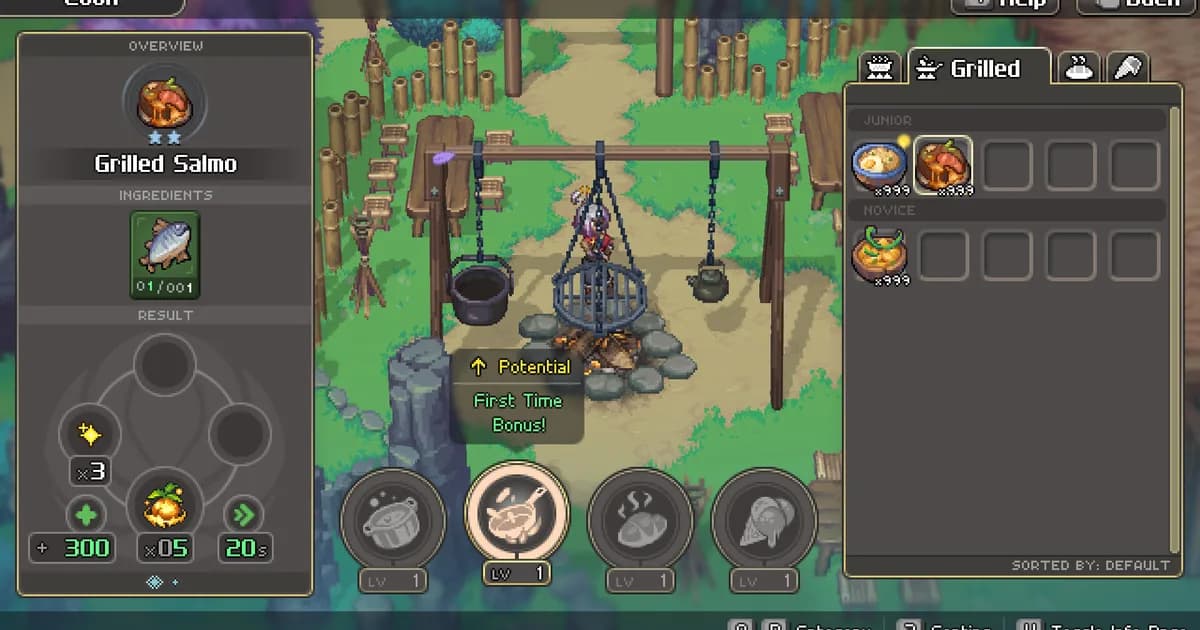
Cooking happens at pots and resting spots. Choose a recipe, add its ingredients, and decide whether a seasoning fits the situation. The current public wiki records four recipe types, Cooked, Grilled, Baked, and Cold, with examples such as Basic Ration, Garrot Soup, Grilled Salmo, Baked Prapple, and Prapple Salad.
The result does more than restore health. Food can replenish Healing Bulbs, recharge Divine Gear, and give temporary boosts. Using a boost raises Palate Level, and the current Palate information connects that level and the last recipe used to Healing Bulb charges, power, and speed. This is why the best cooking choice depends on the next room, not just the ingredient with the highest name value.
Key takeaways for cooking and Palate Level
- Recipes are reusable, while their ingredients are consumed.
- Cooking pots and resting spots are the main places to prepare food.
- Food can recharge Divine Gear, grant temporary combat boosts, and replenish Healing Bulbs.
- Palate Level increases when you use food boosts and affects the Healing Bulb side of the system.
- The last recipe used can affect Healing Bulb charges, recovery speed, and recovery power in the current wiki snapshot.
- Seasonings are optional. The current public list names Scorchili and Muse Mint.
- Somu's Dream Rest Rooms have their own constraint: the current material records fewer Healing Bulb charges from cooking there.
- Recipe effects and lists are Early Access data. Check the in-game menu after a patch instead of trusting an old table.
The Alabaster Dawn complete guide hub tracks the wider Early Access scope. The Alabaster Dawn dungeon exploration guide covers the settlement and rest loop around finding pots, while the Alabaster Dawn Somu's Dream guide explains the mode-specific room and currency decisions.
How cooking affects Divine Gear and Healing Bulbs
The official Steam description gives cooking two immediate uses. Food can charge Divine Gear and provide temporary boosts. It also increases the stock of Healing Bulbs at resting spots. Those are related but not identical outcomes, so a recipe that is useful for a combat boost may not be the best choice when your main problem is running out of healing.
The current public cooking pages add the important state rule: the last recipe used matters for Healing Bulb recovery. The recipe can influence the number of charges, how quickly they recover, and their power. The exact values belong to the current game data, not a permanent guide promise, so use the cooking screen to compare the recipe currently selected.
Resting is a separate reset. The current wiki records that resting restores Healing Bulbs without changing the recipe effects already selected. In practice, this means you can use a pot, rest to refill, then enter the next fight with the same food plan. You do not need to discard the chosen recipe simply because the bulb counter changed.
Food boosts also have charges and a duration. The current mechanics page says attacks recharge Divine Gear between charges, which gives cooking a combat rhythm rather than a one-time pre-fight stat check. Choose the food boost with the weapon and encounter you are about to use, then let ordinary combat pay some of the charge back.
Cooking sits inside the wider rest and settlement loop, so returning to a pot is also a route-planning decision.
Recipes, ingredients, and seasonings
Recipes are reusable in the current public item data. Ingredients are not. That distinction changes how you should explore: unlocking a recipe once is valuable, but the recipe does not remove the need to forage or carry the ingredients required for each future meal.
The current recipe pages group food into Cooked, Grilled, Baked, and Cold. Examples include Basic Ration, Ring Ration, Garrot Soup, Up & Below, Scrambled Egg, Fried Rice, Grilled Salmo, Ring Rolls, Baked Prapple, Fieldfruit Bake, and Prapple Salad. These names show the current breadth of the recipe list, but they do not prove that every recipe is available from the first pot or that the list is complete for the finished game.
Seasonings are optional additions rather than replacements for the main recipe. The current seasonings page lists Scorchili and Muse Mint. If the cooking UI offers a seasoning slot, read the displayed effect before spending it. A seasoning that helps a long combat sequence may be wasted on a short trip back to a settlement.
The Alabaster Dawn gems guide covers another resource sink that competes for exploration materials. Keep the two decisions separate. A rare ingredient should solve the next food problem, while an Essence or Craftable belongs to the Artificer system. Do not consume a material just because both menus are open at the same settlement.
Palate Level and the last-recipe rule
Palate Level is the progression layer attached to eating boosts. The current public mechanics page records that using a boost raises Palate Level, and that recipe complexity affects the maximum experience available from a recipe. The first use of a recipe also receives a first-time bonus in the current snapshot.
That gives you a reason to try new recipes instead of repeating one meal forever. A new recipe can provide more Palate experience, while a familiar recipe may be the better combat choice when you already know its bulb behavior. The decision is about timing: discover new food when a safe rest is available, and use a trusted meal before a dangerous section.
Do not mistake Palate Level for a direct damage tier. Its most useful current connection is the Healing Bulb system. The recipe you last used, the charges it provides, and the Palate Level you have earned all help determine how comfortable the next route feels. A player who cooks frequently but never uses a boost may not advance the same way as a player who actively spends the buff during combat.
The early data also records a practical recharge interaction: attacking can recharge Divine Gear between food-boost charges. That makes an offensive recipe more valuable in a sustained encounter and less valuable when you are only using a pot to refill before a short walk. Read the encounter length before choosing the meal.
The food and Divine Gear indicators stay relevant once you leave the pot and return to combat.
Cooking in Somu's Dream
Somu's Dream uses the same broad food language but changes the value of the pot. The current public Dream material lists Rest Rooms as a room type and says their cooking pot gives fewer Healing Bulb charges than cooking outside the Dream. A pot is still useful there, but it is not a full replacement for the fixed-world rest loop.
Treat food in a Dream as a run resource. If Life is low and a boss door is nearby, use the pot for the immediate attempt. If the room is optional and your current Healing Bulbs are adequate, save ingredients or Shards for a later decision. The mode also has temporary Blessings, so compare a food boost against the next Blessing choice rather than stacking every available effect.
The Alabaster Dawn tips guide remains useful for combat fundamentals, but this mode-specific limit matters more than a general “cook whenever possible” rule. In a regular route, a pot can be part of a reliable recovery loop. In Somu's Dream, it is one more budget choice inside a procedural run.
A safe first cooking plan
Use this route the first time you have several recipes but do not yet understand Palate Level.
1. Read the pot's current recipe list: Check which ingredients are already in your inventory and note the displayed boost, bulb, and recharge information.
2. Cook a simple reusable recipe: Spend a common ingredient on a recipe you can repeat. Do not use a rare seasoning until the next fight justifies it.
3. Use the boost in a real encounter: A boost raises Palate Level when used. Trigger it where its duration and Divine Gear recharge interaction can actually matter.
4. Rest and inspect Healing Bulbs: Confirm how many charges you have and how the current recipe affects their recovery. Resting can restore bulbs without replacing the selected recipe effects.
5. Try a more complex recipe safely: Use a new recipe near a settlement or low-risk route to capture its first-use Palate experience without risking a long run.
6. Reserve ingredients for the next gate: Before entering a dungeon or Dream boss route, keep the recipe whose current displayed effect solves that encounter's problem.
Tips for better food decisions
Cook with a destination in mind. A short trip to an Artificer does not need the same meal as a boss room or a multi-room dungeon. If the route has a safe pot before the fight, a combat boost is more useful than spending it at the settlement entrance.
Use the last-recipe rule deliberately. If your current Healing Bulb recovery is comfortable, do not switch recipes just to consume an ingredient. If bulbs are the limiting resource, select the recipe whose displayed recovery values address that specific shortage.
Raise Palate Level through use, not menu browsing. Looking at a recipe does not replace using its boost. The first-use bonus makes new recipes worth testing, but test them where you can retreat and compare the result.
Keep seasonings for meaningful encounters. Scorchili and Muse Mint are current examples, not guaranteed final categories. If a patch adds a recipe or changes a seasoning, the in-game effect line is more reliable than a dated tier list.
Finally, use the Alabaster Dawn early access overview to keep the system in proportion. Cooking is a useful part of the combat and exploration loop, but the game is still an Early Access slice. A recipe list that is complete today can grow with the next major update.
Step-by-Step: prepare food before a difficult route
1. Identify the next risk: Decide whether you need a combat boost, Divine Gear charge, or Healing Bulb recovery before selecting a recipe.
2. Check ingredients and seasoning: Confirm that the ingredients are common enough to replace and that the seasoning effect is worth the cost.
3. Cook at the nearest pot: Use a reusable recipe and read the displayed effect rather than relying on a fixed online table.
4. Activate the boost deliberately: Use it during the encounter where its duration and recharge interaction matter.
5. Rest and verify the bulb counter: Check charges, recovery, and the current Palate Level before leaving the safe spot.
6. Reassess at the next pot: Keep the recipe if it solved the route problem; switch only when the next section demands a different resource profile.
Frequently Asked Questions
How does cooking work in Alabaster Dawn? Use a cooking pot or resting spot, select a reusable recipe, and spend its ingredients. Food can recharge Divine Gear, grant temporary boosts, and affect Healing Bulb behavior. Optional seasonings add another effect when the recipe accepts them.
What does Palate Level do in Alabaster Dawn? Using food boosts raises Palate Level. The current wiki connects Palate Level to Healing Bulb recovery, including the charges, speed, and power associated with the last recipe used.
Are Alabaster Dawn recipes consumed after one use? Recipes are reusable in the current public wiki snapshot, but their ingredients are consumed. Learn the recipe once, then keep the required ingredients stocked for later pots.
What are the current Alabaster Dawn seasonings? The current public seasonings page lists Scorchili and Muse Mint. Treat the list as an Early Access snapshot and check the cooking menu after updates.
How do you recharge Healing Bulbs with food? Cooking and eating food can replenish Healing Bulbs. The last recipe used influences the recovery behavior, while resting can restore bulbs without changing the recipe effects already selected.
Does cooking work differently in Somu's Dream? Yes. The current Somu's Dream material says Rest Rooms can contain a cooking pot, but cooking there provides fewer Healing Bulb charges than cooking outside the Dream.
Related Reading
- Alabaster Dawn complete guide hub: the current Early Access index and version boundary.
- Alabaster Dawn gems guide: Artificers, gem slots, Growth Charts, and material planning.
- Alabaster Dawn Somu's Dream guide: procedural rooms, Shards, Blessings, and Dream-specific cooking limits.
- Alabaster Dawn dungeon exploration guide: settlements, rest points, and the fixed-world exploration loop.
- Alabaster Dawn tips guide: combat and navigation fundamentals.
- Alabaster Dawn skill tree and builds guide: weapon and Growth Chart context.
- Alabaster Dawn early access overview: planned scope and current playable content.
- Alabaster Dawn review: the wider judgment on the current build.
References
- Alabaster Dawn on Steam: official cooking, Healing Bulb, Divine Gear, and Early Access description.
- Alabaster Dawn appdetails API: official Steam metadata checked during research.
- Alabaster Dawn Cooking wiki: current pots, recipes, ingredients, boosts, and cooking rules.
- Alabaster Dawn Palate Level wiki: current boost experience and Healing Bulb interactions.
- Alabaster Dawn Recipes wiki: current recipe types and examples.
- Radical Fish official roadmap: the Early Access update boundary.
Was this guide helpful?
About the author

Indie & JRPG Critic
Indie game evangelist and lifelong JRPG fan covering small studios since 2017. Mumbai-born, London-based. Writes the way she talks.
- 7 years indie games coverage
- JRPG and visual novel specialist
- Narrative design focus
Keep reading
Alabaster Dawn Gems Guide: Divine Gear and Growth Charts
General · 12 min

Alabaster Dawn Somu's Dream Guide: Keys & Blessings
General · 12 min

Alabaster Dawn Complete Guide: 5 Weapons, Builds & Tips
General · 13 min

Alabaster Dawn Dungeons Guide: Exploration and Settlements
General · 8 min

Alabaster Dawn Skill Tree: Best Builds and Tips 2026
Guides · 10 min

Alabaster Dawn Review: CrossCode's Shadow, Its Own Light
Reviews · 9 min
Game deals · affiliate links

Disclaimer
This article is published for informational and entertainment purposes. It does not constitute professional financial, legal, or technical advice. Game performance, online services, patch schedules, and store listings change. Verify critical details (pricing, system requirements, regional availability) with publishers and storefronts before you buy. Affiliate links, where present, help support our editorial work and are labelled in our affiliate disclosure.
Comments
Loading comments…